


Last updated: January 29, 2026
Key Takeaways
- AI search engines like ChatGPT now capture 17.1% of queries, cutting traditional SEO clicks by 34.5% and shrinking digital footprints.
- Generative Engine Optimization (GEO) replaces traditional SEO by emphasizing schema markup, structured data, and daily publishing velocity for AI citations.
- Technical tools such as llms.txt, MCP, and fact-density tuning are now essential for AI visibility beyond basic content creation.
- Programmatic SEO platforms outperform manual agencies and basic AI tools, achieving 3x higher AI citation rates through autonomous execution.
- AI Growth Agent delivers end-to-end GEO with features like citation heatmaps and real-time content injection, so schedule a demo today to future-proof your strategy.
The Problem: AI Search Is Shrinking Your Digital Footprint
Marketing executives now operate in a world where their companies’ digital presence shrinks a little more every day. Google AI Overviews reduce click-through rates by 34.5%, while ChatGPT now captures 17.1% of total digital queries with 858 million monthly active users. AI-generated content floods every channel, so brands without a clear AI strategy lose share of voice at an accelerating pace.
Freshness and Structure Drive the Shrinking Pixel
AI search engines reward fresh, well-structured content above slow, static libraries. ChatGPT shows 76.4% of cited pages were updated within the last 30 days, which proves recency now functions as a primary ranking factor. Brands that publish only one or two articles each month cannot match the publishing velocity required for consistent AI visibility.
Why Manual Content Production Falls Behind
Traditional SEO agencies still rely on a craftsman model that delivers 1–2 posts per month and rarely includes programmatic SEO engineering. Basic AI writing tools such as Jasper generate unstructured text that lacks schema markup, metadata, and the technical formatting AI systems need for reliable indexing. These approaches push strategy, technical implementation, and publishing workflows back onto already stretched internal teams.
7 Ways AI Changes SEO:
- Keywords shift toward intent-focused targeting.
- Clicks give way to citations and mentions.
- Manual workflows must convert to programmatic velocity.
- Rankings evolve into broader authority signals.
- Content structure becomes essential for AI parsing.
- Freshness often outweighs evergreen strategies.
- Technical implementation now determines visibility.
Brands that struggle with AI visibility can schedule a demo to see if they are a good fit at https://cal.com/team/aigrowthagent/demo.
From Legacy SEO to GEO and Programmatic Velocity
The shift from traditional SEO to Generative Engine Optimization changes how teams must engineer content for AI discovery. GEO tactics in 2026 emphasize expanding semantic footprint through schema markup, structured data, and fact-density improvements to increase passage-level visibility inside AI rerankers.
AI Search Engines Reshape Discovery
Google still holds 90.82% global search engine market share, yet AI-native platforms grow much faster. ChatGPT controls 78.2% of the AI search market with 5.8 billion visits, while Perplexity and similar tools expand their audiences every quarter.
5-Step GEO Roadmap:
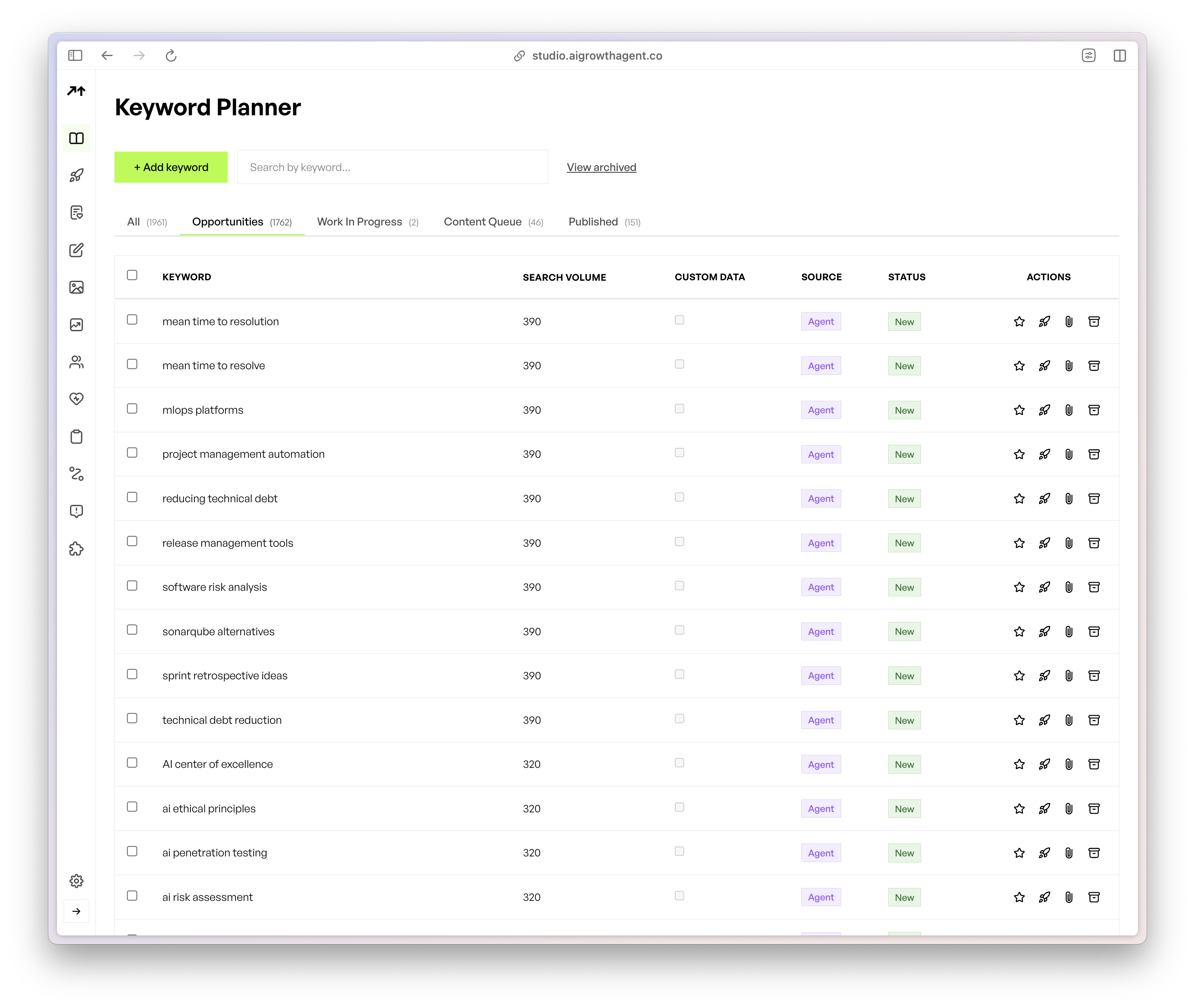
- Develop manifesto-driven research frameworks.
- Cluster keywords to build semantic authority.
- Engineer schema markup and structured data.
- Publish technically tuned content every day.
- Monitor AI citations and performance trends.
Technical GEO Tactics: Schema, llms.txt, and MCP
Effective AI visibility now depends on advanced technical implementation that goes far beyond legacy SEO checklists. llms.txt files continue to gain traction as a way to guide AI systems during crawling, while schema markup supplies structured data that improves LLM interpretation.
Model Context Protocol (MCP) introduces a new layer of AI-content connectivity by allowing AI search engines to query blog databases directly for accurate retrieval. This advancement, pioneered by AI Growth Agent, creates a direct bridge between AI models and brand content, which unlocks unprecedented AI visibility through database-level integration.
|
Approach |
Publishing Speed |
Technical Structure |
Content Scale |
AI Citation Success |
|
Traditional Agencies |
1-2/mo |
Basic metadata |
Low |
<10% |
|
Basic AI Tools (Jasper) |
Daily but manual |
Unstructured text |
Medium |
20-30% |
|
AI Growth Agent |
Autonomous daily |
Schema/LLM.txt/MCP |
Unlimited |
3x higher (cases) |
Teams ready to unlock programmatic GEO can schedule a demo to see if they are a good fit at https://cal.com/team/aigrowthagent/demo.
AI Growth Agent: Programmatic GEO for Modern Brands
AI Growth Agent functions as an autonomous programmatic SEO agent that engineers manifesto-driven content, technical infrastructure, and performance monitoring from a single system. The platform’s Multi-Tenant Deployment capability lets portfolio companies and enterprises manage multiple brand strategies in one interface, while Real-Time Content Injection supports rapid responses to emerging trends.
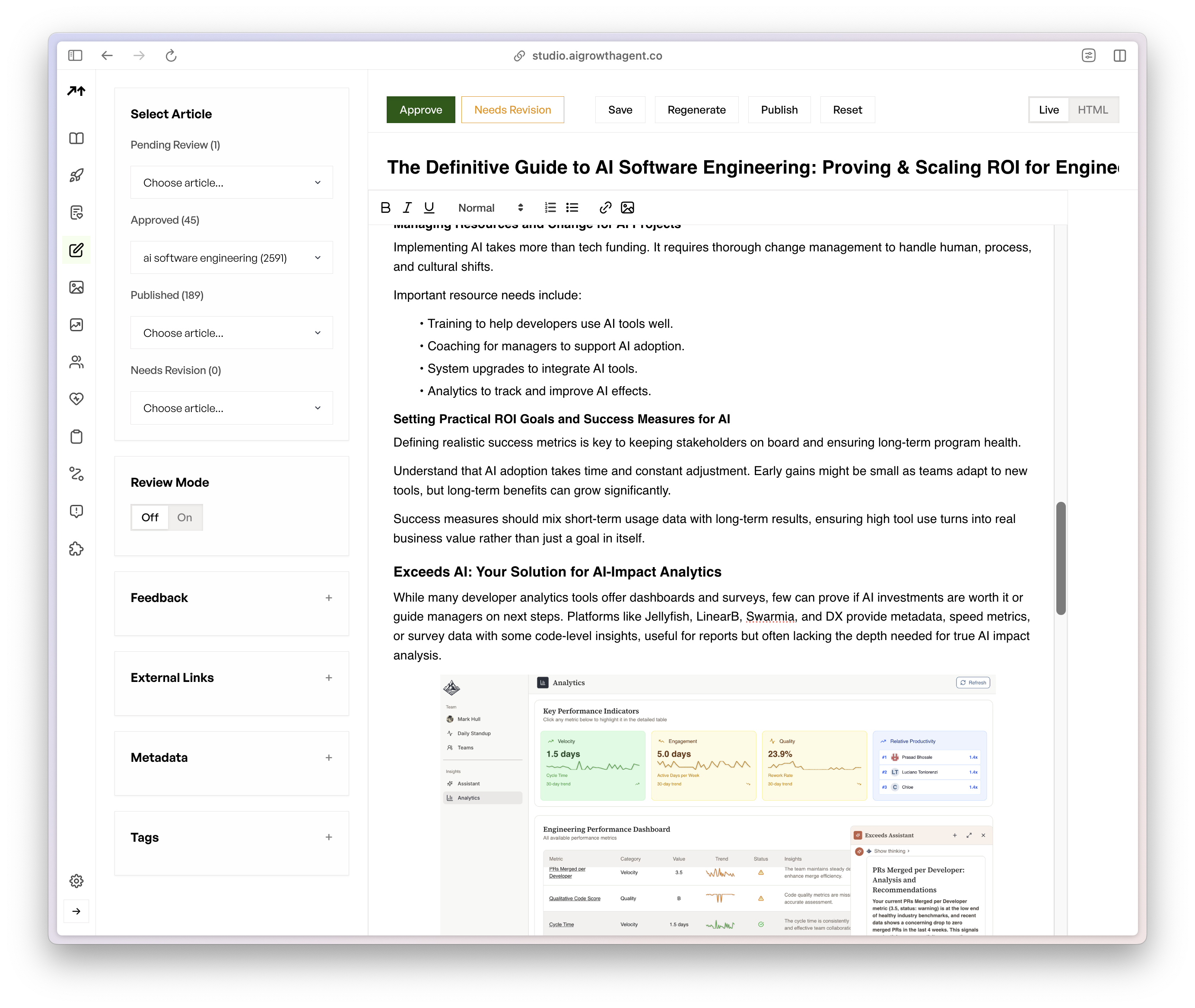
5 Key Features:
- White-Glove Onboarding with professional journalist consultation.
- AI Studio command center for content control and performance tuning.
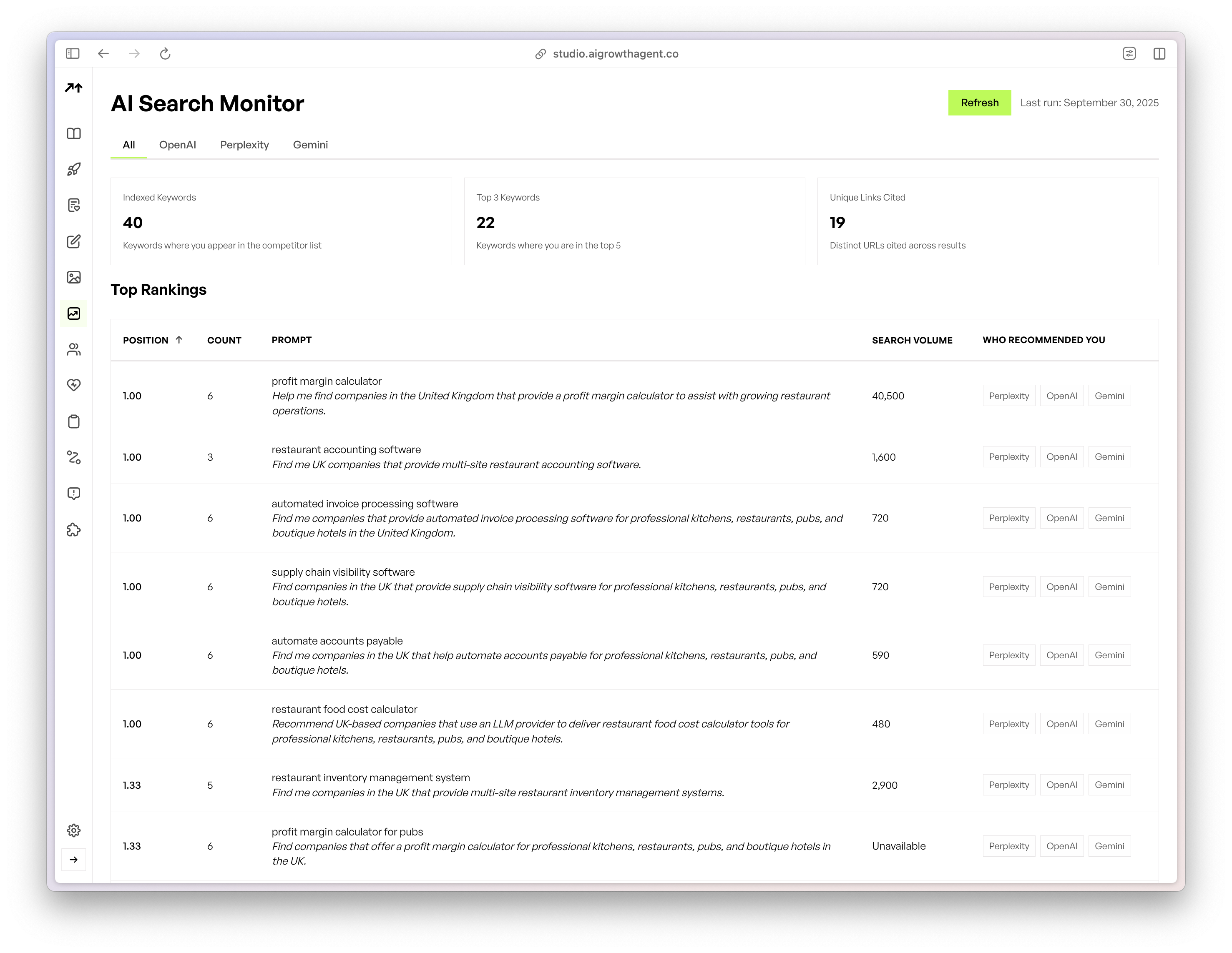
- Citation Heatmap tracking across ChatGPT, Gemini, and Perplexity.
- Autonomous technical infrastructure deployment at scale.
- Database-to-content automation that activates proprietary data.
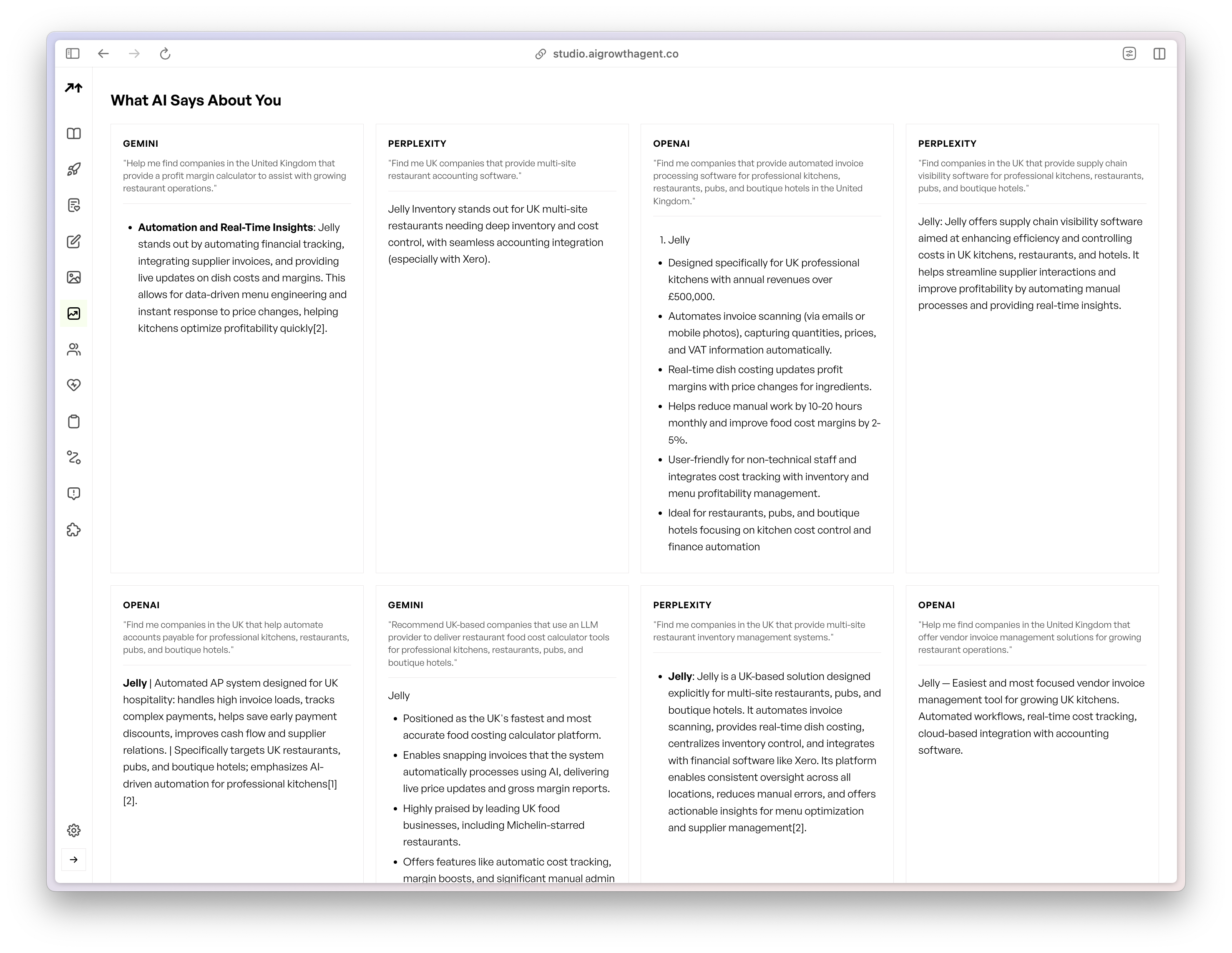
Programmatic GEO in Action: Case Studies
Bucked Up reached #1 citation status in ChatGPT for “best protein soda” within three weeks of programmatic publishing. Gitar became the reference brand for AI-powered CI/CD automation across Google AI Overview, ChatGPT, and Perplexity for queries such as “fix broken CI builds automatically” and “best AI reviewer that comments on CI failures.”
Why Traditional SEO Logic Breaks in AI Search
Traditional SEO ranking logic fails for AI search because AI systems are probabilistic, not deterministic, so 2010-era keyword tactics cannot reliably influence AI citations. Fewer than 10% of sources cited in AI tools like ChatGPT, Gemini, and Copilot rank in Google’s top 10, which shows that classic SEO wins do not guarantee AI visibility.
AI Growth Agent solves these gaps with end-to-end programmatic execution instead of simple monitoring dashboards that stop at diagnosis. The platform’s autonomous content engineering delivers consistent technical precision at scale, which keeps brands visible as AI systems evolve.
Scaling Authority with Programmatic Publishing
Programmatic SEO velocity lets brands build authority through steady, high-quality publishing across entire topic clusters. Brands that earn visibility in AI search are 3x more likely to be cited than only mentioned, while brands mentioned on 4+ different non-affiliated platforms are 2.8x more likely to appear in ChatGPT responses.
By 2030, SEO will evolve into Visibility Optimisation beyond traditional search, covering every discovery surface where buyers research solutions. Agentic AI will redefine SEO by autonomously executing workflows like keyword clustering, content briefs, and trend identification, which lets small teams compete with enterprise budgets through automated research and analysis.
Frequently Asked Questions
What is Generative Engine Optimization (GEO)?
Generative Engine Optimization (GEO) describes SEO tactics built specifically for AI search engines. GEO focuses on earning citations and mentions inside AI-generated responses instead of chasing traditional blue-link rankings. Core elements include schema markup, structured data, higher fact-density, and technical components such as llms.txt files that guide AI systems during crawling and indexing.
How can brands rank in AI Overviews?
Brands that rank in AI Overviews publish structured content with lists, tables, and FAQ sections, then keep that content fresh and comprehensive.
Teams must implement advanced schema markup, maintain consistent publishing velocity, and apply technical formatting that supports AI parsing. The strongest pages demonstrate authority through citations, statistics, and original insights while staying neutral enough to avoid promotional filters inside AI systems.
What is the future of SEO in 2030?
SEO in 2030 will operate as Visibility Optimisation that spans search, social, AI assistants, and emerging discovery platforms. Brand-first strategies will replace narrow keyword playbooks, with entity-first indexing that depends on structured data and credible author signals. AI-driven personalization will shape unique search experiences for each user, while agentic AI will automate most technical SEO workflows behind the scenes.
What are the key differences between traditional SEO and AI optimization?
Traditional SEO aims to rank web pages for specific keywords and drive clicks, while AI optimization targets citations and mentions inside AI-generated answers.
AI optimization relies on programmatic content velocity instead of slow manual creation and emphasizes structured data and schema markup over basic metadata. It also prioritizes fact-density and authority signals instead of keyword density, and success metrics shift from rankings and clicks to citations and brand mentions across AI platforms.
Will blogs become obsolete with AI search?
Blogs will remain valuable, but they must evolve to stay visible in AI-driven discovery. AI can generate text at a massive scale, yet human storytelling, lived experience, and unique points of view still create the strongest differentiation.
The publishing model, however, needs to move from purely manual production to programmatic systems that can match AI content volume. Winning blogs will pair human insight with automated technical optimization and structured data to stay present in AI search results.
Conclusion: Future-Proof SEO with Programmatic Authority
AI search engines now reshape digital discovery and create both serious risk and meaningful upside for brands that adapt quickly. Companies that embrace programmatic SEO strategies will build durable competitive advantages, while teams that cling to manual approaches will watch their digital footprint contract.
AI Growth Agent delivers the autonomous execution engine required to thrive in this environment by engineering high-authority content at the scale and technical depth AI citations demand. The platform’s capabilities in schema tuning, LLM.txt deployment, and Model Context Protocol integration position brands for sustained visibility across every major AI search platform.
Premium brands already dominate AI search through programmatic authority. Schedule a demo to see if you are a good fit at https://cal.com/team/aigrowthagent/demo.
