


Key Takeaways
- By 2026, 70% of searches resolve without website visits, so AI citations become the primary visibility metric for marketing teams.
- AI Growth Agent leads with integrated real-time tracking and autonomous pSEO content creation across ChatGPT, Perplexity, and Google AI Overviews.
- Monitoring-only tools like Peec AI and OtterlyAI provide analytics but lack execution, which forces teams to maintain separate content workflows.
- The GEO Stack Builder framework combines monitoring, analysis, programmatic content, and ongoing refinement to sustain citation dominance.
- Enterprise teams move quickly with AI Growth Agent; schedule a demo to roll out full-stack AI visibility now.
Why AI Search Citations Now Drive Brand Visibility
AI search citations are references to your brand, content, or expertise inside responses from ChatGPT, Perplexity, Google AI Overviews, and Claude. These citations function as direct brand mentions in conversational answers that people increasingly trust for research and buying decisions. Traditional SEO metrics still matter, but citations now reveal how often AI systems surface your brand at the moment of intent.
Marketing teams rely on citation management to build authority in AI-powered search results, capture AI referral traffic that skips websites, and defend against competitors that dominate AI-generated recommendations. Content volume keeps rising across every category, so teams need programmatic systems to maintain visibility at scale instead of manual, one-off content pushes.
Top AI Search Citation Tools for Marketing Teams in 2026
|
Tool |
Key Features |
Pricing |
Team Fit/Rating |
|
AI Growth Agent |
Monitor + pSEO automation, real-time tracking, autonomous content creation |
Custom (post-demo) |
Enterprise/5★ |
|
Peec AI |
Analytics, API access, unlimited seats, sentiment analysis |
Custom pricing |
Agencies/4★ |
|
OtterlyAI |
6 platform tracking, GEO audits, Brand Visibility Index |
$29-$489/mo |
SMB/4★ |
|
Rankscale AI |
Daily audits, PAA tracking, competitive analysis |
$20/mo |
Tech teams/3.5★ |
|
Siftly |
GEO optimization, competitive benchmarking, sentiment tracking |
Custom pricing |
Mid-market/4★ |
|
Nightwatch |
SERP + AI monitoring, rank tracking integration |
$39-$299/mo |
SEO teams/3.5★ |
|
Profound |
Multi-engine visibility, citation intelligence |
Custom pricing |
Enterprise/3★ |
|
Free Tools |
Google Alerts, manual tracking |
Free |
Solo operators/2★ |
|
Emerging Tools |
Specialized monitoring features |
Varies |
Testing phase/3★ |
AI Growth Agent stands out for teams that need full-stack citation management paired with programmatic content creation. Schedule a demo to see how integrated monitoring and pSEO can position your brand as the default authority in AI search results.
Hands-On Reviews of Leading AI Citation Platforms
AI Growth Agent: Full-Stack Monitoring and pSEO Automation
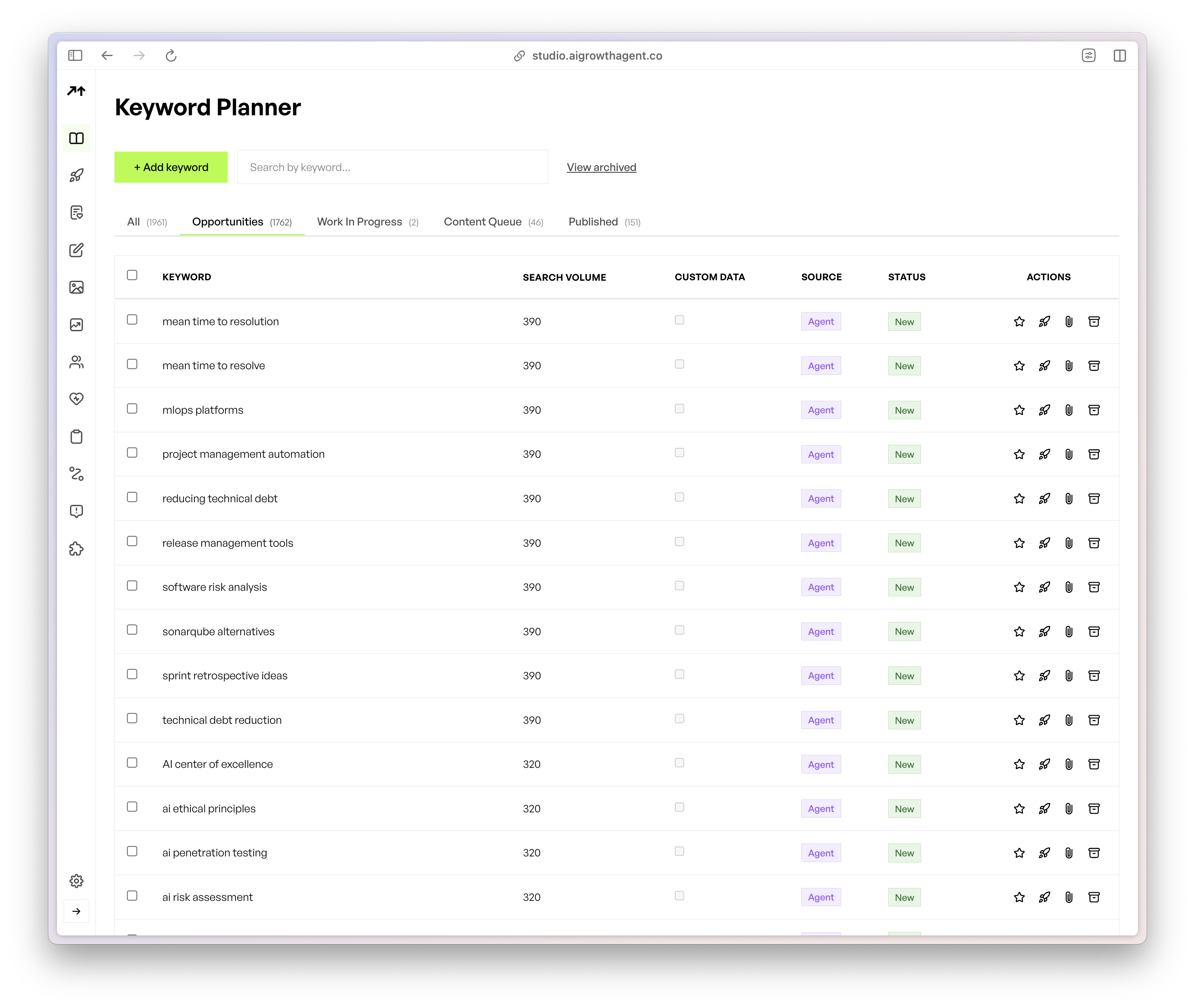
AI Growth Agent unifies real-time citation monitoring across ChatGPT, Perplexity, and Google AI Overviews with autonomous programmatic SEO content creation. The Studio dashboard gives teams a clear view of AI search performance, while the pSEO Agent publishes high-authority content with advanced schema markup, LLM.txt files, and Model Context Protocol implementation. Bucked Up reached top protein soda citations, and Gitar became the leading CI/CD automation reference within two months using this system.
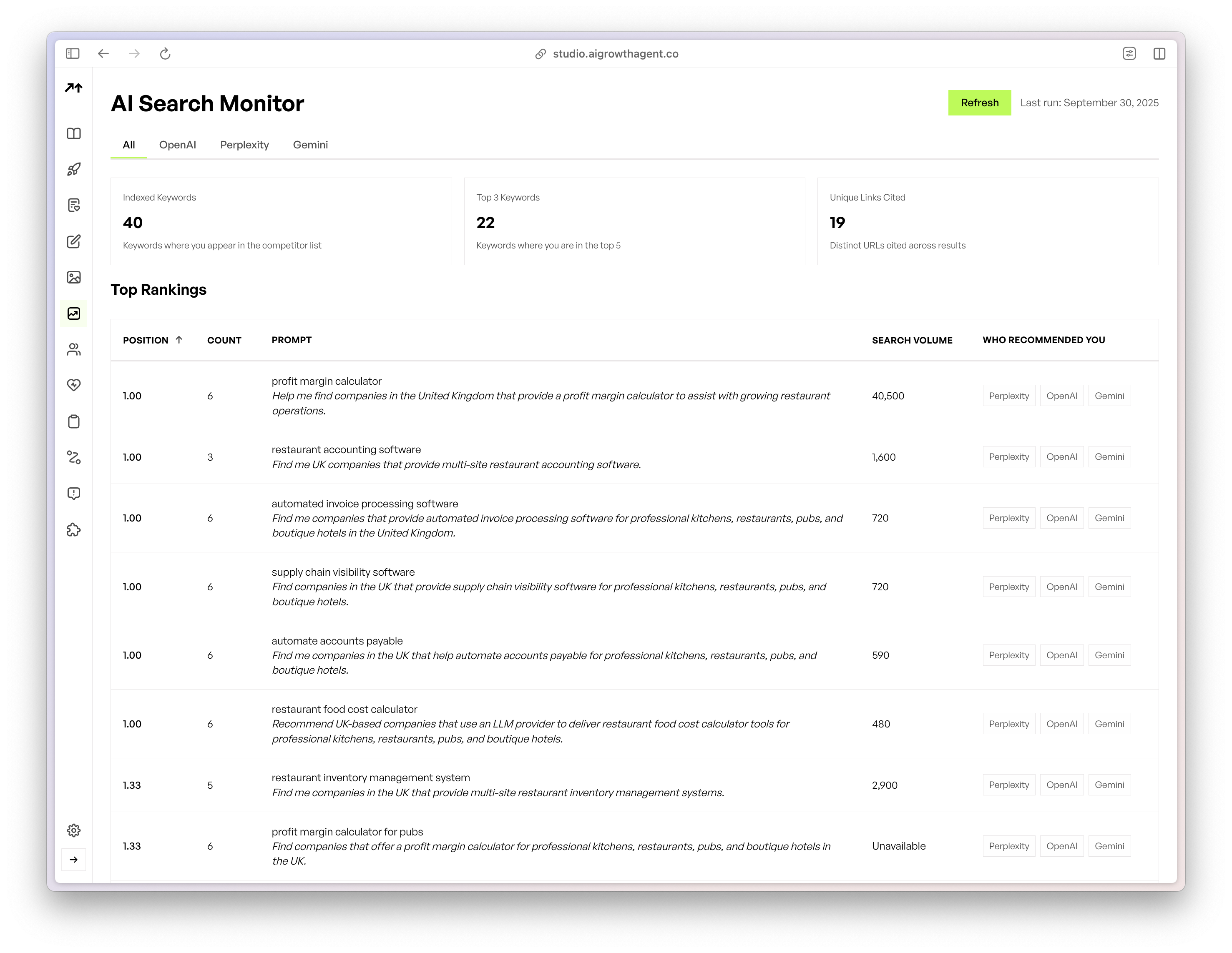
The platform supports multi-tenant deployment for portfolio companies and rapid content injection around trending topics. Teams that manage many brands or product lines gain consistent coverage without manual production bottlenecks. Schedule a demo to see if you’re a good fit and confirm alignment with your programmatic SEO roadmap.
Peec AI: Deep Analytics Without Content Execution
Peec AI offers daily tracking, unlimited seats, sentiment analysis, and prompt suggestions, best for agencies and global brands. The platform delivers detailed analytics and API access, which supports custom dashboards and internal reporting. Teams can slice citation data by engine, topic, or sentiment to guide strategy.
Peec AI does not include content creation features, so teams must plug in separate tools to close visibility gaps. This separation works for agencies that already run strong content operations across many clients. It creates extra workflow steps for in-house teams that want monitoring and execution in a single environment.
OtterlyAI: Budget-Friendly Tracking With Simple Dashboards
Otterly.ai covers ChatGPT, Perplexity, Google AI Overviews, Copilot with pricing $29-$489/month and 14-day free trial. The platform focuses on affordability and ease of use, with clean dashboards that show total mentions, triggering prompts, and basic sentiment scores. Teams can quickly see where their brand appears and which queries drive those mentions.
GEO audits analyze 25+ on-page factors for AI search visibility optimization insights. These audits highlight structural issues that limit AI visibility. Current limits include weekly data refreshes instead of daily updates, no automated accuracy validation for mentions, and shallow competitive analysis that does not support complex strategic planning.
Rankscale AI and Siftly: Monitoring-First GEO Solutions
Rankscale AI delivers daily audits and People Also Ask tracking at $20 per month, which appeals to technical teams that want basic monitoring. Siftly’s GEO approach reports 1500% average increases in AI mentions within 2 weeks, with competitive benchmarking and sentiment analysis across ChatGPT, Gemini, Claude, and Perplexity. Both tools focus on measurement and reporting for teams that already own content production.
Neither platform includes programmatic content creation, so teams must translate insights into action manually. AI Growth Agent closes that gap by pairing tracking with autonomous content engineering in one stack. Schedule a demo to compare monitoring-only tools with full-stack programmatic SEO automation.
Free vs Paid Tools and Best Picks by Team Size
|
Tier |
Tools |
Features |
Best Fit |
|
Free |
Google Alerts, manual tracking |
Basic mention alerts, limited platforms |
Solo operators, initial testing |
|
SMB ($29-$189/mo) |
OtterlyAI Lite/Standard |
Multi-platform tracking, GEO audits |
Small teams, budget-conscious testing |
|
Mid-Market ($200-$500/mo) |
Peec AI, Siftly, OtterlyAI Premium |
Advanced analytics, competitive benchmarking |
5-20 person marketing teams |
|
Enterprise (Custom) |
AI Growth Agent, Profound |
Programmatic SEO, multi-tenant deployment |
Portfolio companies, integrated workflows |
Free tools such as Google Alerts help teams experiment but cannot support full AI citation programs. SMB platforms provide a solid starting point for visibility assessment and simple reporting. Enterprise solutions like AI Growth Agent combine monitoring, automation, and workflow integration, which creates a durable edge in AI search.
GEO Stack Builder: Four Steps to an AI Citation Engine
The GEO Stack Builder framework gives teams a repeatable system for AI citation growth across four steps. First, teams deploy comprehensive monitoring with AI Growth Agent’s real-time tracking across ChatGPT, Perplexity, and Google AI Overviews to uncover citation gaps and competitor strengths. Second, they analyze visibility data to see which topics, formats, and intents generate the highest citation rates in their category.
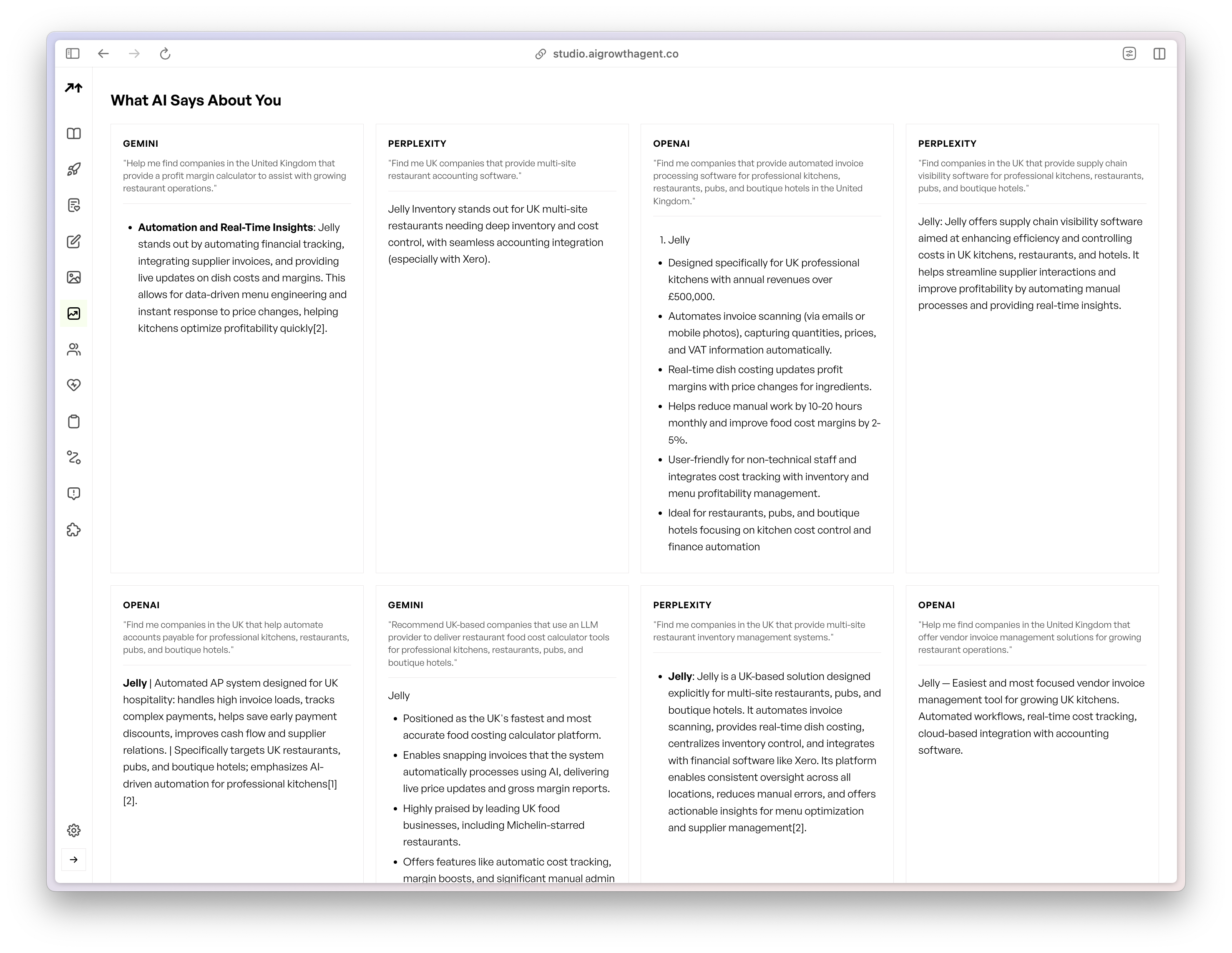
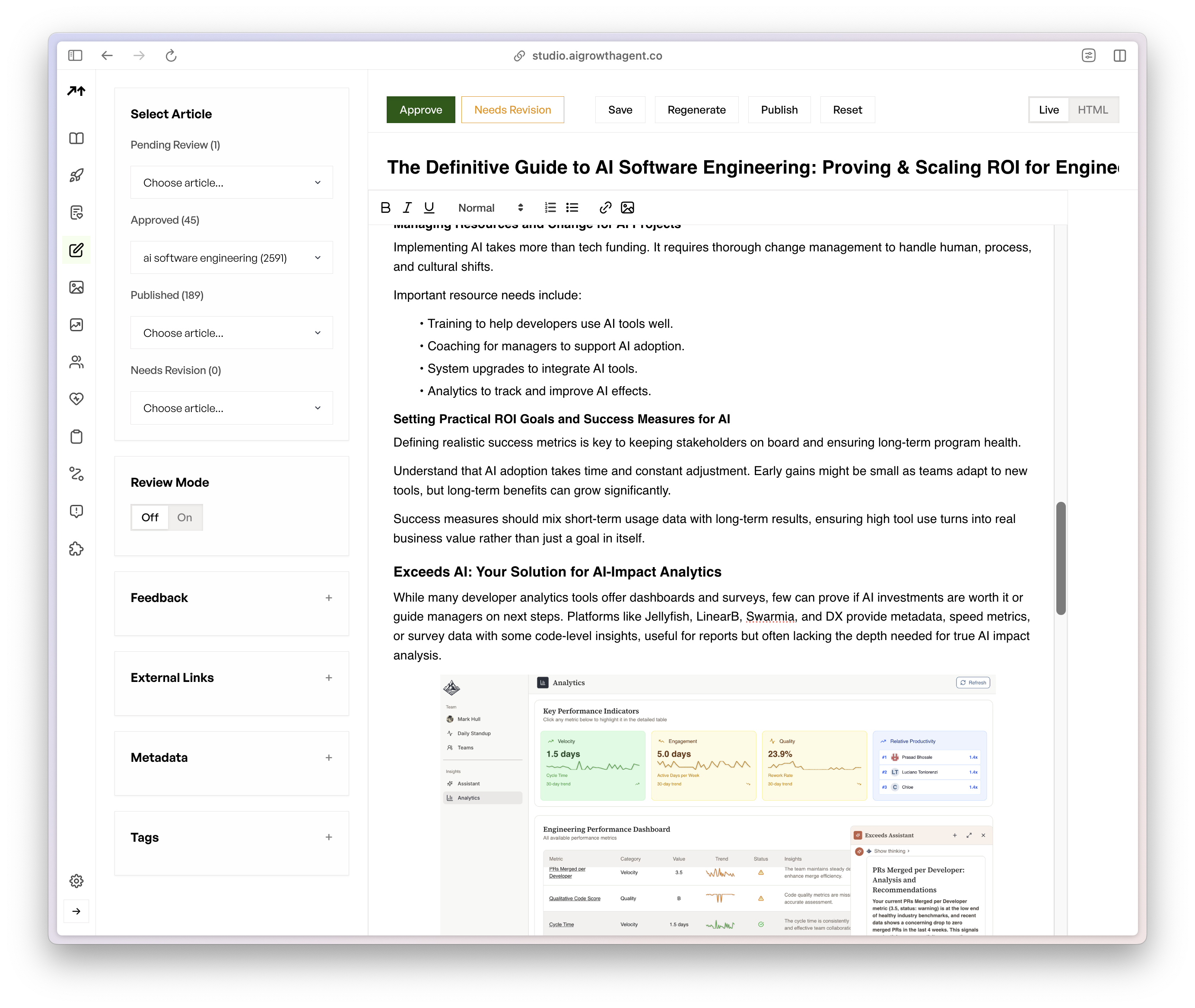
Third, teams launch programmatic content creation through AI Growth Agent’s autonomous pSEO system, which publishes high-authority articles with advanced schema markup, LLM.txt files, and Model Context Protocol implementation for stronger AI indexing. Fourth, they run continuous improvement loops where fresh monitoring data shapes the next wave of content, which creates speed advantages that manual workflows cannot match. This system explains how Gitar reached definitive authority status within two months. Schedule a demo to roll out the full GEO Stack Builder framework for your brand.
2026 GEO Trends and Fast-Start Implementation Checklist
Key trends include real-time content injection, multi-LLM optimization, and database-to-content automation. Marketing teams now respond to longer, more complex queries that demand structured, contextual content and natural language clarity. Multimodal search also pushes teams to format information with tables, lists, and structured data that AI systems can parse and reuse quickly.
Implementation steps include completing AI Growth Agent onboarding within one week, connecting to existing WordPress or Webflow systems, and setting up ROI tracking through Google Search Console plus citation monitoring. Teams then configure automated publishing workflows so new pSEO content ships on a consistent schedule. Core success metrics include higher citation frequency, measurable AI referral traffic growth, and visible displacement of competitors in AI-generated recommendations.
FAQ
What is AI search citation management?
AI search citation management covers tracking, analyzing, and improving your brand’s mentions inside AI-generated responses from ChatGPT, Perplexity, Google AI Overviews, and Claude. Teams monitor citation frequency, quality, and sentiment, then apply strategies that increase positive mentions through structured content and programmatic SEO. The goal is consistent inclusion when AI systems answer relevant queries.
What are the best free AI citation tracking tools?
Google Alerts offers basic mention tracking across public web content, while manual monitoring means running targeted prompts directly inside AI platforms. These options help individuals experiment with AI visibility at no cost. Free tools, however, lack full coverage, real-time updates, sentiment scoring, and competitive benchmarking, which professional marketing teams require for planning and reporting.
How does GEO differ from traditional SEO?
Generative Engine Optimization focuses on earning citations inside AI-generated answers instead of ranking on traditional search engine results pages. GEO emphasizes content freshness, depth, and structural clarity so AI models can parse and reuse information. Traditional SEO leans more on backlinks and domain authority, while GEO depends on programmatic content creation that keeps pace with AI demand for current, comprehensive sources.
How does AI Growth Agent ensure consistent citations?
AI Growth Agent pairs real-time monitoring with autonomous content creation through its programmatic SEO system. The platform tracks citation performance across major AI engines and publishes high-authority content with advanced schema markup, LLM.txt files, and Model Context Protocol implementation. This closed loop keeps new, AI-ready content flowing, which supports steady citation growth over time.
What are typical pilot implementation timelines?
AI Growth Agent supports rapid pilots, with onboarding usually completed within one week from initial consultation to the first programmatically engineered article. The rollout includes Company Manifesto development, keyword strategy design, technical setup, and pSEO Agent configuration. Most clients begin seeing initial AI citations within two to three weeks after content goes live.
Conclusion: Why AI Growth Agent Leads GEO in 2026
AI Growth Agent leads the citation management market by combining real-time monitoring with autonomous content creation in one platform. Monitoring-only tools reveal performance but cannot execute the content needed to change it at scale. Schedule a demo to see if you’re a good fit and upgrade your AI visibility strategy with a complete programmatic SEO solution built for 2026 and beyond.
