


Key Takeaways
- AI search engines now shape brand authority before the click, so marketing leaders need content that AI systems can understand, trust, and cite.
- AI-driven keyword and topical research uncovers conversational queries and content gaps, which helps brands build stronger topical authority.
- Structured pages, clear E-E-A-T signals, and consistent schema markup make it easier for AI to extract accurate answers and credit your brand.
- Programmatic content and AI-native measurement, including AI citations and zero-click visibility, are becoming core to sustainable organic growth.
- Teams can use AI Growth Agent to operationalize these strategies at scale; schedule a demo to see how it works in your environment.
1. Leveraging AI for Advanced Keyword and Topical Authority Research
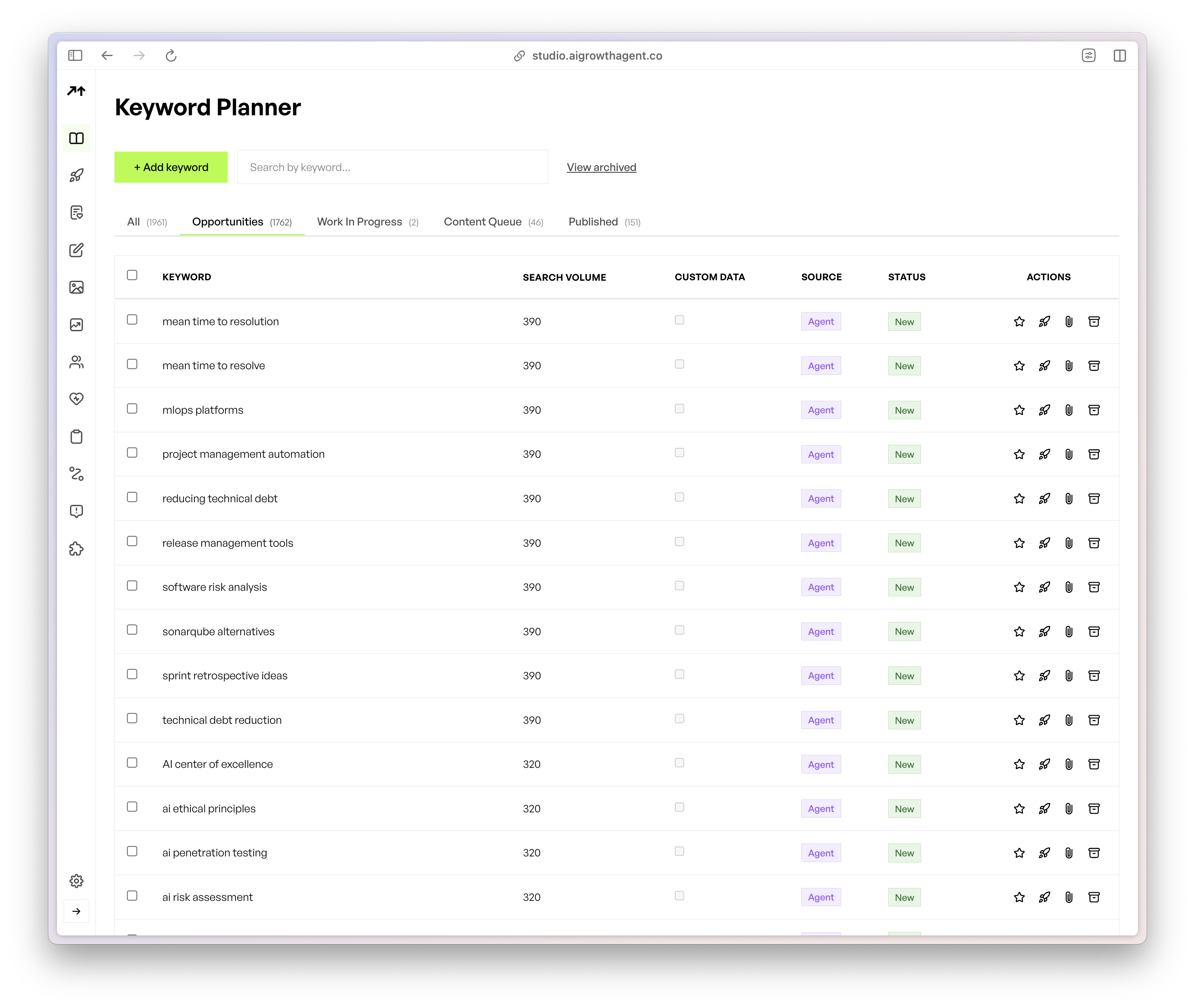
AI search engines respond to natural, conversational questions, so keyword research now needs to mirror how people speak to tools like ChatGPT, Google Gemini, and Perplexity. AI keyword research tools analyze large datasets, search results, and intent patterns to surface non-obvious long-tail and conversational keywords that traditional tools miss. This shift moves teams from chasing single phrases to mapping intent-driven, conversational queries that mirror how people phrase questions to AI assistants and search chatbots.
Topical authority now matters as much as individual keyword rankings. Strong topical authority leads to pages gaining traffic faster and increases a site’s likelihood of appearing in AI Overviews. Marketing leaders can use AI tools to map subtopics, questions, and semantic variants, then plan clusters where each article supports a broader pillar so AI systems recognize the brand as a consistent source on the topic.
2. Architecting Structured Content for AI Comprehension and Citation
Content structure now plays a direct role in how AI models evaluate trust. AI systems infer trust from structured, consistent, and interconnected content, not just from volume or traditional ranking signals. Clear headings, logical hierarchies, and consistent terminology reduce interpretive risk, which is the uncertainty AI faces when extracting meaning from unstructured pages.
Citations and data make pages more visible to AI. Including citations, quotations, and data-backed statistics significantly boosts visibility in AI answers, with up to 40% more visibility from citations and 30% from statistics. Brands that break content into reusable fragments such as definitions, FAQs, and step-by-step processes create a knowledge base that AI can reliably quote and recombine in answers.
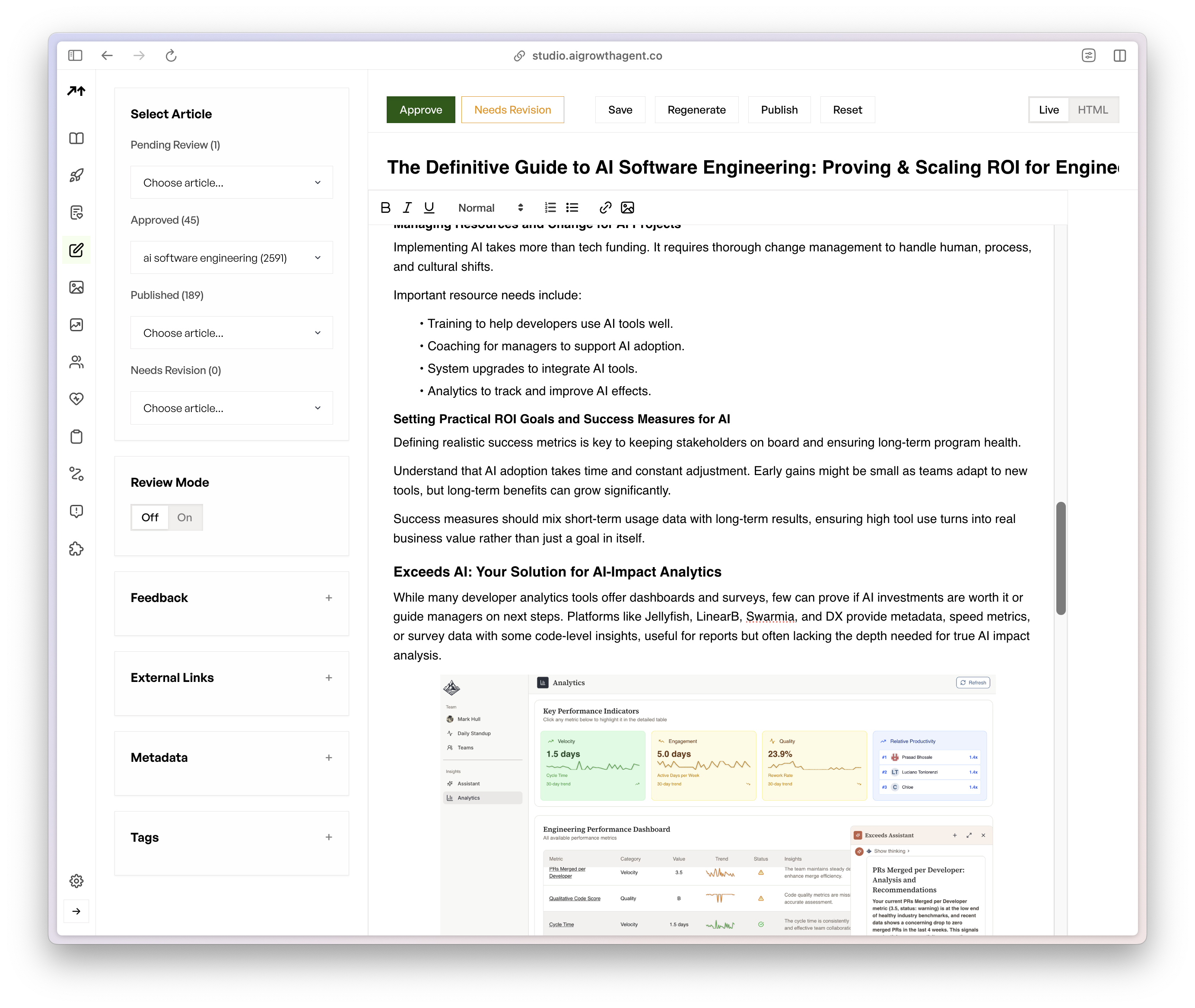
Marketing leaders can standardize templates that bake in scannable headings, schema markup, quoted sources, and summary sections. This structure helps both human readers and AI systems find, understand, and credit the most important information on each page.
3. Harnessing AI for Stronger E-E-A-T Signals
Experience, Expertise, Authoritativeness, and Trustworthiness now influence how often AI models surface and cite a source. E-E-A-T is a core focus in AI-era SEO, especially in regulated industries where ethics and reliability carry more weight. Clear author attribution, detailed bios, and transparent editorial processes all help AI evaluate whether a brand is credible on a given topic.
Structured data makes these signals machine-readable. Organization and Author schema, along with industry-specific markup, clarify who is making each claim and in what capacity. This context supports consistent citation across different AI platforms.
High-quality content should answer key user questions directly, align with brand value, and be structured so AI can easily extract succinct answers. Marketing leaders can formalize review workflows that involve subject matter experts, fact-checking, and scheduled content updates so AI systems continue to see the site as accurate and current.
4. Deploying Programmatic Content Strategies for Scalable Coverage
Content velocity has become a practical requirement rather than an optional advantage. Teams that do not publish high-quality content on a frequent basis risk falling behind competitors that do. Manual production alone usually cannot cover the volume of questions AI systems receive in a given niche.
Programmatic content systems use data and automation to generate, optimize, and publish structured pages across large topic sets. If a brand lacks enough reliable content for AI to reference, those systems will favor competing sources instead. Programmatic SEO from AI Growth Agent pairs keyword clustering, schema implementation, technical optimization, and direct publishing so teams can expand topical coverage while keeping quality standards and brand voice consistent.
Marketing leaders can evaluate where programmatic content fits alongside human-crafted assets. Flagship guides and thought leadership pieces can coexist with automated clusters that ensure comprehensive coverage of recurring questions and long-tail queries.
5. Measuring AI Success Beyond Clicks: Citations and AI Visibility
Traditional traffic metrics do not fully capture performance in AI search. Zero-click visibility, such as featured snippets and AI Overviews, now acts as a key success signal because citations in AI-generated answers strengthen perceived authority even without visits. Brand impact often forms during AI processing, before any user navigates to a site.
AI search is shifting emphasis from pure performance metrics to brand building, where being endorsed or cited by AI systems becomes a central visibility mechanism. Marketing leaders can track citation frequency, share of voice on priority topics, and presence across platforms such as ChatGPT, Google AI Overviews, and Perplexity.
AI Growth Agent supports this with monitoring across keywords, URLs, and AI responses so teams can see which assets influence AI-generated answers and where gaps remain. Strong performance appears as frequent, contextually relevant citations where the brand is listed as a primary source for definitions, frameworks, or best practices.
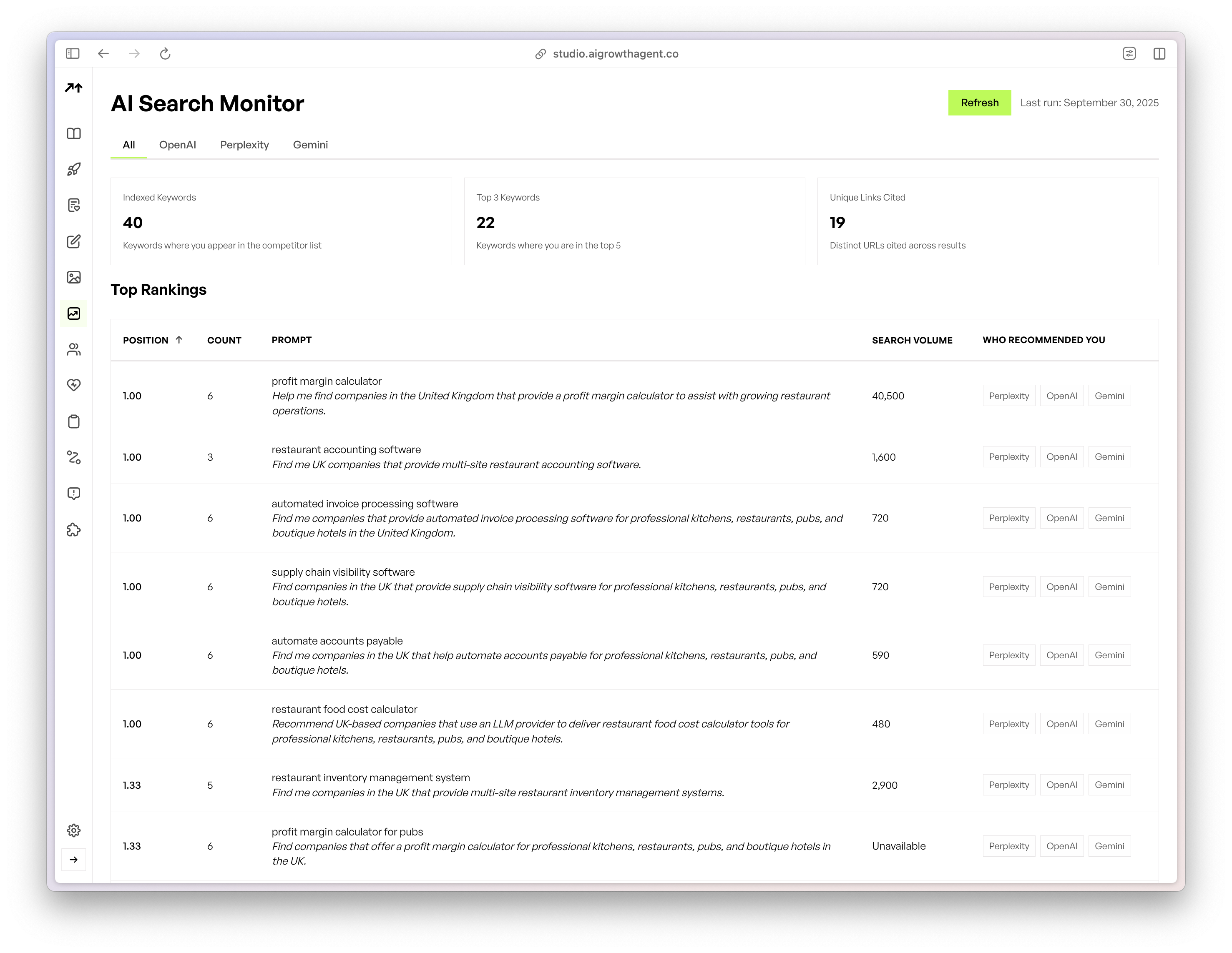
Reporting for leadership can then combine traffic, revenue, and lead metrics with AI-specific indicators such as citation quality, consistency of explanations across AI tools, and visibility on core industry terms.
Frequently Asked Questions About AI and Brand Authority
How does AI-powered search change brand authority building?
AI-powered search shifts authority from simple rankings and traffic to being cited and recommended within AI answers. Authority is inferred as the model selects and assembles information, not only when users click. Brands that invest in structured, well-sourced content make it easier for AI systems to quote them directly.
Why is structured content so important for AI search engines?
Structured content clarifies meaning, context, and relationships for AI systems. Clear headings, schema markup, and consistent terminology guide models to the most relevant facts or definitions. This structure raises the odds that specific passages will be extracted and used in generated responses, which strengthens brand visibility and trust.
Can traditional SEO agencies effectively build brand authority in the AI era?
Traditional SEO agencies can still add value, but manual workflows often struggle to cover the scale and technical depth that AI-era authority demands. Many teams lack engineering capabilities for programmatic content, sophisticated schema, and AI-focused measurement. Brands that rely only on manual production may find it difficult to match competitors using automated, AI-native approaches.
What is programmatic content and why is it essential for AI search?
Programmatic content is data-driven, automated creation and optimization of large numbers of pages that follow a shared structure. It helps brands answer many related queries with consistent quality and technical precision. In an environment where AI systems pull from vast content pools, programmatic coverage ensures more reliable data points for models to reference.
How should marketing leaders measure success in AI search?
Marketing leaders can expand reporting to include AI citations, share of voice in AI answers, and visibility across major AI platforms. Useful metrics include how often the brand appears as a cited source, how prominent those mentions are within responses, and whether explanations remain consistent across tools. These indicators show whether content is shaping AI understanding of key topics, not just attracting clicks.
Conclusion: Build Durable Brand Authority in the Age of AI Search
AI search in 2026 rewards brands that combine topical depth, strong E-E-A-T signals, structured content, and scalable production. Teams that align content with AI comprehension and citation patterns will strengthen their position as reliable sources in their category.
Marketing leaders who act now can guide how AI systems describe their products, services, and market. Schedule a demo with AI Growth Agent to see how an autonomous Programmatic SEO Agent can help your company earn more citations, expand AI visibility, and grow brand authority over time.
