


Key Takeaways
- AI-powered predictive analytics turn multi-channel behavioral data into specific topics, formats, and publishing schedules that match future audience demand.
- Competitive intelligence tools reveal content and intent gaps across the buyer journey, helping teams focus effort on high-value opportunities competitors miss.
- Strategic AI content briefs and programmatic content agents align research, drafting, and technical SEO so each piece strengthens topical authority for AI search.
- Real-time monitoring of AI search visibility creates feedback loops that guide continuous updates, technical fixes, and new content ideas.
- AI Growth Agent unifies these capabilities in a Programmatic SEO Agent built for AI search optimization, and you can schedule a consultation or demo to see how it fits your 2026 content strategy.
1. AI-Powered Predictive Analytics for Audience Behavior
Predictive analytics turns raw behavioral data into a forward looking content roadmap. Advanced AI content platforms ingest web analytics, CRM, social, and email data to predict audience preferences and guide strategic content planning.
Granular segmentation improves message fit. These systems group audiences by demographics, psychographics, behavioral patterns, and platform preferences, then align topics and angles to each segment. Predictive models forecast which topics, formats, and publishing times will perform best, moving content planning from reactive to proactive.
Continuous feedback loops keep the strategy aligned with emerging demand. Insights flow from data into research, briefs, and new content, then back into performance metrics. AI Growth Agent applies this approach through programmatic research workflows that surface high potential topics and queries before they peak.
2. AI-Driven Competitive Intelligence and Content Gap Analysis
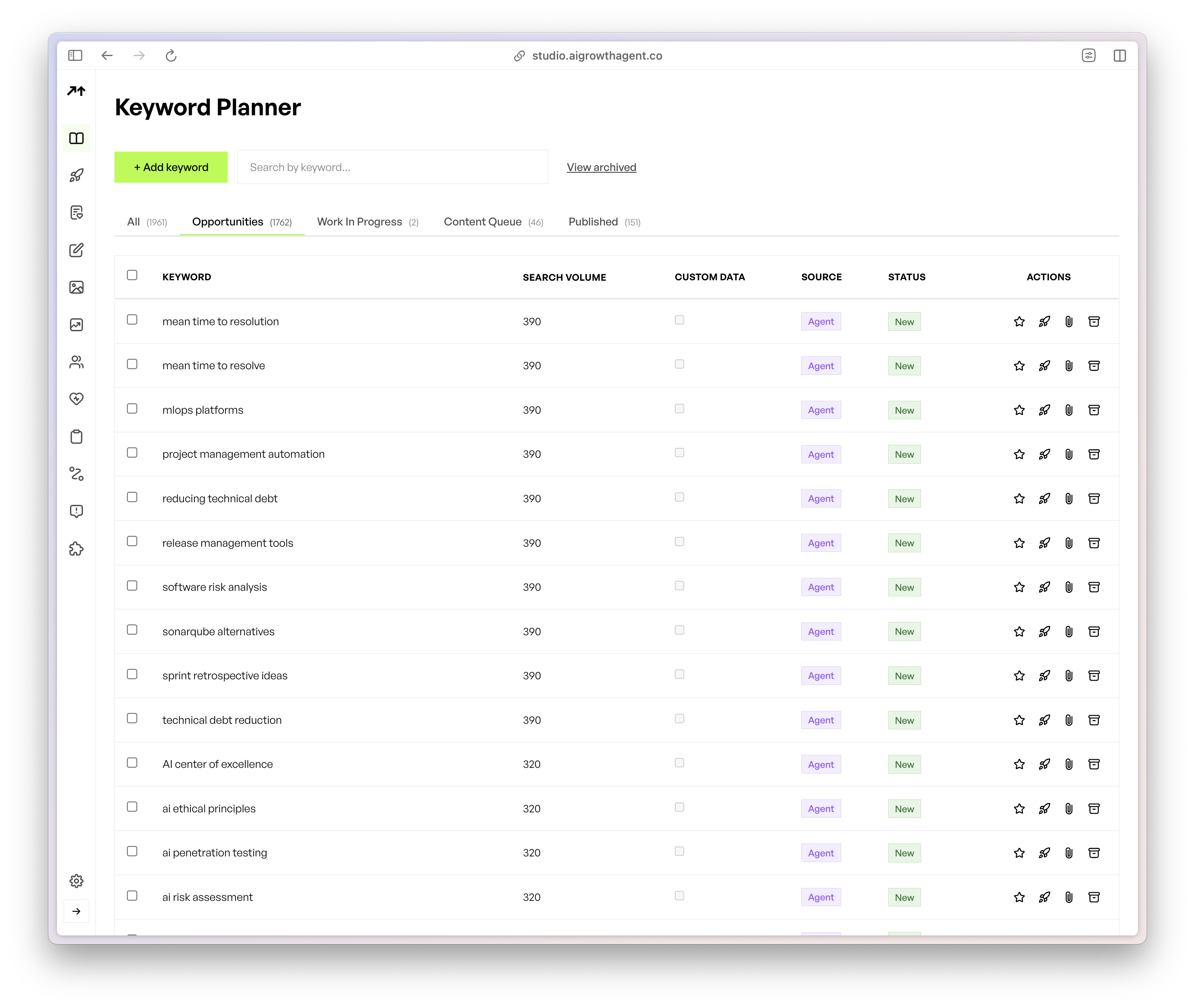
Competitive intelligence tools reveal where competitors under-serve the market. Advanced AI systems analyze large volumes of competitor content to uncover keyword and topic gaps, turning raw data into actionable content plans built around unmet user needs.
Gap analysis highlights the most efficient areas to invest. AI powered competitive intelligence combines content gap analysis, quality gap assessment, and format gap analysis to identify high value opportunities across informational, transactional, and commercial investigation stages.
Intent mapping supports the conversational nature of AI search. These platforms surface chains of related questions and follow ups that users expect AI assistants to handle across multi step journeys. AI Growth Agent uses similar large scale keyword and topic evaluation to identify white space and build topical authority across clusters, not single queries.
3. Strategic AI Content Briefing and Authority Engineering
High quality briefs connect strategy to execution. Advanced AI content briefs embed semantic coverage, topical authority modeling, and competitive analysis into structured guidance that goes beyond simple outlines.
Clear structure improves both depth and consistency. Stronger briefs specify subtopics, questions to answer, internal and external linking, and expected depth, while also defining tone and audience. Integration with content and topical authority scores helps teams prioritize briefs that will most improve the portfolio.
Authority engineering focuses on complete topic coverage rather than copying competitor headings. AI Growth Agent’s Programmatic SEO Agent generates detailed briefs for each asset so writers or agents can build content that matches AI search expectations and reinforces broader topical authority.
4. Programmatic Content Generation and Technical Optimization Agents
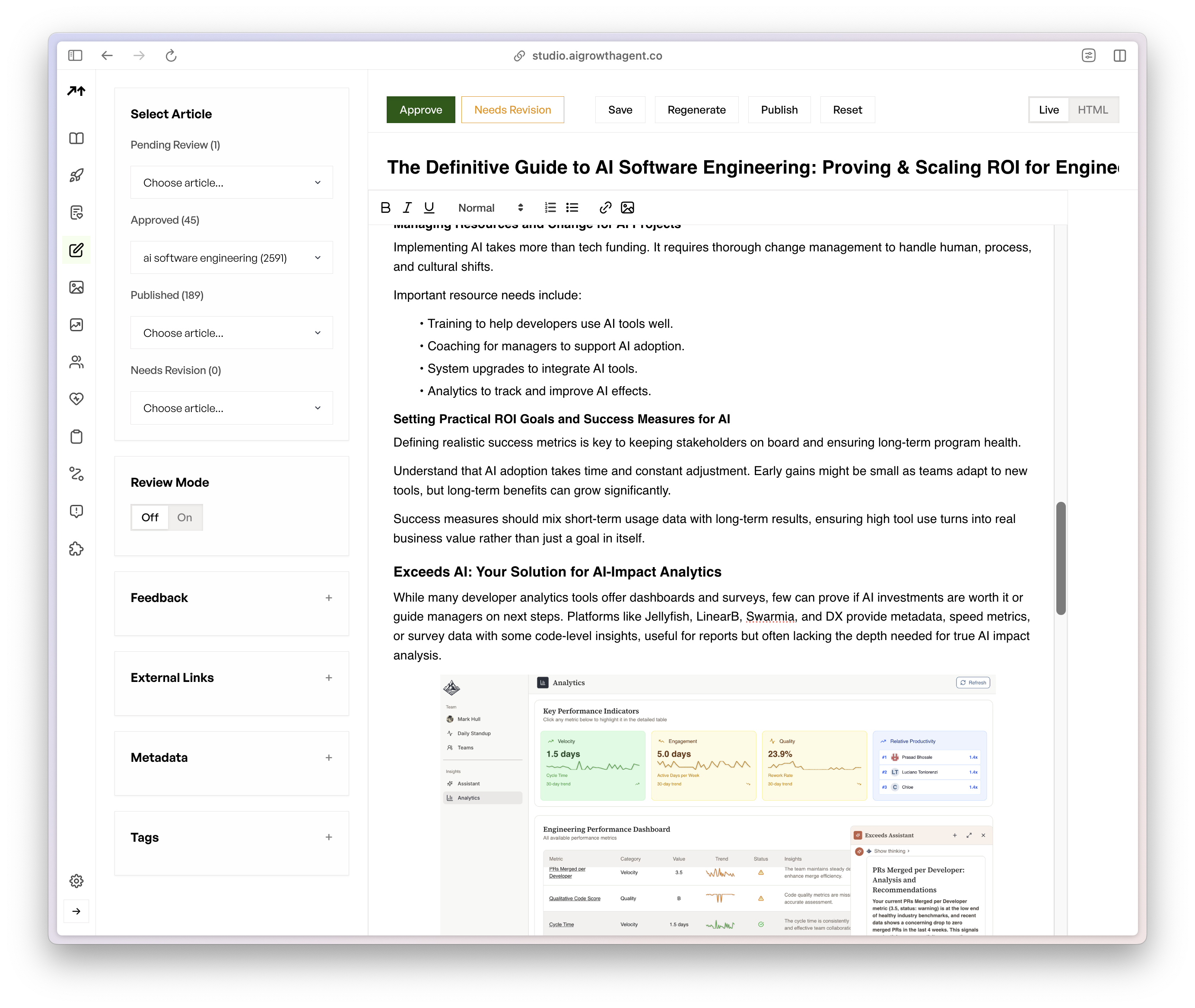
Programmatic content agents manage the full content engineering lifecycle. These systems handle strategy execution, research, drafting, fact checking, and technical optimization for each piece, with consistent quality controls.
Technical optimization plays a specific role in AI visibility. Advanced agents implement schema markup, metadata, and optimized image tags, and can generate LLM.txt files and Model Context Protocols that help AI systems interpret and retrieve content with greater accuracy.
AI Growth Agent provides a Programmatic SEO Content Agent that executes research, drafting, review, and technical engineering with minimal manual effort. Every asset leaves the system with a complete set of technical SEO elements, which supports scalable architecture and clearer indexing for AI and traditional search.
5. AI-Powered Real-time Performance Monitoring and Feedback Loops
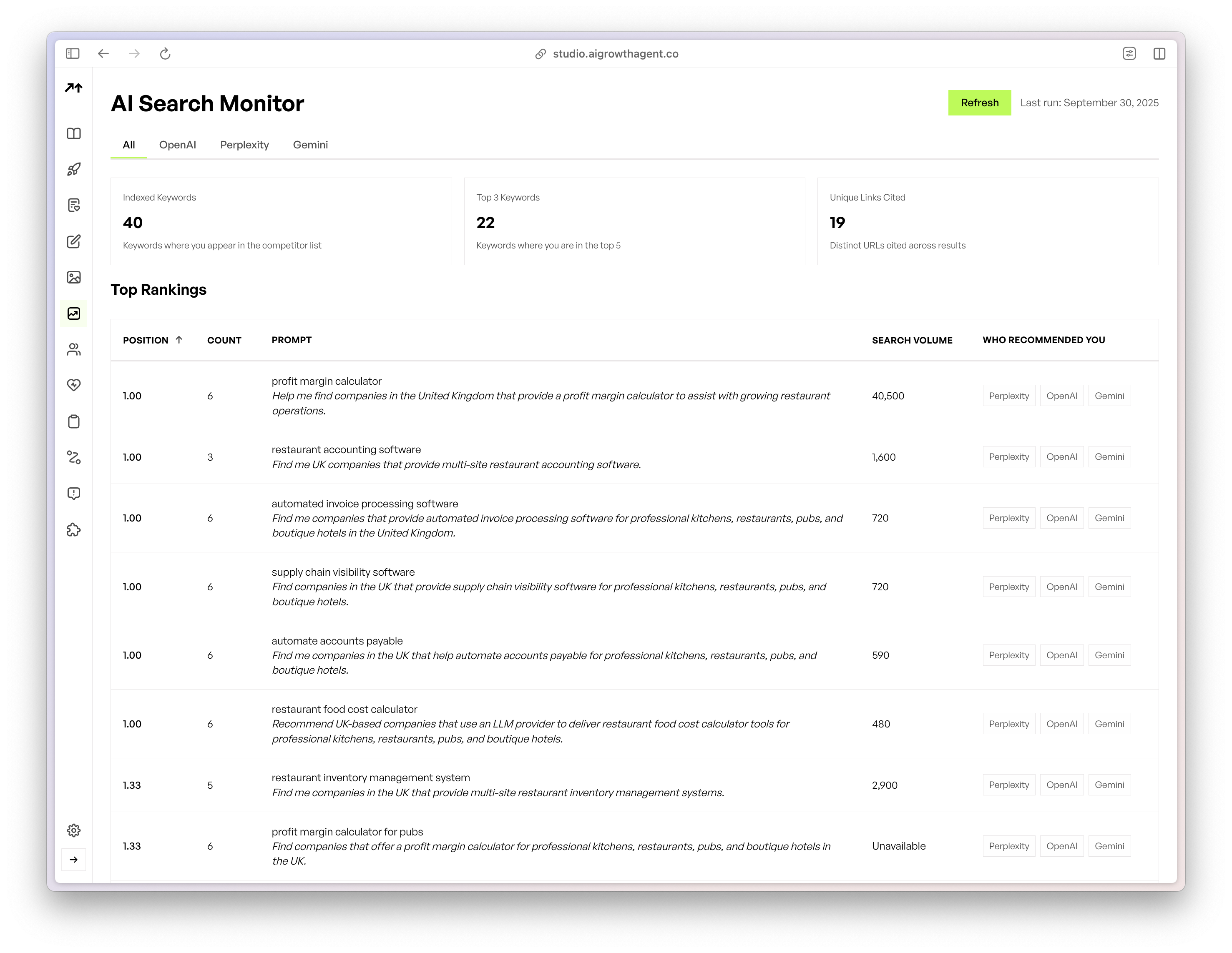
Real time monitoring clarifies how content performs in AI driven environments. Advanced platforms track how pages surface in tools like ChatGPT, Google AI Overviews through Gemini, and Perplexity, including specific URLs and citations that appear in AI responses.
Operational analytics link AI visibility to broader performance. Monitoring often includes crawl statistics for AI bots and data from Google Search Console, connecting AI citations to changes in organic traffic and engagement.
Continuous feedback loops turn this data into updates, new briefs, and new content. The AI Growth Agent Studio includes an AI Search Monitor and feedback system that provides keyword indexing heatmaps, citation tracking, and performance analytics across major AI platforms.
Frequently Asked Questions
How do advanced AI tools for content dominance differ from basic writing assistants?
Advanced AI tools for content dominance connect strategy, production, optimization, and monitoring in a single workflow. Basic writing assistants focus on text generation, while advanced platforms support keyword research, content planning, technical SEO, and performance analysis for AI search. AI Growth Agent follows this model with a Programmatic SEO Agent that manages work from topic discovery through implementation and tracking.
How do AI tools establish topical authority for content dominance?
AI tools establish topical authority by mapping topic clusters, semantic relationships, and content gaps within a domain. They guide creation of content that covers related subtopics, addresses key questions, and links assets together in a structured way. This approach signals expertise to AI search systems and increases the likelihood that assistants will cite the brand as a reliable source.
How do AI tools predict audience intent for strategic content planning?
Advanced AI platforms analyze behavioral data and query patterns to classify audience intent across the funnel with greater precision than manual methods. This understanding supports content that answers initial queries and natural follow up questions, which improves engagement and strengthens citation potential in conversational AI search experiences.
What is the role of technical optimization in AI-powered content dominance?
Technical optimization ensures that AI and traditional search engines can understand and retrieve content accurately. Modern systems need metadata, schema markup, clear internal linking, and structured files such as LLM.txt or Model Context Protocols to interpret context. Advanced AI tools automate much of this implementation, which makes it easier to scale content that AI systems can index and reference.
How do real-time monitoring capabilities support ongoing content strategy?
Real time monitoring shows which content assets drive visibility, citations, and traffic, and which assets stall. Teams can use this data to adjust briefs, expand sections, update outdated information, or improve technical elements. The continuous feedback from AI Growth Agent’s monitoring tools helps keep strategies aligned with changing AI search behavior.
Conclusion: Why Programmatic Systems Drive Content Dominance In 2026
AI powered search in 2026 favors brands that operate content as an integrated system, not a series of isolated articles. Manual processes and basic writing tools struggle to keep up with the speed, breadth, and technical requirements of AI driven discovery.
The five tool categories described here, predictive analytics, competitive intelligence, strategic briefing, programmatic generation, and real time monitoring, work best as connected components. Together they support ongoing topic discovery, efficient production, consistent technical quality, and data driven improvements.
AI Growth Agent brings these capabilities into a single Programmatic SEO Agent focused on AI search optimization. The platform helps brands build durable authority in their categories and maintain visibility as AI assistants evolve.
