


AI search engines such as ChatGPT, Google AI Overviews, and Perplexity are changing how B2B buyers discover vendors, which increases pressure on marketing teams to scale high-quality content efficiently.
Most organizations have not integrated AI into daily marketing operations, so teams that adopt structured, programmatic approaches can gain an early visibility advantage in AI search. What you’ll learn in this article:
- Strategic AI writing tools support five core use cases: programmatic content architectures, automated technical SEO, rapid content injection, proprietary data activation, and multi-tenant deployment.
- These capabilities help B2B brands publish interconnected, technically optimized content at scale, increasing the likelihood of citations and recommendations from AI search systems.
- AI Growth Agent provides a programmatic SEO platform that focuses on technical completeness, content architecture, and AI search alignment for B2B organizations.
Schedule a demo to see if you’re a good fit for AI Growth Agent’s programmatic SEO approach that helps position your company as a trusted authority in your category.
1. Programmatic Content Architectures for Enhanced AI Search Visibility
Building Authority with Programmatic Content Structures
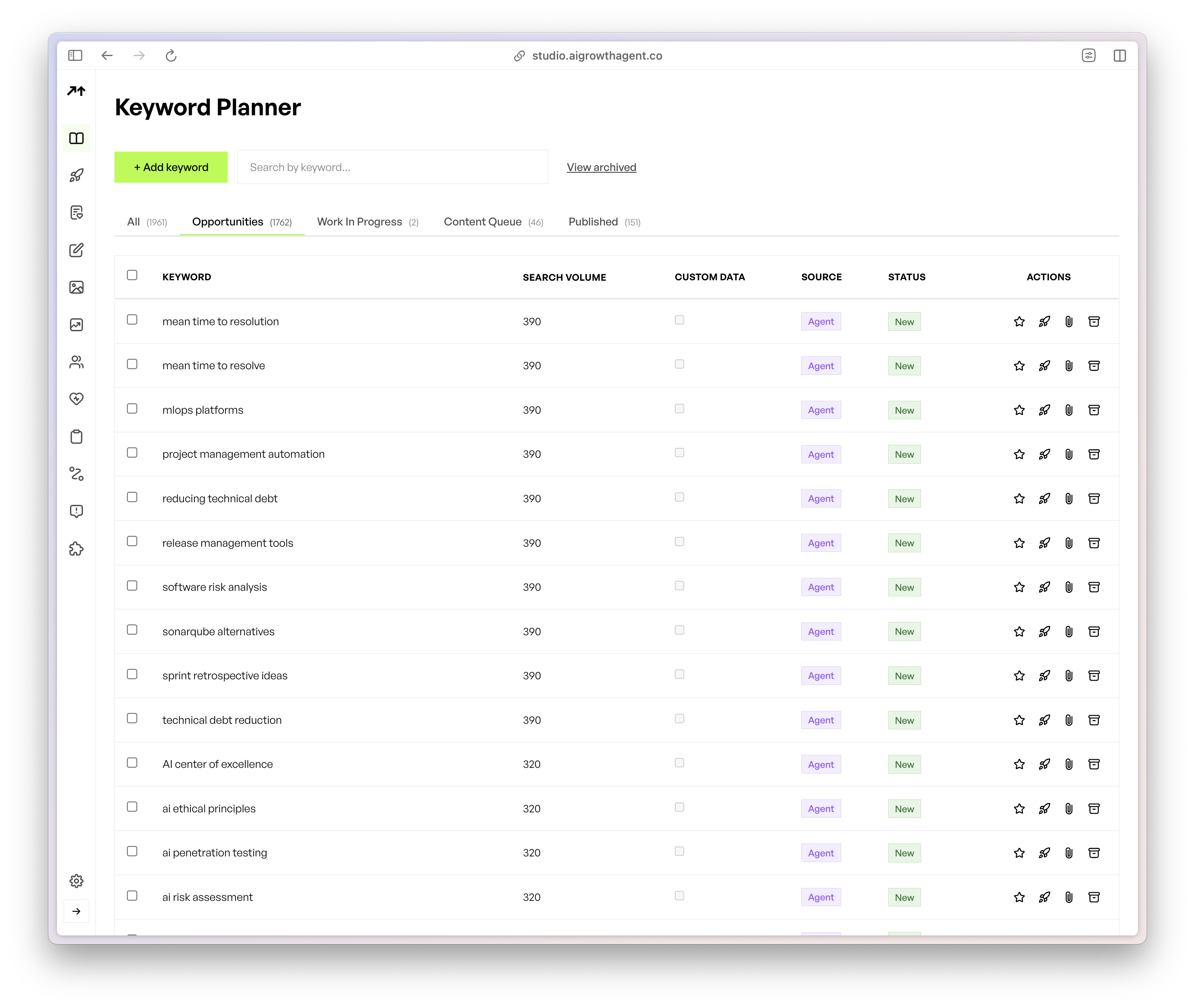
The shift from manual keyword targeting to programmatic content creation has become a key development in B2B marketing strategy for the AI search era. Advanced AI writing tools support the creation of interconnected content architectures, including pillar pages, topic clusters, and resource libraries that are structured for AI search engine indexing. Traditional content methods tend to produce isolated articles, while programmatic architectures create semantic relationships between pieces, so your brand can present as a comprehensive resource on complex B2B topics.
The competitive advantage becomes clearer when you consider current adoption rates. Only 19% of organizations have successfully integrated AI into daily marketing processes, which gives early adopters of programmatic content strategies room to stand out.
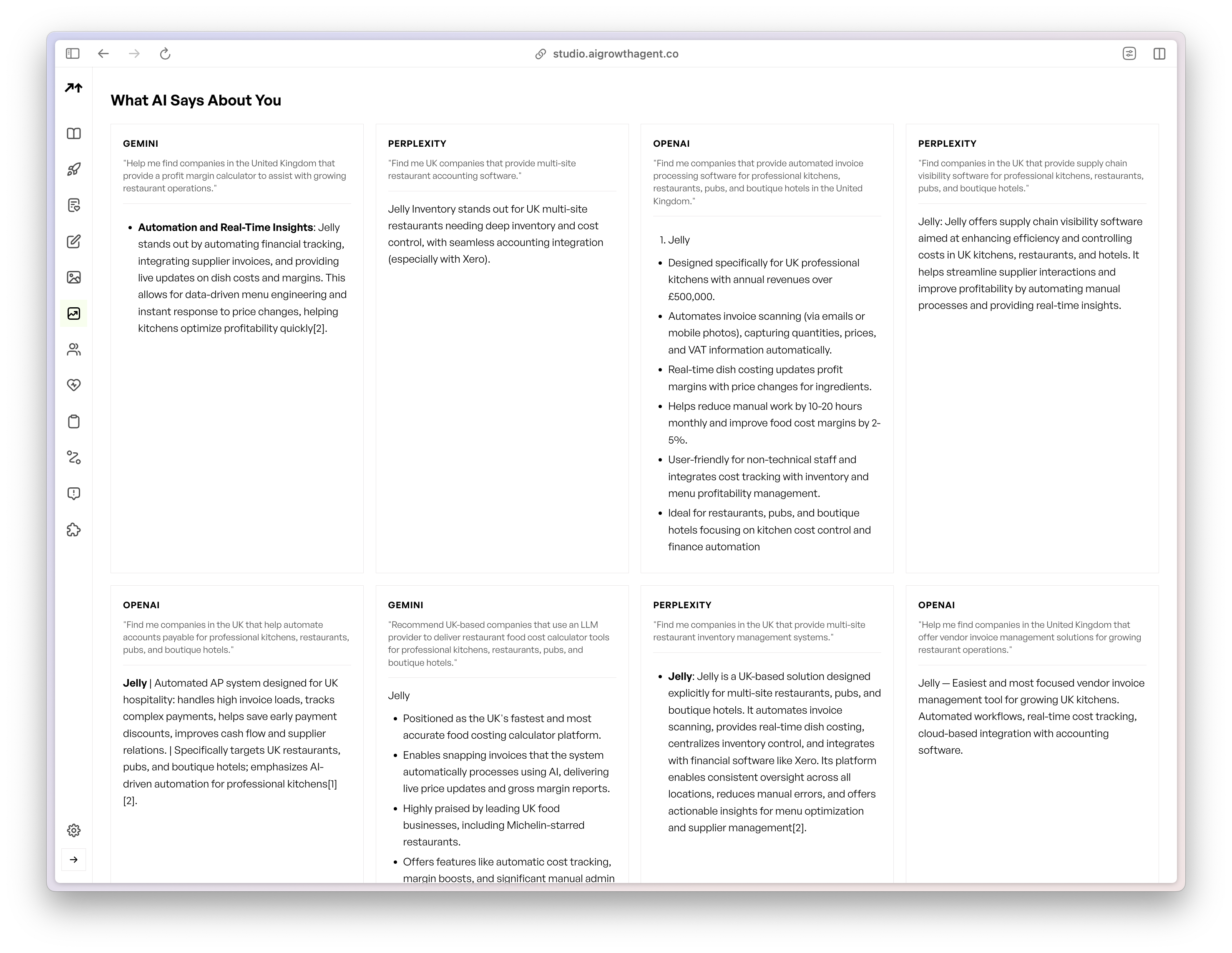
AI search engines such as ChatGPT and Google AI Overviews favor content libraries that show depth and coverage across topic categories. When your content addresses the main questions, use cases, and edge cases in your industry with structured coverage, your brand has a higher chance of being treated as a useful source by AI systems.
The technical foundation of programmatic content architectures extends beyond text production. These systems organize content so it aligns with large language models through structured data and deliberate topic relationships. AI Growth Agent builds structured content architectures that help position companies as credible voices in their markets and increase their chances of citation by AI search engines through advanced programmatic SEO protocols.
2. Automated Technical SEO for Improved AI Indexing
Beyond Keywords: Engineering Content for LLM Understanding
Strong AI search visibility depends on technical SEO elements that help large language models interpret and retrieve your content, not just on traditional keyword optimization. More B2B marketers now prioritize AI for content strategy and focus on programmatically generating high-value assets like pillar pages and whitepapers, yet many teams lack the technical skills to engineer content for AI indexing.
Advanced schema markup, rich metadata, LLM.txt files, and Model Context Protocols (MCP) now function as core requirements for content that aims to earn consistent AI citations.
Many content tools do not address this technical layer. They may create quality drafts but leave gaps in schema injection, metadata optimization, and publishing workflows.
Generic AI writing tools such as ChatGPT can support ideation and drafting, but they typically require additional manual work for technical implementation. Marketing teams then carry the burden of configuring structured data and managing CMS workflows, which slows execution and limits AI search impact.
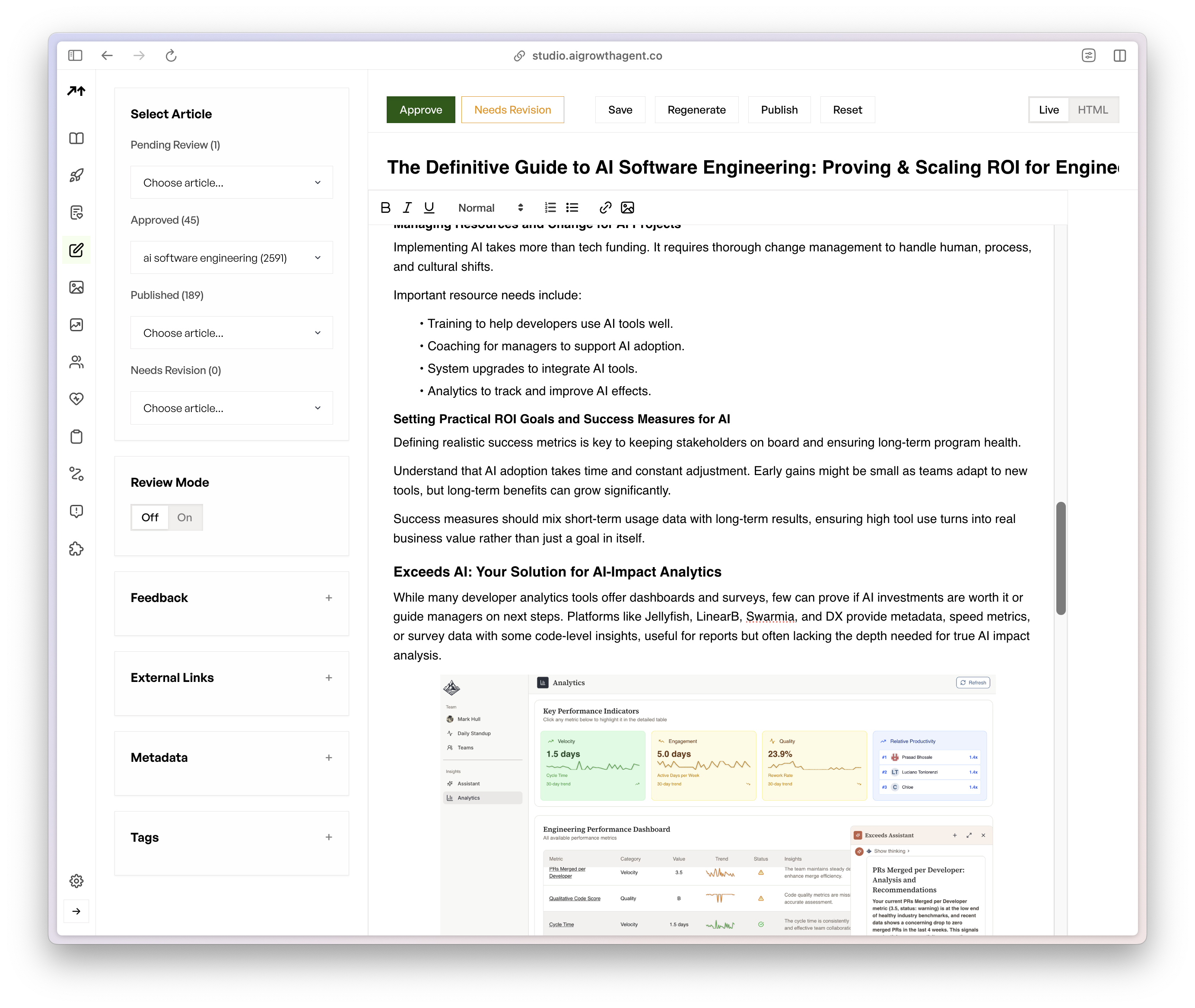
AI writing tools that embed technical SEO automatically can close this gap. AI Growth Agent decorates every post with advanced technical SEO elements, including schema markup, metadata, and optimized image tags, as part of the publishing workflow.
The platform uses an LLM.txt implementation and a blog Model Context Protocol (MCP) so AI search engines can interface directly with your blog database and interpret your content with greater clarity, which supports AI search visibility across platforms such as ChatGPT, Google AI Overviews, and Perplexity.
3. Rapid Programmatic Content Injection for Timely Authority
Capturing Trending Search Volume with AI Velocity
Speed to publish now plays a central role in how B2B brands earn visibility for emerging topics in AI search. Adaptive content strategies powered by AI help marketers respond quickly to trending topics and industry news, giving audiences fresh and timely insights. Large language models favor sources that combine recency, depth, and structural consistency, so the pace of content creation affects how often your brand appears in AI-generated answers.
Traditional content timelines, where brands release one or two manually crafted articles each month, rarely meet this standard. Industry news, regulatory announcements, market swings, and new technologies create short windows of search interest. B2B brands that can generate search-optimized content on these topics within hours or days are more likely to appear in both traditional and AI-driven search results.
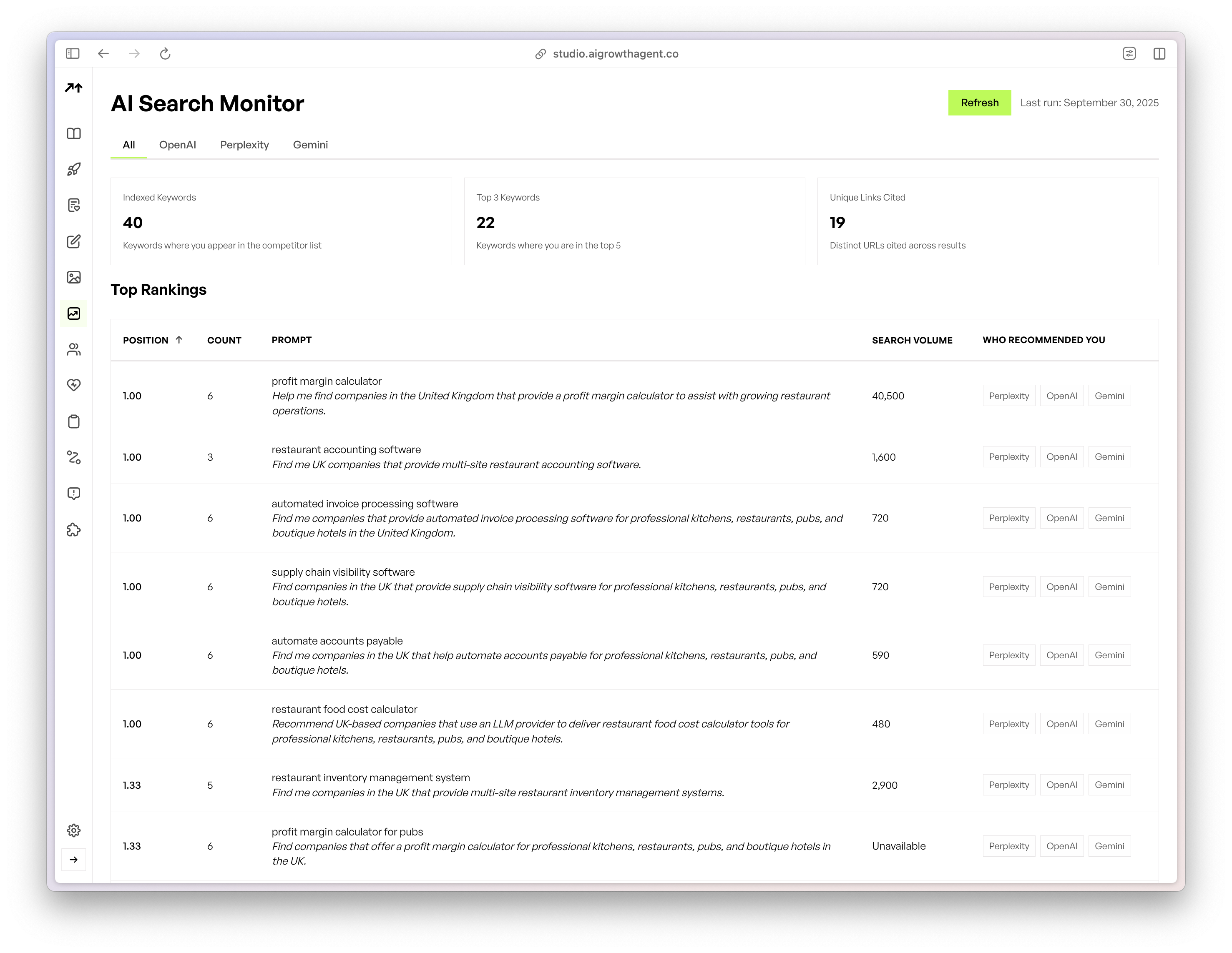
Effective execution depends on AI writing tools that can turn external triggers, such as trending news articles or industry reports, into optimized content assets that reflect your brand’s perspective. AI Growth Agent offers Real-Time Programmatic SEO Content Injection. You provide a link to a relevant news article, and the system generates an SEO-optimized article that incorporates your brand’s stance, helping position you as a timely resource in AI search results.
Schedule a consultation session to learn how AI Growth Agent’s real-time content injection can support your coverage of breaking industry topics.
4. Transforming Proprietary Data into Programmatic Content
Unlocking Insights and Building Unique SEO Assets
Proprietary data and internal insights can create durable advantages in AI search when converted into structured content. AI-driven personalization has been linked to revenue lifts of up to 15% and marketing ROI gains of up to 30% when organizations use their data effectively. The same principle applies to content strategy. Proprietary data enables content that speaks precisely to target segments and is difficult for competitors to copy.
Many B2B organizations hold valuable data in internal tools and documents that AI search engines cannot access directly. Product catalogs, performance analytics, customer success metrics, and research findings can become SEO-rich articles, guides, and resources when structured properly. These assets show your unique expertise on narrow topics and can increase the likelihood that AI systems surface your brand when buyers explore related questions.
The main challenge is turning complex data sets into accurate, engaging, and search-optimized content at scale. AI Growth Agent provides Database-to-Content Automation to address this need. The platform converts structured data into programmatic content assets that highlight your expertise and expand your content footprint. One client, for example, converted an offline food recommendation dataset into SEO-focused articles such as “best bagels in New York,” which created targeted, query-level coverage from their proprietary information.
5. Multi-Tenant Programmatic Deployment for Enterprise-Level Scale
Managing Diverse Brand Voices Across AI Search
Enterprise organizations, private equity firms, and multi-brand companies need consistent authority for multiple brands while preserving the distinct positioning of each. AI agents can manage outreach, prioritize demand, and engage accounts at scale, leaving humans to focus on strategic or complex situations. Similar principles apply to content operations for portfolios with several brands and audiences.
Conventional content approaches often struggle at this scale. Each brand or product line may require its own team, which strains resources and leads to inconsistent execution. Teams that use generic AI tools across brands often end up with similar-sounding content that does not reflect unique value propositions. Integrating AI into existing workflows also requires change management and new skills for marketers, so centralizing capabilities while preserving brand differences can simplify adoption.
AI writing platforms that support multi-tenant deployment help meet this need. AI Growth Agent supports multiple Programmatic SEO Content Agents that run in parallel. Each agent maintains its own manifesto, keyword strategy, and brand voice while publishing to distinct domains or subdomains from a shared interface. This structure gives enterprise teams a way to scale content for complex brand portfolios while pursuing AI search authority for each brand’s category.
Comparison: Strategic AI Writing Tools vs. Generic Content Solutions
|
Capability |
Strategic AI Writing Tools |
Generic AI Tools |
Traditional Agencies |
|
Content Output |
Fully engineered, schema-rich web pages |
Text drafts often requiring additional formatting |
Manual, limited volume |
|
Technical SEO |
Automated schema, LLM.txt, MCP |
Manual implementation often required |
Basic optimization |
|
Scalability |
Programmatic, high capacity |
Manual oversight required |
Human resource constraints |
|
AI Search Optimization |
Designed for AI citation potential |
Limited AI search focus |
Traditional SEO approach |
The Competitive Advantage of Programmatic AI Writing for B2B Marketing
Strategic AI writing tools improve more than content production efficiency. AI systems support faster, more scalable production of long-form content and campaign assets, which can raise both content volume and precision for B2B teams. This blend of scale and accuracy helps brands cover broader topic areas while staying aligned with buyer needs.
Recent data underscores the importance of this shift. AI-driven personalization has been associated with reduced acquisition costs of up to 50%, revenue gains of up to 15%, and marketing ROI improvements of up to 30%. Adoption levels remain relatively low, so organizations that operationalize programmatic AI writing may gain early advantages in AI search visibility and lead generation.
A complete strategy extends beyond isolated content use cases. AI tools help teams manage data overload, limited resources, and the need to respond quickly to buyer questions and market changes. Platforms that integrate programmatic content creation, automated technical optimization, rapid response capabilities, proprietary data transformation, and multi-tenant deployment give B2B marketers a more resilient foundation for competing in AI-driven search.
Implementation Strategy for AI Search Impact
Effective use of strategic AI writing tools starts with a clear implementation plan. Marketers gain better outcomes when they prioritize high-impact AI applications, test carefully before full rollout, and combine AI insights with human creativity. This approach supports measurable ROI and reduces execution risk.
The technical foundation should focus on AI search optimization. Content needs advanced schema markup, metadata, and structural elements that AI search engines can parse and index consistently. Organizations benefit from platforms that automate these requirements, which removes manual bottlenecks and makes it easier to maintain programmatic publishing velocity.
Content architecture work should start with structured keyword research and topic clustering to uncover opportunities for category authority. Successful teams invest in interconnected content ecosystems that show expertise across their main industry segments. Over time, this type of architecture can increase both AI citation potential and traditional SEO performance as content volume and internal links grow.
Schedule a demo to see if you’re a good fit for AI Growth Agent’s programmatic SEO approach that automates technical complexity while supporting AI search authority for your B2B brand.
Frequently Asked Questions
How do AI writing tools help B2B marketers build authority in AI search engines?
AI writing tools with programmatic capabilities help B2B marketers build authority by generating high-volume, technically optimized content that aligns with AI search engine indexing requirements. These tools support structured content architectures that display expertise across important industry topics.
When AI search engines such as ChatGPT, Google AI Overviews, and Perplexity evaluate sources, they tend to favor brands with extensive, well-organized content libraries. Advanced platforms also ensure that content includes technical elements such as schema markup and LLM.txt files, which support more reliable indexing by AI systems.
What distinguishes “programmatic content strategy” from traditional AI content creation?
Programmatic content strategy focuses on autonomously creating and publishing interlinked content architectures based on keyword research and user intent analysis. The goal is to optimize content at scale for AI search visibility. Traditional AI content creation often centers on one-off articles that still require manual oversight for research, optimization, and publishing.
Programmatic strategies automate more of the lifecycle, from topic selection through technical SEO and scheduling. This structure allows teams to build topic clusters and pillar pages that establish authority across categories, including schema and metadata work that is difficult to replicate at scale with manual workflows.
Can basic AI content tools like ChatGPT optimize for AI search visibility?
Basic AI tools such as ChatGPT can support drafting and ideation, but often have limits when it comes to full AI search optimization. They usually require additional manual effort for keyword research, technical SEO, formatting, and publishing.
AI search engines place more weight on content that includes structured data, updated metadata, and consistent coverage of related topics. Reaching that level of completeness typically calls for a platform that turns strategy into fully optimized web pages rather than only generating text.
What are the primary challenges when integrating AI writing tools into existing B2B marketing workflows?
B2B marketers often face learning curves, change management, and tool selection challenges when adding AI writing tools to existing workflows. Many teams feel uncertain about which capabilities matter most for AI search optimization, which can slow adoption. Implementation also involves training, establishing quality standards, and maintaining brand voice across content produced with AI support.
Technical integration can be difficult when tools require manual CMS configuration and multi-step publishing. Platforms that offer end-to-end automation, paired with training and a phased rollout, tend to reduce these obstacles.
How does programmatic AI writing drive measurable ROI in B2B marketing?
Programmatic AI writing can contribute to ROI by increasing content output without a proportional rise in headcount or agency spend. A broader, better-structured content footprint can support organic traffic growth, pipeline creation, and a stronger presence in AI-generated answers.
Cost efficiency improves when automated systems handle repetitive work such as formatting, internal linking, and technical SEO. Consistent visibility in both search and AI-generated results also supports sales teams with better-qualified inbound interest and content that reinforces expertise during the buying process.
Conclusion: The Future of B2B Content Is Programmatic and AI-Driven
The rise of AI search engines is pushing B2B marketers to move beyond traditional, article-by-article content approaches. The five applications covered here, including programmatic content architectures, automated technical SEO, real-time content injection, proprietary data activation, and multi-tenant deployment, provide a framework for building durable authority and aiming for consistent AI citations.
Current adoption data suggests that many organizations are still early in their AI journeys. Teams that build programmatic strategies now can combine technical depth, content scale, and AI search optimization in ways that are difficult to match with manual methods alone.
AI Growth Agent focuses on this shift by providing automated content and ranking technology that supports category authority and AI search citations. The platform is built to reduce technical friction while giving B2B brands the scale and structure needed to appear in AI search results across systems such as ChatGPT, Google AI Overviews, and Perplexity.
Schedule a consultation session to explore how AI Growth Agent’s programmatic SEO technology can help your brand build authority in its category and improve its presence in AI-driven search.
