


Key takeaways from this article:
- AI-powered search engines such as ChatGPT, Google AI Overview via Gemini, and Perplexity now act as primary discovery tools, so content needs to be engineered for how these systems crawl, index, and cite information.
- Advanced AI writing tools enable high content velocity and technical optimization at scale, which helps brands stay visible as AI systems prioritize recency, depth, and consistent structure.
- Programmatic keyword research and topic clustering build semantic authority across entire domains, improving the likelihood that AI search engines will reference a brand as an expert source.
- Consistent, high-quality publishing helps a business control its brand narrative in AI search, limiting the risk that competitors become the default cited source for key topics.
- End-to-end automation across research, writing, technical SEO, publishing, and monitoring turns content operations into a repeatable system with measurable AI citation and traffic outcomes.
- Businesses that adopt programmatic AI writing tools can create engineered, AI-ready content at scale, improving authority signals across both traditional search and AI-driven search experiences.
AI-powered search has changed how authority is built and maintained online. The following sections outline how advanced AI writing tools help businesses adapt, from content velocity and technical optimization to semantic authority, brand narrative control, and full lifecycle automation.
To turn more AI queries into citations for your brand, schedule a consultation session with AI Growth Agent and assess whether the Programmatic SEO Agent aligns with your growth goals.
1. Achieving High Content Velocity with Programmatic AI Writing Tools
The new reality: AI search rewards volume and recency
AI-powered search engines such as ChatGPT, Google AI Overview via Gemini, and Perplexity place strong weight on content volume and recency when selecting sources to cite. The relationship between businesses and search has shifted from manual keyword targeting to programmatic content that demonstrates consistent authority and earns citations within large language models (LLMs).
Digital footprints shrink when content output does not keep pace with the volume of new material AI systems ingest. As AI accelerates information creation, brands that do not publish high-quality, technically optimized content on a frequent schedule see their presence dilute in AI search results. Programmatic velocity has become the baseline for staying technically relevant.
LLMs favor three factors in particular: recency, depth, and structural consistency. Publishing one or two manually crafted posts per month rarely sustains visibility in AI search. The volume of AI-generated content continues to grow, so brands without high-velocity publishing strategies risk becoming difficult for AI indexers to surface.
Programmatic speed vs. manual limitations
Traditional SEO agencies and internal marketing teams often rely on a manual craftsman model. This model tends to be slow and expensive, and it usually lacks the engineering resources needed to implement true programmatic SEO at scale for AI search.
Advanced AI writing tools address this constraint by enabling businesses to publish high-quality, technically optimized content at a pace that manual methods struggle to match. These systems extend beyond simple text generation and create fully engineered web pages that include schema markup, metadata optimization, and technical SEO implementations.
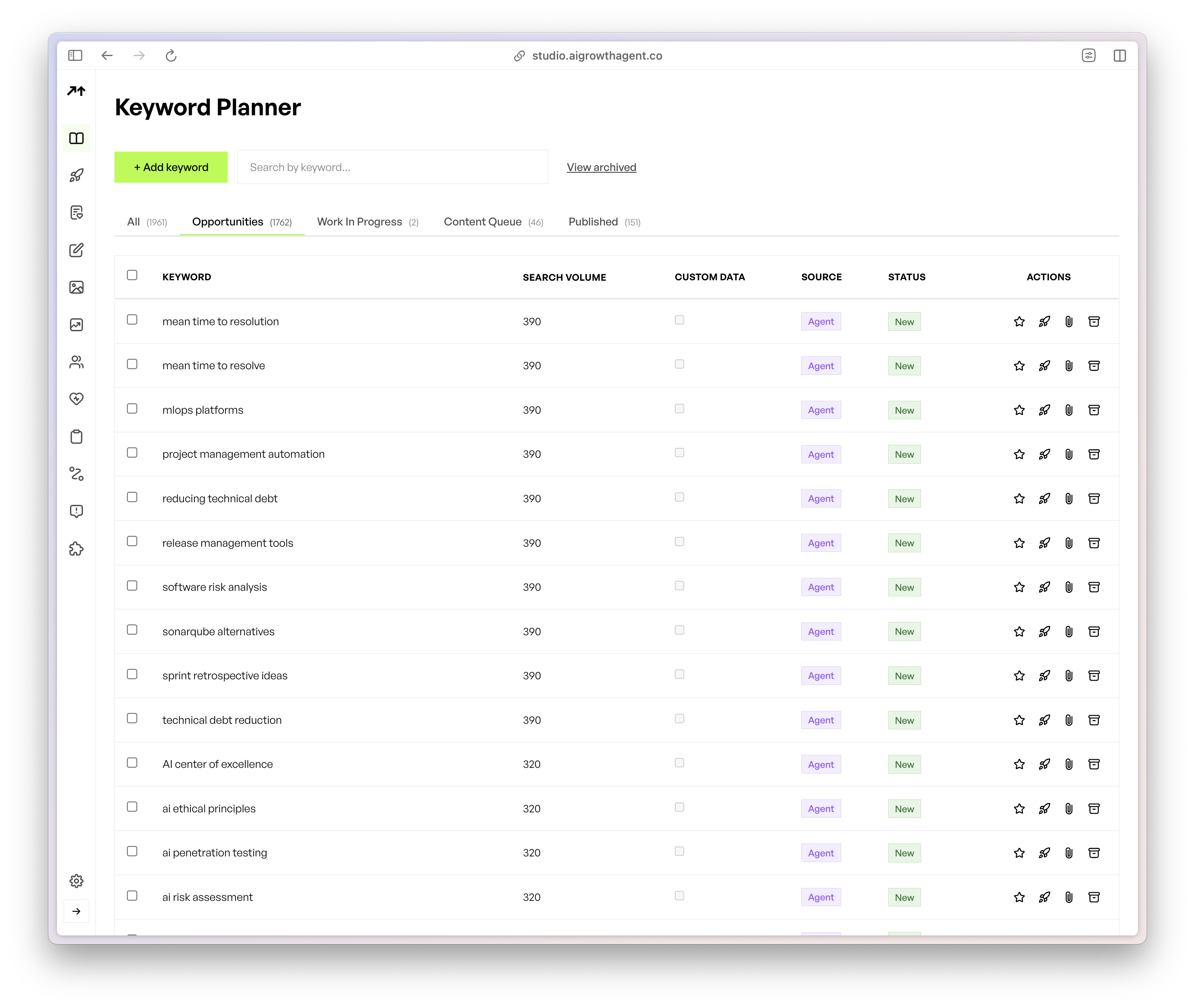
AI Growth Agent provides end-to-end automation of the content lifecycle. The platform supports deep keyword clustering and autonomous technical infrastructure setup, which removes engineering friction while maintaining strict quality standards. Marketing teams can then focus on strategy, positioning, and oversight instead of execution bottlenecks.
2. Mastering Technical Optimization for AI Search Engine Citation
Core Web Vitals and AI indexing
A strong technical foundation increases the likelihood that AI search engines will consider content for citation and recommendation. Advanced AI writing tools automate complex technical optimizations so each piece of content meets performance and structural standards at scale. This level of automation supports high-velocity publishing without sacrificing technical quality.
Automated schema markup and semantic understanding
AI search engines rely heavily on structured data to understand context, intent, and relationships across content. AI Growth Agent automatically decorates content with rich schema markup and metadata, which helps AI crawlers parse and categorize information during indexing. This process improves semantic understanding across articles, pages, and related assets.
Optimizing for AI bots: robots.txt and llms.txt
Modern AI search visibility depends on clear, machine-readable instructions. AI Growth Agent automates important configurations to ensure proper AI bot access and optimal presentation to AI search engines. This includes implementing an advanced LLM.txt file and a blog Model Context Protocol (MCP) that allows AI search engines to interface directly with a blog’s database and interpret its content accurately.
Server-side rendering and clean structure
Advanced AI writing tools generate clean, semantically structured HTML that aligns with strict technical requirements. They implement clear heading hierarchies, logical internal linking, and optimized URL structures that AI crawlers can navigate and interpret efficiently.
3. Building Strong Semantic Authority Through Deep Keyword and Topic Clustering
AI search and semantic understanding
AI-powered search systems use machine learning and natural language processing to interpret intent, context, and background behind queries. Semantic search approaches place more emphasis on topic relationships and comprehensive coverage than on isolated keyword matches.
Traditional keyword-only strategies often fall short in this environment. AI search engines tend to evaluate clusters of content to determine authority. A single high-quality article rarely signals full expertise. These systems look for coverage across related subtopics, questions, and use cases when selecting authoritative sources.
This evaluation process means businesses benefit from content strategies that target entire topic domains instead of individual keywords. AI search engines reward comprehensive expertise delivered through interconnected content architectures that address user needs across a subject area.
Programmatic content architecture for domain expertise
Advanced AI writing tools apply structured keyword research and topic clustering to build content architectures that communicate domain expertise. AI Growth Agent analyzes large sets of search queries, related topics, and semantic relationships to design strategies that cover a subject area in a methodical way.
This programmatic approach ensures that each article contributes to overall semantic authority while addressing specific search opportunities. Systematic coverage helps AI search engines interpret a site as a reliable resource, which supports consistent citation and recommendation.
Programmatic content architecture creates interconnected topic clusters instead of isolated articles. These clusters reinforce one another, enabling businesses to become reliable sources for entire subject domains rather than competing only at the level of individual keywords.
Long-form authoritative content
AI search optimization tends to favor long-form content that answers user questions in depth with clear structure and formatting. AI systems look for relevance, completeness, and clarity when choosing which content to surface.
Advanced AI writing tools specialize in creating comprehensive, structured content at scale. They combine research capabilities with writing models that can follow brand guidelines and technical requirements. As a result, they produce material that meets expectations for both depth and technical optimization.
To position your brand as a trusted authority in your industry with advanced AI writing tools, schedule a demo and see how AI Growth Agent supports programmatic content strategy.
4. Ensuring Competitive Citation and Brand Narrative Control
Competing for AI citations and brand definition
AI search engines must choose which sources to cite for each query. If a brand has limited content volume or weak authority signals, these systems are more likely to reference competitors with stronger content ecosystems.
This situation creates a strategic risk. Gaps in content volume and coverage do not only reduce potential traffic. They also allow competitors to shape how AI systems describe a category and the available solutions. When prospective customers consult AI search about options in a market, brands with more robust content often become the default recommendations.
Consistent, high-volume, authoritative content produced through advanced AI writing tools helps a brand maintain control over its narrative. Success requires quality content, strong publishing velocity, and technical optimization that together establish topic coverage before competitors do.
Real-world impact: AI Growth Agent success stories
The impact of advanced AI writing tools appears clearly in measurable outcomes across industries. Programmatic content strategies support rapid gains in AI citation and recommendation when executed with consistent quality.
Exceeds AI offers a clear example of accelerated authority building in AI search. After implementing AI Growth Agent’s programmatic content strategy, Perplexity began recommending the company as a top alternative to competitors within about two weeks. Within three weeks, Exceeds AI content appeared in Google AI Overview and Gemini snapshots for core keywords. The brand now appears in ChatGPT, Google AI Overview and Gemini, and Perplexity as a leading source for AI performance review tools for engineers.
BeConfident shows how smaller companies can compete with larger incumbents through advanced AI writing tools. While operating in a competitive English learning market, BeConfident gained meaningful visibility in Brazil for its AI-powered features within weeks of adopting a programmatic publishing strategy.
Bucked Up demonstrates how programmatic content benefits consumer brands in crowded verticals. Within three weeks of programmatic publishing, Bucked Up gained visibility for protein soda products in AI search results, supporting a stronger presence in a competitive category.
Gitar.ai illustrates how advanced AI writing tools support category leadership. In under two months, Gitar.ai became a frequently cited brand across Google AI Overview and Gemini, ChatGPT, and Perplexity for prompts such as “fix broken CI builds automatically” and “best AI reviewer that comments on CI failures.”
Tracking AI citation metrics
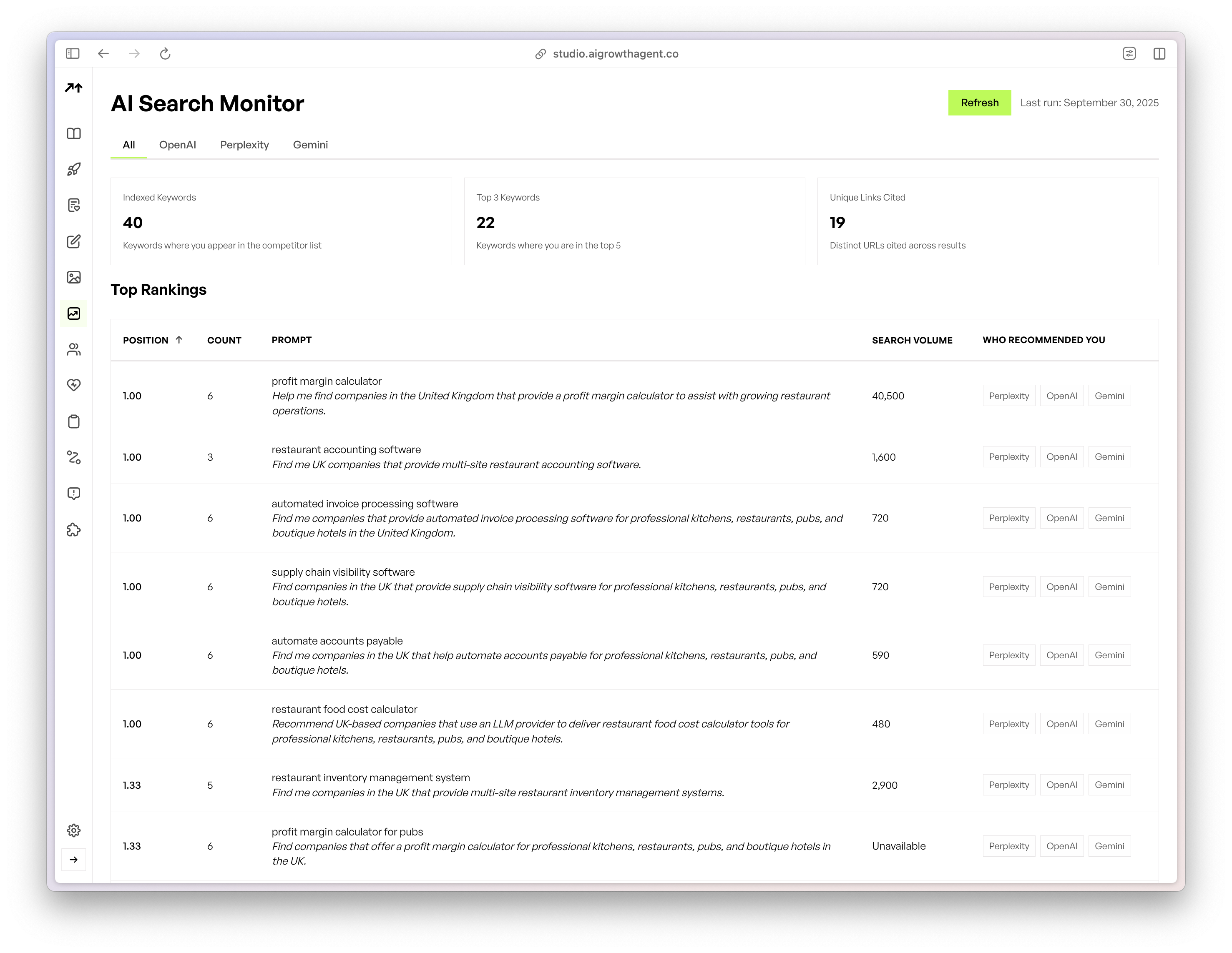
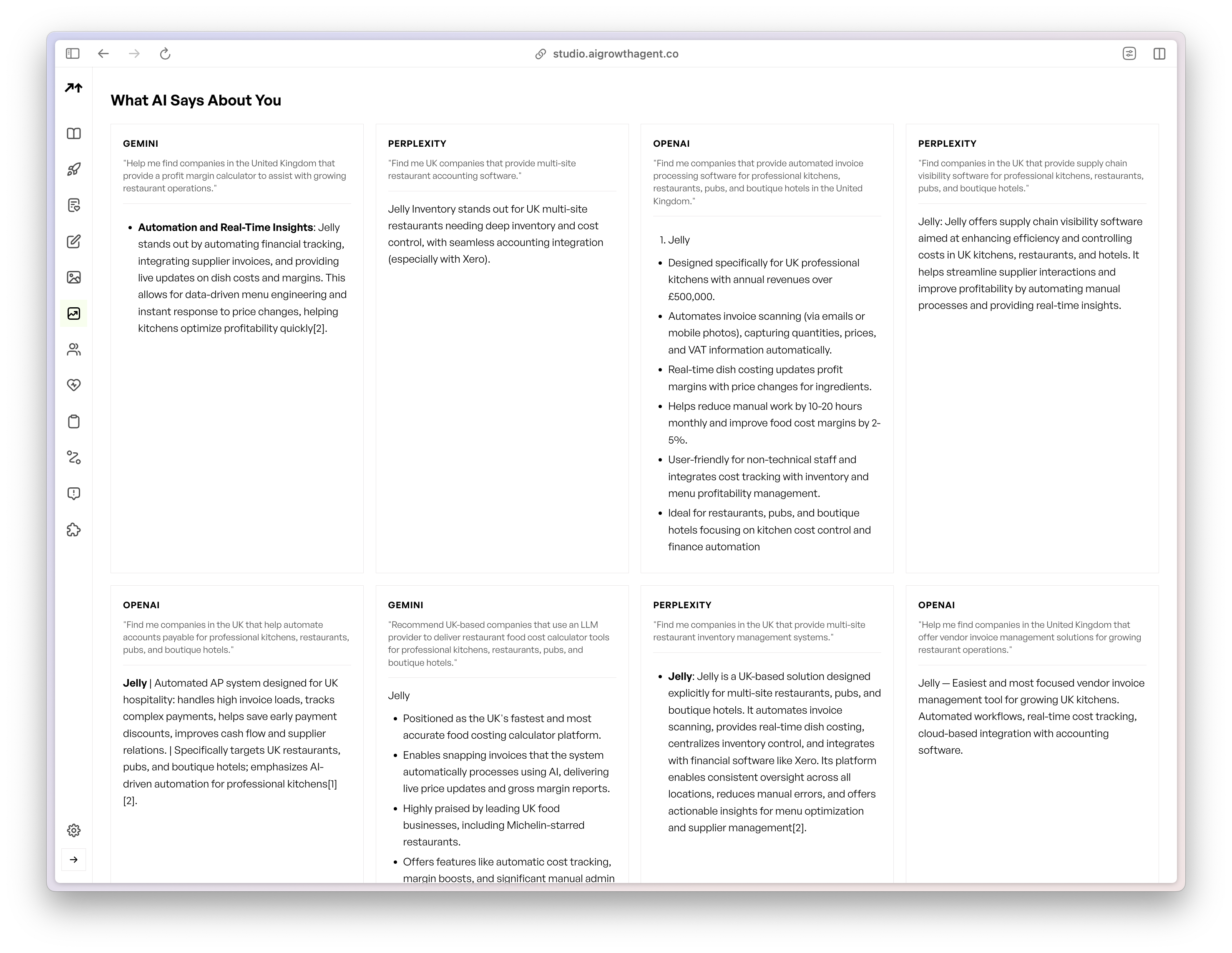
Advanced AI writing tools that include monitoring features give teams real-time visibility into AI citation performance. AI Growth Agent provides heatmaps that show indexing performance across ChatGPT, Gemini, and Perplexity for specific keyword targets.
These tools track which URLs drive AI visibility, where direct quotes and citations appear in AI responses, and how AI search engines crawl and index content. This level of detail helps teams adjust strategies quickly based on actual AI search behavior.
5. Automating the Entire Content Lifecycle for Scalable Growth
Limitations of traditional methods
Traditional content creation models, including many SEO agencies and internal teams, rely on manual processes. These processes often struggle to meet the combined demands of content velocity and technical precision required for AI search optimization.
SEO agencies typically follow a craftsman model limited by team size and available expertise. They may produce a small number of strong articles each month, yet they usually cannot engineer the volume of structured, technically optimized content needed to compete in AI-driven search results.
Internal marketing teams face similar constraints. Many lack specialized engineering resources to create and maintain programmatic SEO systems. They may not have the time or technical capacity to apply advanced schema markup, ideal metadata, robots.txt configuration, and LLM.txt files at scale.
Basic AI content tools such as standalone text generators output unstructured content rather than fully engineered web pages. Strategy, technical formatting, schema implementation, and publishing remain manual tasks for internal teams. This approach rarely delivers the consistency, quality, and technical structure necessary for AI search success.
End-to-end programmatic automation
Sophisticated AI writing tools such as AI Growth Agent automate the entire content lifecycle, from research and planning to engineering and publishing. This automation removes common bottlenecks and supports AI search performance at scale.
Advanced systems start with programmatic keyword and content research. They analyze large volumes of search queries and topics, then organize opportunities into pillars and clusters that map to priority themes. This stage identifies where a brand can build topic authority within a domain.
Autonomous technical infrastructure setup then removes much of the engineering work. AI Growth Agent can configure optimized blog architectures, apply technical SEO best practices, and maintain brand consistency while laying a clean foundation for programmatic content creation.
The core content engine handles strategy execution, research, drafting, quality assurance, and critical technical engineering. This includes adding rich schema markup, configuring AI bot access, and enabling direct AI search engine integration where appropriate.
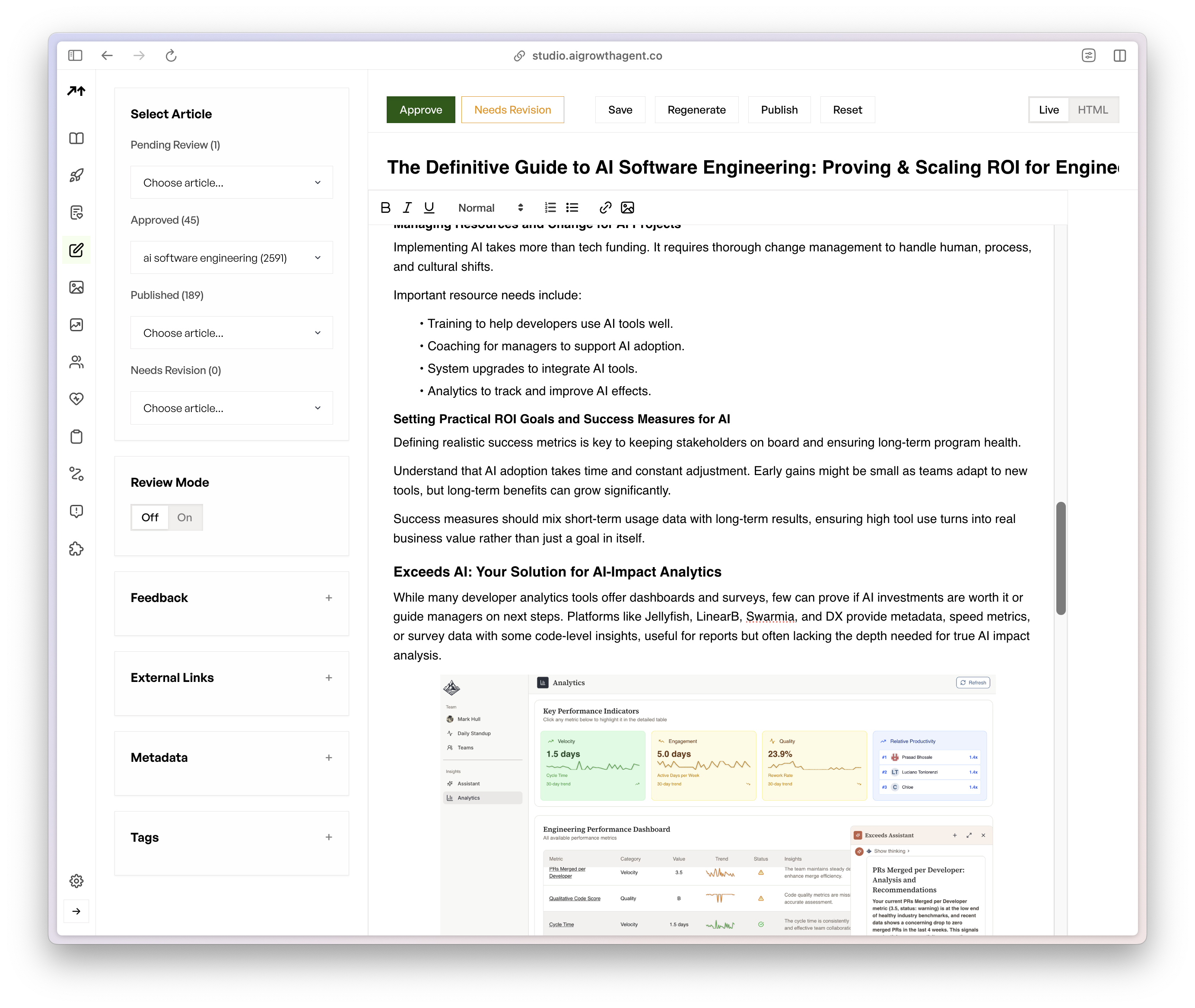
Content workflows can also incorporate brand-approved images and visual assets directly into articles. This approach keeps visual presentation consistent while ensuring images support the narrative of each piece.
The programmatic pSEO engine
A key benefit of advanced AI writing tools is the ability to function as an ongoing programmatic SEO engine. After configuration and initial training, these systems can continue to publish and optimize content with limited manual intervention.
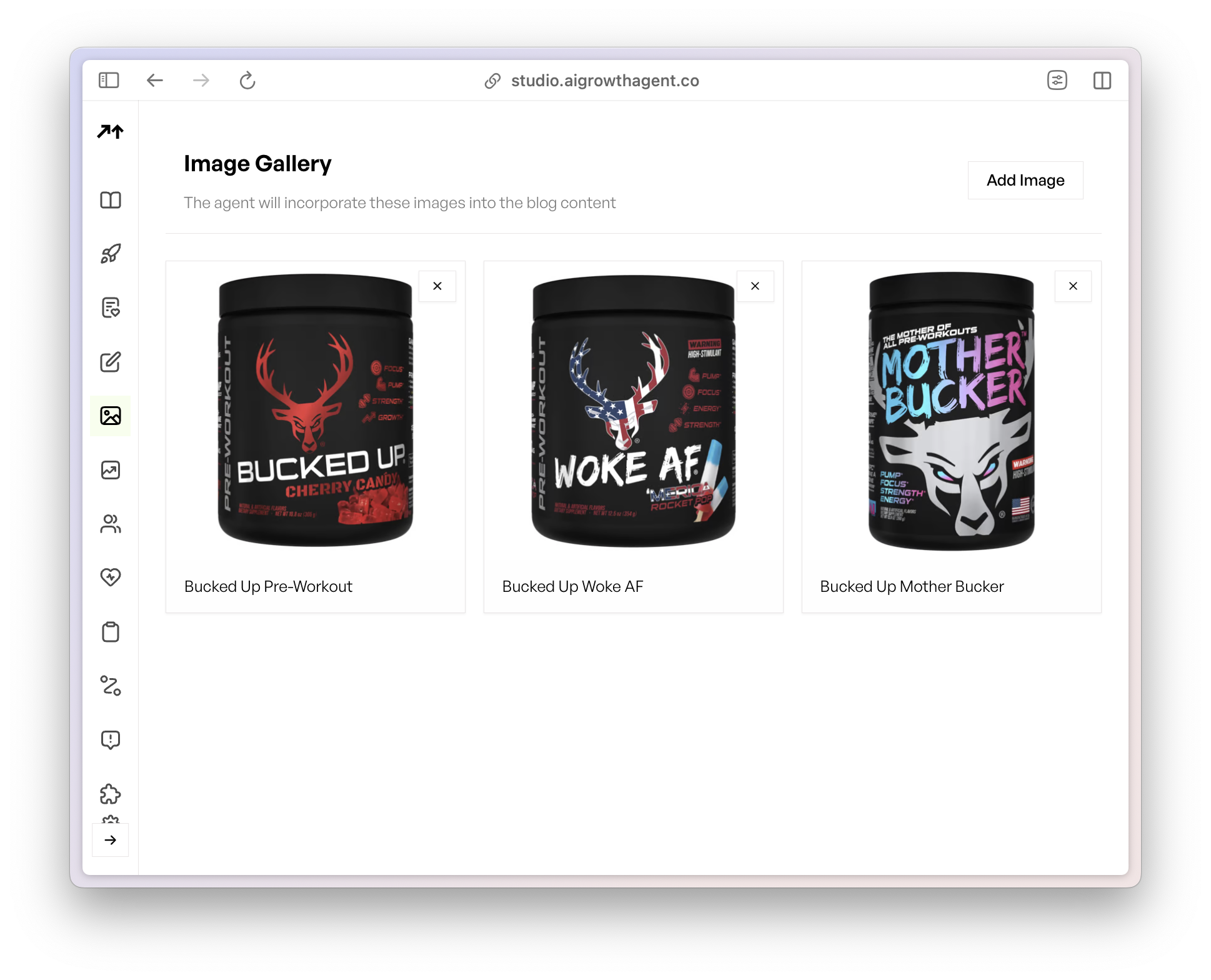
The AI Growth Agent Studio reflects this model while keeping users in control. Clients can provide feedback to the Programmatic SEO Content Agent, edit content manually when needed, or enable an Auto-Pilot mode for more hands-off operation.
The system learns progressively over time. As it absorbs more information about brand voice, industry context, and performance data, it refines its decisions and improves execution of programmatic SEO content strategies.
Real-time indexing and monitoring
Advanced AI writing tools integrate monitoring features that track performance across AI and traditional search channels. AI Growth Agent supplies insights into how content appears in ChatGPT, Gemini, and Perplexity, including citations, quotes, and crawl statistics.
Connections to Google Search Console and analytics platforms complete the picture by showing how AI-driven visibility translates into organic traffic and conversions. Teams can then tie programmatic content strategies to tangible business outcomes such as AI citation growth, traffic trends, and shifts in competitive positioning.
To build an autonomous authority-building engine for your content, schedule a consultation session with AI Growth Agent and explore how the Programmatic SEO Agent can support your growth plan.
FAQs: Advanced AI Writing Tools for Businesses
How do advanced AI writing tools contribute to building authority in AI search?
Advanced AI writing tools help build authority by enabling rapid content creation at scale while ensuring each piece is technically optimized for AI crawlers. They also support systematic coverage of topic clusters that creates semantic expertise across a domain. These capabilities align with the signals AI search engines use when evaluating content quality and authority.
The programmatic approach focuses on domain coverage instead of isolated articles. Interconnected content architectures that address an entire subject area help AI systems interpret a site as a comprehensive resource and therefore a strong candidate for citation.
These tools also maintain the content velocity needed for AI search success. They can produce high-quality, technically sound content on a daily or weekly cadence, which keeps brands aligned with the recency and consistency signals that AI search engines prioritize.
What specific technical SEO aspects do advanced AI writing tools automate for AI search?
Advanced AI writing tools automate several key technical SEO tasks. These include schema markup for articles, FAQs, and multimedia content so AI search engines can better understand context and relationships across pages.
They also configure robots.txt files and create llms.txt files that guide AI systems on how to access and use content. Many platforms ensure clean HTML structure with logical content flow and implement the Model Context Protocol (MCP) to support direct integration between AI search engines and content databases.
Can generic AI content tools achieve the same results as programmatic AI writing tools for AI search?
Generic AI content tools such as basic text generators generally do not achieve the same results as programmatic AI writing tools for AI search. These tools focus on producing text, not on end-to-end strategy, technical formatting, schema markup, or publishing automation.
Teams that rely only on generic tools still need to manage keyword research, content planning, technical SEO, and deployment manually. This situation often limits content velocity and increases the risk of technical gaps that can affect AI indexing.
Programmatic AI writing tools automate the full workflow, from keyword research and clustering through engineering and publishing. They help ensure each piece of content meets the technical standards required for AI visibility while also contributing to broader authority signals.
How does programmatic content velocity impact a business’s visibility in AI search?
Programmatic content velocity provides a steady flow of fresh, relevant, well-structured content. AI search algorithms weigh recency, depth, and consistency, so frequent publishing supports stronger visibility signals.
High-volume publishing across related topics also builds comprehensive coverage within a domain. When AI search engines see a brand addressing many aspects of a subject, they are more likely to treat that brand as a reliable source and surface its content in responses.
Consistent publishing helps prevent competitors from gaining an advantage based purely on volume. In AI search, limited content output can quickly become a liability because AI systems will reference whichever sources demonstrate more extensive and current coverage.
What metrics should businesses track to measure success with advanced AI writing tools for AI search optimization?
Businesses should monitor how often AI search engines such as ChatGPT, Google AI Overview and Gemini, and Perplexity reference their content. Useful metrics include citation frequency, visibility for target keywords, and the specific URLs that receive AI-driven exposure.
Technical performance metrics include crawl activity, indexing rates, and structured data coverage. On the business side, teams should track organic traffic growth from AI-related sources, conversion behavior of AI-referred visitors, and changes in competitive citation patterns. Integrating Google Search Console and analytics platforms provides a more complete view of return on investment from programmatic content strategies.
Conclusion: Build Sustainable Authority in AI Search with Advanced AI Writing Tools
The five critical roles of advanced AI writing tools in AI search authority include high content velocity, strong technical optimization, semantic authority building, competitive citation control, and complete lifecycle automation. Together, these capabilities form a practical foundation for staying visible as AI-powered search reshapes how buyers evaluate solutions.
The shift from manual content production to programmatic AI writing tools represents a significant change in competitive strategy. Organizations that adopt programmatic approaches gain advantages in AI citations, brand narrative control, and perceived authority in their markets.
In a fast-evolving AI search landscape, programmatic content creation has become a requirement for establishing and maintaining authority. Brands that deploy sophisticated AI writing tools can achieve the technical precision, publishing speed, and topic coverage that AI search engines use when selecting sources for citation and recommendation.
Successful implementations across industries show that advanced AI writing tools can influence market positioning in a relatively short period. Examples such as Exceeds AI, BeConfident, Bucked Up, and Gitar.ai illustrate how programmatic strategies help brands gain visibility and credibility in AI-driven search experiences.
To explore how advanced AI writing tools can support AI search authority for your brand, schedule a consultation session with AI Growth Agent and review how the Programmatic SEO Agent can support your goals across ChatGPT, Google AI Overview and Gemini, and Perplexity.
