


AI search engines now favor content that is technically structured, up to date, and clearly authoritative, which basic text generators like ChatGPT do not deliver on their own. In this article, you’ll see advanced alternatives.
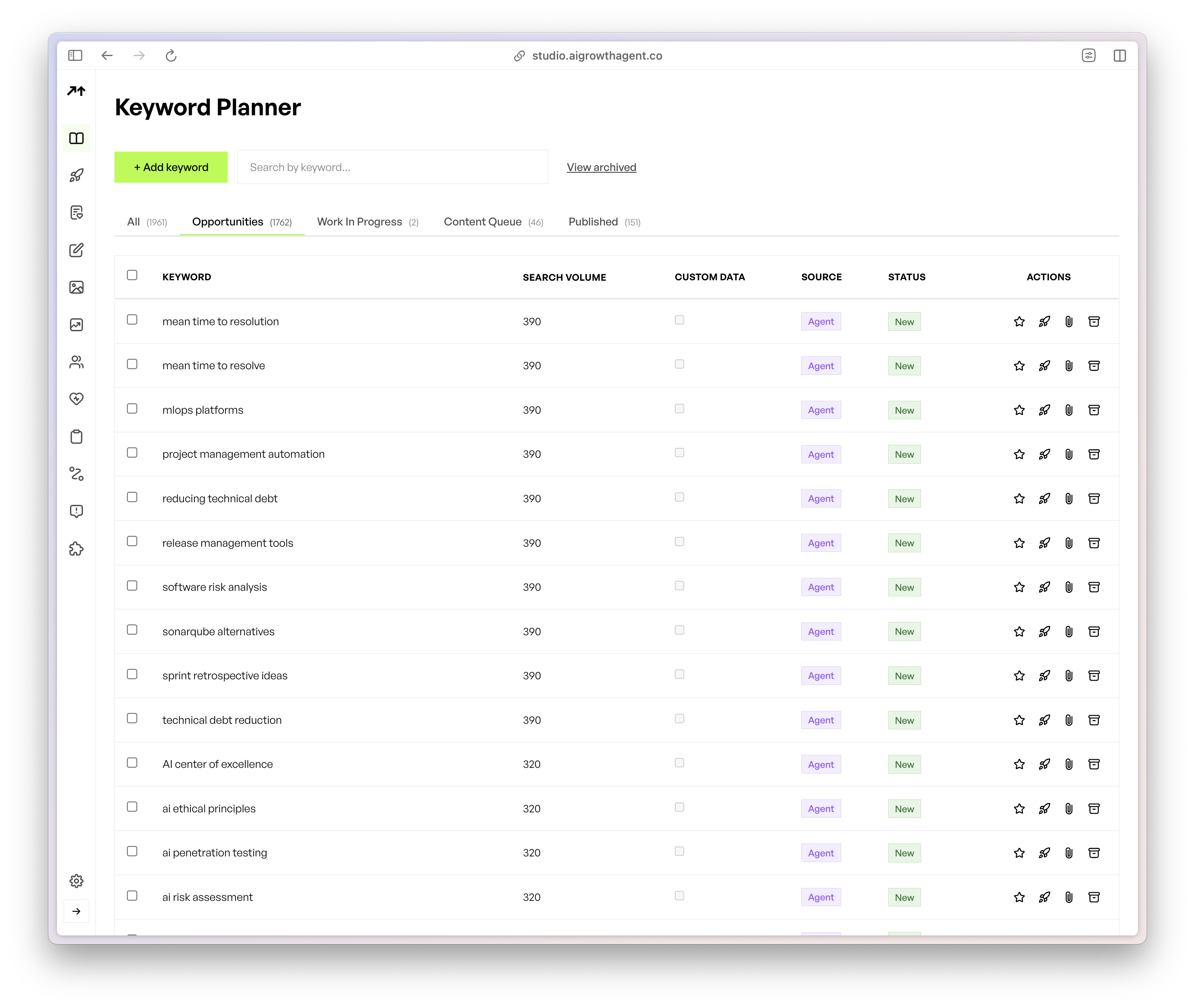
- Programmatic SEO platforms automate the full content lifecycle, including schema, metadata, and LLM.txt, to help brands scale technically sound, AI-ready content.
- AI-powered optimization suites use real-time data to guide topics, keywords, and updates so content stays aligned with current search intent and market trends.
- Multi-modal and enterprise-grade platforms support brand voice control, workflow automation, and reuse of content across formats and brands at scale.
- Database-to-content automation converts proprietary data into unique, SEO-optimized content that expands topical authority in specific niches.
- AI Growth Agent combines these capabilities into a programmatic content engineering platform that focuses on AI search visibility and long-term authority.
Interested in seeing how AI Growth Agent helps brands compete in AI search? Schedule a demo.
1. Programmatic SEO Platforms: Engineering Authority at Scale
Programmatic SEO platforms help brands move from manual content production to scalable content engineering. These platforms automate the content lifecycle and embed advanced technical SEO elements, such as schema, metadata, and LLM.txt files, directly into content architecture. This structure helps AI systems read, interpret, and cite your content more reliably.
Many platforms use a “Company Manifesto” as a central framework to guide brand voice, messaging, and strategy. That manifesto becomes a structured knowledge base that powers consistent, AI-optimized content across hundreds or thousands of pages. The system can handle tasks like keyword clustering and schema markup, which would otherwise require specialized developer support.
Programmatic approaches also change content velocity. While a traditional agency might produce a small number of long-form pieces each month, a programmatic SEO platform can generate many technically optimized, brand-aligned articles each day. The goal is not only more content, but enough high-quality, related content for AI search engines to recognize your brand as a leading source in a category.
Actionable takeaway: Implement a programmatic SEO strategy that turns your core messaging into a structured knowledge base, so you can scale AI-optimized content with consistent technical quality.
See how AI Growth Agent builds content architectures that support AI search citation.
2. AI-Powered Content Optimization Suites with Real-Time Data
AI-powered content optimization suites use analytics and search data to keep content aligned with current demand. These tools connect to search and performance data to support:
- Topic ideation based on real user queries and trends
- Keyword clustering and internal linking opportunities
- On-page SEO adjustments, including headings, structure, and metadata
- Recommendations for refreshing or expanding underperforming pages
Many platforms also analyze competitor content to uncover gaps or over-served topics. This insight makes it easier to prioritize content that matches real search intent and current market conditions. In an AI search environment where recency and topical relevance affect citation, this feedback loop is important.
Continuous optimization helps each piece of content respond to changing search intent over time. As search behavior shifts, the system recommends updates so content stays useful, accurate, and aligned with how AI systems interpret authority.
Actionable takeaway: Use AI optimization suites to maintain an ongoing cycle of content refinement, guided by live data on search behavior, performance, and competitive coverage.
3. Multi-Modal AI Content Generation and Transformation Tools
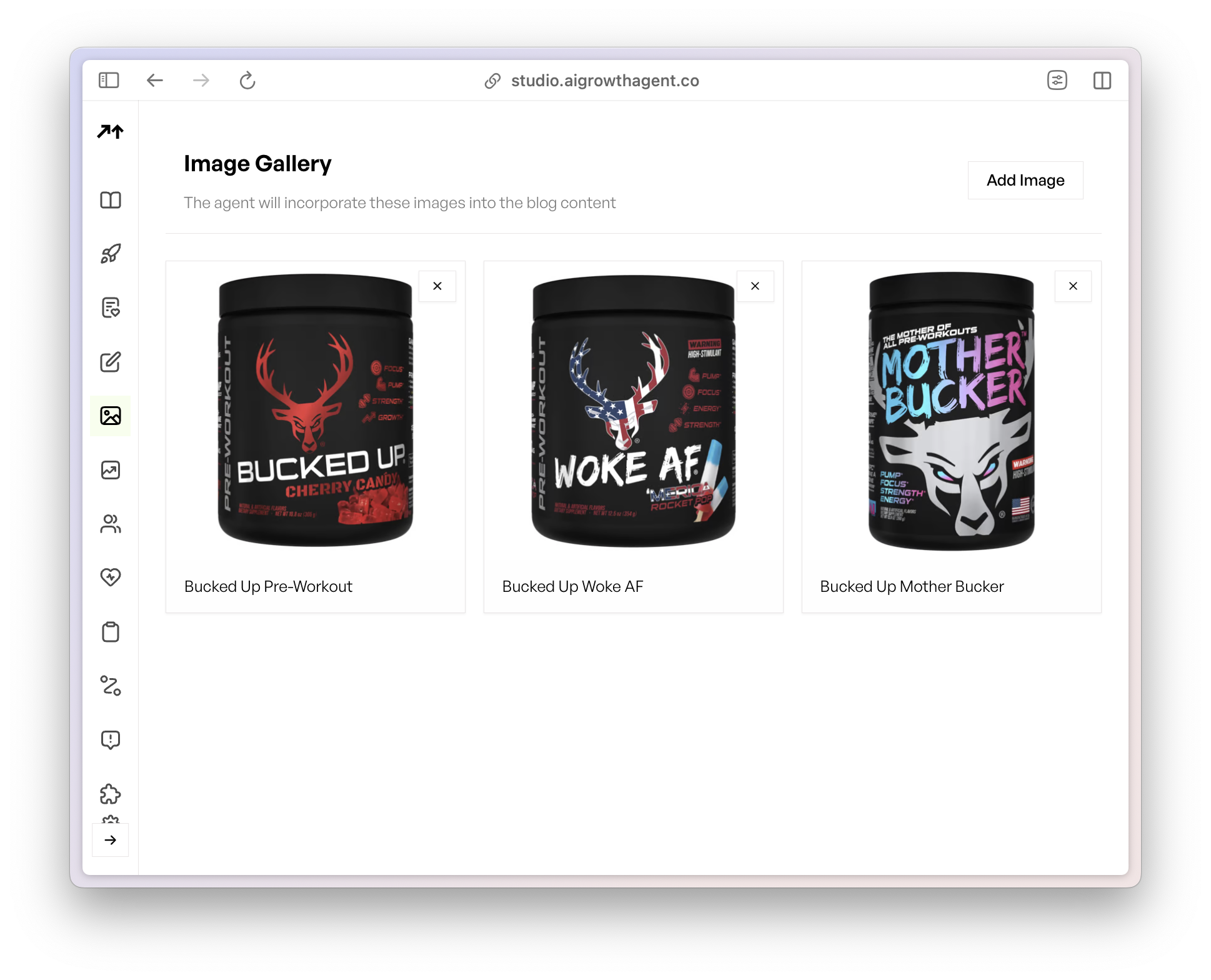
Multi-modal AI platforms support text, images, and sometimes audio or video, starting from a single source of truth. One article or script can become:
- Blog posts and landing pages
- Visual assets and social graphics
- Email sequences and ad copy
- Short-form posts for social platforms
This approach increases the number of surfaces where your expertise appears. AI search systems now interpret and index multiple content types, so treating text, image, and other formats as a connected system helps reinforce your authority.
Multi-modal tools become even more effective when paired with automated SEO optimization. Titles, alt text, captions, and descriptions can be generated in ways that reflect your keyword strategy and brand guidelines, which supports search discovery across formats.
Actionable takeaway: Adopt multi-modal AI tools to reuse core content across formats, while keeping each version optimized for both human readers and AI-driven discovery.
Discover how AI Growth Agent supports content engineering for AI search.
4. Enterprise-Grade Content Engineering Platforms with Brand Voice Guarantees
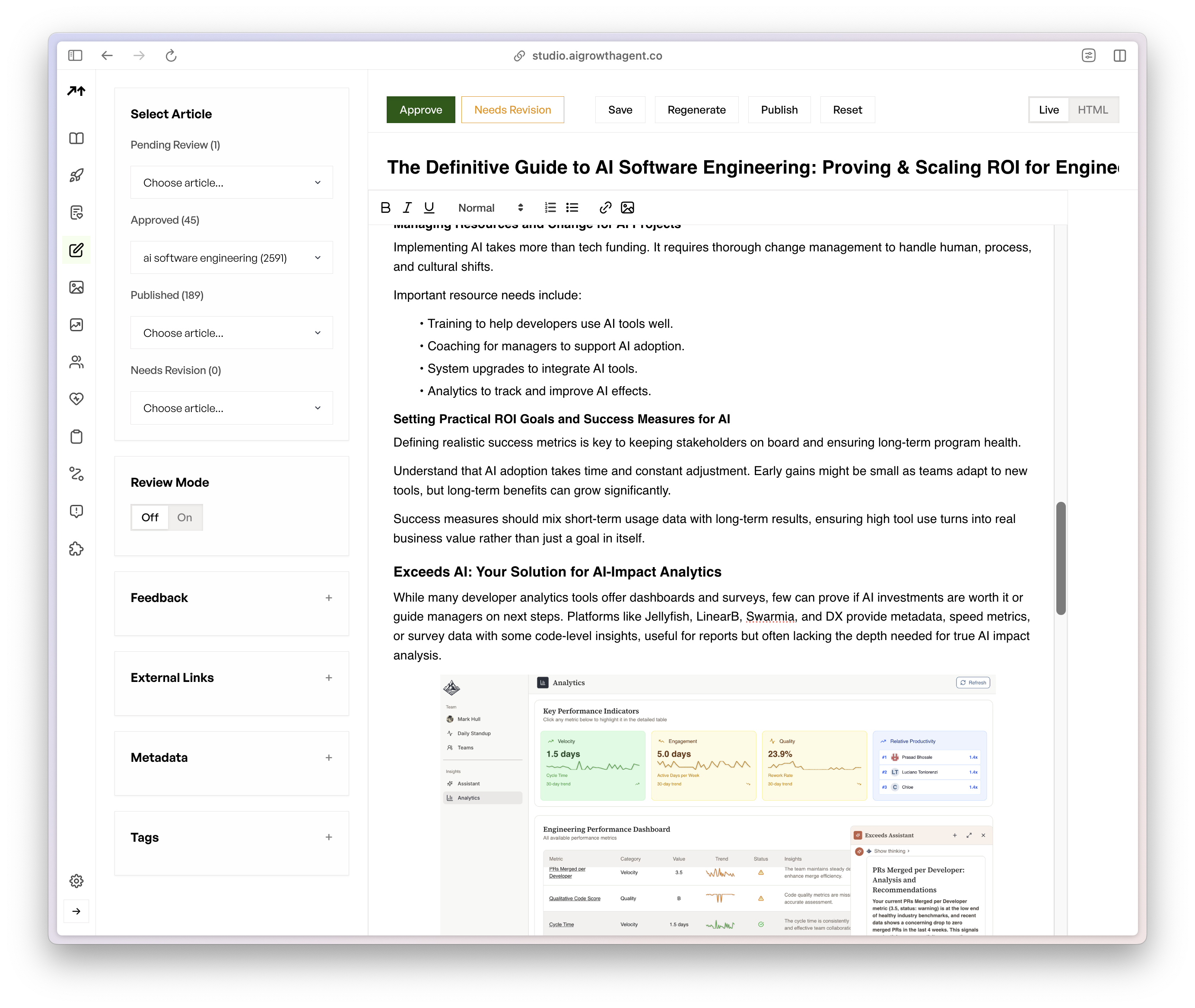
Enterprise-grade platforms are built for organizations that manage multiple brands, regions, or product lines. These systems provide tools to enforce brand voice, manage approvals, and standardize how content moves from draft to publication.
Key capabilities often include:
- Brand voice libraries and guardrails that keep language consistent
- Role-based workflows for writers, editors, and approvers
- Multi-tenant support so different brands or markets have distinct configurations
- Shared technical templates for schema, metadata, and layouts
For companies with several brands, the ability to manage separate narratives and keyword strategies in one platform is important. Each brand can build its own authority profile while still benefiting from shared infrastructure, tools, and reporting.
These platforms also surface performance data across brands. Marketing leaders can compare how content performs, see where authority is growing or lagging, and adjust strategies with a portfolio view instead of isolated reports.
Actionable takeaway: Choose enterprise-grade content engineering tools that combine brand voice control, workflow automation, and multi-tenant support, so you can manage complex portfolios without losing consistency.
5. AI Solutions for Database-to-Content Automation
Database-to-content automation turns structured data into search-ready content. Product catalogs, location lists, internal tools, and other structured sources often remain invisible to search engines because they sit behind interfaces or in formats that are not indexed.
Modern AI platforms can pull this structured data and generate:
- Location-specific landing pages and guides
- Product detail pages with descriptive copy and FAQs
- Dynamic collections like “best of” lists and comparisons
- Category pages optimized for niche search terms
For example, a brand with food recommendations stored inside a mobile app can export that data and produce SEO-rich pages for each list, such as “best bagels in New York.” The underlying data stays the same, but it becomes visible, linkable, and usable as part of a broader programmatic SEO strategy.
The outcome is a content library built from your proprietary data, rather than generic sources. This supports topical authority in specific areas where you already have deep, structured information.
Actionable takeaway: Evaluate where your organization holds structured but non-indexed data, then use database-to-content automation to convert that data into unique, search-accessible pages.
Why AI Growth Agent Stands Apart in Content Engineering for AI Search
|
Feature/Benefit |
AI Growth Agent |
Traditional SEO Agencies |
Basic AI Tools |
|
Nature of Solution |
Programmatic Content Engineering Platform |
Manual service, human specialists |
Text generation assistant |
|
Scale and Velocity |
High-volume output with automated workflows |
Limited by team size and capacity |
High word count potential, manual structuring |
|
Technical SEO Implementation |
Autonomous setup with advanced schema, LLM.txt, MCP |
Manual and often inconsistent or basic |
No built-in implementation, requires manual work |
|
Content Quality and Authority |
Unique content engineered for AI citation and clarity |
Quality varies by team and process |
Variable quality and limited technical optimization |
|
Integration and Autonomy |
Integrates with CMS and studio tools, supports autonomous publishing |
Manual coordination and limited integration |
Requires manual prompting and integration |
|
Brand Voice and Compliance |
Manifesto-driven guidance with clear guardrails |
Subjective interpretation, ongoing oversight required |
Limited controls, risk of off-brand language |
|
Cost Model |
Subscription-based, more predictable costs |
Billable hours with variable totals |
Subscription-based, but higher labor overhead around usage |
AI Growth Agent focuses on complete content engineering rather than only text generation. The platform uses a Manifesto-driven framework, so each piece of content reflects brand guidelines while also including the technical elements needed for AI visibility.
Once configured, AI Growth Agent can run much of the execution work in the background. Marketing teams set strategy, themes, and rules, and the platform handles drafting, technical optimization, and structured deployment. This reduces reliance on manual coordination, while still giving teams control through clear interfaces and settings.
The Strategic Imperative: Why Advanced Alternatives Matter Now
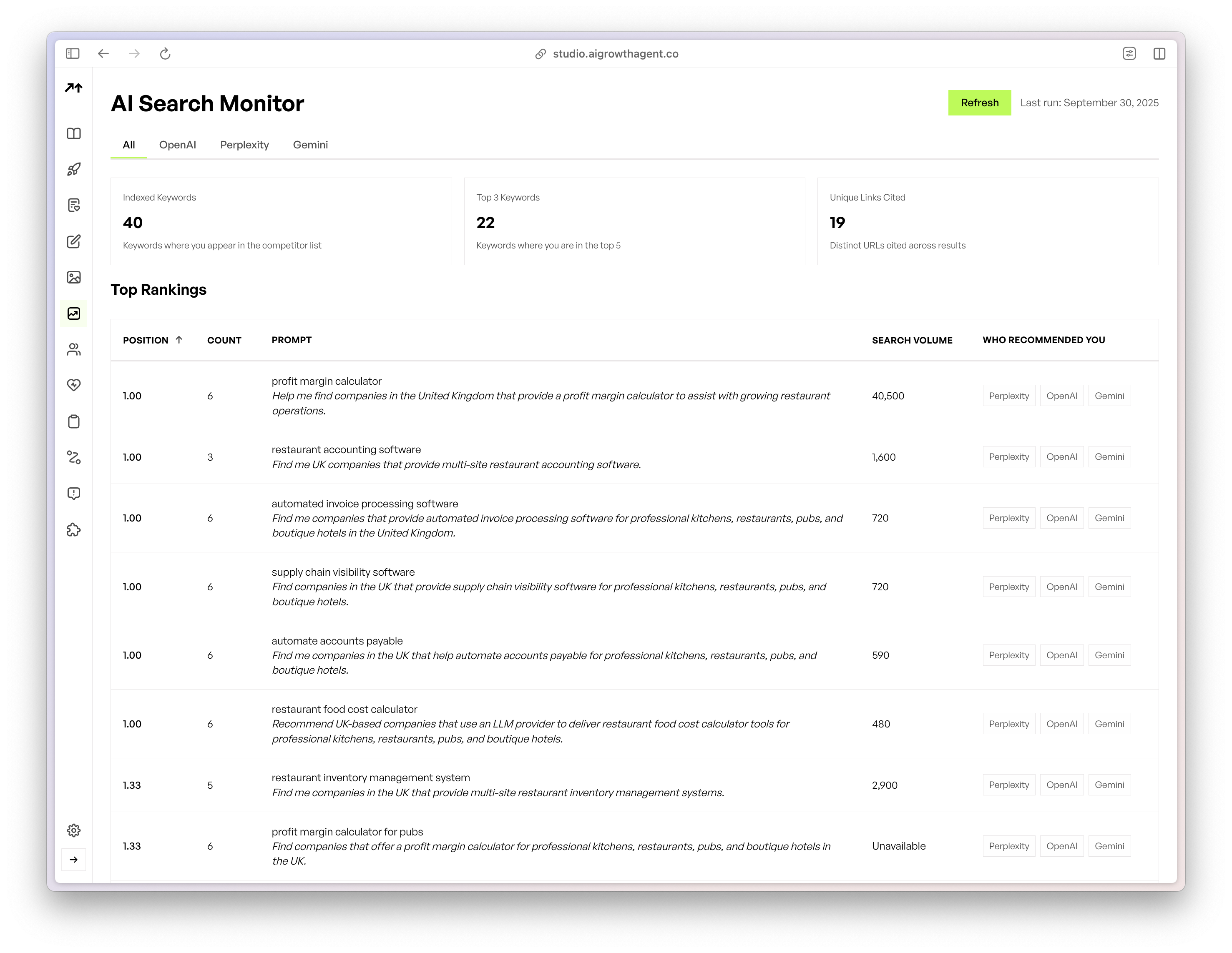
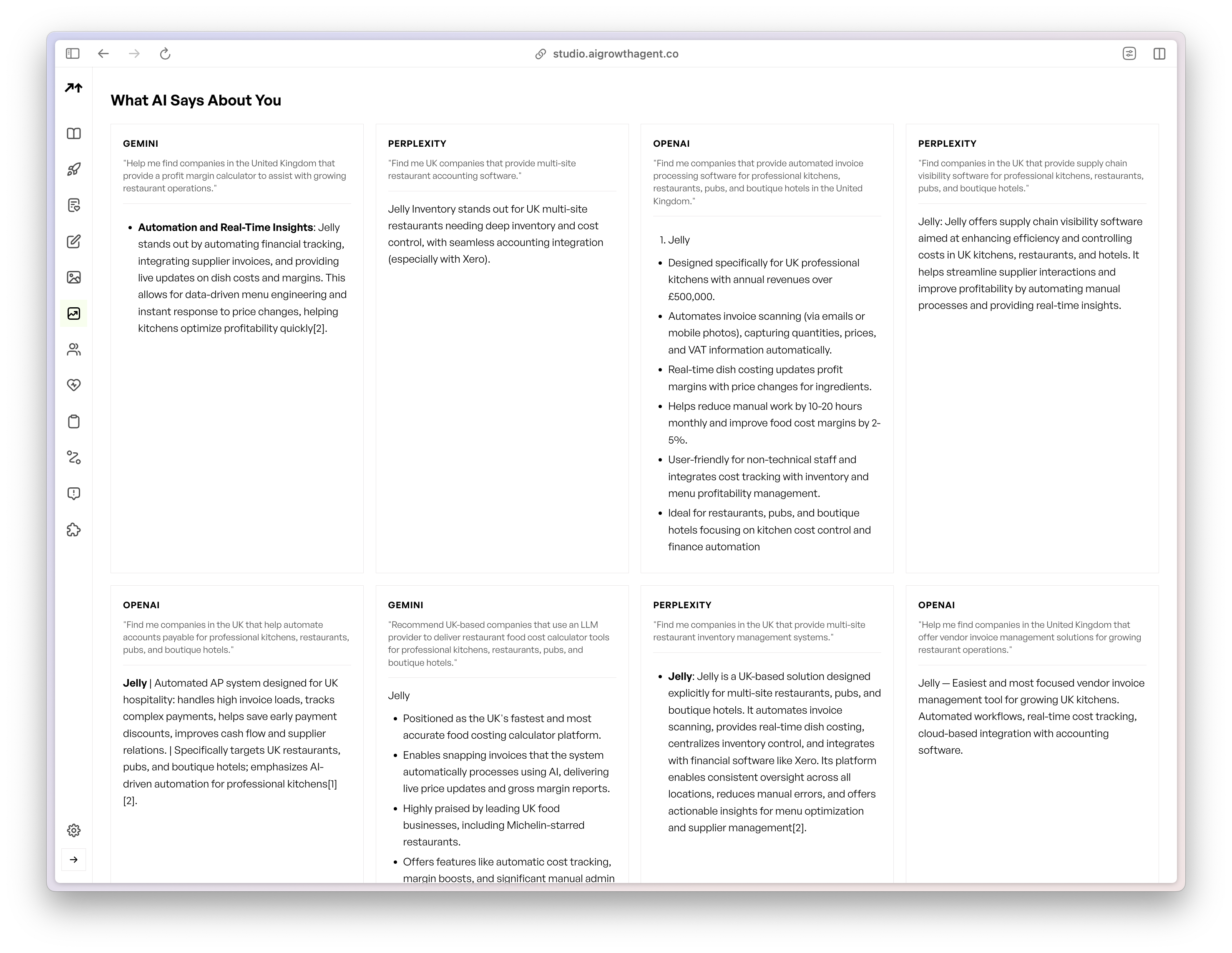
The rise of AI-powered discovery is changing how people find and evaluate information online. AI search engines such as Perplexity weigh signals of authority that go beyond traditional ranking factors, while systems like ChatGPT and Google’s Gemini provide generative answers that may or may not link back to specific sources.
At the same time, the volume of AI-generated content continues to grow. Many brands use basic tools for content creation, but those tools often do not address technical SEO, structured data, or consistent brand voice. As a result, their content can blend into a crowded landscape without building a clear authority profile.
Advanced alternatives help fill this gap by pairing writing with technical content engineering. They support schema markup, metadata planning, internal linking structures, and clear headings. This structure makes it easier for AI systems to understand who you are, what you offer, and when to surface or cite your content.
The benefit of these approaches compounds over time. Each technically optimized, brand-aligned page adds to a growing body of work that signals expertise. Brands that invest early in structured, programmatic systems can build a durable lead in AI search visibility.
Implementation Strategy: Choosing the Right Alternative for Your Brand
Choosing a ChatGPT alternative starts with your current maturity and goals. It helps to assess three areas: your technical capabilities, your existing content foundation, and your long-term authority objectives.
Brands with strong content foundations and clear positioning often gain the most from programmatic SEO platforms. These solutions provide automation and technical sophistication, which help convert existing knowledge into a wide, coherent, AI-ready content footprint.
Organizations that already have active content teams can layer in AI optimization suites. Those tools extend what teams can do with data-driven insights on topics, structure, and technical adjustments, without replacing existing workflows.
Enterprises with multiple brands or markets benefit from platforms that offer multi-tenant deployment and centralized governance. This model supports distinct strategies and voices for each brand, while sharing infrastructure, templates, and analytics.
Regardless of the path you choose, building AI search authority is a long-term effort. Consistent production of technically sound, brand-aligned content is what allows AI systems to recognize and trust your expertise over time.
Frequently Asked Questions About AI Content Alternatives
How do these advanced AI content alternatives differ from simply using ChatGPT or basic AI writing tools?
Advanced alternatives such as AI Growth Agent extend beyond text generation into full content engineering. They connect to analytics, apply technical SEO elements like schema and LLM.txt, enforce brand voice rules, and support programmatic deployment. ChatGPT can produce drafts, but these platforms are designed to handle structure, optimization, and scale as part of a single system.
What is “content engineering” in the context of these advanced AI tools?
Content engineering is the technical and strategic process of preparing content to be discoverable, understandable, and citable by both traditional search engines and AI systems. It includes keyword clustering, schema markup, LLM.txt configuration, semantic structuring, metadata planning, and deployment workflows, all coordinated at scale.
Why is “Programmatic SEO for AI” crucial for brands today?
Programmatic SEO for AI helps brands keep pace with the growing volume of content online. It enables high-quality, technically optimized content production at a scale that manual methods rarely reach. This supports presence and potential citation in AI models that look for depth, consistency, and clear topical coverage.
What technical capabilities should I look for in a ChatGPT alternative for enterprise use?
For enterprise use, look for platforms that provide multi-tenant deployment, automated technical SEO implementation, schema and LLM.txt support, strong brand voice controls, analytics integration, and options for autonomous or scheduled publishing. The platform should allow strategic oversight while handling repetitive execution tasks.
How quickly can I expect to see results from implementing advanced AI content alternatives?
Timelines depend on your current authority and how quickly you implement. Many programmatic SEO platforms can begin producing optimized content within a week of setup, with initial indexing following soon after. Clients of AI Growth Agent have seen early gains in AI search visibility within a relatively short period, although building consistent authority and reliable citations is a longer-term process.
Conclusion: Secure Your Brand’s Authority with AI Growth Agent
AI-driven discovery has raised the bar for what counts as authoritative content. Generic drafts are no longer enough. To be cited and recommended by AI systems, brands need content that is carefully structured, technically optimized, and consistent with a clear point of view.
AI Growth Agent offers a programmatic approach to this challenge. The platform automates content engineering across schema, metadata, LLM.txt, and brand voice, so teams can focus on strategy while the system handles execution at scale.
The tools you choose now will influence how visible your brand becomes in AI search environments over the coming years. Brands that invest in advanced content engineering platforms can create a durable foundation of structured, high-quality content that supports long-term authority.
Ready to build a stronger authority profile in AI search? Schedule a demo with AI Growth Agent.
