


Last updated: February 2, 2026
Key Takeaways for the 2026 AI Search Landscape
- AI-generated content now floods search results, which shrinks individual brand visibility and makes full digital footprint assessment mission-critical in 2026.
- The 7-pillar framework, covering brand search, monitoring, social audits, SEO, competition, third-party mentions, and AI citations, delivers a complete assessment strategy.
- Traditional manual audits cannot keep up with AI content velocity, so programmatic SEO with MCP integration and real-time monitoring is now essential.
- Step-by-step best practices include manual AI searches, monitoring setup, technical upgrades like schema and llm.txt, and competitive benchmarking.
- AI Growth Agent delivers autonomous programmatic SEO that scales your digital footprint, so schedule a demo today to dominate AI search.
Digital Footprint vs Market Presence and the 7 SERP Pillars
Digital footprint covers your total online exposure and mentions across every platform, while market presence reflects your controlled authority and visibility within your industry. In 2026, both concepts now include AI visibility, citation frequency, and programmatic content performance across AI search engines.
The assessment framework uses seven practical pillars that you can review and track.
|
Pillar |
Key Metric |
Assessment Tool |
|
Brand Search |
SERP visibility, AI citations |
Google, ChatGPT, Perplexity queries |
|
Monitoring Tools |
Mention volume, sentiment |
Google Alerts, Brandwatch |
|
Social/Review Audit |
Engagement rate, review score |
Platform analytics, review aggregators |
|
SEO Audit |
Technical health, schema markup |
GSC, technical SEO tools |
|
Competitive Analysis |
Share of voice, ranking gaps |
SEMrush, Ahrefs |
|
Third-Party Mentions |
Citation quality, backlink profile |
Media monitoring, link analysis |
|
AI Citation Audit |
LLM recommendation frequency |
AI search testing, MCP integration |
Why 2026 AI Trends Break Traditional Digital Audits
Traditional digital footprint assessments now fail because they rely on slow, manual reviews while AI multiplies content daily. Quarterly audits that once felt thorough now miss thousands of AI-generated pages and AI search answers that shape buyer decisions.
Existing tools like Constella Intelligence focus on identity risk intelligence and digital risk protection, and WatchMyCompetitor offers narrow tracking. These tools do not solve AI search visibility or programmatic content requirements. Modern assessment now requires Model Context Protocol (MCP) integration, llm.txt implementation, and real-time AI citation monitoring.
AI Growth Agent closes this gap with Manifesto-driven content clustering, automated schema implementation, and Studio-based heatmap tracking that reveals how your brand performs inside AI search results.
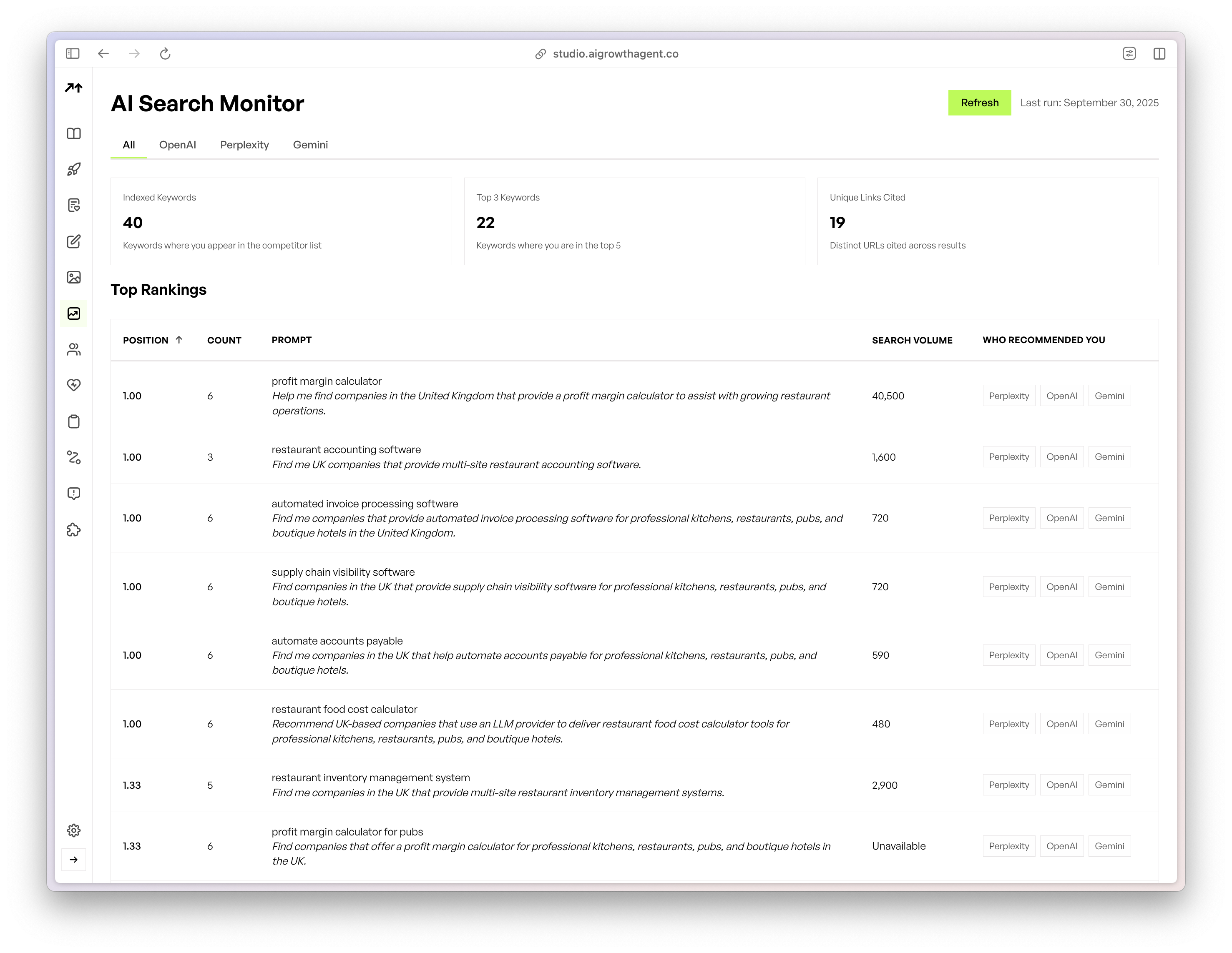
Schedule a demo to see how AI Growth Agent builds an AI-resilient digital footprint through autonomous programmatic SEO.
Strategic Risks: Shrinking Footprints and Buying Criteria
Premium brands now face daily erosion of digital visibility as AI content volume grows. This shrinkage appears as lost AI recommendations, hijacked brand narratives, and declining organic traffic while competitors publish programmatic content at scale.
Most marketing teams lack the resources to respond at that speed. Manual content creation cannot match AI search velocity, and generic AI tools rarely handle advanced schema or LLM-specific requirements correctly.
When you evaluate programmatic SEO platforms, review multi-tenant capabilities, real-time content injection, and Google Search Console integration. AI Growth Agent addresses these needs with autonomous content engineering, direct publishing, and comprehensive AI search monitoring.
Step-by-Step Framework to Assess Your 2026 Digital Footprint
Use this practical sequence to run a complete digital footprint assessment.
Step 1: Manual Brand Search Analysis
Run searches for your brand, key executives, and core products on Google, ChatGPT, Perplexity, and Gemini. Capture which results appear, where they rank, and how often competitors show up in AI-generated answers.
Step 2: Monitoring Infrastructure Setup
Deploy monitoring with enterprise tools like Brandwatch for sentiment analysis and YouScan for real-time alerts. Configure alerts for brand mentions, competitor comparisons, and industry keyword conversations.
Step 3: Social Media and Review Audit
Review engagement rates, review scores, and social sentiment across every active platform. Flag channels with weak coverage and highlight opportunities to strengthen visibility and trust.
Step 4: Technical SEO and AI Readiness
Audit your site’s technical base, including schema markup, robots.txt, and Model Context Protocol implementation. Confirm that llm.txt files are correctly configured so AI crawlers can access and interpret your content.
Step 5: Competitive Benchmarking
Use tools like Maltego for relationship mapping and data visualization to map competitor strategies. Identify where they win rankings, earn citations, and occupy narrative space that you want to claim.
Step 6: AI Citation Testing
Ask AI engines about your industry, products, and use cases in a structured way. Track how often your brand appears, how it is positioned, and which competitors receive recommendations.
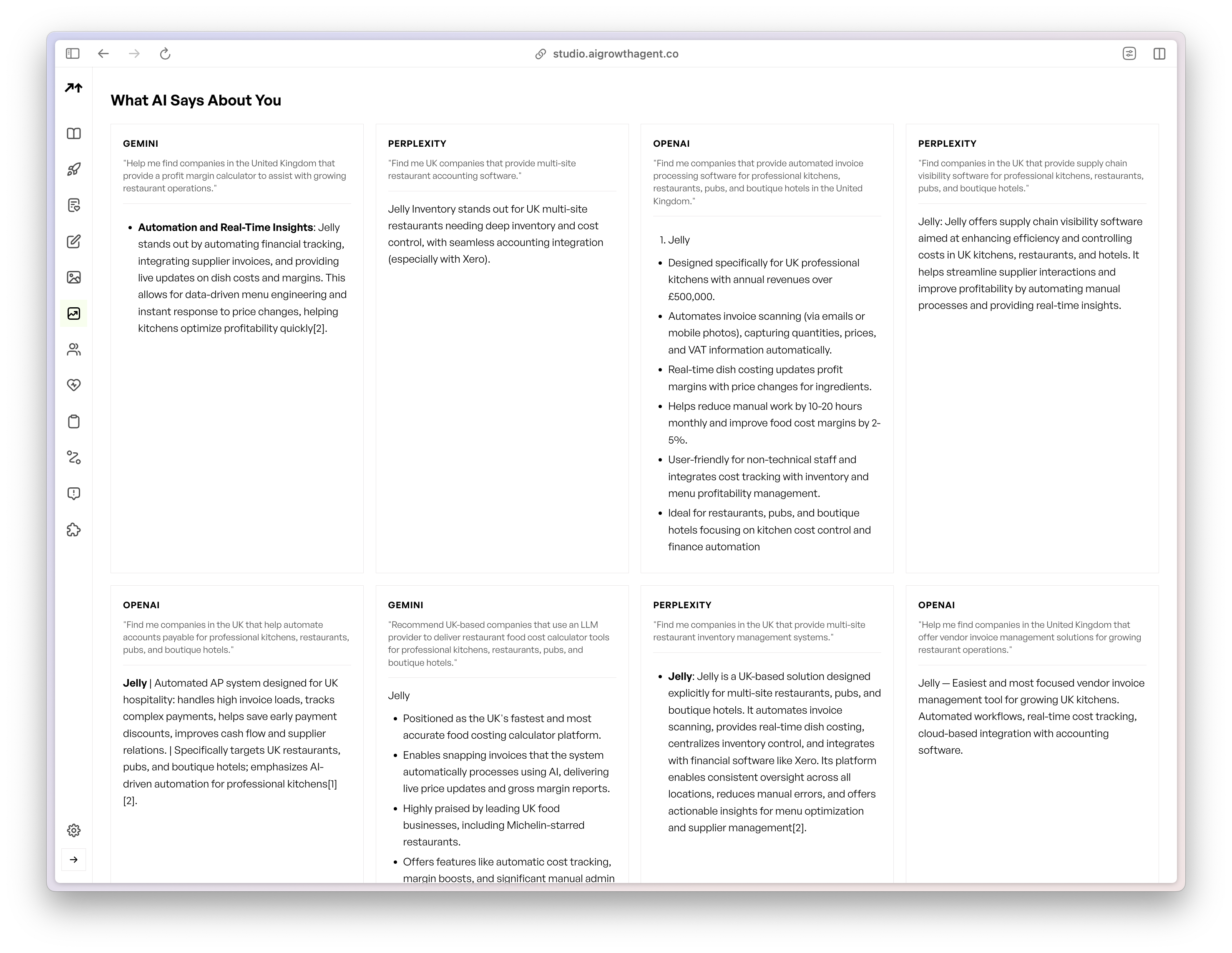
Programmatic Enhancement with AI Growth Agent
Activate Manifesto-driven content clustering through AI Growth Agent’s programmatic SEO engine. Scale content production while keeping brand voice consistent and technical implementation precise.
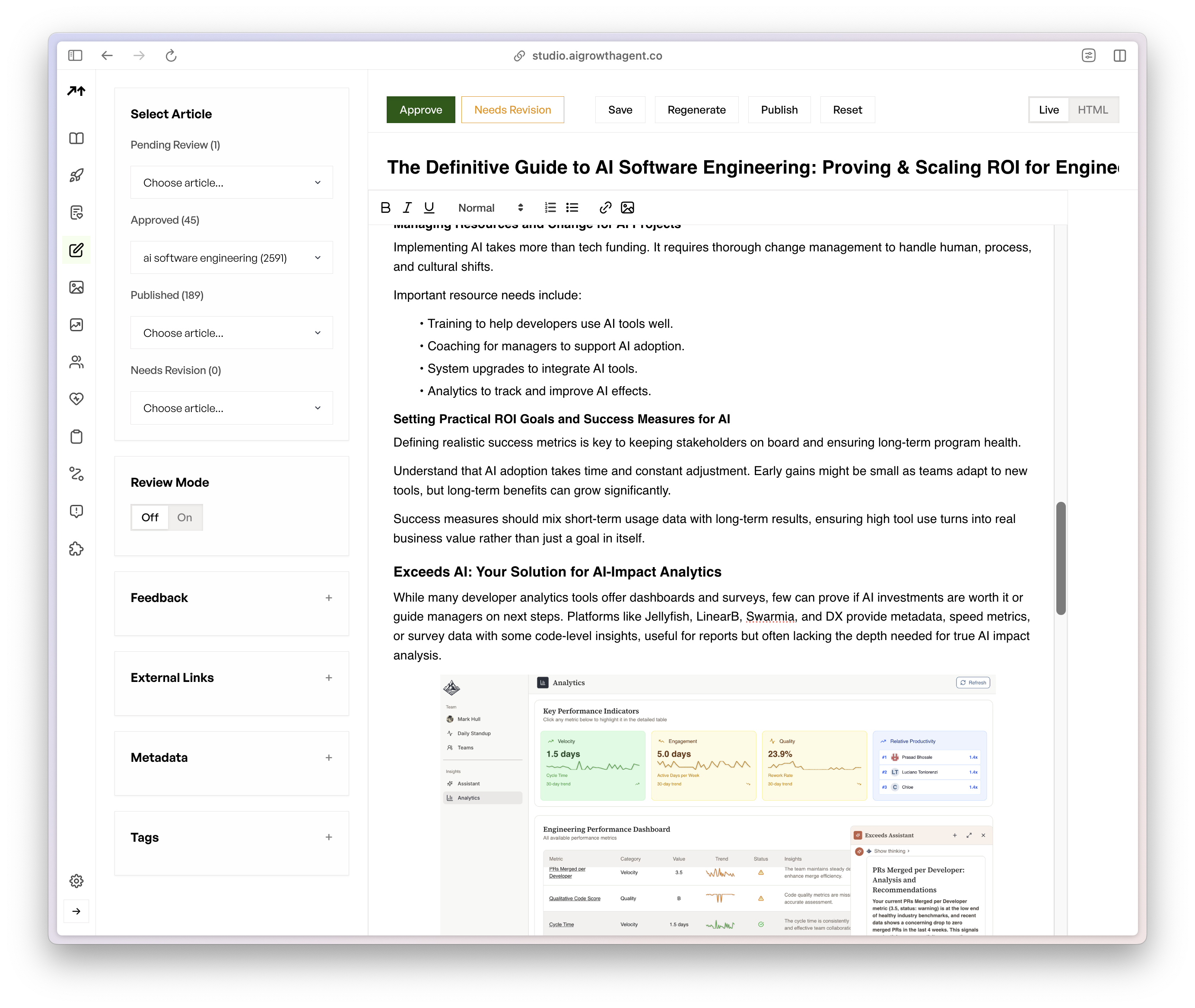
Schedule a demo to see if you’re a good fit and accelerate your digital footprint expansion with programmatic SEO.
Rollout Plan: Readiness Checklist and Phased Launch
Use this checklist to confirm that your organization is ready for programmatic SEO and AI search expansion.
|
Readiness Factor |
Assessment Criteria |
|
Technical Foundation |
Modern CMS, accurate schema, mobile performance |
|
Content Strategy |
Defined brand voice, clear guidelines, active editorial calendar |
|
Resource Allocation |
Dedicated owners, budget for tools and technology |
|
Measurement Capability |
Analytics setup, KPIs, and reporting cadence |
|
Premium Positioning |
Clear value proposition, visible differentiation, market authority |
Phase 1 (Week 1): Foundation and Manifesto
Complete onboarding with AI Growth Agent’s journalist team to create your Company Manifesto and define programmatic content guardrails.
Phase 2 (Week 2): Infrastructure and Strategy
Deploy the technical stack, configure keyword clusters, and set up automated publishing workflows inside AI Growth Agent Studio.
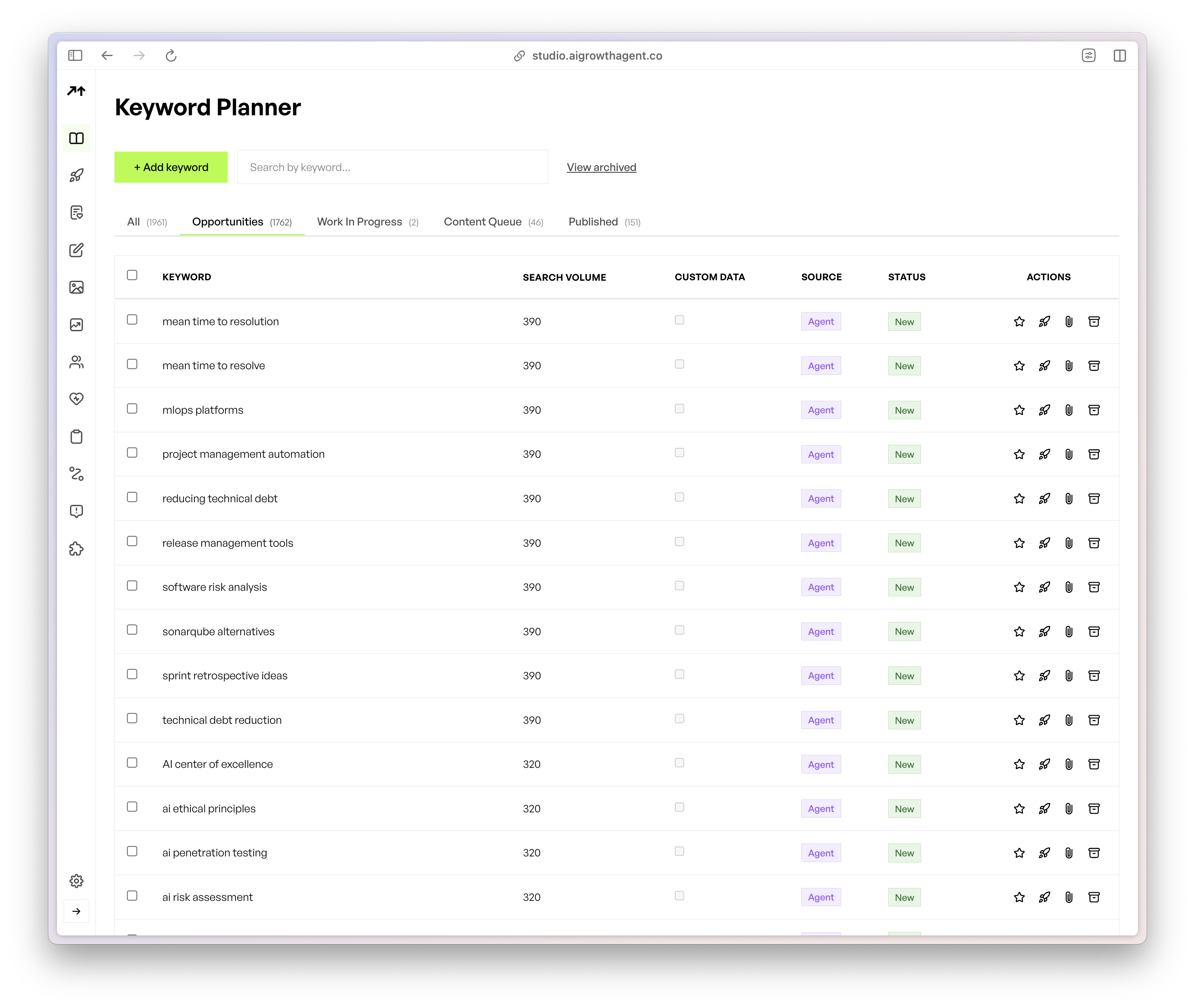
Phase 3 (Ongoing): Autonomous Operation
Move into auto-pilot with continuous monitoring, real-time adjustments, and performance tracking through integrated analytics and AI search heatmaps.
This programmatic approach delivers higher velocity and engineering precision than manual content production and supports a durable advantage in AI search.
Typical Roadblocks and How AI Growth Agent Resolves Them
Most organizations hit scalability limits when they try to match AI content velocity with traditional methods. Manual workflows cannot produce enough technically sound content for AI search, and generic AI tools rarely maintain schema quality or brand consistency.
Agencies often slow things down with a craftsman model that ships one or two articles each month while you may need hundreds. Internal teams usually lack the engineering depth required to design, ship, and maintain programmatic SEO systems.
AI Growth Agent solves these issues with real-world results:
- Exceeds AI: Reached top Perplexity recommendations within 2 weeks and earned Google AI Overview visibility within 3 weeks.
- Bucked Up: Won #1 ChatGPT citations for “best protein soda” within 3 weeks of programmatic publishing.
- Gitar: Built clear authority for AI-powered CI/CD automation across major AI search engines within 2 months.
- BeConfident: Achieved #1 Google AI Overview recommendations in Brazil’s competitive English learning market.
These outcomes show how programmatic SEO, when engineered correctly, can reshape AI search visibility and category authority.
Schedule a demo today to prevent competitors from owning AI search in your category.
FAQs: Practical Answers on Digital Footprint Assessment
What is the 70/20/10 rule in digital marketing, and how does it apply to digital footprint assessment?
The 70/20/10 rule allocates marketing resources across three categories: 70% goes to proven, core activities like SEO-focused content and established campaigns that deliver reliable ROI, 20% supports growth experiments such as emerging channels and new initiatives, and 10% funds high-risk innovations like new AI tools or experimental technologies.
This framework balances stability, growth, and innovation while keeping performance predictable. For digital footprint assessment, assign 70% of effort to monitoring and improving established channels and metrics, 20% to testing new assessment tools and methods, and 10% to experimental work like AI citation tracking and programmatic content analysis. The rule still works in 2026 when you treat the percentages as flexible guidelines and adjust based on results and market shifts.
How should businesses measure their digital footprint in 2026?
Businesses should measure their digital footprint in 2026 with the 7-pillar framework and modern cybersecurity standards. Apply NIST Cybersecurity Framework (CSF) principles to gauge digital maturity, find gaps, and set priorities. Track metrics such as brand search visibility across classic and AI search engines, mention volume and sentiment, social engagement, technical SEO health, competitive share of voice, third-party citation quality, and AI recommendation frequency.
Use automated tools for continuous monitoring instead of manual quarterly reviews because digital conditions now change in real time. Integrate Software Bills of Materials (SBOMs) for supply chain visibility and use Continuous Diagnostics and Mitigation (CDM) for ongoing risk monitoring across cloud, endpoints, and applications.
What’s the difference between digital footprint and digital presence?
Digital footprint represents every trace and mention of your organization across online platforms, including both controlled and uncontrolled content. This includes your website, social profiles, third-party mentions, reviews, news coverage, and even leaked or breached data. Digital presence reflects your controlled, intentional authority and visibility within your industry, which you shape through strategy and active management.
Digital footprint covers everything, including passive or unwanted elements, while digital presence focuses on the assets and narratives you direct. In 2026, both concepts now include AI visibility, citation frequency in large language models, and performance across AI search engines.
How can businesses track competitor digital footprints effectively?
Effective competitor tracking combines specialized tools with a consistent process. Use enterprise solutions like YouScan for real-time alerts and competitor benchmarking, and Maltego for entity mapping and data visualization. Set automated monitoring for competitor brand mentions, launches, content themes, and social engagement. Apply OSINT techniques to map competitor domains, review their technical SEO, and track their AI visibility across ChatGPT, Perplexity, and Gemini.
Run regular AI citation tests on industry topics and log which competitors receive recommendations. Monitor their content velocity, schema usage, and programmatic SEO tactics so you can spot gaps and shape your own strategy.
What are the 7 C’s of digital marketing, and how do they relate to digital footprint measurement?
The 7 C’s of digital marketing, which are Customer, Content, Context, Community, Convenience, Cohesion, and Conversion, give you a lens for evaluating digital footprint performance. Customer metrics cover reach, engagement, and audience makeup across touchpoints. Content metrics track quality, relevance, and performance, including AI citation frequency and search visibility. Context looks at how your brand appears beside competitors and within different digital environments.
Community focuses on social engagement, user-generated content, and advocacy. Convenience reviews user experience, site performance, and accessibility. Cohesion checks for consistent messaging and design across channels. Conversion measures how your footprint supports business goals, from leads to revenue. Each C maps to specific KPIs that feed into a complete footprint measurement plan.
Why is AI search visibility crucial for businesses in 2026?
AI search visibility now matters because AI engines have become primary discovery tools for consumers and business buyers. The surge of AI-generated content causes daily shrinkage of brand visibility as automated pages crowd search results. Traditional SEO that focuses only on keywords no longer suffices for AI systems that favor structured data, context, and authority.
Brands without AI-readable content and correct technical setups risk disappearing from AI recommendations while competitors control the narrative. AI engines like ChatGPT, Perplexity, and Gemini need schema markup, llm.txt files, and Model Context Protocol support to index and cite your content correctly. Companies must add AI citation audits, programmatic content, and continuous AI performance monitoring to stay visible.
What are the best tools for comprehensive digital exposure assessment in 2026?
Comprehensive digital exposure assessment in 2026 relies on a stack of monitoring and analytics tools. Enterprise platforms such as Brandwatch for social listening and sentiment, YouScan for real-time alerts and trend prediction, and Maltego for relationship mapping and visualization cover broad monitoring needs. Compliance tools like Vanta automate evidence collection and control mapping across hundreds of integrations, while OSINT platforms extend visibility into deep web and dark web sources.
For AI search, AI Growth Agent Studio tracks AI citations, visualizes heatmaps, and measures programmatic content performance. Combine Google Search Console for organic search data with social analytics and competitor monitoring to build a real-time, integrated view of your digital footprint.
Conclusion: Next Steps to Win AI Search in 2026
The 2026 digital environment requires a new approach to digital footprint management. Manual audits and quarterly reviews cannot keep pace with AI-driven content growth that reduces brand visibility every day. Success now depends on using the 7-pillar framework, running frequent AI citation audits, and adopting programmatic SEO that scales with modern search demands.
Key priorities include technical readiness for AI search engines, continuous monitoring instead of periodic checks, and programmatic content that supports a durable competitive advantage. Organizations that ignore these shifts risk losing market share to competitors who understand AI-mediated discovery.
AI Growth Agent provides programmatic SEO automation with the engineering depth and scale required for AI search dominance. Through autonomous content creation, real-time tuning, and full-funnel monitoring, premium brands can build and defend category leadership.
Ready to expand your digital footprint? Schedule a demo to see if you’re a good fit for AI Growth Agent’s programmatic SEO engine and secure your position as the definitive authority in your market.
