


Key Takeaways
- AI-first search in 2026 favors brands that publish consistent, structured, and machine-readable content at scale.
- Automated content strategy tools help teams keep pace with AI-generated competition while maintaining quality and oversight.
- Technical elements such as schema, metadata, and LLM-specific files are easier to implement and maintain through automation than by hand.
- Enterprises and growing brands gain operational efficiency and clearer ROI when they automate research, creation, publishing, and monitoring.
- AI Growth Agent provides an end-to-end programmatic SEO system for this new environment; schedule a consultation or demo to evaluate fit.
1. Increase Content Scale and Velocity with Automated Tools
Manual content workflows limit how much you can publish and how quickly you can respond to new opportunities. Marketing teams now compete with a steady flow of AI-generated content, and search systems favor sites that update often with structured, in-depth material.
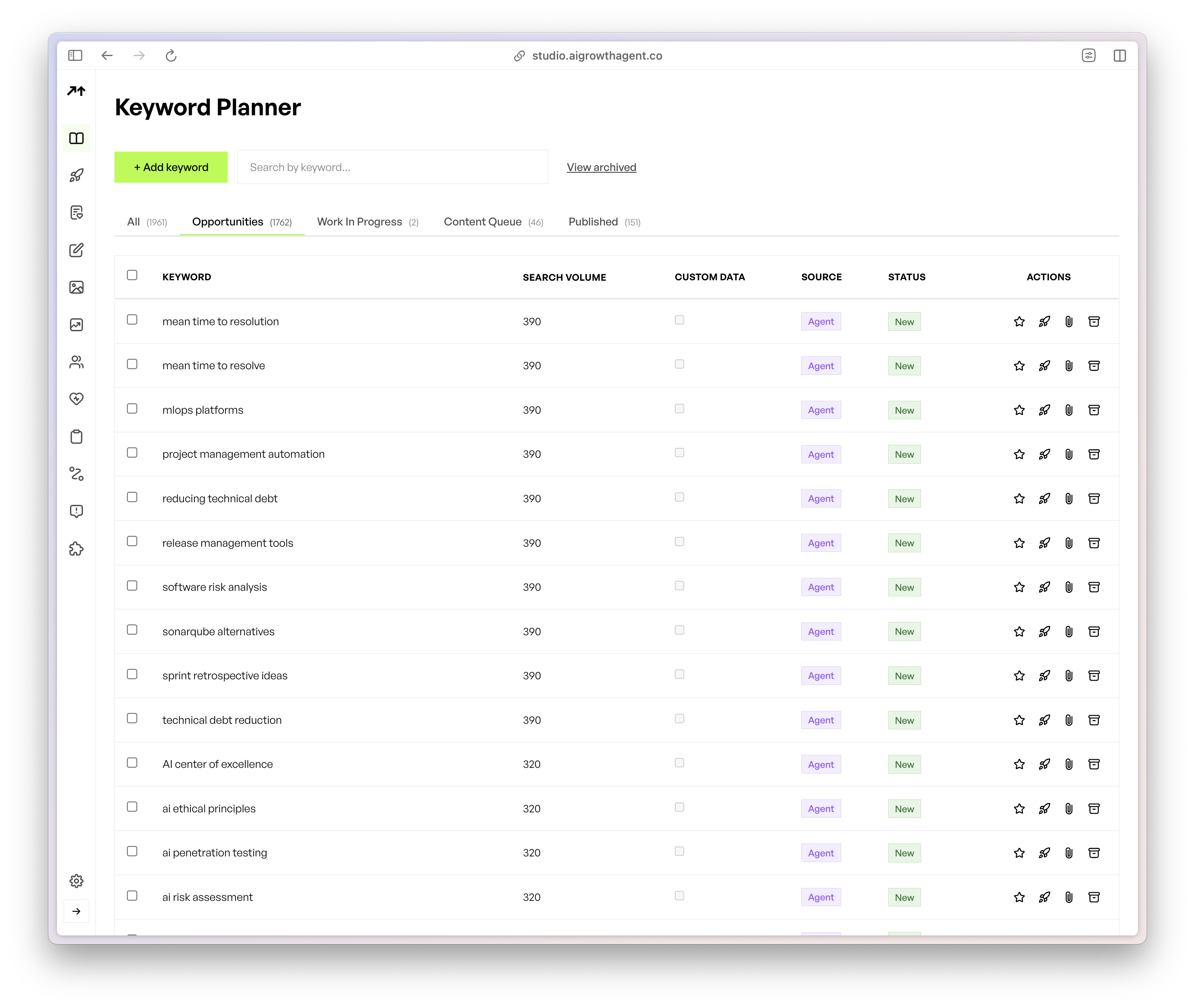
Automated content strategy tools such as AI Growth Agent generate, optimize, and publish large volumes of content in a consistent way. These tools turn strategy inputs and brand rules into complete web pages, then keep them refreshed so content stays current and aligned with evolving user questions.
This approach helps your site become a primary data source for AI systems instead of falling behind faster competitors. Consistent, high-volume publishing builds a wider content footprint that AI search engines can evaluate, reference, and surface.
2. Optimize Content for AI Search and Citation
Traditional SEO alone no longer matches how AI assistants like ChatGPT and Gemini retrieve and summarize information. These systems rely on clear structure, semantic depth, and machine-readable formatting, not just keyword placement on classic result pages.
Automated content strategy tools such as AI Growth Agent apply advanced schema markup, structured headings, and rich metadata across large content libraries. They also support technical assets such as LLM-focused files and protocols like the Model Context Protocol (MCP), which help AI systems interpret and route requests to your content with less ambiguity.
This technical foundation increases the likelihood that AI models can understand, reuse, and potentially cite your material when responding to user prompts. It also prepares your site for new interfaces and standards that will shape how AI search works over the next several years.
3. Strengthen Authority and Trust at Scale
Search engines and AI assistants are placing more weight on signals related to Experience, Expertise, Authoritativeness, and Trustworthiness (EEAT). Brands that rely only on volume risk blending into a growing pool of low-quality AI text.
Automated platforms such as AI Growth Agent ingest your brand story, voice guidelines, and a detailed Company Manifesto so each article reflects expert positioning and consistent messaging. These systems combine fact-checking workflows with structured sourcing and technical assets such as metadata and LLM.txt files that help AI platforms evaluate reliability.
Publishing content that is both technically sound and grounded in verifiable expertise makes it easier for search engines and AI models to treat your site as a trusted reference in your category. Over time, that trust can support higher visibility for both human readers and AI-generated answers.
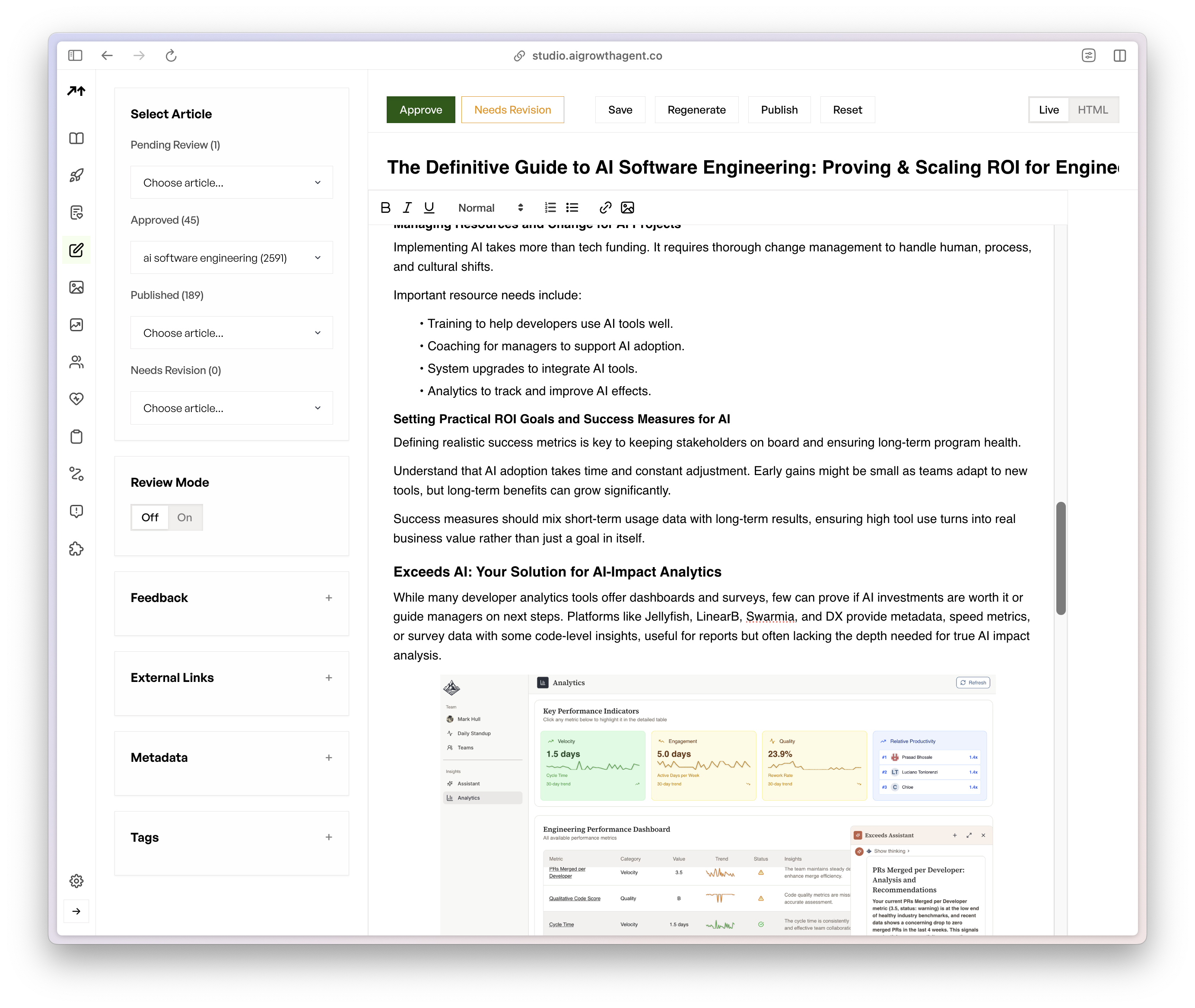
Teams that want AI-ready authority can use AI Growth Agent’s optimization and quality controls to align technical SEO, brand voice, and factual accuracy. Schedule a consultation or demo to review how this works in practice.
4. Streamline Operations and Improve Content ROI
Marketing leaders need to show clear returns on content investments, yet manual production often creates bottlenecks. Research, drafting, editing, formatting, publishing, and reporting all draw on different tools and teams, which slows output and complicates attribution.
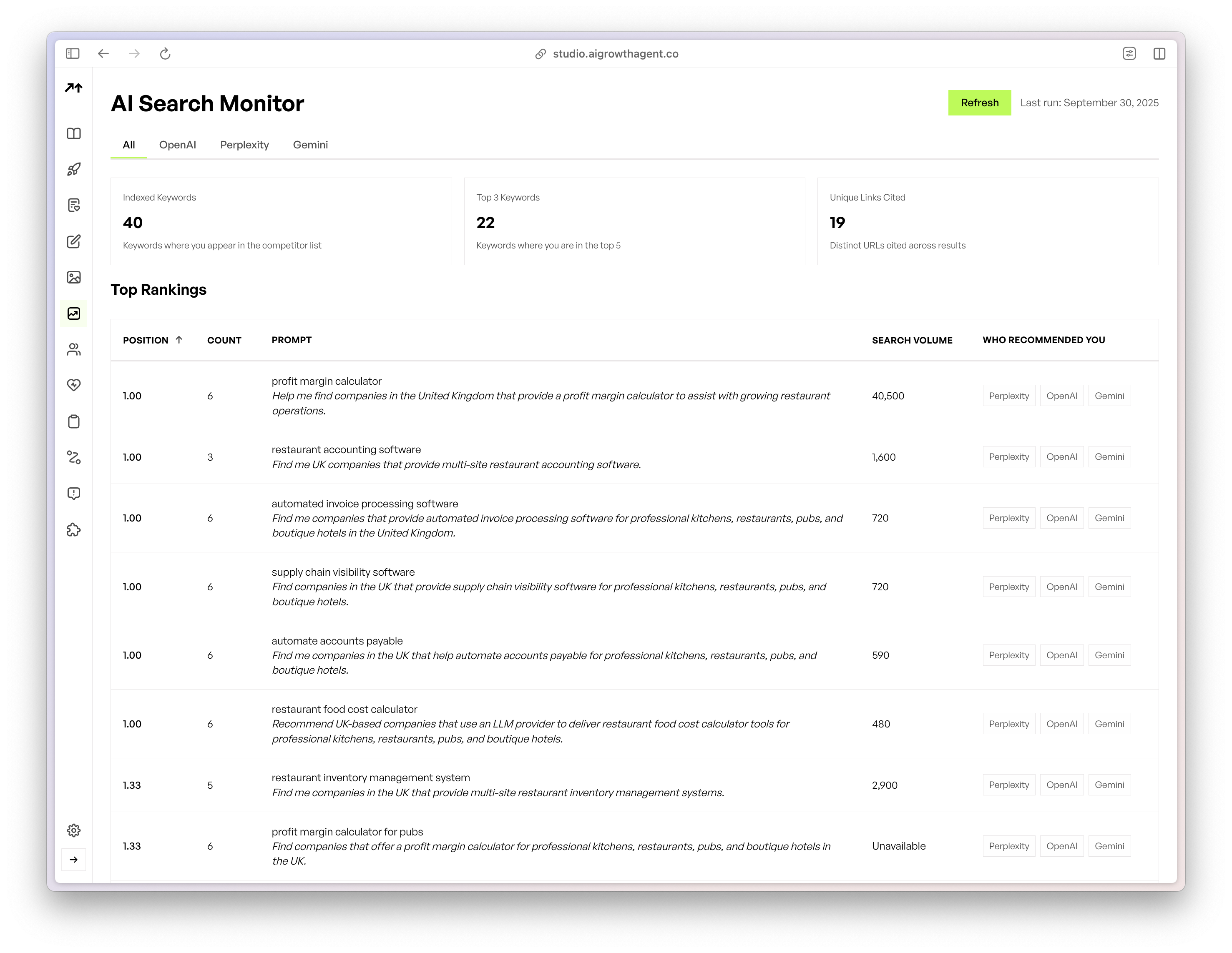
Automated content strategy tools such as AI Growth Agent connect these steps into one programmatic workflow. The platform supports keyword research, content briefs, article generation, technical optimization, autonomous publishing, and real-time performance monitoring in the AI Growth Agent Studio, so teams can focus on strategy and oversight instead of repetitive tasks.
This integrated approach reduces production costs per article and makes it easier to tie content initiatives to traffic, visibility, and revenue metrics. Content shifts from a hard-to-measure expense to a more predictable growth channel.
|
Feature / Outcome |
Traditional Content Strategy |
Programmatic SEO with AI Growth Agent |
|
Content Volume and Velocity |
Manual, limited, slower publishing cycles |
Automated workflows, higher volume, faster publishing |
|
AI Search Optimization Focus |
Primarily keyword and SERP-focused |
Designed for AI citations, structure, schema, and MCP |
|
Technical SEO Depth |
Basic metadata, periodic manual updates |
Consistent technical implementation, LLM.txt, Model Context Protocol |
|
Brand Authority Development |
Incremental gains, manual fact-checking |
Manifesto-guided content, structured trust signals, AI-ready assets |
5. Support Multi-Brand Strategies and Rapid Content Injection
Enterprises with multiple brands or product lines often manage fragmented content operations. Separate teams, tools, and timelines make it difficult to coordinate messaging or react quickly to breaking topics and shifts in demand.
Automated tools such as AI Growth Agent support multi-tenant deployment, so one central team can manage parallel content agents for different brands from a single interface. The platform can also inject real-time context into content generation, which allows fast publication of SEO-optimized articles in response to events, trends, or product updates.
These capabilities help organizations capture search and AI visibility around timely topics while keeping a distinct voice for each brand. A lean core team can supervise many sites and maintain consistent quality, structure, and technical standards.
Marketing leaders who want to resolve the content ROI challenge and simplify operations can review AI Growth Agent’s end-to-end workflows. Schedule a consultation or demo to see how programmatic SEO fits into existing processes.
Frequently Asked Questions about Automated Content Strategy Tools
How do automated content strategy tools ensure quality oversight?
The leading automated content strategy tools such as AI Growth Agent start with structured onboarding, where a professional journalist helps define a Company Manifesto and programs the agent’s core guidelines. This source document sets boundaries for voice, topics, claims, and approval rules. Fact-checking modules and interactive environments such as the AI Growth Agent Studio then support review cycles, edits, and approvals, so output improves over time while staying within brand and quality standards.
Can these tools effectively optimize for AI search engines like ChatGPT and Gemini?
Advanced automated solutions extend beyond classic SEO for web results and focus on how AI assistants read and reuse content. AI Growth Agent implements technical SEO elements including schema markup, metadata, LLM.txt files, and a blog-focused implementation of the Model Context Protocol (MCP). These elements help AI systems interface with the site, interpret context, and identify content that fits user prompts.
Are automated content tools suitable for small businesses or primarily for large enterprises?
Automated content strategy tools provide value to both large enterprises and smaller premium brands. Enterprises benefit from features such as multi-tenant programmatic deployment and centralized governance. Smaller teams use the same infrastructure to automate authoritative content creation, improve technical SEO, and compete for visibility against larger players in an AI-first landscape.
How quickly can a brand see results from implementing an automated content strategy tool?
Implementation timelines vary by site size and complexity, but Programmatic SEO Agents such as AI Growth Agent are built for fast onboarding. Many clients move from setup to their first programmatically engineered article within about a week. Brands such as BeConfident, which was indexed quickly and recommended as a leading app in Brazil within weeks, and Gitar.ai, which became a reference brand in less than two months, illustrate how rapidly AI visibility can shift once structured content libraries go live.
How do these tools compare to generic AI writing assistants?
Generic AI writing assistants typically generate unstructured drafts and leave strategy, formatting, and publishing to the user. Automated content strategy tools such as AI Growth Agent operate as end-to-end systems. They run programmatic research, generate full pages with technical SEO, align content with brand rules, publish to your site, and monitor performance. This turns AI from a drafting aid into a managed content engine.
Plan Your Next Steps with Automated Content Strategy Tools
AI-driven search is reshaping how people discover products, services, and expertise, and brands that adapt their content operations will be better positioned to earn visibility. Automated content strategy tools give marketing leaders a structured way to scale production, maintain quality, and meet the technical expectations of AI systems.
Teams that want to build a durable presence in this environment can treat AI Growth Agent as a partner for programmatic SEO, technical optimization, and ongoing monitoring. Schedule a consultation session or demo with AI Growth Agent today to assess whether automated content strategy fits your goals for 2026 and beyond.
