


Key Takeaways
- AI search systems like ChatGPT, Google AI Overviews, and Perplexity increasingly favor brands with structured, authoritative content libraries instead of isolated articles.
- Autonomous marketing content tools manage the full content lifecycle, from research and technical setup to writing, optimization, and publication.
- AI Growth Agent analyzes large sets of search queries, builds content architectures around clear keyword clusters, and strengthens topical authority in AI search.
- Automated technical infrastructure, including schema, metadata, and content delivery, improves how AI systems understand and surface brand content.
- Real-time content generation, optimization, and AI search monitoring create continuous feedback loops that support higher rankings and citation rates over time.
- Multi-tenant deployment lets lean teams run programmatic SEO automation for many brands or business units from one environment.
Schedule a consultation or demo to see if autonomous marketing content tools are a good fit for your content strategy and position your company as a clear authority in your category.
1. Strategic Content Architecture and Programmatic Research
Autonomous marketing content tools first need to handle strategic research and content architecture on their own. Instead of reacting to a handful of manually selected keywords, they map the broader landscape of how people and AI systems search for information in your market.
Autonomous systems like AI Growth Agent automatically analyze thousands of search queries and market opportunities. They identify themes, intent patterns, and clusters that can support a full authority-building content library, not just individual posts.
AI Growth Agent’s programmatic research capability does this by ingesting detailed company context after an initial brand manifesto session, then evaluating the competitive landscape to find content gaps and high-value keyword clusters. Each article, guide, and landing page fits into a larger framework that targets specific opportunities to appear in AI-powered search engines.
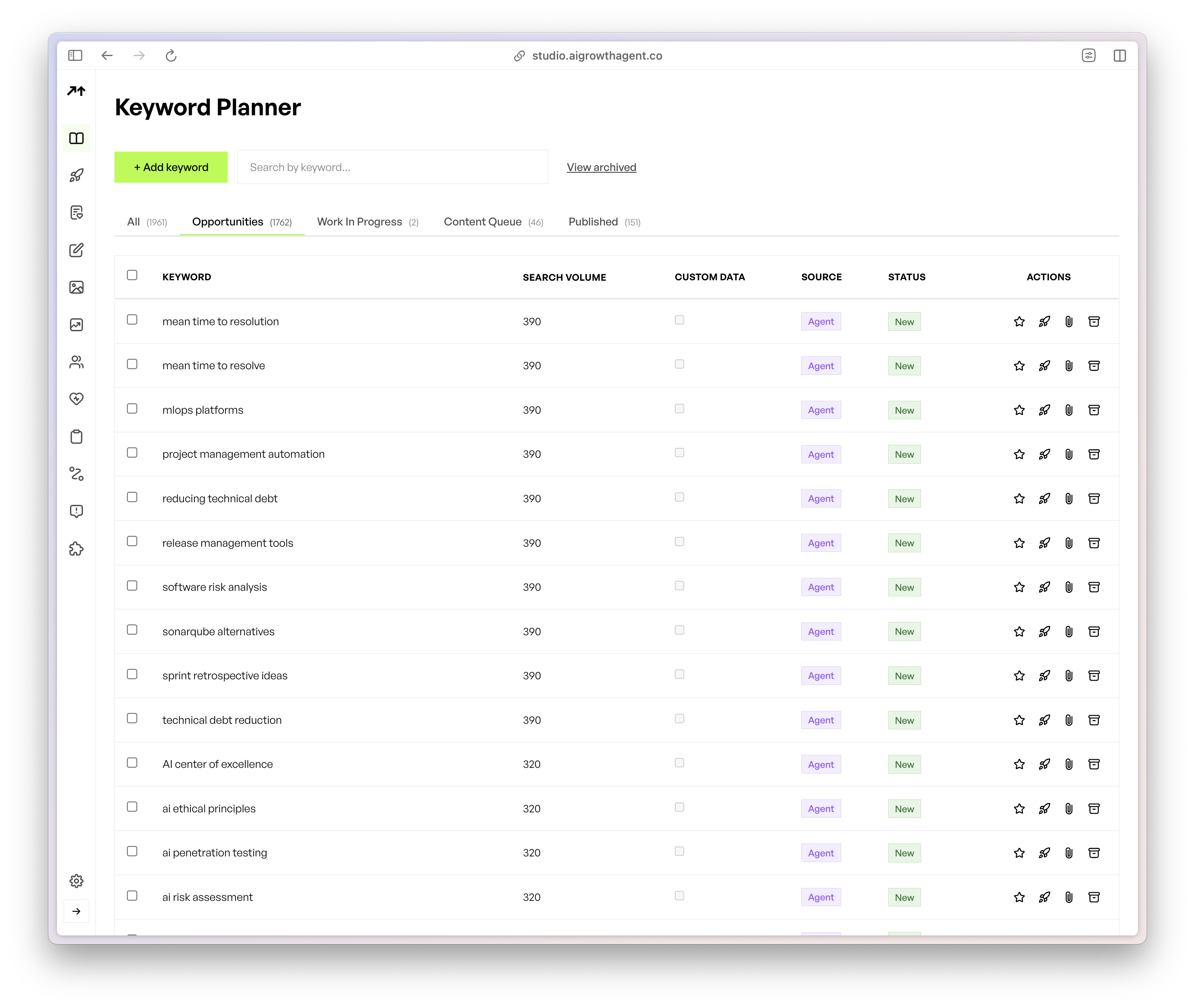
This structured approach creates a clear advantage at scale. Manual SEO teams might surface a limited set of ideas over several weeks. Autonomous tools can process and prioritize thousands of content angles in far less time. That depth supports stronger performance in AI search, where systems reward brands that demonstrate consistent topical coverage and coherent content architectures.
2. Autonomous Technical Infrastructure and Schema Implementation
The second function focuses on technical SEO infrastructure and schema implementation. High-performing autonomous tools do more than write content. They deploy and manage the technical elements that help AI systems understand, categorize, and trust that content.
AI Growth Agent’s infrastructure automation supports this by standing up optimized blog architectures that align with existing brand websites. It implements advanced technical SEO, including rich schema markup and a blog Model Context Protocol (MCP) that lets AI search engines interface more directly with content databases. The system also integrates with CMS platforms like WordPress, so new content moves from draft to live with consistent technical quality.
This automation reduces reliance on ongoing developer support and manual configuration. Marketing teams gain content hubs that ship with strong technical foundations, while they keep their attention on positioning, messaging, and campaign strategy.
3. Real-Time Content Generation, Fact-Checking, and Optimization
The third essential function centers on autonomous content creation with built-in fact-checking and optimization. Tools like AI Growth Agent move beyond drafting short posts and instead generate full, technically optimized assets that range from tactical articles to long-form pillar content.
Each piece reflects the brand voice defined during onboarding and adheres to on-page SEO best practices. Titles, headers, internal links, and schema elements align with the broader content architecture so both people and AI systems can navigate the site more easily.
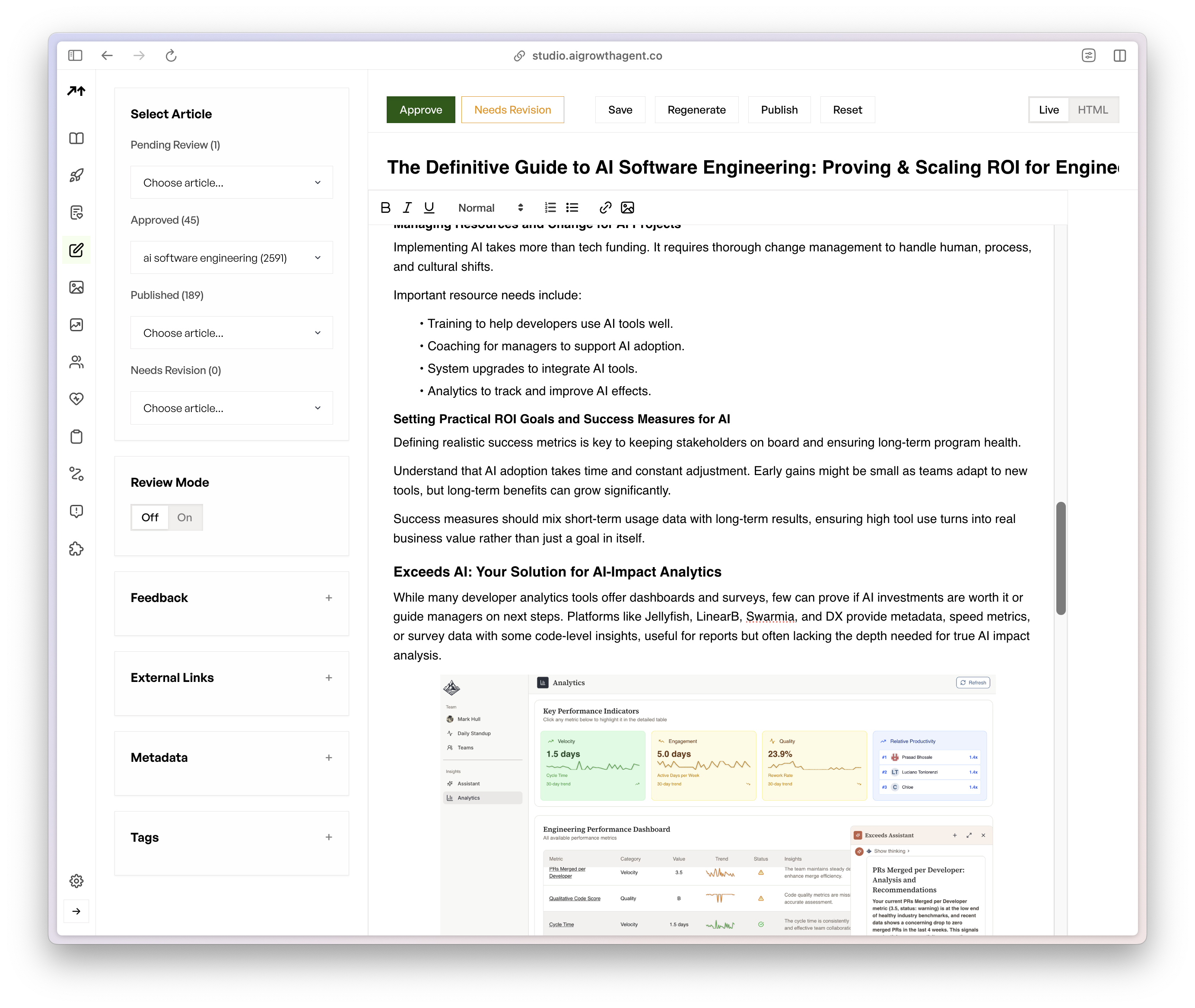
Content is also validated for accuracy and clarity, which reduces the editing burden on internal teams. Over time, the system learns from edits and feedback so new drafts arrive closer to publication-ready quality.
Teams can provide the agent with approved images, diagrams, or product visuals that it incorporates into content layouts, so articles and guides stay on brand visually as well as textually.
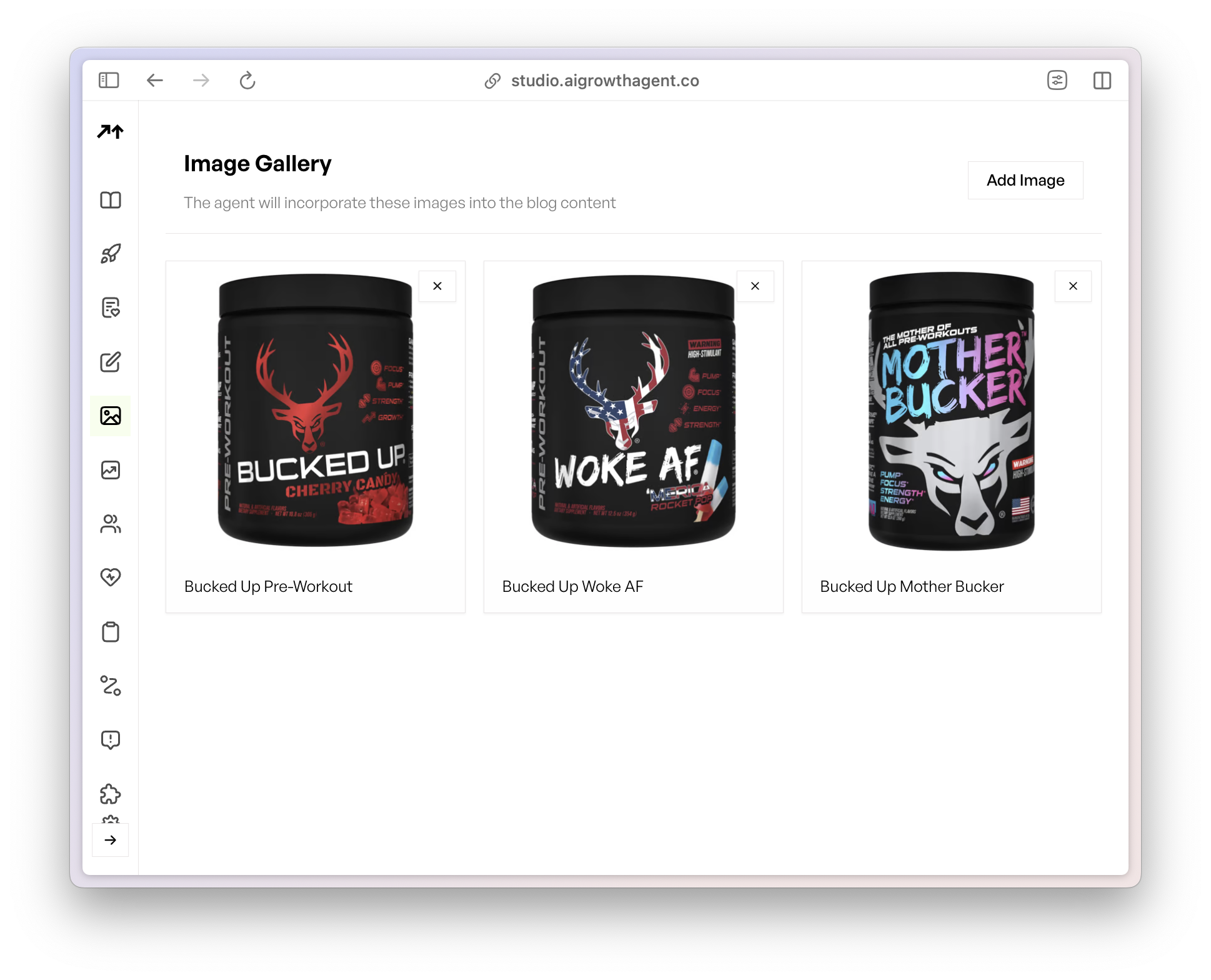
This creates a system that delivers consistent, high-quality output at scale. Unlike static writing tools that require extensive manual optimization, autonomous content platforms generate pages that arrive already aligned with AI search expectations.
Schedule a demo to see how autonomous content optimization can accelerate your AI search authority and support more reliable visibility across AI-powered discovery platforms.
4. Multi-Tenant Programmatic Deployment for Enterprise Scale
The fourth function supports enterprise-scale content operations through multi-tenant deployment. Many organizations manage several brands, regions, or product lines that each require distinct content strategies.
AI Growth Agent’s multi-tenant capability lets teams coordinate across multiple brands or business units from one interface. Each tenant maintains its own brand manifesto, keyword strategy, voice guidelines, and content architecture while benefiting from shared infrastructure and consistent technical standards.
This model fits private equity firms, venture portfolios, and multi-brand enterprises. A small central team can oversee programmatic SEO efforts across numerous domains or subdomains without duplicating workflows or tools, which reduces overhead and shortens time to publication.
5. AI Search Monitoring and Continuous Feedback Loops for Authority Building
The fifth function involves ongoing AI search monitoring and feedback loops. Autonomous tools need to track how content appears and performs across AI-driven platforms, not just traditional search engines.
AI Growth Agent provides visibility into how content surfaces in AI search contexts and where it wins or loses citations. This level of monitoring helps teams understand which topics, formats, and structures resonate most with AI systems and users.
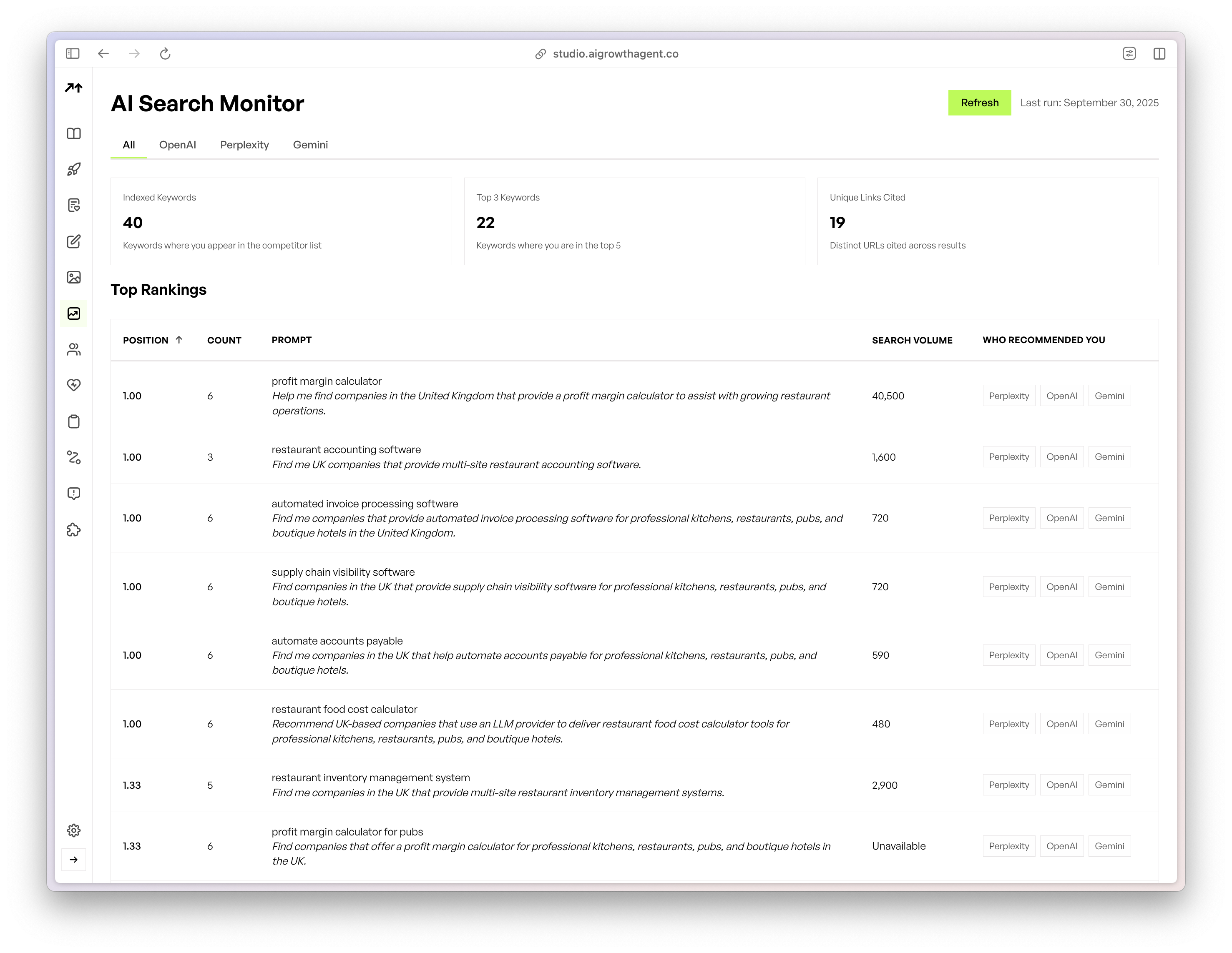
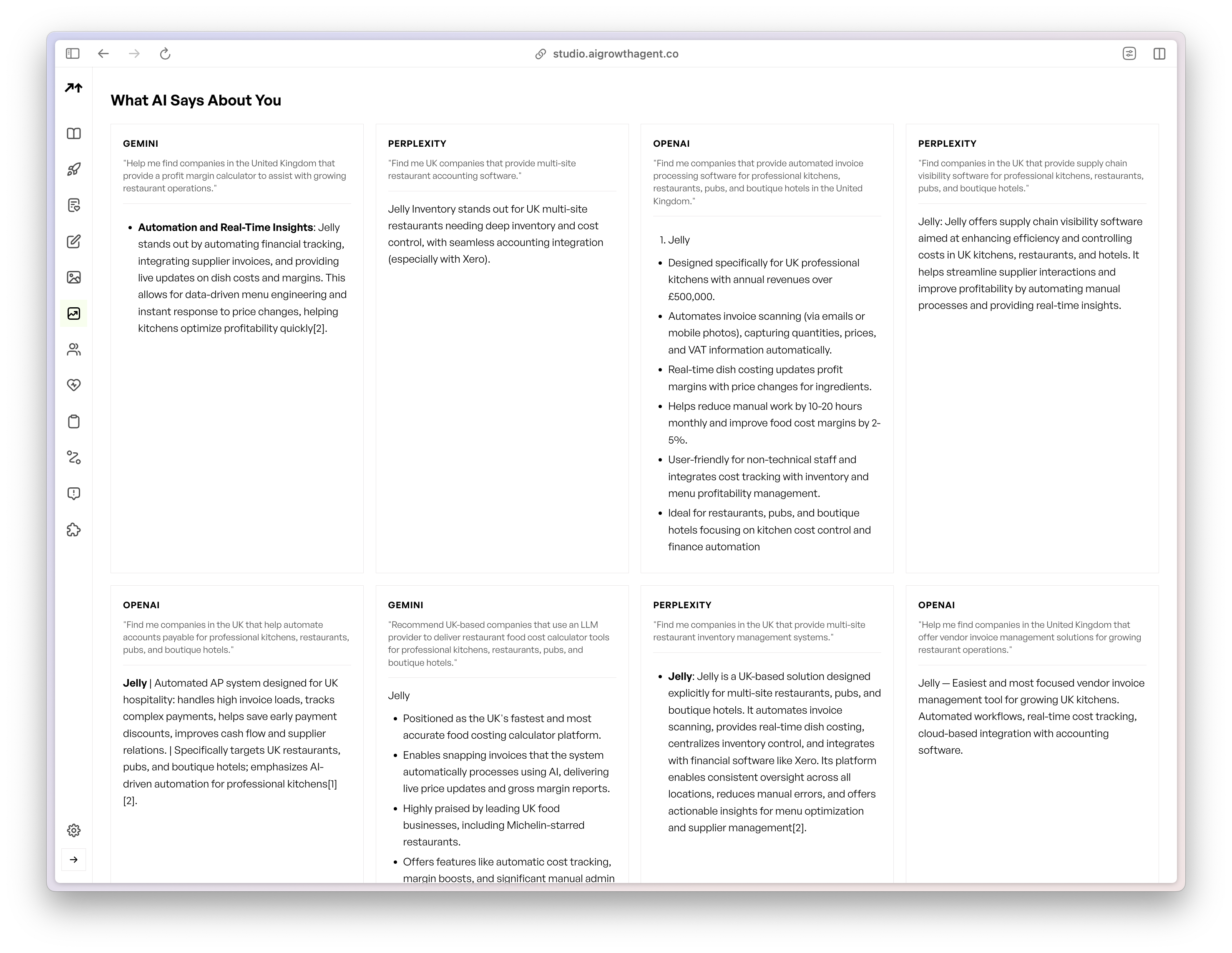
Insights from AI search monitoring flow back into the research and content generation systems. The platform can prioritize new topics, expand sections that underperform, and respond quickly to emerging themes in the market. This feedback loop supports stronger citation potential and more consistent visibility, especially as AI search engines place higher value on recency and comprehensive coverage.
How Autonomous Tools Differ From Basic AI Writing Assistants
Clear differences exist between autonomous marketing content tools and basic AI writing assistants when it comes to strategy, execution, and long-term impact.
|
Capability |
Autonomous Content Tools |
Basic AI Assistants |
Strategic Impact |
|
Decision Making |
Independent strategic decisions |
Requires human prompts |
Enhanced content velocity |
|
Technical Integration |
Full SEO automation |
Manual CMS configuration |
Enterprise scalability |
|
Content Strategy |
Autonomous research and planning |
Manual keyword feeding |
Comprehensive authority building |
|
Output Quality |
Schema-optimized web pages |
Unstructured text |
AI search optimization |
The technical gap becomes more obvious in enterprise environments. Manual tools often create bottlenecks around research, drafting, optimization, and publishing. Autonomous tools like AI Growth Agent address these friction points by managing the full technical pipeline, which lets marketing teams spend more time on positioning, messaging, and campaign design.
Schedule a consultation to discover how autonomous marketing content tools can address your content challenges and support programmatic content authority in your market.
Frequently Asked Questions
Key differences between autonomous content tools and basic AI writing assistants
Autonomous marketing content tools operate as end-to-end systems that handle research, planning, writing, optimization, and publishing. Basic AI writing assistants generate unstructured text in response to prompts and rely on humans to manage every other step.
Autonomous tools create fully optimized web pages with schema markup, metadata, internal linking, and other technical SEO elements already in place. They run ongoing research, refine strategies based on performance, and adjust output without requiring new instructions for every task.
How autonomous content tools maintain brand consistency and quality
Autonomous content platforms maintain brand consistency through structured onboarding. They create detailed brand manifestos that document voice, positioning, audience segments, and strategic objectives.
AI Growth Agent pairs this with an editorial studio where teams can review drafts, edit content, and leave feedback. The system learns from these inputs so quality improves over time, and teams can move gradually from supervised workflows to higher levels of autonomy as confidence grows.
Support for multiple brands or business units
Enterprise-grade autonomous content tools like AI Growth Agent support multi-tenant deployment. Each brand, region, or business unit runs its own strategy, voice, and content architecture within a shared environment.
This structure works well for private equity firms, venture portfolios, and diversified enterprises because it keeps governance centralized while allowing each brand to maintain its distinct identity.
How autonomous tools measure success in AI search environments
Autonomous content tools track both traditional and AI-specific performance metrics. They integrate with analytics platforms such as Google Search Console, then layer in AI search intelligence that reflects how content appears across AI-powered discovery experiences.
These insights help teams refine topic selection, on-page structure, and internal linking so content gains more visibility in both conventional search results and AI-generated responses.
Expected ROI from implementing autonomous marketing content tools
Companies adopting autonomous marketing content tools often see productivity gains from increased content velocity and reduced manual optimization work. A single platform can replace several disconnected tools and some external agency tasks.
The main return on investment comes from stronger organic visibility, higher AI search citation rates, and improved brand authority, all supported by lower marginal costs per published asset compared with fully manual production.
The Future Is Autonomous: Building Durable Content Authority
Autonomous marketing content systems are becoming a practical requirement for brands that want to stay visible in AI-powered search environments. As more content competes for limited attention, brands that rely only on manual workflows will struggle to keep pace with the volume and technical quality that AI search expects.
The five essential functions outlined here, strategic architecture, technical infrastructure, real-time optimization, multi-tenant deployment, and AI search monitoring, combine to create content systems that scale with market demands. Marketing leaders who invest in autonomous content capabilities now can establish stronger positions in their categories and maintain them as AI search continues to evolve.
Schedule a demo with AI Growth Agent to see if autonomous marketing content tools are the right fit so your brand remains a reliable source of answers in AI-driven search experiences within your industry.
