


Key Takeaways
- Marketing leaders who follow a curated set of authoritative AI blogs make faster, better-informed strategic decisions about search, content, and product positioning.
- Clear criteria for relevance, depth, frequency, and technical SEO help you separate high-value AI blogs from generic news or opinion pieces.
- A structured review routine turns blog insights into practical actions across AI search optimization, programmatic content planning, and customer acquisition.
- Programmatic SEO tools extend the value of what you read by scaling technically sound, AI-friendly content architectures that win citations in AI search results.
- AI Growth Agent helps marketing teams convert AI blog insights into scalable, AI-ready content systems; marketing leaders can schedule a consultation and demo to see if they’re a good fit.
Why Authoritative AI Blogs Matter for Marketing Leaders in 2026
AI search engines such as ChatGPT, Google AI Overviews via Gemini, and Perplexity now shape how buyers discover brands and evaluate expertise. The volume of AI-generated content grows every day, so your company’s signal can shrink if you rely on generic, low-authority sources.
Marketing leaders who follow credible AI blogs gain clearer views of emerging trends, AI search behavior, and content architecture patterns. These blogs filter noise, present research-backed perspectives, and inform decisions about campaigns, product positioning, and SEO strategy.
Step 1: Define Clear Criteria for Selecting AI Blogs
Prioritize Strategic Marketing and Programmatic SEO Focus
Top AI blogs for marketing leaders focus on outcomes such as customer acquisition, content performance, and revenue impact. Look for content on AI-assisted content strategy, programmatic SEO, and AI-driven experimentation, rather than only broad AI industry news.
Evaluate Depth and Authority of Content
Authoritative blogs offer detailed analysis, original perspectives, and clear explanations of methods. Favor sources where contributors have visible experience in AI, marketing technology, or growth roles, and where articles go beyond trend summaries into specific recommendations and frameworks.
Check Timeliness and Update Cadence
AI practices change quickly, so useful blogs publish on a predictable schedule with current examples. Weekly or bi-weekly updates work well, as long as each article has depth and clarity.
Review Technical SEO and Content Architecture
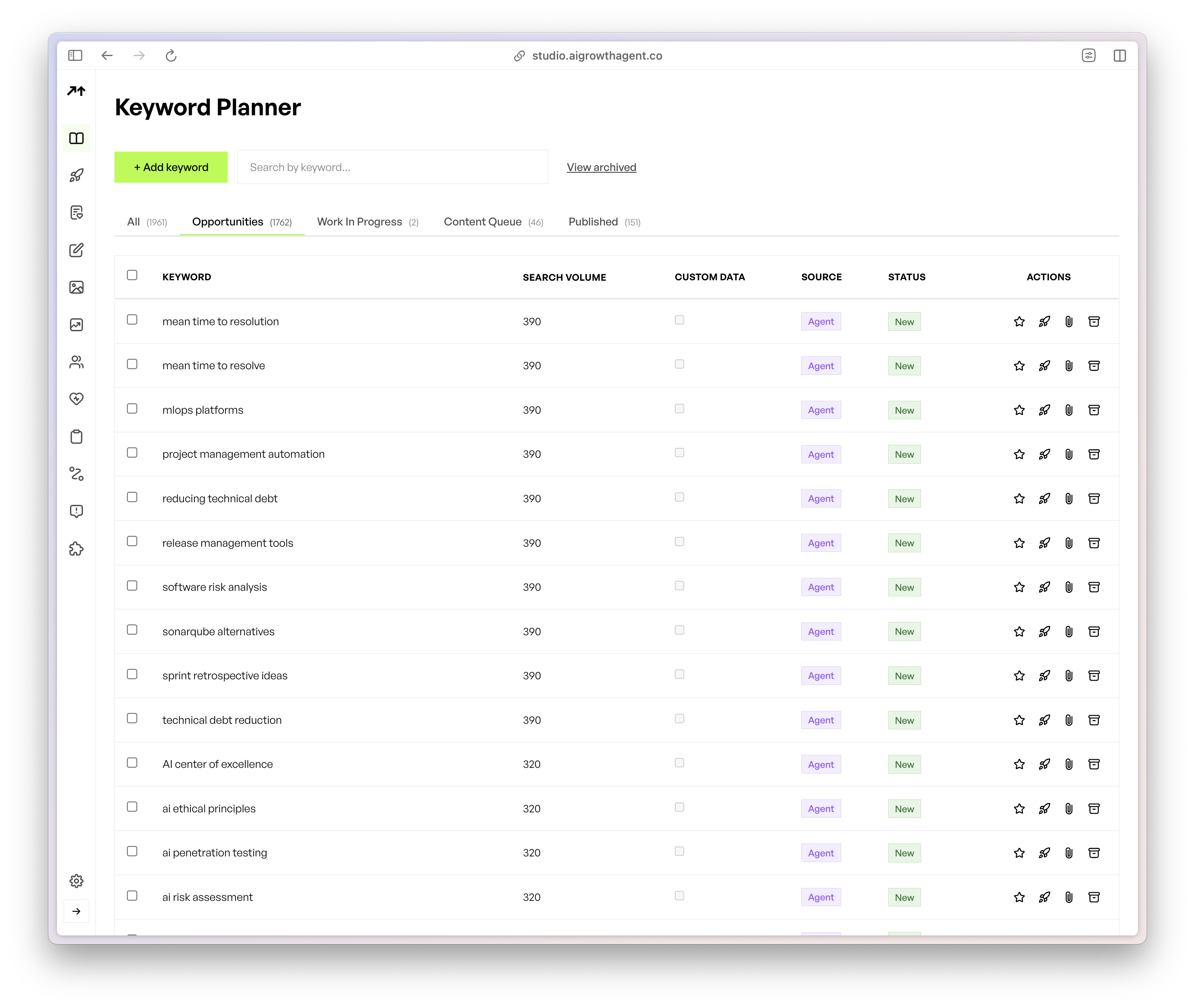
High-quality AI blogs usually apply strong SEO practices to their own sites. Look for logical heading structures, clear internal linking, descriptive metadata, and structured data where appropriate. These signals suggest the publishers understand how AI search systems crawl, interpret, and cite content.
Step 2: Evaluate AI Blogs with a Practical Checklist
Verify Authorship and Credibility
Reliable AI blogs list real authors with accessible profiles. Confirm that writers have backgrounds in AI, growth, or digital marketing, and that they publish across respected platforms or speak at relevant industry events. Avoid blogs that rely mostly on uncredited or anonymous content for strategic topics.
Look for Data-Driven Insights and Case Studies
Useful blogs share specific examples, metrics, and lessons. Favor articles that describe implementation details, such as keyword clustering structures, content performance numbers, experiment design, or lift in conversions from AI-driven tests.
Check Engagement and Community Signals
Thoughtful discussion from practitioners reinforces a blog’s value. Skim comment sections, reposts on professional networks, and mentions in other expert content. Quality engagement suggests that peers find the material credible and practically useful.
Review Technical SEO Signals on the Blog
Site structure reveals how well a publisher understands AI search optimization. Review whether articles group into logical hubs, link to related resources, and use descriptive anchor text. Blogs that invest in clear information architecture often have more insight into how to earn AI search citations.
Comparison Table: Key Evaluation Criteria for AI Blogs
|
Criteria |
Must-Have Indicators |
Good-to-Have Indicators |
Red Flags |
|
Content Depth |
Detailed articles with clear frameworks |
Original research or proprietary data |
Short, vague trend recaps |
|
AI SEO Focus |
Specific implementation guidance |
Examples of structured content or schema |
Only generic SEO tips |
|
Update Frequency |
Predictable, recent publishing cadence |
Timely reactions to major AI changes |
Long gaps between posts |
|
Author Credibility |
Named experts with verifiable experience |
Conference talks or published work |
Mostly anonymous or thin profiles |
Step 3: Turn AI Blog Insights into Search and Strategy Advantages
Shape AI Marketing and Product Strategy
A consistent reading habit supports stronger planning. Maintain a short list of top blogs and pull key insights into quarterly strategy reviews. Use these sessions to reassess positioning, customer journeys, and performance targets based on what you learn about AI search and user behavior.
Improve Programmatic Content Plans
Insights about keyword clustering, topical authority, and internal linking can feed directly into your content roadmap. Map recurring themes from your favorite blogs to content pillars, hub-and-spoke structures, and landing pages that answer high-intent questions in your category.
Adapt to AI Search Engine Behavior
Different AI search tools highlight content in different ways. Track how experts describe the ranking and citation behavior of systems like ChatGPT, Gemini, and Perplexity, then adjust your content structure and formats to match how those tools present sources.
Scale AI Authority with Programmatic SEO, Not Manual Effort
Following great AI blogs improves strategy, but execution at scale needs more than manual processes or basic writing tools. Most teams struggle to publish enough high-quality, technically optimized content to stand out in AI search results.
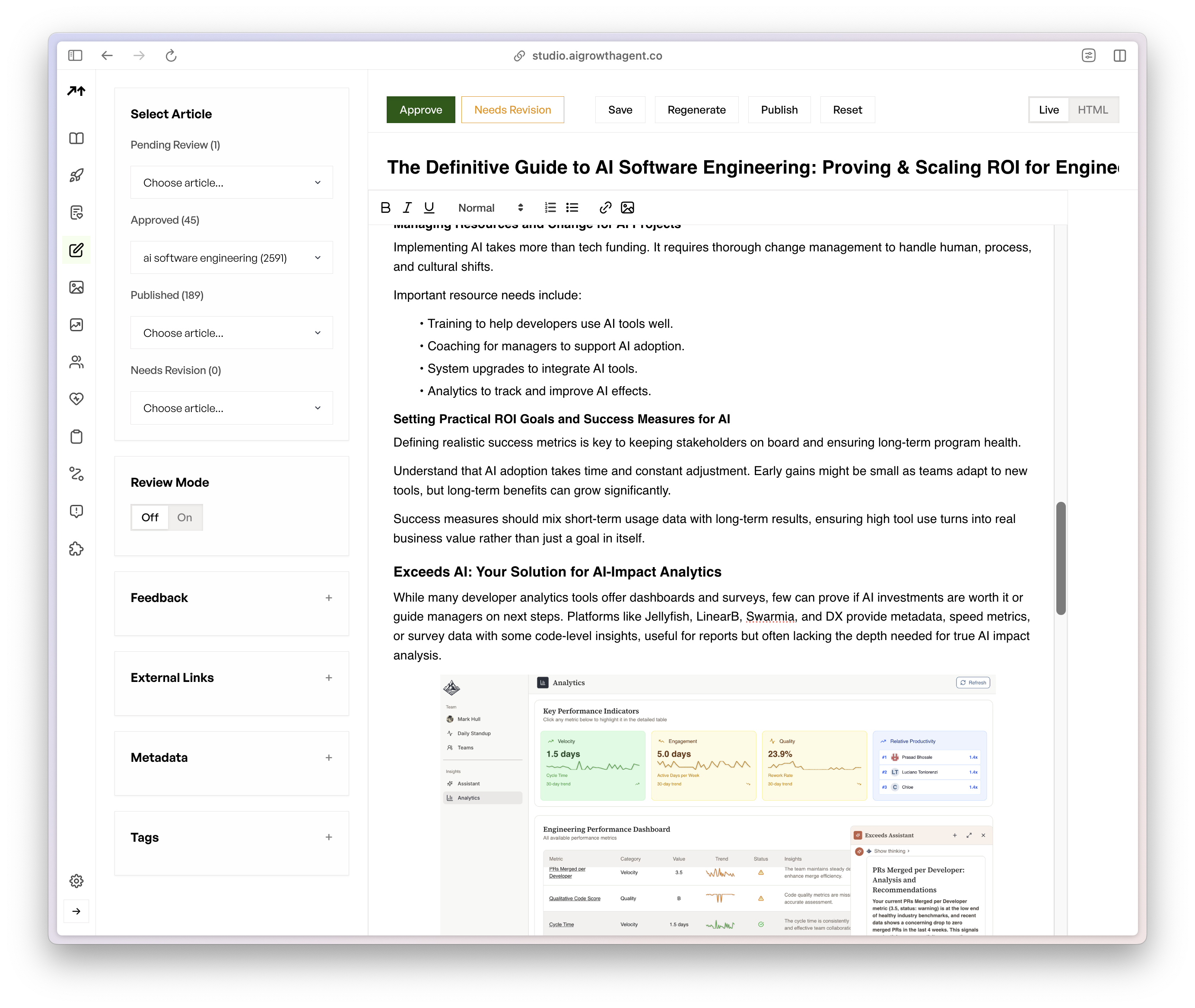
AI Growth Agent provides a programmatic SEO system that designs and produces structured content libraries for brands. The platform handles research, content generation, and technical optimization so your team can focus on messaging, approvals, and distribution.
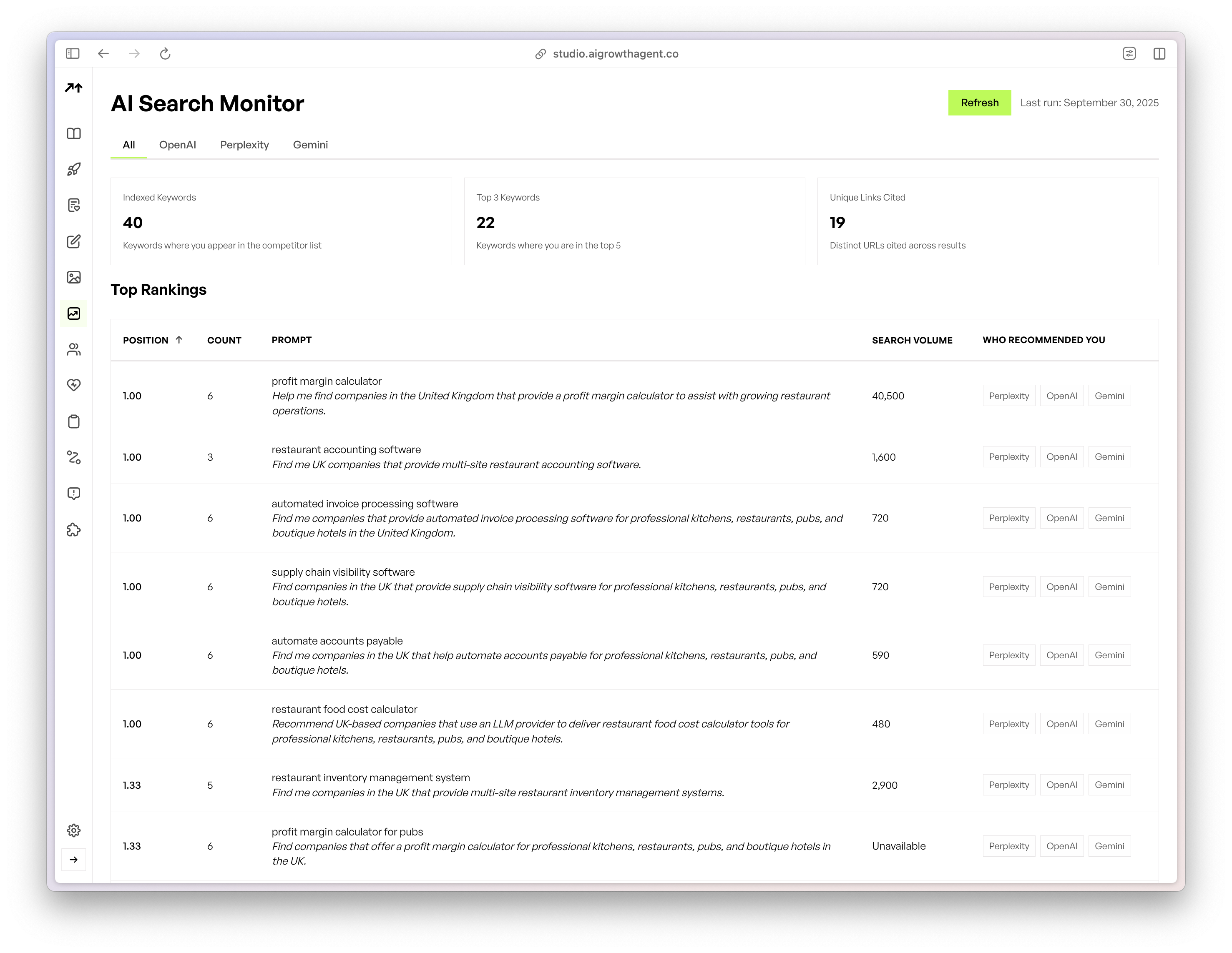
This approach helps brands earn visibility and citations in AI-powered search by aligning topics, site architecture, and metadata with how AI systems evaluate authority, and you can schedule a consultation and demo to see if AI Growth Agent is a good fit for your team.
Avoid Common Mistakes When Using AI Blogs
Limit Information Overload and Analysis Paralysis
A long reading list can delay decisions. Select 5 to 7 primary AI blogs that consistently deliver value, and review them on a set schedule. Capture key ideas in a central document and translate them into specific tests or roadmap items.
Balance Specialist and General AI Coverage
General tech sites often focus on broad AI news, not on practical marketing execution. Use them for context, but base strategic decisions on specialist blogs that focus on marketing, growth, and search optimization.
Do Not Ignore Technical SEO Impacts
Content strategy and technical execution must work together for AI search visibility. As you read AI blogs, note references to crawling, indexing, structured data, and site performance, and fold those details into your implementation plans.
FAQ: AI Blog Selection and Programmatic SEO
What is the recommended review frequency for AI blogs?
Quarterly reviews work well for refreshing your core list of blogs. Add monthly spot checks to discover new voices, then replace weaker sources when new blogs show stronger expertise or clearer strategic relevance.
What is the role of AI tools in finding AI blogs?
AI tools can speed up discovery by clustering content around topics like programmatic SEO, AI marketing operations, or AI analytics. Use those tools to shortlist options, then read several articles from each candidate blog yourself to judge depth, clarity, and fit for your needs.
What is the key factor that makes an AI blog authoritative for marketing?
The combination of demonstrated expertise and proven results matters most. Prioritize blogs where authors share concrete outcomes from AI-driven marketing initiatives and explain what worked, what did not, and why.
How does AI Growth Agent extend the value of AI blogs?
Insights from AI blogs highlight what to do. AI Growth Agent focuses on how to execute at scale by building and optimizing large, structured content programs that align with AI search systems. The platform turns strategic ideas into consistent, technically sound content output.
How should you balance industry-specific and general AI marketing blogs?
A blended mix serves most teams well. Industry-specific blogs provide regulatory and contextual nuance, while general AI marketing blogs reveal tactics and frameworks that apply across categories. Combine both to shape your roadmap.
Conclusion: Combine Strategic Insight with Scalable Execution
Marketing leaders in 2026 need both insight and implementation. A curated set of authoritative AI blogs keeps you current on AI search behavior, content strategy patterns, and emerging opportunities. Programmatic SEO systems then apply those insights at scale, creating content architectures that AI search tools recognize and cite.
AI Growth Agent supports this shift by helping brands design and deploy AI-friendly content programs that reflect the latest thinking from trusted AI sources, and you can schedule a consultation and demo to see if you’re a good fit for this programmatic SEO approach.
