


Written by: Mariana Fonseca, Editorial Team, AI Growth Agent
Key Takeaways
-
Claude delivers the strongest long-form quality with natural prose and a large context window, but lacks built-in SEO scale features.
-
ChatGPT dominates usage with over 800 million weekly users, yet it often produces generic output and does not support enterprise authority building.
-
Jasper fits marketing teams that need brand voice control and collaboration, although its content can feel formulaic without careful prompts.
-
Free tools like Rytr and Copy.ai help budget-conscious users create short-form copy, while Grammarly stands out for student-friendly academic support.
-
For enterprises that need authority and scale, programmatic SEO platforms such as AI Growth Agent automate large content portfolios and drive AI citations.
How This Guide Tested and Compared AI Writing Tools
My 2026 benchmarks focused on seven critical factors: output quality scored by human reviewers on a 10-point scale, detection evasion tested against Originality.ai, production speed measured in articles per hour, niche specialization for SEO and students, pricing and integration capabilities, legal compliance with human authorship requirements, and AI citation potential for visibility in ChatGPT, Perplexity, and Google AI Overviews. Leading tools now deliver human-like output requiring minimal editing, yet these quality gains do not solve the core challenge, because scalability still decides which brands win authority in AI search.
Struggling to scale authoritative content? See how AI Growth Agent automates programmatic SEO in real campaigns.
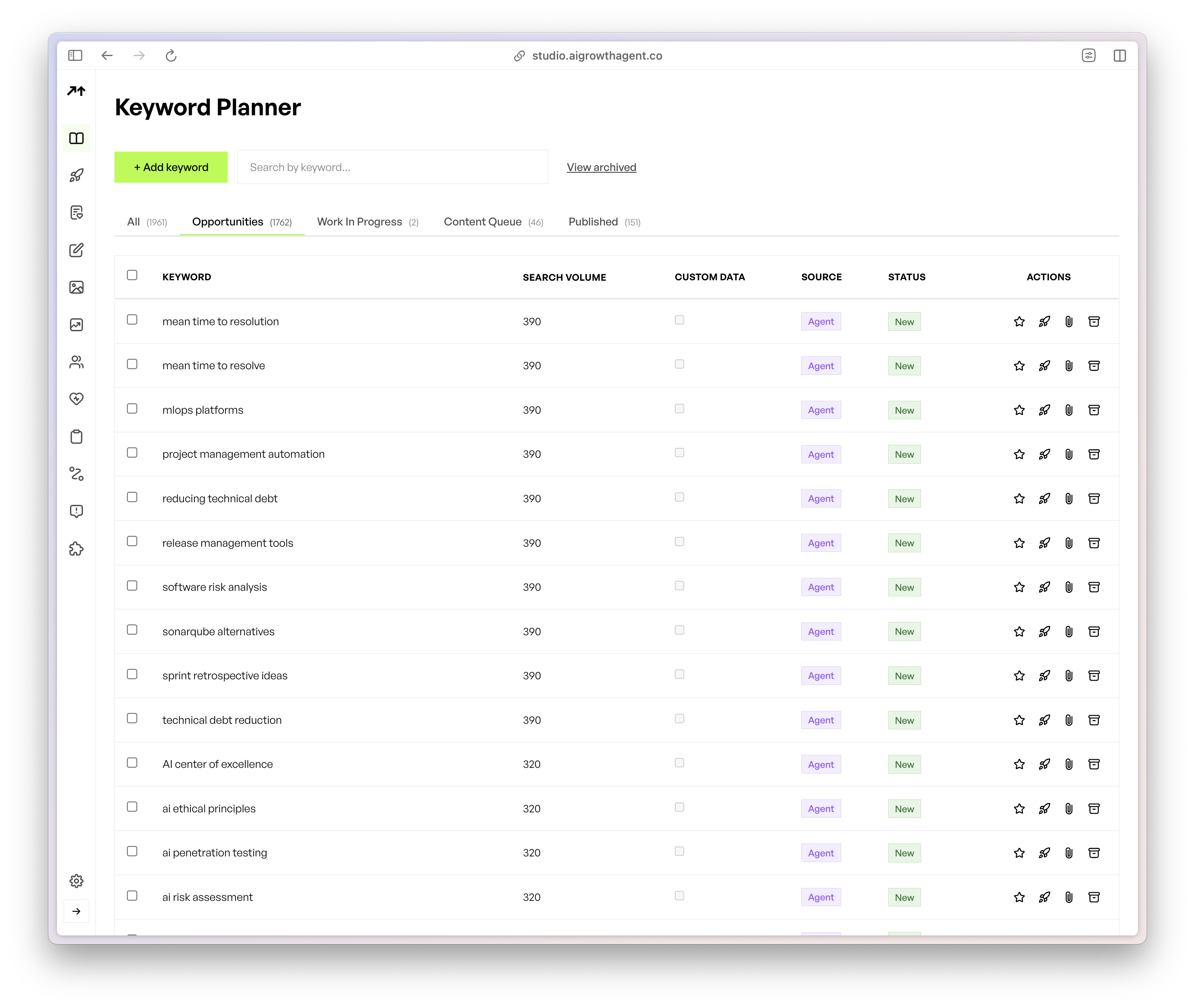
Best Overall AI Writing Tools for Daily Use
Claude by Anthropic leads quality benchmarks with natural, human-like prose and a 200,000-token context window on paid Claude plans. At $20/month for Claude Pro, it works well for long-form content and keeps tone consistent across large documents. However, it lacks built-in SEO workflows and programmatic features that enterprises need for large-scale content operations.
ChatGPT by OpenAI dominates adoption with over 800 million weekly active users and sees heavy use among content marketers. It produces drafts quickly and supports iterative refinement through conversation. Without strong prompts, however, the output often sounds generic and requires human editing for differentiation.
Jasper serves over 100,000 paying customers and supports brand voice customization and team collaboration workflows. Jasper’s Pro plan starts at $59/month per seat when billed annually, which positions it for marketing teams that need shared templates and approvals. Many users report that output can feel formulaic without customization, so teams get the best results when they invest time in detailed brand guidelines.
Readers who need similar capabilities without subscription costs often look next at free tools. These options work well for short-form tasks but usually trade off depth, integrations, or scale.
Best Free AI Writing Tools for Budget-Conscious Creators
Rytr offers a strong free tier with 10,000 characters monthly and support for 30+ languages. Used by over 8 million people, it suits short-form copy such as social posts, product descriptions, and simple emails. Rytr’s Unlimited paid plan costs $7.50 per month with yearly billing, which keeps ongoing costs low for solo creators.
Copy.ai provides 2,000 words monthly on its free plan and serves over 17 million users. It focuses on marketing copy automation, including ads, landing pages, and email sequences. Copy.ai struggles with long-form structure, so users often pair it with other tools for in-depth articles.
Writesonic targets SEO-focused users and supports SEO and Generative Engine Optimization with real-time data integration. Pricing starts at $49/month, which makes it a budget-friendly entry point for search-focused teams. Users should note that quality varies between templates, so testing several flows usually improves results.
Students and academic writers face different constraints from marketers and solo bloggers. They must balance productivity with integrity and institutional rules, so their tool choices follow a separate pattern.
Best AI Writing Tools for Students and Academic Work
Grammarly leads academic writing support with high accuracy in real-time grammar corrections and serves over 30 million daily users. It helps students fix grammar, improve clarity, and avoid common style issues. AI usage among students increased from 66% to 92%, and many rely on Grammarly to polish drafts before submission.
Sudowrite focuses on creative writing and fiction. It uses Muse 1.5, a proprietary fiction model that outperformed Claude 3.7 Sonnet 2x in blind tests. Students who write stories, scripts, or novels often prefer Sudowrite for idea generation and scene development. At the same time, ChatGPT accounts for 77% of AI-assisted academic writing, mainly for rewording and grammar corrections rather than full essay drafting.
Beyond formal reviews, community discussions reveal how everyday users experience these tools. Reddit threads, in particular, highlight nuanced strengths and weaknesses that do not always appear in marketing pages.
Reddit Favorites and Community Picks
Reddit communities frequently recommend Claude for creative writing because of its natural tone and strong context handling. A Reddit commenter in r/WritingWithAI states: “Claude. But if you want to write a story using AI you have to write a detailed outline. Then you have to let it write one chapter at a time, edit each chapter with text prompts, and continue in this way.”
For SEO content, many Reddit users highlight Jasper as a practical choice for structured blog workflows. A Reddit commenter in r/Blogging recommends: “The best AI tool for writing SEO-rich blog content is Jasper (formerly Jarvis). It helps create keyword-optimized content, improves readability, and offers features for generating ideas, headings, and meta descriptions.”
Community opinions give helpful context, yet they rarely compare tools under controlled tests. The next section summarizes head-to-head performance data to clarify where each platform excels.
Which AI Writing Tool Is the Best? 2026 Test Results
The following table compares the top four tools across quality, AI detection evasion, and production speed. These metrics show how each platform performs for different content goals, from individual drafting to programmatic scale.
|
Tool |
Quality Score |
Detection Pass Rate |
Articles/Hour |
Verdict |
|---|---|---|---|---|
|
Claude |
High |
33% (flagged 67% on average across 8 major detectors) |
Varies |
Best quality, limited scale |
|
ChatGPT |
High |
Moderate |
Varies |
Fast but generic |
|
Jasper |
9.2/10 |
High |
Varies |
Best for teams |
|
AI Growth Agent |
High |
High |
Autonomous |
Best for programmatic scale |
Why ChatGPT Falls Short for Enterprise Scale
ChatGPT dominates usage but falls short for enterprise authority building. Content that is 80% AI-generated with only 20% human tweaks gets filtered out by readers and search engines. Legal compliance typically requires a 70% AI to 30% human content ratio for worthwhile content, which makes manual editing essential and time-intensive at scale.
Basic tools fall short for AI authority, so explore our programmatic approach if you need enterprise reach.
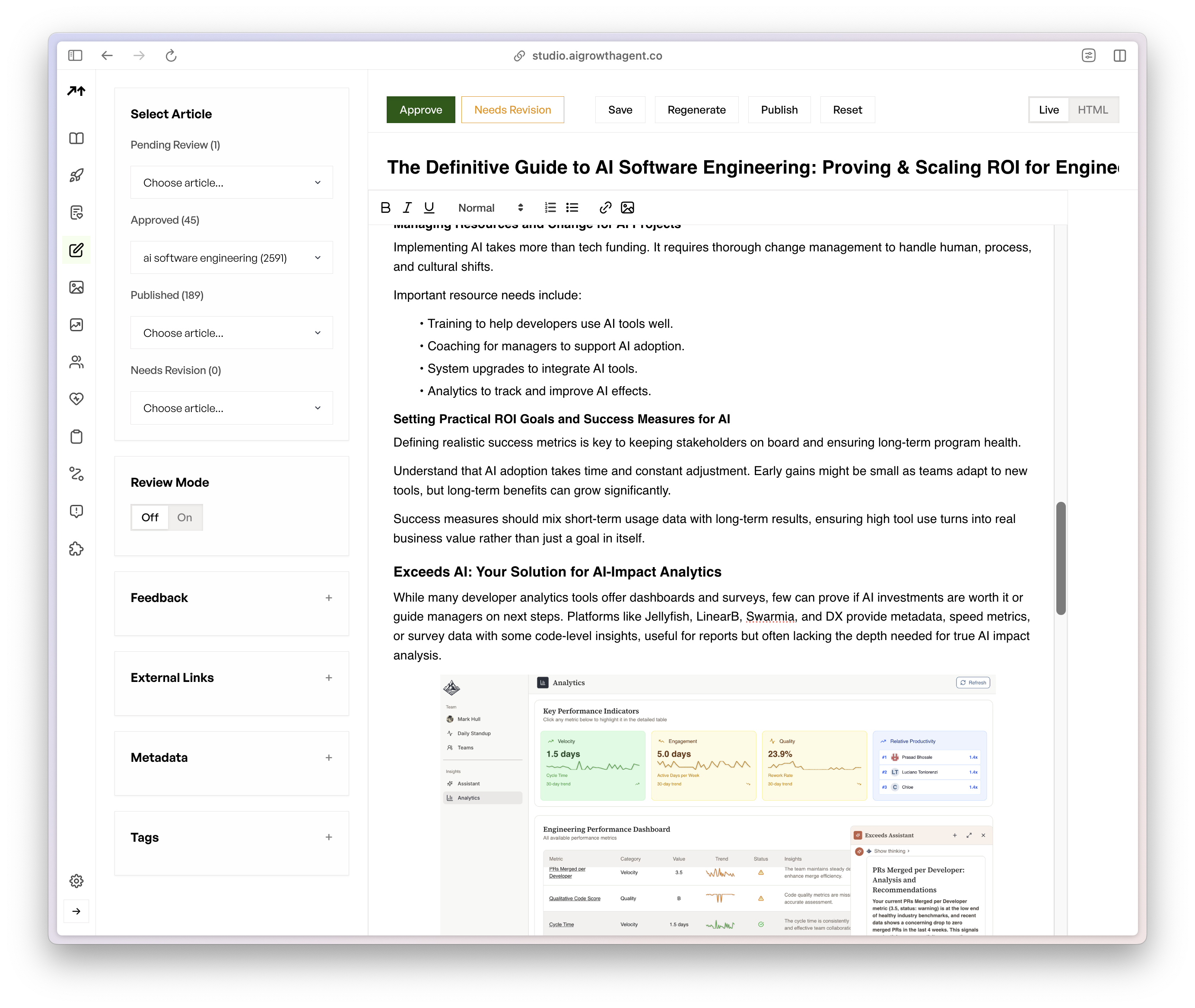
This manual editing bottleneck shows why individual AI writing tools cannot solve the authority challenge for large brands. Enterprises need programmatic systems that coordinate strategy, production, and optimization across thousands of pages.
The Future of AI Citations: Programmatic Content Systems
One-off writers cannot build durable authority in AI search. Manick Bhan, Founder CEO/CTO of SearchAtlas, states: “In 2026, AI content writing tools operate not as standalone drafting assistants but as integrated strategic engines that combine generation, optimization, and performance intelligence into scalable content systems.”
AI Growth Agent leads this shift with autonomous programmatic SEO that engineers complete content architectures. Unlike competitors that require manual keyword research and CMS integration, this agent handles everything from Company Manifesto creation to keyword clustering, schema implementation, and direct publishing.
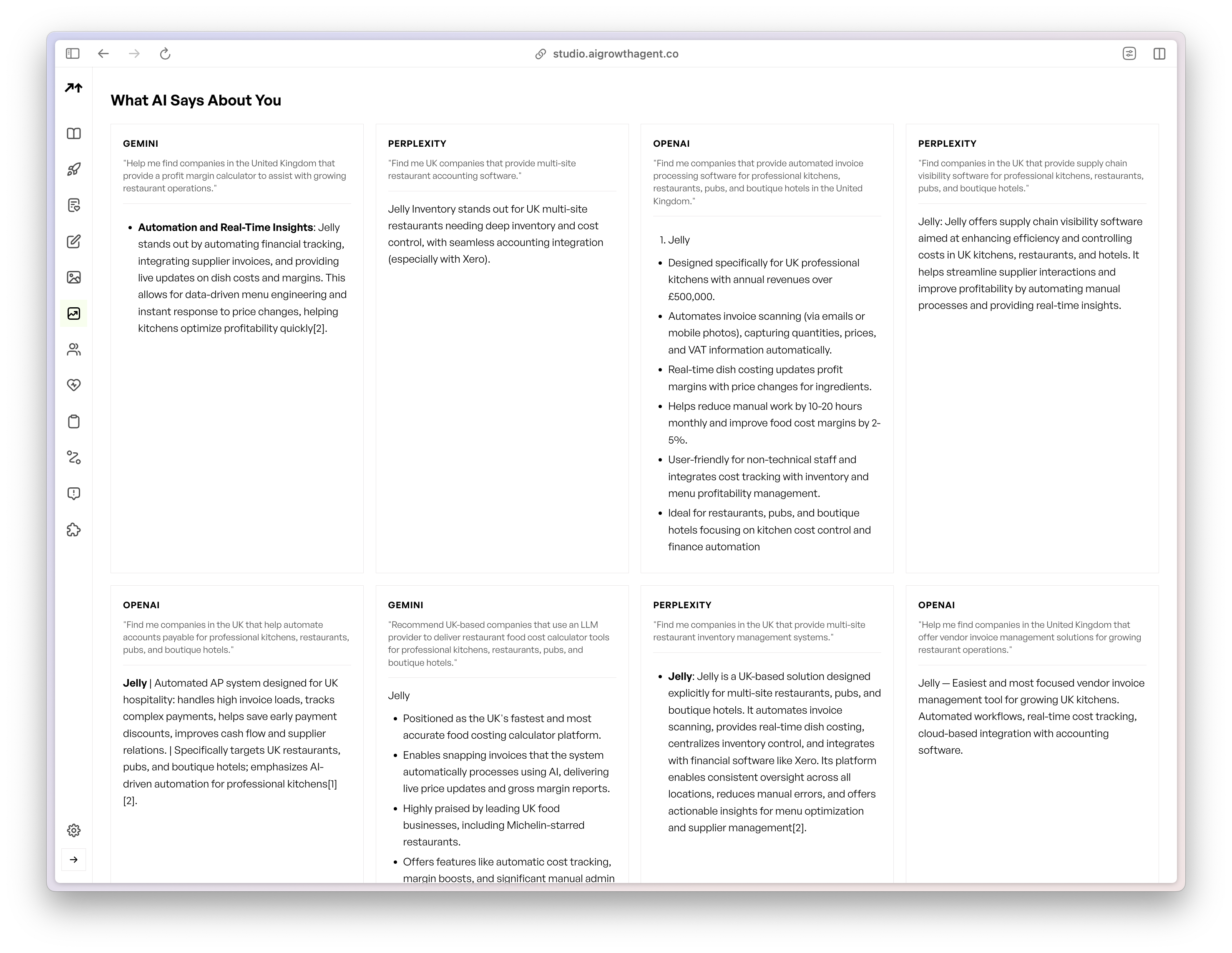
Case studies show clients achieving AI citations within weeks, with brands like Exceeds AI and BeConfident dominating their categories in ChatGPT, Perplexity, and Google AI Overviews.
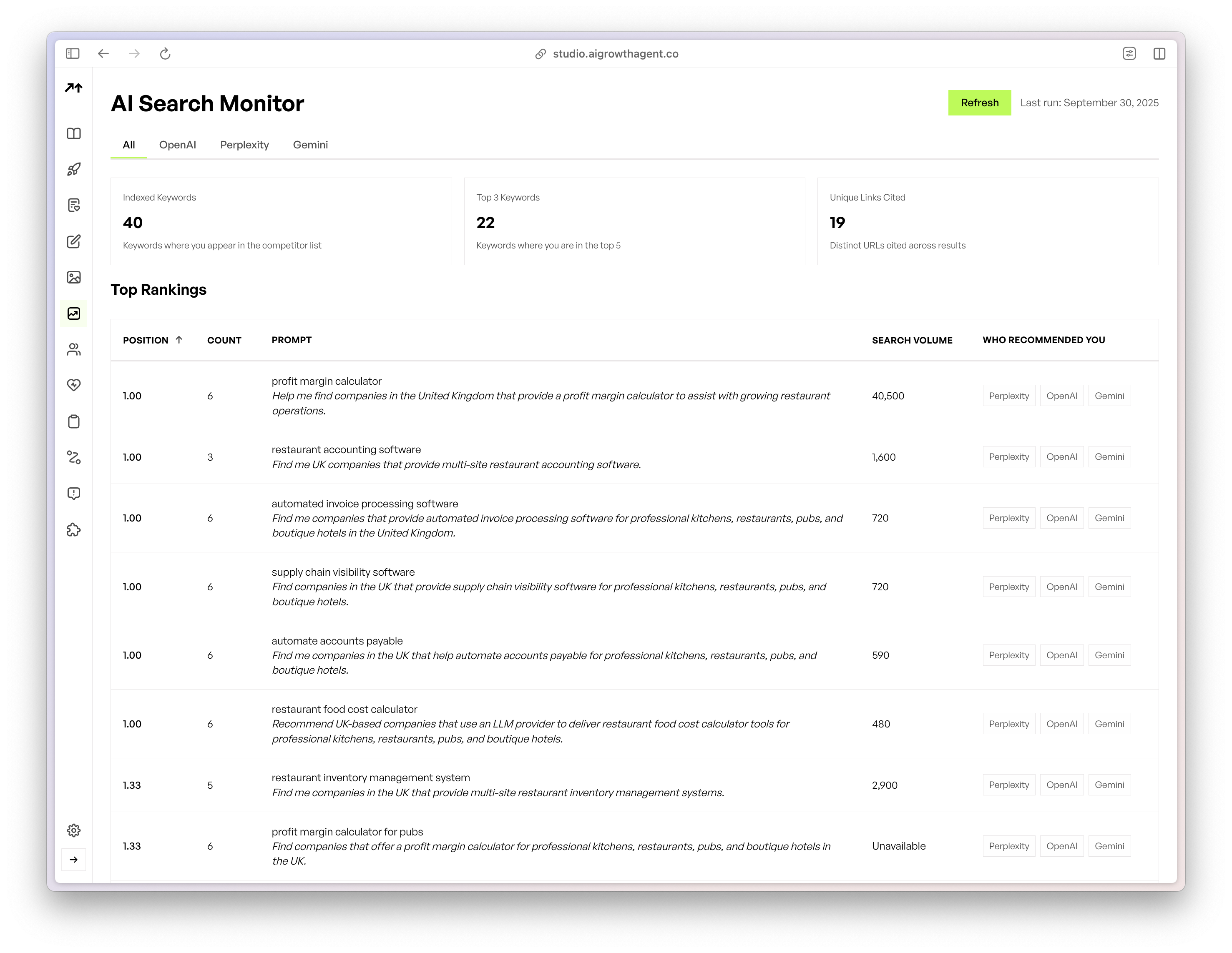
These results demonstrate why teams using programmatic platforms can create content significantly faster while reducing production costs, compared to traditional agencies that lack the engineering capabilities for true scale.
Readers still need a simple way to match their workflow to the right tool. The next matrix pairs common scenarios with the platform that fits each situation.
Best-Fit Matrix and Risk Assessment
Use this matrix to align your workflow with the most suitable tool. Each row maps a typical scenario to the platform that delivers the strongest balance of cost, quality, and scale.
|
Workflow |
Best Tool |
Use Case |
|---|---|---|
|
Solo blogger |
Rytr |
Budget-friendly short-form |
|
Marketing team |
Jasper |
Brand consistency at scale |
|
Enterprise authority |
AI Growth Agent |
Programmatic SEO dominance |
|
Academic writing |
Grammarly |
Grammar and compliance |
Risk Management for AI-Generated Content
Basic AI tools create detection and scale risks when teams push volume without editorial value. Sites publishing hundreds or thousands of AI-generated pages without genuine editorial value saw traffic drops between 50% and 90% within two weeks of the March 2026 core update. In contrast, programmatic platforms that engineer genuine editorial value deliver strong ROI by passing AI detection and building citations, which protects brands from penalties tied to low-quality scaled content.
Ready for AI search dominance? Book your strategy session and map out a programmatic plan.
Frequently Asked Questions
What is the best free AI writing tool?
Rytr offers one of the strongest free tiers with 10,000 characters monthly and support for over 30 languages. For basic content creation, ChatGPT’s free version provides unlimited access but lacks advanced features such as SEO workflows and brand voice controls that paid tools provide.
Which AI writing tools work best for students?
Grammarly leads for academic writing with high accuracy in grammar corrections and plagiarism detection. As noted earlier, ChatGPT dominates student usage, primarily for rewording and research assistance. Students should still follow institutional AI policies and maintain academic integrity when using any tool.
Is it legal to sell AI-generated content?
Yes, selling AI-assisted content is legal in most jurisdictions when humans provide meaningful editing and oversight. The recommended threshold is a 70% AI to 30% human content ratio for commercial use. Content that is 80% AI-generated with minimal human input faces detection and quality issues, so creators should disclose AI usage when required by platforms or clients.
What AI writing tool beats ChatGPT for business use?
For enterprise content production, programmatic SEO platforms like AI Growth Agent surpass ChatGPT by automating the entire content lifecycle from keyword research to publishing. ChatGPT excels at individual tasks, yet businesses need integrated systems that manage strategy, optimization, and scale without constant manual intervention.
What do Reddit users recommend as the best AI writing tools?
Reddit communities consistently favor Claude for creative writing because of its natural prose and large context window. For SEO content, many users recommend Jasper for its keyword optimization features and structured workflows. Most Reddit discussions focus on individual or small-team use cases rather than enterprise-scale content production, where programmatic solutions usually provide stronger results.


