


Key Takeaways
- AI-powered search engines now reward programmatic SEO for B2B SaaS visibility, and manual content cannot keep pace with the required volume or technical depth.
- AI Growth Agent focuses on fully autonomous content generation, advanced schema, and LLM.txt deployment, and unlimited daily publishing to compound authority.
- Traditional platforms like HubSpot and 6sense excel at CRM and ABM but do not support true programmatic SEO for high-velocity content engineering.
- Programmatic SEO delivers an average 340% ROI, with case studies showing major traffic and signup gains over manual content programs.
- Schedule a demo with AI Growth Agent to launch autonomous growth marketing tailored to your B2B SaaS scale.
The Shift to Programmatic SEO for B2B SaaS Growth
Modern growth marketing succeeds when content velocity and technical depth match AI search expectations. Traditional tools handle email automation and lead scoring, but they do not solve the core challenge of producing high-quality content at scale. Zapier reached over 16 million organic visitors monthly through programmatic pages, which proves how automated content systems outperform manual publishing.
Competitive analysis shows clear gaps in current SERP coverage for many B2B SaaS brands. Leading platforms such as HubSpot and 6sense focus on CRM, account-based marketing, and advertising orchestration, while offering only limited support for programmatic SEO. Programmatic SEO ranks as the 8th highest-impact SaaS SEO tactic, yet most growth platforms lack the engineering needed to execute it at scale.
Manual content teams usually publish 1 to 2 articles each month. Programmatic systems publish fresh, technically structured content every day, with embedded schema markup and AI-friendly citations. Dynamic Mockups grew signups from 67 to more than 2,100 per month using programmatic SEO. That result highlights how automated content engineering outperforms traditional manual workflows.
Schedule a demo to see if AI Growth Agent is your fit for programmatic SEO at enterprise scale.
Top Data-Driven Growth Platforms for B2B SaaS
1. AI Growth Agent: Autonomous Programmatic SEO for Authority
AI Growth Agent operates as an autonomous programmatic SEO platform built specifically for authority growth. Specialized agents manage keyword clustering, content engineering, schema deployment, and direct publishing with no ongoing human production work. The platform supports multi-tenant setups for portfolios, real-time content creation around trending topics, and database-to-content automation that converts proprietary data into search-ready assets.
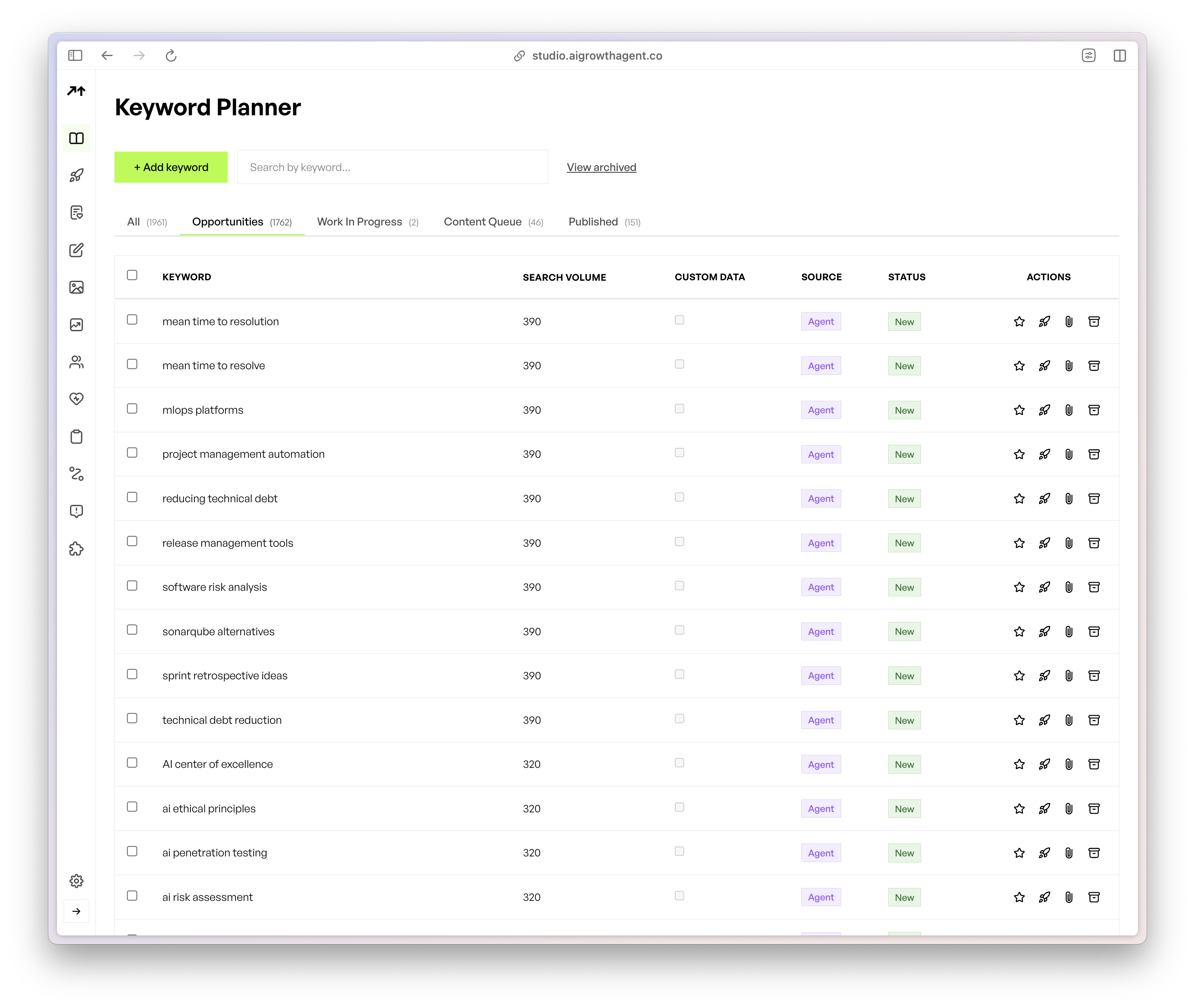
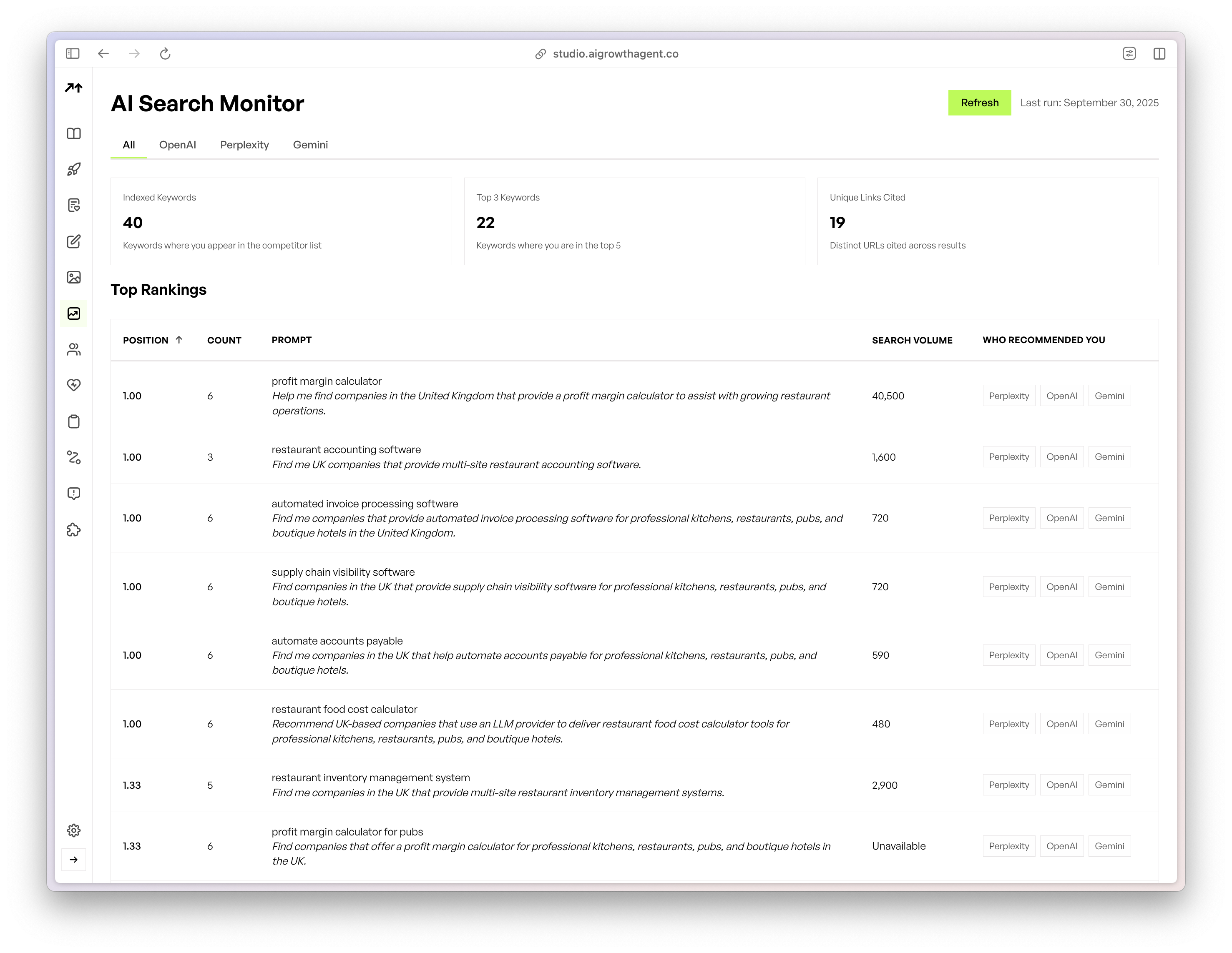
Strengths: Unlimited content velocity, one-week onboarding, advanced technical SEO automation with LLM.txt and Model Context Protocol, and AI search monitoring across ChatGPT, Gemini, and Perplexity.
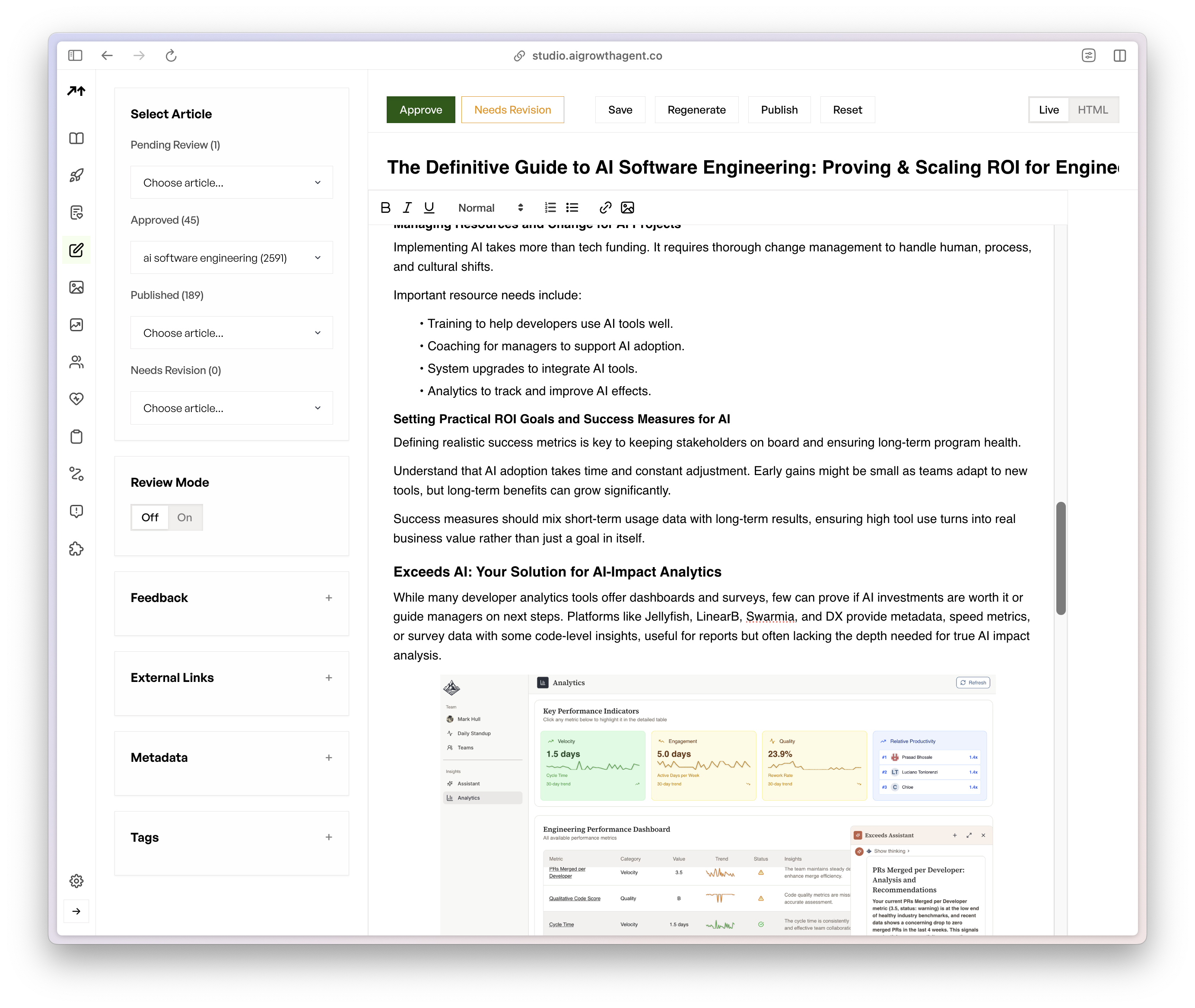
Limitations: Works best with a solid SEO foundation, accepts clients selectively, and positions as a premium solution.
Ideal for: Premium brands that want autonomous content authority at programmatic scale.
2. HubSpot Growth Suite: CRM-Centric Marketing Automation
HubSpot offers all-in-one CRM and marketing automation with built-in lead scoring and email workflows. The platform includes AI-powered SEO tips, answer engine optimization tools, and basic content guidance. It does not, however, provide true programmatic SEO for high-velocity autonomous content creation.
Strengths: Deep CRM integration, mature ecosystem, and pricing that often starts under $800 per month.
Limitations: Limited support for fully autonomous programmatic SEO and continued reliance on manual content processes for scale.
Ideal for: Startups that need foundational marketing automation more than aggressive content velocity.
Schedule a demo to see if AI Growth Agent is your fit when you outgrow traditional CRM-focused systems.
3. 6sense Revenue AI: Intent Data Without Content
6sense specializes in ABM pipeline generation with AI-powered intent data and pricing that often starts above $10k per month for enterprise. The platform centers on account identification, intent scoring, and programmatic advertising orchestration. It offers little support for content creation or programmatic SEO.
Strengths: Rich intent data, strong enterprise ABM features, and detailed account intelligence.
Limitations: No content creation, high enterprise pricing, and a need for separate content systems.
Ideal for: Large enterprises with in-house content teams that want better intent data for targeting.
4. Jasper AI Content Platform: Writing Help Without Automation
Jasper supports AI-assisted content drafting but still depends on manual strategy, formatting, and publishing workflows. The tool produces unstructured text and does not include schema automation, advanced technical SEO, or a programmatic architecture tuned for AI search visibility.
Strengths: Writing assistance, reusable templates, and collaboration features for content teams.
Limitations: Manual technical work, no programmatic strategy layer, and reliance on external publishing systems.
Ideal for: Teams that want help writing but plan to manage technical SEO and publishing themselves.
5. GrowthSpree Agency Platform: Services Over Software
GrowthSpree rebuilds revenue engines across Google Ads, LinkedIn Ads, CRM, and attribution to support a predictable SQL flow. The agency model delivers broad services but relies on manual execution, which limits scalability and prevents programmatic content deployment.
Strengths: Full-service support, B2B SaaS expertise, and end-to-end revenue engine improvements.
Limitations: Manual delivery model, slower content velocity, and no autonomous systems.
Ideal for: Companies that prefer agency relationships instead of software-led autonomy.
Schedule a demo to see if AI Growth Agent is your fit if you want autonomous execution beyond agency bandwidth.
Side-by-Side Platform Comparison
|
Platform |
Automation Level |
Content Velocity |
Technical SEO |
|
AI Growth Agent |
Full Autonomous |
Unlimited Daily |
Advanced Schema/LLM.txt |
|
HubSpot |
Marketing Automation |
Manual 1-2/month |
Basic SEO Tools |
|
6sense |
Intent Automation |
No Content Creation |
No SEO Features |
|
Jasper |
Writing Assistance |
Manual Publishing |
No Technical SEO |
Programmatic SEO delivers 340% average ROI across B2B SaaS implementations, which far exceeds returns from traditional manual content programs. Autonomous systems remove the usual tradeoff between speed and quality by enforcing technical standards while scaling output to superhuman levels.
Schedule a demo to see if AI Growth Agent is your fit for autonomous content systems with clear, measurable ROI.
Implementation Guide and Evaluation Checklist for B2B SaaS
Successful platform adoption starts with a clear view of content velocity, technical SEO needs, and desired autonomy. AI SEO processes huge datasets instantly with predictive analytics while traditional SEO depends on manual data collection. That contrast shows why autonomous platforms create major efficiency gains.
Implementation Checklist:
- Assess current content velocity needs, including daily versus monthly publishing goals.
- Verify your SEO foundation and technical infrastructure across domains and CMS.
- Compare autonomous execution capabilities against manual service requirements.
- Test programmatic content quality through live platform demos.
- Confirm AI search monitoring and citation tracking features.
- Review integration options with your existing CMS and analytics stack.
- Define success metrics such as organic traffic growth and AI search visibility.
The choice between manual SEO and programmatic SEO centers on scalability and technical rigor. AI reduces content production time by 60% while maintaining quality. Faster cycles enable more experiments, better learning, and stronger B2B SaaS growth.
Schedule a demo to see if AI Growth Agent is your fit for autonomous implementation with hands-on technical support.
FAQs: Programmatic SEO and AI Growth Agent
What are data-driven growth marketing platforms?
Data-driven growth marketing platforms are autonomous systems that combine programmatic SEO, AI-driven optimization, and technical content engineering to build authority at scale. Unlike traditional tools that focus on CRM or ads, these platforms generate, refine, and publish content automatically while embedding schema markup and LLM.txt files to improve AI search visibility.
How does programmatic SEO differ from traditional SEO approaches?
Traditional SEO depends on manual keyword research, content writing, and technical fixes, which usually produce only a few articles each month. Programmatic SEO uses autonomous systems to create large volumes of content every day with built-in technical optimization, schema markup, and AI citation features. This higher velocity helps companies capture long-tail demand and build deep topical authority that manual teams cannot match.
Which platforms are best for B2B SaaS scaling in 2026?
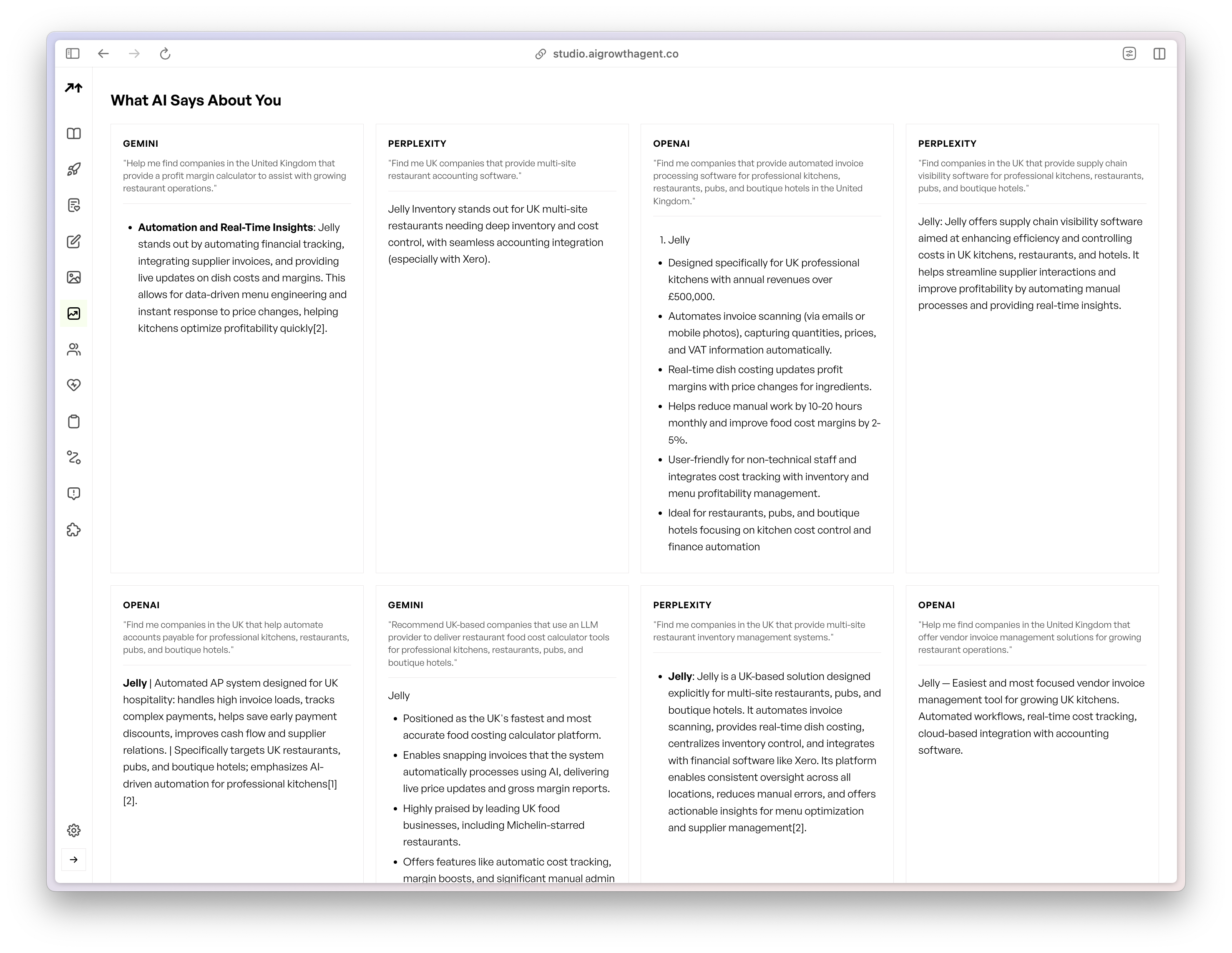
AI Growth Agent leads autonomous programmatic SEO with multi-tenant deployment, real-time content injection, and advanced AI search monitoring. HubSpot covers core marketing automation, and 6sense delivers enterprise intent data without content creation. The right choice depends on whether your priority is autonomous content systems or traditional marketing operations.
How does AI Growth Agent compare to agencies and AI writing tools?
Agencies rely on human teams and billable hours, which limit capacity and speed. AI Growth Agent delivers autonomous programmatic execution with effectively unlimited scale. Generic AI writing tools, such as Jasper, assist with drafting but still require manual strategy, formatting, and publishing. AI Growth Agent manages the full pipeline from keyword clustering through schema deployment and direct publishing.
What timelines should B2B SaaS expect for AI citations and organic growth?
AI Growth Agent clients often see their first AI citations within 2 to 3 weeks of programmatic content launch. Companies such as Bucked Up reached ChatGPT citations as a top protein soda brand within 3 weeks, and Gitar became a reference source for AI-powered CI/CD automation in under two months. Organic traffic grows as the programmatic library expands and strengthens topical coverage.
How do companies estimate ROI from programmatic SEO platforms?
ROI analysis compares autonomous content velocity against manual alternatives and includes technical SEO automation, AI search visibility, and organic traffic gains. Many companies see 67% faster time-to-revenue and an average 340% ROI from programmatic SEO, with clear improvements in AI citations, organic traffic, and lead volume within the first quarter.
Conclusion: Why AI Growth Agent Leads Programmatic SEO
Data-driven growth marketing platforms now extend beyond CRM and ad tools to become autonomous content authority engines. AI Growth Agent gives B2B SaaS teams programmatic SEO at enterprise scale, combining unlimited content velocity with advanced technical execution for 2026 AI search dominance.
Competitive advantage now depends on autonomous execution that traditional platforms cannot match. HubSpot and 6sense still serve important operational roles, but AI Growth Agent delivers the programmatic content engineering required for durable organic growth and AI citation authority.
Schedule a demo to see if AI Growth Agent is your fit and establish category authority through autonomous programmatic SEO.
