


Key Takeaways
- AI-driven search in 2026 favors brands with clear technical foundations, fast sites, and content that AI systems can easily parse and reuse.
- Structured data, schema, and AI-ready protocols help large language models identify which content is reliable, current, and safe to cite.
- Omnichannel content networks and consistent signals across formats increase the chance that AI assistants surface your brand in responses.
- Unique, expert-driven content and a recognizable voice give your brand an advantage over generic AI-generated material.
- Marketing teams can use AI Growth Agent to operationalize this model at scale and book a demo of its content authority platform.
Schedule a demo to see how AI Growth Agent’s content authority-building platform works in practice
The New Reality: Why Content Authority is Non-Negotiable for AI Search
AI-powered systems like ChatGPT, Google AI Overviews, and Perplexity now influence how users discover information. These systems favor unique, original, and insight-rich content, and rely on E-E-A-T and content diversity when deciding which brands to surface and cite.
Search has shifted from manual keyword targeting to programmatic content that demonstrates real authority. Brands that publish structured, high-quality content at a steady pace provide more reliable data points for AI models to reference. Companies that do not invest in this level of authority give competitors room to define category narratives inside AI assistants.
1. Master Technical SEO Fundamentals and AI-Ready Protocols
Strong technical foundations make your content accessible to AI crawlers. Site speed, crawlability, and overall technical health now play a direct role in AI search visibility, since AI agents need to access, parse, and reuse content in real time.
Focus your efforts on a few key areas:
- Improve core web vitals and mobile performance so AI crawlers can retrieve content quickly.
- Use clear site architecture and internal linking to surface important pages efficiently.
- Adopt AI-ready protocols such as MCP servers and llms.txt files to indicate which content is authoritative, current, and safe for training or citation.
These protocols act as structured signals for AI crawlers and indexing systems, improving the odds that your documentation, guides, and resources become trusted references.
2. Implement Sophisticated Structured Data and Schema Markup
Schema markup clarifies meaning for AI systems. Detailed product, review, pricing, and availability schema help AI search experiences and shopping graphs understand and surface brand content with greater confidence.
To support this:
- Add comprehensive schema for articles, products, reviews, FAQs, and your organization.
- Structure headings and internal links so content flows logically for both users and AI systems.
- Highlight E-E-A-T signals such as author credentials and sources inside your schema.
Tools that structure content for better SEO by refining headings, internal links, and information flow also make AI parsing and reuse more reliable, which supports consistent citations across assistants.
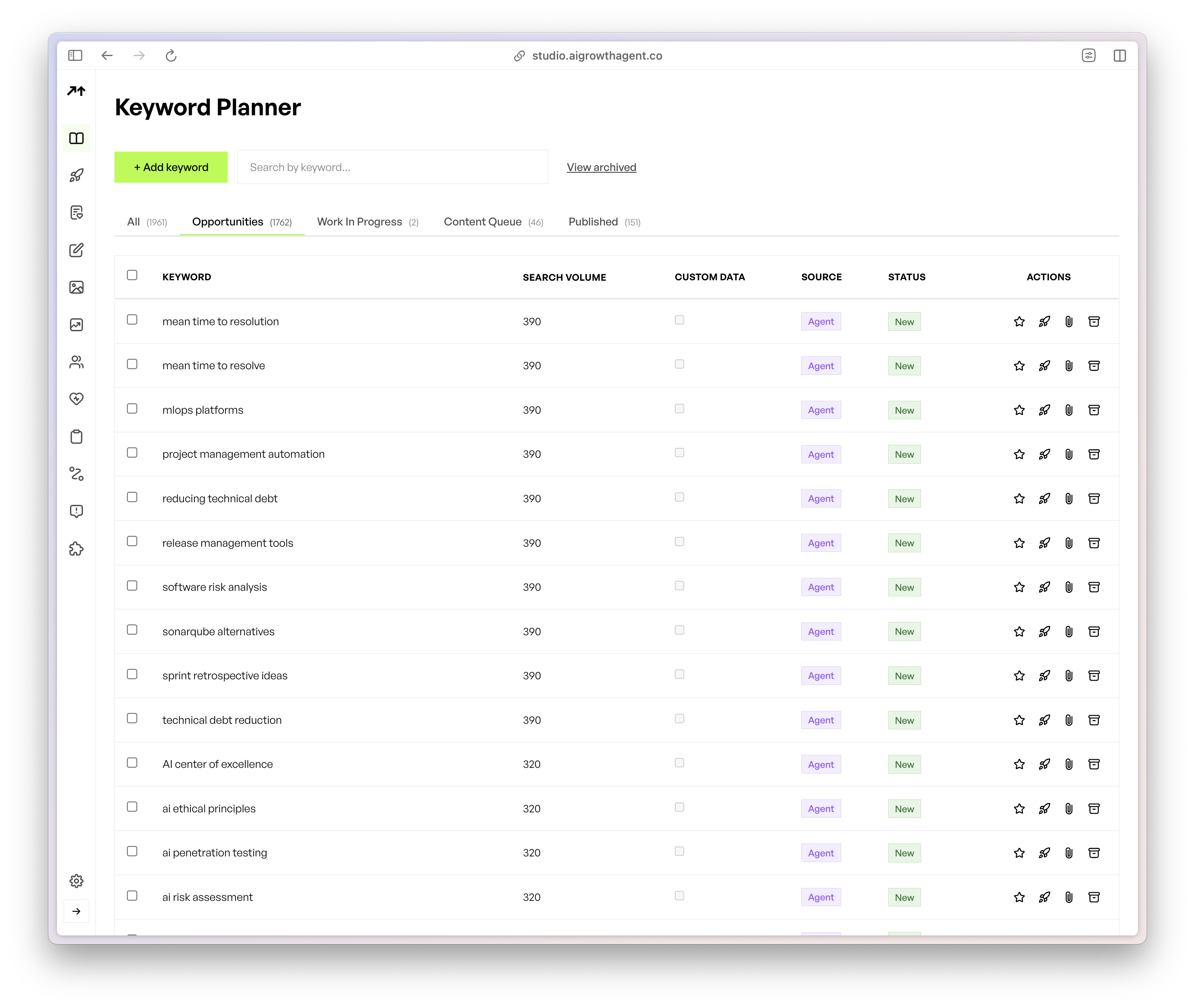
Brands that invest in robust structured data give AI systems more confidence to recommend specific products, pages, and resources in commercial and informational queries.
3. Build Omnichannel Content Networks with Query Fan-Out
Distributed content networks help AI models encounter your expertise in multiple formats. Brands benefit from omnichannel content built for query fan-out, where interconnected ecosystems span web, video, tools, and social channels, giving different LLMs more ways to ingest and cite them.
Practical steps include:
- Connect long-form articles to video tutorials, documentation, tools, and community discussions.
- Use consistent naming and linking conventions so AI systems can associate related assets.
- Repurpose high-performing ideas into multiple formats while maintaining factual alignment.
4. Prioritize Unique, Human-Centric Content and Authentic Voice
Verified expertise and a recognizable voice help your content stand out from generic AI-generated text. An observed authenticity premium shows that content from real experts and identifiable individuals outperforms commodity material in AI systems.
To strengthen this signal:
- Publish proprietary research, original data, and clear points of view from named experts.
- Feature interviews, case studies, and commentary that reflect real-world experience.
- Use AI tools to support research and drafting, while keeping humans responsible for judgment, nuance, and final edits.
Content that delivers genuine human voices, fresh insight, emotional nuance, and narrative depth strengthens perceived authority in AI responses, especially in complex or high-stakes topics.
5. Use Programmatic SEO for Scalable, High-Quality Output with AI Growth Agent
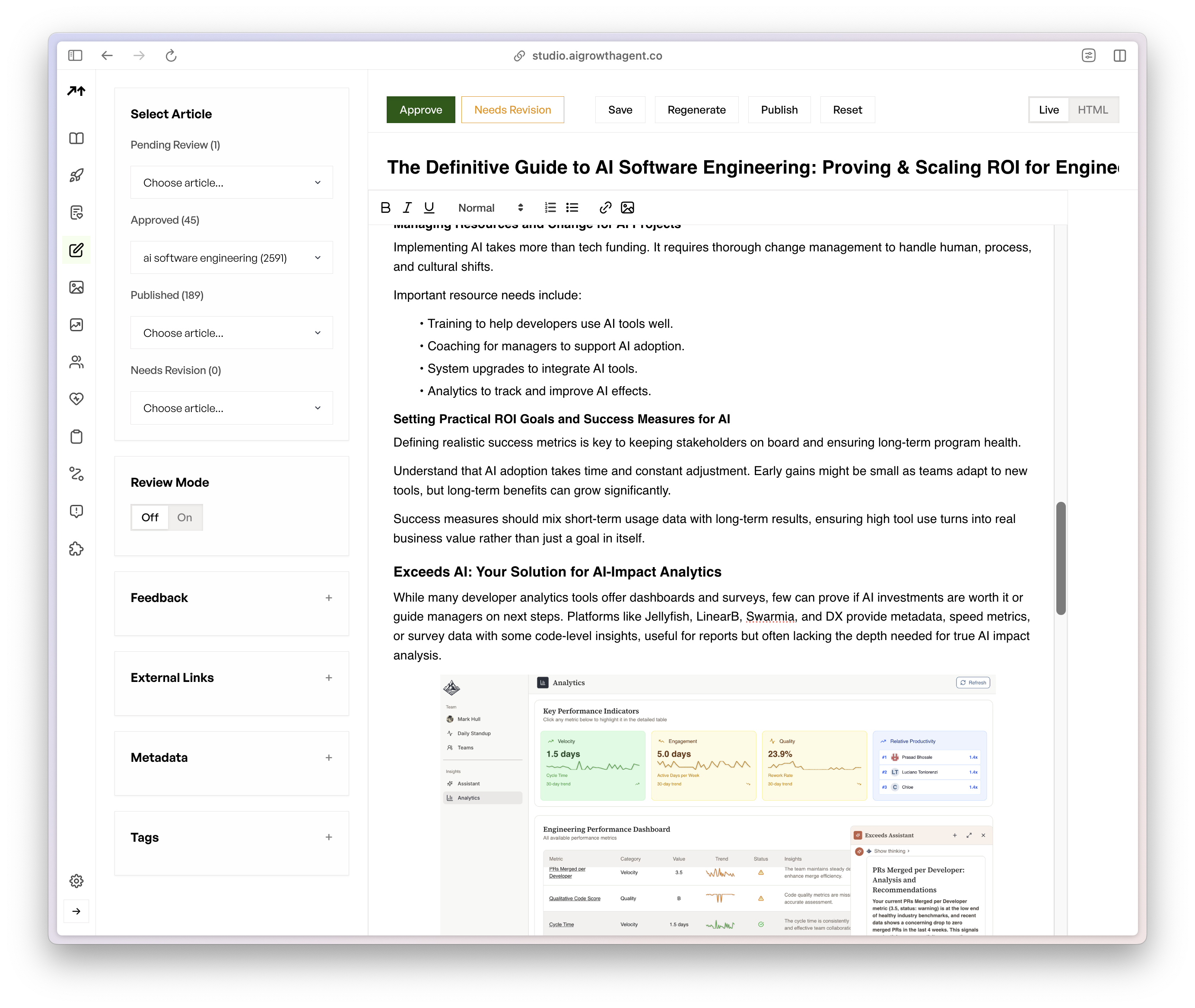
Programmatic SEO supports the scale and precision that AI search environments require. Automation is becoming essential for AI visibility monitoring, technical SEO fixes, schema validation, and large-scale content optimization, since manual workflows struggle to keep pace.
Programmatic systems help teams:
- Generate and maintain large content libraries without sacrificing technical standards.
- Systematically apply schema, metadata, and internal linking patterns across pages.
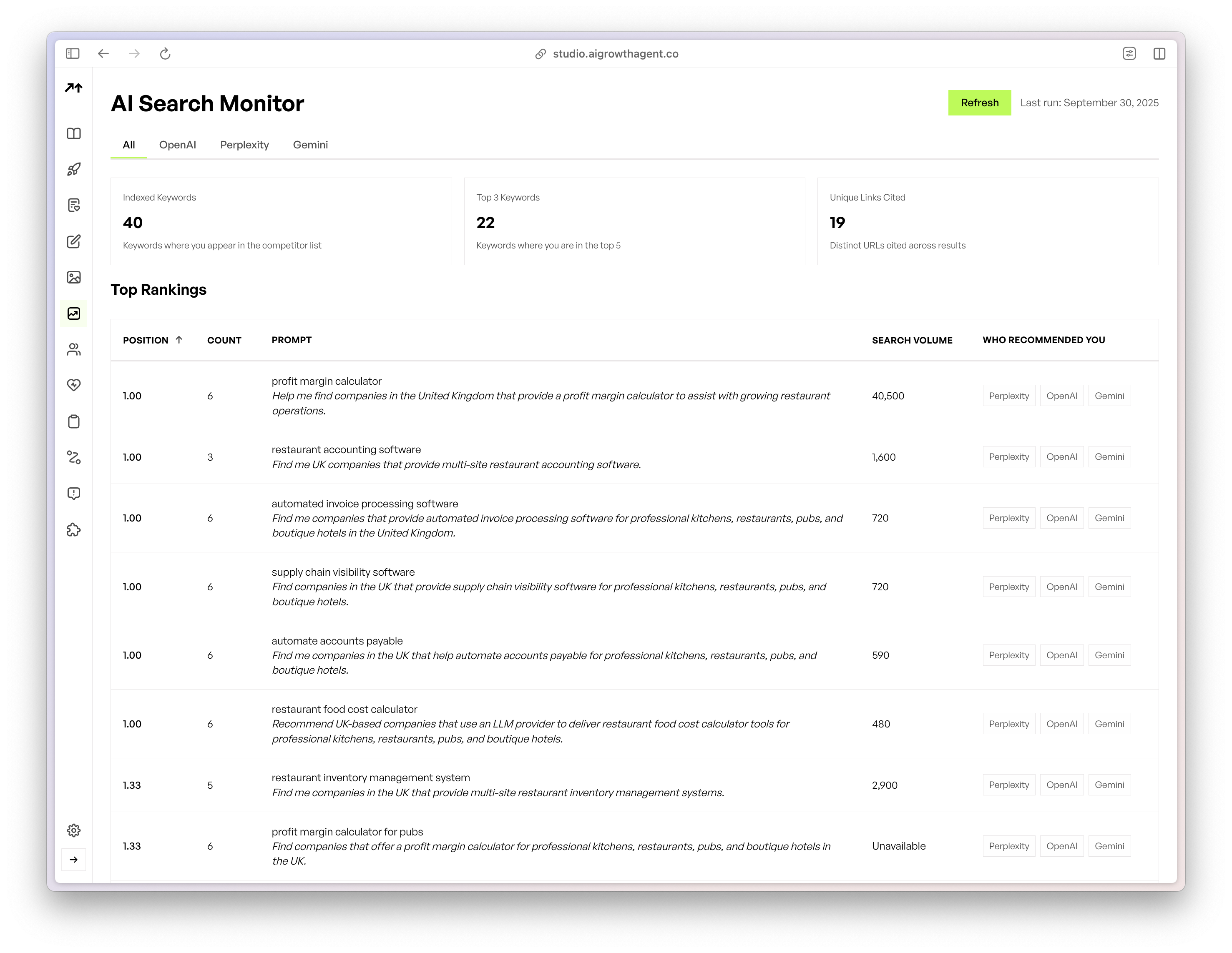
- Monitor how content appears in AI assistants and adjust coverage based on gaps.
AI Growth Agent acts as a programmatic SEO agent that engineers content architectures, from keyword clustering and content briefs to schema implementation and publishing. This approach reduces operational friction and makes it easier to maintain consistent authority signals across an entire site.
Conclusion: Build Sustainable Authority for AI Search in 2026
AI search visibility now depends on a combination of technical quality, structured data, omnichannel coverage, and credible human expertise. Brands that treat these elements as a unified authority strategy will appear more often in AI-generated answers and recommendations.
The five focus areas in this article outline a practical foundation for that strategy. Technical SEO and AI-ready protocols make content accessible. Structured data and schema clarify meaning. Omnichannel networks expand reach. Authentic content signals expertise. Programmatic SEO platforms such as AI Growth Agent bring these pieces together at scale.
Teams that adopt this model early will be better positioned to guide how AI systems represent their category, products, and brand in 2026 and beyond.
Frequently Asked Questions About Content Authority Building Platforms
What makes programmatic SEO different from traditional content marketing for AI search?
Programmatic SEO automates the full content lifecycle, from keyword research and clustering to drafting, optimization, and publishing. This automation supports higher content velocity and consistent use of schema, metadata, and internal links, which AI systems rely on for parsing and citation. Traditional content marketing often cannot sustain this level of technical consistency at scale.
How do AI-ready protocols like MCP servers and llms.txt improve content authority?
AI-ready protocols give crawlers explicit guidance about your content. MCP servers create structured interfaces that AI models can query for reliable data. Llms.txt files outline which content is appropriate for training and citation. Together, these elements clarify how AI systems should interpret and use your pages, which improves the likelihood of accurate references.
Can generic AI writing tools effectively build content authority for AI search engines?
Generic AI writing tools can speed up drafting but usually output unstructured text without advanced schema, metadata, or protocol support. Content authority for AI search requires integrated planning, technical optimization, and ongoing monitoring. A programmatic SEO platform coordinates these tasks so each page contributes to a coherent authority model.
Why is omnichannel content networking essential for AI search visibility?
AI systems draw from many surfaces, including web pages, videos, documentation, forums, and social content. Omnichannel content networks connect these assets so models can recognize them as part of the same brand and topic cluster. This structure increases coverage across assistants and gives AI more options when selecting citations for different query types.
How does AI Growth Agent differ from traditional SEO agencies in building content authority?
Traditional SEO agencies rely on manual work across research, writing, and implementation. AI Growth Agent uses a programmatic content platform that automates keyword clustering, content generation, schema application, and publishing while aligning with your brand guidelines. This approach enables consistent, AI-ready content at a scale that manual teams find difficult to maintain.
