


Key Takeaways
- Programmatic SEO now sits at the core of winning WordPress strategies in 2026’s AI search landscape. It lets you grow from dozens to thousands of structured pages that AI models can easily cite.
- AI Growth Agent stands out as the leading autonomous solution. It manages the full workflow from keyword research through writing to publishing, with deep WordPress integration and AI search features like MCP and LLM.txt.
- Traditional plugins such as Page Generator Pro and Super Programmatic SEO still rely on templates or light AI assistance. They need ongoing manual setup and do not deliver true end-to-end automation.
- Smart buyers compare tools on automation depth, ability to scale past 10,000 pages, technical SEO strength, and ease of WordPress rollout. These factors help avoid thin content and indexation issues.
- Schedule a demo with AI Growth Agent to launch autonomous pSEO and win AI search visibility without adding technical overhead.
How We Chose These WordPress pSEO Tools
Our 2026 review draws on G2 ratings, Reddit threads, WordPress benchmarks, and hands-on platform testing. We focused on real implementation stories, case studies reporting 300–700% traffic growth, and pain points raised in WordPress forums. The analysis favors autonomous agents over manual plugins because 2026’s AI search environment rewards systems that run end to end instead of tool stacks that need developer glue.
Snapshot of the 9 Leading WordPress pSEO Options
The WordPress pSEO ecosystem has shifted from simple content generators to advanced AI agents. The top options include:
- AI Growth Agent – Autonomous research, writing, and publishing with WordPress integration and AI search optimization
- SEOmatic – Enterprise schema and structured data automation
- Page Generator Pro – Template-driven bulk page creation for WordPress
- Super Programmatic SEO – AI article generation with Groq AI for up to 20 free articles each month
- WP All Import – Data import and content automation from external feeds
- Yoast SEO Premium – AI titles and meta descriptions for existing content
- Typemat – Free AI content generation connected to Google Sheets
- RankMath – Schema automation and AI-assisted SEO tuning
- JetEngine – Custom post types and dynamic templates for pSEO builds
Schedule a consultation to see how AI Growth Agent compares to traditional WordPress plugins.
Deep Dives on the Top 9 WordPress pSEO Tools
AI Growth Agent – Autonomous Full-Stack pSEO for WordPress
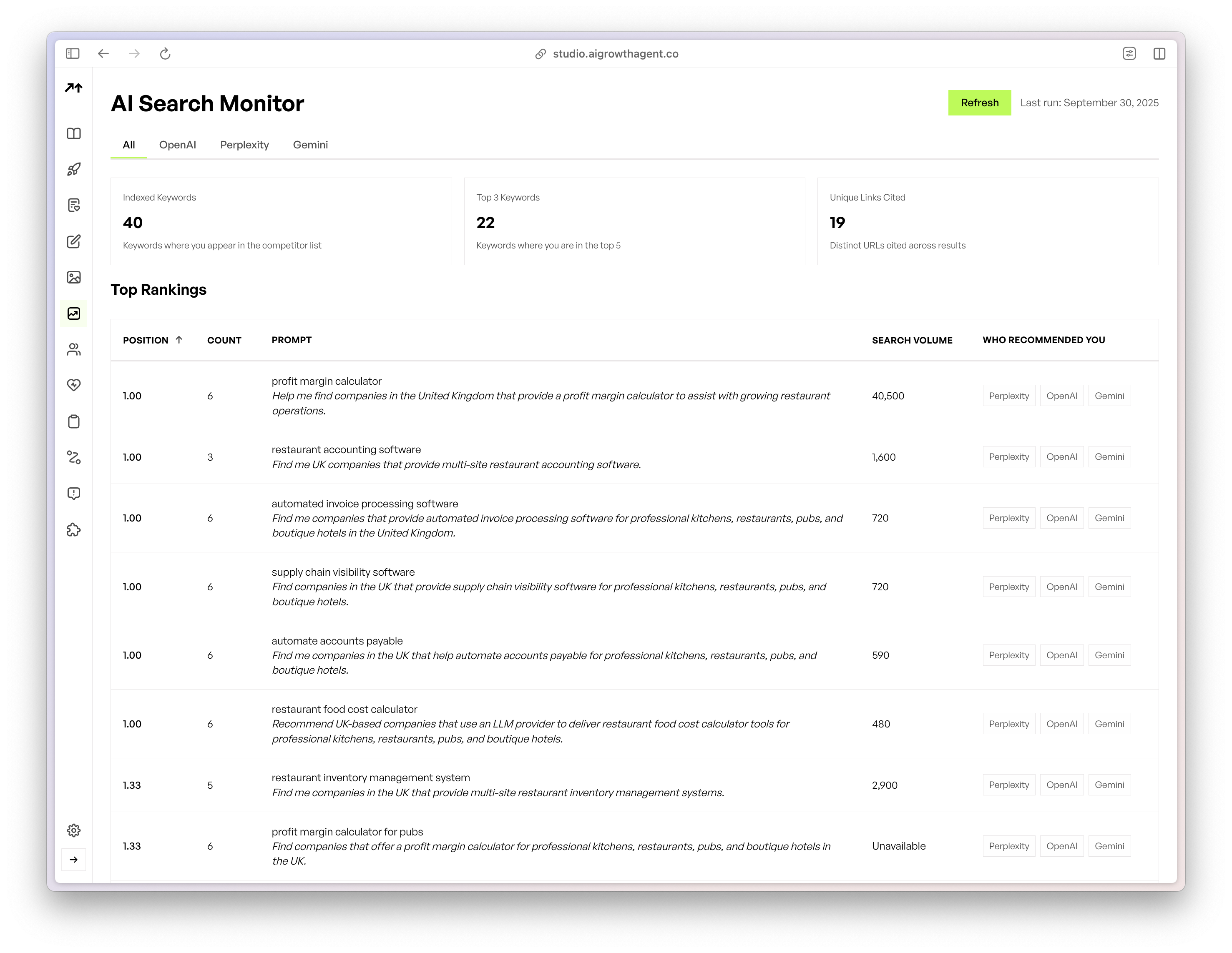
AI Growth Agent replaces manual plugins with a fully autonomous programmatic SEO agent. It runs as a complete pSEO system that covers keyword research, content strategy, article creation, and publishing.
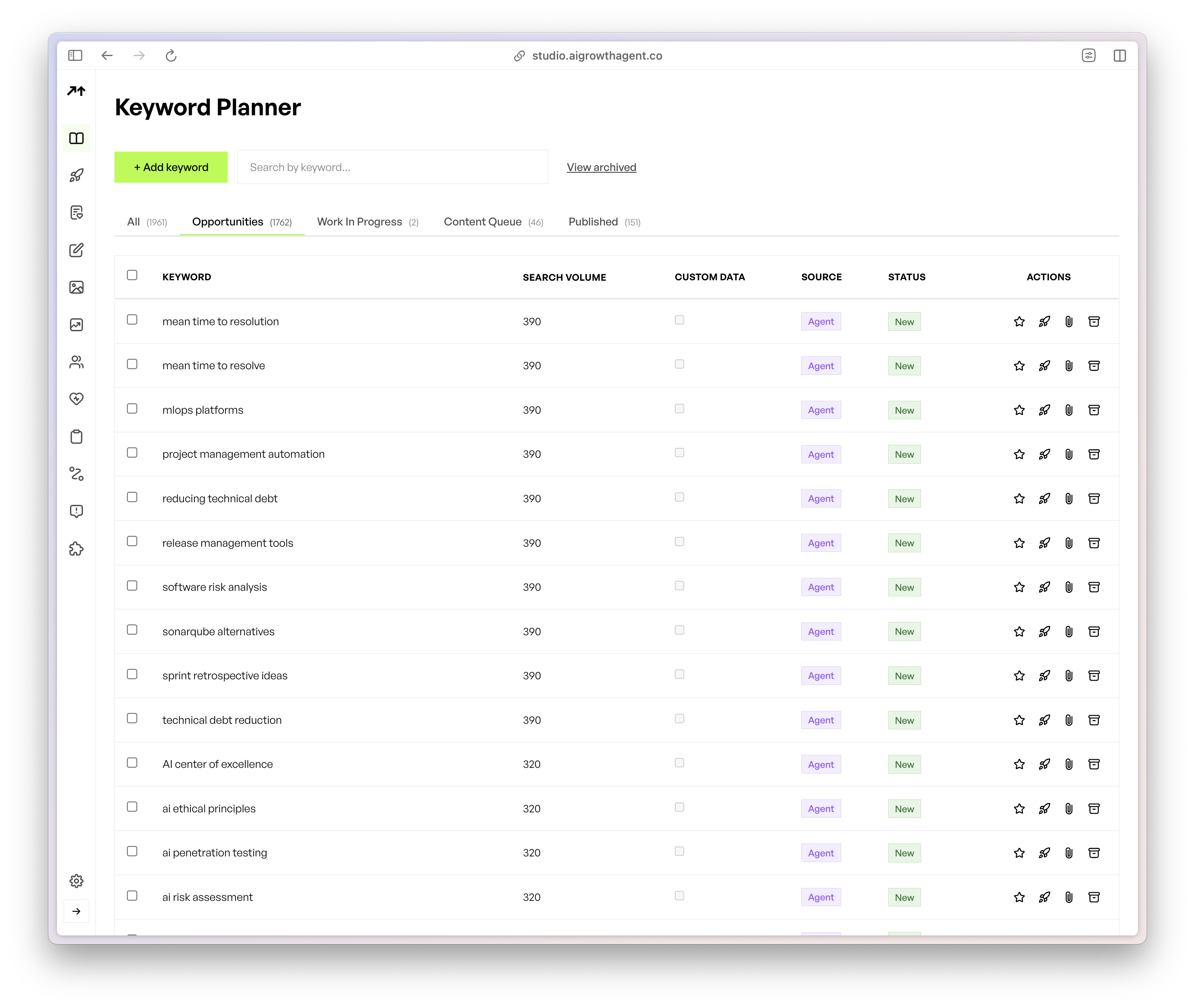
WordPress Features: Custom WordPress integration for self-hosted setups, one-week onboarding from first call to live content, and Company Manifesto programming that locks in brand voice. Most clients choose the hosted environment, while WordPress integration remains available when needed.
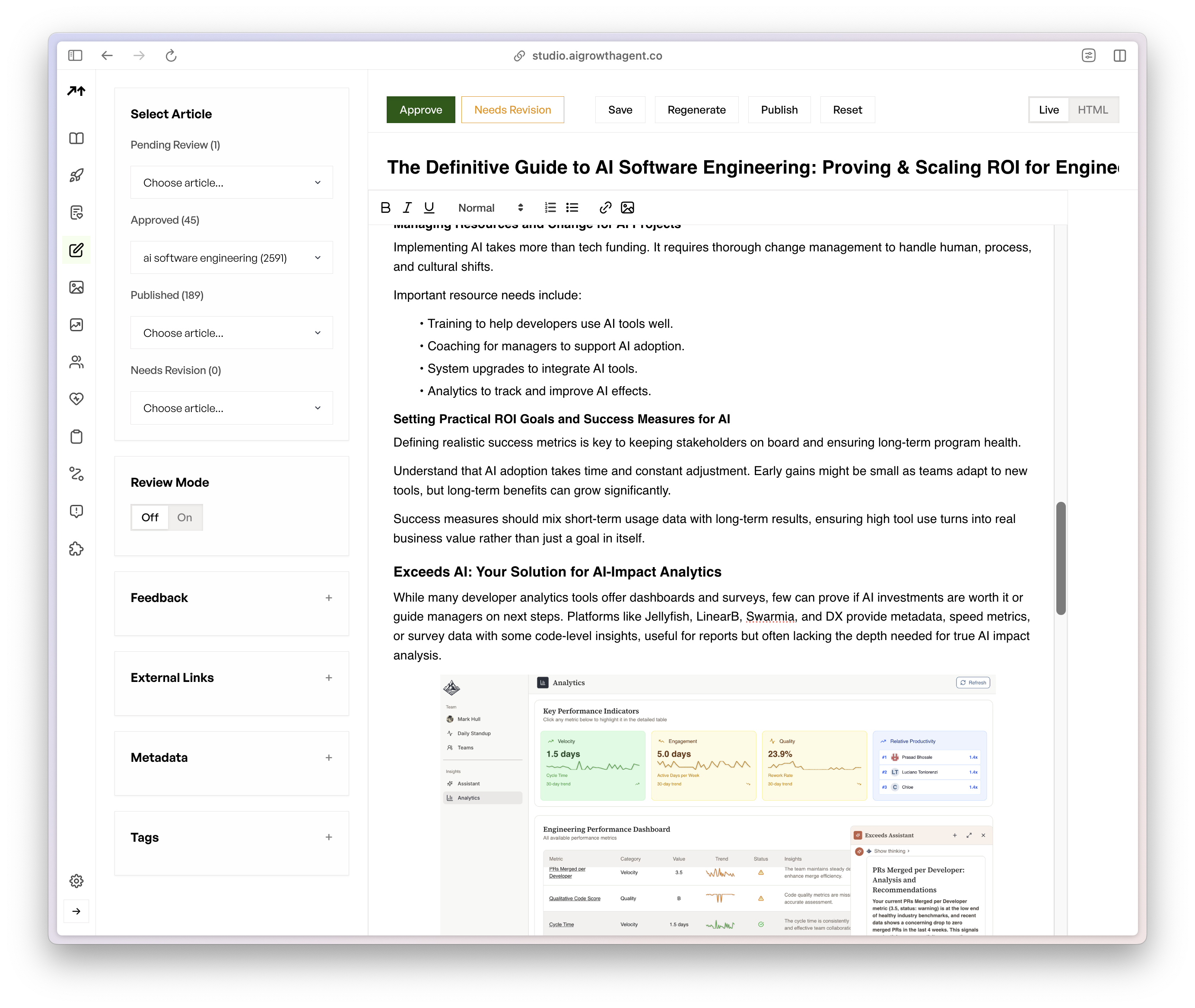
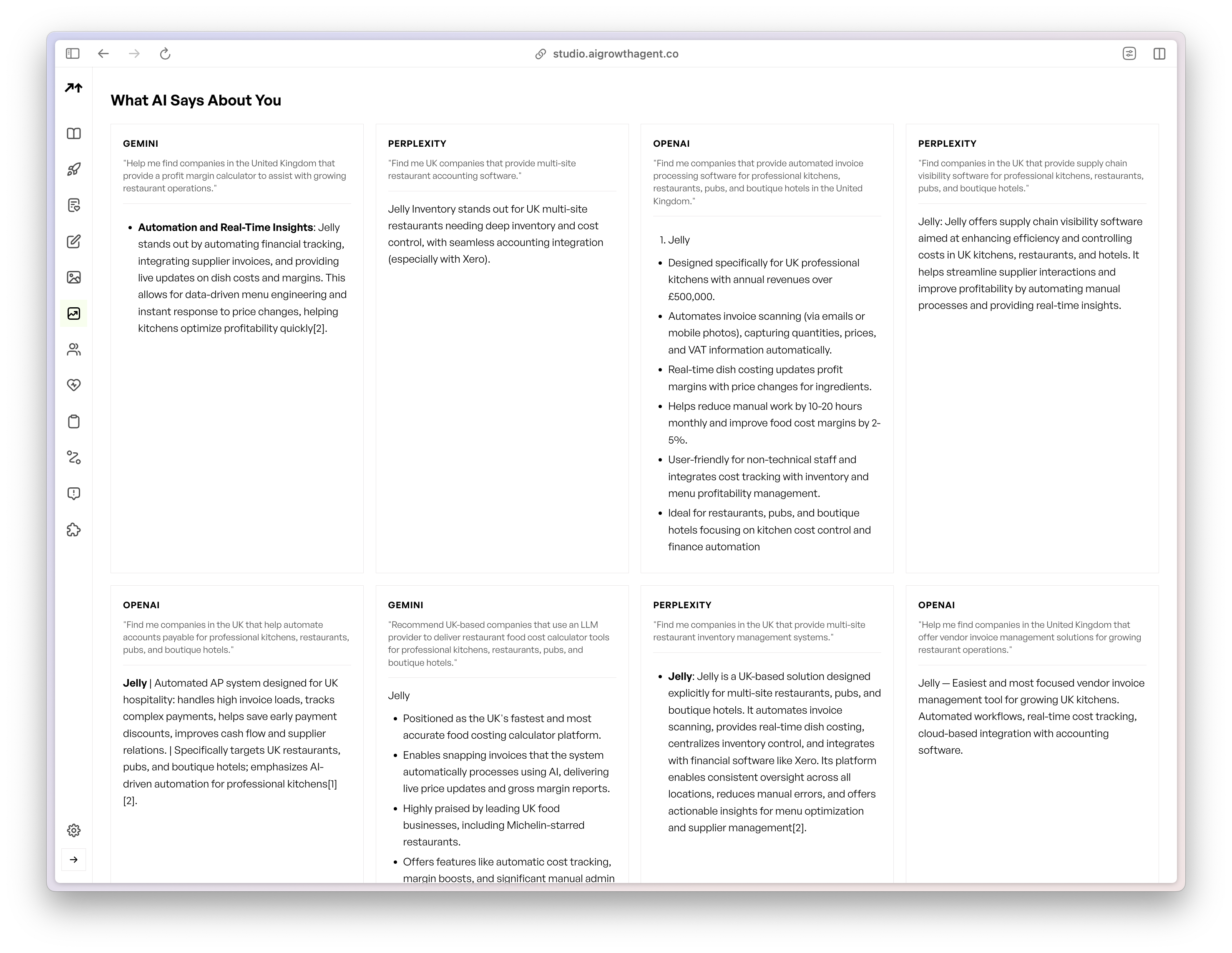
Strengths: End-to-end automation removes developer dependence, supports advanced schema and LLM.txt, and introduces the first blog Model Context Protocol (MCP) for AI search engines. It also supports multi-tenant setups for portfolios and tracks AI citations in real time across ChatGPT, Gemini, and Perplexity.
Limitations: Pricing reflects enterprise positioning, and the team accepts clients selectively. Many customers prefer the hosted model instead of self-hosting.
Pricing: Custom enterprise plans based on content volume and feature scope.
Ideal For: Premium brands and agencies that want autonomous pSEO, minimal technical lift, and measurable growth in AI citations.
SEOmatic – Enterprise-Grade Schema for WordPress
SEOmatic focuses on technical SEO automation with a strong emphasis on schema and structured data across large WordPress sites.
WordPress Features: Native plugin integration, automated schema creation, JSON-LD support, and meta tag management.
Strengths: Broad schema coverage, enterprise-ready technical SEO, and reliable compatibility with WordPress.
Limitations: Advanced setups require technical skills, and the tool offers little help with content creation.
Pricing: Plans start at $99 per month for core features.
Ideal For: Technical SEO teams that care most about structured data rather than content generation.
Page Generator Pro – Template-Based Bulk Page Creation
Page Generator Pro helps WordPress users spin up thousands of pages from templates and data sources.
WordPress Features: Standard plugin install, flexible template system, data source connections, and bulk publishing tools.
Strengths: Proven ability to scale to very large page counts, plus a mature WordPress footprint.
Limitations: Every template needs manual setup, AI support remains limited, and careless use can create thin content.
Pricing: Lifetime licenses start at $299, with annual plans from $99.
Ideal For: WordPress developers who like hands-on template control.
Compare AI Growth Agent’s autonomous approach to manual template systems.
Super Programmatic SEO – AI Articles Inside WordPress
Super Programmatic SEO uses AI to create SEO-focused articles with free Groq AI support for up to 10 articles each month. The PRO tier connects to ChatGPT, Claude, Gemini, and other providers.
WordPress Features: Native plugin, brand settings, SEO tuning, and support for seven languages in the PRO version.
Strengths: Free tier, multiple AI providers, E-E-A-T improvements, and FAQ generation.
Limitations: Hard cap of 300 articles per month in PRO, manual keyword entry, and basic automation compared with full agents.
Pricing: Free for 10 articles per month, with PRO pricing listed at superprogrammaticseo.ai/pricing.
Ideal For: Smaller WordPress sites that want to test AI content on a tight budget.
WP All Import – Data-Driven WordPress Content
WP All Import shines when you need to pull structured data into WordPress and turn it into content at scale.
WordPress Features: Native plugin, CSV and XML imports, custom field mapping, and scheduled import jobs.
Strengths: Reliable imports, broad format support, and a long track record in the WordPress ecosystem.
Limitations: Content still needs to be created elsewhere, AI features are absent, and templates require manual setup.
Pricing: Entry plans start at $99 per year.
Ideal For: Sites with rich external datasets that need automated import flows.
Yoast SEO Premium – AI Enhancements for Existing Content
Yoast SEO Premium now includes AI features that help refine on-page SEO, especially titles and meta descriptions.
WordPress Features: Deep plugin integration, AI title and meta generation, LLM.txt support, Semrush data, and internal linking suggestions.
Strengths: Massive install base, strong SEO fundamentals, and helpful AI enhancements.
Limitations: Limited programmatic content creation, heavy focus on tuning existing pages, and ongoing manual writing needs.
Pricing: Typically $99–$119 per year for a single site.
Ideal For: Site owners who want AI-assisted optimization rather than full pSEO automation.
Typemat – Free AI Content via Google Sheets
Typemat gives budget-conscious WordPress users a free way to generate AI content connected to Google Sheets.
WordPress Features: Plugin integration, Sheets connectivity, and free AI content generation.
Strengths: Zero-cost entry, simple setup, and spreadsheet-based data control.
Limitations: Basic automation, limited scale, and light technical SEO support.
Pricing: Free tier with paid upgrades for more advanced needs.
Ideal For: Small sites experimenting with AI content before committing to larger systems.
RankMath – Schema and AI-Assisted SEO
RankMath now includes Content AI, which helps with SEO recommendations and schema setup.
WordPress Features: Plugin integration, schema automation, Content AI, and SEO scoring.
Strengths: Rich SEO toolkit, AI-assisted optimization, and smooth WordPress support.
Limitations: Programmatic content generation remains limited, and teams still need to write content manually.
Pricing: Free core plugin, with PRO plans from $59 per year.
Ideal For: WordPress sites that want stronger technical SEO with some AI guidance.
JetEngine – Custom Structures for pSEO Builds
JetEngine gives developers the tools to create custom post types and dynamic templates that support pSEO projects.
WordPress Features: Custom post types, dynamic templates, field controls, and query builders.
Strengths: Flexible content models, powerful dynamic layouts, and tight WordPress integration.
Limitations: No native AI features and fully manual content creation.
Pricing: Included in Crocoblock bundles starting at $26 per year.
Ideal For: Developers building bespoke pSEO architectures on WordPress.
See how AI Growth Agent eliminates the need for multiple WordPress plugins.
Side-by-Side Comparison Table
|
Tool |
Automation Level |
WP Scalability |
AI Features |
|
AI Growth Agent |
Autonomous |
High scalability with WordPress integration |
Schema + LLM.txt + MCP |
|
SEOmatic |
Semi-automated |
5,000+ pages |
Schema automation |
|
Page Generator Pro |
Template-based |
10,000+ pages |
Limited |
|
Super Programmatic SEO |
AI-assisted |
300 pages/month |
Multi-AI providers |
|
WP All Import |
Data import |
Unlimited |
None |
|
Yoast SEO Premium |
AI-enhanced |
Optimization only |
Title/meta generation |
|
Typemat |
Basic AI |
Limited |
Free AI content |
|
RankMath |
AI-assisted |
Optimization focus |
Content AI module |
|
JetEngine |
Manual |
Custom structures |
None |
Traditional WordPress plugins rely on manual setup and constant tuning, which slows growth as content volume increases. Autonomous agents such as AI Growth Agent act as set-and-forget systems that manage the full pSEO lifecycle without human input. This difference becomes crucial once you scale to thousands of pages and still need strong quality and technical SEO.
Schedule a demo to see autonomous pSEO in action.
WordPress Implementation Steps and Common Pitfalls
Frequent pSEO issues include thin pages (67% of cases, with up to 80% traffic loss), duplicate content (54%, often leading to deindexation), and weak data quality (41%, sometimes causing manual penalties). WordPress teams also face crawl budget strain, sitemap complexity, and plugin conflicts as page counts grow.
Implementation Steps:
- Subdomain Setup: Configure blog.yoursite.com for pSEO content so the main site remains stable and fast.
- Plugin Installation: Install your chosen pSEO tool with correct WordPress roles and permissions.
- Content Clustering: Group keywords into clear clusters to reduce cannibalization and confusion.
- Automated Publishing: Set publishing schedules and confirm schema is applied correctly.
Critical Pitfalls Checklist:
- Track indexation weekly, and investigate if rates fall below 80 percent.
- Maintain at least 40 percent unique content on each page to reduce duplicate risk.
- Roll out progressive indexing for very large sites instead of publishing everything at once.
- Use strong internal linking so authority flows across your pSEO pages.
- Keep robots.txt and XML sitemaps clean and aligned with your strategy.
AI Growth Agent handles these technical risks through autonomous infrastructure management and tested WordPress integrations, which removes most manual setup work.
FAQ
What is programmatic SEO for WordPress?
Programmatic SEO for WordPress uses automated systems to create, refine, and publish large numbers of SEO-focused pages. Instead of writing each page by hand, teams use templates, structured data, and AI to scale from dozens to thousands of URLs. This method targets long-tail and niche queries that would be impossible to cover manually, which helps WordPress sites capture more organic traffic and AI citations.
What is the best free programmatic SEO solution for WordPress?
Super Programmatic SEO currently offers the strongest free option, with up to 20 AI-generated articles each month through Groq AI plus WordPress integration and SEO tuning. Typemat also provides free AI content generation connected to Google Sheets. These tools work well for tests, although free plans limit scale and automation when compared with premium systems like AI Growth Agent, which runs programmatic SEO end to end.
How does AI Growth Agent differ from WordPress SEO plugins?
Standard plugins such as Yoast or RankMath focus on optimizing content that humans already wrote. AI Growth Agent behaves more like an autonomous teammate that runs the full programmatic SEO cycle. It performs keyword research, drafts content, publishes articles, and manages technical SEO without manual steps. It also supports LLM.txt, Model Context Protocol, and real-time AI citation tracking, which traditional plugins do not provide.
How quickly can I see AI citations from programmatic SEO?
AI citation timing depends on content quality and technical setup. AI Growth Agent clients often see first citations within two to three weeks, with consistent patterns forming over six to eight weeks. Strong schema, correct LLM.txt, and clear authority signals all help. Manual plugin stacks usually move slower because they lack dedicated AI search optimization and require more configuration.
Are there WordPress security concerns with programmatic SEO?
Programmatic SEO can create security risks when teams ignore performance and access controls. Large publishing runs may stress databases, trigger plugin conflicts, or expose weak permissions. Mature platforms such as AI Growth Agent reduce these risks through secure subdomain setups, vetted WordPress integrations, and enterprise security practices. Always confirm that your pSEO stack follows WordPress security guidelines and ships regular updates.
What is the best way to start with programmatic SEO on WordPress?
A focused pilot works best, usually 50–100 pages in a single topic cluster. Confirm that hosting is fast, plugins stay updated, and technical SEO is clean before you scale. AI Growth Agent supports a one-week onboarding window from first consultation to live content, which makes it a strong fit for teams that want quick pSEO deployment without extra engineering work.
Conclusion
The strongest WordPress pSEO solutions in 2026 favor autonomous systems over manual plugin stacks. Traditional tools still demand developer time and ongoing maintenance, while AI Growth Agent points toward a future where an agent manages research, writing, publishing, and AI search optimization.
Schedule a consultation or demo today to see how AI Growth Agent can reshape your WordPress content engine and position your brand as a leading source for AI search results.
