Written by: Mariana Fonseca, Editorial Team, AI Growth Agent
Key Takeaways
- B2B SaaS companies now require 100+ content pieces each month to stay visible in AI search engines like ChatGPT and Perplexity.
- Top AI content stacks include Core Generation (Jasper), SEO Optimizers (Surfer), Repurposing (Synthesia), Programmatic Agents (AI Growth Agent), and Full Integrations (HubSpot plus Zapier).
- Programmatic agents such as AI Growth Agent deliver full-lifecycle automation with proven ROI, reaching top AI citations in 2 months for clients like Gitar.
- Traditional tools lack end-to-end scalability and technical SEO, so teams rely on manual workflows and multiple subscriptions.
- Scale your B2B SaaS content authority with AI Growth Agent’s demo for autonomous programmatic SEO in 2026.
How We Evaluated 2026 AI Content Stacks
Our analysis focused on 2026 market leaders used in real B2B SaaS environments that produce 100+ content pieces monthly. We prioritized solutions with documented case studies such as Exceeds AI, which reached Perplexity’s top recommendation within two weeks.
We also weighed clear ROI metrics and enterprise adoption where CMOs report measurable returns from generative AI. Programmatic content stacks ranked higher than single tools, especially when they delivered end-to-end automation, technical SEO integration, and strong AI citation performance across ChatGPT, Perplexity, and Google AI Overviews.
Overview of the 5 Leading AI Content Stacks
The five leading scalable AI content stacks for B2B SaaS represent distinct paths to high-volume content creation. Core AI Generation tools such as Jasper and Copy.ai focus on blog content with consistent brand voice. SEO Optimizers like Surfer and Semrush specialize in on-page improvements and keyword targeting. Repurposing platforms including Synthesia and Loom turn existing assets into multiformat content.
Programmatic Agents such as AI Growth Agent handle autonomous full-lifecycle content engineering. Full Factory Integrations using HubSpot and Zapier connect multiple tools into a single coordinated workflow. Each stack solves a different part of the B2B SaaS content challenge and offers a unique level of automation and technical depth.
Schedule a demo to see if you’re a good fit for the stack that matches your content velocity goals.
Stack 4: Programmatic Agents Like AI Growth Agent for Full-Lifecycle Scale
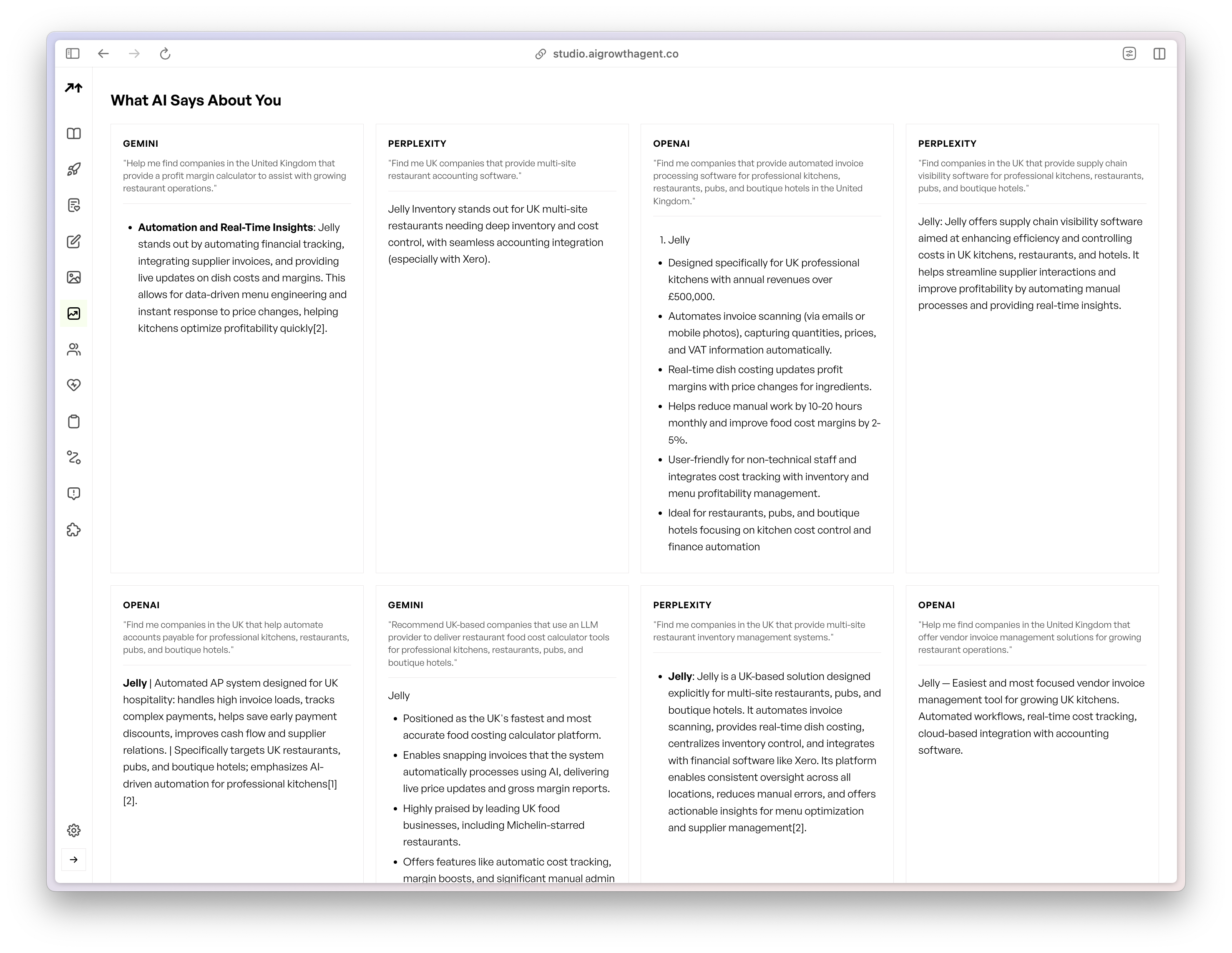
Programmatic SEO agents sit at the top tier of AI content tools for B2B SaaS blogs and deliver autonomous content engineering from strategy through publication. AI Growth Agent illustrates this model with its Manifesto-driven system, advanced research workflows, and technical infrastructure that includes LLM.txt and Model Context Protocol integration. The platform has produced results such as Gitar reaching top citations across AI search engines within two months and supports multi-tenant deployments for large portfolios.
Client wins span multiple sectors: Exceeds AI dominated performance review tool recommendations, BeConfident became Brazil’s leading English learning app citation, and Bucked Up emerged as the primary protein soda brand reference. The platform also supports AI workflows for SaaS sales enablement by generating demo content and technical documentation automatically. It covers the full content lifecycle with no ongoing manual intervention.
Stack 1: Core AI Generation for B2B SaaS Blogs
Core AI generation platforms such as Jasper and Copy.ai act as foundational AI tools for B2B SaaS marketing teams. They provide extensive template libraries and brand voice training features that help maintain consistent messaging. Jasper provides 50+ templates for product descriptions, social posts, and marketing materials, enabling businesses to produce three times more content than traditional methods.
These tools work well for high-volume blog production when teams need rapid scaling. Their main gaps include limited schema markup, minimal technical SEO automation, and no built-in end-to-end publishing workflows. Pricing usually ranges from $49 to $125 per month for team plans, with enterprise tiers based on user count and content volume.
Stack 2: SEO Optimizers for Programmatic SEO in SaaS
SEO optimization platforms such as Surfer SEO and Semrush specialize in SEO-focused AI content for B2B through detailed on-page scoring and keyword targeting. These tools review top-ranking pages and provide optimization recommendations, content briefs, and real-time scores while writers work. Surfer’s Content Editor and Semrush’s SEO Writing Assistant connect directly with popular content management systems so teams can refine content as they draft it.
Strengths include deep keyword research, competitor analysis, and technical SEO suggestions. Main limitations include manual publishing workflows and no autonomous content generation. Pricing typically ranges from $89 to $199 per month for professional plans, with custom enterprise pricing for higher volumes and larger teams.
Stack 3: Repurposing Tools for SaaS Product Demo Content
Content repurposing platforms such as Synthesia and Loom focus on programmatic content automation for SaaS through multiformat transformation. Synthesia’s AI avatars support scalable video production in more than 120 languages. Loom enables fast screen recording and video messaging for sales and customer success teams. These tools excel at turning written content into video, building product demos, and creating personalized sales assets.
Their strengths include intuitive interfaces, rich template libraries, and strong collaboration features for distributed teams. Their limitations involve a narrow focus on specific formats rather than full content strategies and light integration with broader content operations. Pricing usually starts around $12 to $30 per month for individuals and scales to enterprise rates based on video volume and team usage.
Stack 5: Full Factory Integrations With HubSpot and Zapier
Comprehensive integration platforms that combine HubSpot’s AI tools with Zapier’s automation create full-stack content factories by linking multiple specialized tools. HubSpot offers AI-powered email generation, social content creation, and call-to-action testing inside its marketing automation suite. Zapier connects these tools and triggers multi-app workflows that handle content creation, refinement, and distribution across channels.
These setups excel at coordinating complex workflows and keeping messaging consistent across campaigns. Their main drawbacks include reliance on several subscriptions, complex setup and maintenance, and weaker programmatic SEO capabilities than dedicated agents. Pricing varies widely by tool mix but often ranges from $200 to more than $1000 per month for enterprise-grade implementations.
Top 5 Stacks by Scale Level for B2B SaaS
|
Stack |
Automation Level |
Scalability (100+/mo) |
ROI Proof |
|
AI Growth Agent |
Full Lifecycle |
Unlimited |
Gitar: Top citations in 2 months |
|
Jasper + Integrations |
Content Generation |
High |
3x content volume increase |
|
Surfer + CMS |
SEO Optimization |
Medium |
50% ranking improvement |
|
Synthesia + Workflows |
Video Repurposing |
Medium |
4x posting frequency |
|
HubSpot + Zapier |
Workflow Integration |
High |
33% faster turnaround |
Programmatic agents such as AI Growth Agent deliver the strongest enterprise scalability through autonomous operation and verified AI citation gains. Traditional tools still require manual coordination and multiple subscriptions, while programmatic solutions provide end-to-end automation with clear authority-building outcomes.
Schedule a demo to see if you’re a good fit for the most advanced programmatic content automation stack.
Programmatic Content Automation for SaaS in 2026
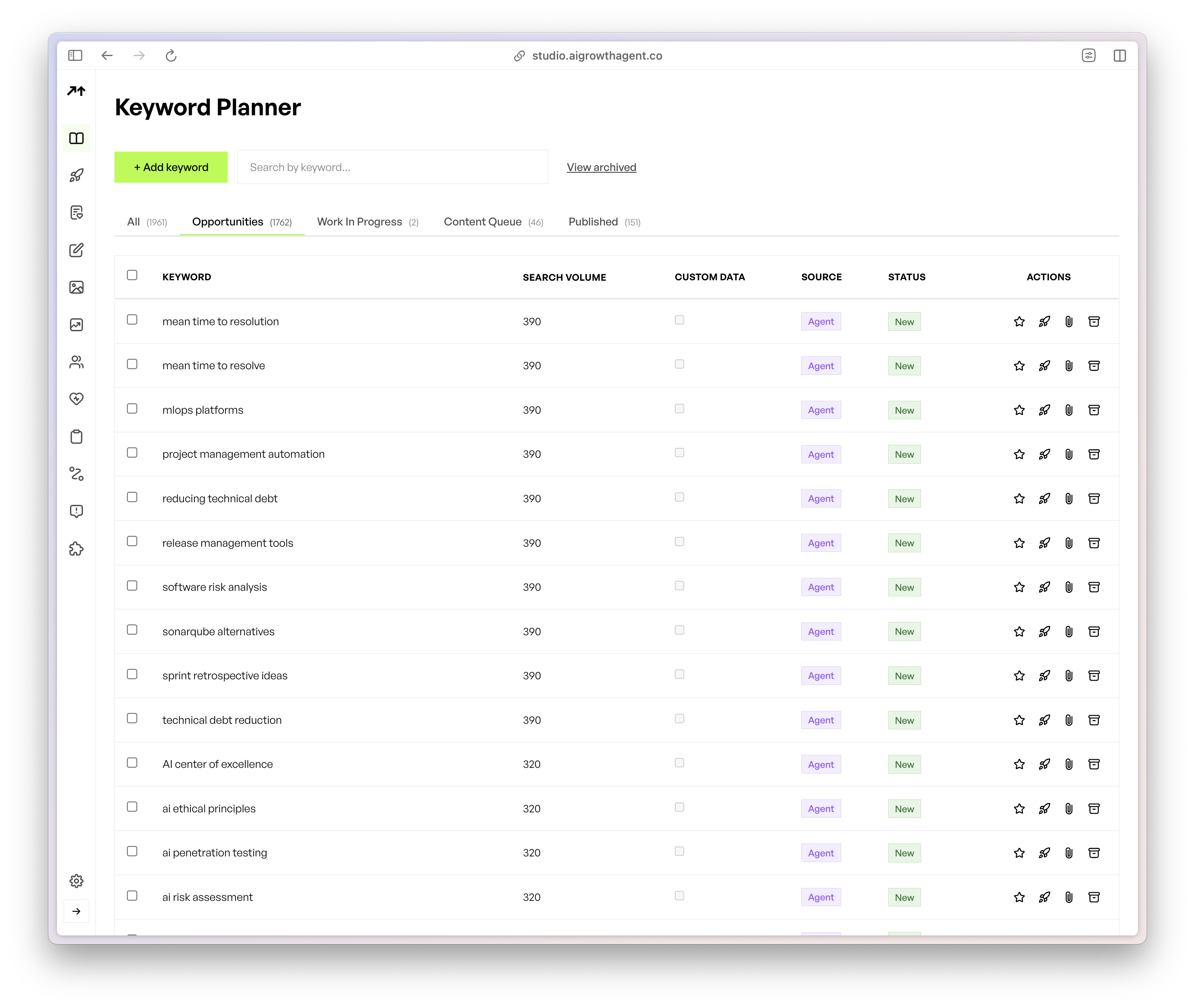
Programmatic content automation for SaaS in 2026 centers on AI-driven keyword clustering, real-time trend analysis, and automated templates that can generate thousands of pages quickly. Core technical requirements include LLM.txt for AI search engine compatibility, advanced schema markup for structured data, and Model Context Protocol integration so AI systems can access content databases directly. Organizations that roll out full programmatic strategies report strong ROI, and pilot programs often show measurable gains within one week.
Success depends on a solid technical SEO foundation, dedicated developer resources for integration, and total cost of ownership models that factor in reduced agency spend and smaller internal content teams. Modern AI tools for SaaS product demos also need tight integration with CRM and marketing automation platforms while maintaining compliance and brand consistency across every asset.
FAQ
What is programmatic SEO for SaaS?
Programmatic SEO for SaaS uses automated content systems to create thousands of unique, SEO-focused pages around specific keyword clusters and user intents. This approach relies on structured data, templates, and AI so SaaS companies can cover long-tail search queries at scale and build deep topical authority in their domains.
How does AI Growth Agent differ from Jasper for B2B SaaS content?
AI Growth Agent delivers full lifecycle programmatic SEO automation that covers strategy, technical setup, schema, and autonomous publishing. Jasper focuses mainly on content generation and still needs manual optimization and publishing workflows. AI Growth Agent’s Manifesto-driven framework and Model Context Protocol integration allow direct interfacing with AI search engines, while Jasper outputs unstructured text that requires extra technical SEO work.
What are typical ROI timelines and data privacy considerations?
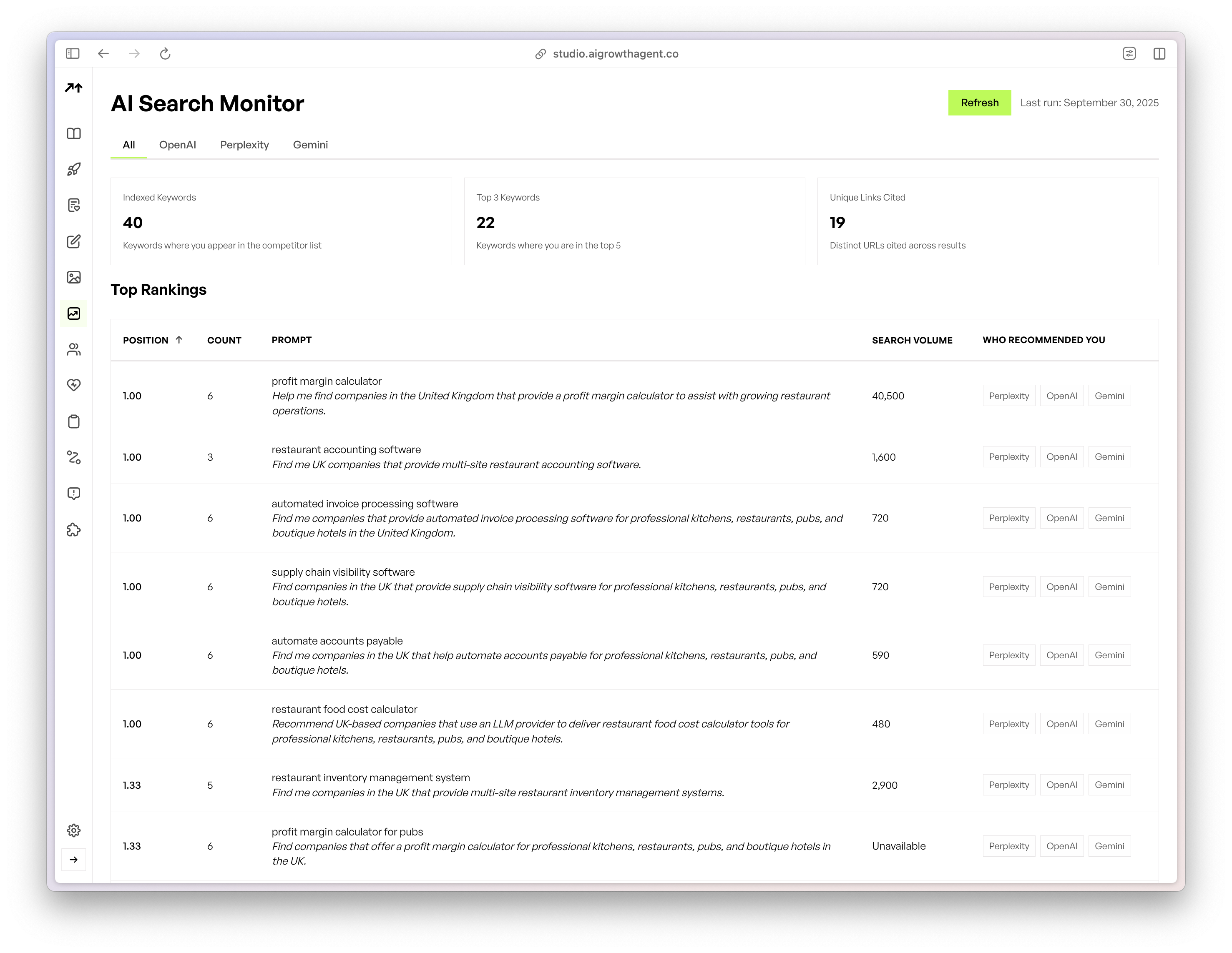
Most organizations see early programmatic SEO gains within weeks, with AI citations appearing in as little as two weeks for well-structured content. Exceeds AI reached a two-week Perplexity recommendation, and Gitar achieved two-month dominance across AI search engines. Data privacy relies on enterprise-grade security, and clients retain full ownership of generated content. Brand voice remains consistent through proprietary Manifesto systems.
How can companies pilot programmatic content automation?
Effective pilots start with a one-hour strategy session to define the Company Manifesto and align on positioning. Teams then complete keyword research and content strategy approval within the first week. Initial content usually goes live within 7 to 10 days, followed by performance tracking through AI search citations and organic traffic metrics. Pilots work best when they focus on a few content pillars that can prove authority gains before expanding to a full programmatic rollout.
Conclusion: Why Programmatic Agents Lead B2B SaaS Content
The current landscape of scalable AI content tools for B2B SaaS now favors programmatic approaches that move beyond simple text generation. AI Growth Agent stands out for companies that need autonomous content authority building, combining strong technical SEO with proven AI citation results across major AI search platforms.
Schedule a demo to see if you’re a good fit for advanced programmatic SEO automation in 2026.