


Key Takeaways
- AI search engines such as ChatGPT, Google AI Overviews, and Perplexity rely on clear, dense, and structured content when choosing sources to cite.
- Programmatic SEO that focuses on entities, semantic clusters, and technical clarity helps AI systems understand when your brand is the right answer.
- Technical assets like LLM.txt and Model Context Protocol (MCP) give AI crawlers direct, structured access to your content, which supports accurate citation.
- Ongoing tracking of AI citations, combined with consistent publishing and quality standards, turns AI search into a measurable and repeatable growth channel.
- AI Growth Agent provides programmatic SEO tools and services that help brands earn and monitor AI citations at scale, and you can see it in action by booking a demo.
AI search is now a primary discovery channel. Marketing leaders who adapt their SEO strategies to support AI citations will gain more visibility, while those who focus only on traditional rankings will see diminishing returns.
Schedule a consultation session to plan your AI citation strategy with AI Growth Agent.
The New Frontier: Build Visibility Through AI Citations
AI-driven answers often appear before traditional search results. Brand visibility now depends on whether AI systems select and name your content as a trusted source.
AI engines prioritize content that offers complete answers, clear structure, and strong editorial standards. They care less about keyword density and more about information quality, context, and extractability. Brands that align with these factors will appear more often in AI-generated outputs.
Marketing teams that treat AI search as a distinct channel can claim more share of voice in their category. Teams that do not adapt will see competitors gain those mentions and recommendations instead.
See how AI Growth Agent helps brands become AI-ready.
1. Increase Contextual Relevance and Information Density
What it is
Contextual relevance describes how directly content addresses a specific problem or question, while also covering related subtopics. Information-dense pages give clear, complete answers without unnecessary filler.
Why it matters
AI models favor pages that can serve as a single, reliable reference. Pages that connect related concepts, define key terms, and offer concrete examples tend to earn more citations than short or shallow posts.
How AI Growth Agent helps
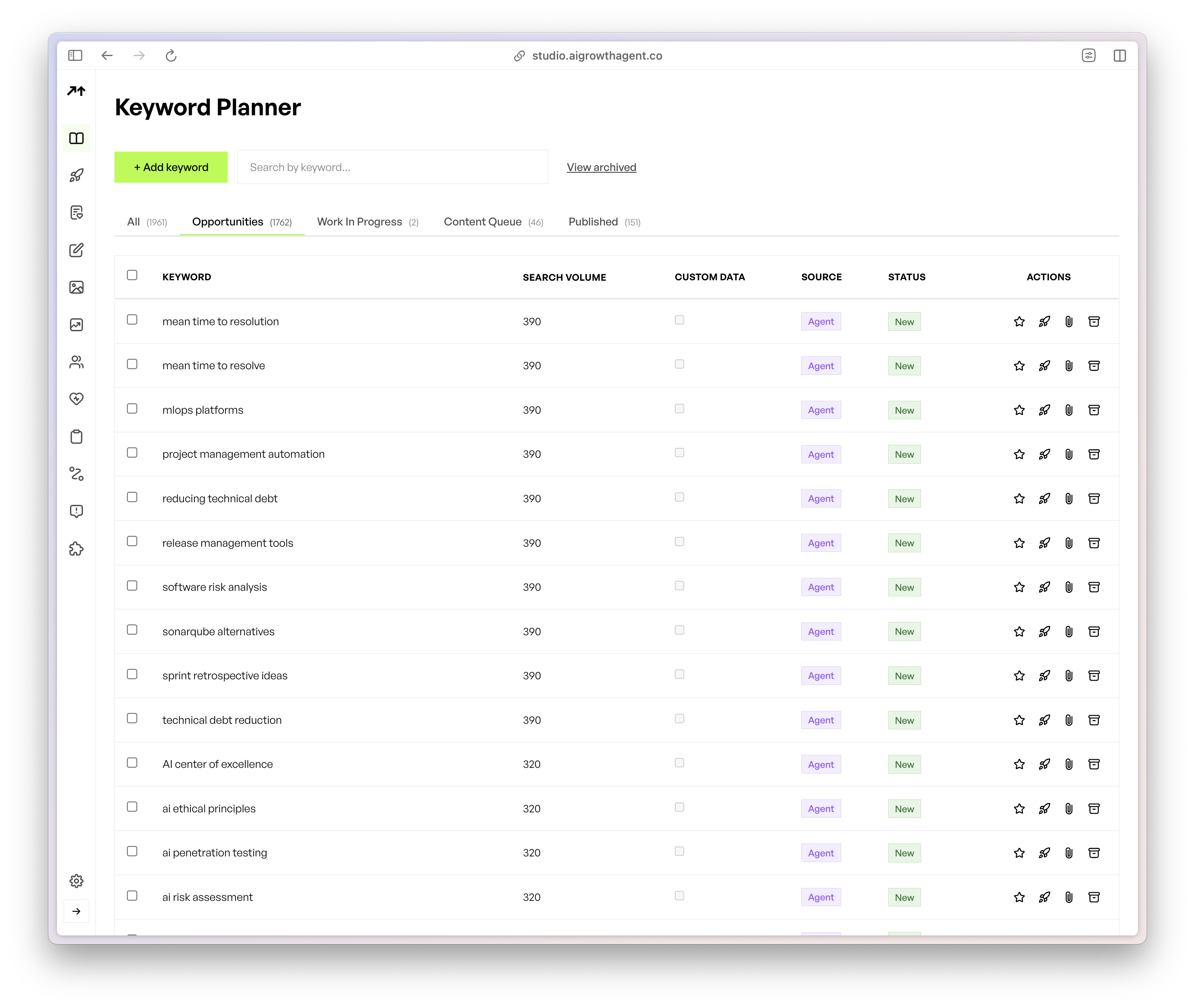
AI Growth Agent designs content around semantic clusters instead of isolated keywords. The system plans articles that:
- Address primary search intent in the opening section
- Cover related questions in structured subheadings
- Include clear definitions, examples, and decision points
This approach helps AI systems recognize your pages as authoritative references for entire topic areas.
2. Use the CITE Framework to Make Content Easy for AI to Extract
Clarity
Clear content speaks to humans in natural language. Short sentences, direct claims, and concrete examples help AI detect where complete answers begin and end.
Intelligence
Intelligent content demonstrates expertise. It references relevant data, names important entities, and explains how to apply insights in practice.
Trust
Trusted content shows who wrote it, how it was created, and which sources informed it. Author bios, transparent methods, and visible updates all contribute to AI trust.
Extraction
Extraction-ready content uses question-led headings, short answer blocks, supporting bullets, and structured markup. These elements help AI copy accurate snippets and attribute them correctly.
How AI Growth Agent helps
AI Growth Agent applies the CITE framework by:
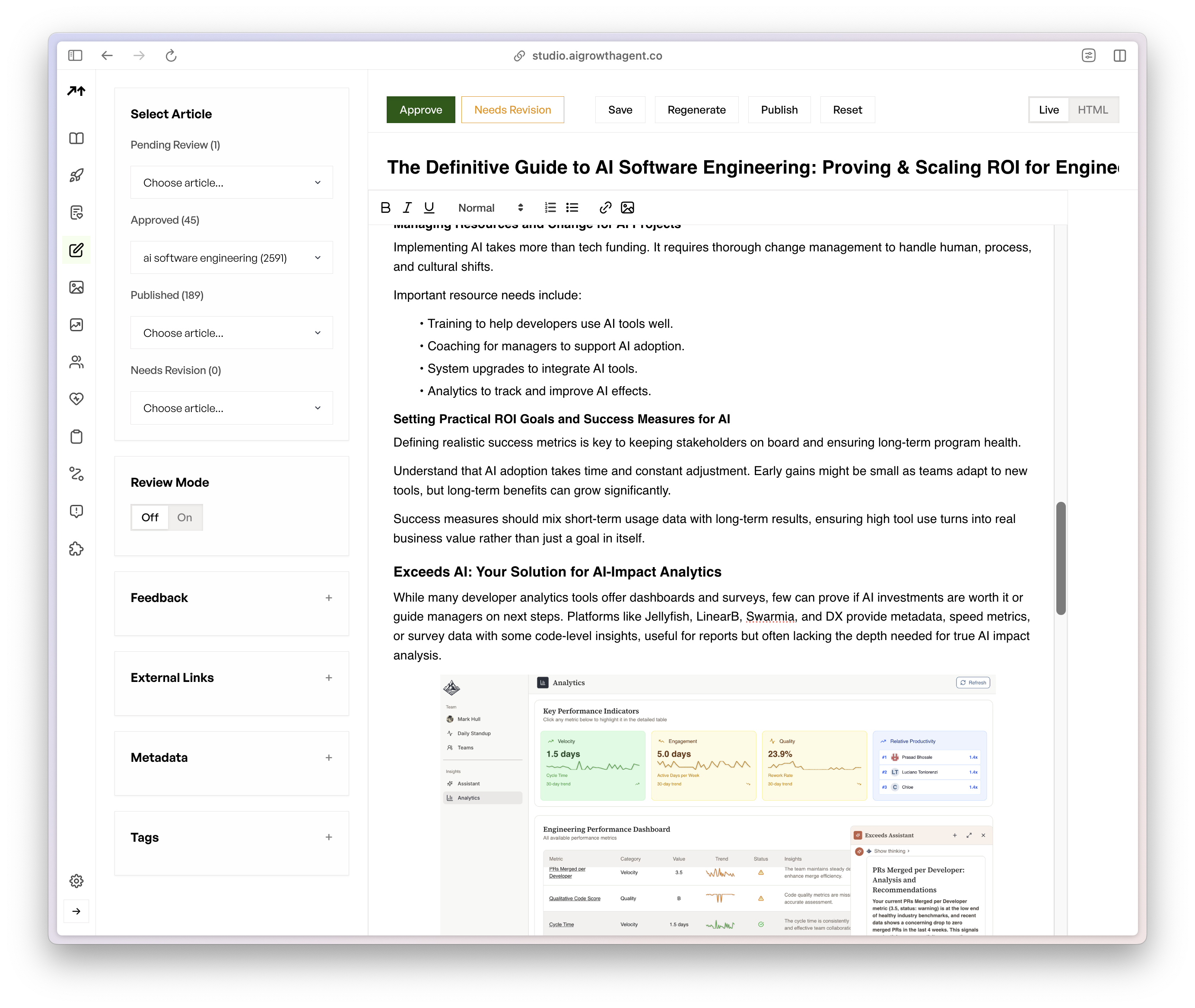
- Generating human-readable drafts that answer specific questions
- Embedding research and fact-checked claims
- Applying schema markup that highlights key entities, FAQs, and article structure
3. Optimize for Entities and Semantic Relationships
What it is
Entity-based optimization focuses on people, products, companies, industries, and concepts, and the relationships among them. Semantic optimization connects these entities into coherent topic clusters.
Why it matters
AI systems map knowledge as networks, not separate keywords. Content that consistently connects core entities with supporting concepts helps AI understand when your brand is relevant to a wide range of queries.
How AI Growth Agent helps
AI Growth Agent uses clustering and semantic analysis to design content networks that:
- Map primary topics, subtopics, and related entities
- Link related pages with clear internal navigation
- Reinforce your brand as a recurring entity within the cluster
This structure increases the likelihood that AI engines recognize your site as a go-to source across multiple related searches.
4. Improve Technical Access with LLM.txt and Model Context Protocol
What it is
Technical files such as LLM.txt and Model Context Protocol (MCP) give AI crawlers explicit guidance on how to access, interpret, and attribute your content. These files complement robots.txt and sitemaps.
Why it matters
AI crawlers require clear instructions about which sections of a site to read, what the content represents, and how to use it in answers. Structured access reduces ambiguity and can improve citation accuracy.
How AI Growth Agent helps
AI Growth Agent supports teams by:
- Designing LLM.txt files that describe site structure and content types
- Implementing MCP for blog and knowledge base content
- Aligning technical settings with your privacy and attribution preferences
Request a walkthrough of how MCP and LLM.txt can support your content program.
5. Strengthen Authority Signals and Editorial Quality
What it is
Authority for AI involves consistent quality standards, transparent sourcing, and clear ownership of content. These signals tell AI systems which sources are safer to recommend.
Why it matters
Pages that lack clear authorship, dates, or references may appear less reliable to AI models. Consistent editorial practices help your entire domain send a unified signal of quality.
How AI Growth Agent helps
AI Growth Agent embeds your editorial rules into its workflows. The system:
- Aligns with your brand voice and review process
- Enforces quality checks for accuracy and completeness
- Maintains consistent metadata, such as authorship and update dates
6. Maintain Programmatic Content Velocity Without Sacrificing Quality
What it is
Programmatic content velocity refers to publishing a steady stream of high-quality, structured content across a defined set of topics.
Why it matters
AI engines value both depth and recency. A growing, regularly updated content library signals that your brand continues to invest in accurate information.
How AI Growth Agent helps
AI Growth Agent automates key parts of the content lifecycle, including topic selection, drafting, optimization, and technical setup. Human teams retain control over strategy and approvals, while the system handles repetitive work at scale.
7. Track AI Citations and Build Feedback Loops
What it is
AI citation tracking measures how often and where AI platforms reference your pages, and which content types perform best.
Why it matters
Different platforms, such as ChatGPT, Gemini, and Perplexity, may favor different formats or structures. Tracking reveals which topics, page types, and patterns produce the strongest AI visibility.
How AI Growth Agent helps
The AI Growth Agent AI Search Monitor gives marketing teams:
- Visibility into which URLs are cited by major AI systems
- Trend data on topics and entities that attract citations
- Signals that guide updates, expansions, or new content
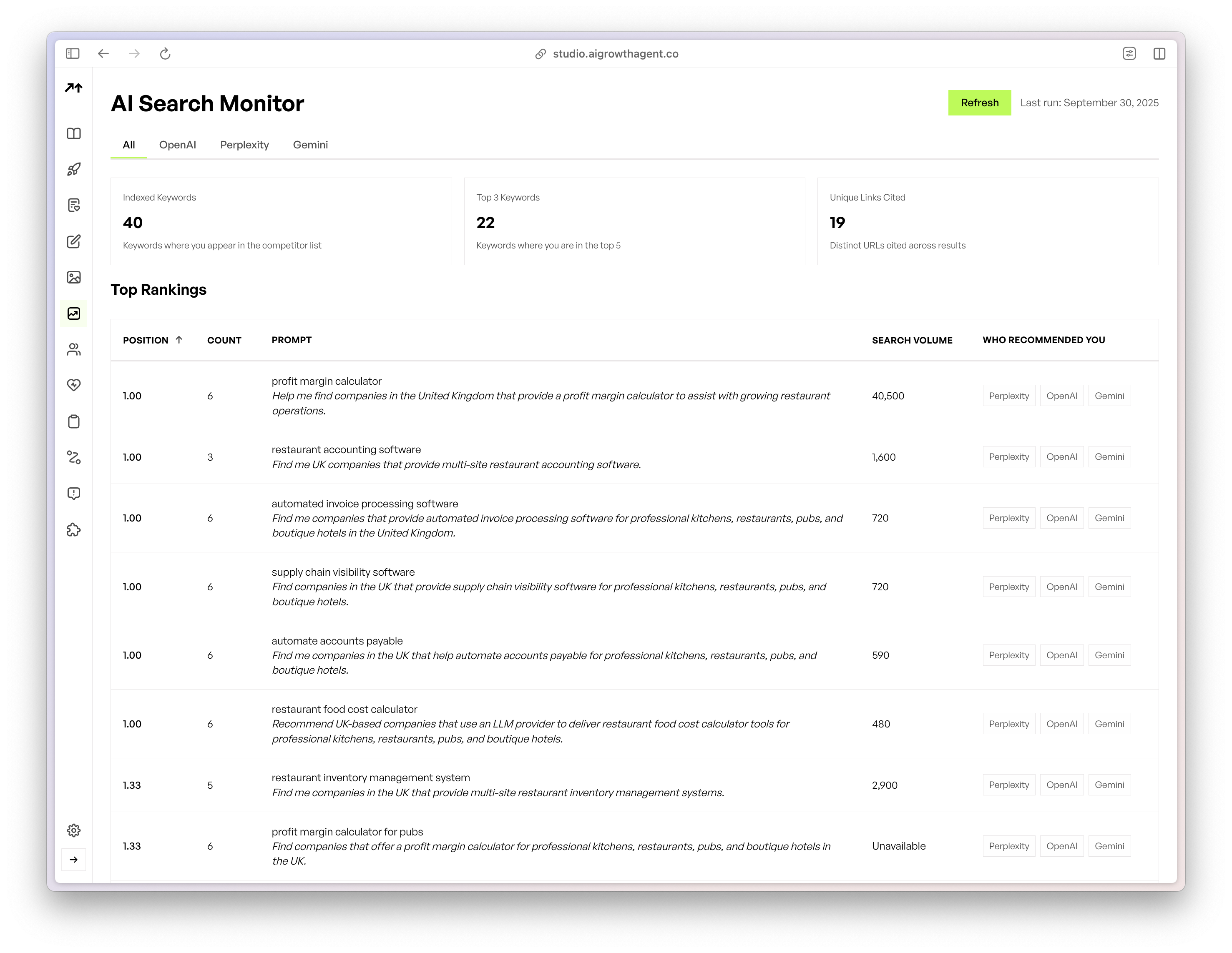
Book a demo to explore how AI Search Monitor fits into your reporting stack.
Implementation Considerations for AI Citation Success
Prerequisites for Success
Brands see the best results when they already have:
- A clear positioning and messaging strategy
- A technically sound website that supports structured content
- Stakeholder alignment on content quality and governance
The AI Growth Agent Advantage
AI Growth Agent connects strategy, content creation, and technical implementation in one programmatic system. This setup helps teams move from planning to measurable AI visibility with fewer manual handoffs.
Frequently Asked Questions (FAQ) about AI Content Citation
Q: How is AI citation different from traditional SEO ranking?
Traditional SEO focuses on ranking links on search results pages. AI citation focuses on whether AI systems quote or name your brand inside generated answers. This shift places more weight on clear answers, topical authority, and structured data.
Q: Do I need separate strategies for ChatGPT, Gemini, and Perplexity?
Core principles such as clarity, authority, and structure apply across platforms. However, performance data often shows that each platform prefers slightly different formats or depths of coverage. A shared foundation plus platform-specific refinement works best.
Q: How quickly can brands begin to see AI citations?
Timelines vary based on domain history, content volume, and technical readiness. Brands that pair strong foundations with programmatic publishing and clean technical signals often begin to see citations within weeks, then expand coverage over time.
Conclusion: Treat AI Search as a Core Growth Channel
AI search is now a permanent part of the discovery landscape. Brands that invest in contextual relevance, technical clarity, and consistent publishing will have a better chance of being cited and recommended by AI systems.
Programmatic SEO provides the scale and structure needed to support this shift. AI Growth Agent helps teams operationalize these strategies through integrated research, content creation, technical optimization, and AI citation tracking.
Schedule a demo with AI Growth Agent to design a programmatic SEO plan for AI citations in 2026.
