


Key Takeaways
- AI search systems such as ChatGPT, Gemini, and Perplexity now shape how buyers discover brands, so AI citations operate as a new layer of authority alongside traditional SEO.
- Programmatic SEO with structured, schema-rich content and clear topical coverage supports AI retrieval systems more effectively than occasional, manually produced articles.
- Technical assets such as LLM.txt files, Model Context Protocol (MCP), and advanced schema markup help AI models interpret brand content and increase citation likelihood.
- Monitoring AI search results and adjusting content based on how platforms cite your brand creates a feedback loop that compounds visibility over time.
- AI Growth Agent offers an automated programmatic SEO system that handles strategy, content, and AI-specific technical SEO, and you can review it in a live session by scheduling a demo.
The New Frontier: Why AI Search Changes Everything for Brands
AI powered search now sits at the front of many customer journeys. ChatGPT, Google AI Overviews, and Perplexity handle billions of queries and summarize web content into short answers that often show only a handful of sources.
This shift reduces the visible surface area of the web. Content volume grows quickly, but AI answer boxes highlight fewer brands, so companies with thin content footprints lose visibility even if they once ranked well in traditional search.
Marketing leaders now compete on depth, structure, and recency at scale. Brands that publish technically sound content daily across key topics give AI systems more opportunities to recognize, retrieve, and cite their pages throughout 2026.
Teams that want a structured review of current AI visibility can run an assessment as part of a focused consultation. Schedule a consultation session
Demystifying AI Search Indexing: Essential Concepts for Marketing Leaders
AI search describes tools that blend large language models with live web retrieval to generate direct answers that include cited sources. These systems focus on understanding entities, relationships, and user intent rather than only matching keywords.
Programmatic SEO (pSEO) uses templates, data, and automation to generate many high-quality, technically consistent pages across a topic cluster. Each page includes schema, metadata, and internal links that help AI and search engines interpret the content.
AI citations act as signals of authority. When ChatGPT, Gemini, or Perplexity cites your content, that mention influences how the model answers related questions in the future and how often your brand appears across adjacent topics.
Technical standards such as LLM.txt and Model Context Protocol (MCP) give AI systems direct, structured access to content. Brands that implement these files clearly describe which data is available, how it is organized, and how models should use it.
Navigating the AI Ecosystem: Differentiated Retrieval Across ChatGPT, Gemini, and Perplexity
Each AI platform retrieves, ranks, and cites information differently, so a single optimization playbook rarely works across all of them.
ChatGPT’s Approach
ChatGPT mixes pretrained knowledge with selective web access and usually returns a conversational answer with limited citations. This platform tends to surface fewer explicit citations, so domain-level authority and clear entity signals help it recognize your brand.
Perplexity’s Transparency
Perplexity behaves more like a traditional search engine combined with an LLM and provides dense inline citations that expose exactly which pages it uses. This platform defaults to web-grounded answers with numbered citations, which rewards well-structured pages and strong topical coverage.
Google AI Overviews/Gemini’s Integration
Gemini draws heavily from Google’s existing index and ranking systems, then layers AI reasoning on top. This integration means traditional SEO signals strongly influence Gemini’s citation behavior while AI logic decides which sources appear in AI Overviews.
AI authority now reflects a mix of classic SEO metrics, user behavior, and how clearly content fits into the model’s internal knowledge graph. Strong architectures, not isolated posts, give brands a consistent presence across these systems.
Strategic Imperatives: Why AI Citations Are the New SEO Gold
Recent comparisons between Google rankings and AI answers show that AI models often favor different domains and pages. This analysis found limited overlap between Google’s top results and LLM citations, especially for ChatGPT.
Brands that do not cover their category in depth leave gaps that competitors can fill. AI systems then learn to rely on those competitors as primary references, which shapes category narratives over time.
Programmatic strategies that map every major question, subtopic, and use case give AI engines many precise entry points into your site. Manual, sporadic publishing rarely reaches this level of coverage or recency.
Leadership teams therefore need clear budgets and plans for automation, content engineering, and AI-specific technical SEO rather than only traditional blog production.
AI-First Content: Best Practices for Maximum Discoverability and Citation
Structured Content for AI Retrieval
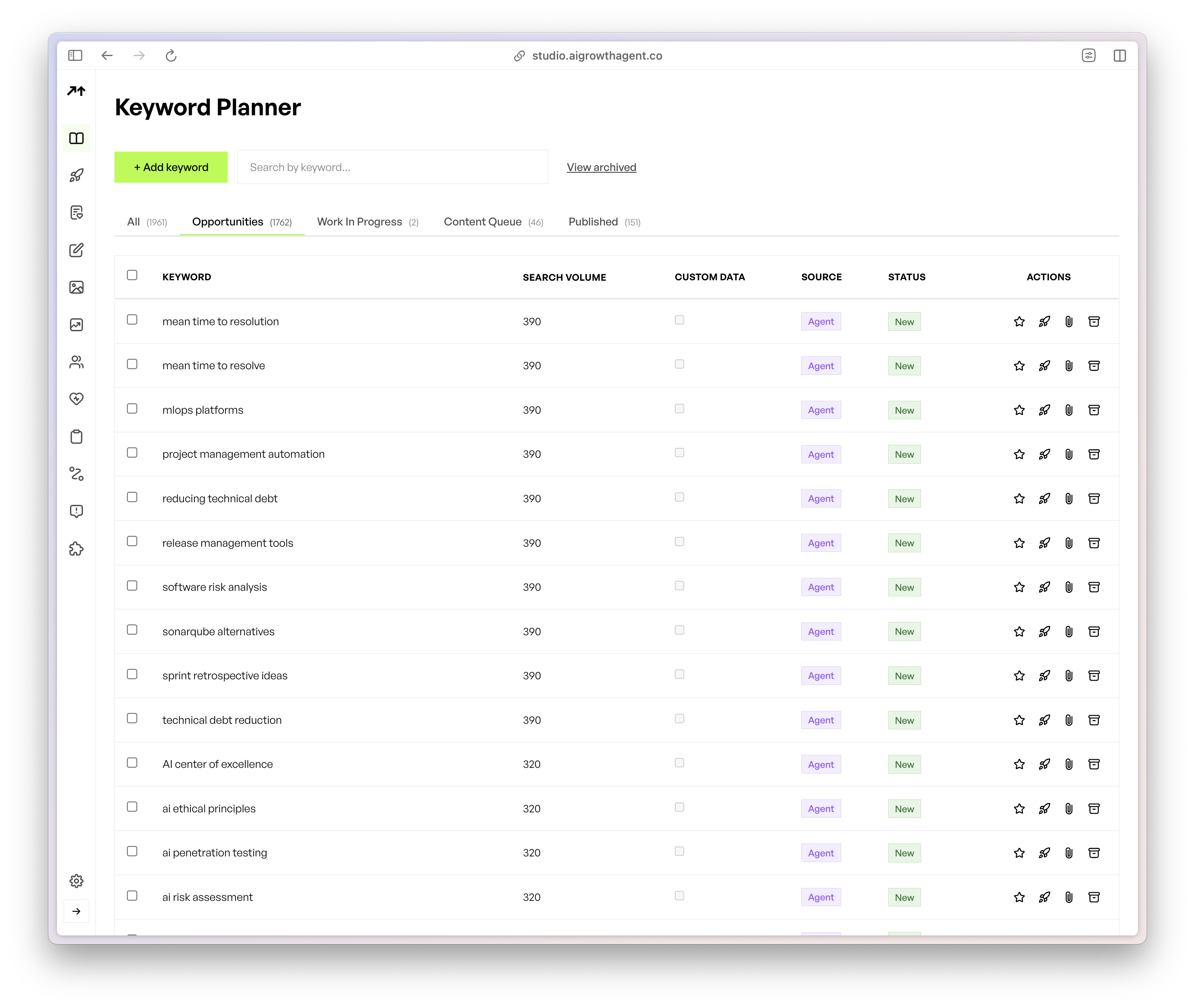
Clear headings, focused sections, and consistent formats help AI models identify which passage answers a query. Content structure strongly influences which passages are retrieved by AI models, so predictable layouts matter.
Advanced Schema Markup: Elevating Entity Understanding
Schema markup clarifies who you are, what you offer, and how concepts relate. This technical foundation makes content more likely to match relevant queries and increases citation odds across AI tools.
Programmatic Coverage: Winning the Volume War
Topic models and vector retrieval work best when a site covers many related queries at a consistent quality level. Programmatic content strategies tend to align more effectively with AI retrieval systems, which favor dense, coherent clusters over isolated posts.
Harnessing LLM.txt and Model Context Protocol (MCP)
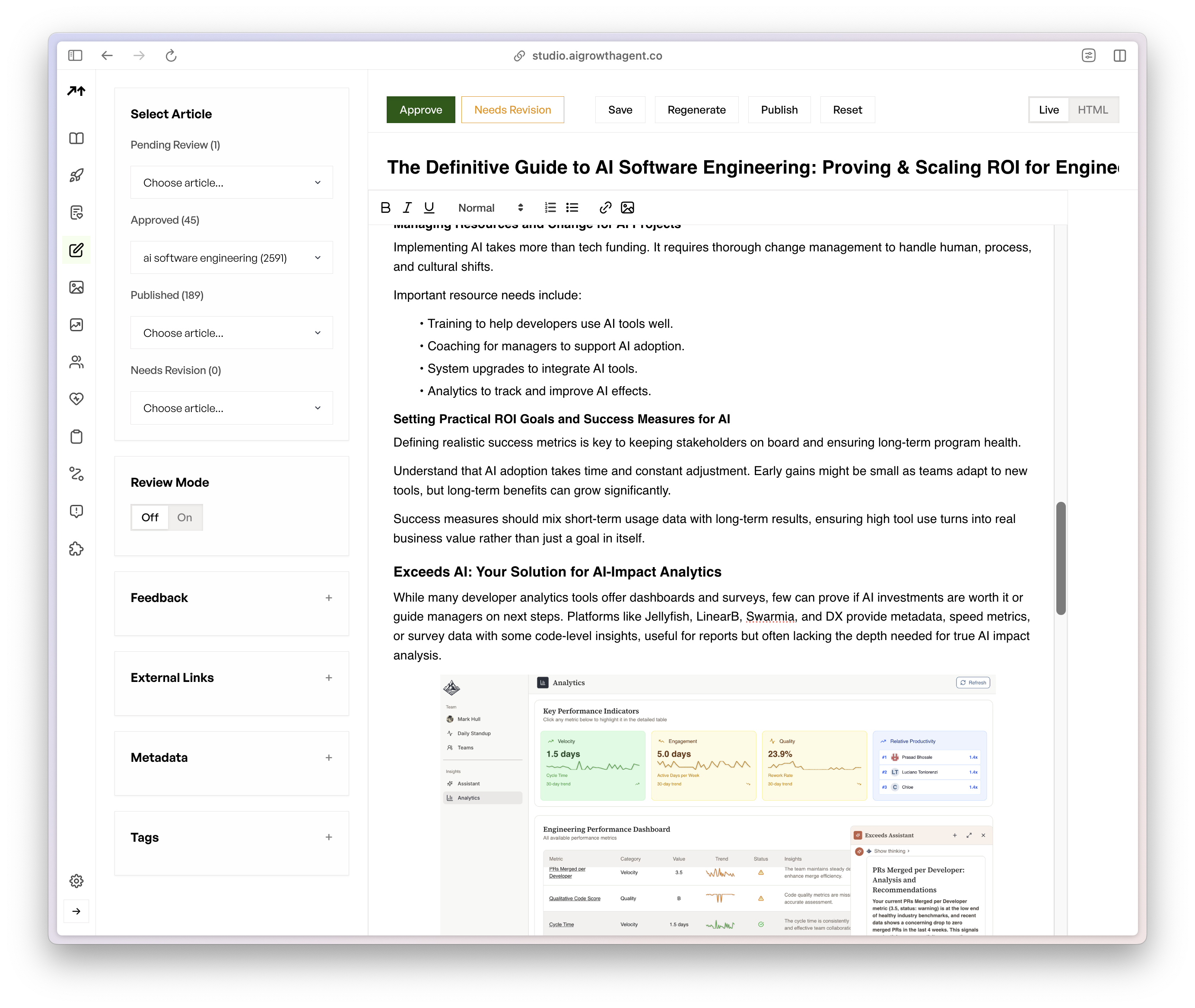
LLM.txt files and MCP expose structured, machine-readable descriptions of your content inventory. These assets guide AI crawlers toward the right data and lower ambiguity, which supports more accurate retrieval and citation.
Velocity and Recency: The AI Imperative
Language models often favor recent, detailed, and consistently formatted information. Automated publishing systems that can refresh and expand content at high velocity give brands a durable advantage in AI search results.
Overcoming the Scale vs. Quality Challenge: The Limits of Traditional Solutions
Why Traditional SEO Agencies Fall Short
Most agencies rely on manual research, writing, and implementation. That model produces thoughtful pieces but rarely reaches the page volume, schema density, or update frequency required for AI-first ecosystems.
The Resource Gap for Internal Marketing Teams
In-house teams usually focus on campaigns and core messaging, not on building programmatic SEO infrastructure. Few teams have ongoing capacity to manage LLM.txt, advanced schema, MCP, and automation pipelines at scale.
Inadequacy of Basic AI Content Tools
Basic AI writers create raw text, not fully engineered pages. Marketing teams still need to handle information architecture, technical SEO, and ongoing monitoring, so quality and consistency vary widely.
Introducing the Autonomous Solution: AI Growth Agent
AI Growth Agent provides a programmatic SEO system that joins strategy, content generation, and AI-specific technical SEO. The platform focuses on building structured content architectures that support AI citations across large topic areas.
Common Pitfalls in AI Search Optimization and How to Avoid Them
Ignoring Platform Diversity
Many brands treat ChatGPT, Gemini, and Perplexity as interchangeable. Platform-specific approaches are essential for optimal visibility because each system uses its own retrieval and ranking logic.
Underestimating Content Velocity
Manual workflows that produce a few posts per month cannot keep pace with AI systems that ingest and prefer rapidly updated sources. Automation and templates help teams maintain a consistent publishing rhythm.
Neglecting AI-Specific Technical SEO
Skipping schema, LLM.txt, or MCP leaves AI systems with partial context about your site. These files and tags now operate as core infrastructure rather than optional enhancements.
Lack of a Citation Feedback Loop
Brands that never check how AI systems reference them lose chances to refine their strategy. Ongoing monitoring across ChatGPT, Gemini, and Perplexity supports iterative improvements.
Misattributing Google Rankings to AI Citations
High Google rankings do not guarantee strong AI citations. AI citation patterns diverge significantly from traditional search rankings, so teams need AI-specific measurement.
AI Growth Agent: A System for AI Search Discoverability
Autonomous Engineering for Consistent AI Visibility
AI Growth Agent automates the programmatic SEO lifecycle from keyword modeling through content creation, technical markup, publishing, and monitoring. The system focuses on structured pages that align with AI retrieval patterns and reduce manual engineering work for marketing teams.
Comparison: AI Growth Agent vs. The Status Quo
|
Feature |
AI Growth Agent |
SEO Agencies |
Basic AI Tools |
|
Content Scale |
Programmatic, high-velocity publishing |
Manual, limited by headcount |
High volume, but unstructured |
|
Content Quality |
Engineered, brand-aligned, consistent |
Human-crafted, variable |
Variable, often generic |
|
Technical SEO for AI |
Autonomous LLM.txt, MCP, advanced schema |
Basic SEO, few AI-specific features |
Requires manual implementation |
|
Speed to Deployment |
Weeks from setup to publishing |
Several months |
Variable, depends on setup |
Key Capabilities
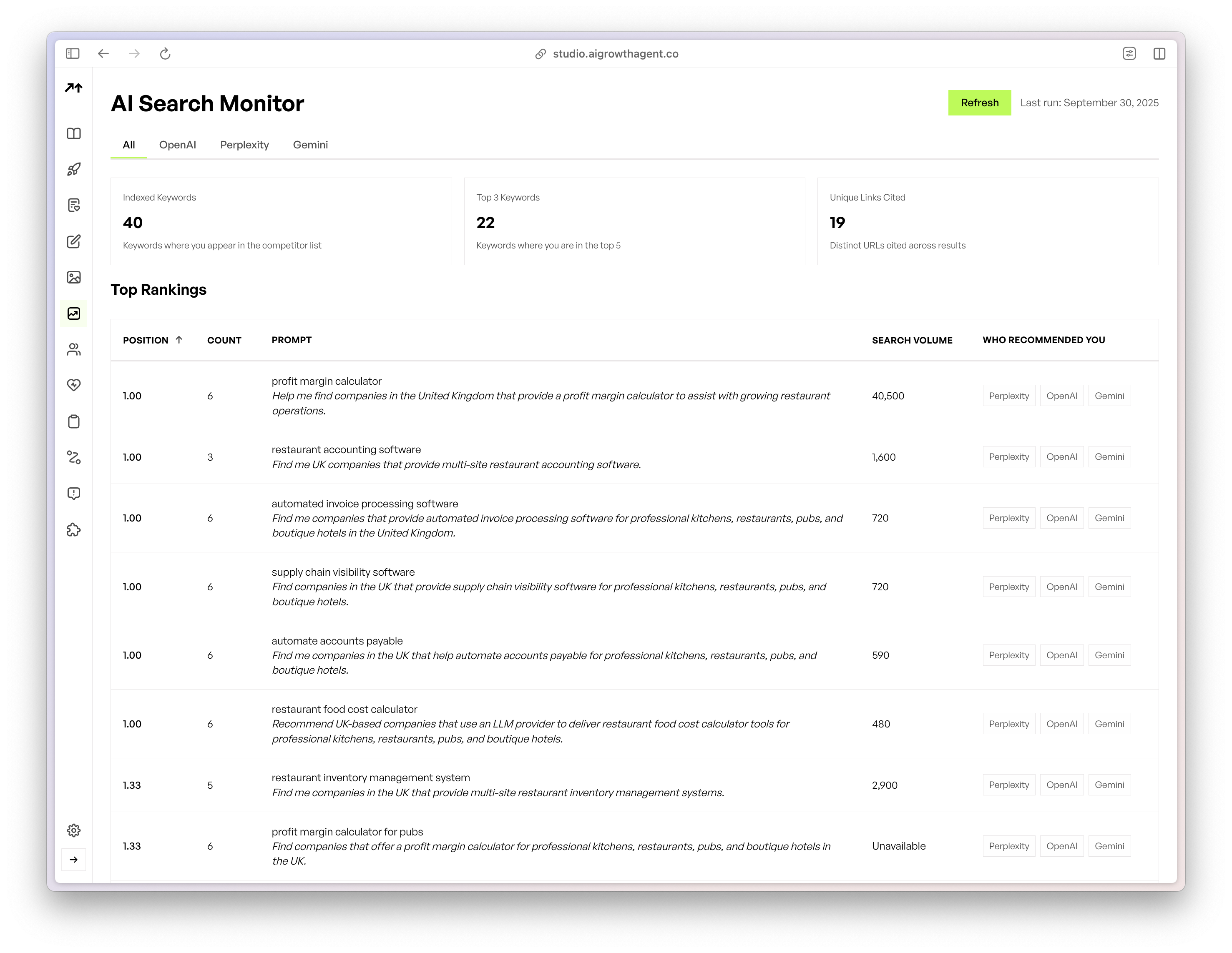
AI Growth Agent supports multi-tenant deployment for multiple brands, programmatic content injection for emerging topics, and an AI Search Monitor that tracks citations across major platforms. These capabilities create a closed loop from strategy to measurement so teams can adjust quickly based on how AI systems respond.
Client examples illustrate the impact. Exceeds AI earned Perplexity recommendations within two weeks and AI Overview visibility within three weeks. BeConfident reached the top recommended English learning app position in Brazil through Google AI Overview, and Bucked Up obtained ChatGPT citations as a leading protein soda brand within weeks of launch.
Teams that want to evaluate fit can review use cases, timelines, and expected outputs in a strategy discussion. Schedule a demo to see if you’re a good fit and explore how AI Growth Agent could support your AI search goals.
Frequently Asked Questions: Mastering AI Search and Programmatic SEO
How do AI search engines like ChatGPT, Gemini, and Perplexity differ in their citation behavior, and why does it matter for my brand?
ChatGPT blends its training data with selective web grounding and often provides a narrative answer with limited citations. Perplexity behaves more like a research assistant and attaches citations to many individual statements, which exposes which pages it values. Gemini leans on Google’s search index, so strong SEO fundamentals help it surface your content. These differences matter because brands need tailored strategies for each platform rather than assuming a single optimization approach will work everywhere.
Can traditional SEO ensure my brand is cited by AI search, or do I need a new strategy?
Traditional SEO remains important but does not cover all AI requirements. AI systems often cite pages that do not sit at the top of Google results, especially when those pages offer clear structures and niche depth. Brands benefit from combining standard SEO with programmatic topic coverage, schema, LLM.txt, and other AI-focused technical steps to build a broader authority footprint.
What is Programmatic SEO, and how does it help with AI discoverability on platforms like Perplexity?
Programmatic SEO uses templates, data inputs, and automation to generate many pages that share a consistent structure while addressing distinct queries. This approach suits Perplexity because the platform looks for detailed, well-organized answers and highlights sources transparently. Broad, structured coverage across a topic increases the chances that Perplexity selects your pages for many related questions.
How does AI Growth Agent specifically address the technical requirements for AI search visibility, including advanced schema and LLM.txt files?
AI Growth Agent automatically adds schema, metadata, internal links, and AI-specific files to each page it publishes. The system configures LLM.txt and supports MCP so AI models can understand which content exists, how it is organized, and how to access it. This automation removes manual technical work and helps align pages with the retrieval patterns AI systems favor.
How quickly can a brand see results for AI citations using a solution like AI Growth Agent?
Most brands that deploy AI Growth Agent see measurable AI citations within weeks, not months, because the system publishes optimized content at high velocity. Exceeds AI gained Perplexity recommendations in two weeks and Google AI Overview rankings in about three weeks, while Bucked Up and BeConfident saw ChatGPT and AI Overview results within similar timeframes. Timelines vary by category, but the programmatic approach shortens the path from setup to visible AI references.
Conclusion: Programmatic SEO – The Future of AI Authority
AI search has introduced a new layer of competition for visibility. Brands that rely only on traditional SEO and infrequent content updates risk losing presence in AI-generated answers throughout 2026.
Programmatic SEO gives marketing leaders a scalable method to build structured, high-coverage content architectures that align with how ChatGPT, Gemini, and Perplexity retrieve and cite information. Automated workflows that join content, schema, and AI-specific files help brands earn and maintain authority signals across platforms.
AI Growth Agent offers a practical way to operationalize this approach by combining programmatic content, technical SEO for AI, and ongoing monitoring into one system. Teams that invest in this kind of infrastructure place their brands in a stronger position to be cited, discovered, and trusted in AI-first search environments.
