


AI search engines have changed the way customers find and assess brands. Tools like ChatGPT, Gemini, and Perplexity don’t just list websites, they highlight credible sources. Content cited by AI engines sees 312% more engagement compared to content that’s overlooked. Yet, many established brands remain unnoticed by AI because their content doesn’t meet the required standards for relevance, quality, structure, or publishing frequency. This article looks at why standard content methods fall short for AI citations and offers a solution: an autonomous platform using AI agents to create high-quality, citation-ready content at scale with precise technical tweaks.
The need for action is urgent. Without a solid citation strategy, your online presence fades as AI-generated content overwhelms the internet. When customers ask AI about your industry, missing out on citations lets competitors shape the story. This goes beyond old-school SEO rankings; it’s about being visible in an AI-driven world.
Established brands should be seen as leaders in their field. Achieving that visibility means producing content at a faster pace, with technical accuracy and clear structure that traditional methods can’t match. Autonomous technology designed for this new landscape offers the way forward.
Why Many Brands Stay Invisible to AI Search Engines
The internet is flooded with AI-generated content daily, drowning out your brand’s voice if you don’t keep up. Publishing one article a month while thousands of AI-created pieces hit your industry space shrinks your chances of being noticed or cited by AI engines.
This content overload creates a tough competitive challenge. Sticking to a slow publishing schedule, like one or two articles a month, often leads to obscurity as AI systems favor fresh, in-depth material. Even well-written quarterly pieces get buried under the daily output of competitors who adapt to the new pace.
Old-school publishing plans, made for human readers, don’t work in an AI context. Monthly planning sessions or quarterly content schedules leave gaps that quicker competitors exploit, grabbing citation chances while your content waits for approval.
How AI Search Became the Main Way Customers Discover Brands
More users now skip Google and turn straight to ChatGPT, Gemini, or Perplexity for advice, comparisons, and insights. This shift changes how customers find brands, moving from browsing search results to getting tailored answers in AI conversations.
Unlike traditional search, AI engines don’t list websites in a typical format. They reference reliable sources within their detailed replies, making citation the new measure of visibility. When someone asks, “Which project management tools work best for large teams?” or “How should businesses handle data privacy rules?”, AI picks specific sources to mention, deciding who gets seen and who doesn’t.
This conversational search model means brands need to focus on being cited, not just clicked. Even a perfectly designed website won’t matter if AI engines can’t find content worth referencing in their answers.
Citation Benefits and Why They Matter for Your Brand
Citations create a cycle of growing advantages that build strong competitive edges. Cited content earns 312% more engagement, leading to more organic visitors, better leads, and stronger brand credibility, which boosts future citation odds.
Brands that gain early citations can shape the industry narrative, making it hard for others to catch up. Consistent citations for key industry questions let you guide buyer choices and set your position in the market.
This engagement cycle offers lasting benefits. Cited content attracts more traffic, gathers more user interactions, and provides data that strengthens your standing in AI systems over time. As citation gaps grow, acting now becomes critical to stay in the game.
What Happens When Competitors Define Your Industry
If AI engines answer questions about your field and your content isn’t there, they turn to competitors’ material, establishing their views as the trusted standard. Each missed query is a lost chance to influence how the market sees your brand and affect buying decisions.
Competitors who publish detailed content regularly train AI engines to see them as industry experts. Their ideas become norms, their terms become standard, and their messaging sets market expectations through frequent citations.
This narrative control creates risks beyond just losing traffic. When AI consistently cites competitors on core industry topics, their perspective shapes buyer priorities, influences product features, and sets benchmarks across your market. To protect your position, schedule a consultation to build your citation strategy and see how an autonomous platform can position your brand as a trusted authority.
Key Factors AI Engines Use to Evaluate Content for Citations
Authority Signals That Influence AI Choices
AI systems often favor sources with proven expertise and steady publishing records. These models show consistent citation preferences for established domains with deep content, frequent updates, and solid technical setup that reflects professional operations.
Recognized news outlets often dominate citations, indicating that AI engines have internal rankings favoring known sources over new ones. High-quality publishers consistently appear in news-related citations, giving an edge to brands with strong technical bases and regular content output.
AI evaluates authority through both content depth and technical setup. Factors like schema usage, metadata quality, and clear structure show a brand’s commitment to professional content, increasing citation likelihood.
Content Structure Needed for AI to Extract Information
Content must be organized clearly to help AI engines understand and pull key details. Well-defined headings and facts make extraction straightforward, allowing AI to match content to user questions effectively.
Using proper heading levels, like H1, H2, and H3, helps AI navigate and identify main ideas, boosting the odds of citation. A logical structure acts as a guide for AI to find and use relevant information.
Schema markup adds machine-readable details that clarify content connections and relevance. Implementing it shows technical skill and helps AI cite your content more accurately for specific queries.
Why Specific Pages Get Cited More Often
AI engines prefer detailed, topic-specific pages over general ones like homepages for citations. About 82.5% of citations point to in-depth pages, showing a focus on actionable answers rather than broad brand content.
Dedicated pages with thorough coverage of a subject increase citation chances by addressing specific user needs. Shallow content on generic pages often fails to meet the depth AI looks for in authoritative sources.
To maximize citations, create pages that dive deep into one topic. Each should be a complete resource, offering detailed insights that position it as a go-to reference for AI engines.
Content Types AI Engines Prefer to Cite
Certain formats stand out to AI for their clarity and usefulness. Comparison listicles gain higher citation rates because they organize information in a way that directly answers user questions about options.
Content with clear facts, numbered lists, or tables makes it easy for AI to pull specific details. These structured formats support accurate citation by presenting data in an accessible way.
Meta descriptions that summarize content for specific queries also help. Well-written summaries improve citation odds by helping AI quickly see the content’s relevance to a user’s need.
How Fresh Content Boosts Citation Chances
AI systems value recent content as a sign of relevance. They prioritize current and unique information, with the shelf life of content shrinking from months to days. Regular publishing is now essential to stay relevant.
Updating content often signals active engagement and reliability to AI engines. Brands that publish daily show they’re current, increasing their citation potential compared to those who post sporadically.
Frequent publishing offers more chances for citations and builds authority. Daily content output creates multiple opportunities to be noticed while establishing your brand as a consistent, up-to-date source.
Role of URL Structure in Citation Decisions
AI engines analyze URLs to gauge content relevance and authority. Semantic URL analysis influences citation choices by revealing the focus and expertise of the content.
URLs that describe the content, like “/ai-search-optimization-tips”, provide context that helps AI match content to queries. Clear, keyword-rich URLs improve citation odds for related topics.
Beyond keywords, URLs reflect site organization and professionalism. A logical URL structure suggests expertise and boosts authority signals, aiding citation decisions.
Why Standard Content Methods Don’t Win AI Citations
Traditional SEO Agencies Can’t Keep Up
Agencies depend on human hours, limiting how much content they can produce. Even fast teams take weeks for a single piece due to research, writing, and approval steps, falling short of AI citation needs.
Most agencies output just one or two articles a month, far below the daily pace of competitors who optimize for AI citations.
Slow schedules create openings for quicker competitors to snag citation opportunities. By the time agency content is ready, the conversation may have shifted.
Many agencies also lack the technical skills for AI-specific tweaks like advanced schema markup, focusing instead on outdated Google ranking tactics.
In short, agencies provide quality but not the speed needed to compete for AI citations.
Internal Teams Face Capacity Limits
Internal marketing teams know the brand well but often lack staff to produce content fast enough. Even dedicated writers struggle to match the needed output frequency.
Content work competes with other tasks like events or campaigns, often taking a back seat to urgent priorities, slowing down consistent publishing.
Most teams also don’t have the technical SEO skills for AI citation requirements. These often need developer support, which isn’t always available.
Even focused content teams can’t hit the daily pace AI demands. Human processes create delays that block scalable output.
Ultimately, internal teams grasp what to say but can’t deliver at the speed or technical level needed for AI citation success.
Basic AI Tools Lack Full Automation
Tools like Jasper or AirOps need heavy user input for setup, strategy, and management, taking up significant time.
Content quality varies based on how they’re used, often needing extra edits to meet AI citation standards.
Integrating with content systems requires technical effort and ongoing upkeep, beyond many teams’ skills.
Some tools struggle with creating relevant visuals, and while image generation is available, customization options differ.
Despite automation claims, tasks like editing, fact-checking, and publishing often still need human input.
These tools speed up drafting but don’t fully eliminate the work needed for citation-ready content.
AI Search Monitors Show Gaps Without Solutions
Platforms like Profound offer detailed analytics on citation gaps but no way to fix them. They highlight issues without action steps.
These tools diagnose where you’re falling behind but lack the means to create content or improve output.
Reports showing competitors ahead become a liability if you can’t act on the insights with effective content production.
Knowing your citation weaknesses doesn’t help without the ability to publish at scale and close those gaps.
Four Ways to Build Citation Relevance and Quality
Option 1: Boost Agency Support for More Output
Hire more agencies or increase budgets to produce higher content volumes through added human effort.
This approach offers human-led quality with established editing and safety checks for brand alignment.
However, costs rise directly with volume, and output stays limited by human pace. Agencies often lack AI-specific technical skills.
You’ll see some improvement in quality, but not the speed needed to outpace competitors publishing daily.
This fits brands with large budgets willing to trade speed for traditional oversight, with costs ranging from $10,000 to $25,000+ monthly for limited results.
Option 2: Expand Internal Staff for Content Creation
Build a dedicated in-house team of writers, editors, and SEO experts to handle content production.
This gives full control over branding with direct insight into company goals and feedback.
Drawbacks include high yearly costs for salaries and long hiring timelines. Output is still capped by human limits, and AI citation skills may require extra hires.
Content quality is strong with moderate volume, but speed falls short for a competitive edge, costing $35,000 to $50,000+ monthly.
Option 3: Use AI Tools to Support Existing Teams
Provide marketing staff with AI writing and automation tools to boost content creation efficiency.
This is more affordable upfront and quicker to start than hiring, while keeping human control for brand safety.
Manual tasks like strategy, editing, and optimization persist, and quality depends on user skill and time spent.
Volume increases slightly, but inconsistent quality and lack of technical tweaks lead to uneven citation results, costing $1,500 to $5,000 monthly with tools and time included.
Option 4: Adopt an Autonomous Content Platform
Use a system of AI agents that handle the full content process, from keyword research to technical setup and publishing, without ongoing input.
This scales easily for high monthly output, cuts traditional timelines to minutes, and applies technical optimization to every piece automatically.
It requires a strong existing SEO base and a well-built website, so it’s not ideal for brands needing basic fixes.
The result is a clear edge with high volume, steady quality, and technical readiness for AI citations, fitting established brands with solid foundations at enterprise-level pricing.
Find out which option matches your goals. Schedule a demo to explore autonomous platform features and check if your technical setup supports scaled, citation-focused content.
How AI Growth Agent Helps Secure Citations
Personalized Onboarding to Capture Your Brand Voice
Our process starts with a one-hour session led by a professional journalist to understand your brand’s unique story and positioning.
This creates a Company Manifesto, a guiding document ensuring all AI content matches your voice and strategy.
The outcome is content that consistently reflects your brand, even at high volumes, meeting AI authority standards for citations.
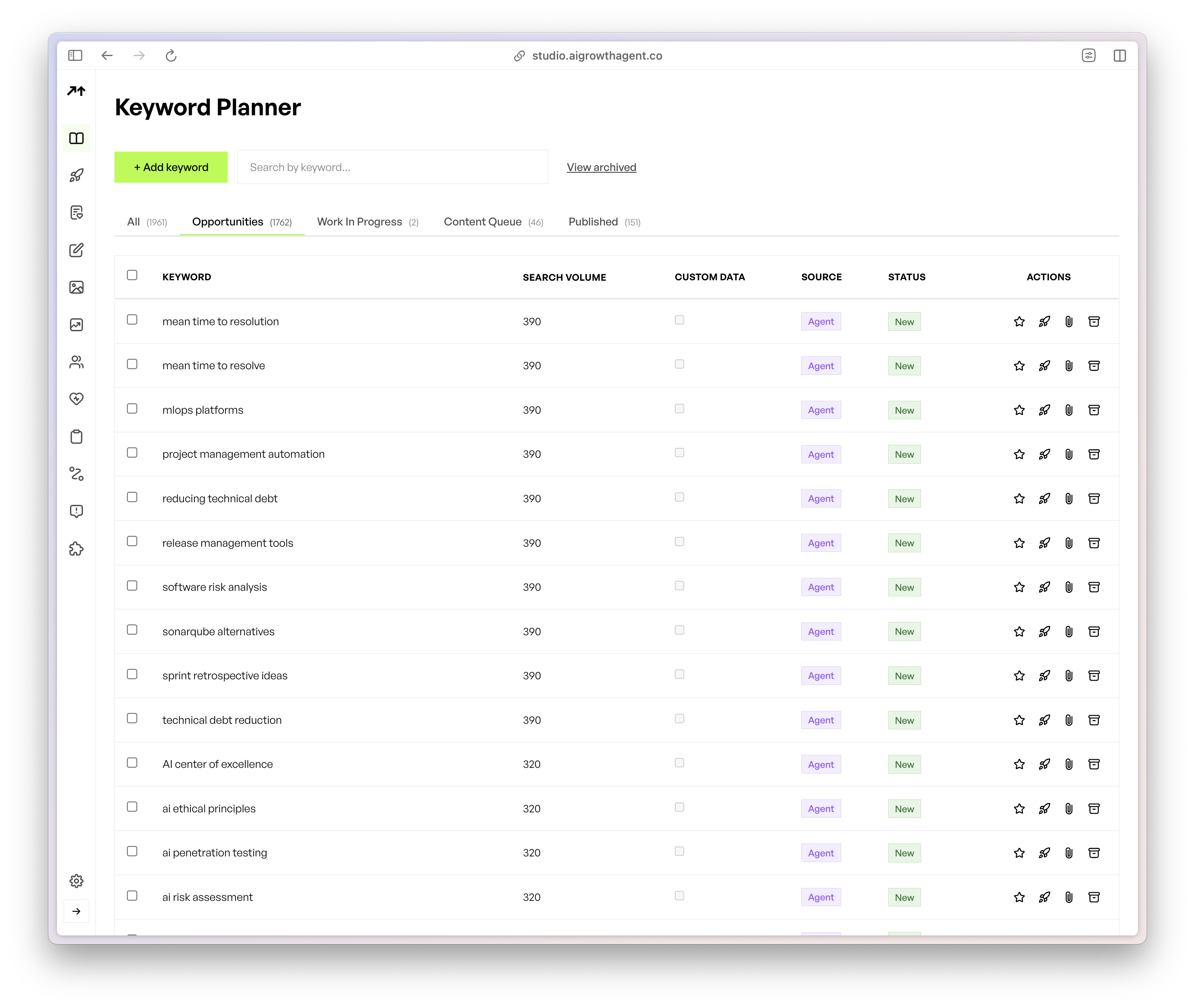
Keyword Research Agent for Targeted Opportunities
Our specialized agent analyzes thousands of search queries and topics relevant to your industry within 24 hours of setup.
It delivers a detailed keyword plan grouped by themes, mapping out content to hit specific citation chances.
Ongoing updates keep your strategy aligned with new trends, ensuring content targets gaps and builds authority for AI recognition.
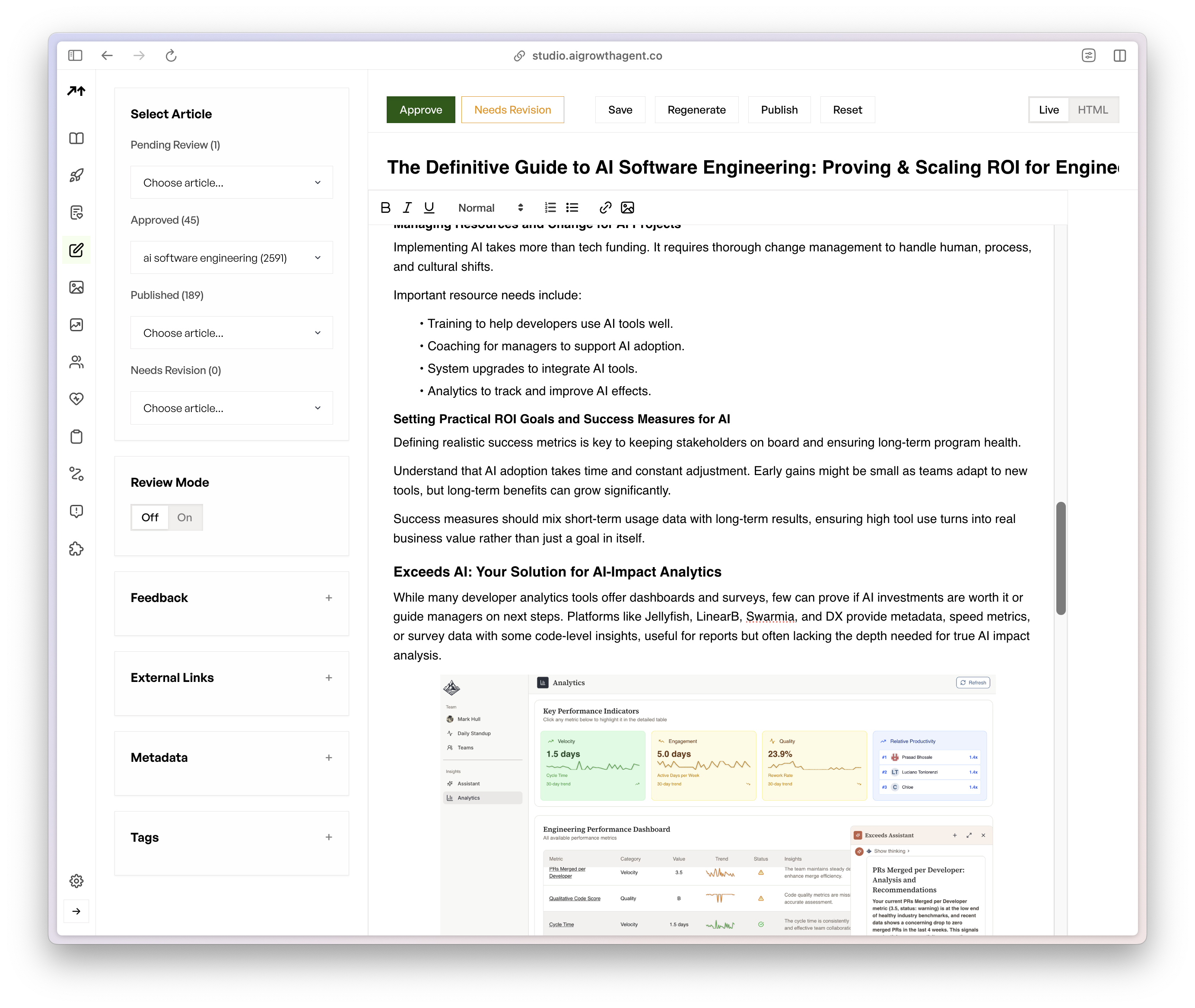
Content Agent for Rapid, High-Volume Publishing
Our Content Agent automates the full process, from research to publishing, maintaining quality at a pace that outstrips traditional workflows.
This speed provides a clear advantage in securing AI citations through frequent output.
High volume allows deep coverage of topics, positioning your brand as a leader across industry areas for AI to notice.
Technical Setup for AI-Friendly Content
Every article gets automatic schema markup to help AI engines understand and cite content more effectively.
Advanced protocols and file formats allow AI to directly access and interpret your content for better visibility.
Optimized titles, descriptions, and headings are applied to each post, ensuring readiness for citation without needing extra resources.
Effortless Blog Setup for Professional Output
We offer a tailored blog subdomain, like blog.yourcompany.com, removing technical setup hurdles.
The design matches your existing site for a unified, professional look that supports brand trust.
For those preferring their own hosting, WordPress integration options maintain technical SEO benefits, enhancing citation credibility.
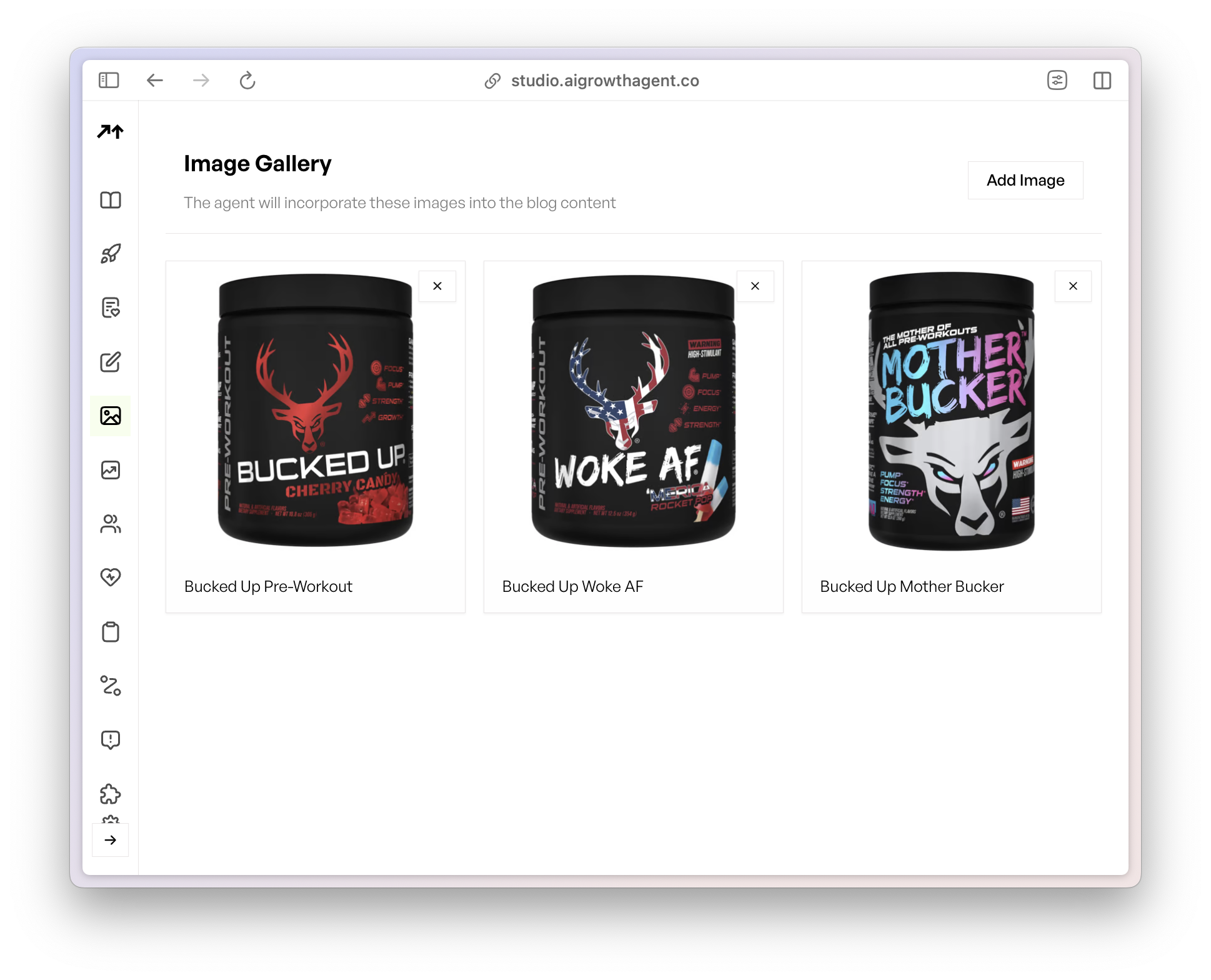
Smart Image Use to Enhance Content Appeal
Our system picks relevant images from your brand library to match content, keeping visuals consistent.
Built-in AI image creation tools remove reliance on external design resources, while full metadata optimization ensures visuals aid citation goals.
This creates multimedia-rich content that aligns with AI preferences without slowing down production.
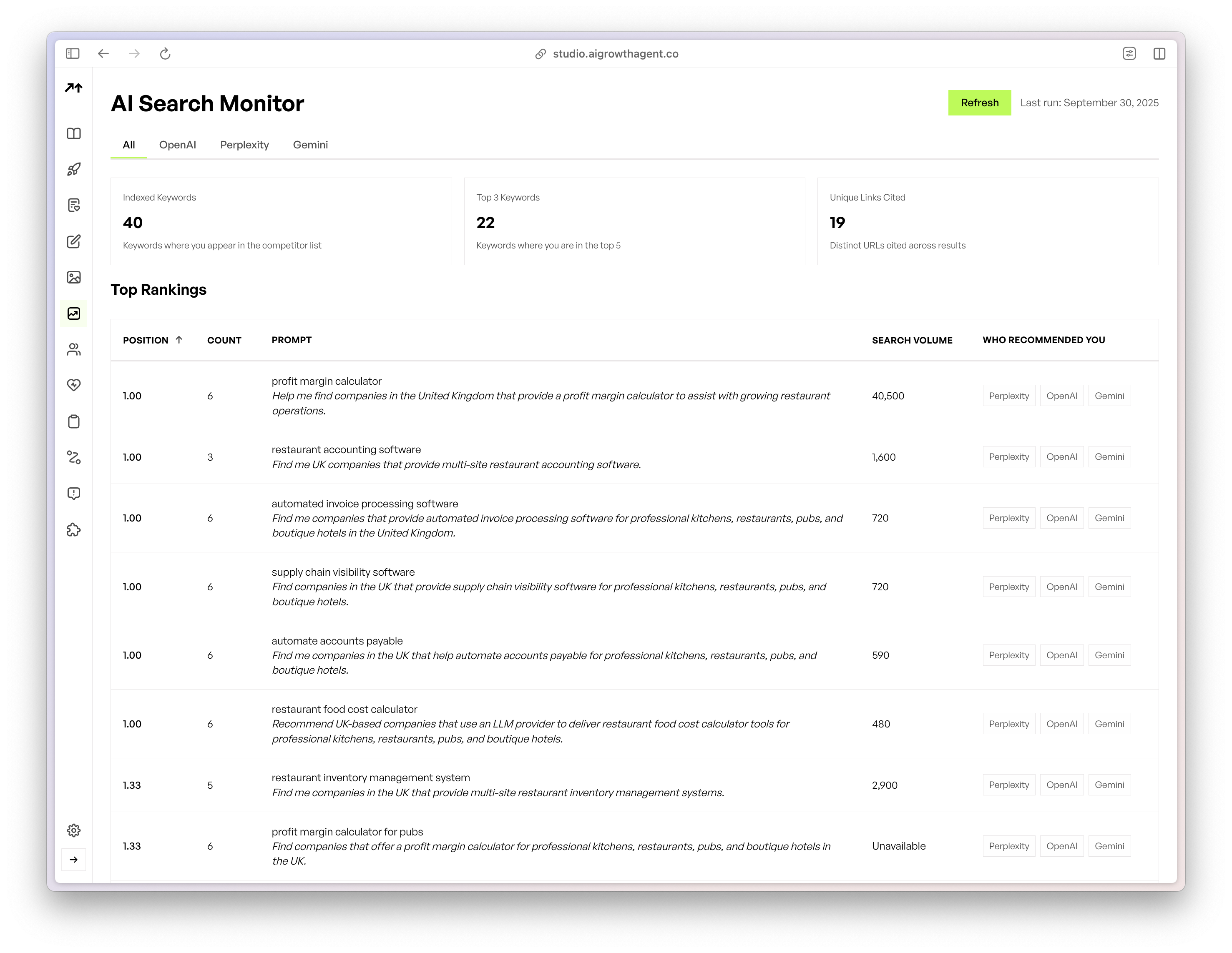
Track Citation Performance in Real Time
A visual heatmap shows your citation status across ChatGPT, Gemini, and Perplexity, highlighting strengths and areas to improve.
Track exact quotes and specific articles driving visibility, plus compare against competitors to spot gaps and adjust strategy.
Crawl analytics offer insights into AI indexing patterns, providing data to refine content for better citation results.
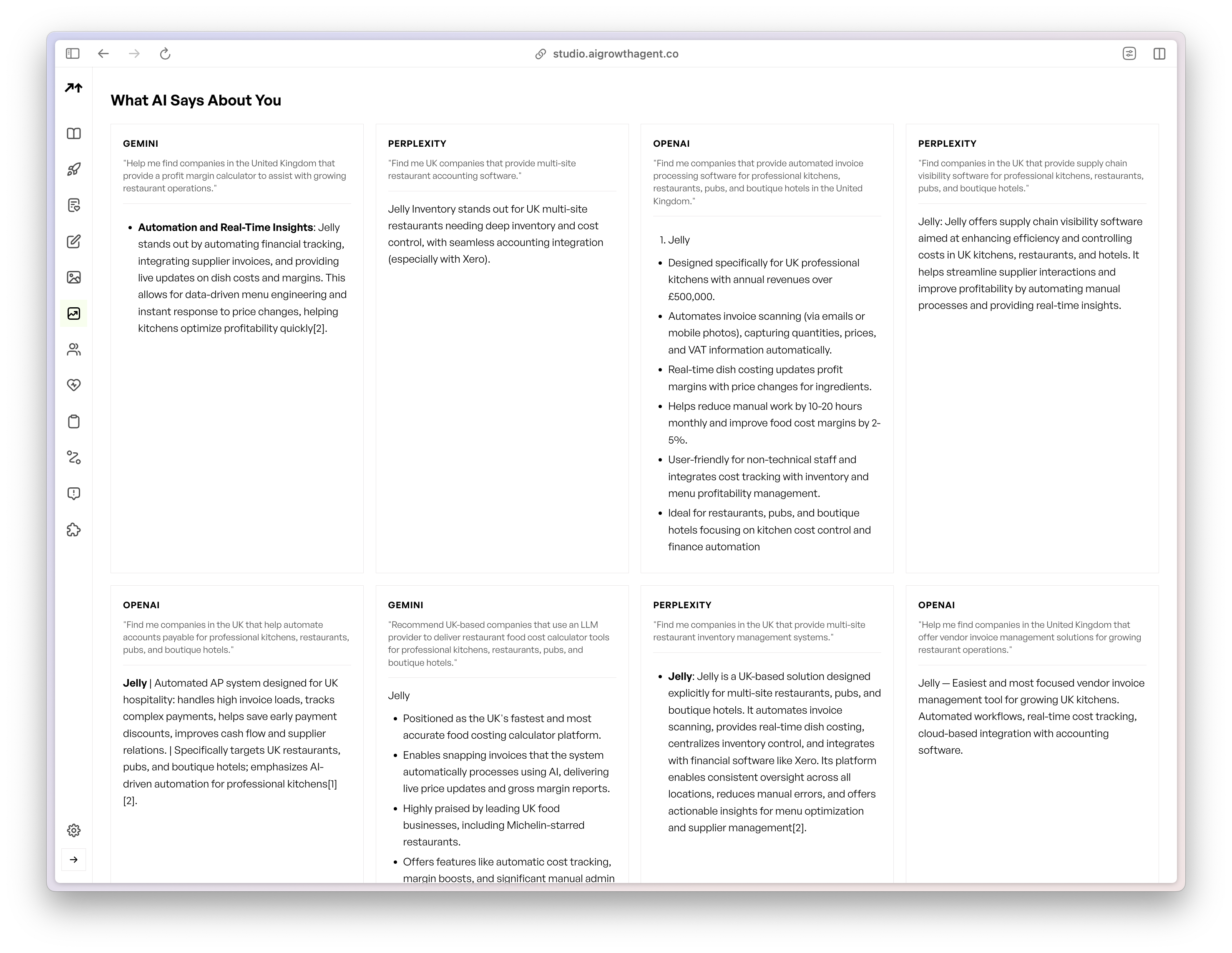
Unique Features for Citation Success
Manage Multiple Brands with Parallel Agents
Run several distinct Content Agents from one dashboard, each with tailored strategies and brand voices.
This setup suits private equity firms or multi-brand companies needing separate citation plans managed centrally.
Each agent uses its own guiding document and keyword approach, ensuring unique positioning for citation gains.
Quick Content for Trending Topics
Submit a link to a trending story, and our agent crafts a brand-aligned article in minutes.
This lets you join live discussions fast, capturing immediate attention and citation opportunities on hot topics.
Turn Proprietary Data into Citation-Worthy Content
Convert private data sets into detailed articles that add SEO value and citation potential.
For example, a food app’s data turned into a “best bagels in New York” guide gained frequent AI citations for local queries, creating unique content advantages.
How AI Growth Agent Compares to Other Solutions
| Capability | Traditional Agency | Internal Team | AI Content Tools | AI Growth Agent |
|---|---|---|---|---|
| Monthly Article Volume | 1-2 articles | 15-20 articles | 8-12 articles | High volume |
| Advanced Schema & LLM.txt | Manual, inconsistent | Requires dedicated dev | Not included | Automatic on every post |
| Model Context Protocol | Not available | Not available | Not available | Industry-first implementation |
| Publishing Velocity | 1-2 weeks per article | 2-3 days per article | 1-2 days per article | Minutes per article |
| Keyword Strategy Automation | Manual, billable hours | Manual internal effort | Manual user input | 24-hour autonomous research |
| AI Citation Tracking | Separate tool required | Separate tool required | Not included | Built-in performance monitoring |
| Technical Optimization | Inconsistent, human-dependent | Requires SEO specialist | User responsible | Automatic engineering |
| True Autonomy | No—constant management | No—team coordination | No—workflow management | Yes—strategy to publication |
| Monthly Investment | $10,000-25,000+ | $35,000-50,000+ | $1,500-5,000 | Enterprise platform pricing |
Who Benefits Most from AI Growth Agent
Not a Fix for Basic SEO Issues
We partner only with brands that already have strong technical SEO and optimized websites. We don’t take on clients needing basic repairs or foundational work.
Quality content can’t overcome poor site performance. Brands must resolve these issues first to see the best results from our platform.
Ideal Partners for Citation Growth
We work with established brands ready for advanced content scaling, seeking recognition as industry leaders through AI citations.
Our partners are marketing leaders willing to invest in autonomous tech to become the go-to voice AI engines cite.
These are companies with market presence aiming to turn existing credibility into citation dominance with high output and technical precision.
Our Role in Amplifying Strong Brands
We enhance existing strengths, not fix weaknesses. Our platform turns capable brands into industry leaders through fast, optimized content production.
Success requires a focus on quality strategy and investment in tech that creates lasting citation advantages.
Take the Next Step for Citation Success
AI search engines are now the primary way customers find brands, and citations define your online presence. Competitors are building robust content daily, optimizing for AI visibility.
Each day without a citation plan, your digital reach shrinks as others gain ground. Every AI answer about your industry that ignores your content boosts competitors.
Older content methods, like slow agencies or basic tools, don’t deliver the speed or technical accuracy AI demands. Autonomous systems are needed to remove production barriers.
AI Growth Agent uses AI agents to manage the entire content process, from research to publishing, letting clients focus on strategy while gaining citation advantages.
Brands with solid technical bases should be seen as industry leaders through consistent AI citations. Schedule a consultation to explore tailored citation strategies for your position. We’ll review your setup, showcase our platform, and see if you’re ready to lead in AI citations.
AI is answering industry questions every day. Make sure your brand’s voice shapes those responses. Book your strategy session now to shift to autonomous, citation-focused content.
Common Questions About Citation Strategies
What Helps Content Gain High Citation Relevance?
AI engines value content with clear authority, structure, freshness, and depth. About 82.5% of citations link to detailed pages, not homepages. Comparison listicles also see higher citation rates due to their clear format for AI extraction.
How Does Citation Quality Affect Business Outcomes?
Cited content has a significant impact. It drives 312% more engagement, increasing traffic, building credibility, and guiding buyer decisions by positioning your brand as a key reference.
Why Do AI Engines Favor Certain Sources?
Established sources often get priority. AI models show consistent citation patterns toward trusted outlets. They also analyze URLs for relevance, favoring consistent, high-quality publishers for citations.
Do Traditional SEO Methods Help AI Citations?
Classic SEO, like link building, has little effect on AI citations. AI values freshness, clarity, relevance, and expertise. A strong technical base is still vital for AI to access and use content effectively.
How Soon Can Brands Expect Citation Improvements?
Results depend on publishing pace, content quality, and technical setup. Brands using autonomous systems with daily output might see citations in weeks, with major gains in months. Slower, traditional methods take much longer for noticeable impact.
What Technical Needs Support Citation Success?
Success requires schema markup, AI-specific file formats, clear heading structures, and optimized summaries. Most brands lack expertise for these, making autonomous platforms with built-in technical features essential for citation wins.
