


Key Takeaways
- AI-powered search engines will handle 30-40% of queries by 2026, dropping traditional search volume by 25% and forcing new visibility strategies.
- AI-driven strategies outperform traditional SEO in citation velocity, structured data (GEO), third-party signals, zero-click performance, and programmatic scale.
- Follow BCG’s 10-20-70 rule by investing 70% in people and processes, 20% in tech infrastructure, and 10% in algorithms to grow your digital footprint efficiently.
- Programmatic automation compresses timelines from months-to-ranking to weeks-to-citation and supports advanced features like LLM.txt and Model Context Protocol.
- Teams ready to scale an AI-dominant footprint can schedule a demo with AI Growth Agent for autonomous content generation and measurable results.
10-20-70 Rule for AI-Driven Digital Footprint Growth
BCG’s 10-20-70 framework allocates AI transformation resources: 10% on algorithms, 20% on technology and data infrastructure, 70% on people and processes. Applied to digital footprint growth, this model favors depth, repeatable workflows, and clear business outcomes over scattered experiments.
AI leaders scale more than twice as many content products by standardizing processes, codifying brand knowledge, and aligning teams around measurable AI visibility goals.
How To Evaluate AI-Driven Search Strategies in 2026
Effective digital footprint expansion in 2026 depends on four dimensions. Citation velocity tracks how quickly content appears in AI-generated responses across ChatGPT, Perplexity, and Google AI Overviews. AI-referred traffic delivers 47% lower cost per lead and 2.1x conversion rates compared to traditional search, so conversion quality becomes a primary performance metric.
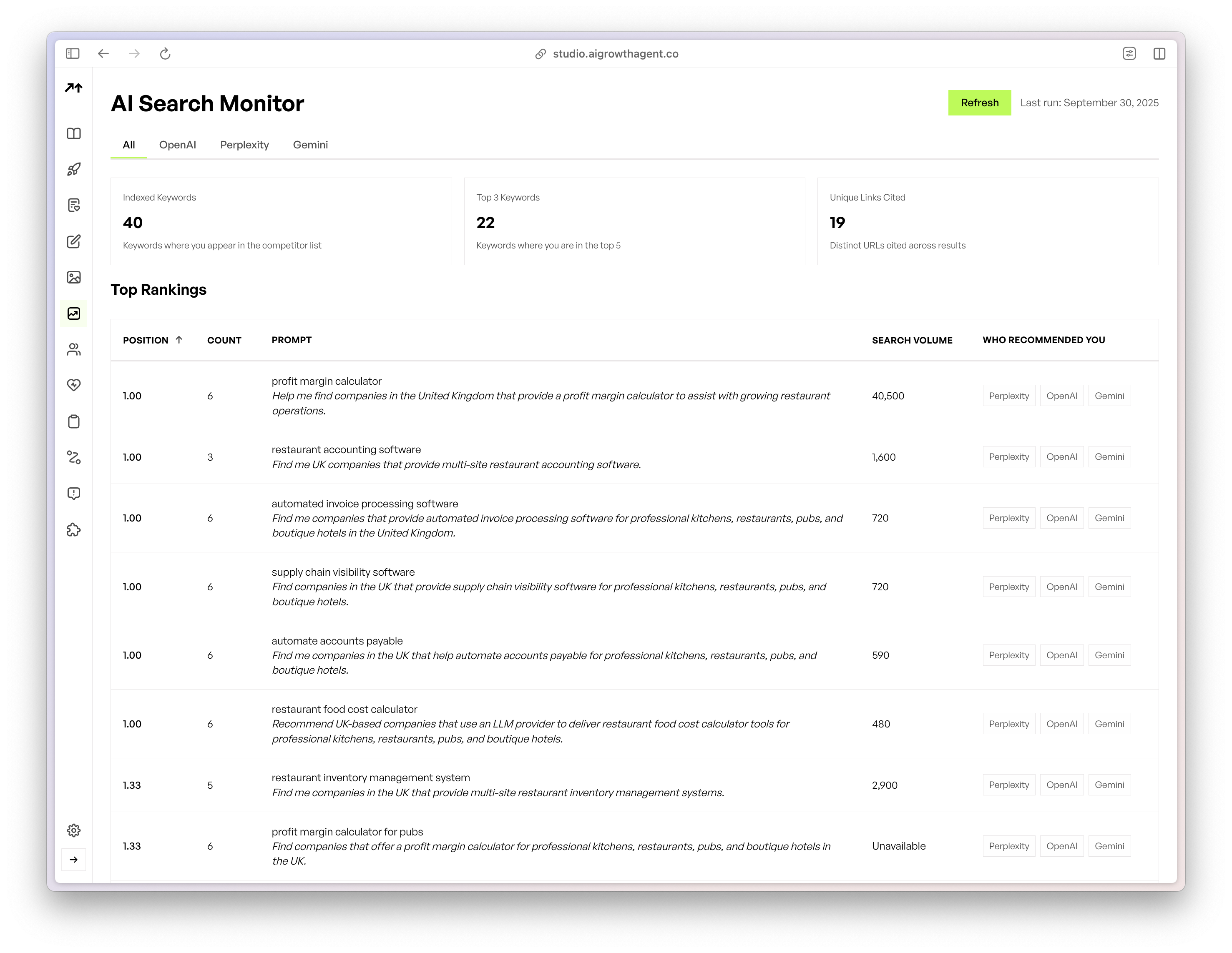
Scale versus quality defines the tradeoff between programmatic content and deep editorial work. Programmatic SEO with thousands of AI-generated posts often lands mid-page, while high-quality human content dominates top positions and avoids penalties. Technical infrastructure now includes advanced schema markup, LLM.txt files, and Model Context Protocol to support accurate AI parsing and indexing.
Traditional SEO focuses on domain authority through manual link building and keyword-led content. This approach produces strong editorial work but usually caps output at 2-4 comprehensive articles per month. AI-driven strategies prioritize recency, structured data, and cross-platform distribution so brands appear as citations across multiple AI engines at the same time.
Traditional Search vs AI Search: Side-by-Side Comparison
|
Strategy |
Traditional SEO |
AI-Driven Search |
Key Metrics |
|
Topical Clusters |
Manual keyword research, pillar pages, 3-6 month development cycles |
Programmatic entity mapping, semantic coverage, automated cluster generation |
AI: 2-3x citation velocity, Traditional: Higher editorial depth |
|
Structured Data/GEO |
Basic schema markup, focus on rich snippets |
Advanced JSON-LD, LLM.txt, Model Context Protocol for AI parsing |
AI: 40% higher visibility in generative results |
|
Third-Party Signals |
Backlink acquisition, domain authority building |
Social platform presence, review citations, community engagement |
AI engines prioritize earned media over owned content |
|
Zero-Click Optimization |
Featured snippet targeting, FAQ schema |
Answer blocks, conversational content, quotable phrasing |
Traditional CTR down 30% post-AI Overviews |
|
Multi-Platform Distribution |
Website-centric, limited syndication |
Cross-platform publishing, social integration, video content |
3.8x discovery touchpoints with triple optimization |
|
10-20-70 Implementation |
Heavy manual processes, limited scalability |
Automated workflows, programmatic execution, human oversight |
AI leaders scale 2x more content products |
|
Programmatic Automation |
Manual content creation, agency dependencies |
Autonomous content generation, real-time optimization |
Weeks-to-citation vs. months-to-ranking |
Ready to deploy programmatic SEO? Schedule a demo with AI Growth Agent to confirm fit for autonomous content generation that delivers measurable citation velocity.
Topical Clusters and GEO: Building an AI-Visible Digital Footprint
Traditional topical clustering depends on manual keyword research and pillar page structures that often require 3-6 months to complete. AI-driven approaches emphasize topical authority, semantic coverage, and editorial trust through relevance engineering instead of keyword density.
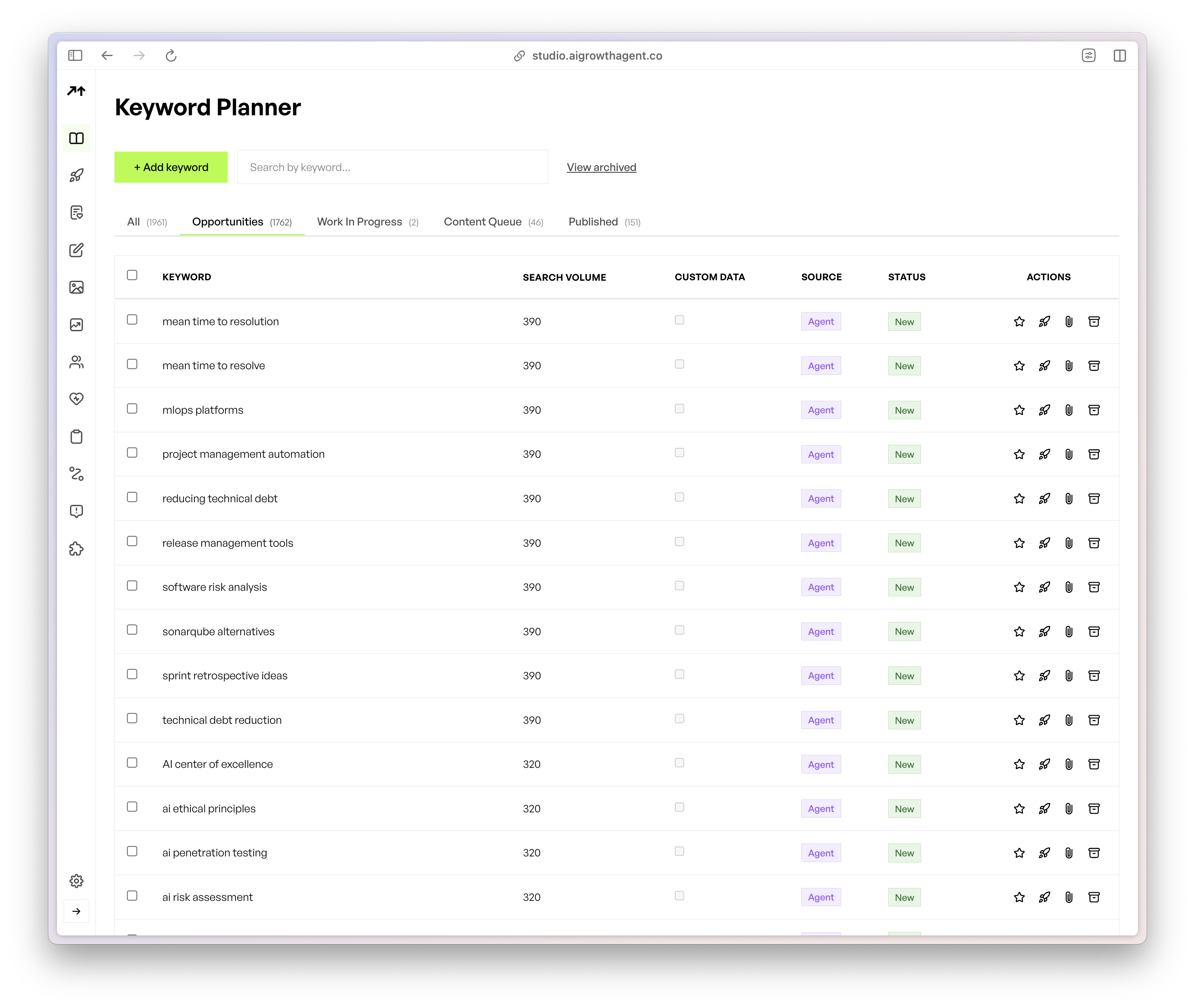
Generative Engine Optimization (GEO) reshapes how content supports AI parsing. Multimodal AEO in 2025 calls for text, video, images, charts, and audio so AI systems can surface brands across formats. Advanced schema work now includes JSON-LD markup, LLM.txt files, and Model Context Protocol that lets AI engines interface directly with content databases.
AI Growth Agent automates this technical pipeline and produces programmatic clusters with embedded structured data, achieving a level of velocity and consistency that manual methods rarely reach.
Third-Party Signals and Zero-Click Answers in AI Search
Social platforms like Reddit and review sites such as Yelp and TripAdvisor now rank among the most cited domains in AI search engines. Authority signals have shifted from pure backlink profiles to earned media, community engagement, and cross-platform validation.
Zero-click optimization starts with conversational content and quotable phrasing placed near the top of each page. Answer Engine Optimization can deliver up to 40% higher visibility in generative AI results through structured Q&A pairs and FAQ schema that support direct AI extraction.
Applying the 10-20-70 Rule to Multi-Platform and Programmatic AI
The 10-20-70 framework for digital footprint growth keeps algorithm tuning lean, infrastructure investment focused, and process design central. Companies that adopt this model redesign work with zero-based processes for real value creation, similar to consumer brands that convert tacit knowledge into agent prompts for consistent recommendations.
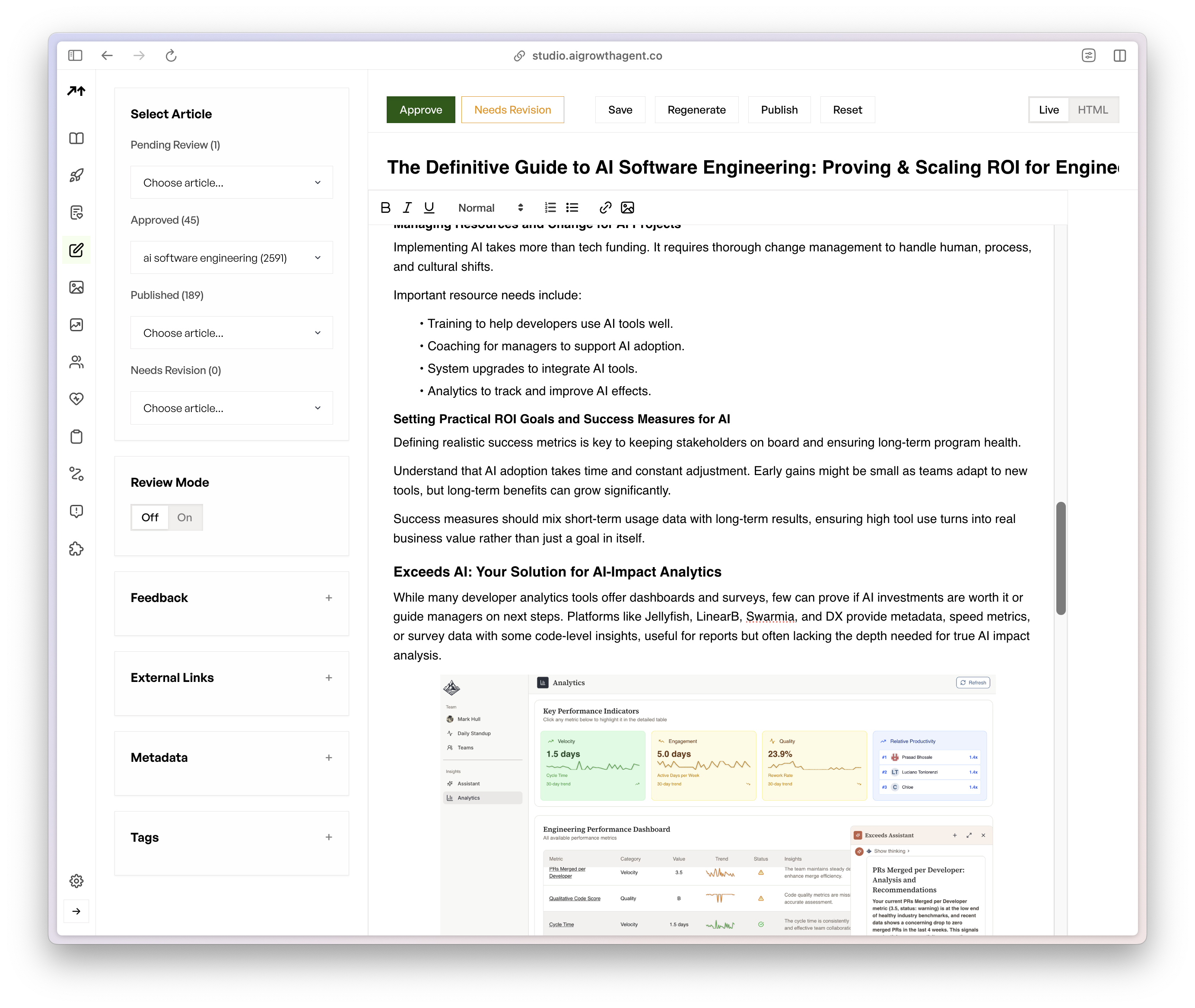
AI Growth Agent’s Manifesto-driven approach reflects this balance by automating the 10% algorithmic layer while keeping 70% of effort on brand voice, editorial standards, and strategic content planning. The Studio interface supports human oversight, rapid iteration, and learning without slowing output with manual production.
AI-Driven Search Trends and the Shift Beyond Google
EEAT (Experience, Expertise, Authoritativeness, Trustworthiness) has become the leading ranking factor in 2026, which elevates human expertise over raw AI volume. Technical SEO for AI now centers on structured data, internal linking, and proprietary data formatting so AI systems can interpret and cite content accurately.
Google handled 373× more queries than ChatGPT in 2024. At the same time, ChatGPT’s web traffic surpassed Bing’s by early 2024, and AI tools are projected to reach 50% global query volume by 2030. This shift requires optimization across multiple AI platforms instead of a Google-only strategy.
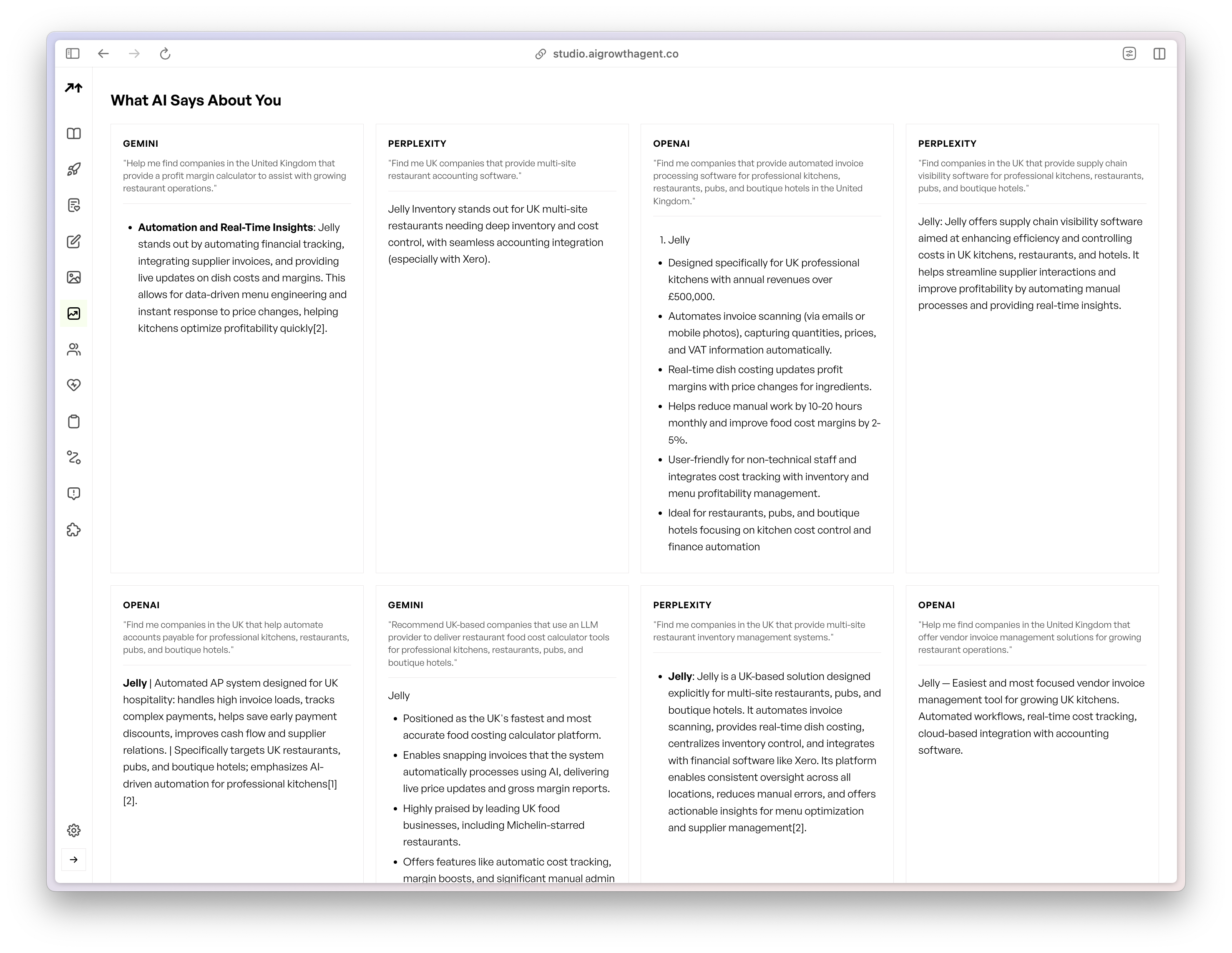
Case studies highlight the impact. Exceeds AI secured Perplexity recommendations within two weeks. Gitar.ai became the reference brand for AI-powered CI/CD automation and now appears as the top-cited tool across Google AI Overview, ChatGPT, and Perplexity for queries such as “best self-healing software for developers.”
Why Programmatic SEO Wins in AI Search: AI Growth Agent’s Advantage
Programmatic SEO wins in AI search because it matches the speed and structure AI engines expect. Traditional SEO agencies rely on manual production models that ship one or two articles each month and cannot create the structured volume required for AI dominance. Generic AI tools like ChatGPT generate unstructured text without schema, LLM.txt, or publishing automation, which pushes technical work back onto internal teams.
AI Growth Agent stands out through autonomous programmatic execution, fast onboarding, and multi-tenant deployment for multi-brand portfolios. Continuous feedback loops inside AI Growth Agent Studio refine prompts, content, and targeting. The platform also implements advanced capabilities such as Model Context Protocol to strengthen AI indexing and citation potential.
ROI metrics show clear gains. Teams see weeks-to-citation instead of months-to-ranking, programmatic scale without spam flags, and measurable traffic growth from AI referrals.
Schedule a consultation session today at https://cal.com/team/aigrowthagent/demo to build an AI-dominant digital footprint with programmatic SEO automation.
FAQs
What are the best digital footprint growth strategies for AI-driven search?
The seven most effective strategies include programmatic topical clustering, advanced structured data with LLM.txt and Model Context Protocol, earned media across social platforms, conversational content for zero-click results, multi-platform distribution, 10-20-70 resource allocation that favors processes over algorithms, and autonomous programmatic automation. These approaches prioritize citation velocity and AI parsing accuracy over traditional ranking signals.
How does AI Growth Agent differ from traditional SEO agencies?
AI Growth Agent operates as an autonomous programmatic platform instead of a manual service model. Agencies usually deliver one or two articles monthly through human writers. AI Growth Agent produces technically optimized content daily with embedded schema markup, automated publishing, and real-time refinement. The platform also offers multi-tenant deployment, Model Context Protocol integration, and continuous learning from feedback loops that agencies rarely match in speed or technical depth.
What is the 10-20-70 rule for AI optimization?
The 10-20-70 rule allocates AI transformation resources with 10% on algorithms and technical tuning, 20% on technology infrastructure and data systems, and 70% on people, processes, and workflow design. For digital footprint growth, this translates into light focus on keyword algorithms, targeted investment in technical SEO infrastructure, and strong emphasis on content strategy, brand voice, and editorial processes that scale programmatically while preserving quality.
What are the key differences between traditional search and AI search optimization?
Traditional search optimization targets webpage rankings through keyword usage, backlinks, and domain authority to drive clicks. AI search optimization focuses on citations and recommendations inside AI-generated responses using structured data, conversational formatting, quotable phrasing, and cross-platform authority signals. Success metrics shift from rankings and raw traffic to citation velocity, AI visibility, and conversion quality from AI referrals.
How can companies optimize for AI search results in 2026?
Companies can implement advanced structured data such as JSON-LD and LLM.txt, write conversational content with answer blocks in opening sentences, and build presence on social platforms and review sites to strengthen earned media signals. They can also design multi-platform distribution plans and deploy programmatic automation tools that maintain editorial standards while reaching the output volume AI engines reward. The strongest results come from combining solid infrastructure with autonomous content generation that scales beyond manual teams.
Conclusion: Choosing a Path for AI-Driven Digital Footprint Growth
Programmatic automation now provides the clearest path to scaling digital footprints in AI search environments. Manual approaches cannot keep pace with AI engines that reward recency, structured data, and cross-platform authority. Marketing leaders face a choice between limited manual quality and scalable programmatic excellence that preserves editorial standards while delivering measurable citation velocity.
Schedule a consultation session today at https://cal.com/team/aigrowthagent/demo to build an AI-dominant digital footprint with autonomous programmatic SEO that delivers weeks-to-citation results.
