Written by: Mariana Fonseca, Editorial Team, AI Growth Agent
Hey there, B2B SaaS leaders! The digital world is changing fast, and AI search is redefining how your audience finds you. This guide cuts through the noise to show you why traditional SEO isn’t enough anymore and how to build authority in AI systems for better visibility and qualified leads.
Why AI Search Matters for B2B SaaS Content Strategies
AI search is changing the game for B2B SaaS. Tools like ChatGPT, Gemini, and Perplexity are now go-to resources for decision-makers researching solutions. If your content isn’t optimized for these platforms, you risk missing out on key opportunities.
Unlike traditional search engines that list web pages, AI tools deliver direct answers by pulling from various data sources. This shift offers a chance to stand out if you adapt, but it’s a challenge if you stick to old methods. Let’s explore how to stay ahead.
Shifting Focus: From Keywords to Contextual Authority
The way search works has evolved. Traditional search engines prioritize keyword relevance and page authority to rank results. B2B SaaS companies thrived by targeting specific terms and building links.
AI tools, however, approach search differently. Powered by large language models, they create responses by combining data from multiple sources. Your goal now is to become a trusted reference for these systems, not just a top-ranked page.
Hybrid Search Trends: Adapting to New User Habits
The search landscape blends traditional and AI methods, creating a hybrid model you need to navigate. Google is adding AI features to its platform, merging both approaches.
User behavior drives this change. Complex queries often go to AI tools, while simpler searches still use traditional engines. For B2B SaaS, this means prospects researching detailed solutions rely on AI for answers.
Buyers now ask nuanced questions, like comparing software for specific needs or evaluating security options for hybrid setups. Your content must address these deeper inquiries with clear, authoritative insights.
Act Fast: Don’t Let Your Digital Presence Fade
Your online visibility is shrinking in the flood of AI-generated content. With so much content out there, a few posts a month won’t cut it. Publishing infrequently is like whispering in a crowded room.
Consider the numbers. If you post twice monthly while a competitor posts daily, they get 15 times more chances to be noticed by AI systems. Over time, this gap widens, making it harder to catch up.
This urgent need for frequent, quality content is what we call the “velocity imperative.” If you don’t keep up, your voice fades in an AI-driven world.
How AI Search Optimization (ASO) Differs From SEO
Optimizing for AI search means rethinking your approach. Traditional SEO focused on keywords and technical tweaks. AI Search Optimization, or ASO, prioritizes building real expertise that AI tools recognize and reference.
ASO requires your brand to appear consistently across trusted sources, as AI learns authority from repeated patterns. Let’s break down what this looks like.
AI’s View: Pattern Recognition Over Page Rankings
AI doesn’t rank pages like traditional search engines. Instead, it identifies patterns in data to determine expertise. AI delivers tailored answers by combining information from various sources.
For B2B SaaS, this means AI assesses your authority across all your content, looking for consistent themes and deep knowledge. A single great post isn’t enough. You need ongoing, connected content to prove your expertise.
Boosting Authority: Brand Presence and External Mentions
AI evaluates more than just your website. It looks at your reputation across the web. Being mentioned in AI answers depends on external references and widespread data about your brand.
Your strategy should build authority on your site and encourage mentions in industry publications or forums. AI focuses on brand presence and third-party validation over simple page metrics. Consistent recognition signals expertise to AI tools.
Technical ASO: Key Steps for Better Visibility
Technical optimization for AI goes beyond standard SEO. While meta tags and structured data are still important, AI needs author profiles, timestamps, updates, and topic clusters.
Use advanced schema markup to help AI understand your content’s context. Implement tools like LLM.txt files and Model Context Protocol for direct communication with AI systems.
Fresh content also matters. AI prefers up-to-date material, especially in fast-moving fields like B2B SaaS. Regularly refresh older posts alongside creating new ones.
Ensure your setup signals trust. Use version control and quality checks to avoid errors in AI citations. A solid technical foundation is critical.
Three Core Strategies for AI-Driven Content Success
To win in AI search, you need a clear plan that tackles its unique demands. Here are three key strategies to position your B2B SaaS company as a go-to source for AI systems.
Strategy 1: Build Deep Topical Expertise
First, create a wide-ranging content ecosystem that showcases your knowledge. AI looks for depth across topics, not just isolated posts tied to keywords.
Cover every angle of your field, from basics to complex trends. Link these ideas to show you understand how they connect. AI values this broad, integrated approach.
Keep content current with regular updates. Freshness signals relevance to AI systems. Aim for daily posts with unique insights to stay visible in a crowded space.
Strategy 2: Optimize Technically for AI Citations
Second, focus on the technical setup to ensure AI can find and reference your content. This means using detailed schema markup and protocols like LLM.txt to guide AI interactions.
AI citation can be inconsistent. Many AI tools struggle to credit sources properly. Make your content stand out with unique claims to increase citation chances, even if attribution isn’t perfect.
Strategy 3: Publish Quality Content Frequently
Lastly, meet the demand for speed without sacrificing quality. Daily posting is the new standard for staying relevant in AI search. Each piece must offer real value.
Most teams can’t handle this pace manually. Traditional agencies are too slow, and basic AI tools lack depth. You need a tech-driven solution to manage the entire process, from research to publishing.
Schedule a demo to see how to scale content for AI search with a platform that keeps quality high.
Why Traditional Content Methods Fall Short for AI Search
AI search exposes the limits of older content approaches. Many B2B SaaS companies struggle with capacity, technical gaps, and costs when using conventional tools. Let’s dive into the specific challenges.
SEO Agencies: Too Slow and Expensive
Traditional agencies rely on manual work, which doesn’t match AI search needs. Their process, from research to revisions, often yields just a couple of posts monthly.
Costs add up quickly at premium rates. Plus, many lack the expertise for AI-specific technical setups, like advanced schema or LLM.txt files. This model can’t keep pace with daily content demands.
Internal Teams: Stretched Thin Without AI Skills
Your in-house team knows your brand best, but they’re often overloaded with other tasks. Adding daily content creation to their plate risks burnout or dropped priorities.
Technical AI optimization is another hurdle. Most marketers aren’t equipped for tasks like configuring protocols or maintaining AI-ready infrastructure. Scaling across products or regions only adds to the strain.
Basic AI Tools: Missing Depth and Optimization
Generic AI writing tools seem like a quick fix, but they often produce bland, repetitive content. AI search systems spot this lack of value and ignore it.
These tools also skip technical optimization and burden your team with editing and strategy. They don’t solve capacity issues; they just shift the workload. Brand voice and insight suffer as a result.
Future-Proof Your Content with an AI-Powered Platform
The challenges of AI search call for a new kind of solution. An autonomous platform can deliver high-volume, quality content with full technical optimization, letting your team focus on strategy.
AI Growth Agent: Your Partner for AI Authority
AI Growth Agent is a complete platform using specialized AI to position your company as a leader in your field. It handles everything, ensuring AI systems cite and recommend you.
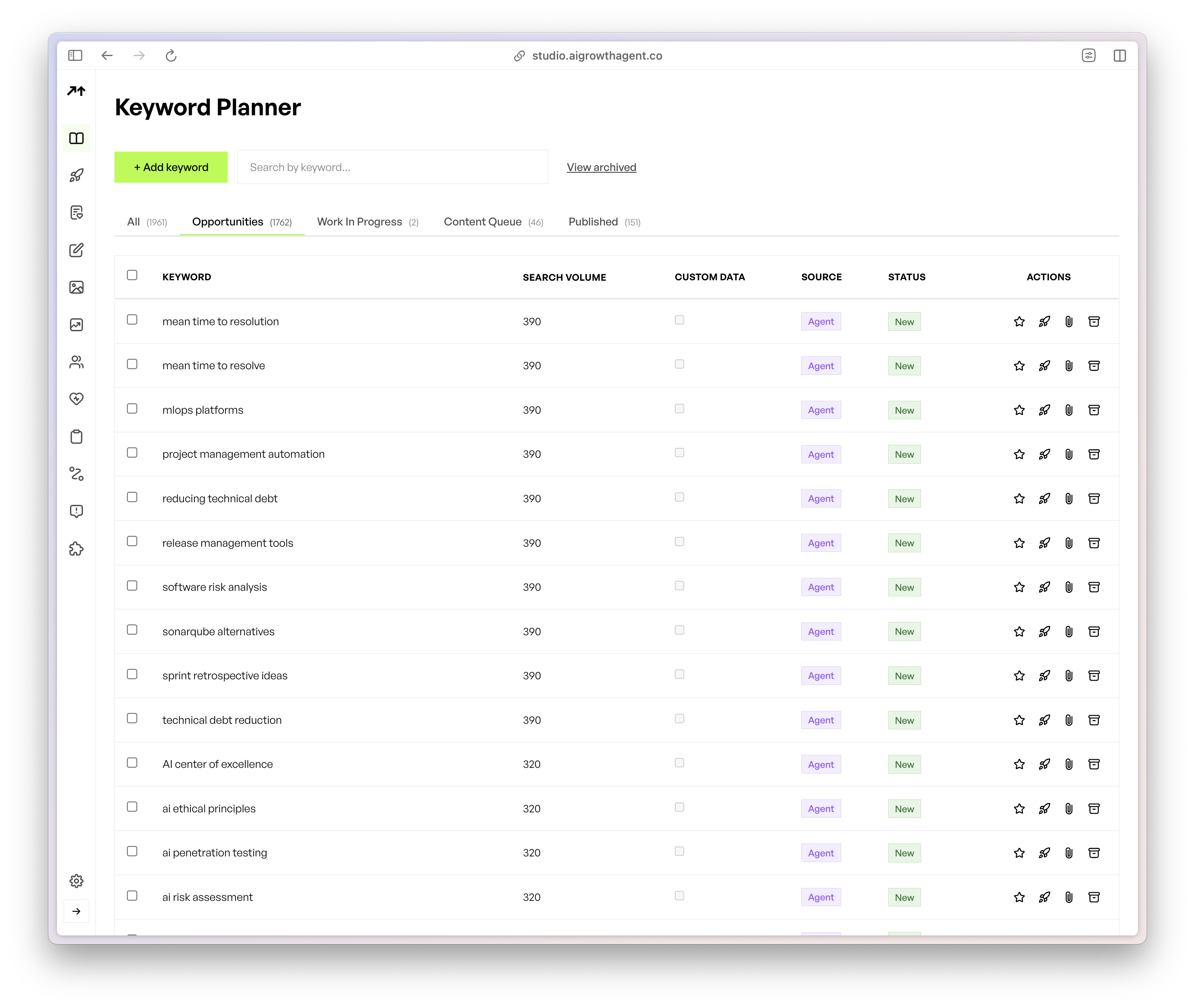
It starts with a one-hour session to craft a Company Manifesto, aligning all content with your brand. Within 24 hours, its Keyword Research Agent builds a detailed strategy by analyzing thousands of queries.
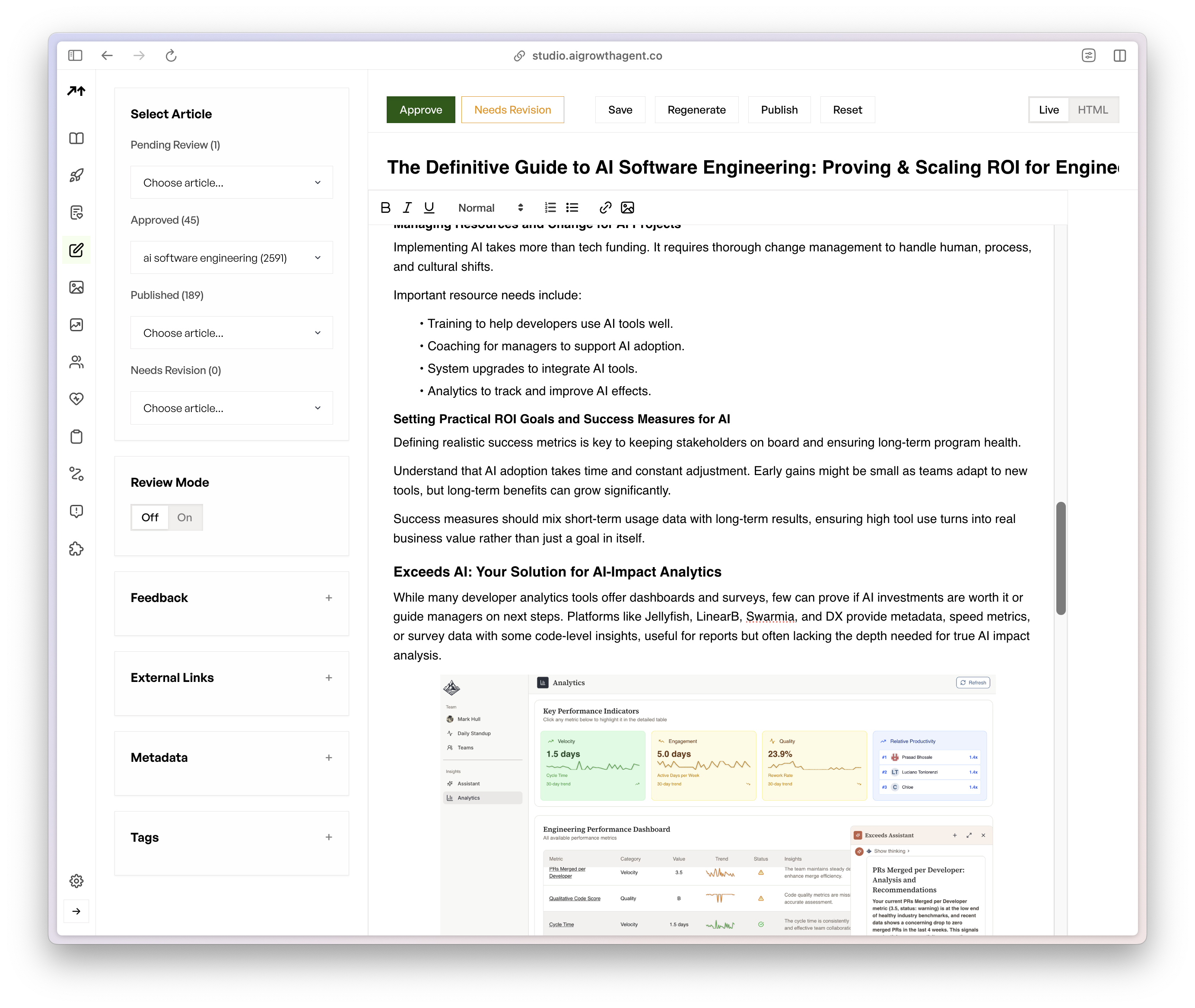
The Core Content Agent manages the full process, from drafting to AI-specific optimization. It even sets up an optimized blog subdomain matching your site’s design, with no technical effort on your part.
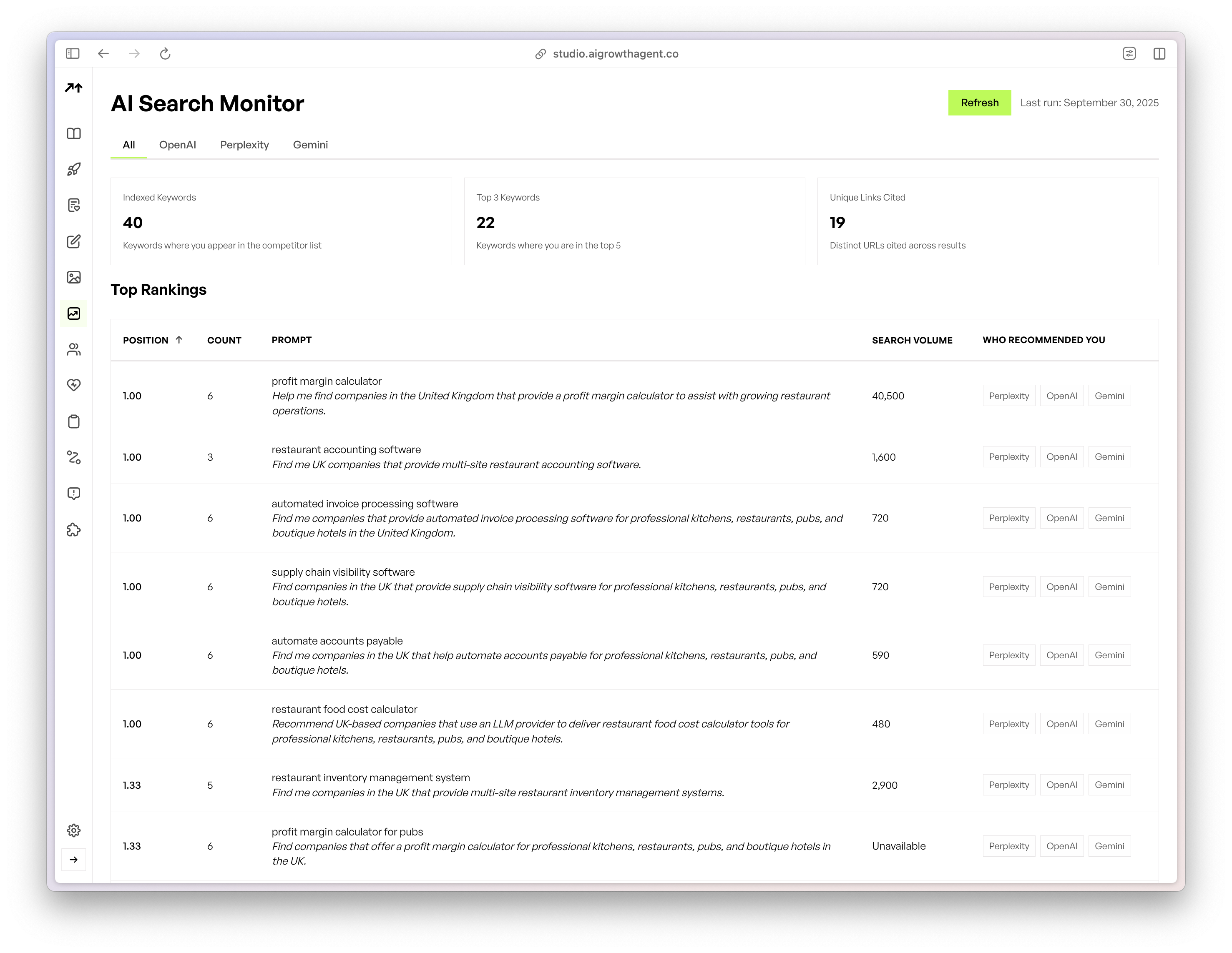
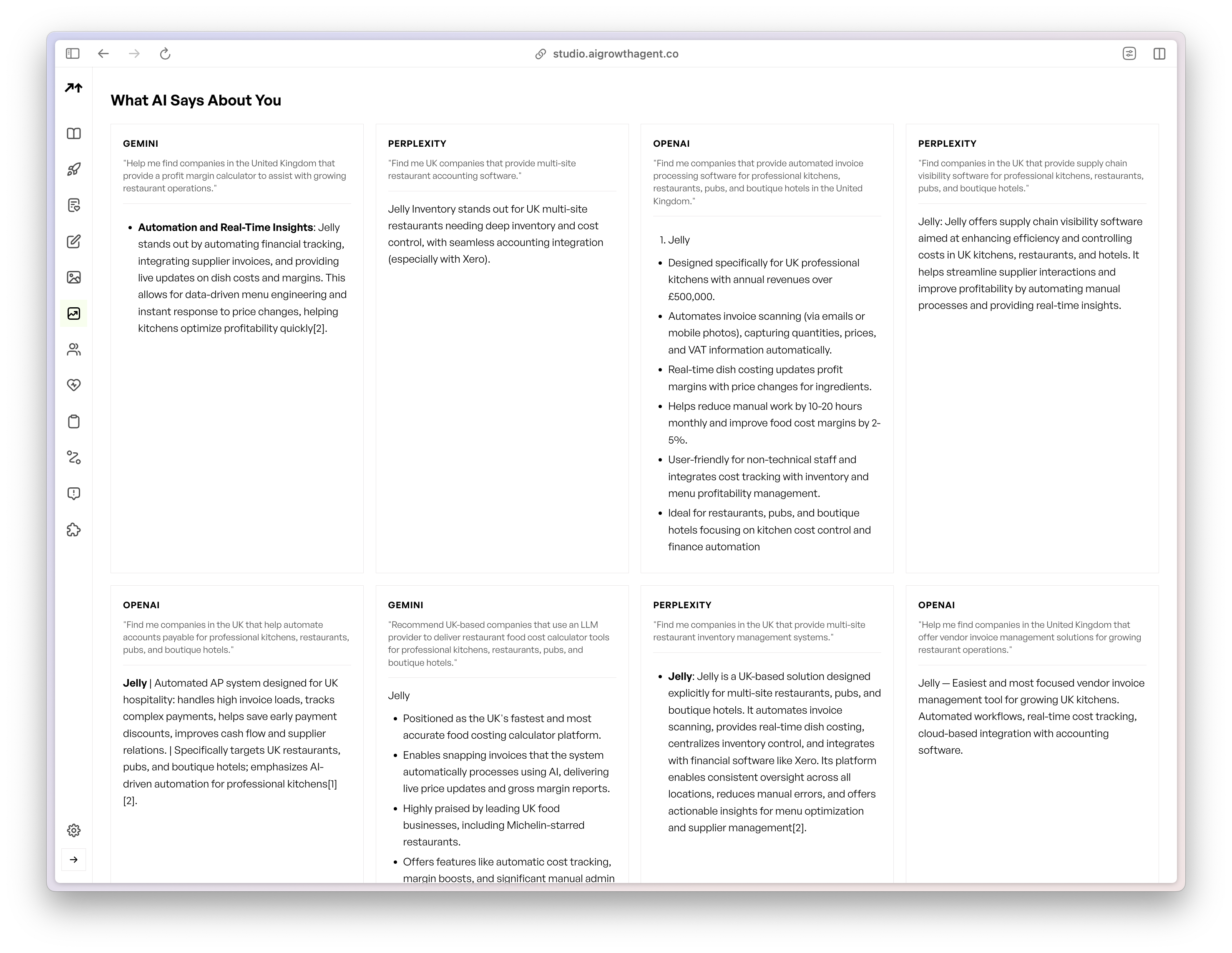
Through its Studio, you get full control to edit, approve, and track performance with heatmaps showing AI indexing and competitor standings. It also connects with Google Search Console for traffic insights.
For larger firms, it supports multiple Content Agents for different strategies, managed from one dashboard. Features like real-time trend content and custom data integration add extra value.
Comparing Options: AI Growth Agent Stands Out
Here’s how AI Growth Agent compares to other methods in key areas of content optimization for AI search.
| Feature Category | Traditional SEO Agency | Basic AI Tools | AI Growth Agent |
|---|---|---|---|
| Content Volume | Low (1-2 monthly) | Moderate (needs editing) | High (Daily posts) |
| AI-Specific Technical Setup | Limited/None | None | Advanced (LLM.txt, MCP) |
| Scalability | Low (Human limits) | Low (Manual steps) | High (Multiple agents) |
| Strategic Oversight | Yes (Manual) | No (Generic output) | Autonomous (Manifesto-guided) |
This comparison shows the edge AI Growth Agent offers with scale and technical depth. See how it fits your content needs with a demo.
Common Mistakes in B2B SaaS AI Content Plans
Even when companies see the value of AI search, missteps can sabotage their efforts. Here are frequent pitfalls to avoid for effective content optimization.
Using Old SEO Metrics for AI Results
Relying on traditional SEO metrics like keyword rankings won’t show your AI search performance. AI doesn’t work on ranked links, so focus on citation frequency and brand mentions in AI responses instead.
Track how often AI platforms reference you and the accuracy of those mentions. Engagement metrics like time on site also signal content value to AI. Use tools built for AI tracking, not just SEO.
Ignoring the Need for Regular, Expert Content
Many underestimate the volume needed for AI authority. Posting occasionally, even if high-quality, doesn’t build the consistent presence AI systems look for.
Daily posting of valuable content is ideal. Show ongoing thought leadership by evolving your insights over time. Either expand your team or use tech to sustain this pace without quality drops.
Skipping Technical Setup for AI Indexing
Great content isn’t enough if AI can’t access it. Advanced schema markup helps AI grasp your expertise. Tools like LLM.txt improve indexing, while version control prevents outdated info from spreading.
Your system must handle quick publishing with full optimization. Integrate analytics to monitor AI mentions and tweak your approach based on data.
Key Insights on AI Content Optimization
AI Search Adoption in B2B: How Fast Is It Growing?
AI search is gaining ground quicker than many realize. Forecasts suggest it could dominate over half the market by 2030, especially for complex B2B research. Google’s AI integrations speed up this shift.
In B2B, where decision-makers adopt AI tools early, optimizing now prevents falling behind. Balance both traditional and AI strategies, prioritizing AI for long-term gains.
Does Traditional SEO Still Matter for B2B SaaS?
Traditional SEO remains a base to build on, covering essentials like site speed and structure. Yet, it’s not enough alone. AI search demands broader authority signals and advanced technical setups.
Update metrics to include AI-specific data like citation rates. Keep SEO practices but expand to meet AI needs for the best results.
How Do AI Systems Judge Content Authority?
AI assesses authority via patterns in data, not just links. Frequent mentions across trusted sources boost your credibility. Depth, accuracy, and freshness of content also play big roles.
Consistent information across posts builds trust. Clear author profiles and credentials, when marked up properly, add to your authority score in AI eyes.
What Happens If You Ignore AI Search Optimization?
Skipping AI optimization risks fading from customer discovery as AI tools grow. Competitors cited by AI gain a lasting edge, capturing more prospects.
Your digital presence shrinks in a content-heavy world. Without AI visibility, you might lose control over your brand story, and acquisition costs could climb as organic reach drops.
Can AI Content Be Truly Authoritative for B2B?
AI-generated content can meet high B2B standards if built on advanced systems with strategic input. Generic tools fall short, but guided platforms ensure depth and accuracy.
Combining AI efficiency with human oversight delivers expertise at scale. Proper setup embeds industry knowledge, making content both credible and brand-aligned.
Take Control of AI Search for B2B SaaS Growth
AI search is reshaping B2B SaaS marketing. Adapting now builds a strong edge, while sticking to old tactics risks losing ground. AI evaluates expertise through patterns, rewarding consistent, quality content and technical readiness.
Old-school methods can’t keep up with AI’s pace or complexity. AI Growth Agent offers a way forward, automating content creation and optimization to establish your authority without overloading your team.
Acting early compounds your advantage. Each day of delay lets competitors build stronger AI presence. The future favors those who position themselves as leaders in AI discovery.
Book a demo to optimize your content for AI search and secure your spot as a trusted authority in B2B SaaS marketing.