


Key Takeaways for 2026 Reputation Software
- AI search engines shrink brand visibility, so companies must build authority beyond basic review monitoring.
- AI Growth Agent leads with autonomous programmatic SEO that earns AI citations, outperforming reactive tools like Birdeye and Reputation.com.
- Enterprise tools differ by strength: Yext excels in listings, Sprout Social in social monitoring, but both lack AI-era content scale.
- Critical buying criteria include automation, scalability, AI integration, and fast onboarding, with AI Growth Agent deploying in about one week.
- Companies ready to grow AI search visibility can schedule a demo with AI Growth Agent to plan an authority strategy.
How We Evaluated These Reputation Platforms
Our evaluation uses 2026 market share data from Capterra, G2 user ratings, and Gartner analyst reports. We prioritized platforms with 4.5+ star ratings, proven AI features, enterprise case studies, and measurable ROI in digital footprint management.
We drew on platform demos, technical documentation, analyst research, and proprietary data from AI Growth Agent monitoring systems. The review remains objective across tools while highlighting AI Growth Agent’s programmatic SEO approach for proactive authority in AI search.
Overview of the 9 Reputation Management Solutions
These nine digital footprint and reputation platforms cover review management, listings, social listening, and AI-era content scale.
- AI Growth Agent: Autonomous programmatic SEO that builds large content libraries for AI citations and authority
- Birdeye: AI-powered review and listing management for multi-location brands
- Reputation.com: Enterprise sentiment analysis and customer experience platform
- Yext: Digital presence and listings management using knowledge graph technology
- Podium: SMS-based review generation and customer messaging
- Sprout Social: Social media management with listening and reputation monitoring
- Brand24: Real-time mention tracking and social analytics
- Semrush Reputation: SEO-connected reputation analytics and monitoring
- Google Alerts: Free basic mention alerts and monitoring
Schedule a consultation to match these tools to your enterprise needs.
Top Reputation Tools Reviewed in Detail
1. AI Growth Agent (Best Overall for AI-Era Authority)
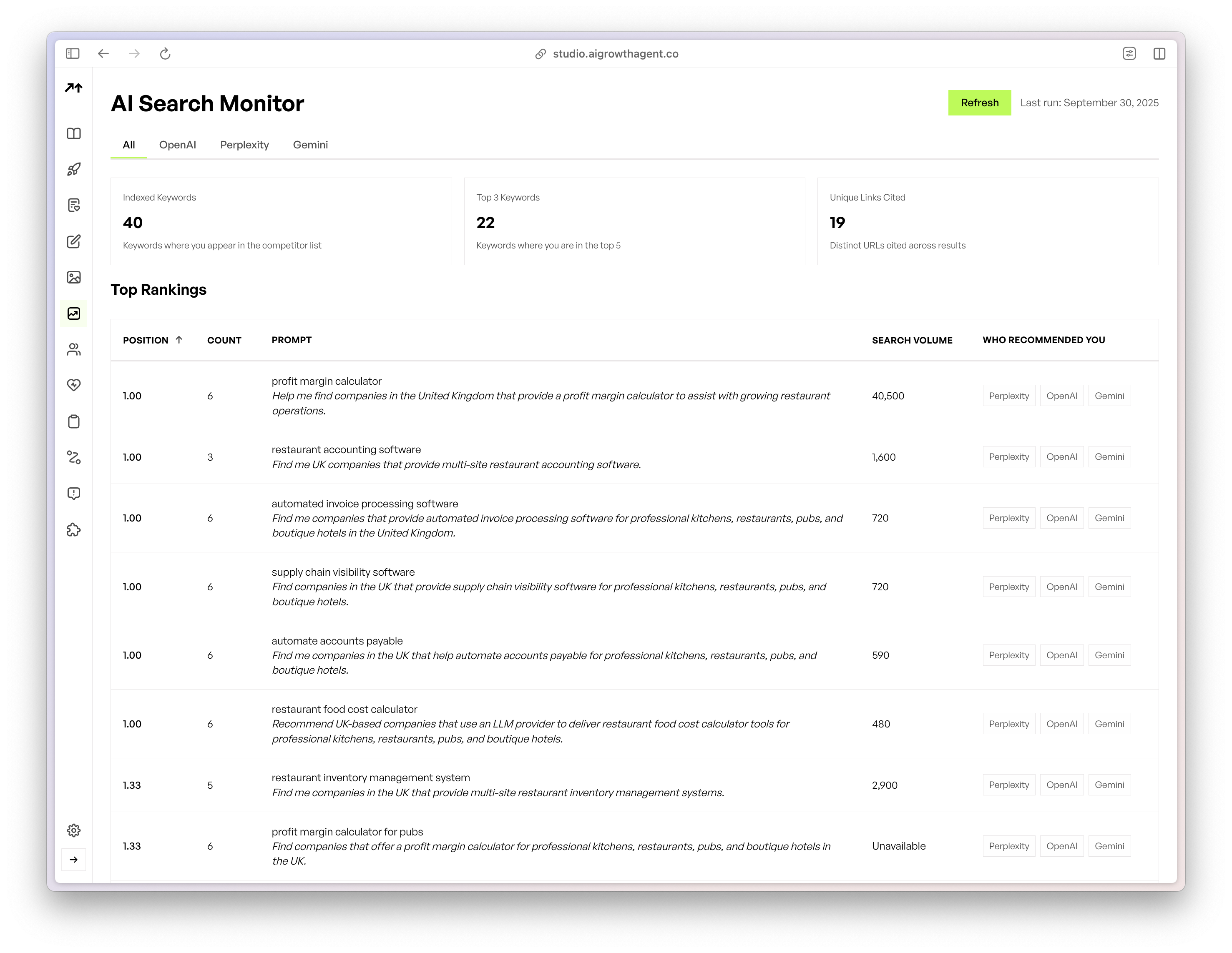
AI Growth Agent focuses on autonomous programmatic SEO that turns brands into trusted sources for AI search engines. Specialized agents handle content velocity, technical SEO, and AI citation tracking at scale, which protects visibility as AI-generated content crowds search results.
Key Capabilities:
- Advanced keyword clustering and programmatic content strategy
- Automated schema, LLM.txt, and Model Context Protocol setup
- Multi-tenant deployment for portfolios and complex enterprises
- Real-time content launches around trending topics and news
- Direct Google Search Console integration and AI citation monitoring
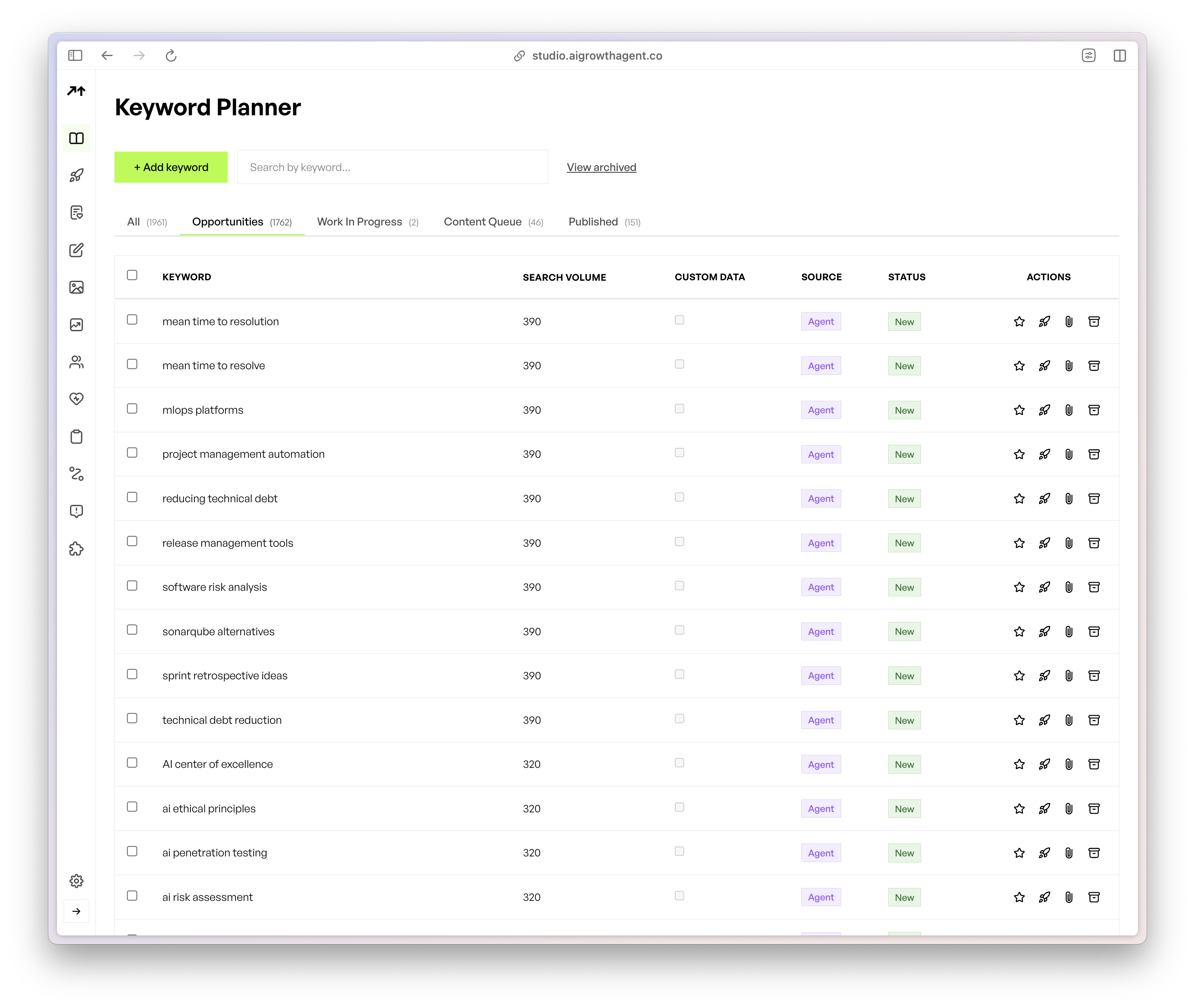
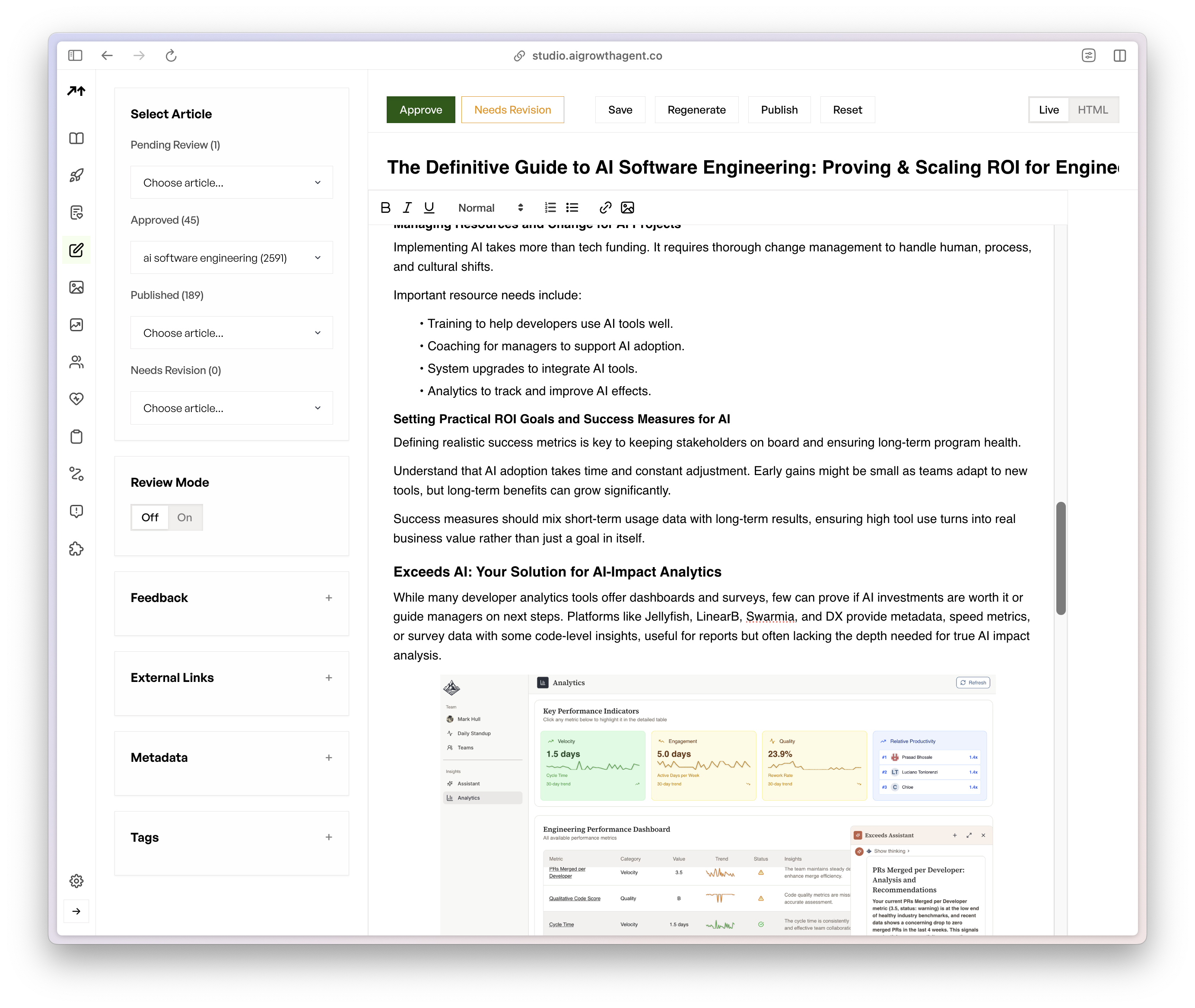
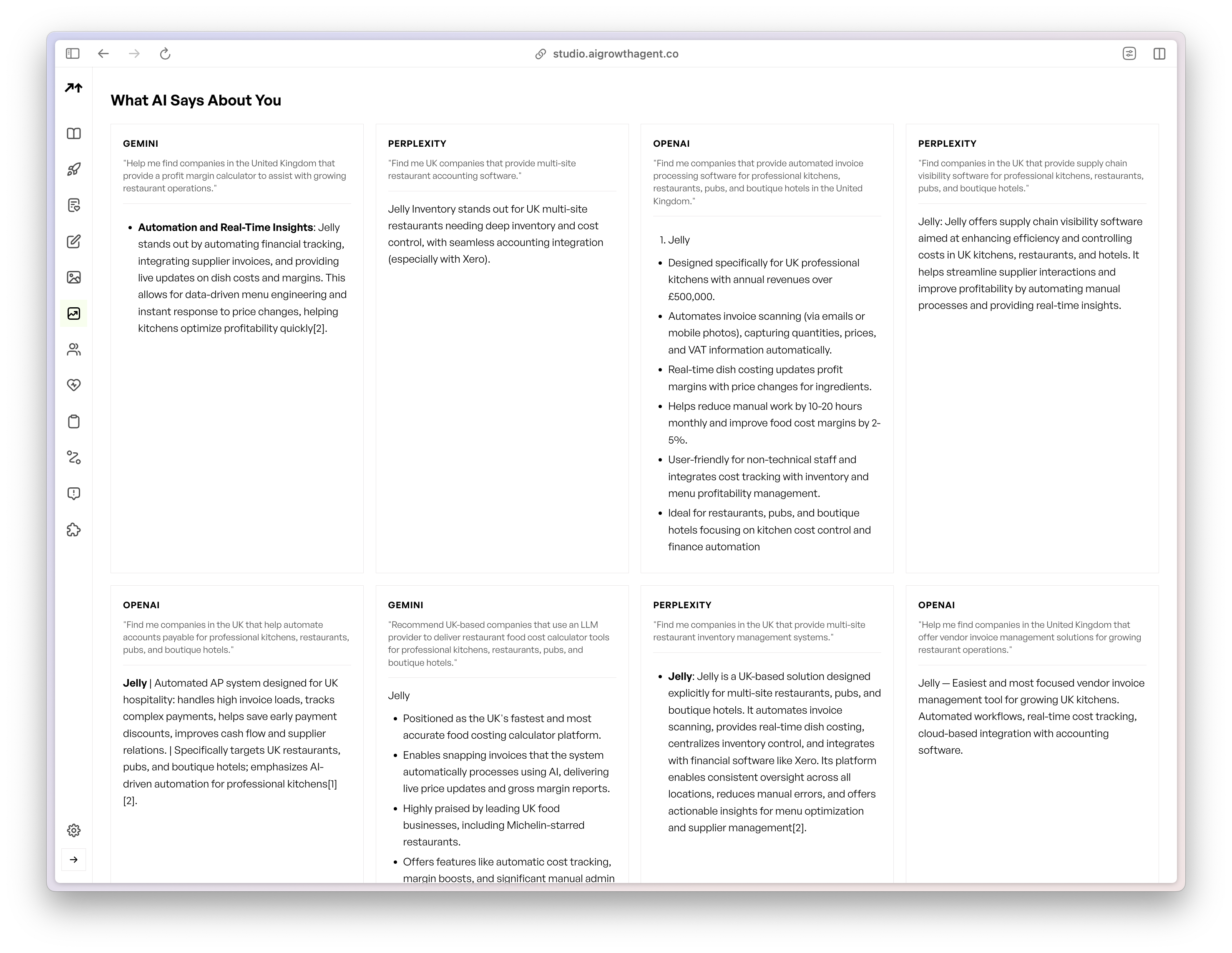
AI Growth Agent delivers high content volume while keeping brand voice consistent through Company Manifesto programming. Case studies show Exceeds AI gaining Perplexity recommendations in two weeks and Bucked Up becoming the top ChatGPT citation for protein soda queries. Most clients complete onboarding in about one week, while legacy platforms often take months.
Limitations: Serves premium brands with established SEO foundations and uses custom pricing after a demo.
Pricing: Custom enterprise pricing based on scope.
Ideal Fit: Marketing leaders at premium brands who want autonomous programmatic SEO, AI citation gains, and scalable authority.
2. Birdeye (Best for Multi-Location Review Management)
Birdeye offers an all-in-one customer experience platform with AI-powered review management across 200+ sites. It centralizes reviews, responses, and feedback analytics for multi-location businesses.
Key Features:
- AI-generated review responses using natural language processing
- Monitoring across Google, Facebook, Yelp, and niche platforms
- Local SEO tools and citation management
- White-label reporting for agencies and large clients
Strengths: Large integration library, proven enterprise scale, and strong automation for review workflows.
Limitations: Light programmatic content features and a reactive focus on existing reviews instead of authority building.
Pricing: Starts at $299 per month per location, with custom enterprise tiers.
Best For: Multi-location brands that need centralized review and customer experience management.
3. Reputation.com (Best for Regulated Industries)
Reputation.com targets enterprise clients in healthcare and other regulated sectors with AI sentiment analysis and benchmarking. It focuses on multi-location reputation control and crisis response.
Key Features:
- AI-driven sentiment analysis and trend discovery
- Competitive benchmarking and market positioning insights
- Multi-location dashboards and centralized workflows
- Monitoring that includes AI search engines such as ChatGPT
Strengths: Enterprise security, compliance support, deep analytics, and strong healthcare expertise.
Limitations: Higher cost, complex rollout, and limited content creation tools.
Pricing: Custom enterprise plans, often several thousand dollars per month.
Best For: Large healthcare systems and regulated enterprises that need advanced analytics.
4. Yext (Best for Global Listings Control)
Yext centers on digital presence management through a knowledge graph that keeps listings accurate across hundreds of directories. Global enterprises use it to control data syndication from a single source of truth.
Key Features:
- Knowledge graph for consistent data distribution
- Directory management across 200+ platforms
- Central review dashboard and response tools
- Location-based analytics and performance reports
Strengths: Wide directory coverage, strong data accuracy, and global scalability.
Limitations: Limited AI features, basic review workflows, and almost no content creation support.
Pricing: Plans start around $199 per year for basic listings.
Best For: Global brands that need centralized directory and listing management.
Schedule a demo to compare enterprise solutions.
5. Podium (Best for SMS-Driven Local Reviews)
Podium focuses on SMS-based customer communication and review generation for local service businesses. It unifies messaging, payments, and reputation tasks in one inbox.
Key Features:
- Automated SMS review requests
- Built-in payment processing and messaging
- AI Employee features for automated replies
- Unified inbox for text, web chat, and reviews
Strengths: Deep SMS capabilities, strong communication tools, and clear results for local businesses.
Limitations: Limited fit for large enterprises, basic analytics, and weak AI search impact.
Pricing: Core at $399 per month and Pro at $599 per month with up to 500 review invites.
Best For: Local service companies that rely on text-based communication and review growth.
6. Sprout Social (Best for Social Reputation Monitoring)
Sprout Social blends social media management with reputation monitoring and sentiment analysis. It supports publishing, engagement, and listening in one platform.
Key Features:
- Social listening and reputation tracking
- AI-powered sentiment analysis across networks
- Crisis management and response coordination tools
- Full social media management suite
Strengths: Unified social and reputation workflows, strong analytics, and broad enterprise adoption.
Limitations: Limited coverage of review sites, minimal programmatic content, and a social-first focus.
Pricing: Custom enterprise pricing based on seats and features.
Best For: Brands that treat social media reputation as a primary channel.
7. Brand24 (Best for Affordable Mention Monitoring)
Brand24 offers real-time mention tracking and social analytics with AI insights for sentiment and trends. It focuses on broad online mention coverage.
Key Features:
- Real-time monitoring across the web and social
- AI sentiment analysis and trend detection
- Influencer identification and engagement tracking
- Competitive analysis and benchmarking
Strengths: Wide mention coverage, accessible pricing, and an easy interface.
Limitations: Limited review management, basic response tools, and almost no content creation.
Pricing: Plans start at $79 per month.
Best For: Small and midsize businesses that need broad monitoring and simple sentiment analysis.
8. Semrush Reputation (Best for SEO-Connected Insights)
Semrush Reputation ties reputation metrics to SEO analytics, giving a single view of search performance and brand perception. It uses the wider Semrush database for context.
Key Features:
- SEO-linked reputation analytics and monitoring
- Search visibility impact tracking for reputation events
- Competitive reputation benchmarking
- Integration with the full Semrush SEO toolkit
Strengths: Deep SEO integration, strong competitive data, and proven enterprise use.
Limitations: Limited review workflows, basic automation, and a requirement for a broader Semrush plan.
Pricing: Included in Semrush enterprise packages starting at $449 per month.
Best For: Enterprises already on Semrush that want combined SEO and reputation analytics.
9. Google Alerts (Best Free Starter Option)
Google Alerts offers simple mention monitoring through email notifications for chosen keywords and brand names. It gives a basic awareness layer without cost.
Key Features:
- Free alerts for keywords and brand terms
- Email delivery of new mentions
- Simple frequency and source filters
- Fast setup and management
Strengths: Completely free, easy to use, and backed by Google’s web crawling.
Limitations: No sentiment analysis, limited filters, no response tools, and very basic features.
Pricing: Free.
Best For: Startups and small businesses that need an initial monitoring layer on a zero budget.
Side-by-Side Comparison of Core Capabilities
|
Tool |
Automation/AI Citations |
Scalability/Integrations |
Pricing/Enterprise Fit |
|
AI Growth Agent |
Autonomous pSEO, AI citation tracking |
Multi-tenant, unlimited scale |
Custom/Premium brands |
|
Birdeye |
AI review responses, basic automation |
3000+ integrations, enterprise-ready |
$299+/location/Enterprise |
|
Reputation.com |
AI sentiment analysis, ChatGPT monitoring |
Multi-location, healthcare focus |
Custom/Enterprise |
|
Yext |
Basic automation, directory sync |
Global directories, enterprise scale |
$199+/year/Enterprise |
Traditional tools concentrate on monitoring and reacting to existing content, while AI Growth Agent builds authority through programmatic content creation. This proactive model makes AI Growth Agent distinct for AI search visibility.
Across platforms, buyers trade automation speed for manual control. AI Growth Agent favors autonomous scale, while legacy tools rely on ongoing human effort for content and responses.
Schedule a demo to see AI Growth Agent’s programmatic approach in action.
What to Consider Before Implementation
Successful digital footprint programs start with clear expectations around onboarding, technical needs, and ROI tracking. AI Growth Agent typically onboards in about one week, while many enterprise tools require several months.
Key requirements include an SEO foundation review, content volume planning, AI monitoring setup, and defined ROI metrics. Companies without strong technical SEO risk invisibility in AI search, so programmatic content creation becomes a core requirement.
Evaluation checklists should cover content scale, AI citation tracking, multi-location support, integration needs, and proof of ROI through organic traffic and AI visibility metrics.
Frequently Asked Questions
What is digital footprint reputation management in the AI era?
Digital footprint reputation management in the AI era means actively building and maintaining authority across AI search engines such as ChatGPT, Gemini, and Perplexity. Traditional tools mainly monitor and respond to existing content, while AI-era platforms create structured content systems that earn citations and recommendations from AI models. This approach requires technical SEO, schema, and content velocity that manual teams rarely match.
How does AI Growth Agent differ from traditional review tools?
AI Growth Agent works as an autonomous programmatic SEO agent instead of a reactive monitoring platform. Tools like Birdeye and Reputation.com manage existing reviews and mentions, while AI Growth Agent builds large content libraries through automated keyword clustering, technical SEO, and AI citation tracking. The platform focuses on creating content that AI search engines choose to reference.
Which solution works best for white-label and multi-brand setups?
AI Growth Agent supports advanced multi-tenant deployments that suit private equity firms, venture portfolios, and enterprises with many product lines. Teams can run separate SEO agents from one interface while preserving unique brand voices and strategies. Birdeye and similar tools offer basic white-label reporting but lack deep programmatic content and multi-brand control.
Are there effective free options for digital footprint management?
Google Alerts gives free basic mention monitoring, which helps startups build early awareness. Free tools, however, do not provide AI integrations, sentiment analysis, or proactive content creation. Organizations that treat AI-era reputation as strategic need paid platforms with programmatic content features, since monitoring alone cannot offset shrinking AI search footprints.
What timeline should companies expect for AI citation gains?
AI Growth Agent often secures AI citations within two to three weeks after programmatic content launches. Case studies include Exceeds AI appearing in Perplexity recommendations and Bucked Up ranking as the top ChatGPT citation for protein soda queries. Timelines vary based on content volume, technical quality, and existing domain authority, while traditional review tools rarely affect AI citation visibility directly.
Conclusion: Choosing the Right AI-Era Reputation Platform
AI Growth Agent stands out for brands that want AI search authority through autonomous programmatic SEO, which traditional reputation tools do not provide. Platforms like Birdeye and Reputation.com still excel at review and monitoring workflows, but they do not solve the authority gap created by AI search.
Marketing leaders should align tools with their needs for automation, scale, and AI integration. The shift from reactive monitoring to proactive authority building marks a major strategy change and favors platforms built specifically for the AI era.
Schedule a demo to see whether AI Growth Agent fits your AI citation strategy.
