


Key Takeaways
- AI-generated content is flooding social feeds, which makes it harder for brands to stay visible without programmatic, search-focused publishing.
- AI-driven recommendations and chat-based search now shape discovery, so brands need content that AI systems can reliably understand, trust, and cite.
- Programmatic SEO combines scale, quality, and technical SEO to create structured content that stands out for both human audiences and AI models.
- Marketing teams gain leverage when they automate research, writing, and technical setup instead of relying only on manual, one-off content campaigns.
- AI Growth Agent helps teams operationalize Programmatic SEO at scale, and you can see it in action by scheduling a demo.
The Problem: Why Traditional Social Engagement is Failing Marketers
Marketing teams that rely on manual content calendars and social posting face shrinking reach and inconsistent engagement. AI tools now create and recommend most of what audiences see, which changes how attention, trust, and authority work online.
The Flood of AI-Generated Content and Shrinking Digital Footprints
AI has changed the volume and nature of social content. Medium’s AI Attribution Rate grew from 1.77% to 37.03%, and Quora’s from 2.06% to 38.95% between January 2022 and October 2024. Accounts with smaller followings lean on AI even more, and their average AI Attribution Rate reaches 54.02%.
This surge creates digital footprint shrinkage. As AI-generated posts multiply, a brand that publishes only a few human-crafted posts per month becomes quieter in relative terms. The result is fewer impressions, less engagement, and weaker signals for both human users and AI systems that look for authoritative sources.
Brands that do not match this new level of volume with a structured, programmatic approach risk becoming invisible in the channels where their audiences now spend time.
The Irreversible Shift to AI-Powered Discovery and Search
AI now filters and ranks much of the content people see. More than 80% of social media content recommendations run on AI systems, so algorithmic models, not follower counts or post timing, decide what surfaces in feeds.
AI assistants and chat-based search platforms like ChatGPT, Google AI Overviews, and Perplexity also play a growing role in discovery. These systems often answer questions directly and cite only a limited number of sources. Brands that do not appear in those citations lose visibility at the exact point where intent is strongest.
At the same time, trust in social media content is declining as generative AI use grows. Users rely more on AI tools, yet are more skeptical of what they see in feeds. That shift increases the value of content that looks authoritative, verifiable, and reference-worthy.
The Crisis of Authenticity, Trust, and Engagement
Audiences care about who or what created the content they see. Labeling content as AI-generated reduces perceived authenticity and trust, which often lowers engagement metrics.
Brands still get stronger engagement from human-written work. Human-created posts tend to outperform AI-generated ones on likes and comments, but the sheer amount of AI content makes it hard for manual production to compete for attention.
Audiences now struggle to distinguish human from AI content, and this uncertainty affects all digital channels. Brands need systems that signal expertise and reliability while still operating at the scale that modern discovery platforms expect.
Marketing teams that want to close this gap benefit from a programmatic approach that treats authority and technical SEO as core parts of social and search strategy. Schedule a demo to explore whether a Programmatic SEO framework fits your current goals.
The Solution: Programmatic SEO for AI Citation and Social Engagement
Programmatic SEO gives brands a structured way to publish large volumes of useful, technically sound content. This approach focuses on building topic authority that AI systems can clearly recognize, index, and cite.
Programmatic Velocity as the New Baseline
Content velocity in 2026 involves more than posting often. It means publishing many pieces of structured, high-quality content that map to the questions people and AI systems ask.
Ninety-seven percent of marketing leaders now say marketers must understand how to use AI, yet many teams still treat AI as a drafting tool inside a manual workflow. That approach caps output and leaves technical SEO work underpowered.
Programmatic SEO supports daily publishing of technically consistent, search-ready content that targets specific clusters of intent. Each article contributes to a larger topic map, which helps AI models see your site as a reliable source instead of a collection of isolated posts.
Beyond Keywords: Technical SEO for AI Engagement
AI models depend on structure and context. They look for schema markup, machine-readable documentation, and consistent signals that point to a site as an authority on a subject.
Modern AI search requires:
- Advanced schema markup that clarifies entities, relationships, and key facts
- LLM.txt files that explain how models should use and interpret your content
- Model Context Protocol setups that allow AI tools to query your content in a controlled way
- Clean metadata and internal linking that reinforce topic relevance
Many marketing teams lack the engineering time to manage these elements at scale. Manual setups often remain incomplete or outdated, which limits how often AI systems surface and cite their content.
AI Growth Agent: Your Autonomous Path to Programmatic Authority
AI Growth Agent provides an autonomous system for Programmatic SEO. The platform combines strategy, content production, and technical publishing so marketing teams can focus on positioning and oversight instead of manual execution.
Engineer Authority at Scale with AI Growth Agent
The engagement starts with a white-glove onboarding process. The team captures your positioning, audience, compliance needs, and examples of expert content. That input becomes a Company Manifesto that guides every decision the Programmatic SEO Agent makes.
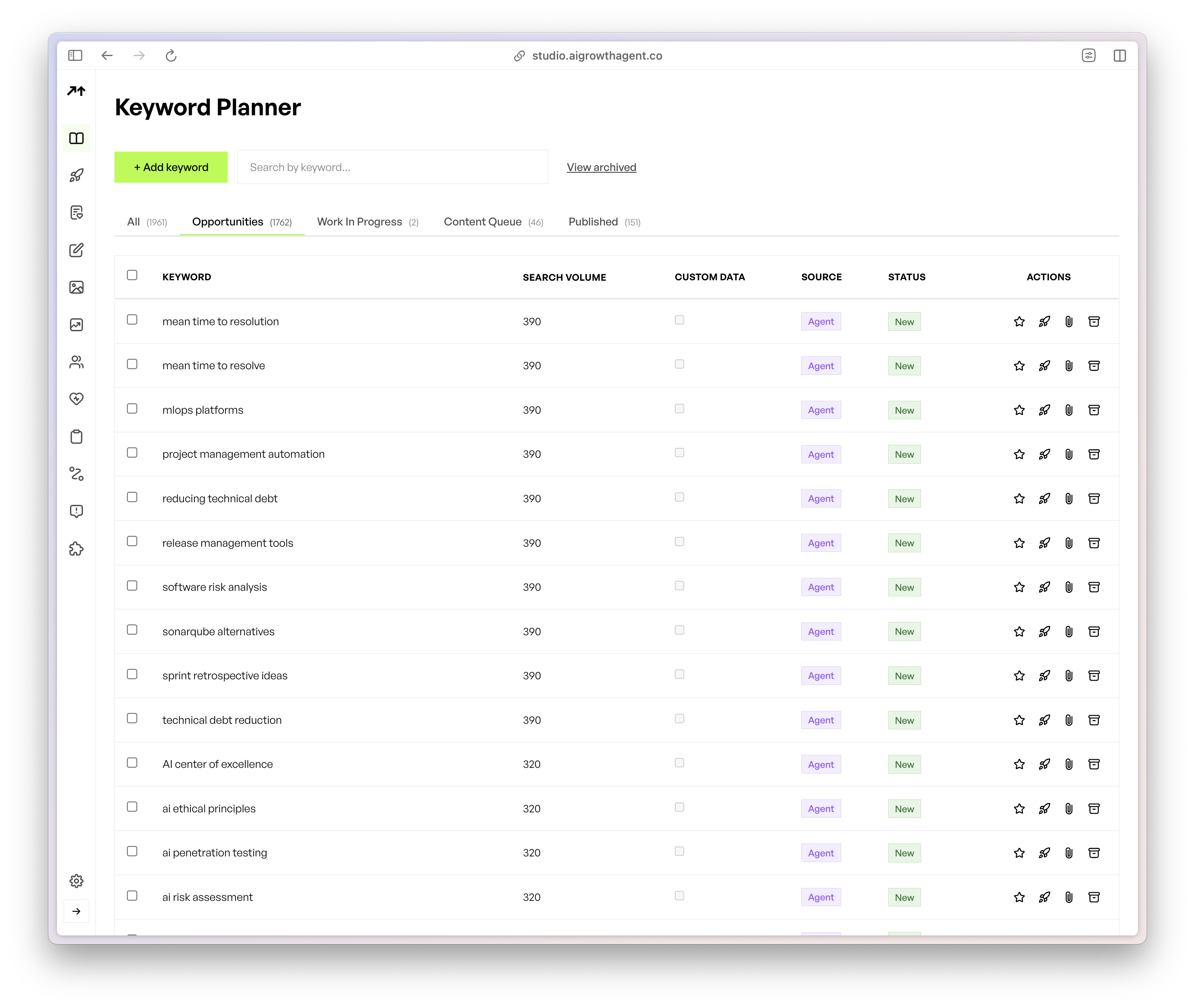
The agent then performs large-scale keyword and content research. It reviews tens of thousands of queries, groups them into clusters, and builds a roadmap that aligns with AI-driven discovery. Each planned asset supports a clear ranking or citation opportunity.
The platform sets up a blog and content infrastructure with advanced LLM.txt files and Model Context Protocol support. This structure helps AI systems interface directly with your content library.
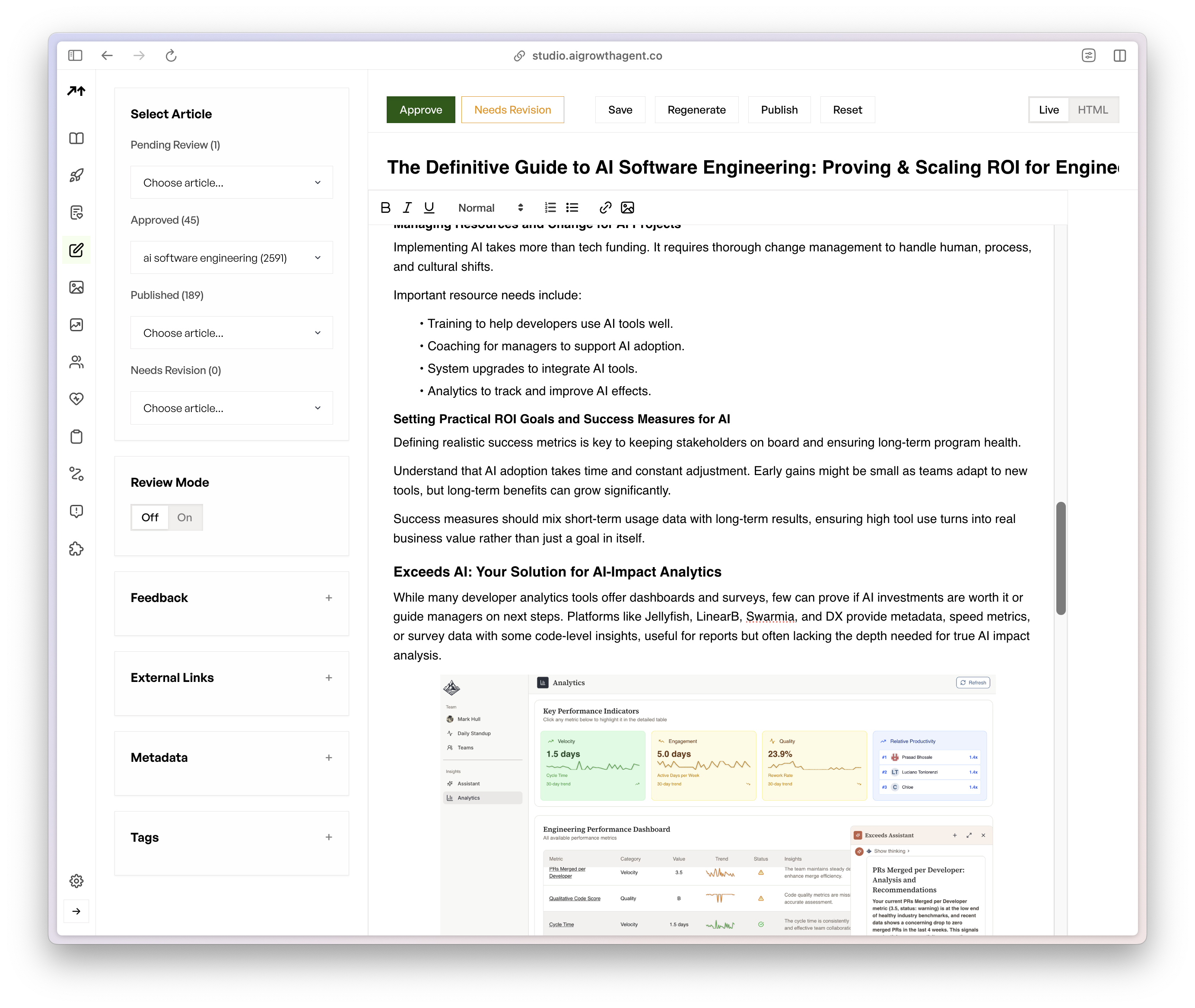
The Programmatic SEO Content Agent then runs the full lifecycle. It creates briefs, drafts content, performs fact checking, and publishes pieces with schema, metadata, and internal links already in place.
Capabilities That Support AI and Social Discovery
AI Growth Agent includes several capabilities that address current discovery patterns.
- Real-time programmatic content injection that turns timely news or trends into optimized articles while interest is highest.
- Multi-tenant deployment that lets central teams manage multiple brands or product lines in one environment.
- Database-to-content automation that converts internal datasets into public, search-focused content that builds authority around proprietary knowledge.
These features help brands compound their authority instead of treating every campaign as a new, isolated effort. Book a demo to see how this workflow could plug into your current stack.
AI Growth Agent vs. Traditional Approaches: A Comparison in the AI Era
Programmatic SEO differs from both traditional agencies and basic AI writing tools. The focus shifts from single assets to systems that build measurable topic authority.
|
Feature / Role |
AI Growth Agent |
Traditional SEO Agencies |
Self-Service AI Content Tools |
|
Approach to Content Creation |
Autonomous, programmatic, citation-focused |
Manual, human-led production |
Drafting support with unstructured output |
|
Content Volume and Velocity |
Daily publishing at scale |
Limited by headcount and billable hours |
Dependent on user time and prompts |
|
Technical SEO Integration |
Automated schema, LLM.txt, and MCP |
Manual and often incomplete |
Handled separately by the user |
|
Strategy and Keyword Research |
Programmatic clustering and coverage mapping |
Batch research with smaller data sets |
Single keyword or prompt-based |
Frequently Asked Questions
Does AI-generated content still earn lower engagement, and how does Programmatic SEO help?
Human-written content still tends to earn higher engagement on social platforms than AI-generated posts. Programmatic SEO helps by combining AI efficiency with structured workflows that embed expert input, original insight, and technical quality, which improves both trust and visibility.
How do AI-powered recommendations change content visibility for brands?
AI recommendation engines decide which posts and pages users see most often. Brands that structure content for AI citation, with strong internal linking and clear schema, increase the chances that their work appears in feeds and AI search responses instead of remaining buried.
How can brands stand out as AI-generated content becomes mainstream?
Brands stand out by pairing AI-assisted production with clear positioning and topic ownership. A focused content architecture that covers key questions in depth helps AI models treat your site as a primary reference instead of a generic source.
How can marketing leaders measure success in AI search citation and engagement?
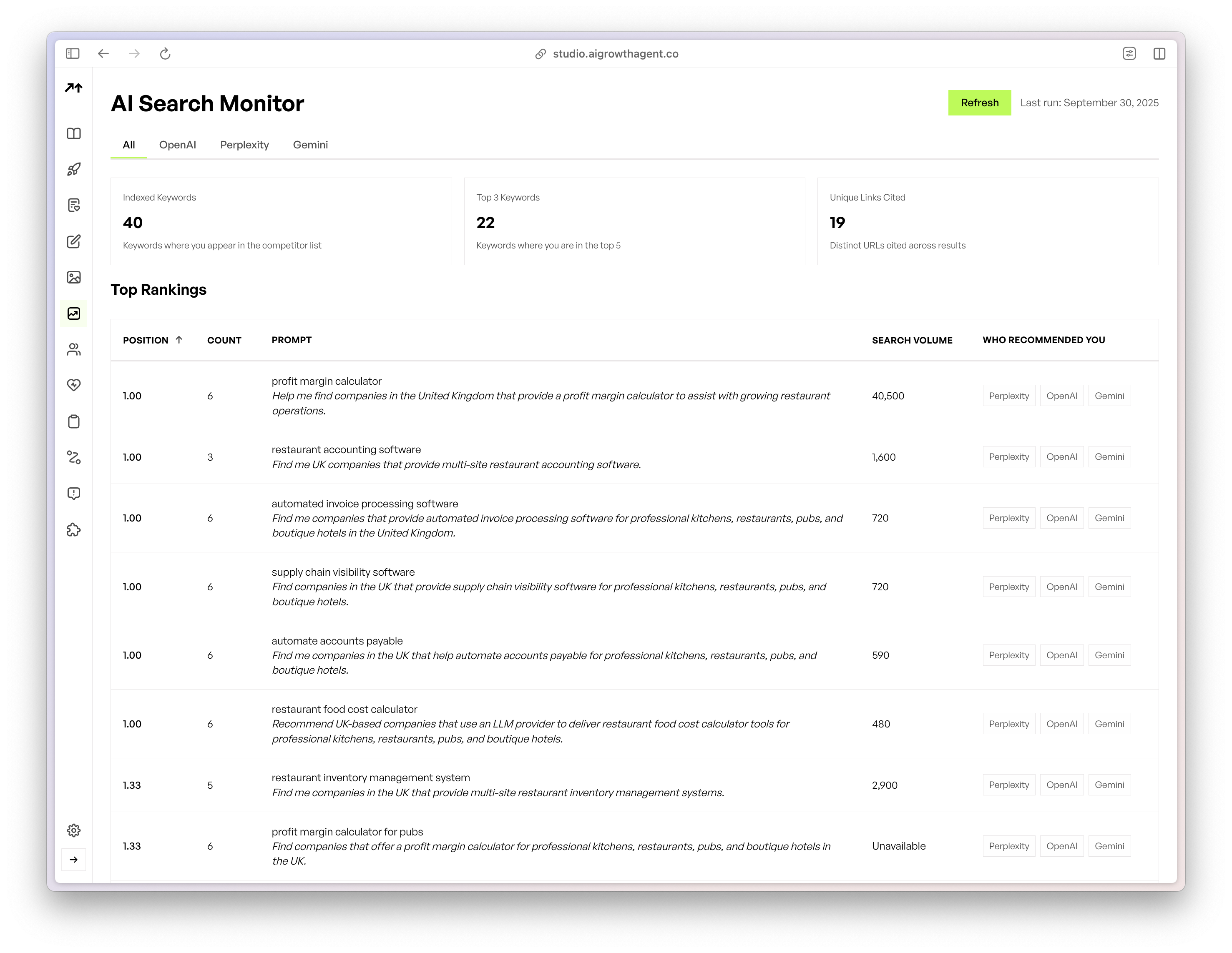
Teams can track how often AI tools surface their content, which URLs appear in AI summaries, and how organic traffic shifts for priority topics. AI Growth Agent’s AI Search Monitor reports on keyword coverage, citations, and traffic trends so leaders can see which programmatic assets drive results.
Conclusion: Programmatic SEO as the New Foundation for Social and AI Visibility
AI-driven search and recommendations now shape how audiences find and trust brands. Manual content tactics, even when well executed, struggle to keep pace with the volume, structure, and technical requirements of this environment.
Programmatic SEO gives marketing leaders a way to build durable authority in 2026. AI Growth Agent operationalizes that model by automating research, production, and technical publishing so your team can focus on strategy and differentiation.
Move your content strategy from one-off posts to a system that compounds visibility across social and AI search. Schedule your AI Growth Agent demo to see how Programmatic SEO can support your next stage of growth.
