


Ket takeaways from this article:
- AI search now rewards brands that publish consistent, in-depth, and technically optimized content at scale.
- Autonomous agent-based platforms can manage the full content lifecycle, while feature-centric tools mainly support individual tasks.
- AI-first technical SEO, including structured data for large language models, improves how AI systems index and cite your content.
- Authority-focused content strategies outperform volume-only approaches for earning AI citations.
- Real-time responsiveness and proprietary data integration help brands capture emerging topics and publish unique insights.
- AI-specific monitoring closes the gap between traditional SEO metrics and actual visibility in AI search experiences.
AI search systems like ChatGPT, Google AI Overviews, and Perplexity now shape how customers discover brands.
This article explains how to choose an enterprise AI content platform that builds authority in those systems. Marketing and growth leaders can use these criteria to evaluate platforms and select a solution that supports long-term authority in AI-powered search.
1. Autonomous Agent-Based Architecture vs. Feature-Centric Tools
The core difference between enterprise AI content solutions is how they structure content production. Some platforms offer isolated AI features that support human teams. Others use autonomous AI agents that manage the full content lifecycle with limited oversight.
Autonomous agent-based platforms shift content work from manual workflows to systems that act like full content teams. These agents plan, research, write, edit, optimize, fact-check, and publish content with clear rules and guardrails. This approach supports consistent output for complex, high-value content without adding headcount.
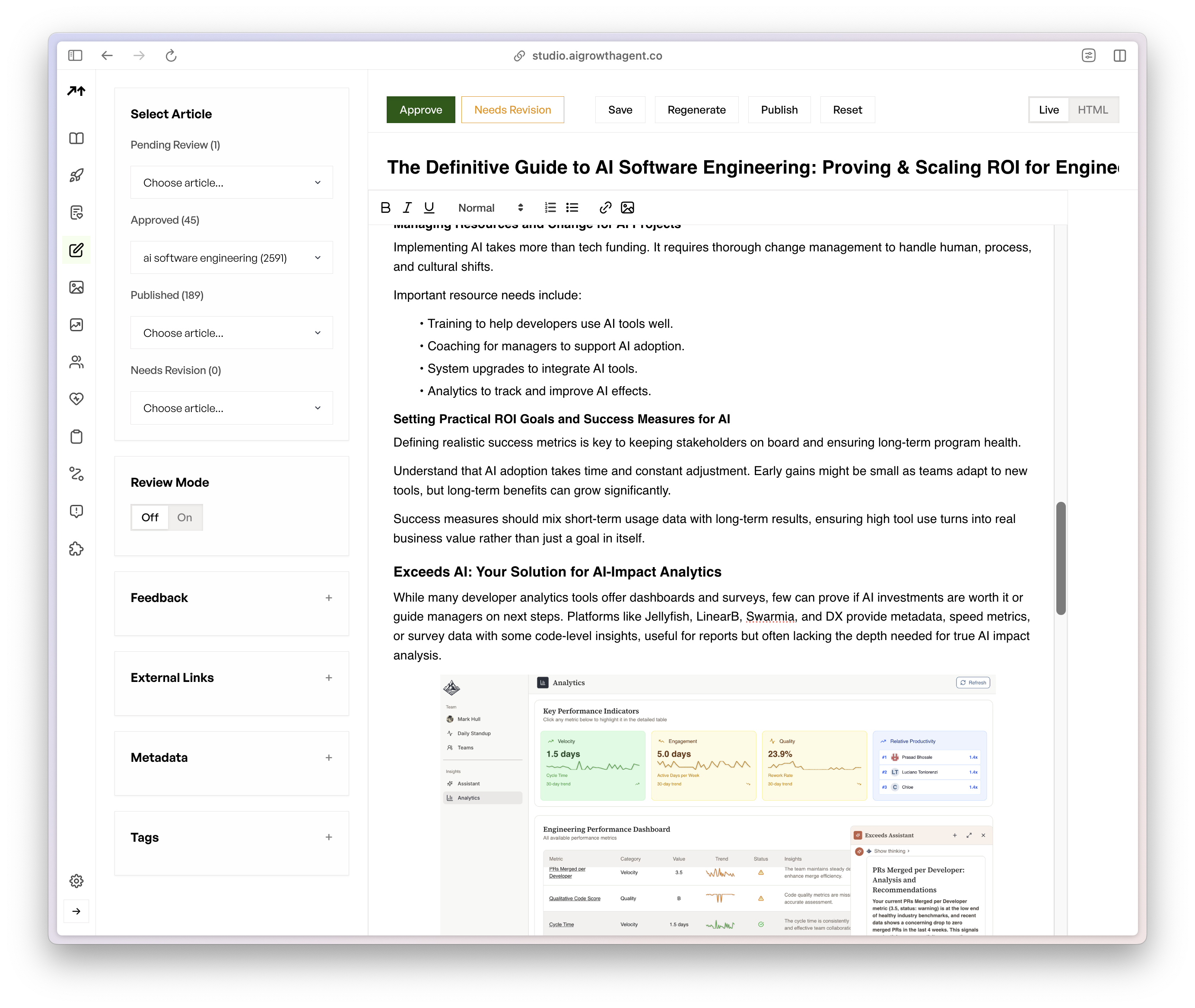
Feature-centric tools support specific steps, such as drafting or rewriting, but still depend on people to coordinate strategy and quality. Teams must own keyword research, content briefs, editing, technical optimization, and publishing steps. This structure limits scale and often recreates traditional content operations with AI as a writing assistant rather than a fully integrated system.
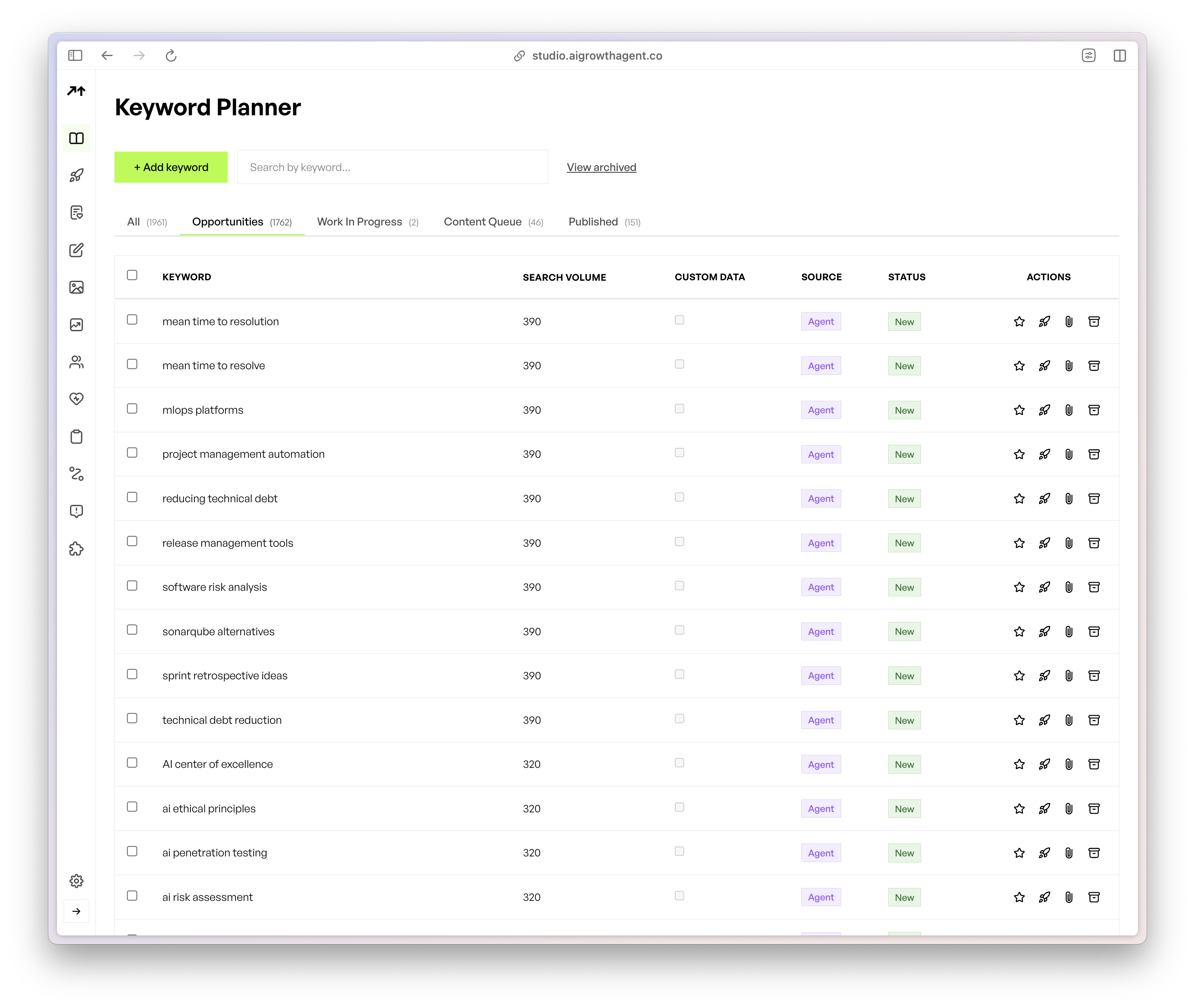
The scalability gap between these approaches becomes clear as content needs increase. Feature-centric tools might help a team publish a few more articles per month. Autonomous agent systems can support daily publication of high-quality, authoritative content while keeping workflows consistent and manageable for lean teams.
The Role of a “Company Manifesto” in Directing Autonomous Agents
Mature agent-based platforms rely on structured guidance to keep content aligned with brand strategy. Rather than simple prompts or basic style notes, advanced systems use a detailed “Company Manifesto” created during onboarding as the reference point for every agent action.
This manifesto documents positioning, target audiences, competitive context, value propositions, and key narratives. Each article generated by autonomous agents draws from this source, so messaging, examples, and angles stay consistent as volume increases. Brands can scale content without drifting from their core story or voice.
The manifesto also gives agents clear direction on topic selection and keyword priorities. Agents can make informed decisions within agreed boundaries, which reduces the need for ongoing manual instruction and unlocks more strategic autonomy.
The Strategic Advantage of Parallel Agent Deployment for Multi-Brand Management
Advanced agent-based platforms support parallel deployment, so teams can run separate content strategies for multiple brands or product lines from a single environment. This structure is useful for private equity firms, venture portfolios, franchises, or enterprises with several business units.
Each agent works from its own manifesto, keyword plan, and editorial strategy while sharing infrastructure, templates, and technical capabilities. A small central team can oversee multiple programs that once required separate, fully staffed content teams.
AI Growth Agent supports this parallel deployment approach, which helps organizations coordinate complex, multi-brand content programs from one place while preserving each brand’s distinct voice and strategy.
2. Deep Technical SEO for AI Indexing vs. Standard SEO Practices
The technical layer of an AI content solution strongly influences how content appears in AI search experiences. Many platforms still optimize only for traditional search. AI-first systems add technical structures that help large language models understand, index, and cite content more clearly.
AI-focused platforms use advanced technical SEO elements such as detailed schema markup, LLM.txt files, and Model Context Protocol (MCP) integrations. These components create structured pathways between content libraries and AI systems. They clarify topics, relationships, and authority, which can improve how AI tools surface and quote brand content.
Standard practices like basic keyword optimization, meta descriptions, and generic schema remain useful but often do not provide enough structured context for AI systems. Brands that rely only on traditional SEO may publish strong content that still receives limited AI visibility, because indexers lack the detail needed to treat that content as a reliable source.
This technical gap can affect how quickly content is indexed, how often it is cited, and how prominently it appears inside AI-generated answers.
The Impact of LLM.txt and Model Context Protocol on AI Citation
LLM.txt files and Model Context Protocol are emerging tools for AI-specific technical SEO. They act as structured guides that help AI systems navigate and interpret a site’s content.
Well-designed LLM.txt files describe content organization, topic coverage, and areas of depth. They help AI systems map where expert information lives on a site, which can support more confident recommendations.
Model Context Protocol integrations give AI systems a clearer way to access and retrieve relevant information. AI Growth Agent implements these capabilities so content is prepared for interaction with AI search experiences such as ChatGPT, Gemini, and Perplexity.
Ensuring Content Authority Through Advanced Metadata and Indexing Strategies
Technical authority signals extend beyond a single file or protocol. Effective platforms apply a comprehensive metadata strategy that gives AI systems more context on each article and asset.
This strategy can include detailed authorship markup, clear freshness and update indicators, optimized media tags, and structured summaries that highlight key claims. These details help AI tools assess relevance and reliability for specific questions.
Strong indexing approaches also rely on internal linking and topic clusters that define how articles relate to each other. When a platform builds coherent clusters around core themes, AI systems can better recognize domain expertise across an entire site. AI Growth Agent uses these methods to support brands that want to be treated as dependable sources within their categories.
3. Strategic Content Authority Building vs. Content Volume Generation
The way a platform defines success for content output shapes its impact in AI search. Some solutions emphasize total volume. Others prioritize content that builds measurable authority across defined topics.
In AI-driven search, systems evaluate brands as sources, not just individual pages. They weigh factors such as depth, consistency, and expertise across related topics. Content strategies that treat each article as part of a larger authority signal tend to align better with how AI models rank and select sources.
Volume-centric platforms often generate many surface-level articles that meet basic optimization rules. These pieces can drive some traffic but may not stand out enough for AI engines to treat them as preferred references. Authority-focused programs design content to cover topic areas thoroughly and to show clear expertise.
Measurement approaches differ as well. Volume-focused strategies often track output counts and basic traffic. Authority-focused strategies look at AI citations and coverage across themes, not just individual keywords.
Crafting 2000-Word Pillar Content for AI Search Visibility
Comprehensive pillar articles serve as anchors for topic authority. Instead of addressing narrow keyword variations, they organize and explain an entire theme in one place, which aligns with how AI systems look for complete, well-structured answers.
AI Growth Agent automates creation of these long-form resources, from tactical guides to 2000-word thought leadership pieces. The agents apply the Company Manifesto, technical SEO rules, and topic plans so each pillar shows depth and supports AI authority goals without requiring extensive manual drafting by internal teams.
Using Proprietary Data for Unique, Authoritative Insights
Proprietary data can set brand content apart from generic material that AI systems see across many sites. When platforms can work directly with first-party data, they can generate articles that provide specific, verifiable insights.
AI Growth Agent can incorporate client data, such as recommendation sets, performance benchmarks, or internal research, into SEO-focused articles. A restaurant marketplace, for example, can use its own review or booking data to support content like “best bagels in New York” with evidence grounded in actual customer behavior. These data-backed assets give AI systems stronger reasons to treat the brand as a differentiated source.
4. Real-Time Responsiveness and Custom Data Integration vs. Static Content Pipelines
The pace of information has accelerated in markets where AI search is common. Platforms that adapt quickly to new topics and integrate internal data can capture opportunities that slower content pipelines miss.
Real-time responsive systems help brands join relevant conversations soon after they emerge. They combine trend detection with automated drafting that still respects brand voice and positioning rules. This structure makes it easier to publish timely pieces that meet editorial standards.
Static content pipelines, which are common in traditional agency models and basic AI tools, rely on fixed calendars and long planning cycles. That structure supports predictability but often misses short-lived or fast-evolving topics that matter for both audiences and AI search visibility.
Instant Content Generation from Trending News
Advanced platforms track news feeds, social signals, and search trends to spot emerging themes that match a brand’s expertise. When a relevant topic appears, AI Growth Agent can create aligned content in minutes rather than days or weeks.
This faster response allows brands to publish useful explanations, opinions, or guides while interest is still high. It also creates fresh material that AI systems can surface for time-sensitive questions.
Turning Proprietary Data into Searchable Assets
Many organizations hold valuable information inside internal tools, CRMs, analytics platforms, and data warehouses. Converting this material into structured, searchable content can strengthen both user experience and AI recognition.
AI Growth Agent connects to these data sources and turns them into articles, landing pages, and resource hubs that explain what the data shows in plain language. These assets can attract search traffic, support sales and customer success teams, and give AI systems richer, evidence-based material to cite.
5. Comprehensive AI Search Monitoring & Performance Metrics vs. Traditional SEO Reporting
Measurement practices reveal whether a platform is built for legacy search or for AI-driven discovery. Traditional SEO reports focus on organic traffic, rankings, and backlinks. These metrics still matter but do not show how often AI systems cite or reference a brand.
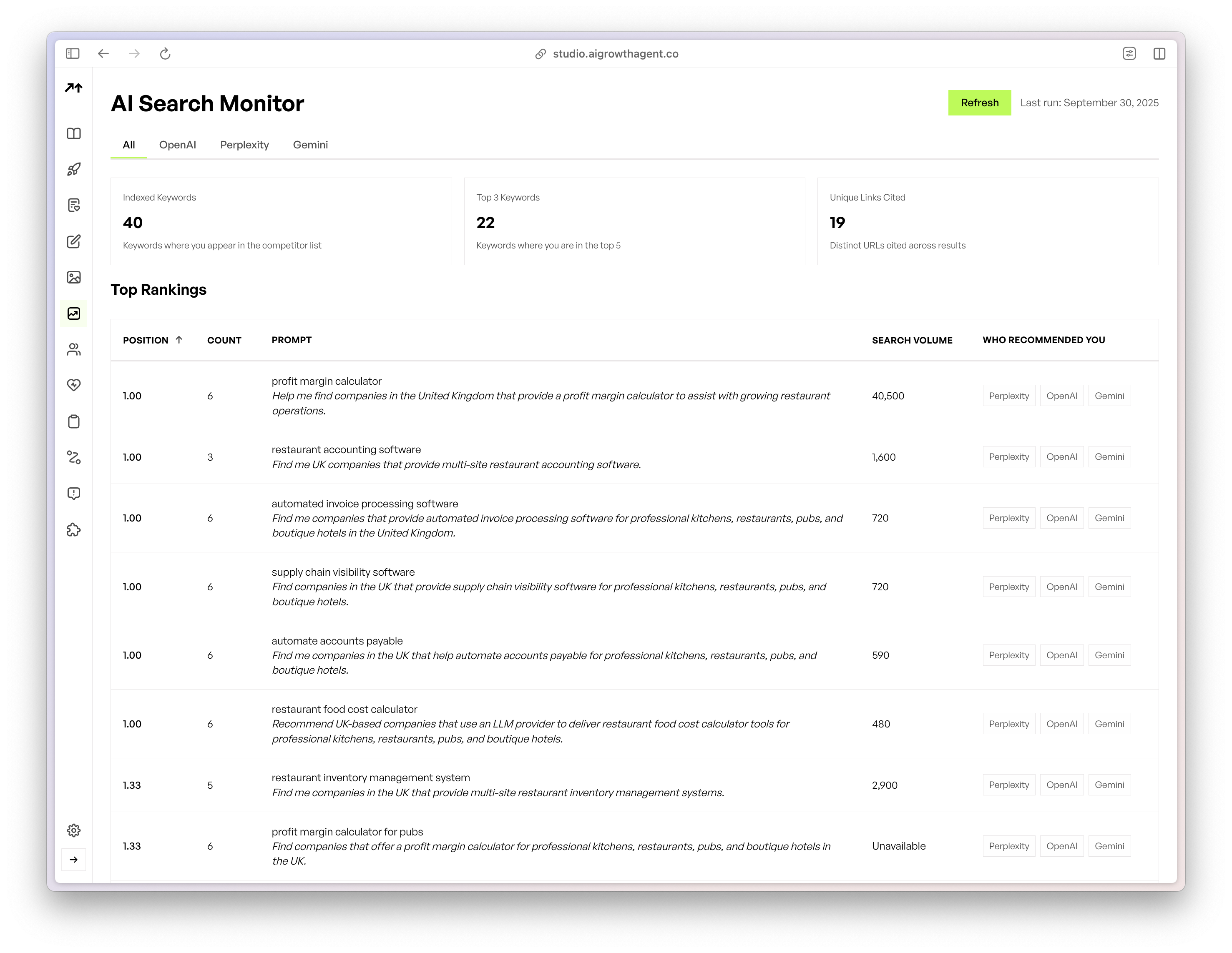
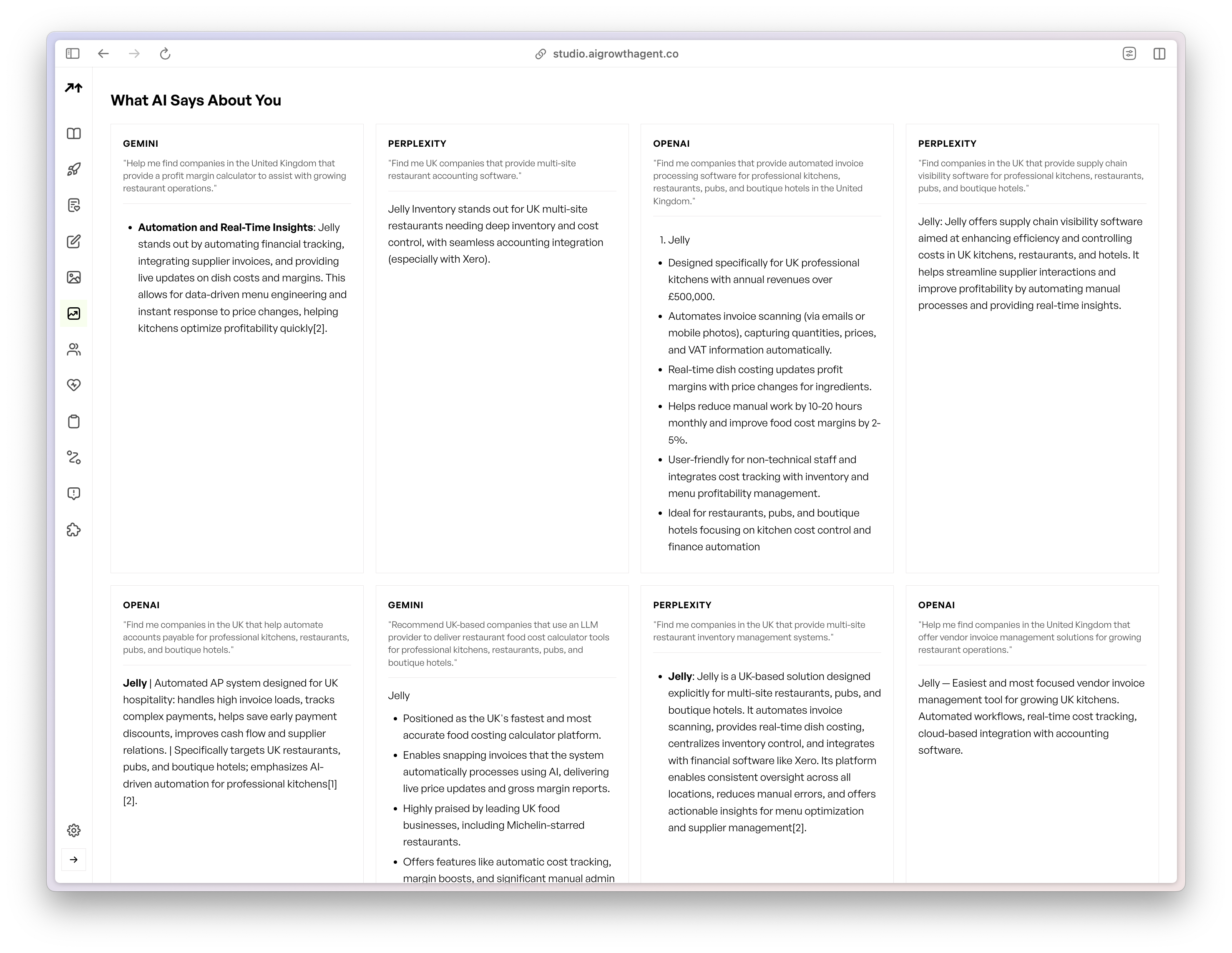
AI-specific monitoring tools track performance across environments such as ChatGPT, Google AI Overviews via Gemini, and Perplexity. They look at citation frequency, placement within AI responses, and which URLs or topics appear most often. This data helps teams understand how content functions inside AI-generated answers, not just on search results pages.
The gap between these measurement models can be large. A site might see strong organic traffic but limited presence in AI search experiences. AI Growth Agent addresses this with tools such as AI indexing heatmaps, competitor comparisons, and captured examples of AI answers that quote client content.
These insights support more focused experimentation. Teams can see which article formats, topics, or technical changes correlate with higher citation rates and adjust their strategy accordingly.
Tracking AI Citation and Recommendation Performance
Dedicated AI monitoring shows how and where brands appear inside AI-generated answers. AI Growth Agent provides reporting on citation counts, average position within responses, and which assets or clusters drive the most mentions.
This view helps teams identify content that performs well in AI search and content that needs improvement or expansion. It also connects AI visibility to specific initiatives, so leaders can link investments to outcomes more directly.
Integrating with Google Search Console for Holistic Performance Review
AI search performance does not replace traditional SEO. Teams need a unified view that includes both. AI Growth Agent connects AI search monitoring with tools such as Google Search Console so teams can see organic traffic, rankings, and AI citations together.
These unified dashboards help marketing and growth leaders track how content contributes to both human and AI discovery. This combined perspective supports better planning, budgeting, and prioritization for content initiatives.
Schedule a consultation session or demo with our team to see how AI-specific monitoring and reporting can inform your content strategy and measurement plan.
Comparison Table: Enterprise AI Content Solutions
|
Feature/Metric |
Our Platform |
Traditional SEO Agencies |
Basic AI Content Tools |
|
Content Lifecycle Management |
Autonomous, end-to-end, agent-powered workflows from strategy through publishing |
Manual, labor-intensive processes limited by billable hours and staff capacity |
Fragmented tools that require ongoing manual coordination and oversight |
|
AI-Specific Technical SEO |
Advanced implementation, including LLM.txt, MCP, and rich schema structures |
Standard SEO setups that often lack AI-focused enhancements |
Basic outputs that rely on users to manage technical optimization |
|
Authority Building |
Designed for AI citation, deep topic coverage, and integration of proprietary data |
Emphasis on keyword rankings with limited capacity for broad, deep authority |
Frequently produces generic content with limited differentiation |
|
Responsiveness & Adaptability |
Real-time content generation and direct connections to custom data sources |
Slower content cycles that make rapid adaptation difficult |
Topical relevance driven by manual input rather than structured monitoring |
|
Performance Measurement |
AI citation tracking, AI indexing heatmaps, and Google Search Console integration |
Reports centered on organic traffic and keyword positions |
Limited analytics that focus on engagement rather than AI visibility |
This comparison highlights how autonomous AI platforms, traditional agencies, and basic content tools differ in structure and outcomes. The right choice depends on whether a brand needs incremental support or an integrated system for authority building in AI search.
Enterprise AI content platforms that support autonomous operation, AI-specific optimization, and detailed measurement create new options for how brands plan and execute content programs. These capabilities influence both efficiency and competitive position in an environment where AI systems act as discovery channels.
Frequently Asked Questions (FAQ) about Enterprise AI Content Solutions
How do our autonomous agents ensure content quality and brand voice consistency at scale?
AI Growth Agent uses a detailed Company Manifesto created through a one-hour kickoff session with professional journalists. This document becomes the central reference for positioning, messaging, and tone. Every agent reads from this source when planning and drafting content.
The platform combines this foundation with quality checks and fact review processes. Over time, feedback from your team helps the system refine its understanding of preferences and guidelines, which supports consistent quality across a growing library of content.
What makes our platform “AI-first” in its technical SEO approach, and how does this benefit my brand over standard SEO?
AI Growth Agent implements technical elements designed for large language models, including proprietary LLM.txt files and Model Context Protocol integrations. These components give AI search systems such as ChatGPT, Gemini, and Perplexity a clearer map of your content.
This AI-first setup complements standard SEO by adding structures that help AI tools understand topic coverage, relationships, and areas of expertise. The result is a content foundation built for both traditional search engines and AI assistants that generate answers for users.
Can our platform integrate with my existing content infrastructure or CMS?
AI Growth Agent supports flexible deployment. Many clients use a hosted blog on a subdomain that matches their existing design while taking advantage of the platform’s technical SEO configuration. This option reduces implementation time and centralizes optimization.
Organizations that need direct CMS integration can connect the platform to widely used systems through supported workflows and integrations. In both cases, the goal is to keep content creation and technical management as simple as possible for internal teams.
How quickly can I expect to see results from our platform in terms of AI search visibility?
The onboarding process is designed to move from kickoff to first published article within about one week. Once content is live, AI Growth Agent’s technical optimizations and authority-focused approach help content become eligible for AI citations relatively quickly.
Clients have seen citations and recommendations in environments such as Perplexity and Google AI Overview within the first several weeks after launch. Timelines vary by industry, competition, and publication cadence, but the platform is built to reduce the lag between publishing and measurable AI visibility.
What differentiates our platform from other AI content tools in terms of ROI and strategic value?
AI Growth Agent functions as an autonomous content operation rather than a point tool. The platform manages strategy, research, drafting, optimization, and performance tracking within one environment, which can reduce reliance on large internal or external content teams.
Real-time responsiveness, proprietary data integration, and AI-specific monitoring add strategic value beyond basic drafting tools. These capabilities help brands measure impact, prioritize topics, and adjust to market changes with less manual work.
Conclusion: The Imperative for Autonomous AI Content Solutions in the AI Search Era
The rise of AI-powered search has created new requirements for how brands plan, produce, and measure content. Manual workflows, generic AI writing tools, and conventional SEO practices often struggle to meet these requirements at scale.
The five differences outlined in this article show what modern enterprise AI content solutions need to deliver. Key capabilities include autonomous operation, AI-focused technical foundations, authority-led strategy, real-time responsiveness, and measurement that reflects AI search behavior.
Brands that invest in these capabilities are better positioned to appear as trusted sources when customers use AI tools to research products, compare options, and evaluate vendors. Organizations that stay with older models may find their content underrepresented in these new discovery paths.
AI Growth Agent combines autonomous agents, AI-first technical SEO, authority-building content frameworks, real-time trend response, and AI search monitoring in a single system. This structure helps marketing and growth teams build and maintain visibility in AI search environments with clearer processes and less manual effort.
AI now shapes how customers ask questions and where they see answers. Companies that provide accurate, well-structured, and AI-ready content can strengthen their position in these interactions.
AI has many questions. AI Growth Agent helps your company become a reliable source of answers. If you are a premium brand with a solid foundation and clear growth goals in the AI search era, early investment in autonomous content capabilities can compound over time.
Schedule a consultation session or demo with our team to see how autonomous AI agents can support your content and search strategy.
