


Key takeaways for enterprise content in the AI search era
- Enterprise brands need structured, authoritative content that AI search engines can understand, trust, and cite at scale.
- Programmatic SEO and automation help teams keep pace with AI-driven search by turning research, creation, and optimization into repeatable systems.
- Strong data and knowledge layers, integrated workflows, and clear governance give enterprises control over quality as they scale content.
- Programmatic velocity and database-to-content automation allow companies to publish relevant content faster than manual approaches.
- Advanced technical SEO and monitoring, including AI-focused markup and AI search visibility tracking, support long-term performance in ChatGPT, Gemini, and Perplexity.
Introduction: Why enterprise content generation is critical for AI search
AI search engines such as ChatGPT, Google’s Gemini, and Perplexity now surface direct answers, not only lists of links. Brands that want consistent visibility need content architectures that these systems can reliably reference and cite.
Organizations that rely only on manual production or basic AI writing tools often cannot match the speed, structure, and technical optimization that AI search rewards. Enterprise content generation platforms like AI Growth Agent use programmatic SEO to systematize research, creation, and optimization so brands can build durable authority in AI search.
1. Architect strong data and knowledge layers for semantic retrieval
Effective enterprise content generation starts with a clear data and knowledge foundation. Structured data, taxonomies, and domain knowledge give AI models the context they need to understand your content and match it to specific queries.
A platform that supports semantic retrieval can map topics, entities, and intent across your content library. AI Growth Agent uses programmatic keyword and content research to build this map, focusing on clusters where your brand can earn visibility in AI-powered search. Each article then serves a clear role in that architecture instead of existing as a one-off asset.
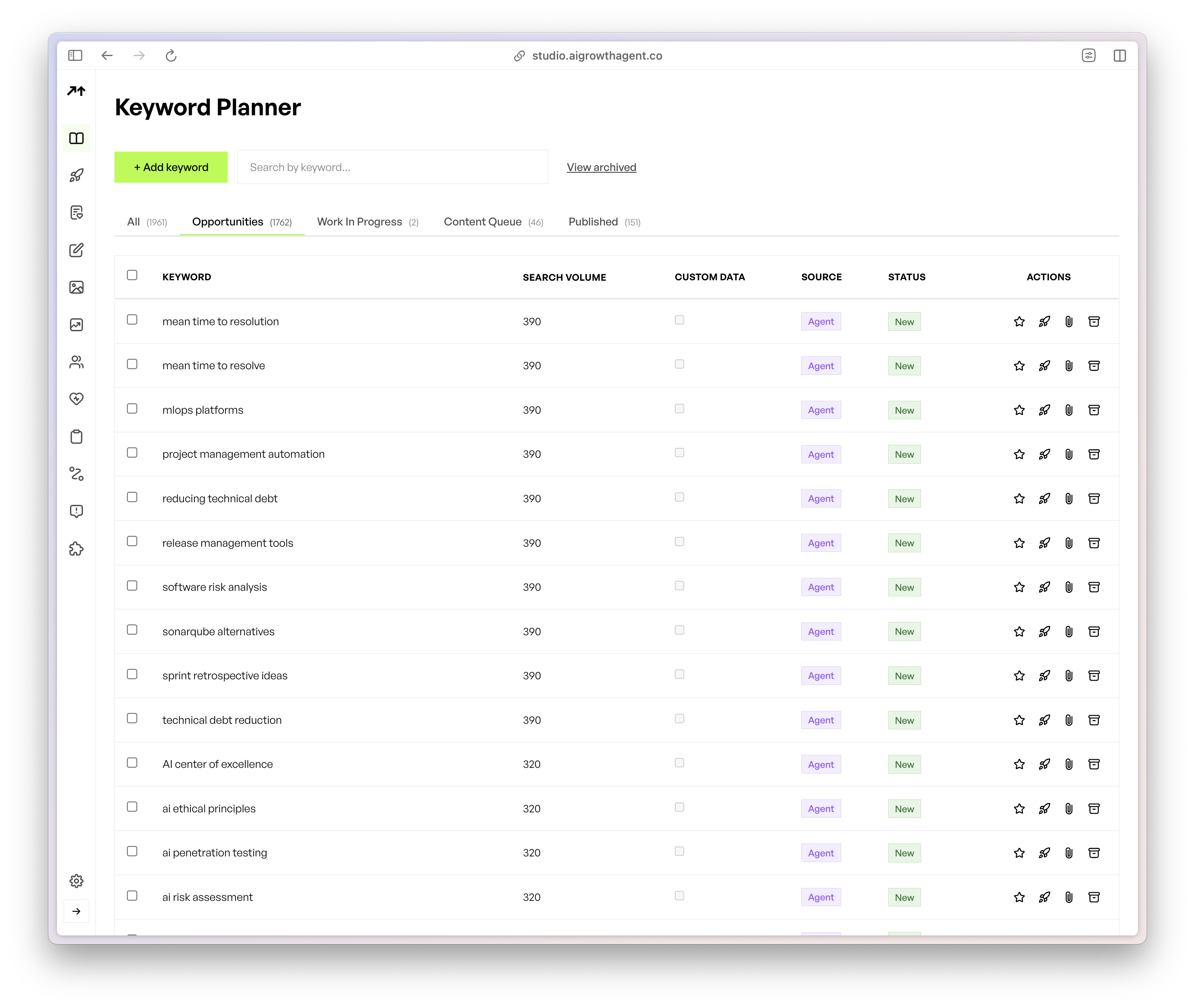
This strategy turns content into a searchable knowledge layer that AI agents can draw from repeatedly. The AI Growth Agent keyword planner helps identify gaps and opportunities across traditional and AI search so teams can prioritize the right topics.
2. Connect content generation to your existing tools and workflows
Enterprise teams work across multiple platforms, so content generation needs to plug into that ecosystem without adding complexity. Direct integrations reduce manual copying and pasting, lower the risk of errors, and keep publishing workflows familiar for your team.
AI Growth Agent supports integrations with common systems such as:
- Content management tools like WordPress and Webflow with CMS features
- Marketing and CRM platforms like HubSpot
- Custom or proprietary systems through APIs and custom connectors
Teams can choose a hosted solution that matches their existing website for consistent branding, or connect AI Growth Agent directly to their current stack. This setup aligns AI-generated content with your design system, approval flows, and analytics, while still benefiting from programmatic scale.
3. Put security, governance, and compliance at the center of content operations
Enterprise adoption depends on clear controls around data, quality, and approvals. Content generation platforms must protect sensitive information while ensuring that every published asset reflects brand standards and regulatory requirements.
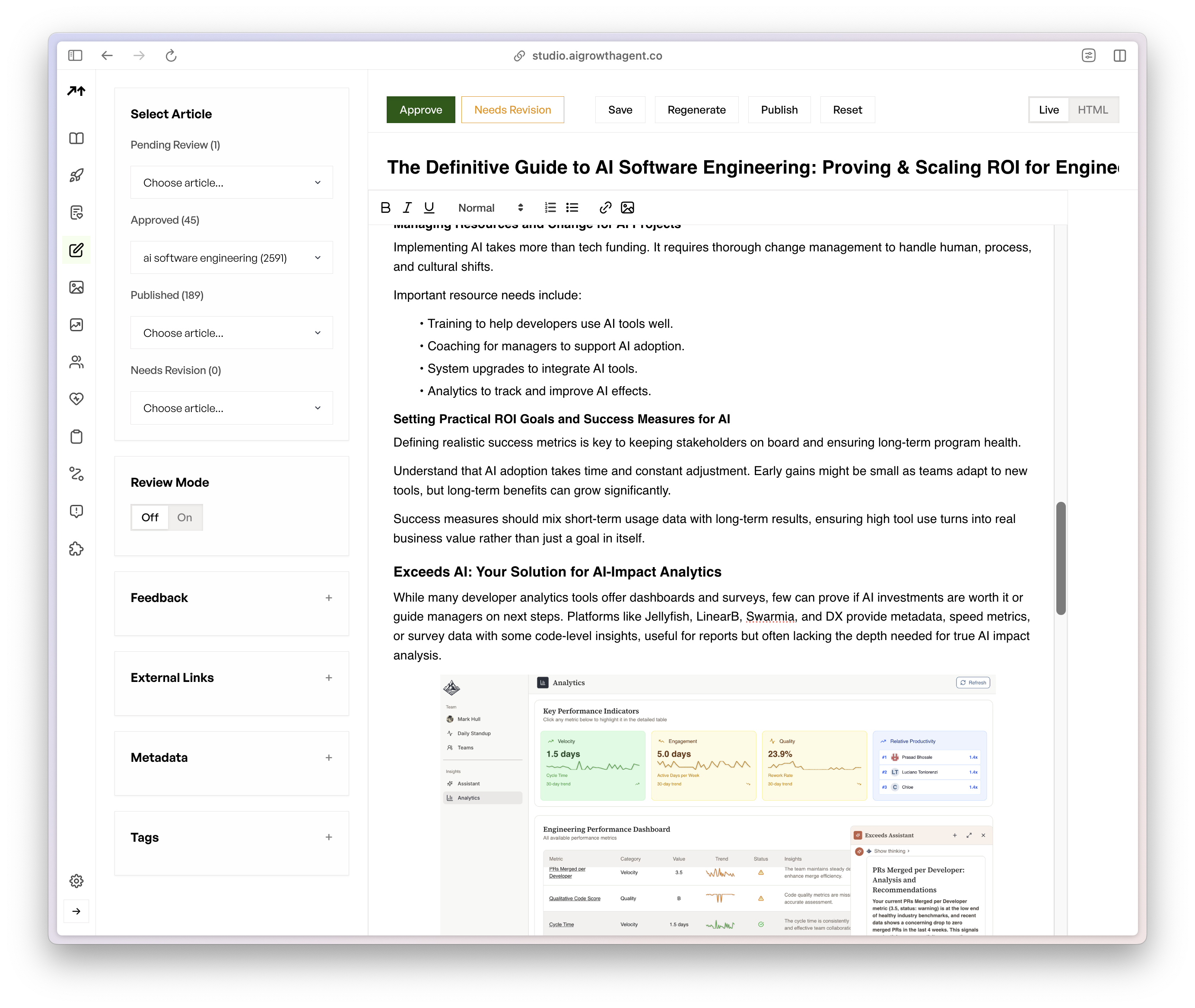
AI Growth Agent supports this with governance features in the AI Growth Agent Studio. Teams can:
- Review and edit drafts before publishing
- Provide feedback that trains the agent on brand voice and preferences
- Choose between manual approval and more autonomous modes
- Define rules and templates that guide content structure and tone
These controls keep quality and compliance consistent as volume increases. Marketing and compliance leaders maintain oversight, while still gaining the efficiency of AI-driven production.
4. Scale content production with programmatic velocity
AI search favors sites that publish high-quality, relevant content consistently. Enterprise brands need a programmatic approach that can generate, optimize, and publish content at a pace that matches changing demand and emerging topics.
AI Growth Agent is designed to deliver this programmatic velocity. The platform can:
- Continuously publish authoritative content that aligns with your topic map
- Inject real-time programmatic content for trending topics and new questions
- Turn databases and proprietary data into structured, SEO-focused articles
- Update and refresh existing content to reflect new information
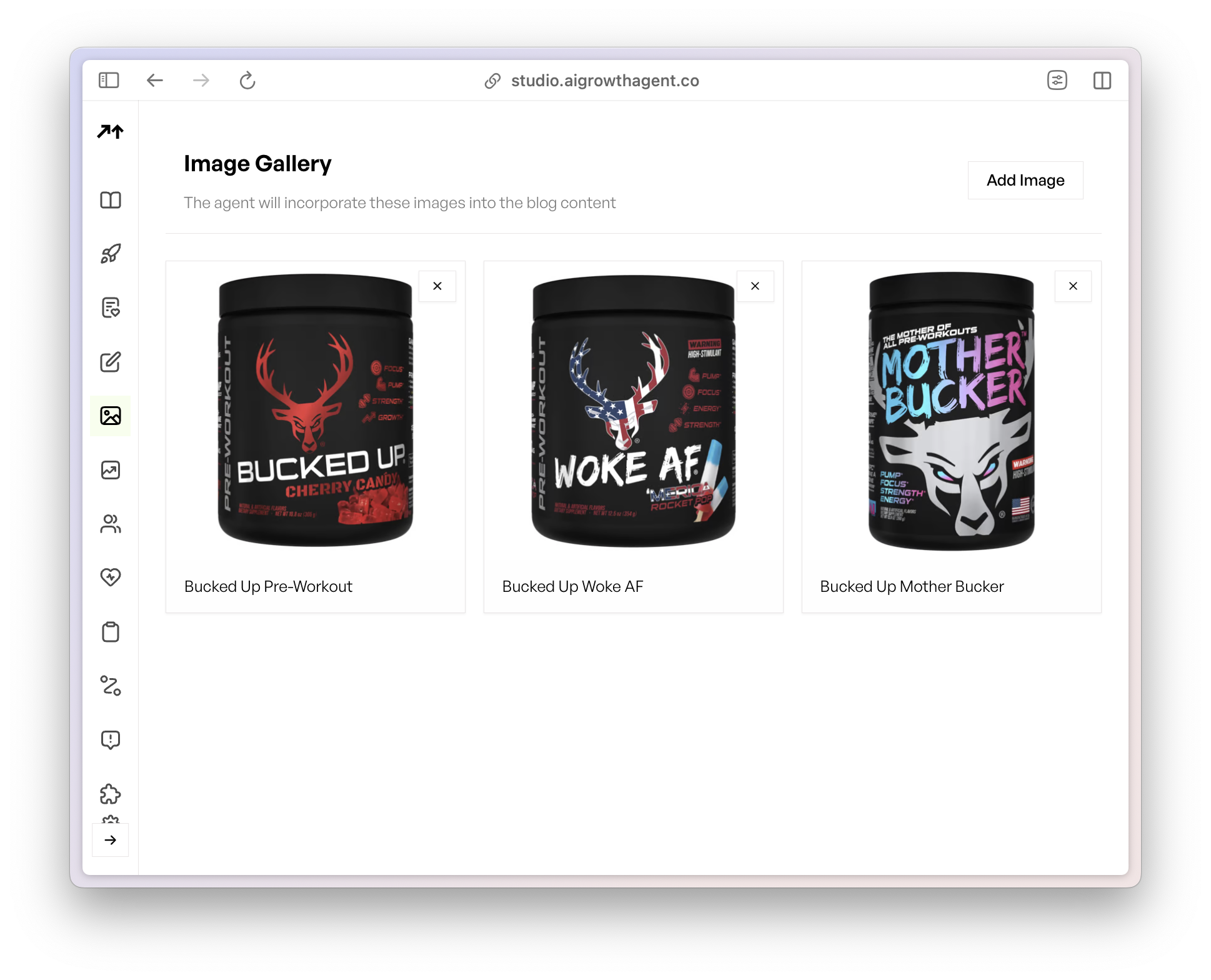
This system turns content operations into an ongoing pipeline rather than a set of one-off campaigns. Intelligent placement of images and assets ensures that each page is visually clear for human readers and structurally organized for search engines.
Teams can also provide their own images and creative assets so the agent can incorporate them naturally into content. This keeps visual storytelling aligned with brand standards while still benefiting from automation.
5. Use advanced technical SEO to support AI indexing and citations
AI search systems rely on structured signals to interpret and reuse your content. Technical SEO gives these systems the context they need to connect your pages to specific questions and topics.
Enterprise platforms should support elements such as:
- Rich schema markup and structured data
- Clear internal linking strategies across topic clusters
- Optimized metadata that reflects actual search intent
- Machine-readable files that describe your content to AI models
AI Growth Agent includes features such as an LLM.txt file and a blog Model Context Protocol (MCP) implementation that help AI models interface more directly with your content database. These elements make it easier for AI systems to understand where your content fits and when it should be cited.
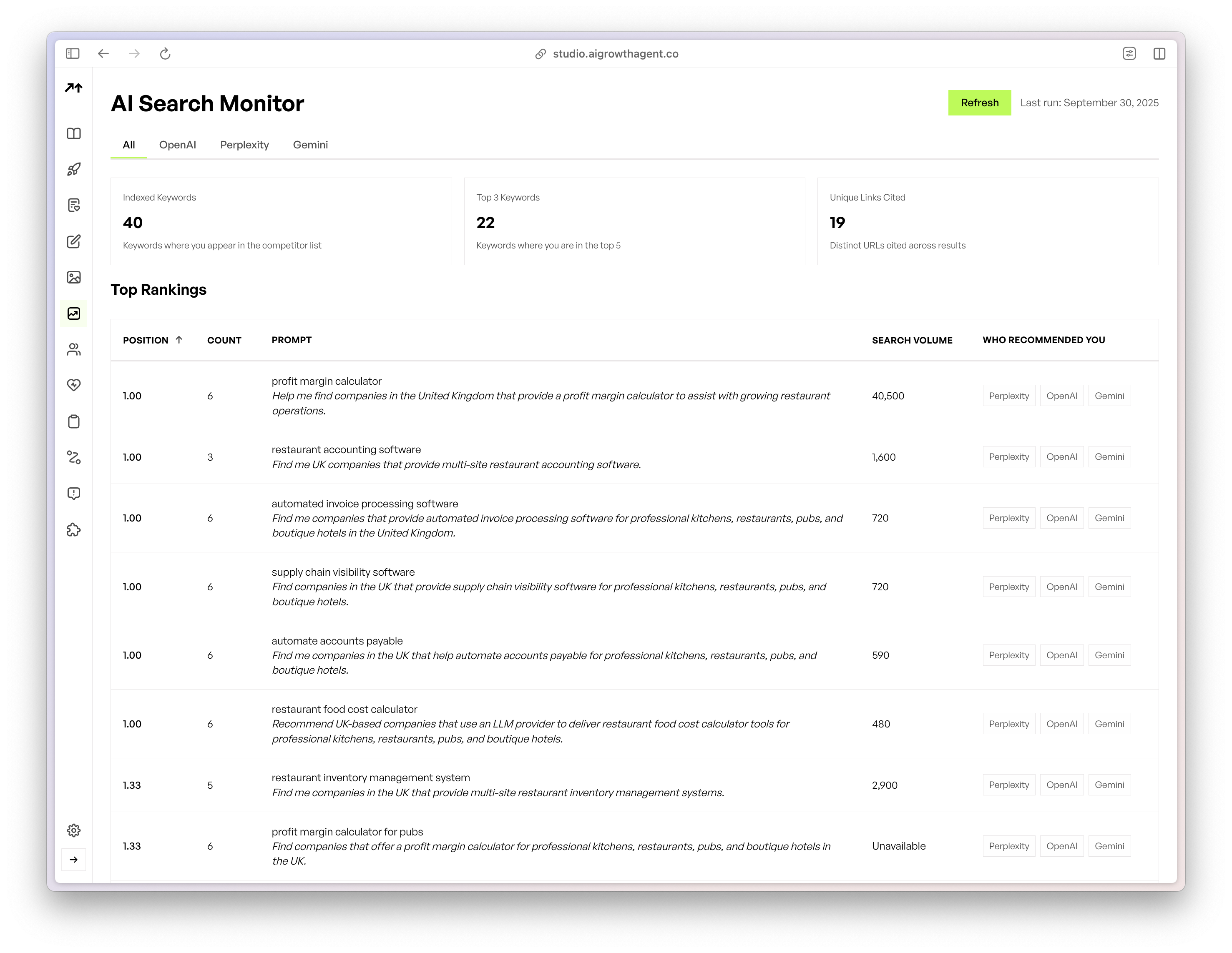
Ongoing monitoring is also important. The AI Search Monitor tracks how your content appears across AI search experiences, including heatmaps of indexing and citation patterns. This feedback loop helps teams see where content is working, where visibility is lagging, and where to focus the next round of optimization.
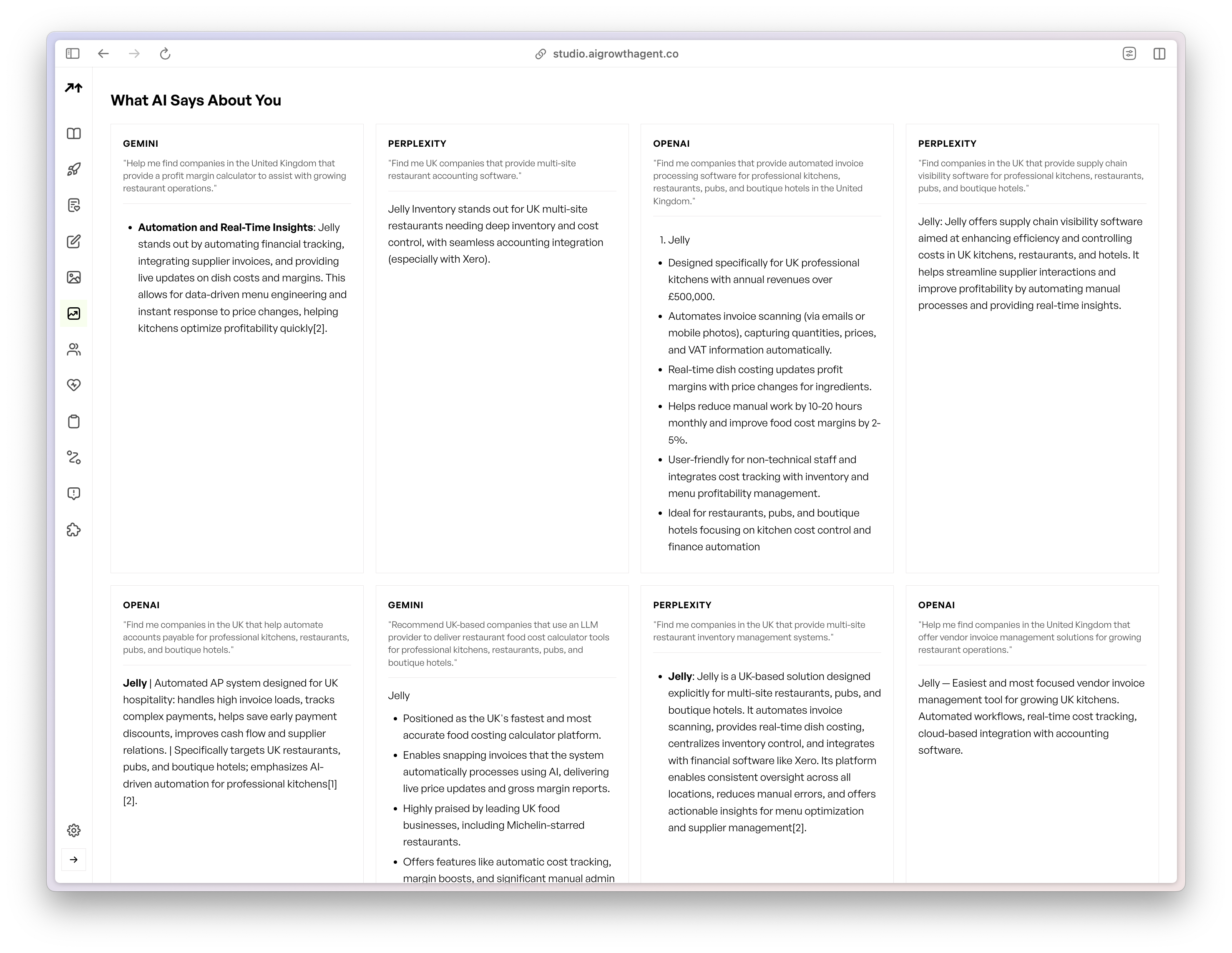
Ready to improve your visibility in AI search? Schedule a demo with AI Growth Agent.
Frequently asked questions about enterprise content generation
How do enterprise content generation platforms differ from basic AI writing tools?
Enterprise content generation platforms offer systems for research, planning, creation, optimization, and publishing. These platforms are designed for scale and repeatability rather than single-use drafts. They focus on building authoritative content architectures at programmatic speeds, while basic AI writing tools often produce isolated pieces of text without the technical SEO and strategy needed for enterprise results.
What is the importance of programmatic content strategies for AI search?
Programmatic content strategies automate the content lifecycle, from topic research and outlining to drafting and publishing. This approach allows teams to cover large keyword landscapes in a structured way and keep content updated as search behavior changes. In an environment where AI systems surface synthesized answers, consistent and systematic coverage of a topic area improves the chances that your content will be referenced.
How can enterprise platforms ensure brand consistency across scaled content?
Enterprise platforms support brand consistency by centralizing guidance and feedback. In AI Growth Agent, tools such as the “Company Manifesto,” programmatic content strategies tied to positioning, and the AI Growth Agent Studio give teams a shared source of truth. Marketing leaders can review outputs, provide corrections, and refine rules so that the agent applies brand voice and messaging consistently, even at high volumes.
Why is programmatic SEO more effective than traditional SEO for AI search?
Programmatic SEO turns SEO into a repeatable process rather than a series of individual optimizations. By automating research, templating, internal linking, and technical markup, it produces a steady flow of structured, high-quality content. This systematic approach aligns well with how AI search systems evaluate topic coverage, authority, and consistency across a site.
What does it mean for content to be “cited” by AI search engines?
Content that is cited by AI search engines appears as a referenced source for specific queries in experiences such as ChatGPT, Google’s Gemini, and Perplexity. These citations may include links, attributions, or quotes from your pages. Frequent, relevant citations increase your visibility and signal authority within your domain.
Conclusion: Position your brand for AI search with programmatic SEO
AI-powered search has raised the bar for how enterprises plan, create, and maintain content. Brands that want stable visibility need platforms that combine structured data, workflow integration, governance, programmatic velocity, and advanced technical SEO.
AI Growth Agent is a programmatic SEO platform built for this AI-first reality. The system helps design and maintain content architectures that support authority across your category and improve your chances of being cited in ChatGPT, Google’s Gemini, and Perplexity. Organizations that invest in this kind of structured approach can build a more predictable and defensible presence in AI search.
