AI assistants such as ChatGPT, Gemini, and Perplexity now act as primary discovery layers, so enterprises need content architectures that these systems can easily crawl, understand, and cite.
Enterprise programmatic SEO platforms close the gap between slow manual production and low-quality automation by generating thousands of structured, brand-safe pages from centralized data, templates, and workflows. What you’ll see in this article:
- Effective platforms combine multi-model AI, resilient infrastructure, and automated processes to deliver high content velocity, fast global performance, and consistent schema and metadata for AI search.
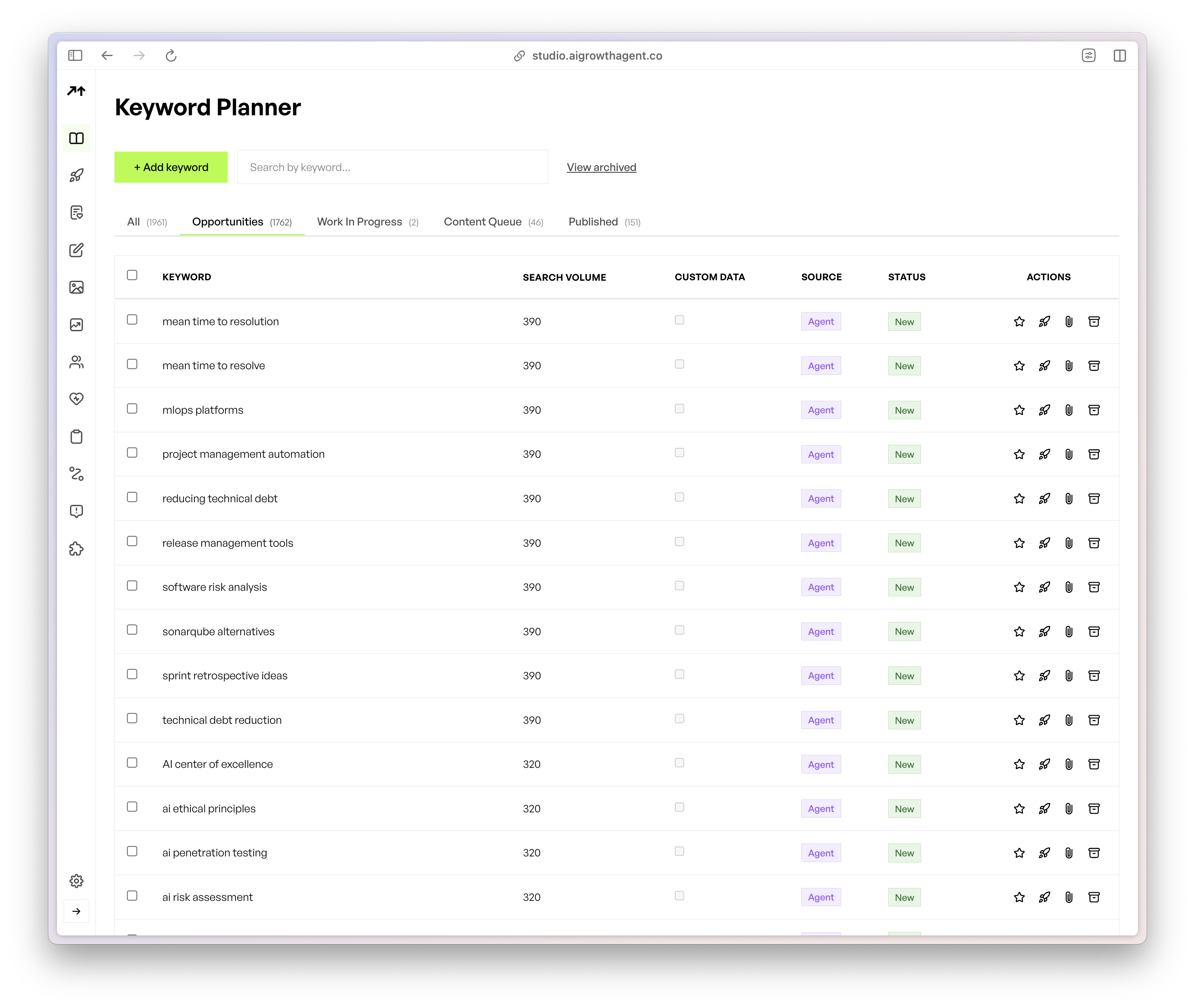
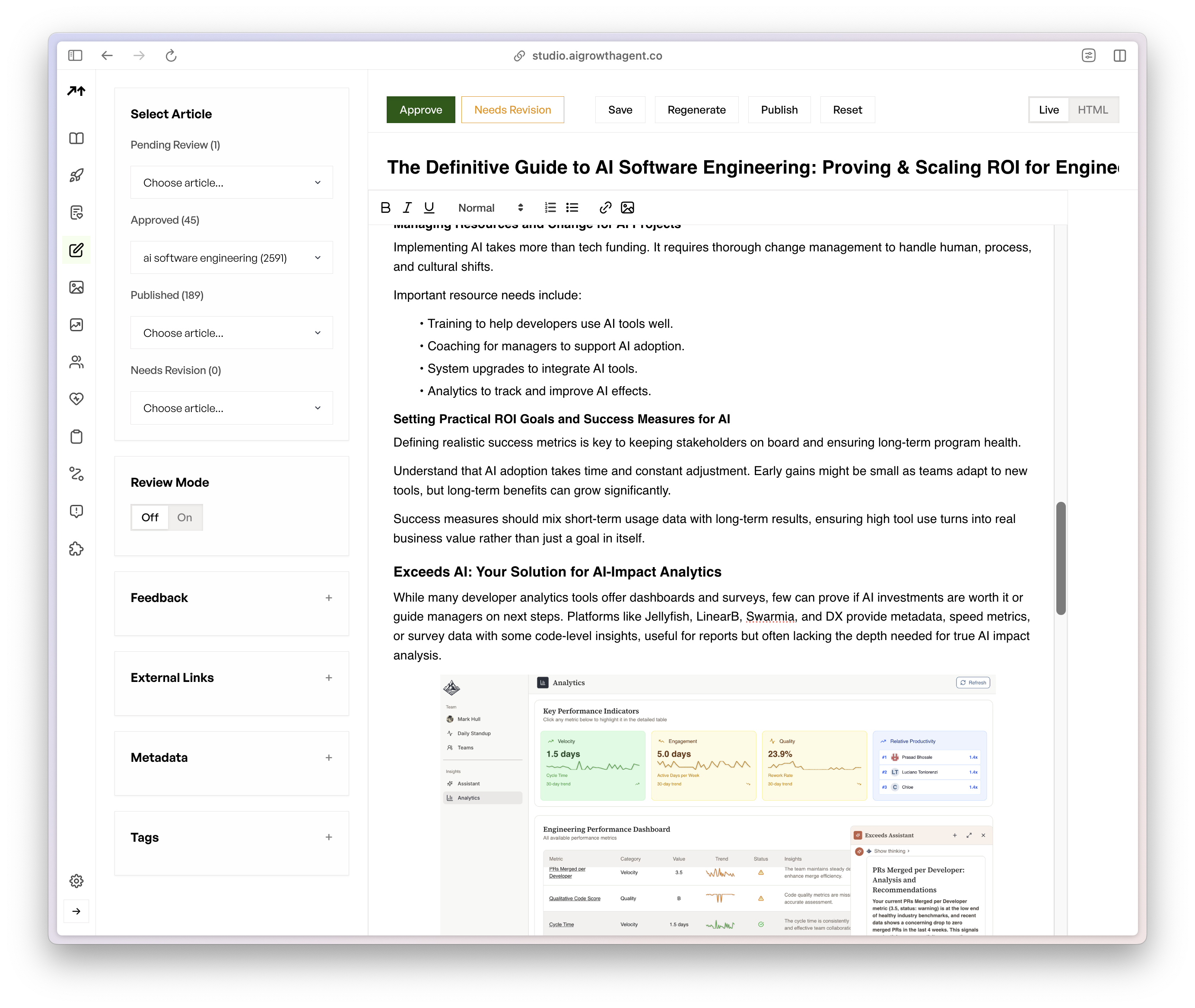
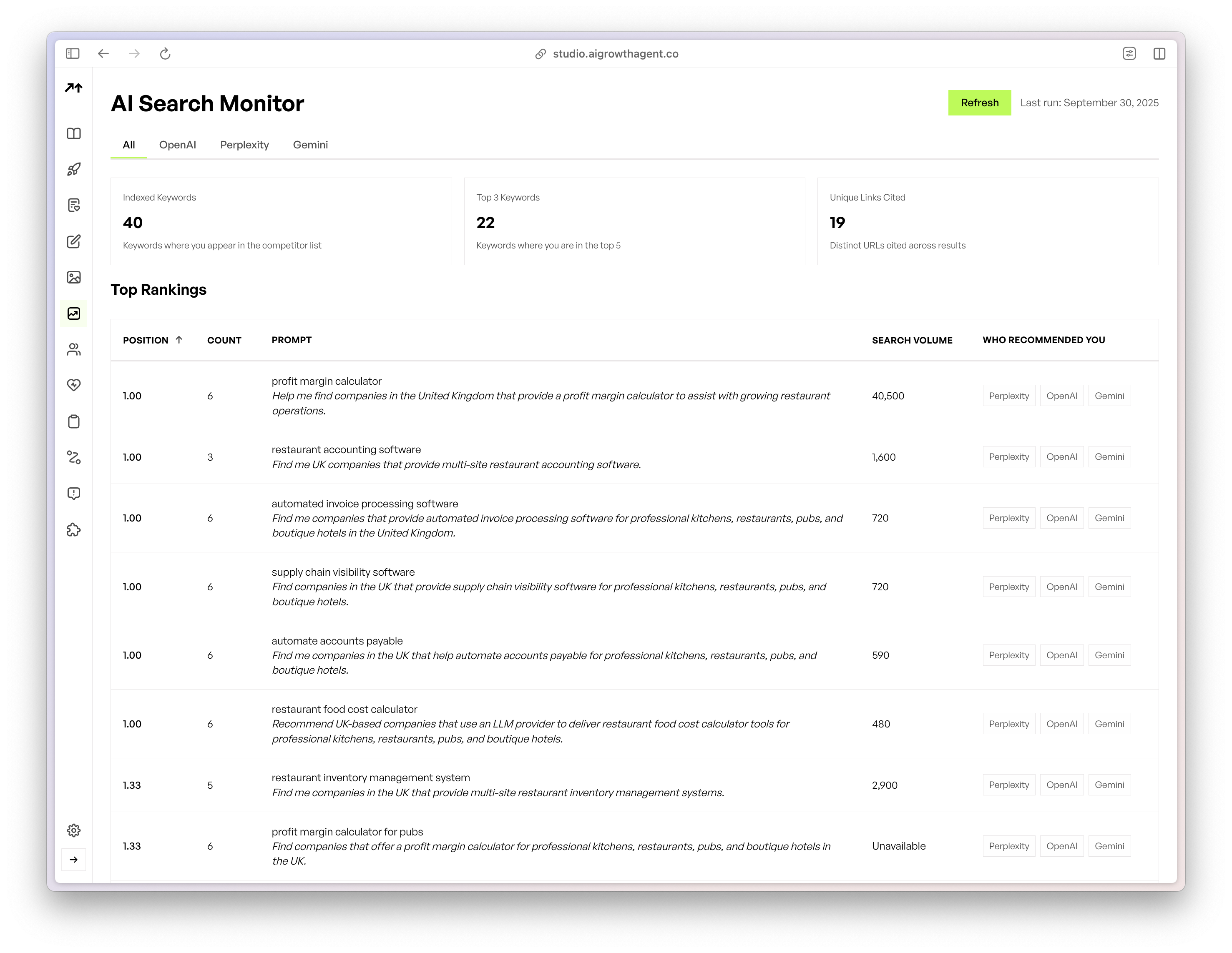
- AI Growth Agent extends these capabilities with multi-tenant deployments, database-to-content automation, real-time content injection, intelligent asset placement, and AI search monitoring across major assistants.
- Marketing leaders who adopt enterprise programmatic SEO gain durable advantages in organic traffic, AI search citation, and team efficiency compared with traditional agencies or basic AI writing tools.
The New Reality: Why Enterprise Programmatic SEO is Non-Negotiable for AI Search
Search has shifted from manual keyword targeting to programmatic content that proves authority and earns citations inside large language models.
Enterprise-grade programmatic SEO platforms address content velocity and authority by using automation to generate thousands of optimized, unique pages rapidly, targeting long-tail and semantic keyword clusters for deeper topical coverage and improved AI search engine visibility.
Enterprise digital footprints now compete with an exponential volume of AI-generated content. Without a programmatic strategy tailored to this environment, brands lose share of voice inside the AI indexes that power modern search. Publishing one or two manually crafted posts each month no longer keeps pace, because language models reward recency, topical depth, and consistent structure.
Traditional approaches struggle in this environment. SEO agencies rely on manual production models that are slow, expensive, and difficult to scale. These teams can deliver strong individual articles but cannot engineer the volume of structured data required to compete in AI-driven search. Internal marketing teams often lack the engineering resources to build and maintain programmatic systems or to embed content with complete metadata such as advanced schema, robots.txt, and LLM.txt files.
Basic AI content tools leave strategy, formatting, schema, and publishing work on internal teams. The result is often thin, unstructured content that lacks the technical foundation needed to earn rankings and citations in AI-powered search results.
Enterprises that want to lead in AI search can use an enterprise programmatic SEO platform to combine scale, structure, and quality in a single system. Schedule a consultation session on enterprise programmatic SEO platform features to see how this applies to your organization.
Core Features of an Enterprise Programmatic SEO Platform in 2025
AI-powered content generation and scale for enterprise programmatic SEO
Modern enterprise programmatic SEO platforms rely on sophisticated AI architectures instead of single-model text generators. Enterprise platforms rely on multi-model AI systems, deploying at least five specialized AI engines for tasks such as content creation, fact-checking, and quality evaluation, which improves accuracy and consistency at scale.
These platforms ingest structured datasets from tools such as Google Sheets, Airtable, and proprietary databases, then convert that data into SEO-focused content at high velocity. Support for custom templates that define headings, schema, and internal links enables the generation of thousands of optimized, unique pages that target long-tail and semantic keyword clusters.

Advanced natural language processing helps these platforms understand entities, relationships, and search intent. Each generated page can then support a defined topic cluster instead of existing as an isolated article. This structure allows enterprises to capture search volume across thousands of related queries while maintaining clarity and usefulness for both human readers and AI systems.

Robust technical infrastructure for global performance and AI search
Programmatic SEO requires technical foundations that can support millions of pages and global traffic. Distributed, cloud-native database architectures that use systems like DynamoDB are important for serving large volumes of pages with minimal latency, achieving response times under 100 ms, while edge computing supports real-time, global content delivery.
Typical performance targets for enterprise platforms include:
- Sub-2 second page loads across major global regions
- Time to First Byte under 200 ms
- API response times under 100 ms
- Cache hit ratios above 95 percent for static content and above 70 percent for dynamic content
These standards help maintain a consistent user experience and meet the expectations of AI search crawlers that favor fast, stable properties.
Tight CMS integrations such as WordPress connections, automated metadata and schema creation, and dynamic templates that adjust by location, product, or category allow enterprises to deploy programmatic content while keeping existing infrastructure in place.
Platforms such as AI Growth Agent support formats like LLM.txt and Model Context Protocol integration so AI systems can interface directly with content databases. This type of implementation helps assistants interpret site architecture with greater accuracy and improves the likelihood of citation in AI-generated answers.

Advanced automation and workflow optimization for enterprise scale
Automation distinguishes enterprise programmatic SEO platforms from simple writing tools. Advanced automation features include auto-internal linking, automated task sequences, and data-driven content population for real-time scale.
Modern systems manage the full content lifecycle in a coordinated way. Typical workflows include keyword clustering, brief creation, research, drafting, fact-checking, editing, schema and metadata application, internal linking, and publishing. Feedback loops from editors and performance data then refine future content.
Leading enterprise SEO platforms use AI agents for workflow automation from keyword research and clustering to content creation, optimization, and audits, while supporting brand voice and multilingual output. This automation allows marketing teams to oversee large content portfolios without expanding headcount at the same rate.
Brand consistency and factual accuracy in programmatic content
Brand safety and accuracy matter more as content volume increases. Brand consistency and factual accuracy are supported through customizable templates, SEO guardrails that avoid duplicates and cannibalization, and entity and intent modeling with AI and natural language processing.
Enterprise platforms often deploy additional AI models dedicated to fact-checking and quality review. Multi-model AI systems improve accuracy and consistency at scale by using specialized engines for content creation, fact-checking, and quality evaluation. This structure reduces the risk of incorrect claims or off-brand language.
Many organizations define a Company Manifesto inside the platform. This document captures brand positioning, tone, terminology, editorial rules, and legal constraints. The manifesto then acts as a control layer for AI agents so thousands of pages can be generated while maintaining a coherent voice and avoiding internal cannibalization across topic clusters.
Differentiating Features: What Sets Leading Enterprise Programmatic SEO Platforms Apart
AI Growth Agent capabilities for enterprise programmatic SEO
AI Growth Agent adds features tailored to organizations that manage multiple brands or complex product portfolios. The Multi-Tenant Programmatic Deployment capability allows private equity firms, venture capital portfolios, and multi-brand enterprises to run separate Programmatic SEO Content Agents from a single interface. Each agent maintains its own manifesto, keyword strategy, and brand voice while publishing to distinct domains or subdomains.
Real-Time Programmatic SEO Content Injection helps teams respond quickly to emerging topics. Marketers can supply links to trending articles, and the agent produces SEO-optimized content that reflects brand perspectives in minutes. This workflow allows enterprises to capture search demand from new topics before slower manual processes can respond.
Database-to-Content Automation converts proprietary datasets into public-facing SEO assets. For example, a company with food recommendations locked inside a mobile app can export that data and generate structured, search-optimized articles for each list. This approach turns offline or underused data into a programmatic content source.
Intelligent Image and Asset Placement selects images and other assets from brand libraries, then inserts them into content with relevant alt text and metadata for image SEO. This keeps visual presentation consistent while reducing manual creative work.

Security, compliance, and human oversight for enterprise deployments
Security and compliance remain central for enterprise platforms, which use security frameworks with granular access controls, encrypted data storage, and alignment with regulations such as GDPR, CCPA, and industry certifications.
Responsible rollouts combine automation with human review. Many deployments include phased launches, performance dashboards, training programs, and monitoring systems so teams can guide the platform and refine governance over time.
Role-based access controls, audit trails, and approval workflows give marketing and compliance leaders visibility into content decisions. Teams can distribute operational work while maintaining policy and brand standards across large programmatic portfolios.
Organizations that want to evaluate this model for their own use cases can review AI Growth Agent in a live environment. Book a demo to see if the platform aligns with your requirements.
Strategic Advantages for Marketing Leaders Using Enterprise Programmatic SEO Platforms
Reaching new levels of scale and velocity for AI search visibility
Enterprise programmatic SEO platforms make daily publication schedules realistic without sacrificing structure or governance. These platforms address content velocity by generating thousands of optimized, unique pages rapidly, targeting long-tail and semantic keyword clusters for improved AI search engine visibility.
This scale also supports deeper topical coverage. Platforms can map out thousands of related questions, use-cases, and comparisons within a domain, then systematically produce content that fills those gaps. AI search engines benefit from this density when selecting sources for citations.
Many marketing leaders report shifting from a handful of monthly articles to broad, cluster-based coverage within weeks of implementation. When combined with strict templates and brand rules, this higher volume can still maintain standards that equal or exceed manually produced content.
Building authority and citation in AI search engines
Programmatic SEO plays a direct role in how often brands appear in AI answers. Structured, comprehensive content architectures give AI models enough context to treat a site as an authoritative reference on specific topics.
Technical features increase this effect. LLM.txt files and Model Context Protocol integration can help AI agents interpret where to find accurate, up-to-date information on a domain. Clear guidance in these files improves how models understand a site’s structure and authority.
Implementation data from enterprise deployments shows fast gains when these elements align. Some companies start receiving Perplexity recommendations within roughly two weeks of launch, appear in Google AI Overviews within three weeks, and reach regular citation for core queries in ChatGPT, Gemini, and Perplexity within the first phase of rollout.
Demonstrating ROI and organic growth with enterprise programmatic SEO
Reporting and analytics capabilities often integrate with Google Analytics and Google Search Console to track keyword performance, impressions, click-through rates, and impact at scale. Dashboards help leaders understand how programmatic content contributes to traffic and conversions.
Analytics can also include competitor tracking, SERP change monitoring, site health data, and ROI metrics for both content and technical SEO initiatives. This broader view supports more precise budgeting and prioritization.
More advanced platforms extend tracking into AI search environments. Teams can see which topics and URLs earn citations in ChatGPT, Gemini, and Perplexity, along with where gaps remain. Combined with Google Search Console, this data provides a clear picture of organic growth driven by programmatic SEO.

Comparison: Enterprise Programmatic SEO Platforms vs. Traditional Solutions
|
Feature category |
Traditional SEO agencies |
Self-service AI content tools |
Enterprise programmatic SEO platforms |
|
Scale |
Limited by headcount |
Manual setup, unstructured output |
High scale, programmatically engineered |
|
Technical SEO |
Manual, ad hoc |
Requires user expertise |
Automated, rich schema, LLM.txt, MCP support |
|
Integration |
Service-based, project-specific |
Manual configuration of CMS |
End-to-end, multi-CMS or hosted deployment |
|
Authority building |
Slow, bespoke articles |
Generic content, limited technical depth |
Structured for AI citation at volume |
This comparison highlights structural differences between traditional services, basic tools, and enterprise platforms. Agencies remain tied to human capacity, and self-service tools demand significant manual effort for planning, formatting, and publishing. Enterprise programmatic SEO platforms deliver engineered systems that combine content creation, technical optimization, and publishing into a single workflow.
Cost models reflect these differences. Agencies charge project fees and hourly rates. Basic tools use subscriptions but still require significant internal labor. Enterprise platforms operate more like autonomous agents with defined usage tiers, which can make costs more predictable for large-scale initiatives. Time-to-value also varies, with agencies often needing weeks or months to produce campaigns, while enterprise platforms can publish programmatically generated content within days of onboarding.
Strategic Implementation Considerations for Enterprise Programmatic SEO
Successful deployments depend on both organizational readiness and technical alignment. Modern platforms use modular architectures and real-time, distributed deployment strategies so they can adapt quickly to new AI model requirements and search engine algorithm changes.
Many vendors focus on organizations that already have healthy SEO baselines, since programmatic content performs best when built on top of solid technical foundations. Comprehensive technical audits during onboarding help identify issues such as slow hosting, crawl bottlenecks, or flawed internal linking before scale increases.
Real-time insights, adaptive content intelligence, and automation of repetitive SEO tasks allow large teams to manage extensive content inventories and maintain standards across multiple domains. This is especially important for enterprises that operate in many markets or manage portfolios of brands.
Implementation timelines for enterprise platforms generally undercut traditional methods. AI Growth Agent, for example, typically moves from initial meeting to the first programmatically engineered article within about a week, while many agency or in-house builds require several months to reach comparable output.
Future-Proofing Enterprise SEO Through Programmatic Innovation
AI-powered search is now a core part of how people find information, not a short-term trend. Leading platforms use AI and machine learning to adapt to evolving Google ranking patterns with semantic intent mapping and ongoing optimization for new AI search paradigms.
Enterprise programmatic SEO platforms help organizations stay visible as ranking signals change. Well-structured content architectures and modern technical deployments tend to age more gracefully, since they give search engines and AI models clearer context for each piece of content.
Vendors such as AI Growth Agent continue to add capabilities like multi-tenant deployment, real-time content injection, and database-to-content workflows. This type of roadmap helps ensure that investments in programmatic SEO remain relevant as assistants, search features, and ranking systems evolve.
Organizations that commit to programmatic SEO build advantages that compound. Over time, the combination of scale, quality, and technical precision creates a content footprint that is difficult to match with manual methods alone.
Frequently Asked Questions (FAQ) about Enterprise Programmatic SEO Platform Features
What differentiates an “enterprise” programmatic SEO platform from a standard AI writing tool?
Enterprise programmatic SEO platforms such as AI Growth Agent provide full systems for content engineering rather than one-off text generation. They combine multi-model AI, technical SEO automation, and workflow management so content moves from keyword strategy to live page with minimal manual steps.
Basic AI tools usually output unstructured drafts that require separate work for strategy, formatting, schema, linking, and publishing. Enterprise platforms, by contrast, can generate thousands of pages using shared templates, pre-defined structures, and integrated metadata, which reduces per-article effort and improves consistency.
These platforms also tend to include capabilities such as multi-tenant deployment for multi-brand organizations, real-time content injection for trending topics, and database-to-content automation for turning internal data into indexed pages. Features like audit trails, approvals, and role-based access help align with enterprise governance requirements.
How do enterprise programmatic SEO platforms ensure brand consistency and factual accuracy at large scale?
Enterprise platforms encode brand rules directly into their systems. Company Manifestos and similar configurations define tone, vocabulary, positioning, and compliance requirements. Content templates then apply these rules across titles, introductions, body copy, and calls to action.
Factual accuracy is supported with dedicated AI models and checks. Specialized engines can validate dates, statistics, product details, and claims before publication. Internal review workflows add a second layer of control for high-stakes pages or regulated industries.
SEO guardrails reduce duplication and cannibalization by coordinating which topics each page should cover. Entity and intent modeling further aligns content with the questions people actually ask, which benefits both accuracy and relevance.
What kind of real-time monitoring and reporting capabilities are essential for enterprise programmatic SEO?
Effective monitoring covers both traditional search analytics and AI assistant performance. Real-time tracking of citations in ChatGPT, Gemini, and Perplexity helps teams understand how often and where their content appears in AI-generated answers.
Integration with Google Search Console and analytics platforms provides metrics on impressions, clicks, rankings, and conversion paths. Crawl and index status for both web search and AI-focused bots clarify whether technical issues limit visibility.
More advanced reporting layers in competitor data, SERP change alerts, site health checks, and ROI analysis for content clusters and technical improvements. This level of insight supports ongoing optimization and prioritization of programmatic efforts.
How quickly can an enterprise expect to see results from deploying a programmatic SEO platform?
Timelines vary by starting point, but many enterprises see early indicators within the first few weeks. When platforms publish technically sound content at scale, search engines and AI assistants gain more signals to evaluate a site’s authority.
Some implementations reach Perplexity recommendations in roughly two weeks and Google AI Overview visibility shortly after. As clusters build out, AI assistants such as ChatGPT and Gemini begin citing these sites more frequently for targeted queries.
Compared with manual programs that might require several months before meaningful movement appears, programmatic deployments can often show directional results in days and measurable traffic growth in the first phase of rollout.
What technical infrastructure requirements exist for implementing enterprise programmatic SEO platforms?
Most modern enterprise programmatic SEO platforms are designed to minimize client-side infrastructure demands. Hosted offerings handle performance, security, schema, and publishing pipelines, while connecting to existing sites through subdomains, subdirectories, or API integrations.
Organizations that choose self-hosted options typically run on established CMS platforms such as WordPress, Webflow, or HubSpot. In those cases, the programmatic SEO platform connects through plugins, APIs, or export pipelines, while the enterprise manages its own hosting and deployment.
Key considerations include reliable global content delivery, distributed databases with low latency, and security models that support role-based access and encryption. The platform should manage complex tasks such as edge deployment, schema generation, and ongoing performance tuning so marketing teams can focus on strategy and oversight.
Teams that want to explore these requirements in more detail can review them in a live environment. Schedule a demo with AI Growth Agent to discuss fit with your current stack.
Conclusion: Securing Your Authority in the AI Search Era with AI Growth Agent
AI-driven search requires more than incremental updates to existing SEO programs. Enterprises now benefit from platforms that can generate, structure, and maintain large content libraries in ways that AI systems can interpret and trust.
AI Growth Agent provides an autonomous programmatic SEO platform built for these requirements. Features such as multi-tenant deployment, real-time content injection, and database-to-content automation help organizations convert strategy and data into search-ready content at scale.
Companies that adopt enterprise programmatic SEO platforms often see faster growth in AI citations and organic traffic than those that rely solely on manual methods. Over time, the compounding effect of structured, well-optimized content can establish durable authority in key topics.
AI integration in search will continue to expand, and enterprises that prepare now are better positioned to keep visibility and control. Book a strategy session with AI Growth Agent to evaluate whether an enterprise programmatic SEO platform fits your roadmap.