Written by: Mariana Fonseca, Editorial Team, AI Growth Agent
Key Takeaways
-
Gemini AI Overviews now appear in 13% of queries and cut organic CTR by 18-65%, so citation strategy now sits at the core of brand SEO.
-
Implement GEO-focused schema markup like Organization, FAQPage, and Product schemas to increase citation likelihood by up to 73%.
-
Use Q&A structures with natural question headings and FAQ schema, grounded in real customer queries, to earn direct AI extraction.
-
Grow entity authority with programmatic content clusters, proprietary datasets, and daily publishing that keeps your content fresh.
-
Scale across brands with AI Growth Agent’s autonomous agents for portfolio-wide SEO; schedule a demo today to build an AI search moat.!
1. Lay the Technical Groundwork with GEO-Focused Schema Markup
Schema markup creates the structural foundation for AI citation success. Structured data via Schema markup increases Google AI Mode citation likelihood by 2.1×, while earlier analysis showed that structured data implementation significantly increases Google AI Overview selection rates.
Priority schema types for Gemini citations include:
-
Organization Schema: Establishes brand entity identity and Knowledge Graph connections.
-
Article/BlogPosting Schema: Sends clear content attribution and authorship signals.
-
FAQPage Schema: Structures Q&A content for direct extraction.
-
Person Schema: Links content to verifiable experts and author authority.
-
Product Schema: Defines commercial entity clarity for e-commerce brands.
Implementation uses JSON-LD format with connected entity graphs, @graph arrays, and stable @id references. Once this foundation exists, advanced setups extend AI access with LLM.txt files and Model Context Protocol (MCP) integration so AI systems can interface directly with your content database.
Manual schema deployment across hundreds of pages slows teams and opens gaps that competitors exploit. AI Growth Agent automates schema injection at scale, so every new article ships with complete structured data within minutes of publication.
2. Turn Customer Questions into Directly Extractable Q&A Blocks
The schema provides the technical base, while the Q&A structure determines what AI systems actually quote. FAQPage and HowTo schema markup are the most influential types for AI Overviews because they present clean question-and-answer pairs that models can lift directly into responses.
Effective Q&A structures rely on:
-
H2 Question Formatting: Write headings as natural questions that users ask.
-
Concise Answer Paragraphs: Start with a direct answer in one or two sentences, then add detail.
-
FAQPage Schema Implementation: Use @type: Question with acceptedAnswer markup.
-
Customer-Driven Questions: Pull topics from support tickets, sales calls, and common objections.
Warby Parker uses this model across help center pages on shipping, prescriptions, and returns, which surface in rich results for queries like “How do I set up a return or exchange?” The brand wins because it answers real questions with schema-enhanced responses that AI systems can parse instantly.
Most content teams cannot map and structure hundreds of relevant questions at scale. Our programmatic workflows analyze customer support data, competitor libraries, and search patterns, then generate complete Q&A architectures automatically.
3. Build Topic Ownership with Programmatic Content Clusters
Once Q&A foundations exist, the next step is topic depth. Internal cross-referencing through links to related domain content signals topical depth to Google AI Mode and favors sites that cover a subject comprehensively.
High-performing clustering strategies include:
-
Pillar-Cluster Architecture: Create in-depth pillar pages that link to focused cluster articles.
-
Entity Relationship Mapping: Connect related concepts through internal links and schema relationships.
-
Topical Breadth Expansion: Add adjacent topics that reinforce domain expertise.
-
Knowledge Graph Alignment: Organize content around recognized entities and their connections.
Levels.fyi became the default cited source for “software engineer salary 2025” by owning the largest proprietary salary dataset and refreshing it monthly. That authority now extends across compensation, career paths, and industry trend queries.
Schedule a demo to see if you’re a good fit and learn how programmatic clusters position your brand as the reference source in your category.
4. Turn Proprietary Data into Uncopyable Citation Assets
Content clusters set the stage, and proprietary data secures a durable edge. Proprietary data became the primary driver of guaranteed LLM citations by 2026, evolving from a PR and link-building asset into a core AI search advantage. Original research, surveys, and unique datasets create citation hooks that competitors cannot match.
High-impact proprietary data formats include:
-
Survey Research: 2,000–10,000 responses using tools like Typeform.
-
Original Experiments: Clear testing methodologies with meaningful sample sizes.
-
Proprietary Databases: Industry-specific benchmarks and longitudinal datasets.
-
Earnings and Performance Reports: Company metrics and trend insights.
Backlinko’s study of 11.8 million Google search results still dominates AI citations because of its transparent methodology and massive dataset. Dev.to’s “State of JavaScript” surveys appear in nearly every AI answer about front-end trends because they supply unique, trusted data.
Our database-to-content automation unlocks value from hidden or offline data. For one client with food recommendations trapped inside a non-indexed mobile app, we exported the dataset and generated SEO-rich articles for each recommendation list. That shift turned a closed database into a persistent AI citation engine.
5. Maintain Freshness with Daily Publishing and Real-Time Updates
Content updated within 90 days achieves a 61% citation rate, and real-time fact checks against authoritative databases increase AI Overview citations by 89%. Gemini favors recent, verifiable information over static pages.
Effective freshness systems focus on:
-
Daily Publishing Cadence: Consistent output that signals active expertise.
-
Real-Time Data Integration: Automatic syncs from trusted data sources.
-
Trending Topic Capture: Fast reactions to breaking industry stories.
-
Updated-Date Optimization: Clear, accurate freshness markers for AI crawlers.
Manual content creation cannot reach the velocity of AI ecosystems’ reward. When brands publish only one or two articles each month, faster competitors capture emerging topics and trending queries within hours. Our real-time content injection solves this timing gap by generating high-quality, SEO-focused articles from trending news within minutes.
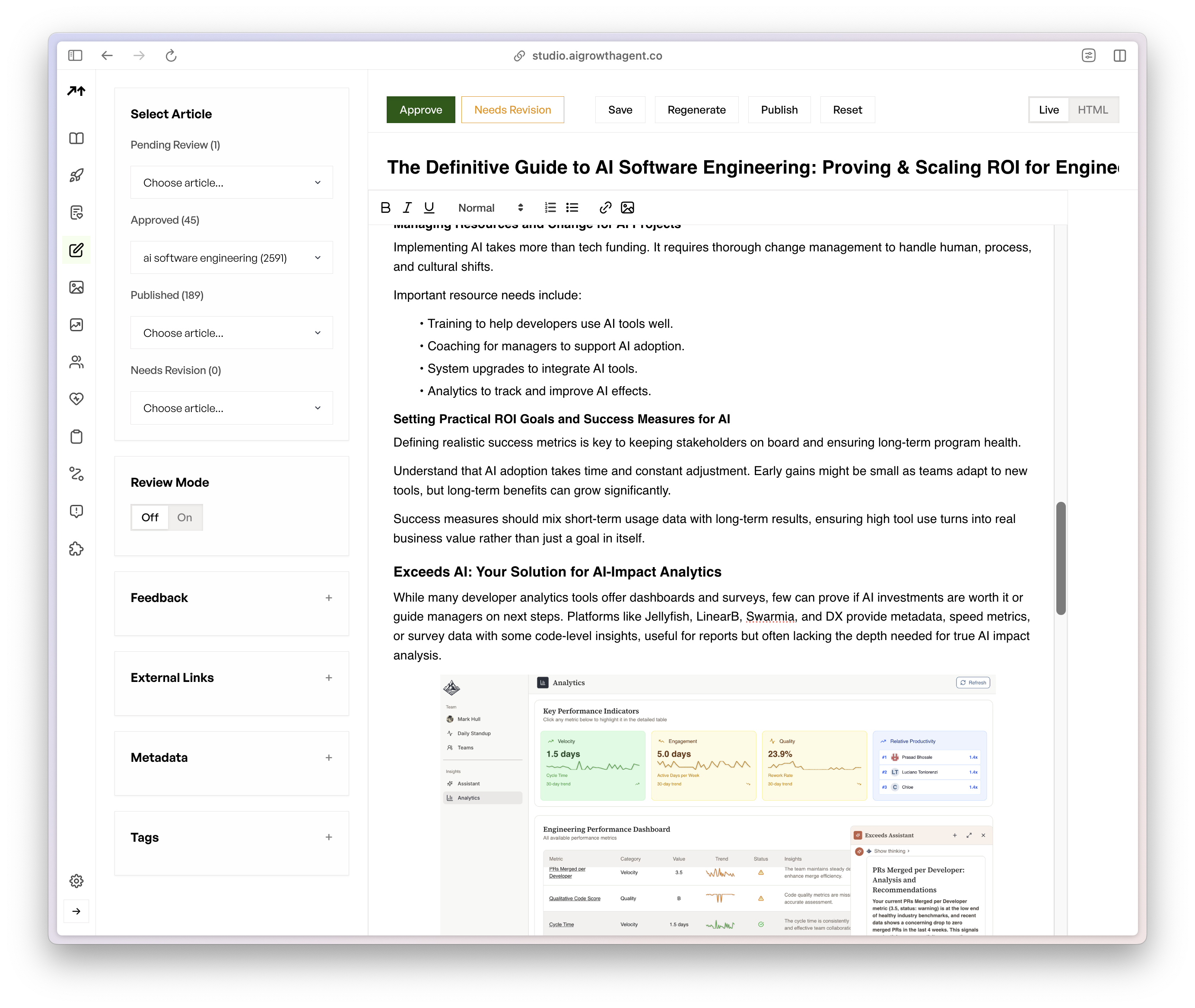
Gitar.ai became the reference brand for AI-powered CI/CD automation in under two months. The company now appears as the top-cited tool across Google AI Overviews, ChatGPT, and Perplexity for queries like “fix broken CI builds automatically” and “best AI reviewer that comments on CI failures.” High publishing velocity and fresh data made that outcome possible.
6. Monitor AI Search Performance and Close Feedback Loops
High-velocity publishing only works when teams measure impact and adjust. Only 16% of brands systematically track AI search metrics such as citation rates and mention frequency, which leaves a wide opening for disciplined operators.
Core monitoring metrics include:
-
Citation Rate: Frequency as a cited source for target queries, with 10–25% as a healthy benchmark.
-
AI Visibility Score: Brand mention frequency across AI platforms.
-
Share of Voice: Relative presence in AI-generated responses versus competitors.
-
Source Attribution: Specific URLs and assets that drive citations.
AI Growth Agent Studio tracks these signals with heatmaps that show keyword indexing across ChatGPT, Gemini, and Perplexity, direct quotes and citations inside AI answers, real-time ChatGPT citation logs, and crawl statistics for Google, ChatGPT, and Perplexity bots.
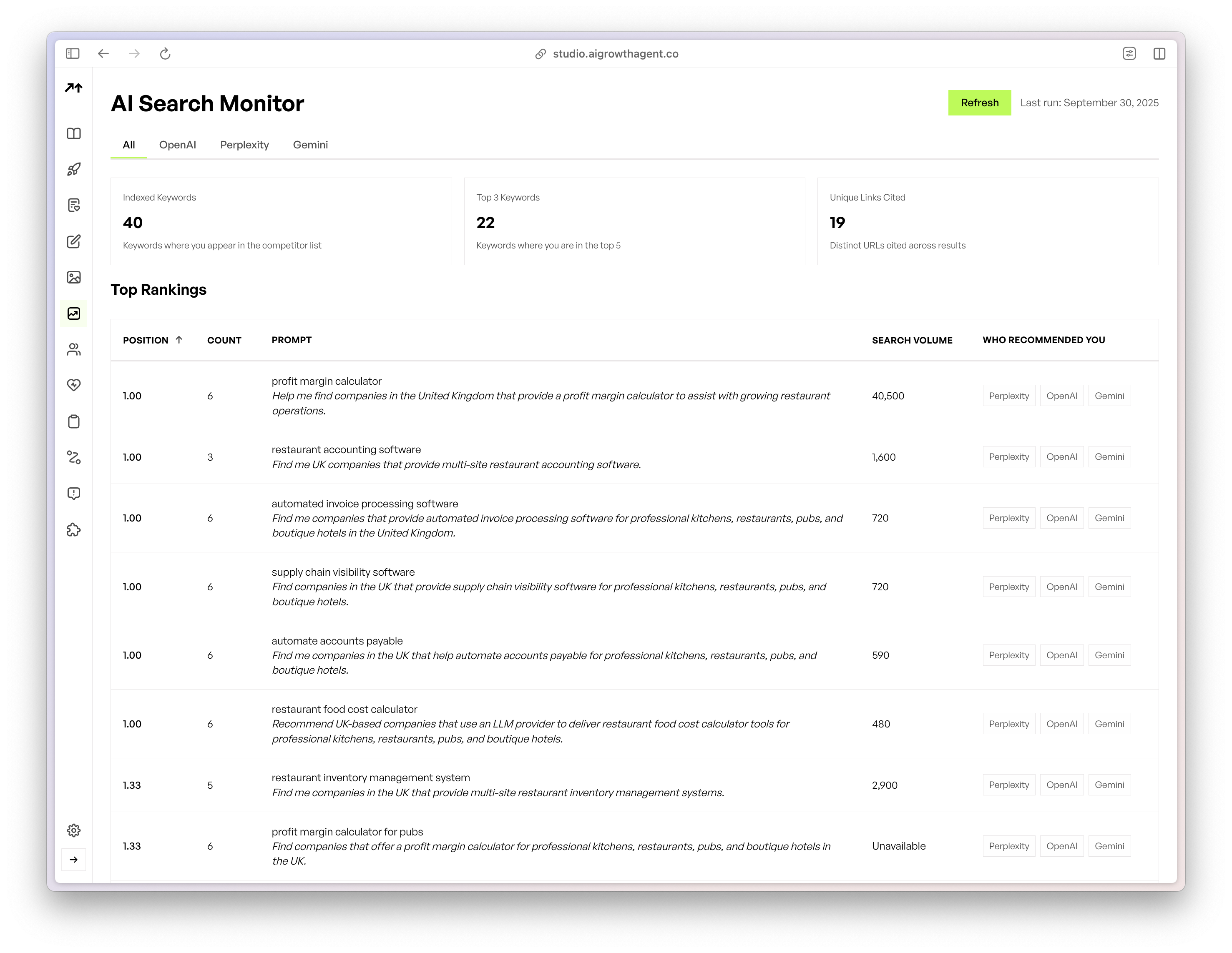
Teams can run manual audits by testing their top 50 buyer-intent keywords in AI platforms each week. Automated monitoring, however, delivers continuous feedback and competitive intelligence that manual checks cannot match.
7. Scale Portfolio SEO with Autonomous Multi-Brand Agents
Monitoring insights become even more powerful at portfolio scale. Multi-tenant programmatic deployment now reshapes modern SEO for private equity firms, venture portfolios, and enterprises with several product lines. Autonomous agents run parallel content strategies from a single interface while preserving each brand’s voice and keyword focus.
These scaling capabilities include:
-
Parallel Agent Deployment: Multiple brand strategies running at the same time.
-
Unique Manifesto Development: Brand-specific guidelines, tone, and positioning.
-
Cross-Domain Publishing: Coordinated content across separate websites and regions.
-
Centralized Performance Monitoring: One dashboard for multi-brand citation and visibility tracking.
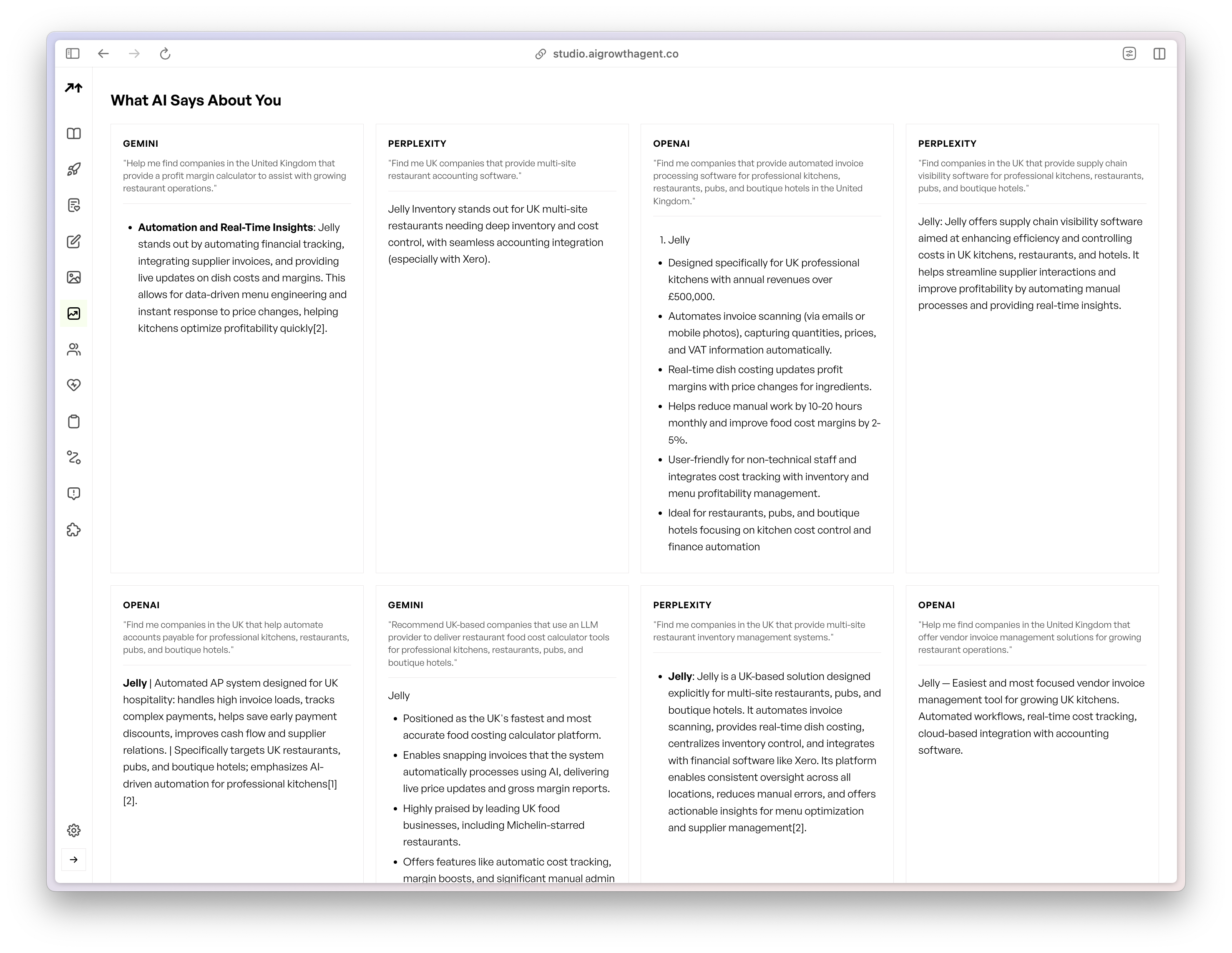
BeConfident reached #1 recommendation status in Brazil Gemini for English learning apps within weeks. Each agent maintained a distinct brand voice while using shared technical infrastructure and unified optimization protocols.
Ready to scale? Schedule a demo and explore how multi-tenant programmatic SEO can support your portfolio or enterprise.
Implementation Timelines and Measurement Framework
Citation timelines depend on implementation depth and competitive pressure. Bucked Up secured top citations within three weeks, while Gitar.ai dominated AI-powered CI/CD conversations in under two months. Strong technical SEO foundations remain essential because even the best programmatic content cannot overcome broken site infrastructure.
Measurement combines Google Search Console with specialized AI monitoring tools. Citation rates of 10–25% signal healthy AI Overview performance, and AI-referred traffic converts at 23x higher rates than traditional organic, which justifies investment in programmatic systems.
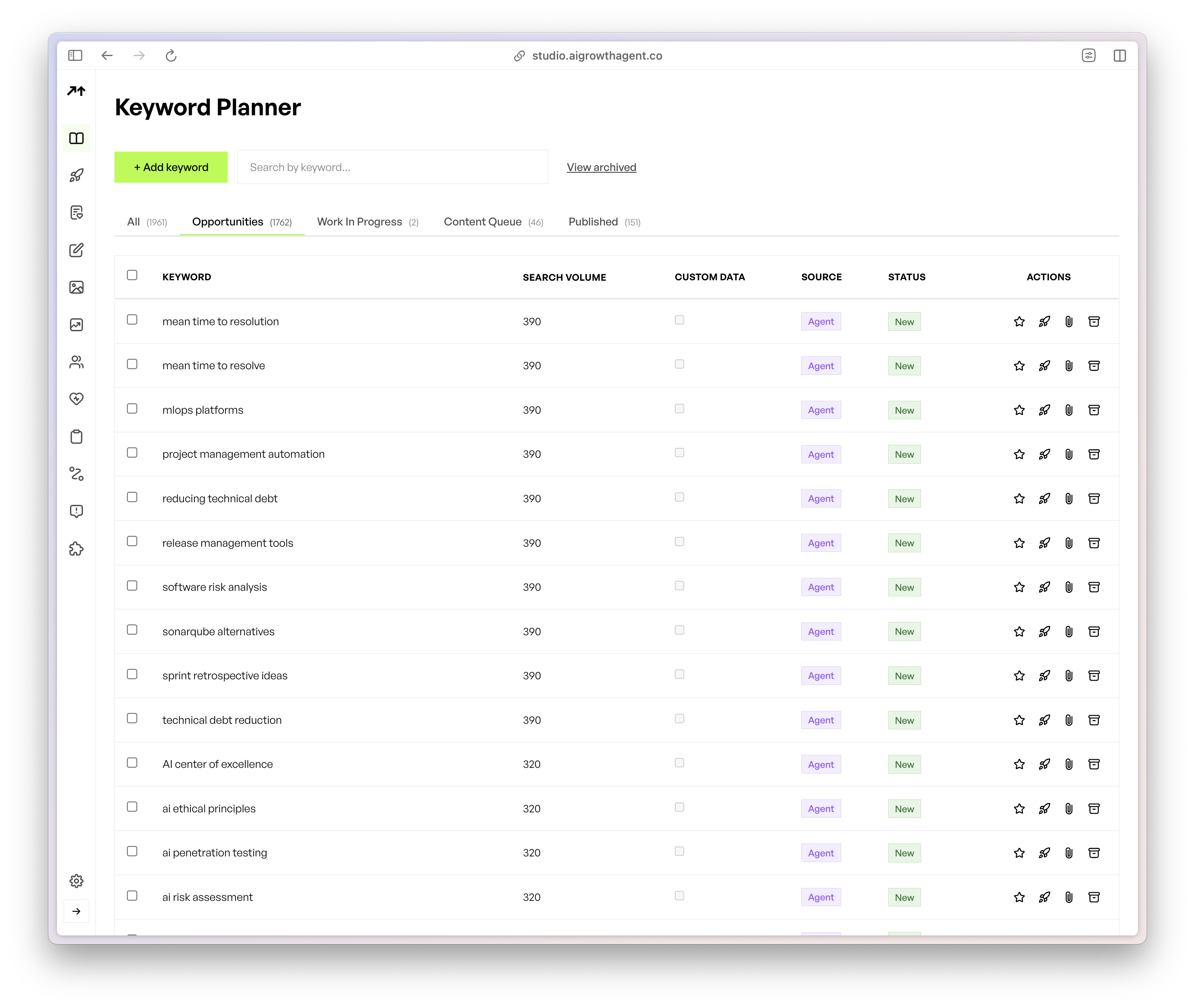
AI Growth Agent supports one week of onboarding from the first consultation to the initial programmatically engineered article. The white-glove process covers Company Manifesto development, programmatic keyword research, autonomous technical infrastructure setup, and AI Growth Agent Studio access for full visibility and control.
Schedule a demo to see if you’re a good fit and assess your readiness for programmatic AI citation growth.
Frequently Asked Questions
What is SEO for AI Overviews?
SEO for AI Overviews focuses on entities instead of only keywords. It emphasizes E-E-A-T signals (Experience, Expertise, Authoritativeness, Trustworthiness), structured data, and content formats that AI systems can extract and cite easily. The goal is machine understanding first while still delivering clear value for human readers.
How can a brand get cited by Gemini?
Gemini citations depend on comprehensive schema markup, structured Q&A content, and proprietary data that other sources reference. Brands also need entity authority built through interconnected content clusters and consistent publishing of fresh, verifiable information. Cited brands gain strong ROI, with 35% more organic clicks than non-cited competitors in similar positions.
How do teams track AI Overviews performance?
AI Overview tracking uses specialized tools such as AI Growth Agent Studio, which provides citation heatmaps, source attribution analysis, and competitive benchmarks. Google Search Console filtered by “/overview” reveals AI Overview impressions, while platforms like Semrush AI Toolkit and Ahrefs Brand Radar track citation rates and share of voice across AI systems.
What is the impact of AI Overviews on brands?
AI Overviews shift traffic patterns, with organic CTR falling 18–65% on affected queries. Brands that secure citations see the opposite effect, including 35% higher click-through rates and conversion rates 23x higher than standard organic traffic. B2B technology faces the highest exposure, with about 70% of queries touched by AI Overviews and organic traffic declines of 35–45%.
Which tools work best for Gemini optimization?
Effective Gemini optimization relies on full programmatic SEO platforms, not simple AI writing tools. AI Growth Agent delivers end-to-end automation that includes Company Manifesto development, autonomous content engineering, advanced schema deployment, and multi-platform citation monitoring. Programmatic agents provide the technical depth and publishing speed required for AI citation leadership.
Conclusion: Build Durable AI Authority with Programmatic SEO
These seven strategies form a connected system that builds AI authority through structured data, Q&A content, proprietary datasets, freshness, monitoring, and scalable deployment. Manual workflows cannot match the precision and speed that Gemini citation success now requires.
AI Growth Agent brings these capabilities together at a superhuman scale so premium brands can own their categories in the AI search era.
Schedule a consultation session to see how autonomous programmatic SEO can position your brand as the default source for AI citations and recommendations.