


Written by: Mariana Fonseca, Editorial Team, AI Growth Agent
Key Takeaways
- Gemini AI shows 7–13.6% hallucination rates on enterprise documents, so teams spend significant time on manual fact-checking instead of growth.
- Gemini lacks real-time SEO data and technical features like schema markup, which produces generic content that risks Google quality downgrades.
- Manual prompts and reviews slow production, so teams cannot reach the content volume required for AI search visibility in 2026.
- Google’s SpamBrain and Helpful Content System demote scaled AI content that lacks E-E-A-T, originality, and clear user value.
- Programmatic SEO agents like AI Growth Agent deliver autonomous, citation-ready content at scale, so you can see how AI Growth Agent delivers autonomous content at scale.
Seven Core Gemini Limits That Hold Back SEO Teams
Seven fundamental constraints limit Gemini’s effectiveness for enterprise SEO content production.
1. Hallucination Risks: Gemini 2.5 Pro exhibits documented hallucination rates on enterprise documents, and Gemini 3 Pro shows similar risks on complex tasks. These factual errors damage brand credibility and force teams into heavy manual fact-checking.
2. Real-Time SEO Data Gaps: Gemini does not connect to live ranking data, competitor movements, or keyword performance. Teams fly blind on strategy and rely on static knowledge instead of current search behavior.
3. Generic Output Quality: Without deep brand inputs, Gemini produces templated content that lacks distinctive positioning and clear expertise. This weakens E-E-A-T signals and makes pages easier for Google to ignore.
4. Team Workflow Bottlenecks: Manual prompt writing, review cycles, and uploads slow everything down. Content teams hit a ceiling on volume long before they cover their priority topics.
5. AI Content Penalties: Google’s SpamBrain and Helpful Content System demote scaled AI content that looks thin, repetitive, or manipulative. Gemini’s generic drafts often fall into these risk zones without strong human intervention.
6. Schema Implementation Gaps: Gemini cannot independently add structured data, meta descriptions, or other technical SEO elements. Teams must handle these steps manually, which slows publishing and limits AI search visibility.
7. Limited Programmatic Capabilities: Gemini focuses on single-article generation. This approach cannot match the programmatic content velocity required to build topical authority across hundreds or thousands of URLs.
These seven limitations create a compounding effect on SEO performance. As hallucinations erode trust, generic content fails to build authority, and manual workflows cap output, brands lose visibility in AI Overviews and other AI surfaces. The combined impact can resemble a 35% CTR reduction scenario where AI Overviews answer queries directly without sending traffic, while Gemini-dependent brands struggle to earn citations in Perplexity, ChatGPT, or Google’s own AI responses.
These concerns look even sharper when compared to alternatives. Both Gemini and ChatGPT show notable hallucination rates in production, and Gemini’s tight connection to Google’s ecosystem increases the risk when content quality slips.
Fixing Gemini’s SEO Limits With Targeted Workflows
SEO teams can reduce Gemini’s weaknesses by layering specific workflows on top of the model.
Hallucination Mitigation: Teams establish human-in-the-loop fact-checking with real-time validation through tools like Semrush or Ahrefs. This approach reduces revision cycles but still requires dedicated editorial capacity.
Beyond factual accuracy, teams must correct Gemini’s strategic blind spots.
Real-Time Data Integration: Teams connect Gemini outputs with Google Search Console and Analytics through manual workflows or API bridges. Current performance data guides topic selection, internal linking, and update priorities.
Once data and accuracy improve, content still needs a recognizable voice.
Brand Voice Development: Teams create detailed brand guidelines and reusable content frameworks. These assets give Gemini clear direction on tone, positioning, and expertise for each piece.
After brand and strategy alignment, teams still need technical readiness for AI search.
Technical SEO Enhancement: Editors manually add schema markup, meta descriptions, and structured data to Gemini drafts before publishing. This work improves AI search compatibility but adds another manual step to every article.
The following table illustrates how each limitation forces specific team interventions. The expected benefit column shows that mitigation reduces damage but does not remove the underlying workflow friction.
| Limitation | Gemini Impact | Team Mitigation | Expected Benefit |
|---|---|---|---|
| Hallucinations | Up to 13.6% error rate | Human fact-checking and data validation | Fewer revisions |
| No Real-Time SEO Data | Strategy misalignment | Manual GSC and Analytics integration | Improved targeting accuracy |
| Generic Content | Weak E-E-A-T signals | Brand guideline frameworks | Stronger authority positioning |
| Technical SEO Gaps | Low AI search visibility | Manual schema implementation | Better indexing performance |
Even with these mitigation strategies in place, SEO teams face a larger concern. Google’s evolving systems may still penalize AI-generated content that looks shallow, regardless of internal quality controls.
Google AI Content Penalties in 2026: What Matters Most
Google evaluates AI content based on value, relevance, and quality rather than the tool that produced it. Google ranks AI-generated content on usefulness and intent alignment, and recent data shows human-written content still outperforming AI across top 10 SERP positions.
Google’s spam policies penalize content created only to manipulate rankings and lacking context, originality, or clear utility. The Helpful Content System targets scaled volumes of superficial AI-generated pages that weaken a site’s perceived authority.
Gemini vs ChatGPT vs Programmatic SEO Agents
Both Gemini and ChatGPT share fundamental limits for enterprise SEO workflows. The following comparison shows how each tool depends on manual work, lacks technical implementation, and relies on static data, while programmatic SEO agents address these gaps in a coordinated way.
| Capability | Gemini | ChatGPT | Programmatic SEO Agents |
|---|---|---|---|
| Content Scale | Manual prompts, low velocity | Similar manual limitations | Autonomous content generation |
| Technical SEO | No schema or metadata | No technical implementation | Automated schema injection |
| AI Citations | Generic outputs, poor citation rates | Limited brand positioning | Citation-focused content architecture |
| Real-Time Data | Static knowledge cutoff | No live SEO integration | Live keyword and competitor analysis |
AI Growth Agent’s programmatic SEO approach closes these gaps with end-to-end automation. The system handles keyword clustering from real-time data, schema and MCP implementation, multi-tenant deployment for portfolio brands, and citation heatmaps that track AI visibility across ChatGPT, Gemini, and Perplexity. Unlike agencies that bill by the hour, programmatic agents deliver effectively limitless content velocity with consistent quality and technical rigor.
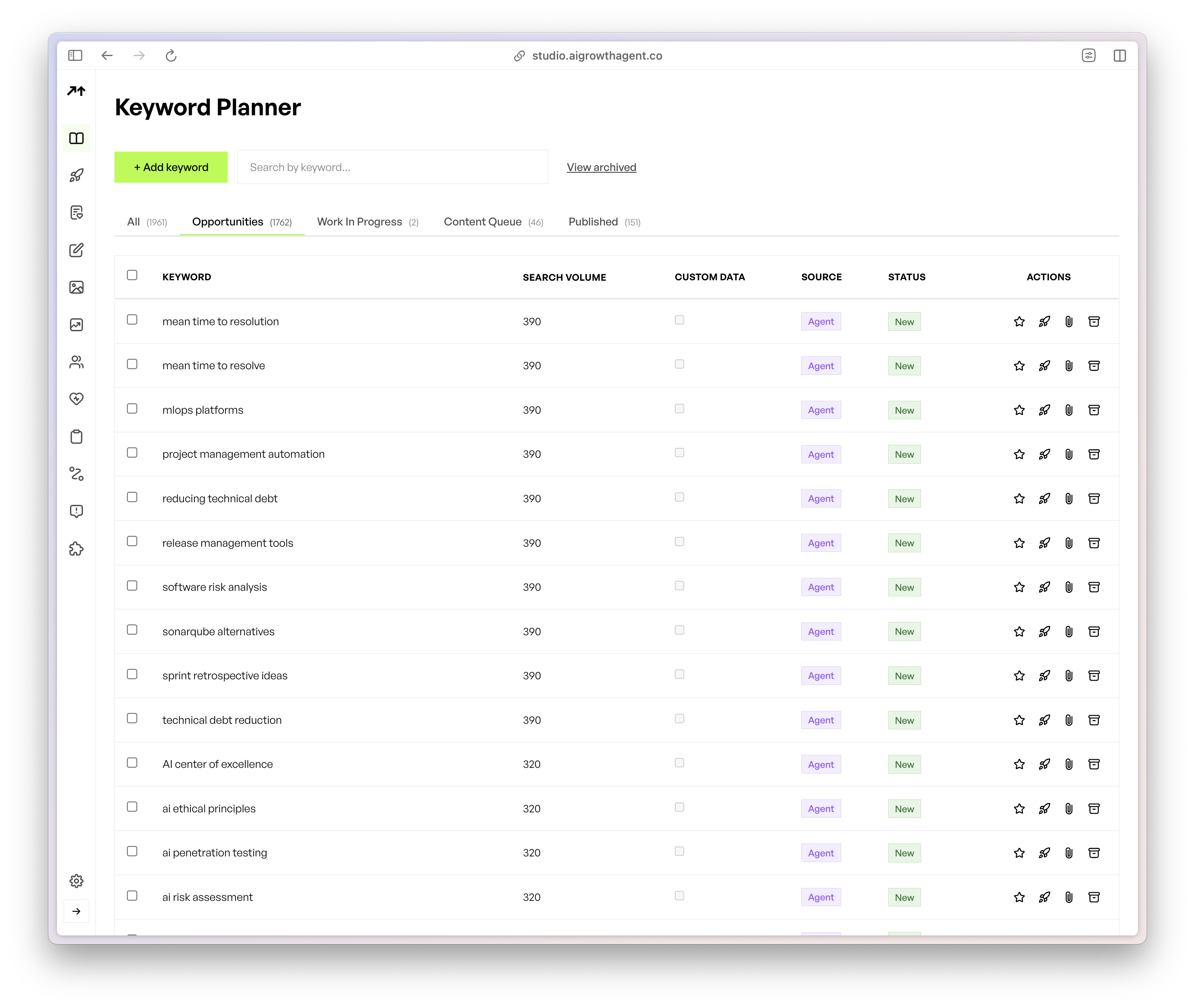
Case Studies: How Brands Outgrew Gemini With AI Growth Agent
Real-world implementations show how programmatic SEO outperforms manual Gemini workflows.
Sports Nutrition Brand: This brand reached the #1 ChatGPT citation for “best protein soda” within three weeks of programmatic deployment. The win came from a structured content architecture that covered the topic comprehensively instead of isolated article tweaks.
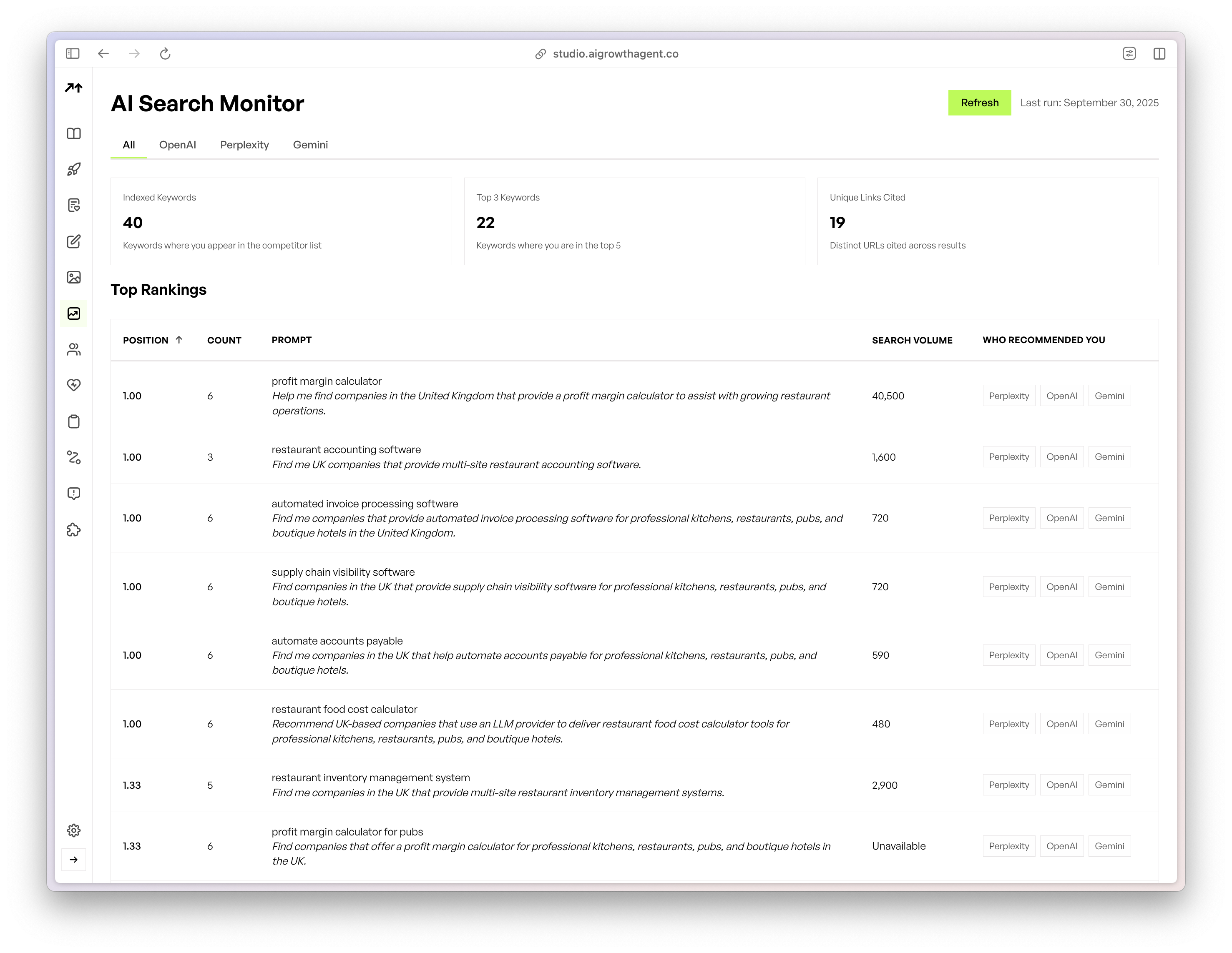
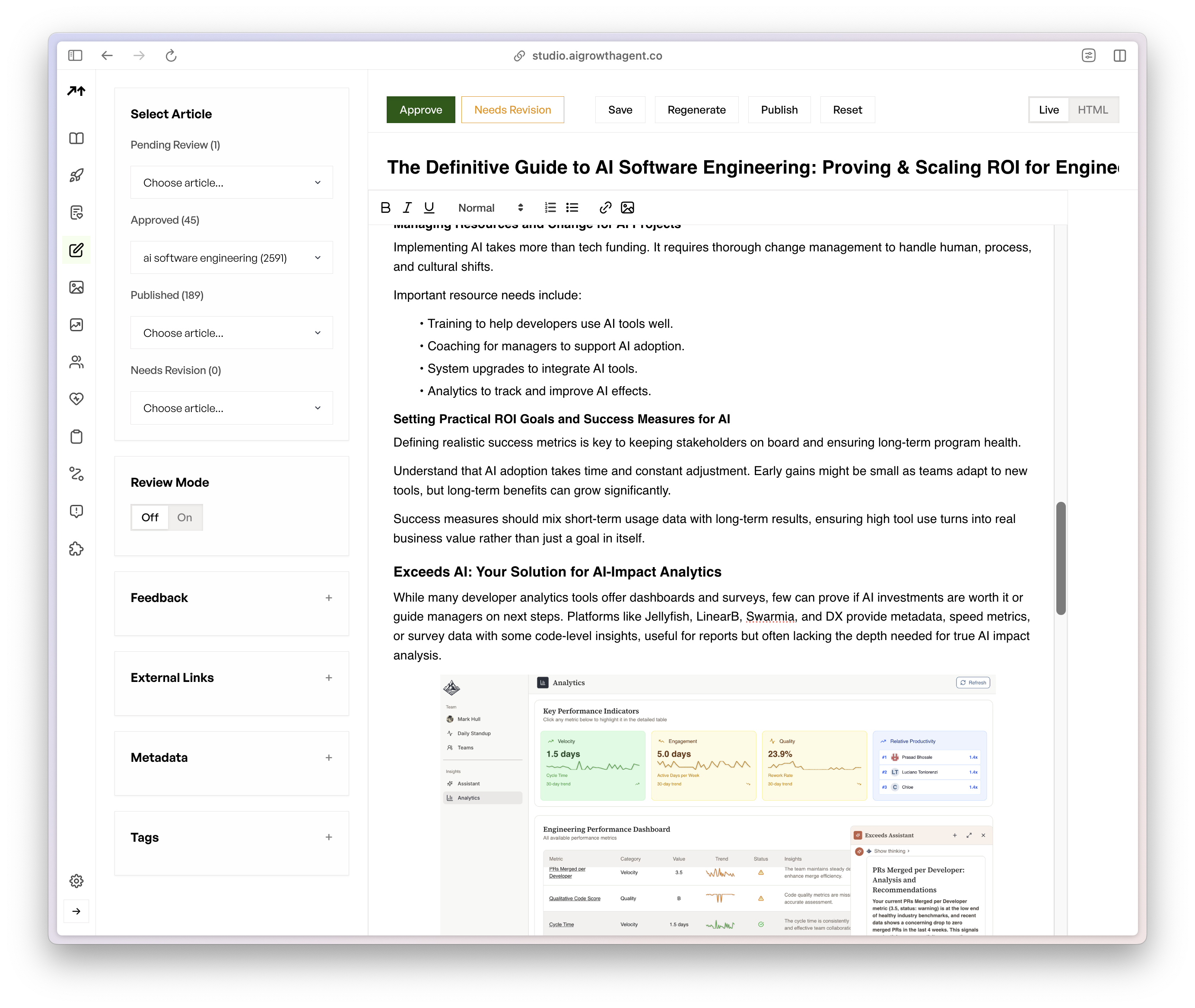
CI/CD Tool: This software company gained AI search dominance for “AI self-healing pipelines” across ChatGPT, Gemini, and Perplexity. Immediate indexing and structured content deployment increased AI visibility compared with their previous manual content strategy.
Both examples highlight the same pattern. Programmatic agents build full content ecosystems with strong E-E-A-T signals, technical optimization, and citation-friendly formatting that manual Gemini workflows cannot reproduce at scale.
How to Scale Beyond Gemini With Programmatic SEO Agents
Teams ready to move beyond Gemini’s limits can use the following evaluation framework to adopt programmatic SEO in a structured way.
1. Audit Current Gemini Performance: Teams document hallucination incidents, revision cycles, and publishing bottlenecks to establish baseline inefficiencies. This audit reveals which constraints waste the most time and budget.
2. Build Company Manifesto: Teams use audit insights to create brand positioning and expertise frameworks that programmatic agents can reference. Without this foundation, automated systems still produce generic content that fails to differentiate the brand.
3. Integrate Real-Time Data Sources: After the brand framework is clear, teams connect Google Search Console, Analytics, and competitive intelligence tools. These data sources guide automated content strategy based on real performance instead of assumptions.
4. Deploy Programmatic Agent: Teams then implement an autonomous content system with built-in technical SEO, schema markup, and AI search optimization. This deployment turns strategy and data into consistent publishing.
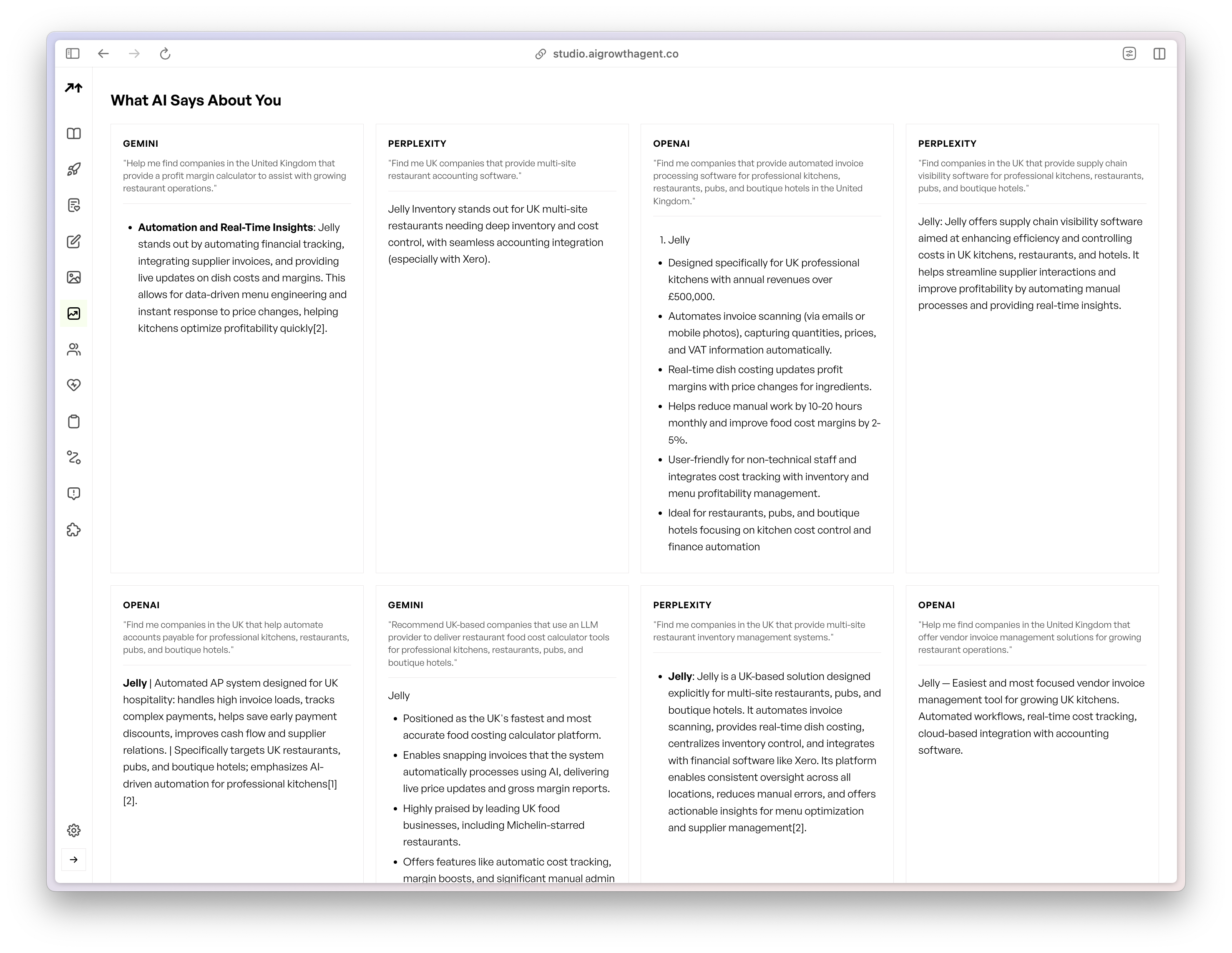
5. Monitor AI Citations: Finally, teams track citations across ChatGPT, Gemini, and Perplexity to measure authority growth. These signals show whether the programmatic system is earning trust from AI search engines.
Common pitfalls include launching programmatic SEO without solid technical foundations or skipping brand positioning work and expecting instant results.
Conclusion: Moving From Gemini Limits to Citation-Proof Authority
Gemini AI’s hallucination risks, manual workflows, and technical gaps prevent SEO teams from reaching the content velocity and authority required for 2026 AI search. Mitigation workflows help, but they still rely on human effort at every step. Programmatic SEO agents provide a systematic alternative that builds citation-proof authority at scale.
Teams that stay with manual Gemini processes will struggle to match competitors using autonomous content systems built for AI search. Ready to build citation-proof authority? Schedule a consultation to build citation-proof authority for your brand
Frequently Asked Questions
Is Google Gemini good for SEO content creation?
Google Gemini has serious limits for SEO content creation. It shows the hallucination rates mentioned earlier on enterprise documents and lacks real-time SEO data integration. As a result, teams must invest heavily in fact-checking and manual optimization. Gemini also cannot handle technical SEO tasks like schema markup injection and does not support the content velocity needed for competitive AI search. Many teams use Gemini for early drafts, then rely on separate workflows for verification, technical work, and strategic planning.
What are the main risks of Gemini content hallucinations for SEO?
Gemini content hallucinations create several SEO risks, including damaged brand credibility from visible errors and higher editorial overhead. The hallucination rates discussed earlier mean that meaningful portions of long-form content can contain inaccuracies that mislead users. These issues force teams into extensive fact-checking and can trigger Google’s quality and spam systems, which reduces domain trust over time.
How can SEO teams fix AI content penalties in 2026?
SEO teams can address AI content penalties by focusing on quality at scale instead of abandoning AI. As discussed earlier, Google’s quality systems penalize thin, manipulative content regardless of creation method, so teams need systematic approaches that combine AI efficiency with human oversight and strong technical foundations. Programmatic SEO agents help by automating content creation while maintaining E-E-A-T signals, schema markup, and brand-specific positioning more consistently than manual AI workflows.
What is the difference between Gemini and programmatic SEO for content creation?
Gemini provides manual content generation that still needs human support for strategy, technical optimization, and publishing. Programmatic SEO delivers autonomous systems that manage the entire workflow from keyword research through publication. Gemini lacks real-time SEO data, technical implementation, and scalable content architecture, so teams remain stuck on single-article production. Programmatic SEO agents add end-to-end automation, including live competitor analysis, schema injection, multi-tenant deployment, and AI citation optimization.
Why do AI search engines prefer programmatic content over Gemini-generated articles?
AI search engines like ChatGPT, Perplexity, and Google’s AI Overviews favor content with strong authority signals, solid technical foundations, and comprehensive topical coverage. Programmatic systems deliver these elements consistently across entire sites. They create content ecosystems with schema markup, citation-friendly formatting, and coordinated E-E-A-T signals, while isolated Gemini articles often lack this structure. As a result, programmatic content is more likely to earn citations and recommendations from AI systems that prioritize reliable, well-structured sources.


