


Key Takeaways
- AI-native search and large language models now act as the primary discovery layer, so brands need to optimize for how models read, remember, and cite content, not only for how pages rank.
- Generative Engine Optimization (GEO) shifts the main KPI from clicks to references, with success measured by how often AI systems cite your brand as a trusted source.
- Programmatic SEO gives brands the velocity and structure required to earn AI citations, using scalable content architectures that align with how models parse and synthesize information.
- Emerging GEO tools, structured data standards, and model-aware content practices create an opportunity for marketers to build durable visibility in the AI layer.
- AI Growth Agent provides a programmatic SEO platform that helps brands become the answers AI engines recommend, with demos available at AI Growth Agent.
The AI Search Paradigm Shift: From SEO To GEO
From Links To Language Models: How Search Now Works
Traditional search relied on links and rankings. GEO relies on language and model memory. In the SEO era, success meant placing high on a results page based on keyword matching, content depth, backlinks, and engagement signals. With LLMs like GPT-4o, Gemini, and Claude now handling more queries, visibility means appearing directly inside the generated answer, not only in a list of links.
This change rewrites how search operates. Generative engines favor content that is well organized, easy to parse, and rich in meaning, not just dense with repeated keywords. Clear headings, concise paragraphs, summary sections, and bullet points help LLMs extract, reframe, and cite your content, so structure becomes as important as substance.
Fragmented AI Search: Why Discovery Now Happens Everywhere
AI-native discovery now spans platforms like Instagram, Amazon, Perplexity, Siri, and in-app assistants. Each environment uses different models and optimizes for different intents. Queries tend to be longer, sessions last longer, and responses blend multiple sources into one synthesized answer.
Brands now need to earn citations across several AI platforms at once, each with distinct citation styles and content preferences. This environment rewards a programmatic approach that can adapt content structure and metadata while still preserving a consistent brand voice.
Monetization And Incentives In AI Search
The LLM business model shifts incentives for what content gets surfaced. Traditional search engines monetized attention with ads, while many LLMs use subscription and pay-per-use models. Model providers have less direct incentive to send users away, so external content needs clear additive value to earn citations.
Outbound clicks have become a visible signal of value inside LLM interfaces. ChatGPT already drives referral traffic to tens of thousands of domains. Well-structured, model-friendly content still earns traffic, but only when it reaches citation status inside AI answers.
Brands that want a detailed picture of their position in this new landscape can review their AI citation footprint and GEO readiness with specialized tools or partners.
Generative Engine Optimization (GEO): Building Visibility In AI Answers
Model Relevance: The Core GEO KPI
Reference rate now matters more than click-through rate. GEO focuses on how often models cite your brand or content in generated responses. The key outcome is model relevance, not only page rank.
Brand visibility now depends on being chosen by the model as a reliable source. Content that consistently earns citations becomes the default answer for repeated queries, which compounds brand authority over time.
New GEO Tools And Measurement Approaches
New platforms such as Profound, Goodie, and Daydream now track how brands appear in AI answers, monitor sentiment, and identify which publishers shape model behavior. These tools simulate user prompts at scale, map references, and highlight gaps in a brand’s AI presence.
Legacy SEO tools are expanding into GEO as well. Ahrefs Brand Radar tracks mentions in AI Overviews, while Semrush provides an AI toolkit to monitor and react to generative citations. These capabilities move measurement beyond rankings to how models frame and recall a brand.
Encoding Your Brand In The AI Layer
Brands now compete for how they are encoded inside models, not only in the minds of human audiences. Encoding your brand accurately into the AI layer has become a strategic advantage. Clear positioning, structured content, and consistent evidence all help models associate your brand with specific problems and solutions.
GEO remains early and dynamic. Major model updates can change citation behavior, similar to how search algorithm updates changed rankings in the past. Teams need systems that can adapt content programs quickly as model behavior evolves.
Marketers who want to systematize this process can use programmatic SEO tools that engineer content specifically for model parsing and citation.
From Fragmented SEO To Programmatic GEO Platforms
Limits Of The Traditional SEO Tool Stack
SEO tooling never consolidated into a single full-stack solution. Teams combined platforms like Semrush, Ahrefs, Moz, and Similarweb with agencies and freelancers, and still navigated incomplete data. Google held the ranking logic, while vendors inferred performance.
Clickstream data, one of the clearest signals of behavior, stayed locked behind ISPs, SDKs, and brokers. This fragmentation limited how precisely brands could optimize.
Centralized Programmatic GEO As A New Opportunity
GEO allows more centralized solutions. Leading GEO platforms will not only measure citations, they will fine-tune their own models and run closed feedback loops from prompt to content to result. These systems can analyze prompts, generate structured content, monitor references, and adapt strategy from a single interface.
Brands gain value when this loop runs programmatically. Campaigns can adjust to model behavior daily instead of quarterly, and technical updates can roll out across hundreds of pages at once.
The Critical Role Of Programmatic SEO In GEO Success
Programmatic Velocity As A Competitive Baseline
Content velocity now sets the floor for GEO performance. LLMs reward recent, deep, and consistently structured content, and manual workflows struggle to meet that standard at scale. One or two long-form articles per month are no longer enough to shape how models talk about a category.
Programmatic SEO gives brands a way to publish large volumes of structured, semantically rich content that models can easily parse and cite. The goal is not volume for its own sake. The goal is a reliable content architecture that delivers breadth, depth, and technical quality at the pace AI systems expect.
Why Manual And Piecemeal Methods Struggle
Most traditional SEO agencies and internal content teams still rely on manual writing, hand-built briefs, and limited technical automation. These approaches rarely support scaled schema markup, LLM.txt files, or Model Context Protocols across hundreds of URLs.
General-purpose AI writing tools improve drafting speed but do not manage end-to-end programmatic workflows. Strategy, structure, metadata, and publishing often fall back on overstretched teams, which results in inconsistent formatting and weaker AI citation potential.
AI Growth Agent: Programmatic SEO For AI Search
AI Growth Agent focuses on solving this programmatic gap with automation rather than billable hours. The Programmatic SEO Agent handles engineering, content creation, and technical optimization as one coordinated system, with capabilities that include:
- Autonomous technical infrastructure, including blog architecture setup, brand-aligned templates, and support for LLM.txt and Model Context Protocols so AI search engines can read from your content database.
- Programmatic keyword and content research that evaluates large sets of queries and topics, then organizes them into pillars and clusters tuned for AI search behavior.
- Content generation paired with automated schema markup, metadata management, and on-page SEO to maximize the odds of AI citation.
- Real-time programmatic content injection that responds to emerging topics so brands can participate in new conversations quickly.
- Database-to-content automation that converts proprietary data into structured, search-optimized content assets.
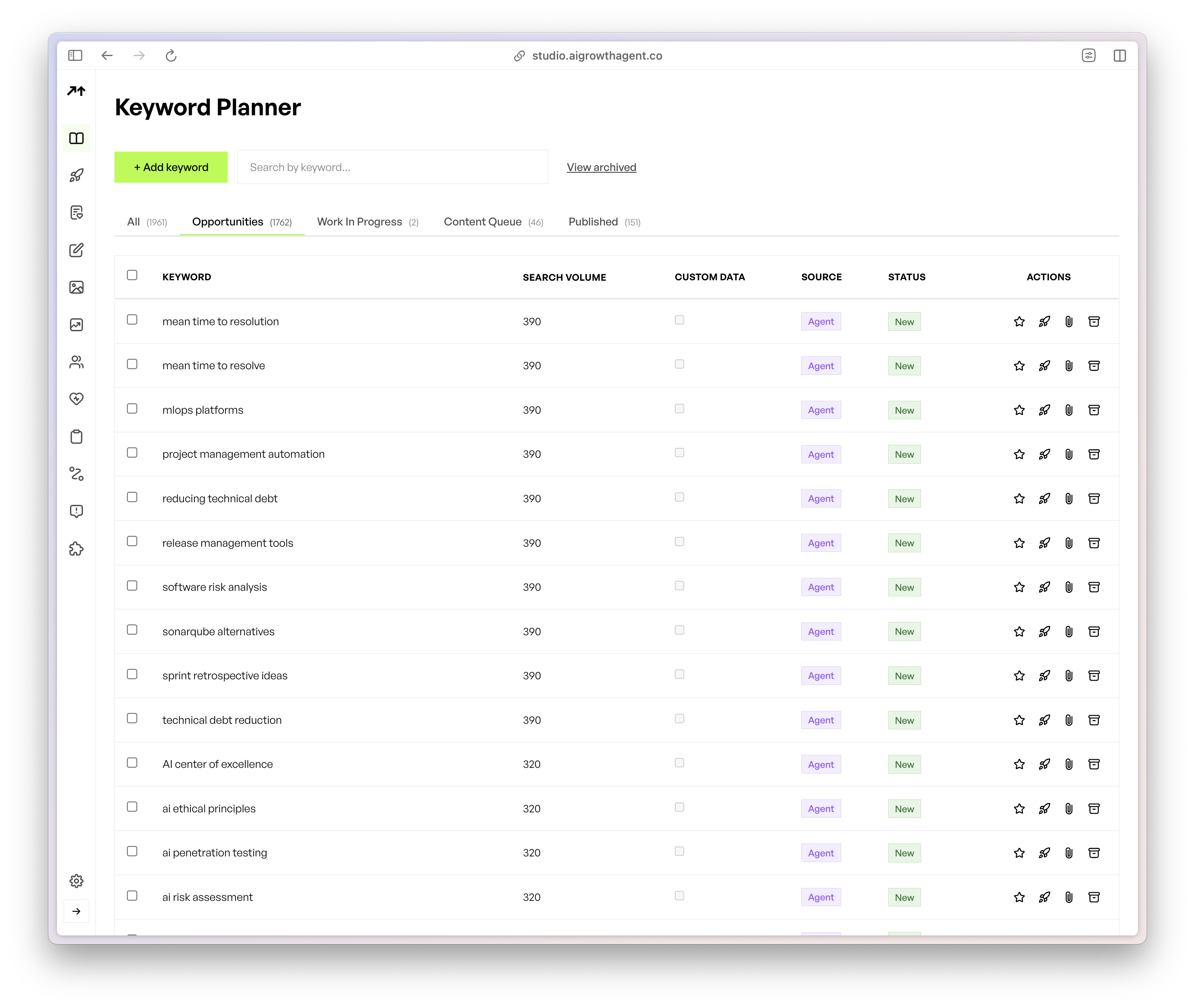
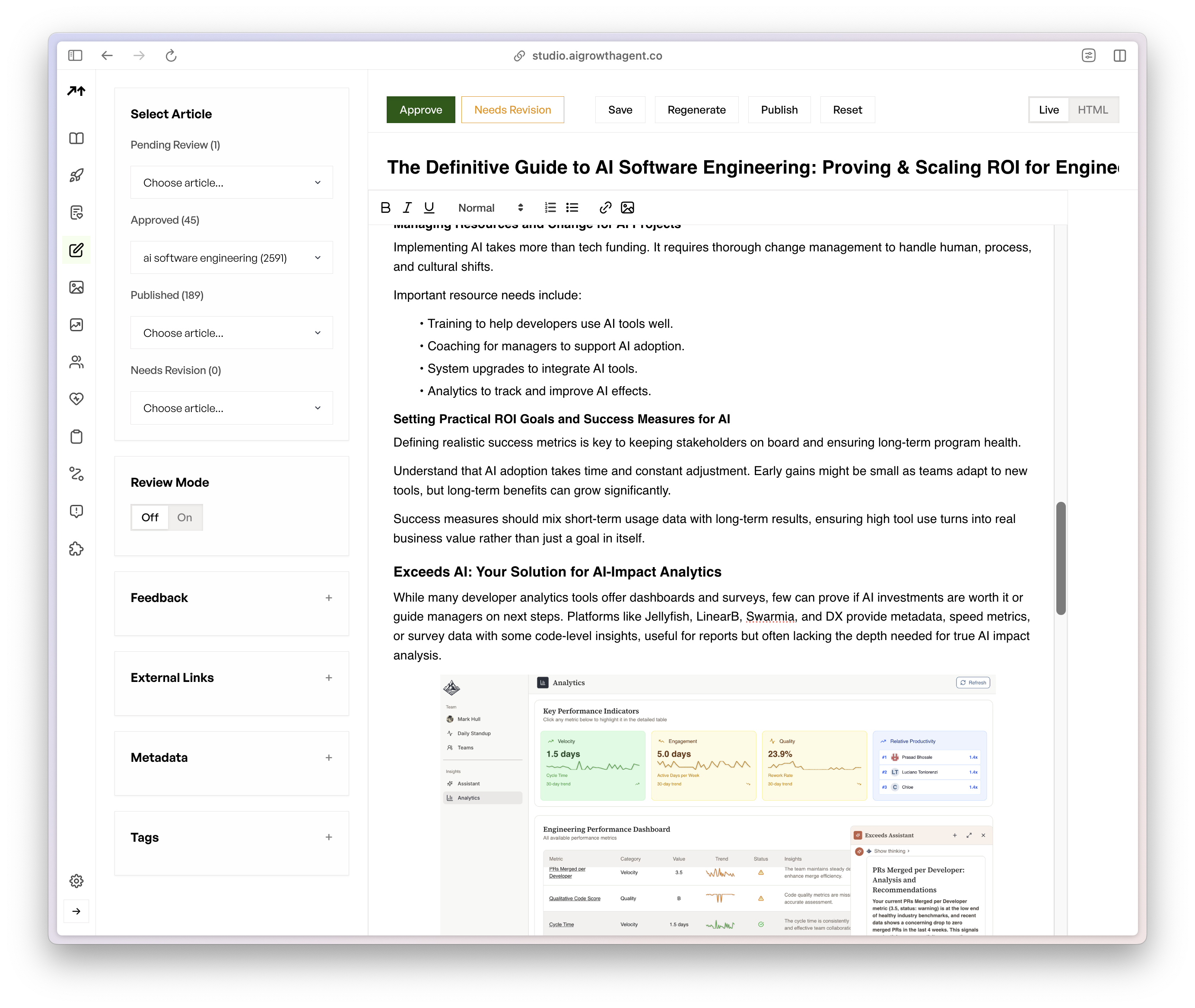
AI Growth Agent aims to keep your brand present where AI systems generate answers, using a structured and repeatable approach rather than ad hoc content efforts. See if you are a fit for the Programmatic SEO Agent.
AI Growth Agent Case Studies: GEO Impact In Practice
AI Growth Agent Success Stories And GEO Citation
|
Client |
Challenge or Goal |
Key GEO Outcome |
Timeframe |
|
Exceeds AI |
Be recognized for engineer performance reviews |
Recommended by Perplexity, ranked in Google AI Overviews, cited by ChatGPT |
Within 3 weeks |
|
BeConfident |
Compete with language learning giants |
#1 recommended app in Brazil in Google AI Overview and Gemini |
Within weeks |
|
Bucked Up |
Earn visibility as a top protein soda brand |
Cited by ChatGPT as a leading protein soda, #1 citation for “best protein soda” |
3 weeks |
|
Gitar |
Become a reference for AI-powered CI/CD |
Top-cited tool across Google AI Overview, Gemini, ChatGPT, and Perplexity |
Under 2 months |
These examples show how structured, programmatic SEO can translate into consistent GEO citations across multiple AI engines in a relatively short period.
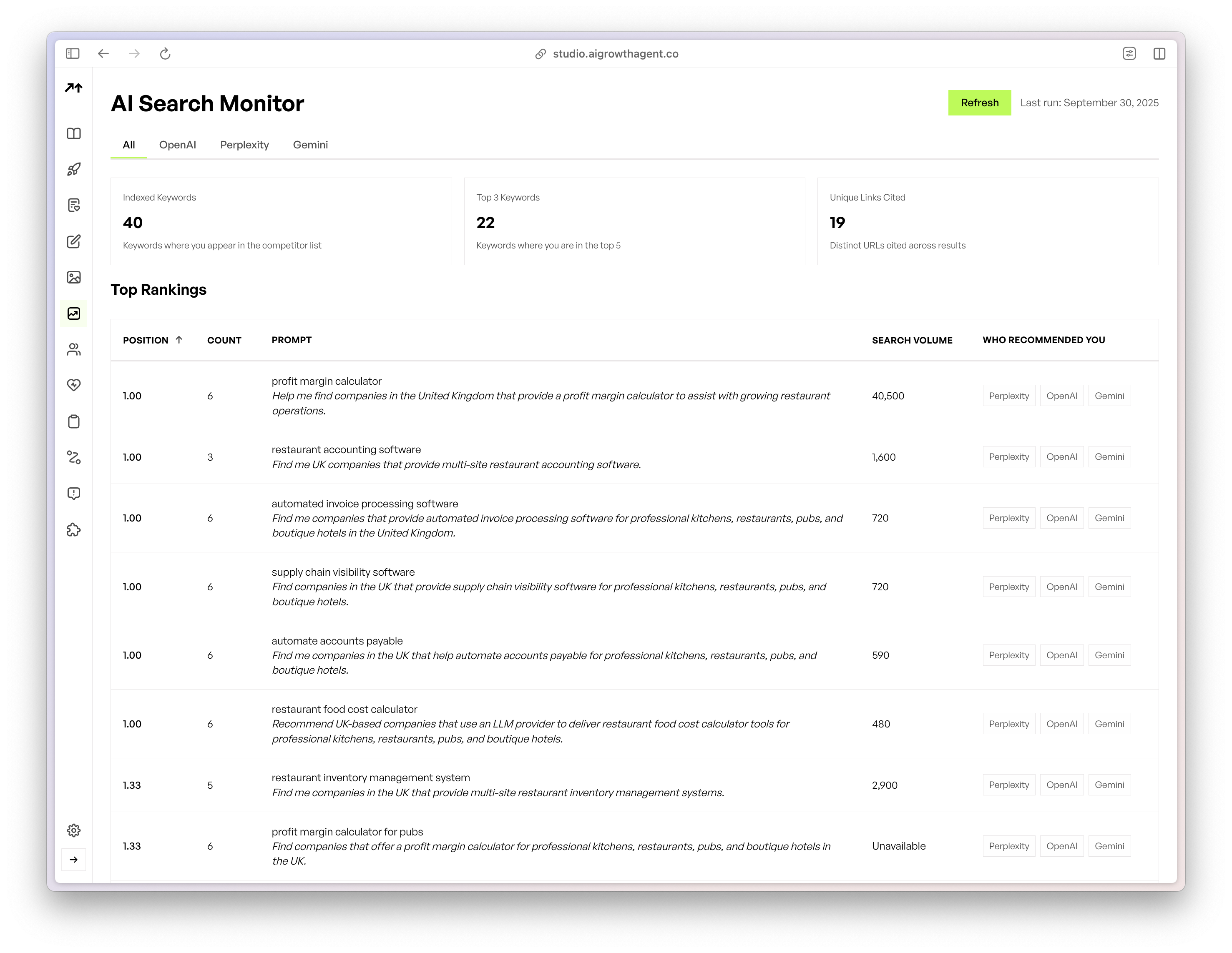
Schedule a consultation with AI Growth Agent to review your GEO opportunities.
Frequently Asked Questions About GEO And Programmatic SEO
What is the main difference between SEO and GEO?
SEO focuses on rankings and clicks from search engine results pages. GEO focuses on how often AI systems cite your content directly in generated answers. GEO success depends on reference rate, content structure, semantic clarity, and technical signals that make it easy for models to select your pages as trusted sources.
Why is Programmatic SEO important for GEO?
Programmatic SEO provides the scale and consistency needed to compete for AI citations. LLMs process vast amounts of content and tend to favor sources that stay fresh, comprehensive, and structurally clear. Programmatic systems can roll out schema markup, LLM.txt files, and Model Context Protocols across many pages, which helps AI engines read and reuse your content.
How does AI Growth Agent support GEO?
AI Growth Agent runs programmatic SEO as an ongoing system. The platform clusters keywords, plans content, generates and structures articles, and manages technical SEO so AI models can interpret and cite the material. Teams also gain monitoring of citations across ChatGPT, Google AI Overviews, and Perplexity, plus options to run multiple brands from one interface through multi-tenant deployment.
Is GEO a short-term trend?
GEO reflects a long-term change in how people discover information. AI assistants are becoming the default entry point for many tasks, including product research and education. The SEO market that grew through 2024 and 2025 around classic rankings is now being reoriented toward AI citation, and this shift is unlikely to reverse.
How fast can GEO efforts show results?
Well-structured, programmatic GEO efforts can achieve citations within weeks, as long as the underlying content architecture and technical implementation are in place. Timelines depend on competition, model update cycles, and how thoroughly a brand aligns its content with model-friendly structures.
Conclusion: Competing For The AI Layer In 2026
The move from SEO to GEO marks a lasting change in digital discovery. AI now acts as a front door to commerce and research across many categories, so brands need to manage how models perceive, summarize, and cite their content.
AI Growth Agent helps brands meet this challenge with a programmatic SEO agent that focuses on scale, structure, and technical quality. The approach aims to make brands easier for AI systems to understand and recommend, rather than relying only on traditional rankings.
Teams that invest early in GEO and programmatic SEO will be better positioned to stay visible as AI search matures through 2026 and beyond. Schedule a strategy session with AI Growth Agent to explore how programmatic SEO can support your GEO goals.
