


Written by: Mariana Fonseca, Editorial Team, AI Growth Agent
Key Takeaways
- AI search engines favor recent, structured, and authoritative content, with 65% of citations coming from content published within the past year.
- Manual SEO cannot keep pace with 400+ million terabytes of daily data creation and shifting user behavior toward AI answer engines.
- A seven-phase programmatic SEO system, from company manifesto through citation monitoring, helps brands earn AI citations in weeks.
- Allowing AI crawlers, implementing robust schema markup, and using LLM.txt files can increase citation rates by 3 to 5 times.
- AI Growth Agent has delivered results such as 400% visibility gains; schedule a demo to automate your brand’s AI citation strategy.
The Desperate Skill Gap: Why Manual SEO Fails in AI Search
Traditional marketing teams face a scale problem they cannot solve manually. Approximately 402.74 million terabytes of data are created daily worldwide as of 2026, while Gartner predicts traditional search volume will drop 25% as users shift to AI-powered answer engines. Publishing one or two articles each month cannot compete with this level of content velocity.
Scale and quality now move together. AI search engines prefer content published within the past year, with 65% of citations targeting recent content. Traditional agencies bill by the hour and rarely have the engineering resources to build programmatic SEO systems at the speed AI engines expect. Internal marketing teams face similar limits and struggle to deploy structured data and automated content engineering at scale.
Brands without programmatic velocity lose control of their story. AI search engines cite the companies that provide dense, structured, and frequent signals of authority. When your site lacks a comprehensive content architecture, AI systems fall back to competitors and treat their information as the default narrative for your category.
AI Search Evolution: What LLMs Prioritize in 2026
AI search engines now focus on entities such as brands, people, and products instead of ranking individual pages alone. Generative engine optimization emphasizes these entities and rewards brands that strengthen their signals for confident recognition.
Three factors drive citation probability. First, recency matters most. AI assistants prefer fresher content, citing URLs averaging 1,064 days old compared to 1,432 days for traditional search results. Second, structured data improves accessibility, and chunked, quotable, schema-tagged pages receive 3 to 5 times more citations. Third, semantic authority grows through branded mentions and consistent entity recognition across the web.
Brands must align technical foundations with these priorities to benefit from them. The technical prerequisites include allowing AI crawlers like GPTBot and PerplexityBot in robots.txt, implementing comprehensive schema markup, and publishing content with high factual density. Sites with complete Tier 1 schema see approximately 40% more Google AI Overview appearances. Programmatic SEO brings these elements together so brands can earn citations within weeks through automated technical setup and sustained content velocity.
Seven Programmatic Phases to Earn AI Citations
Effective AI citation strategies follow a repeatable seven-phase programmatic framework.
1. Craft Company Manifesto
Define your brand’s AI “brain” through detailed authority documentation. This living source of truth guides every programmatic content workflow and keeps voice, positioning, and claims consistent across thousands of pages.
2. Programmatic Keyword Clustering
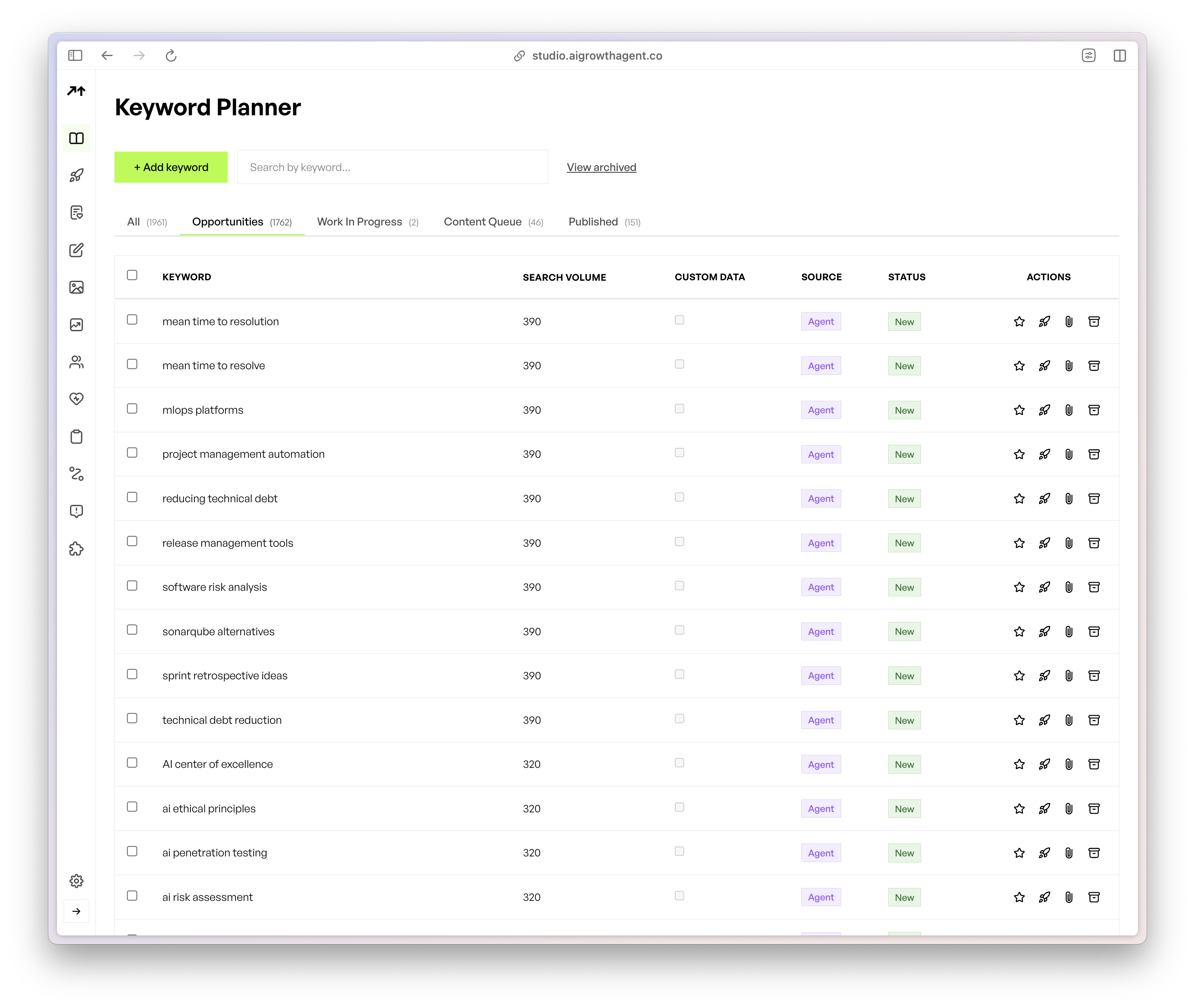
Use automated research systems to analyze tens of thousands of relevant search queries. Build pillar and cluster architectures that map to specific AI citation opportunities instead of relying on slow, manual keyword research.
3. Autonomous Technical Infrastructure
Implement technical foundations starting with subdomain architecture that organizes content at scale. Add advanced schema markup so AI systems can interpret meaning and relationships. Create LLM.txt files to give language models explicit guidance, and integrate Model Context Protocol to support real-time AI interactions with your content. Together, these components remove engineering friction and help AI crawlers access and understand your site.
4. Activate Programmatic Content Agent
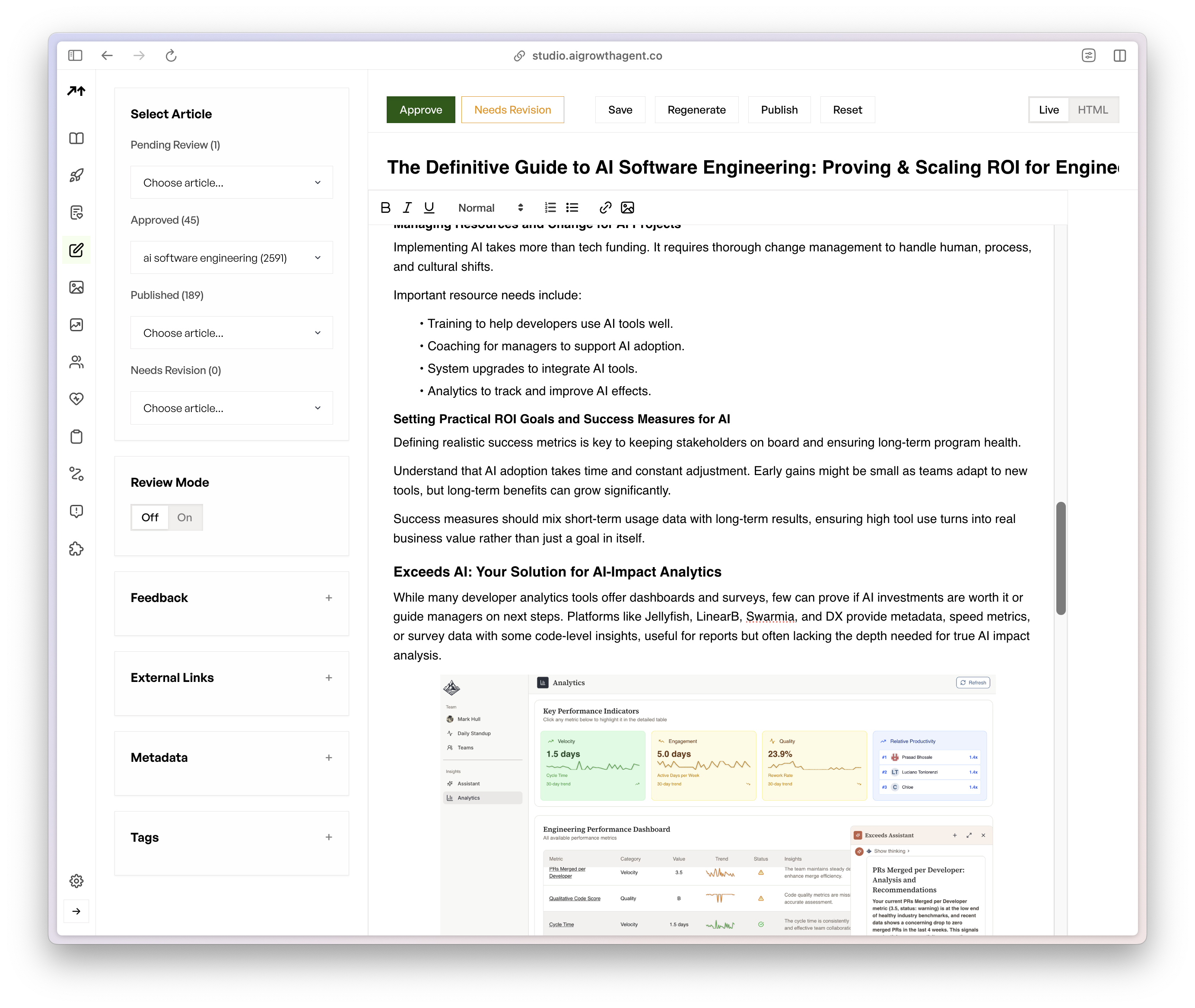
Run automated content engineering workflows that handle strategy, research, drafting, fact-checking, and technical formatting. The system produces high-velocity, citation-ready content while reducing manual effort to oversight and refinement.
5. AI Studio Dashboard Control
Maintain control through a central dashboard that supports editing, feedback, and approvals. Configure auto-pilot modes for low-touch execution while preserving guardrails for quality and brand safety.
6. Real-Time Content Injection
Set up monitoring for trending topics and emerging conversations. Respond with new content within minutes of trend detection so your brand appears in early AI answers about breaking news and fresh themes.
7. Monitor Citation Performance
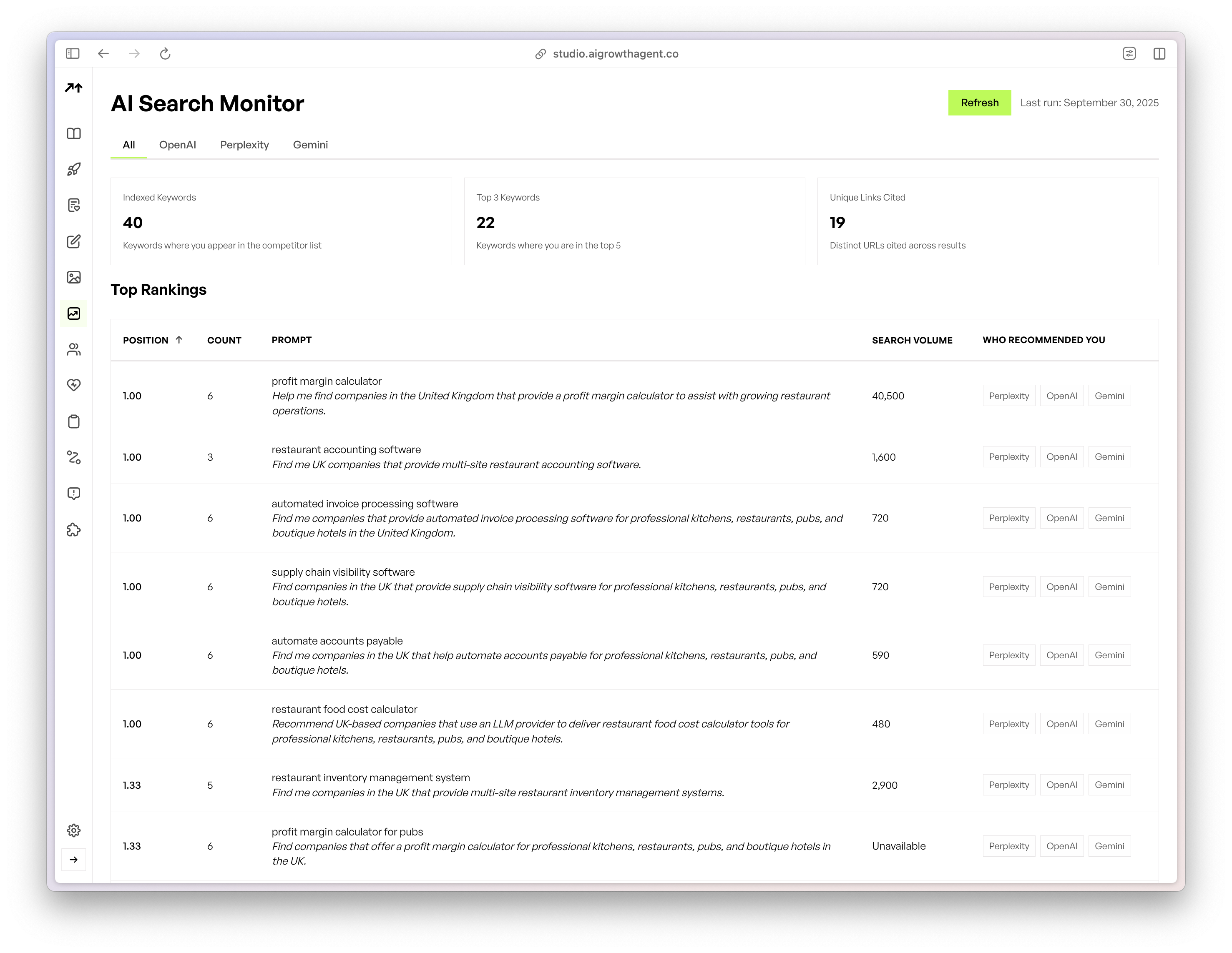
Track brand mentions, citations, and recommendations across ChatGPT, Perplexity, Google AI Overviews, and other platforms. Measure share of voice, sentiment, and competitive positioning, then refine your programmatic strategy based on these insights.
Schedule a demo to see if you’re a good fit for this structured, programmatic approach to AI citation growth.
Tracking Brand Mentions Across AI Search Platforms
Reliable measurement depends on tools built specifically for AI search environments. Ahrefs’ Brand Radar tracks brand mentions across ChatGPT, Perplexity, Gemini, and AI Overviews using a database of over 150 million queries. Core metrics include share of voice, citation frequency, sentiment, and competitive benchmarks.
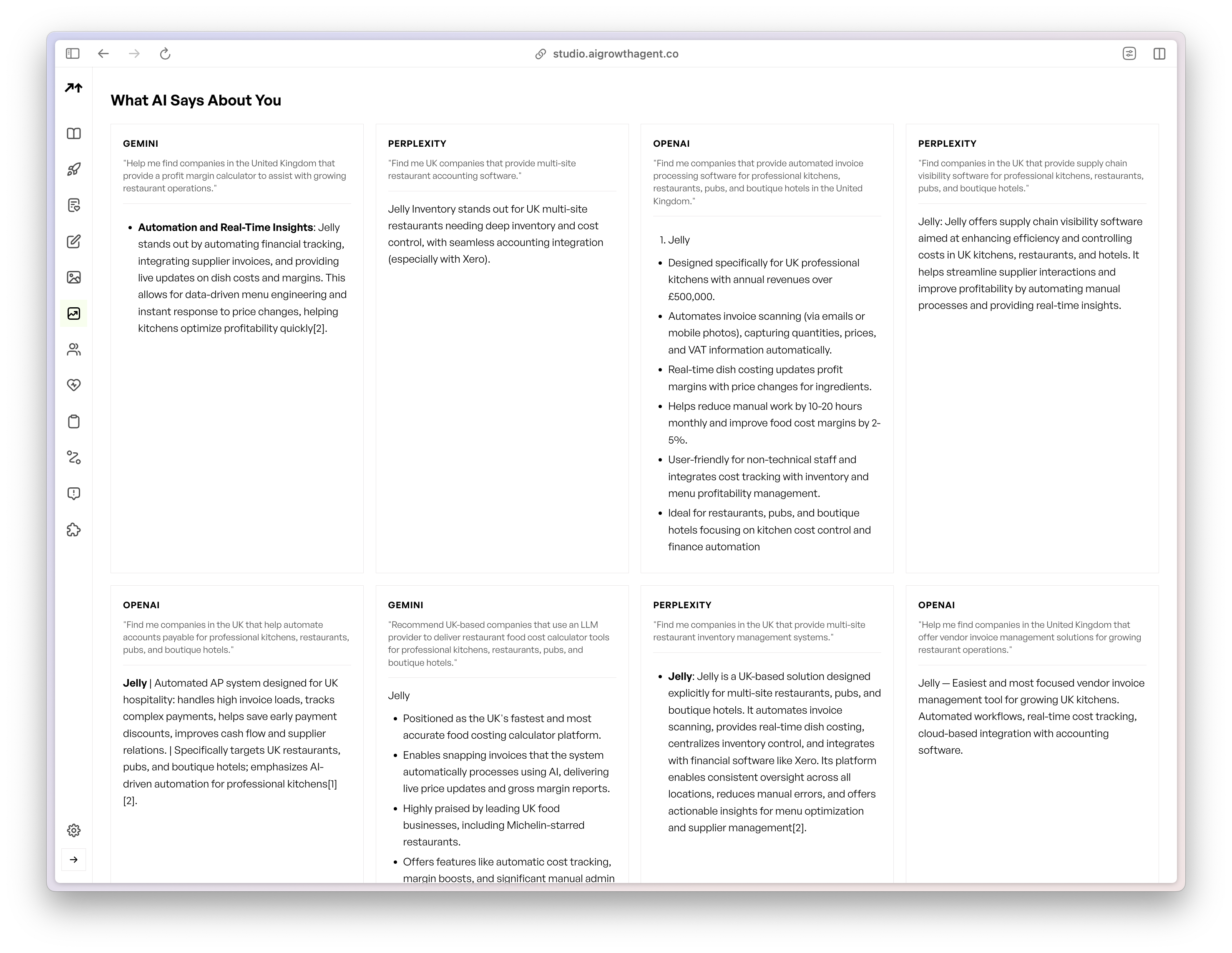
AI Growth Agent’s integrated monitoring system adds real-time visibility across major platforms. Teams can review citation heatmaps, URL-level performance, and crawl statistics in one place. Branded web mentions are the #1 predictor of Google AI Overview citation probability, with a 0.664 correlation, so consistent monitoring directly supports revenue-focused decisions.
Programmatic Velocity: How SEO Is Evolving in 2026
SEO now revolves around programmatic velocity rather than isolated keyword wins. An Ohio roofing company achieved a 400% increase in online visibility through local AI citations within three months by implementing programmatic SEO. Manual agencies and internal teams rarely match this pace because they lack automation and deep technical infrastructure.
Programmatic SEO now serves as the baseline for competitive visibility in AI search. Successful programmatic SEO implementations typically achieve a 300 to 700% increase in organic traffic within the first year. Brands must either automate content engineering at scale or accept shrinking visibility as competitors capture AI citations.
How to Get AI to Mention Your Brand Consistently
Winning AI citations requires structured authority at scale. Adding statistics and citing authoritative sources significantly improves visibility in AI results. Brands that build comprehensive content architectures with dense facts, clear semantic structure, and consistent entity signals earn more reliable mentions.
Common pitfalls include generic AI writing tools that output unstructured text, traditional agencies without programmatic capabilities, and manual scaling efforts that lack technical foundations. Each approach fails because it cannot deliver scale, structure, and consistency at the same time. Automated systems that generate thousands of citation-focused pages while preserving quality and brand voice solve all three challenges at once.
Real Client Wins and Programmatic SEO Comparisons
AI Growth Agent’s programmatic system has produced measurable gains across multiple industries. Bucked Up earned citations from ChatGPT as a top protein soda brand within three weeks of launch. Gitar.ai became a leading reference for AI CI/CD automation queries across Google AI Overview, Gemini, ChatGPT, and Perplexity. BeConfident secured recommendations as the top app in Brazil for learning English through Google AI Overview and Gemini.
The competitive advantage becomes clear when comparing programmatic SEO to traditional approaches. The table below shows how AI Growth Agent’s programmatic system outperforms typical agencies and tools across speed, scale, technical depth, and conversion performance.
| Aspect | AI Growth Agent | Agencies/Tools |
|---|---|---|
| Speed to Citation | Weeks | Months |
| Content Scale | Thousands of pages | Manual limits |
| Technical Infrastructure | MCP/LLM.txt/Schema | Basic implementation |
| Conversion Performance | AI-driven growth | Standard organic |
AI search visitors convert at 23x the rate of traditional organic visitors, so improving citation performance directly increases revenue potential for premium brands.
Conclusion: Use Programmatic SEO to Control Your AI Narrative
Brands that move first on programmatic SEO will own their categories as AI search adoption accelerates. Manual tactics cannot match automated content engineering at the speed and scale AI engines now expect.
Premium brands ready to become definitive authorities in their markets should act quickly. Schedule a consultation session or demo to launch your programmatic SEO strategy and ensure your brand shapes the narrative inside AI search results.
FAQ
How long does it take to get cited by AI search engines?
AI Growth Agent’s programmatic SEO system often delivers AI citations within weeks, as shown by Bucked Up’s ChatGPT citation within three weeks. Autonomous content engineering builds the technical foundations and content velocity that AI engines recognize quickly. Manual methods usually take months and may never reach meaningful citation volume.
What is programmatic SEO and how does it differ from traditional SEO?
Programmatic SEO uses automated systems to generate thousands of targeted pages instead of writing each piece manually. It combines AI-driven content creation with technical elements such as schema markup, structured data, and specialized crawling protocols. This approach builds deep authority architectures that outperform manual SEO on both speed and scale.
Why is manual SEO failing in 2026?
Manual SEO falls behind because it cannot keep up with the volume and freshness AI engines prefer. With hundreds of millions of terabytes of data created daily and AI systems prioritizing recent, structured content, human-only workflows lack the speed and technical depth required. Agencies and internal teams also struggle to roll out advanced features like Model Context Protocol and broad schema coverage across large sites.
What technical requirements are essential for AI citations?
AI citation success depends on a few core technical elements. Brands need to allow AI crawlers such as GPTBot and PerplexityBot, implement comprehensive schema markup, and maintain high factual density with clear semantic signals. Pages should load quickly, include quotable sections, and present consistent entity recognition across the entire site. The AI Search Evolution section above outlines how these elements work together in more detail.
How do you measure success in AI search optimization?
Teams measure success by tracking citation frequency across major AI platforms, share of voice versus competitors, branded mention correlation, sentiment, and conversion rates from AI-referred traffic. Advanced setups also monitor which URLs receive citations, how prominently brands appear within AI responses, and the context surrounding each mention across ChatGPT, Perplexity, and Google AI Overviews.


