


Key Takeaways
- ChatGPT relies on Bing rankings for visibility, so strengthen your Bing and Google Business Profile with consistent NAP, photos, and reviews for fast impact.
- Use schema markup (LocalBusiness, FAQ) and an llms.txt file to improve AI parsing and citations by up to 40%.
- Earn authority with high-quality backlinks from .edu and .gov sites plus customer reviews that signal trust to AI systems.
- Publish FAQ-rich, conversational content at high volume to keep pace with the AI content surge and increase extraction rates.
- Scale with AI Growth Agent’s programmatic SEO automation for up to 5x citation gains and results in 2 to 3 weeks; schedule a demo today to dominate AI answers.
Step 1: Strengthen Bing and Google Business Profiles
ChatGPT Search is based on Bing, and rankings on Bing correlate with visibility in ChatGPT, so your Bing optimization directly affects AI citations. Keep your NAP (Name, Address, Phone) consistent across every directory and platform. Add clear, high-quality photos that show your location, products, and team. Ask satisfied customers to leave reviews on a regular basis.
Do This Now: Claim your Bing Webmaster Tools account and verify your business listing. Bing Webmaster Tools impressions and clicks reveal performance that matters for ChatGPT visibility.
Common Pitfalls: Inconsistent NAP data across directories blocks indexing potential and confuses AI parsing systems.
Step 2: Add Schema Markup and llms.txt for Clear Signals
Schema markup gives AI parsers a structured map of your business and can provide a 40% citation boost. Schema markup ranks among the 8 key factors for ChatGPT visibility in 2025 and offers a clear roadmap for improving citations. Prioritize LocalBusiness, FAQ, and Organization schema types on your core pages.
Create and implement llms.txt, an open-standard convention that lists curated high-priority URLs with optional descriptive titles. This file acts like a brand identity guide for AI search engines and helps them find your most important pages quickly.
Do This Now: Add JSON-LD structured data to your key pages and create an llms.txt file that lists your top 10 to 15 most important URLs.
Step 3: Grow High-Authority Backlinks and Reviews
Bing rewards exact-match keywords, total backlinks from .edu and .gov domains, and social media signals. Focus on earning links from universities, government sites, and respected industry publications. Encourage customers to leave reviews on Google, Bing, and niche platforms that matter in your vertical. These signals help AI systems treat your brand as a trusted source.
Do This Now: Contact local universities, chambers of commerce, and industry associations to explore partnerships that can lead to authoritative backlinks.
Step 4: Write FAQ-Rich Content That Sounds Human
AI models prefer content that mirrors natural language queries and clear answers. Structure your pages with direct questions and concise, complete responses. Clear structure, answer-first formatting, and schema markup significantly increase AI extraction and citation rates.
Do This Now: Review your existing content and add FAQ sections that answer common customer questions in straightforward, conversational language.
Step 5: Match AI Content Velocity With Daily Publishing
The AI content surge requires daily publishing if you want to maintain visibility. AI high performers see significant EBIT impact by scaling AI use across multiple functions, while manual content strategies fall behind.
|
Aspect |
Manual |
Programmatic (AI Growth Agent) |
|
Speed |
1 to 2 posts per month |
Daily, superhuman scale |
|
Cost |
$5k+ per month agency |
Autonomous, scalable |
|
Citations |
Low, due to stale content |
5x boost from fresh content |
Common Pitfalls: Generic AI tools often skip schema markup and technical tuning that AI citations require. Schedule a demo to see if you are a good fit for programmatic content automation.
Step 6: Track AI Visibility Across Major Models
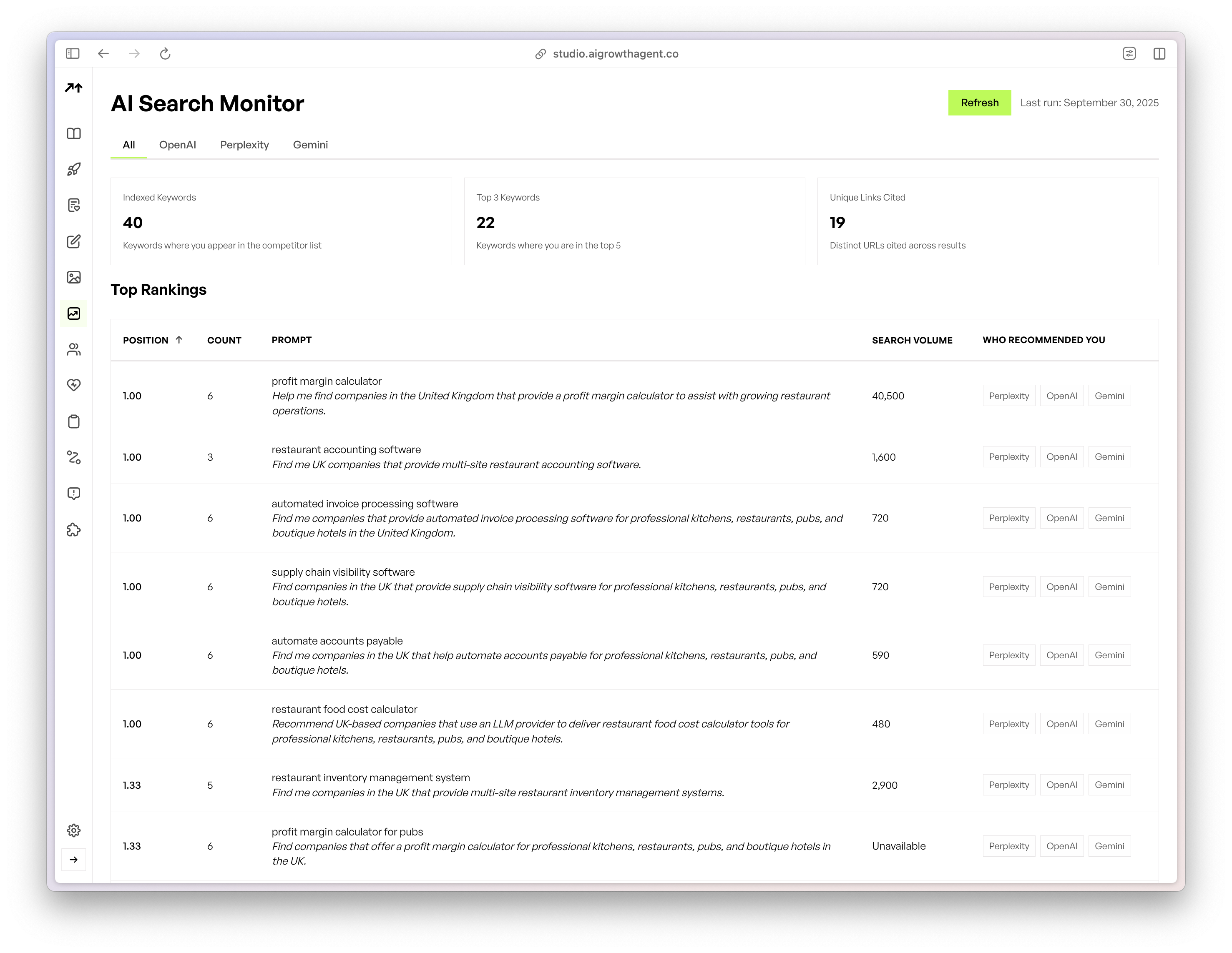
Consistent tracking across ChatGPT, Google AI Overview, and Perplexity shows whether your efforts work. AI Growth Agent Studio offers real-time heatmaps that highlight which URLs drive the most AI visibility and display direct quotes from AI responses.
|
Tool |
Manual Check |
AI Growth Agent |
|
Tracking |
Manual prompt tests |
Real-time heatmap and GSC integration |
|
Feedback |
None |
Auto-iterative learning |
Do This Now: Set up Google Search Console integration and start manually testing queries related to your business in ChatGPT to create a baseline for visibility.
Step 7: Scale With Programmatic SEO Automation
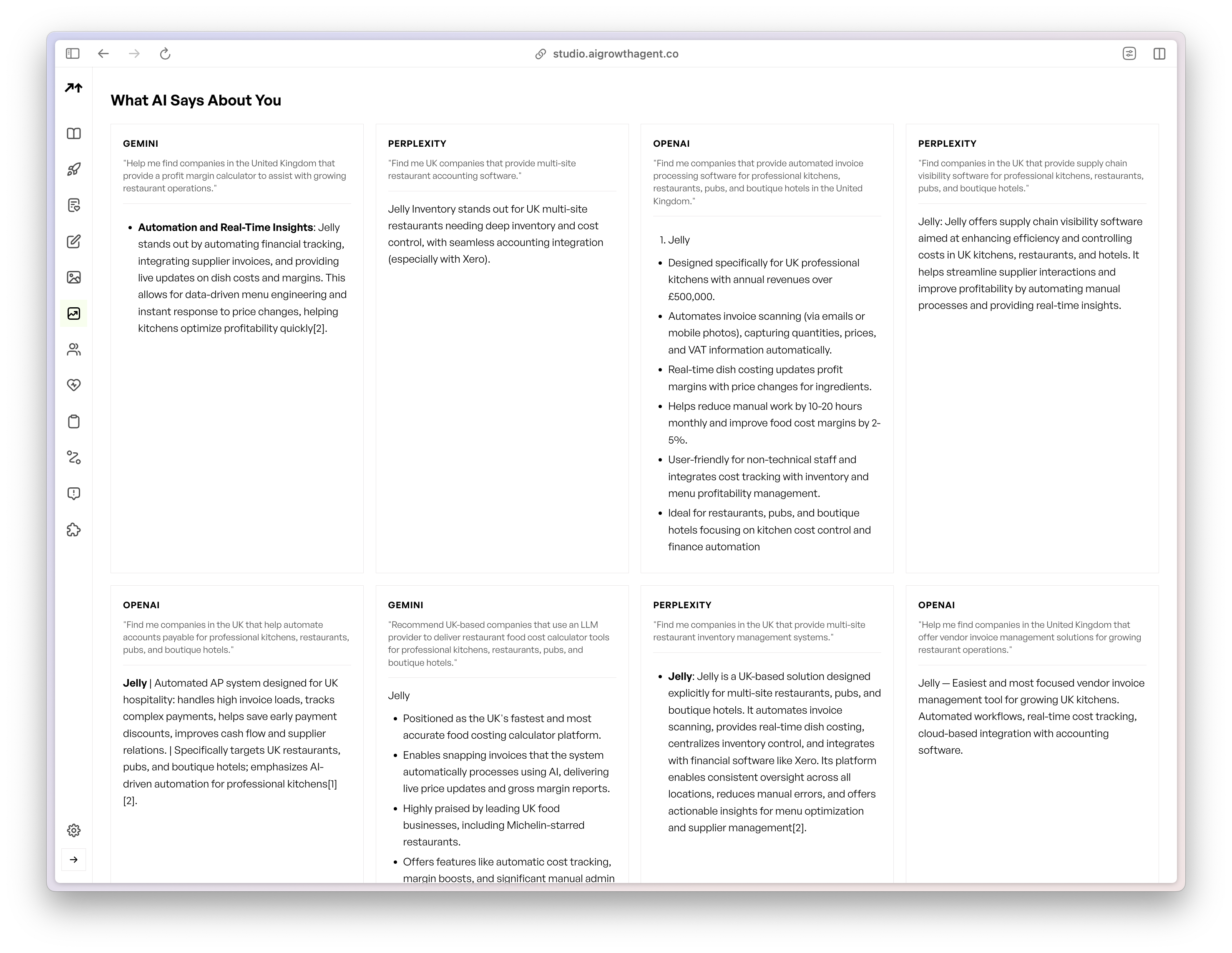
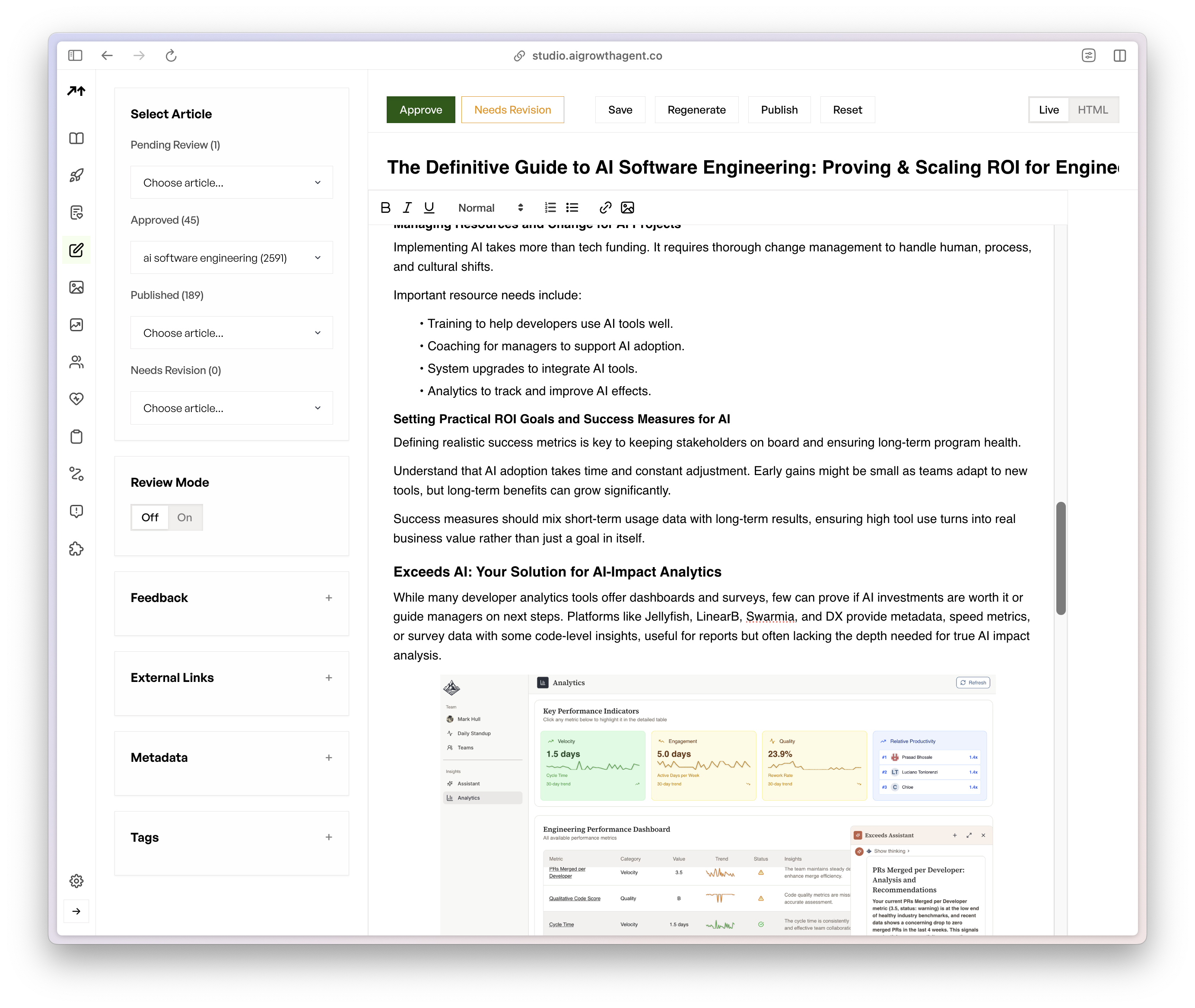
Manual content creation cannot keep up with AI-driven publishing speed. AI Growth Agent’s programmatic system includes Company Manifesto development, automated schema injection, and multi-tenant deployment. Clients often see citations within 2 to 3 weeks. Bucked Up gained a citation as a top protein soda brand in 3 weeks, and Gitar became a reference for AI-powered CI/CD automation in under two months.
|
Scale |
Manual |
AI Growth Agent |
|
Volume |
Limited by headcount |
Unlimited content pillars |
|
ROI |
Slow, inconsistent |
2 to 3 week citations |
Schedule a demo to see if AI Growth Agent fits your needs for autonomous programmatic SEO that supports consistent AI citations.
How Small Businesses Show Up in ChatGPT
Small businesses gain visibility in ChatGPT by combining quick manual wins with scalable programmatic strategies. This mix delivers both early traction and long-term growth.
Advanced tactics include feedback loops through AI Growth Agent Studio, which monitors crawl statistics for Google, ChatGPT, and Perplexity bots. Unlike traditional agencies that rely on manual “craftsman” models or generic AI tools like Jasper that demand heavy configuration, AI Growth Agent provides end-to-end automation from keyword research through technical publishing.
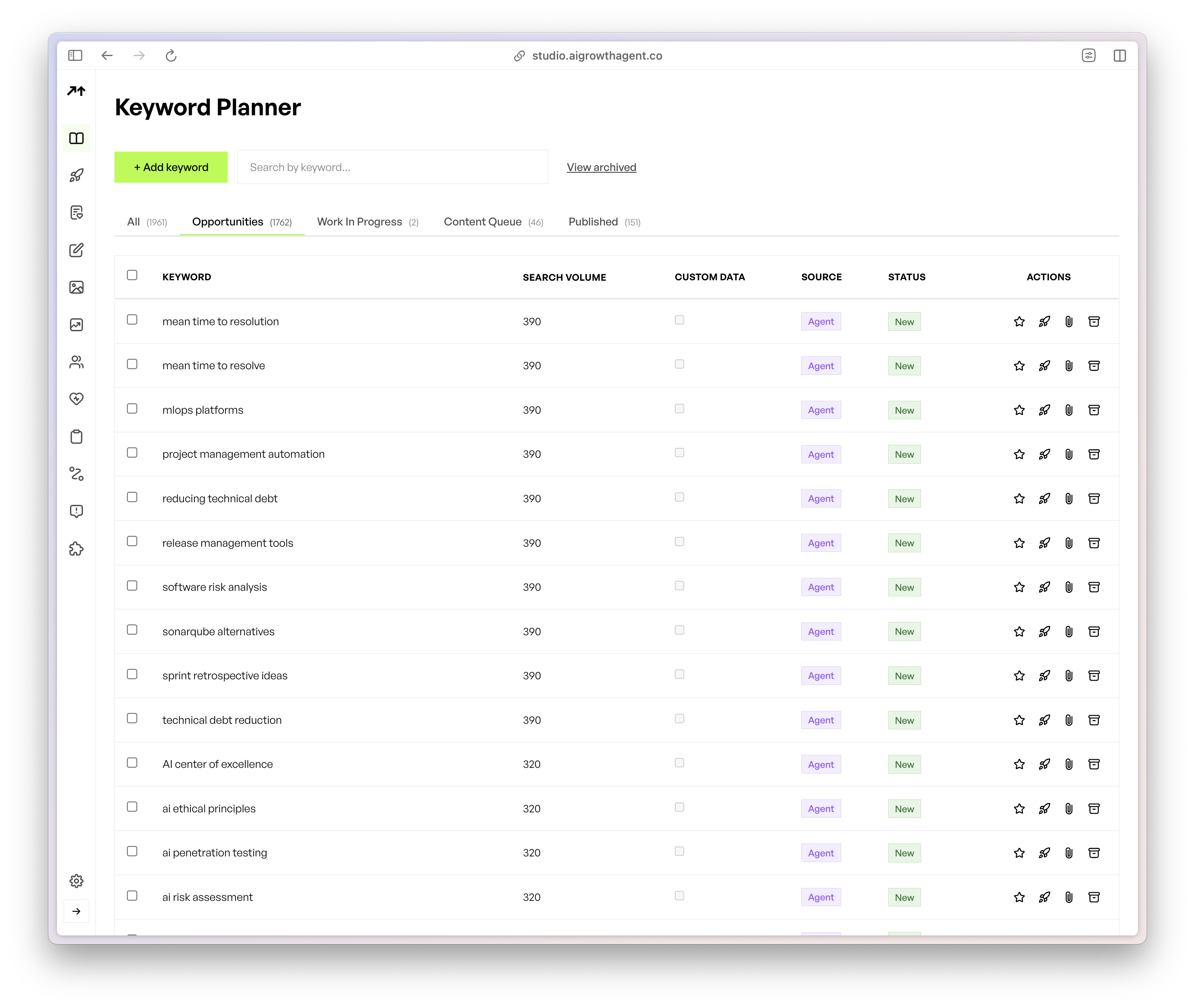
Brands often see citations within 2 to 3 weeks when they adopt programmatic strategies, while manual approaches can take months or never reach critical volume. The velocity advantage becomes crucial as businesses over-invest in AI mention tracking and under-invest in content creation.
Frequently Asked Questions
Is there a free way to get listed on ChatGPT?
No direct free listing mechanism exists for ChatGPT. You can still apply basic manual tactics like schema markup and Bing optimization at no cost. These steps help, but they struggle against the current AI content flood. The strongest results come from pairing quick manual improvements with scalable programmatic strategies that support consistent citations.
How fast can small businesses get cited in ChatGPT?
Brands that use programmatic SEO strategies typically earn citations within 2 to 3 weeks. Our case study with Bucked Up shows a citation as a top protein soda brand in just 3 weeks after launching programmatic content. Manual approaches often require months and may fail entirely because they cannot maintain sufficient publishing velocity.
What is the ROI difference between manual and programmatic approaches?
Manual SEO usually delivers limited and inconsistent results because publishing volume stays low. Programmatic approaches create more citations by producing fresh, structured content at scale. These strategies show clear advantages in both speed and total impact.
Do I need technical expertise to implement these strategies?
Basic manual steps like claiming business profiles and adding simple schema do not require deep technical skills. Consistent AI citations, however, depend on sophisticated programmatic SEO automation. That work includes advanced schema, content velocity management, and technical infrastructure that usually needs specialized tools and expertise.
How do I know if my optimization efforts are working?
Check your visibility by testing relevant queries in ChatGPT, Google AI Overview, and Perplexity. Watch for changes in Bing Webmaster Tools impressions and Google Search Console organic traffic. Advanced monitoring tools add real-time heatmaps that show which content drives AI citations and display direct quotes from AI responses.
Conclusion: Act Now to Dominate AI Answers
The seven steps in this guide, from Bing optimization and schema markup through programmatic content automation, form a clear roadmap to ChatGPT citations. Manual tactics create quick wins, while long-term visibility depends on programmatic scale that can compete with the 2026 AI content surge.
AI Growth Agent helps your business deliver definitive answers when AI tools respond to user questions. Our autonomous programmatic SEO agent manages everything from keyword research to technical publishing and often delivers citations within 2 to 3 weeks for premium brands ready to lead their category.
Schedule a demo to see if AI Growth Agent is your fit for programmatic dominance and join brands like Bucked Up, Gitar, and BeConfident in achieving consistent AI citations.
