


Last updated: January 29, 2026
Key Takeaways
- Traditional SEO falls short in the AI era, so Generative Engine Optimization (GEO) is now essential for Google Gemini citations and requires programmatic scale instead of manual efforts.
- GEO fundamentals such as statistics, expert quotes, structured formats, and long-form content over 2,900 words can increase citation rates by up to 59%.
- Strong technical foundations with schema markup, LLM.txt files, fast site performance under 200ms response, and Google-Extended crawler access can deliver up to 3x more crawls.
- Topical authority clusters that cover query fan-out variations and long-tail queries, which trigger AI Overviews about 30% of the time, depend on high-velocity content publication.
- Ongoing monitoring through Search Console and AI tools, followed by iteration, keeps performance improving. Schedule a demo with AI Growth Agent to automate GEO at scale and dominate Gemini visibility.
The Shift from SEO to GEO for Gemini Citations
Google Gemini processes search very differently from traditional engines. Gemini 3 became the default model for AI Overviews globally on January 27, 2026, and now uses query fan-out that runs hundreds of related searches at once. Content must address many query variations inside tightly connected topic clusters.
Gemini citations depend on technical prerequisites that go beyond classic SEO. Sites with server response times under 200ms and load times under 1 second receive 3x more Googlebot requests, which directly benefits LLM crawlers such as Google-Extended. Manual content production rarely reaches the speed needed to build real topical authority.
Programmatic approaches already show clear wins. Concurate increased AI-generated traffic 5x through llms.txt optimization and consideration-stage content. AI Growth Agent’s Manifesto-driven system automates these steps while keeping brand voice consistent and technically sound.
Step 1: GEO Content Fundamentals for Gemini
GEO content works best when structured for AI models first. GEO-optimized pages that include attribution, credentials, specific data, and direct quotes show a 30% higher citation likelihood. Bullet points, tables, and clear headings improve readability for both humans and models.
Authoritative sourcing strongly influences Gemini citations. Articles need verifiable statistics, expert quotes, and credible references that models can cross-check. Pieces over 2,900 words are 59% more likely to be cited than articles under 800 words. Deep coverage signals expertise and reliability.
|
GEO Tactic |
Gemini Impact |
Implementation |
AI Growth Agent Feature |
|
Statistics Integration |
30% higher citation rate |
Include verifiable data points |
Autonomous fact-checking |
|
Expert Quotes |
Stronger authority signals |
Source industry leaders |
Automated research protocols |
|
Structured Format |
Better AI parsing |
Use bullets, tables, and headers |
Template-based generation |
|
Long-form Content |
59% citation advantage |
Publish 2,900+ word articles |
Comprehensive pillar creation |
AI Growth Agent bakes these fundamentals into every asset through its research protocols, so each article carries the authority signals Gemini looks for when assigning citations.
Step 2: Technical Foundations for Gemini Crawling
Technical foundations support every successful Gemini citation strategy. Schema markup supplies structured data that clarifies entities and relationships for Gemini. Gemini’s query fan-out relies heavily on structured data to map entities and their connections.
LLM.txt files now act as a key communication layer with AI crawlers. These files live in the root directory and define how models can use content and handle attribution. Robots.txt must explicitly allow Google-Extended so Gemini can crawl and index your pages.
Site performance shapes crawl frequency and citation potential. Google prioritizes UX metrics like LCP, FID, and CLS for rankings, with Gemini and MUM handling complex queries. Fast-loading sites gain more frequent and deeper AI crawling.
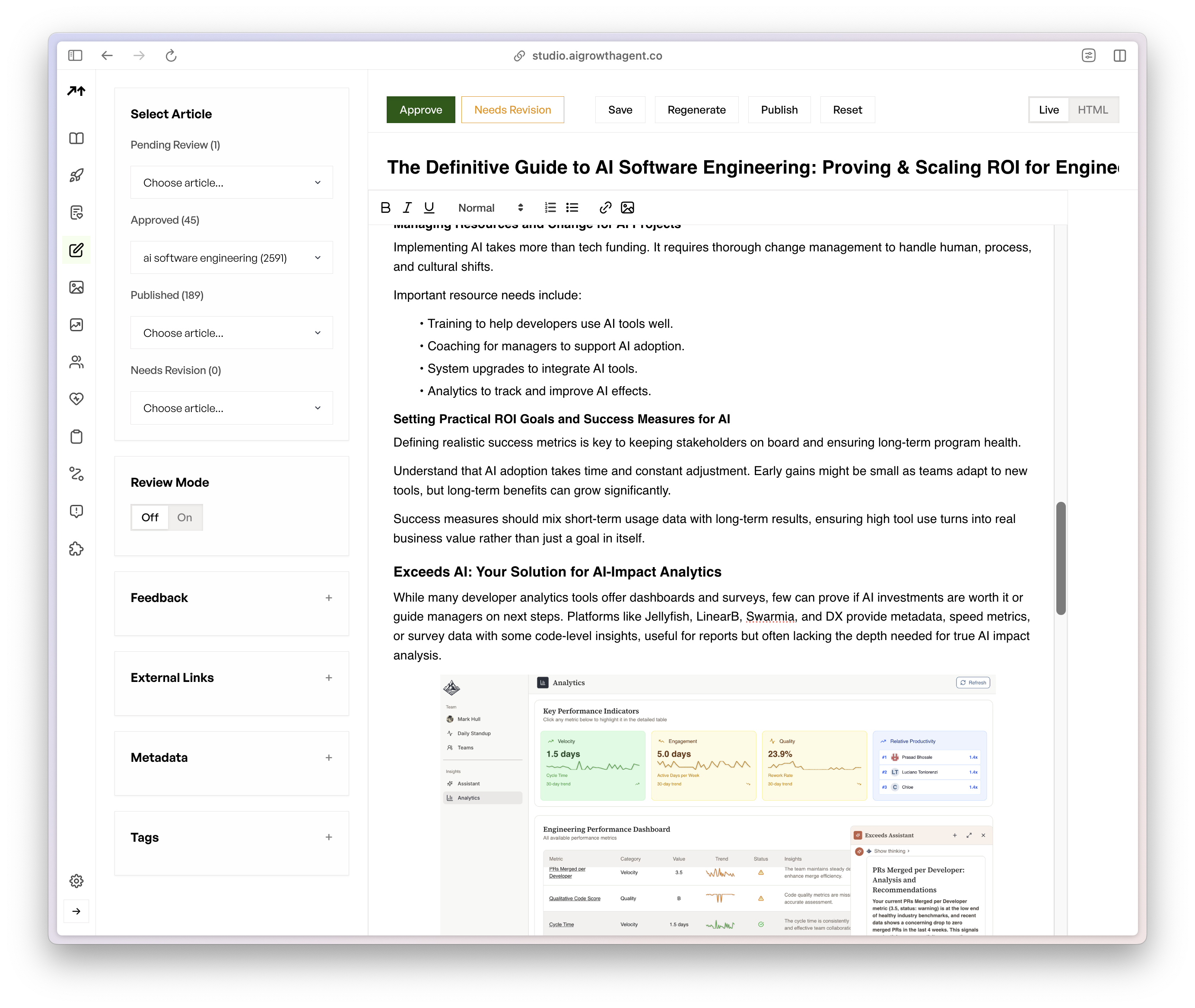
AI Growth Agent rolls out these technical improvements across entire content ecosystems. The platform manages LLM.txt files, advanced schema markup, and the first blog-focused Model Context Protocol (MCP), which lets AI systems interface directly with your content database for richer understanding.
Step 3: Topical Authority Clusters for Query Fan-out
Gemini’s query fan-out rewards brands that cover topics comprehensively instead of chasing isolated keywords. Strong GEO strategies use pillar and cluster architectures that answer many related questions inside one topic area. This structure mirrors Gemini’s internal process that explores hundreds of variations around a single query.
Keyword research for GEO focuses on semantic links and intent patterns, not just volume. Long-tail queries trigger AI Overviews 30-31% of the time. Niche clusters around these queries create strong citation opportunities.
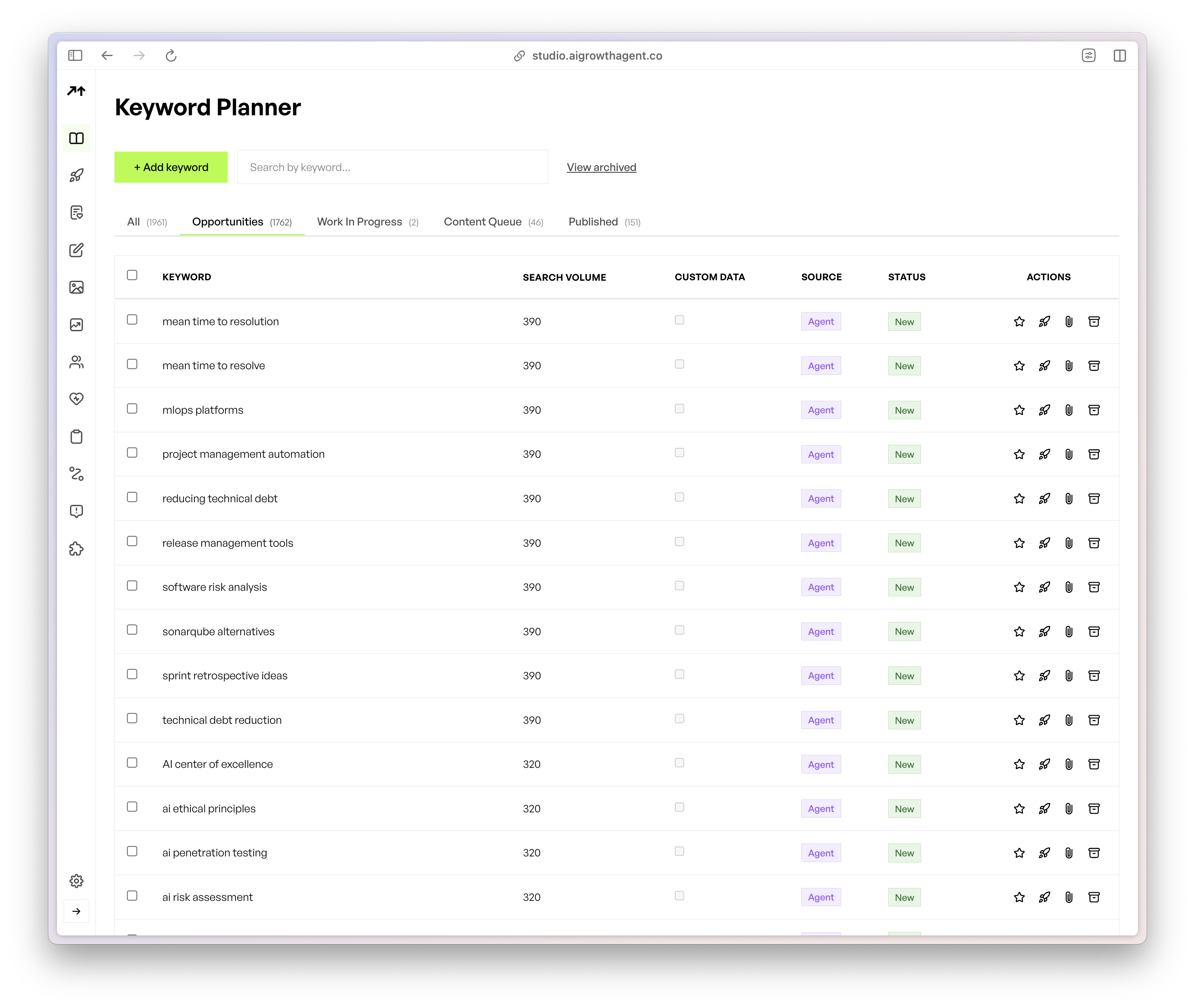
Content velocity plays a central role in building topical authority. Manual workflows rarely publish fast enough to fill every gap in a cluster. AI Growth Agent’s programmatic system supports daily publishing while keeping quality and brand voice aligned through Manifesto-driven rules.
Step 4: Formatting Content for AI Ingestion
AI-friendly formatting increases the odds of selection during summarization. Clear answers, specific statistics, and a conversational tone help models extract and reuse your content. Content must stay clearly structured, accurate, and easy to digest for the summarizing model stage in generative engines.
Attribution and credibility signals guide Gemini’s quality judgments. Expert quotes, industry benchmarks, and authoritative citations give models confidence. Articles should feature concrete data, case studies, and examples that show real-world outcomes.
|
Content Element |
AI Optimization |
Citation Impact |
Implementation |
|
Direct Answers |
Question-response structure |
Higher selection rate |
FAQ blocks and clear statements |
|
Statistical Data |
Verifiable metrics |
Authority validation |
Use industry reports and studies |
|
Expert Quotes |
Human authority signals |
Credibility boost |
Include interviews and commentary |
|
Case Studies |
Real-world evidence |
Practical validation |
Highlight client success stories |
AI Growth Agent enriches content automatically through research workflows and fact-checking so each article contains the elements Gemini prefers for citation.
Step 5: Monitoring Gemini Citations and Iterating
Effective GEO depends on constant measurement and refinement. AI Mode data has appeared in Search Console performance reports since June 17, 2025, which gives direct insight into Gemini citation behavior.
Teams should track crawl frequency, citation counts, and engagement across AI platforms. Patterns in top-performing topics and formats inform future content plans. Regular reviews of competitor citations reveal gaps where your brand can publish stronger or more complete resources.
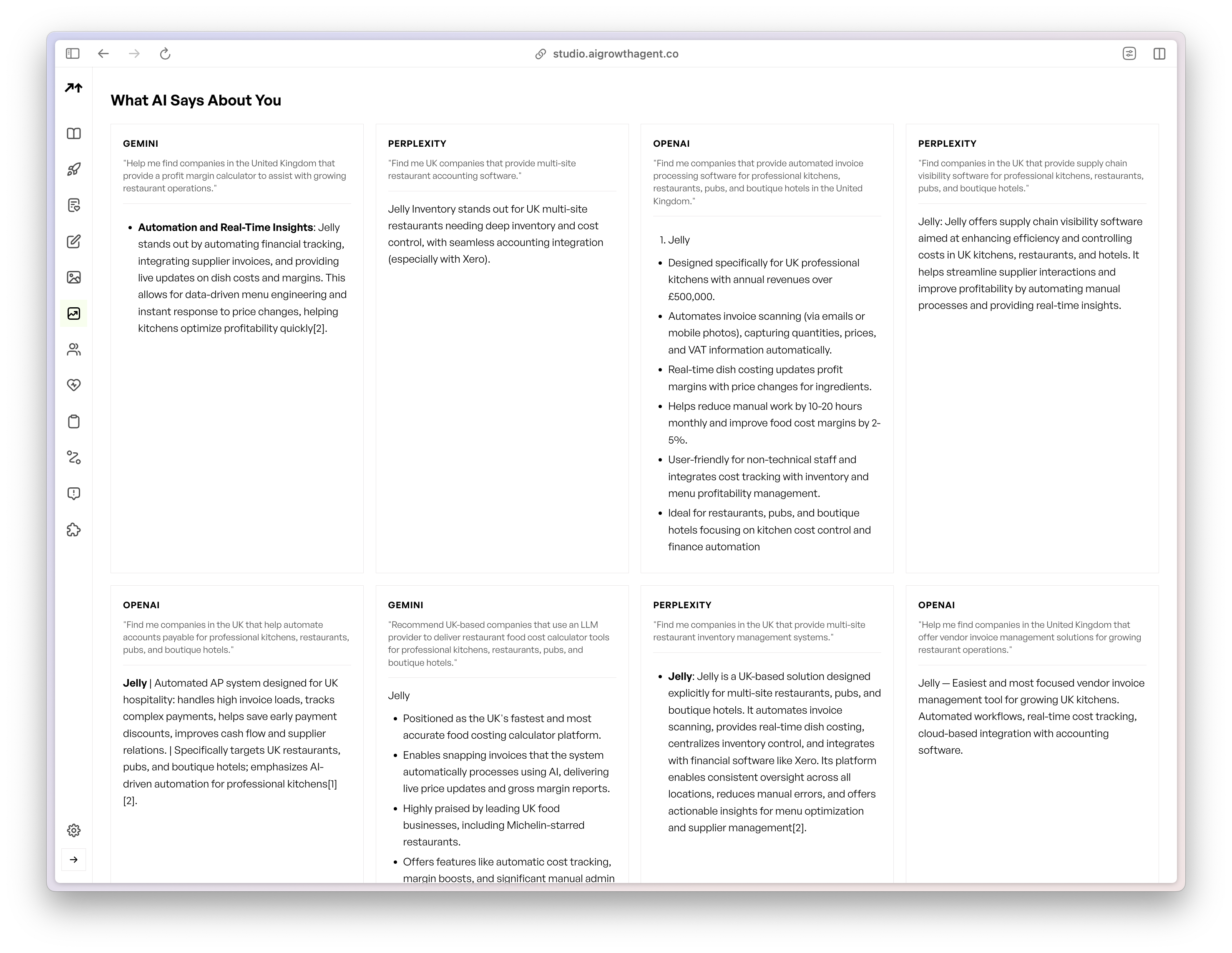
AI Growth Agent Studio centralizes this monitoring with real-time citation tracking, crawl logs, and performance heatmaps. The platform watches citations across ChatGPT, Gemini, and Perplexity, then feeds results into automated optimization loops that refine strategy over time.
Gemini vs Other AI Search Engines
Gemini indexes and surfaces content differently from other AI tools. Gemini delivers fast results that sit inside Google’s search interface and uses Google’s mature search index. This combination gives it an advantage over platforms with smaller or less refined indexes.
Perplexity relies on fresh real-time web searches, and ChatGPT leans on a more static knowledge base. Gemini blends Google’s index with live context, which rewards content that already ranks well and also meets GEO-specific requirements.
Different query processing methods shape the strategy. Perplexity treats each query as a separate search. Gemini’s query fan-out explores many related angles at once, so brands need broad topic coverage instead of narrow keyword pages.
Gemini Website Analysis Capabilities
Gemini analyzes websites through query fan-out and structured data interpretation. The system reviews site architecture, content relationships, and entity connections to judge topical authority and content quality.
Core Differences Between SEO and GEO
SEO focuses on ranking positions in traditional results, while GEO focuses on earning AI citations and recommendations. GEO depends on programmatic scale, structured data, and high publishing velocity that manual SEO workflows rarely match.
Common GEO Pitfalls and Success Stories
Technical mistakes often block Gemini citations even when the content quality looks strong. Gemini’s default grounding can create broken or irrelevant citations because it scrapes dynamic pages without full verification. Stable URLs and consistent layouts reduce these errors.
Content issues usually involve weak authority signals and generic marketing copy. Gemini favors editorial independence and journalistic standards, often citing independent publications more than brand-owned pages. Objective data and expert viewpoints help counter this tendency.
Several brands already show what effective GEO can deliver. Exceeds AI reached number one Gemini citations within three weeks using a programmatic rollout. Gitar became the leading source for “AI self-healing pipelines” across multiple AI platforms through deep topical coverage and strong technical execution.
Server performance problems also limit citation potential. Slow response times reduce crawl depth and frequency. Context window limits and file ingestion issues in Gemini can block full processing of large content, so clean structure and efficient markup matter.
Advanced GEO Use Cases for Growth Teams
GEO programs follow realistic timelines. Many brands see first Gemini citations within two to three weeks after full GEO implementation. Ongoing growth then depends on steady publishing and data-driven refinement.
Advanced GEO setups include multi-tenant deployment for portfolios, real-time content injection around breaking topics, and database-to-content automation that turns proprietary data into articles. These approaches require robust infrastructure that manual teams cannot maintain consistently.
AI Growth Agent delivers these advanced capabilities at scale. Its multi-tenant architecture supports portfolio-wide GEO, and real-time injection captures trending opportunities within minutes. Schedule a consultation session to see how programmatic GEO can expand your AI visibility.
Frequently Asked Questions
How to implement LLM.txt for AI crawlers?
Place an LLM.txt file in your site’s root directory with clear instructions for AI crawlers. Define content usage rules, attribution preferences, and crawl permissions. Ensure the file allows Google-Extended while guiding models on how to handle your content. AI Growth Agent automates LLM.txt deployment across large sites so AI crawlers receive consistent instructions.
What is the 30% rule in AI search?
The 30% rule describes how long-tail queries trigger AI Overviews about 30-31% of the time, which is higher than broad queries. This pattern gives niche content a strong chance to earn citations through focused topic clusters. Brands that cover long-tail themes thoroughly often outperform competitors chasing only high-volume keywords.
How can a business appear in ChatGPT results?
ChatGPT’s visibility follows similar principles to GEO, including structured content, authoritative sources, and solid technical foundations. However, ChatGPT uses different indexing methods and citation logic than Gemini. AI Growth Agent tracks and optimizes performance across ChatGPT, Gemini, and Perplexity to maintain broad AI search coverage.
Can Gemini analyze a website for topical authority?
Gemini analyzes websites through advanced crawling and processing. It reviews site structure, content depth, topical authority, and technical health. Query fan-out explores many related topics at once, so comprehensive coverage and structured data both support stronger analysis and citation potential.
What makes content citation-worthy for Gemini?
Citation-worthy content blends authoritative sources, clear structure, deep coverage, and strong technical performance. Articles should feature verifiable statistics, expert commentary, and direct answers to user questions. Long-form content over 2,900 words, combined with schema markup and fast loading, often receives favorable treatment from Gemini’s citation systems.
Conclusion: Programmatic GEO for Gemini Leadership
Manual SEO cannot keep pace with AI-driven content velocity or Gemini’s complex citation rules. The five-step GEO framework in this guide, which covers fundamentals, technical foundations, topical clusters, AI-ready formatting, and continuous monitoring, creates a repeatable path to Gemini citations.
Programmatic automation then turns that framework into a scalable system. AI Growth Agent’s autonomous Programmatic SEO Agent removes technical bottlenecks and speed limits that block most brands from consistent Gemini visibility.
Brands that secure authority across AI search will control future discovery. Traditional SEO agencies and basic AI tools rarely reach the scale modern GEO demands. Schedule a demo to see if you’re a good fit and learn how AI Growth Agent can position your brand as the definitive authority in your category through autonomous GEO.
