


Last updated: January 29, 2026
Key Takeaways
- AI search engines like ChatGPT and Perplexity reduce clicks by 34.5%, so brands need Generative Engine Optimization (GEO) to secure citations in AI answers.
- Traditional SEO and manual content workflows cannot keep up with AI search. Programmatic GEO with daily publishing and advanced schema is now required for visibility.
- Core GEO tactics include answer-first structures, question-based headings, LLM.txt files, and strong E-E-A-T signals that deliver 2.8× higher citation rates.
- AI Growth Agent automates keyword research, technical setup, content creation, and publishing so teams can scale AI search coverage without adding headcount.
- Brands using AI Growth Agent earn top AI recommendations in weeks. Schedule a demo with AI Growth Agent to follow the same playbook.
The New Reality: AI Search Shrinks Organic Clicks
AI search engines work differently from traditional search. ChatGPT, Perplexity, and Google AI Overviews pull from many sources, then present a single synthesized answer that replaces many clicks. This shift already reduces website clicks by 34.5%.
At the same time, AI platforms are sending more traffic overall. They generated 1.13 billion referral visits in June 2025, a 357% jump from June 2024. The opportunity grows, but only for brands that AI engines choose to cite.
Generative Engine Optimization differs from traditional SEO at a structural level. Traditional SEO focuses on keyword rankings and organic traffic. GEO focuses on being cited inside AI-generated responses where the user spends attention.
AI models now favor fresh content, clear structure, and strong E-E-A-T signals instead of simple keyword density. Top-10 organic rankings still show an 81.1% correlation with AI Overview citations, yet content format and authority signals now decide which brands appear in the final answer.
Why Manual SEO Workflows Cannot Keep Pace With AI Search
Traditional SEO agencies still rely on a manual craftsman model that breaks under AI search demands. They publish one or two articles each month and rarely have engineers who can manage advanced schema, LLM.txt files, or Model Context Protocol (MCP) integration across a full site.
Internal marketing teams run into the same wall. They juggle campaigns, reporting, and stakeholder requests, so they cannot also build and maintain a programmatic SEO system. Basic AI writing tools like Jasper generate raw text, but they skip metadata, schema injection, and publishing automation that AI engines now expect.
The velocity gap creates the real risk. 57% of marketers plan to scale content production with AI in 2026. Manual workflows cannot sustain daily output across hundreds or thousands of pages with consistent structure and quality.
As AI content volume surges, brands that publish sporadically fade from AI citations. AI engines favor sites that ship frequent, structured, and trustworthy content that fits their retrieval pipelines.
Foundational GEO Tactics: Structure, Schema, and Machine Readability
Effective GEO starts with specific structural and technical choices. AI platforms prefer an answer-first structure with a 40–60 word summary directly under the H1. This format lets models grab a clean, self-contained answer block.
Content should mirror conversational intent. Question-based H2 and H3 headings drawn from “People Also Ask” and live AI prompts help align with how users phrase real queries.
Technical setup matters just as much. Pages need schema markup for Organization, Person, Article, FAQ, and HowTo entities so models can map relationships. Sequential heading structures correlate with 2.8× higher citation likelihood, and 68.7% of cited pages use logical hierarchies.
Content also needs modular, machine-readable sections. Clean semantic markup, lists, and tables make it easier for retrieval-augmented generation (RAG) systems to ingest, chunk, and reuse your content as trusted snippets.
|
Solution |
Scale |
Technical Depth |
Autonomy |
Cost |
|
Manual Agencies |
Low (1-2/month) |
Basic |
None |
High |
|
Basic AI Writers |
Medium |
None |
Low |
Medium |
|
Monitors (Profound) |
None |
Diagnostic |
None |
Low |
|
Programmatic (AI Growth Agent) |
High (Daily) |
Advanced (MCP/LLM.txt) |
Full |
ROI-Driven |
Programmatic GEO at Scale With AI Growth Agent
Scale now decides who wins AI search. Fresh content velocity and structured formatting deliver 2.8× higher citation rates. LLM.txt files, Model Context Protocol integration, and advanced schema must appear consistently across thousands of URLs, which manual teams cannot maintain.
AI Growth Agent solves this with a dedicated Programmatic SEO Agent that automates the full content engineering lifecycle. The process starts with white-glove onboarding that produces a detailed Company Manifesto. The system then runs autonomous keyword research, configures technical infrastructure, and generates content with advanced on-page SEO baked in. Schedule a demo to see if you are a good fit.
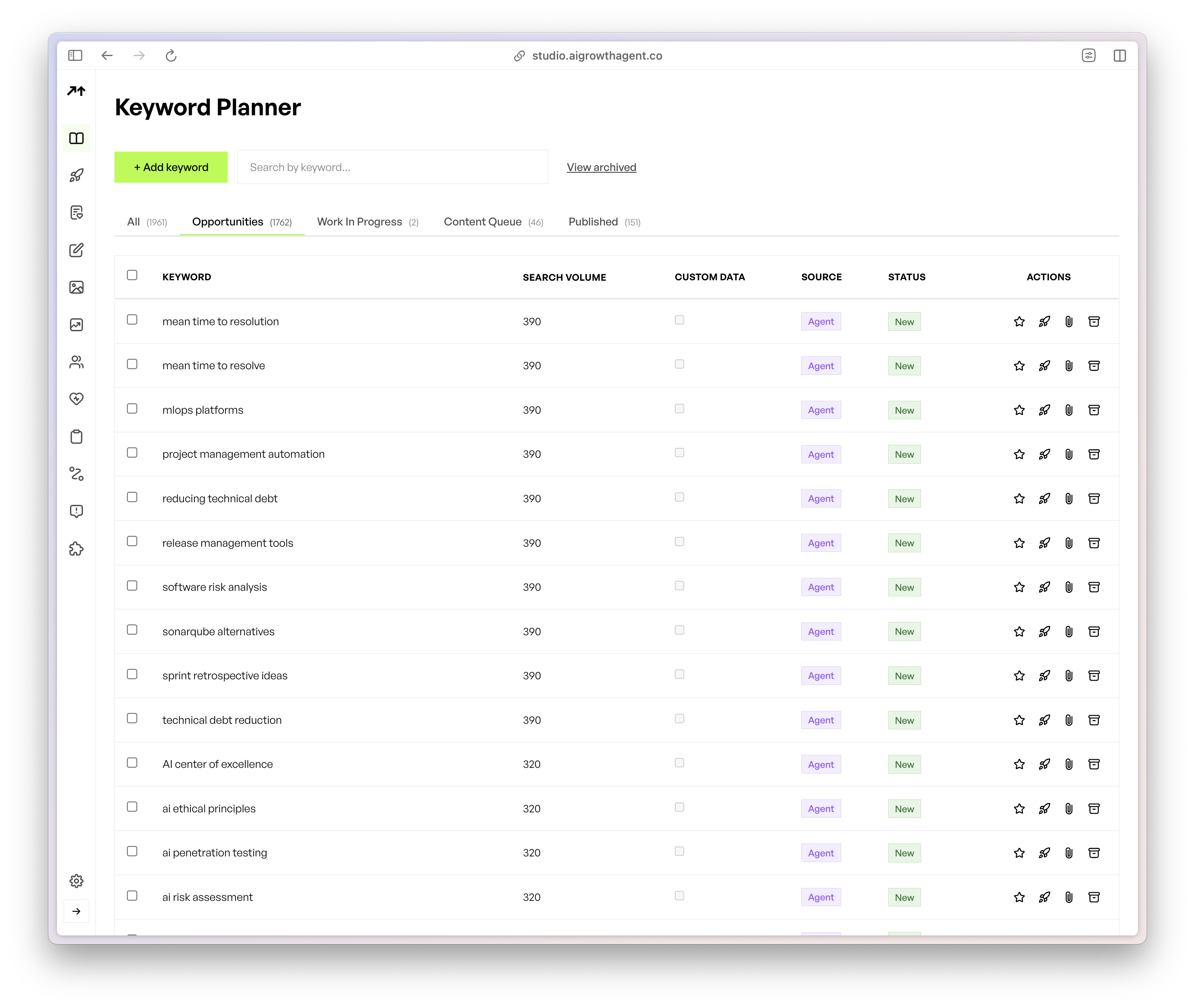
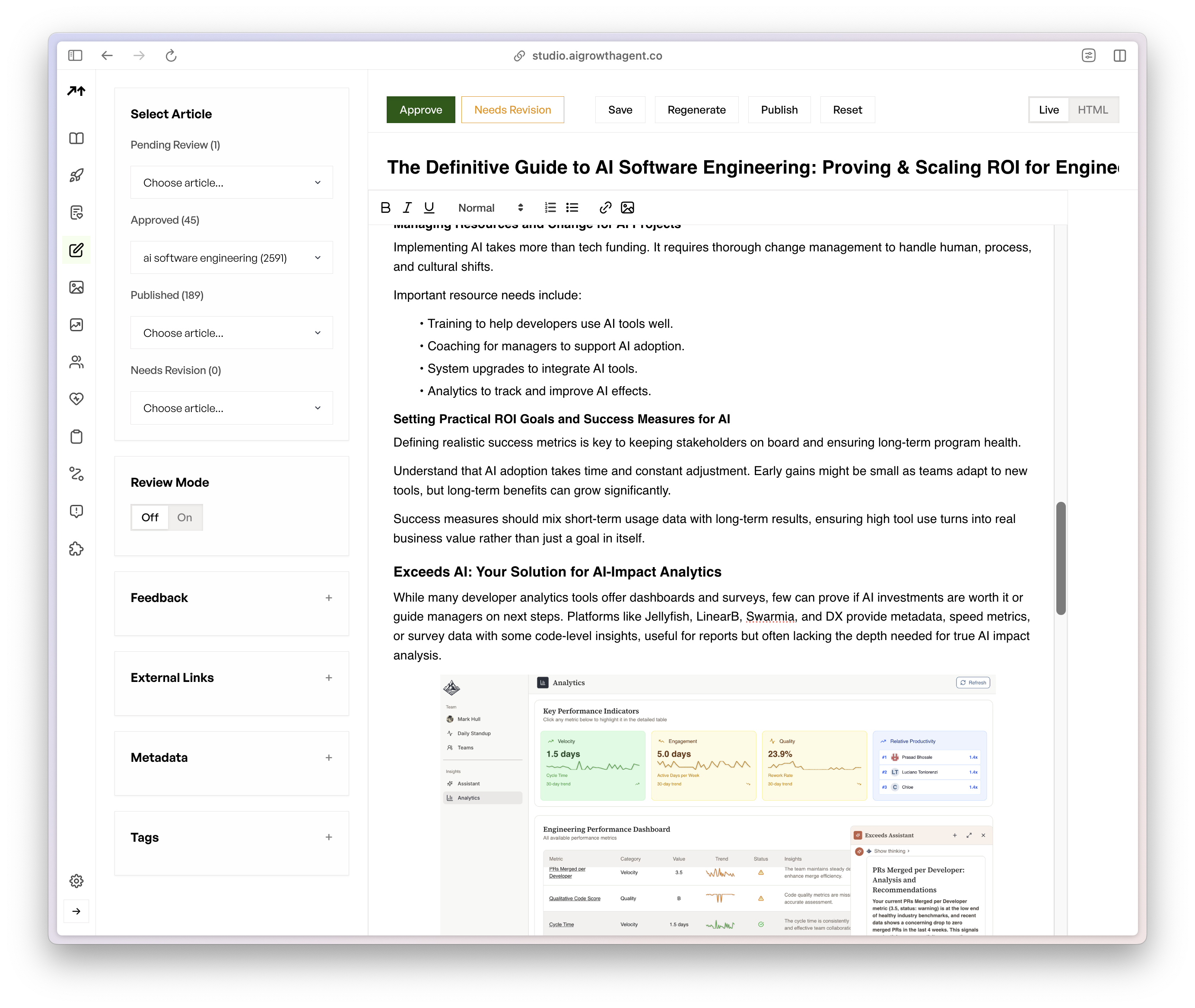
The platform supports multi-tenant deployment for portfolio companies and franchises. It can inject real-time content around trending topics and convert proprietary databases into SEO-rich articles at scale. The AI Growth Agent Studio gives teams full visibility and control, so they can edit manually or run in auto-pilot mode as the agent learns brand preferences.
Top 10 GEO Best Practices for AI Citations
- Structured data and schema markup for Organization, Article, FAQ, and HowTo entities.
- Fresh content velocity through consistent daily publishing schedules.
- Brand manifesto integration so every article reflects your positioning and voice.
- LLM.txt and MCP implementation that gives AI systems direct, structured access to your data.
- Answer-first paragraphs with 40–60-word summaries directly under H1 headings.
- E-E-A-T signals such as clear authorship, credentials, and credibility markers.
- Conversational query targeting with question-based headings and natural language phrasing.
- Modular content structure using lists, FAQs, and comparison tables for easy snippet extraction.
- Original data and case studies that provide unique insights AI models want to surface.
- Monitoring feedback loops that track AI citations and performance across engines.
Case Studies: Brands Winning AI Search With AI Growth Agent
Exceeds AI reached top Perplexity recommendations as an alternative to key competitors within two weeks of programmatic content deployment. Within three weeks, they appeared in Google AI Overview snapshots for core keywords and now show up as a leading source across ChatGPT, Google AI Overview, and Perplexity for “AI performance review tools for engineers.”
Bucked Up became the number one protein soda brand cited by ChatGPT within three weeks of publishing. They now appear as the top citation for high-intent searches such as “best protein soda.” Gitar.ai emerged as the reference brand for AI-powered CI/CD automation and now leads conversations across major AI search platforms for queries about self-healing software and automated CI build fixes.
Schedule a consultation session to explore how AI Growth Agent can apply the same GEO system to your brand.
Frequently Asked Questions: Practical Answers on GEO and AI Growth Agent
What is an LLM.txt file, and why does it matter for AI search?
An LLM.txt file is a machine-readable protocol that gives AI search engines structured information about your website’s content. It works similarly to robots.txt for web crawlers but focuses on context, authority, and content structure for language models. This file helps AI systems understand how to interpret and trust your content, which increases the chance of earning citations in AI-generated answers. AI Growth Agent automatically creates, formats, and updates LLM.txt files to support reliable AI indexing.
How can my site appear in Perplexity search results?
Perplexity favors sites that combine strong content velocity with clear structure. It looks for fresh articles with clean headings, accurate facts, and authoritative sources. Sequential heading hierarchies and question-based formatting significantly improve citation odds. AI Growth Agent’s programmatic system publishes new content daily with the technical structure that Perplexity’s algorithms reward.
Which tools help most with AI search visibility?
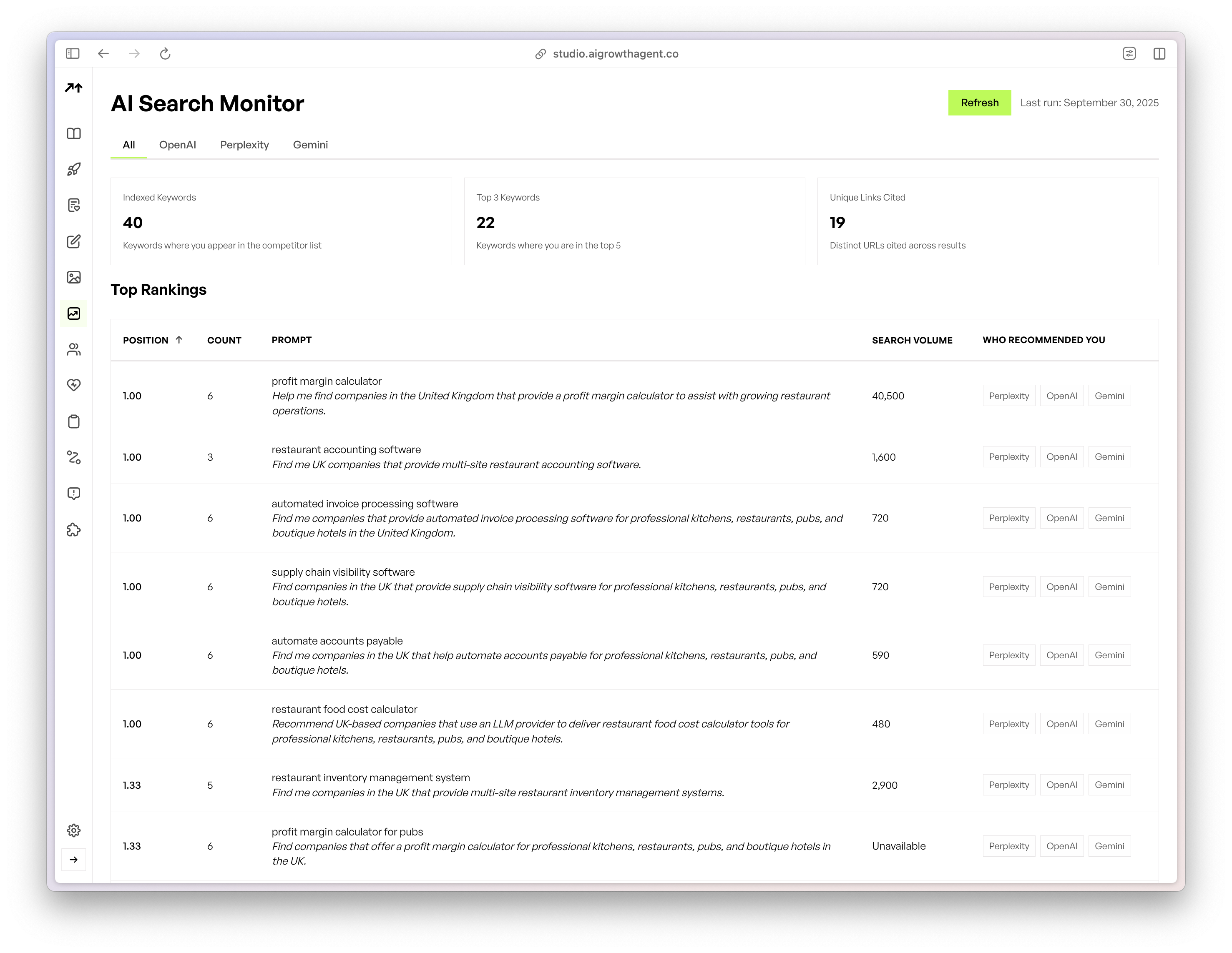
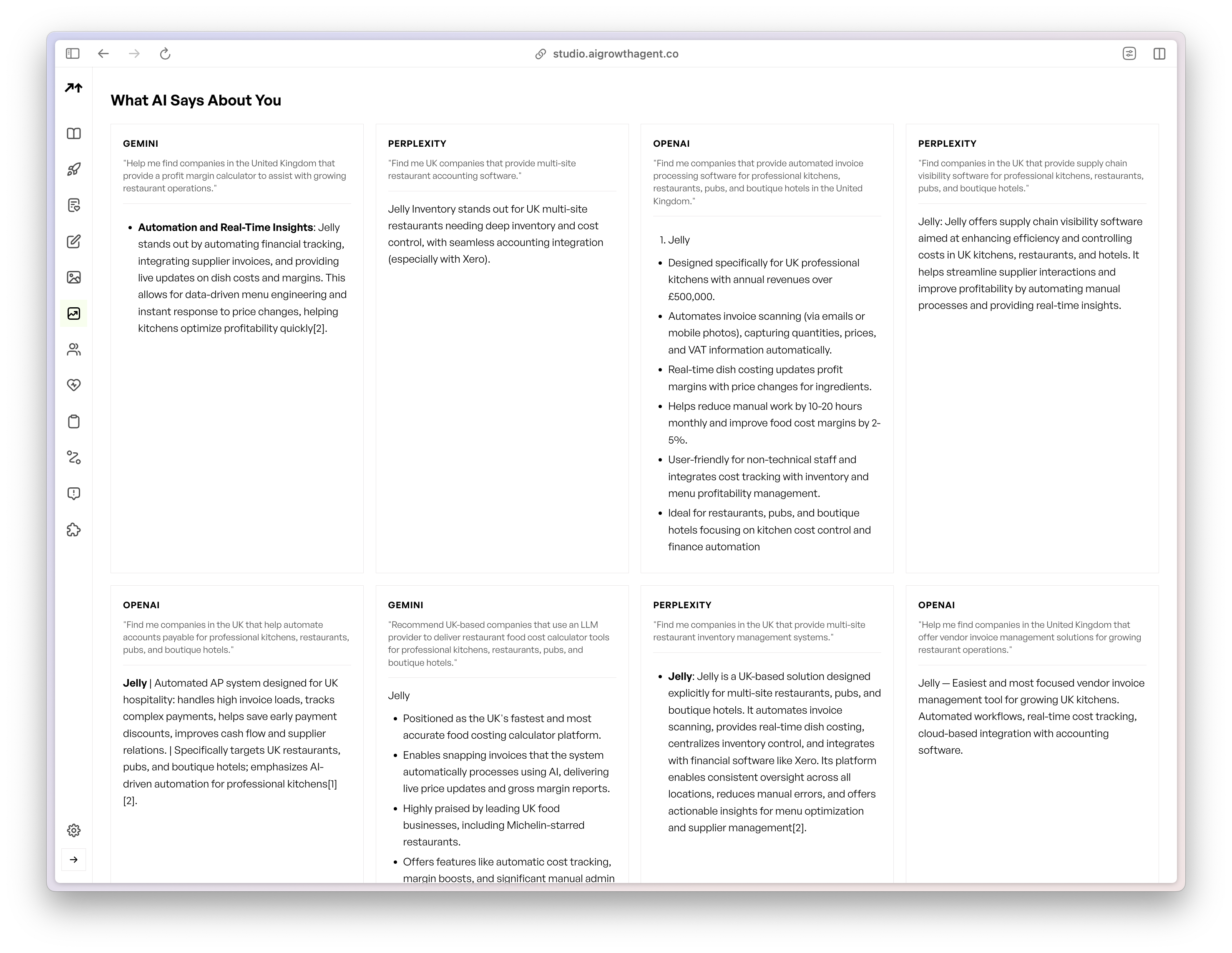
Diagnostic tools like Profound highlight gaps and opportunities, but stop at analysis. AI Growth Agent acts as the execution engine that follows through on those insights. It manages content strategy, production, technical implementation, and publishing in one workflow. The platform also monitors citations across ChatGPT, Perplexity, and Google AI Overviews, then feeds those insights back into the content engine.
How do I tailor content specifically for Perplexity?
Perplexity responds best to question-first structures, comprehensive schema, and consistent publishing. Each article should answer the core query in the opening paragraph, use conversational headings, and include supporting data and citations. Programmatic scale matters most because Perplexity rewards sites that show broad topical coverage, which manual optimization cannot deliver at volume.
How does AI search optimization differ from traditional SEO?
AI search optimization focuses on earning citations inside generated responses instead of ranking in a list of blue links. Traditional SEO emphasizes keywords and backlinks. GEO emphasizes context, semantic relationships, structured data, and direct answers to user questions. Traditional SEO still plays a key role, since top-10 organic rankings correlate with 85.79% of AI citations, so GEO and SEO work together rather than compete.
Conclusion: Move Now to Secure AI Search Leadership
AI search now requires programmatic systems that manual methods cannot match. As content volume grows and AI engines become primary discovery channels, brands need automated workflows that secure consistent citations and recommendations.
AI Growth Agent delivers the scale, technical depth, and autonomous execution needed to dominate AI search and build durable authority in your category. Schedule a demo to see if AI Growth Agent is your fit.
