


Key Takeaways
- Google Gemini AI Overviews now appear in 30% of queries and cause 15-80% organic traffic drops with 61% CTR declines from zero-click answers.
- Zero-click searches dominate 58-69% of results and cut revenue for mid-sized and informational sites by 30-60%.
- Traditional SEO cannot keep pace with AI systems because content velocity is too low. Programmatic SEO with high entity density and semantic completeness is now required for consistent citations.
- Core frameworks include the 80/20 citation rule, the 10-20-70 AI success allocation, and a 5-step system: manifesto programming, keyword clustering, schema markup, automated publishing, and citation monitoring.
- AI Growth Agent scales content without limits, publishes autonomously, and tracks citations in real time. Schedule a demo today to counter traffic losses.
Traffic Losses From Gemini: 2025-2026 Real-World Data
AI Overviews cause organic CTR drops of 61% and paid ad CTR declines of 68% when they appear. Over 58% of Google searches now end with zero clicks to external websites. At the same time, zero-click searches increased from 56% to 69% between May 2024 and May 2025.
|
Metric |
AI Overviews Present |
Traditional Blue Links |
|
Organic CTR |
0.6-2.6% |
7.3-15% |
|
Zero-Click Rate |
58%+ |
42% |
|
Traffic Impact |
15-80% decline |
Stable baseline |
Daily Mail’s analysis shows some keywords with CTR declines of 80-90% once AI Overviews dominate. The AI content flood overwhelms traditional ranking signals. Competitors gain citations when your brand lacks the content volume needed for AI indexing.
Why AI Overviews Replace Clicks and Break Traditional SEO
AI Overviews now serve 2 billion users monthly and reshape how search results deliver information. Traditional snippets encouraged clicks to websites. AI Overviews answer questions directly and remove the need for many visits.
Manual SEO cannot match the daily content volume that AI systems expect for citation consideration. Programmatic approaches become mandatory once AI Overviews sit on top of a large share of results.
Several adaptation rules guide this shift. The 30% rule shows that AI Overviews appear in 30% of queries, which demands immediate programmatic strategies. The 80/20 rule shows that 80% of AI traffic flows from 20% of citations, so visibility concentrates around high-volume publishers.
The 10-20-70 rule for AI success allocates 10% to algorithms, 20% to technology and data, and 70% to people and processes. Execution quality matters more than tools alone. The 5-3-2 rule then shapes content cadence and supports authority building through consistent social and content publishing schedules.
Core Impacts of Gemini AI Overviews on Traffic and Revenue
Around 93% of AI Search sessions end without a website click, which creates extreme zero-click dominance. Mid-sized websites ranked between 100 and 10,000 experience the steepest traffic declines from AI Overviews and Featured Snippets.
Weekly ranking volatility has risen by 30% as AI systems refresh citation preferences more often. Informational content sites suffer the most. Publishers report display ad revenue down 30-50% and affiliate revenue down 35-60%.
Defensive SEO Tactics vs Offensive AI Citation Strategies
Defensive tactics focus on protecting current rankings. These include strengthening E-E-A-T signals, adding structured data markup, and targeting long-tail keywords where AI Overviews appear less often.
Offensive strategies focus on winning citations at scale. These strategies rely on citation-focused content structures and technical depth that AI systems can easily parse.
Semantic completeness shows a correlation of r=0.87 with citation success and makes content 4.2 times more likely to appear in AI results. High entity density with 15 or more entities is now standard, with 96% of citations coming from strong E-E-A-T sources and 4.8 times higher citation rates for high-entity content.
5 Steps to Citation Optimization
- Use manifesto programming to define brand authority frameworks and core positions.
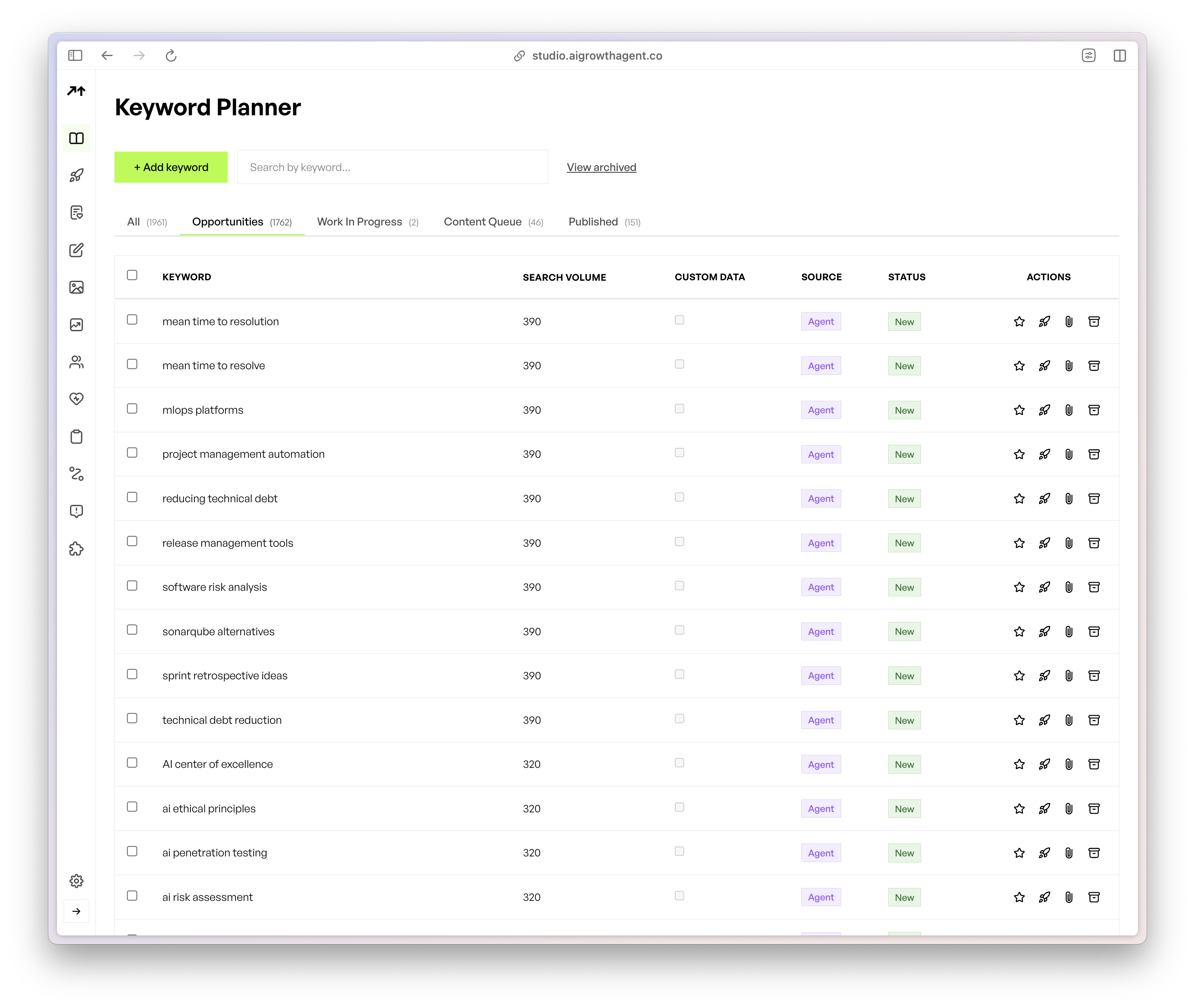
- Apply keyword clustering to cover each topic comprehensively with related pages.
- Implement schema markup, LLM.txt, and Model Context Protocol for clear AI access.
- Run automated publishing at programmatic scale to maintain consistent volume.
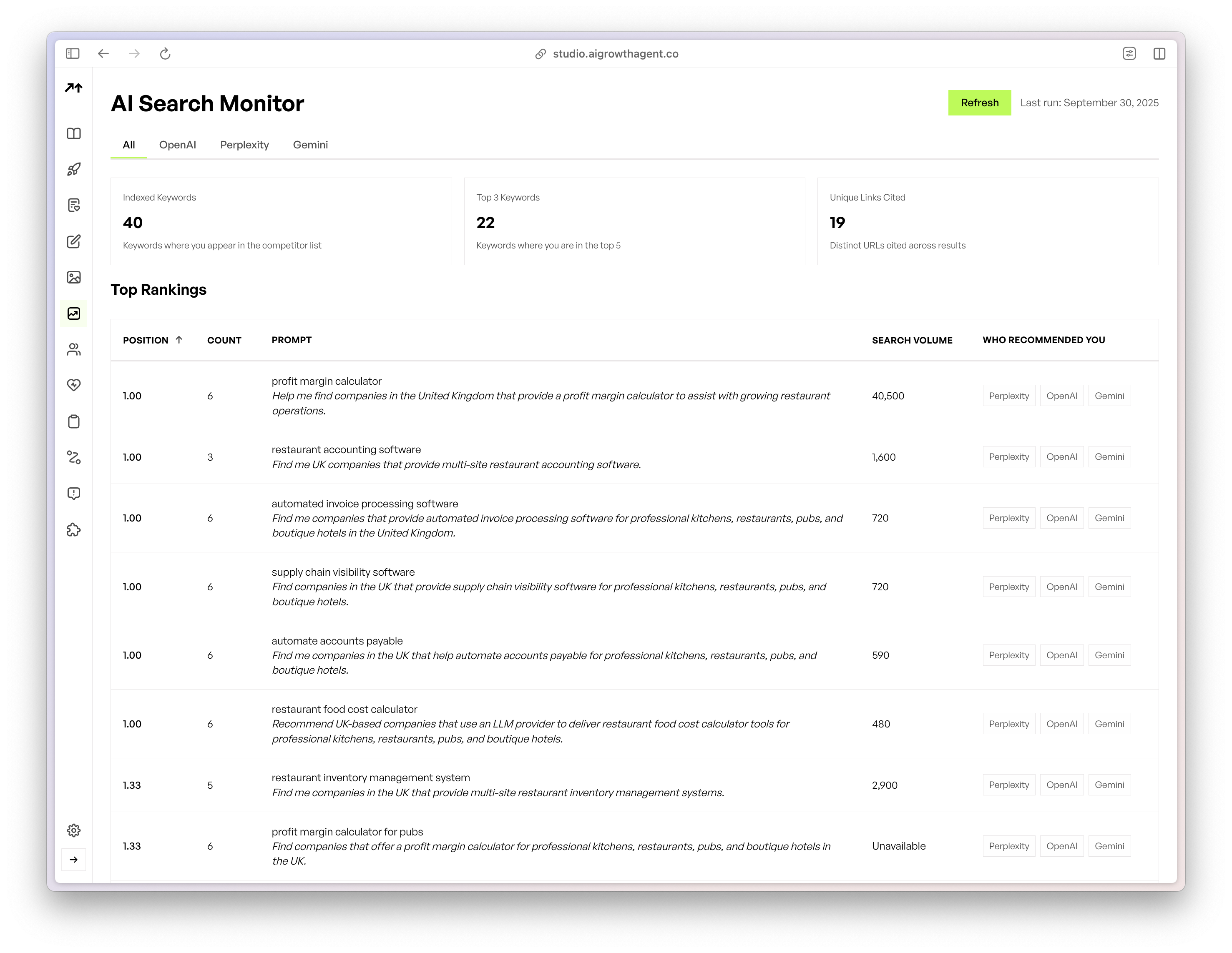
- Monitor AI citations across Gemini, ChatGPT, and Perplexity to guide iteration.
Schedule a demo to see if you’re a good fit for these citation optimization frameworks.
Programmatic SEO as the New Standard and How AI Growth Agent Leads
Programmatic SEO now sets the baseline for AI citation success. Traditional solutions cannot meet the speed and technical depth required. The comparison below highlights the main capability gaps.
|
Solution |
Publishing Speed |
Content Scale |
Citation Optimization |
|
SEO Agencies |
Monthly |
Limited by headcount |
Manual processes |
|
AI Content Tools |
Daily |
Moderate |
Basic optimization |
|
AI Growth Agent |
Daily |
Unlimited |
Autonomous with Monitor |
AI Growth Agent delivers several distinct capabilities. These include Manifesto-driven content strategy, autonomous research and publishing, advanced schema implementation, and real-time citation tracking.
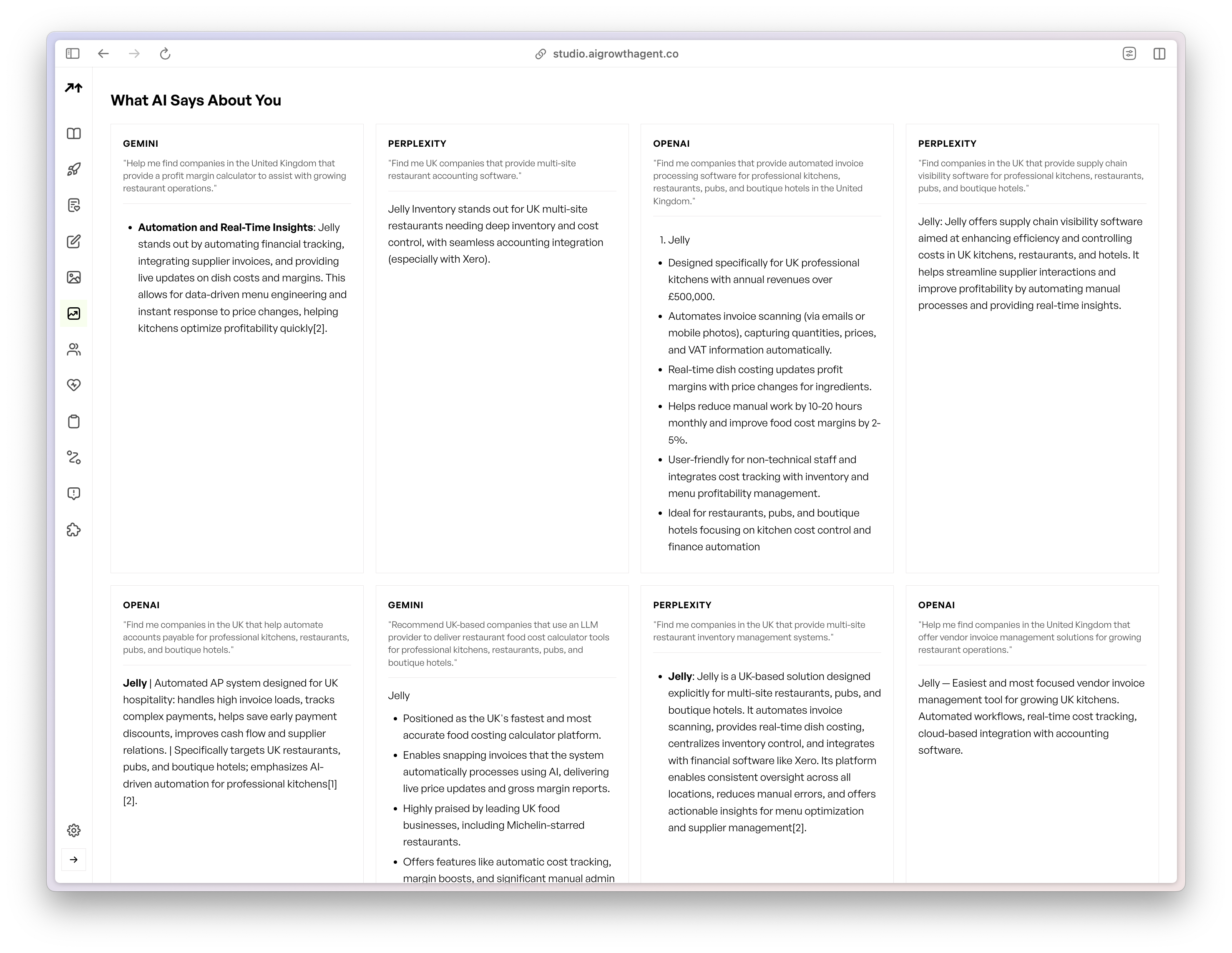
The Multi-Tenant deployment model supports portfolio-wide programmatic SEO from a single interface. Teams can manage multiple brands and domains without adding manual overhead.
Case studies show measurable outcomes. Exceeds AI reached the number one Perplexity ranking in two weeks. Bucked Up gained ChatGPT citations as the top protein soda brand within three weeks of programmatic publishing.
Frequently Asked Questions: Gemini, AI Overviews, and Programmatic SEO
What is the 30% rule in AI Overviews?
The 30% rule states that AI Overviews appear in about 30% of search queries and cause organic CTR drops of 61% when present. This share means roughly one-third of searches now bypass traditional website clicks.
Programmatic SEO becomes essential once this threshold is reached. Brands need at least 30% of their content strategy focused on AI citation optimization to offset these traffic losses.
How can a site get cited in Google Gemini AI Overviews?
Sites earn citations by combining strong E-E-A-T with an advanced technical setup. Pages need semantic completeness with self-contained answers and high entity density above 15 entities per article.
Structured data markup further improves citation odds. AI Growth Agent’s Model Context Protocol implementation strengthens this setup through direct AI system interfacing and optimized content architecture.
What is the impact of Gemini on SEO traffic in 2026?
Gemini continues to drive traffic declines of 15-80% across many industries as AI Overviews expand worldwide. Programmatic content strategies can offset these losses by winning citations at scale.
LLM systems reward high-volume, technically sound content that covers topics in depth. Brands that adopt programmatic SEO see traffic recovery and new growth as they capture citation slots that manual teams cannot reach.
How do zero-click searches affect website monetization?
Zero-click searches now account for 58-69% of queries and cut revenue by reducing page views and ad impressions. Display ad revenue has fallen 30-50% for many content businesses.
Affiliate revenue has dropped 35-60% for similar sites. Cited content in AI results still sends valuable visitors, with 23% lower bounce rates and 41% more time on site when users do click. These visitors create new chances for stronger conversion performance.
What makes programmatic SEO different from traditional SEO for AI citations?
Programmatic SEO operates at the speed and scale AI systems expect. It publishes optimized content daily instead of monthly. Traditional SEO usually focuses on single pages and manual tweaks.
Programmatic approaches build full topic clusters and structured content architectures. AI Growth Agent’s autonomous system manages the full pipeline from keyword research to schema, which removes manual bottlenecks and supports citation dominance.
Schedule a demo to see if you’re a good fit and explore programmatic SEO for your brand.
Conclusion: Turn 2026 AI Search Disruption Into an Advantage
Google Gemini’s AI Overviews continue to erode traditional website traffic. Programmatic SEO with AI Growth Agent builds the authority and technical structure that AI systems reward with citations.
Forward-looking brands will treat programmatic SEO as their default approach by 2026. These brands will capture AI citation opportunities while competitors stay stuck in manual workflows.
Schedule a demo to see if you’re a good fit for autonomous content systems that turn AI search disruption into a durable competitive edge.
