


Key Takeaways
- Google Search AI Mode creates an AI-first, conversational search experience that reduces reliance on traditional blue-link results and shifts attention to answers inside the interface.
- AI Mode selects and synthesizes information from a broad set of domains, so visibility depends on being a trusted citation source rather than ranking on a single results page.
- Manual content workflows and basic AI tools cannot keep pace with AI-driven discovery, which favors structured, high-quality, and frequently updated content at scale.
- Programmatic SEO, supported by strong technical foundations and clear E-E-A-T signals, offers a practical path to earning consistent citations in Google Search AI Mode.
- AI Growth Agent helps marketing teams operationalize this approach through autonomous programmatic SEO, technical optimization, and monitoring, and teams can explore fit by booking a demo.
Why Google Search AI Mode is the New North Star for Marketing Leaders
Introduction to AI Search Transformation
AI-enhanced search now shapes how people discover, evaluate, and compare solutions online. Marketing leaders who rely only on classic SEO risk losing visibility as AI interfaces answer more queries directly inside search.
Defining Google Search AI Mode and AI Overviews
Google Search AI Mode is an experimental Labs experience that uses a custom version of Gemini 2.0 to answer complex, multi-part questions with conversational follow-ups inside Google Search. This mode prioritizes depth and exploration instead of listing pages.
AI Overviews appear inline as one-shot summaries for eligible queries, while AI Mode runs as a separate, on-demand interface that supports multi-turn dialogue and persistent context. This expanded context changes how users move through topics and how often they click into websites.
Impact on Search and User Behavior
Google Search AI Mode removes the familiar list of 10 blue links and presents answers in a format that resembles a conversational assistant. Users can refine questions, compare options, and collect recommendations without leaving the AI view.
Zero-click behavior rises because the interface often satisfies the need inside the AI response. Brands need strategies that focus on being cited and recommended by the AI, not only on ranking positions or click volume.
How Google Search AI Mode Works for Content and SEO
Gemini 2.0 and Multi-Part Query Processing
AI Mode uses a query fan-out technique that issues multiple related searches across subtopics, web results, Knowledge Graph entries, real-time updates, and product data, then synthesizes them into a single answer. This process allows the system to handle complex research-style questions that once required several independent searches.
Source Selection and Corroboration
Analyses of AI Mode results show about seven unique domains surfaced in sidebars and only around 51 percent overlap with the top ten organic results. This pattern indicates that AI Mode prioritizes corroborated, well-structured sources over purely ranking-based signals.
AI Mode vs. AI Overviews
AI Mode runs up to about 16 simultaneous searches behind a single question, then consolidates them into one answer. AI Overviews, in contrast, layer a short AI summary on top of traditional results.
This distinction means content must support both quick extraction of clear facts and deeper exploration across related subtopics if it is to feature consistently in AI-generated responses.
The Programmatic Imperative for AI Search
Why Manual SEO Strategies Struggle
Content volume on the web grows faster than most teams can publish. Brands that add only a few new articles each month lose relative representation in the data used by AI systems, especially on broad topics.
Closing the Authority Gap with Programmatic Content
AI Mode tends to cite content that is original, specific, readable, and easy to parse, with clear evidence and unique value. Manual workflows rarely generate enough depth and coverage across a topic cluster to become a primary source for these answers.
Keeping Pace with AI-Driven Topics
AI Mode ranking logic emphasizes semantic topic relationships over simple keyword matching. This behavior favors brands that can quickly publish structured content around new themes and long-tail questions at scale.
Limitations of Traditional Agencies and Basic AI Tools
Traditional SEO agencies depend on manual research, writing, and implementation, which constrains velocity. Basic AI text tools output drafts but do not handle schema, internal linking, structured data, or AI-oriented content architecture.
These gaps make it difficult to reach the consistency and technical sophistication required for frequent AI citations.
How AI Growth Agent Addresses These Gaps
AI Growth Agent focuses on autonomous, programmatic content engineering. The platform publishes technically optimized, topic-structured content at high scale so brands can appear more often as trusted sources inside AI search experiences like Google Search AI Mode.
Strategic Opportunities to Earn Google Search AI Mode Citations
Designing Authoritative Content Architectures
Effective AI Mode optimization emphasizes clear E-E-A-T signals, structured layouts, and multimodal readiness so AI can ingest and attribute information reliably. Strong information hierarchy, internal linking, and schema markup help Gemini interpret relationships between pages.
Using Programmatic SEO for Broad Coverage
Programmatic SEO creates large, coherent sets of pages that cover hundreds or thousands of related queries across a topic. This network of content increases the likelihood that AI Mode will find, cross-check, and cite your material during its fan-out process.
AI Growth Agent Capabilities for AI Mode
AI Growth Agent provides several functions aligned to AI search behavior:
- Multi-tenant programmatic deployment that lets enterprises run content agents for multiple brands or product lines from a single interface while preserving distinct positioning.
- Real-time programmatic SEO content injection that allows teams to capture emerging topics and add expert perspectives to AI-visible content soon after news or trends appear.
- Database-to-content automation that converts proprietary datasets into structured, AI-ready articles and resources that offer evidence other sites cannot match.
- Implementation of LLM.txt files and Model Context Protocol so AI systems can index and interpret site content more accurately.
Teams that want to explore this approach can schedule a demo and review potential fit.
Implementation Framework: How AI Growth Agent Builds AI Search Authority
Onboarding and the Company Manifesto
AI Growth Agent starts with structured interviews conducted by content specialists. These sessions inform a Company Manifesto, a living reference that defines voice, positioning, and guardrails for the programmatic SEO agent.
Programmatic Keyword and Content Research
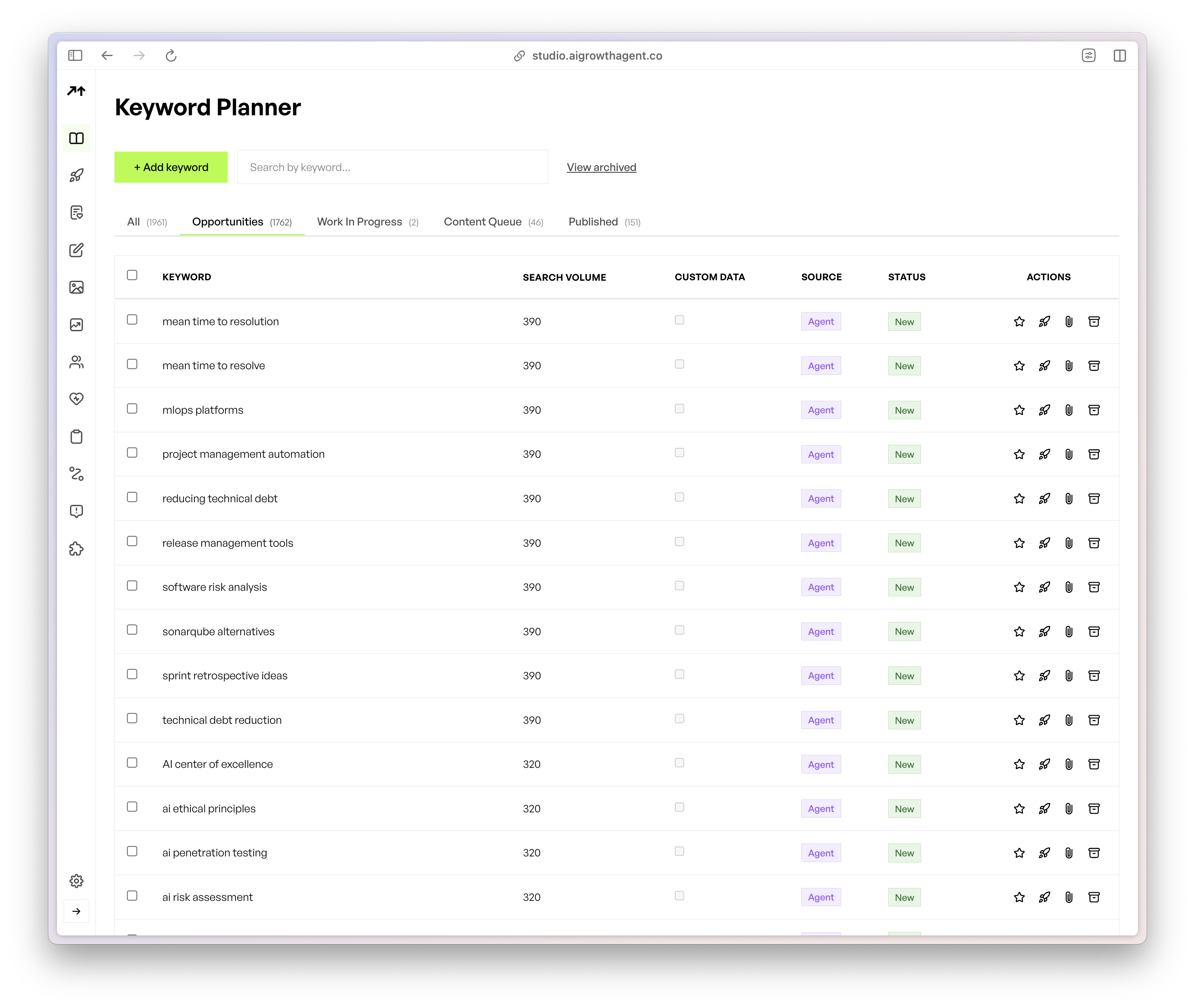
The agent evaluates tens of thousands of relevant queries and organizes them into pillars and clusters aligned with AI search behavior. This map guides which topics, angles, and formats to prioritize for Google Search AI Mode.
Technical Infrastructure for AI Indexing
AI Growth Agent deploys an optimized blog subdomain that mirrors the design of the primary site. The system configures schema markup, LLM.txt, and Model Context Protocol to help AI models efficiently crawl, interpret, and reuse the content.
The Programmatic SEO Content Agent
The agent manages the full content lifecycle, including research, drafting, fact review, internal linking, and technical optimization. Each page ships with structured data and metadata designed for AI retrieval and citation.
The AI Growth Agent Studio and AI Search Monitor
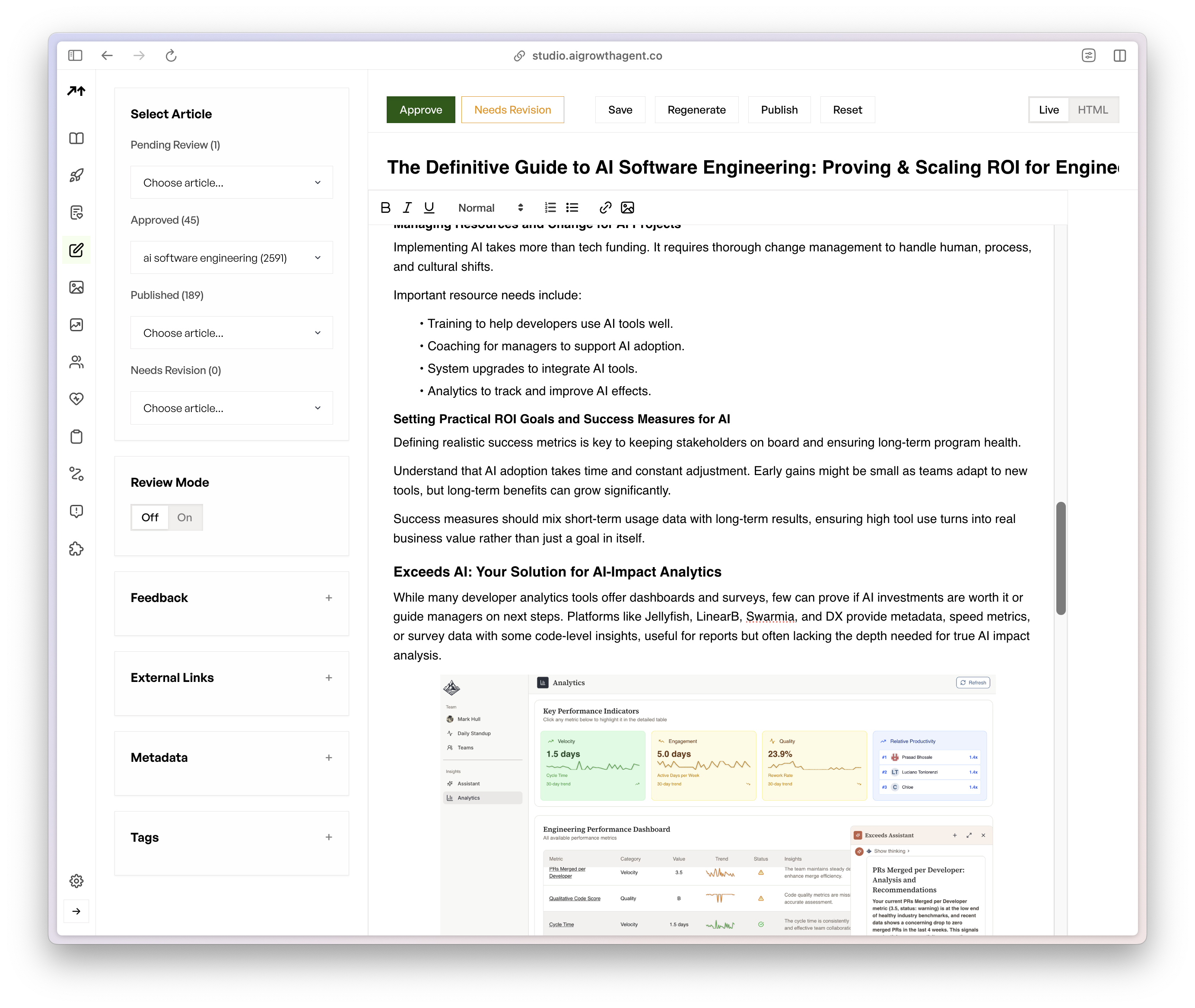
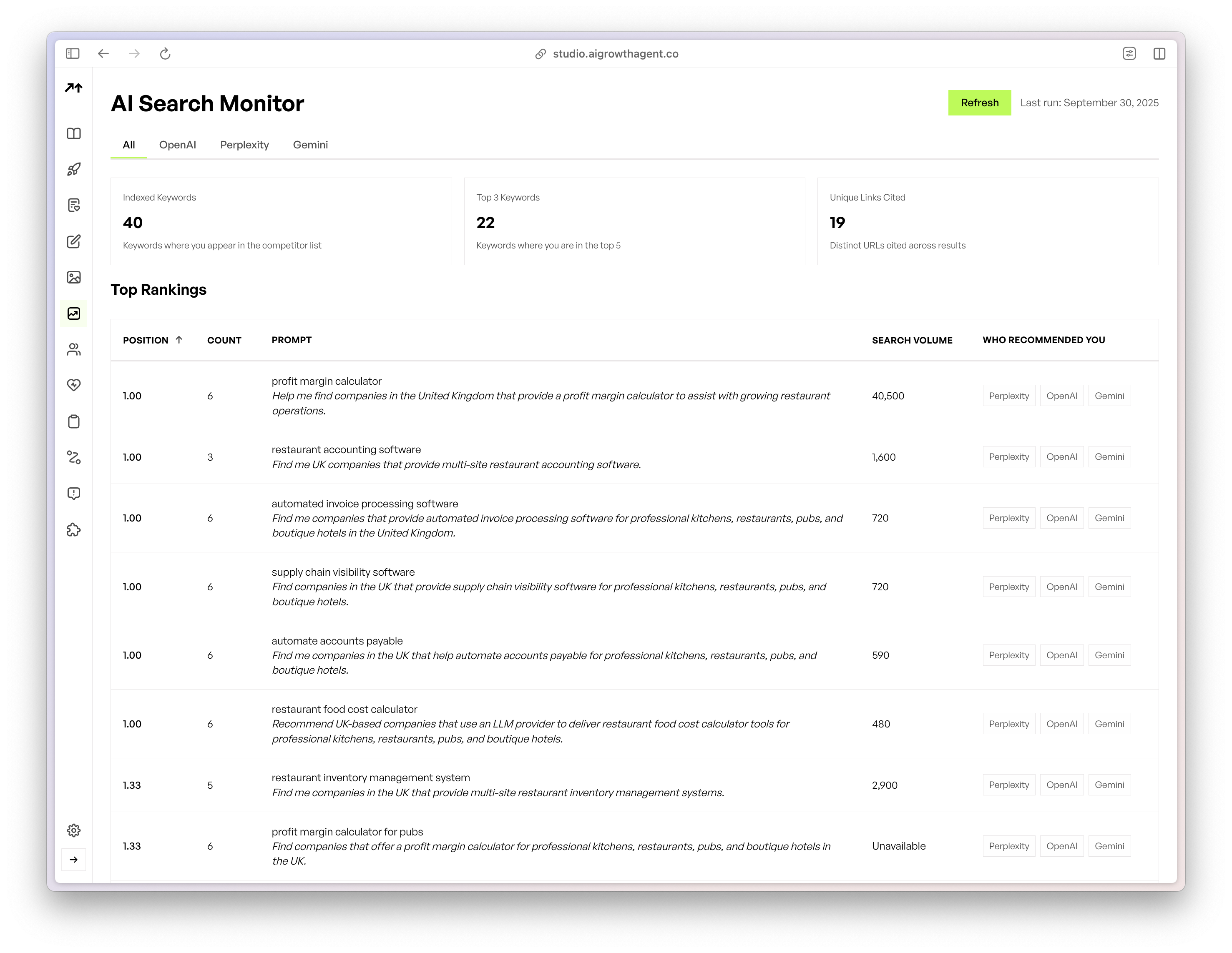
The Studio dashboard gives marketing teams visibility into topics, calendars, and performance. The AI Search Monitor tracks how often and where AI systems reference client URLs across ChatGPT, Gemini, and Perplexity and shows example excerpts from AI answers.
Illustrative Client Outcomes
Client programs have led to outcomes such as inclusion in Google AI Overview snapshots, recommendations as top alternatives inside Perplexity, and category mentions in ChatGPT within weeks of publishing focused content. These results show how citation-focused strategies can shift brand visibility inside AI assistants.
Common Challenges in Google Search AI Mode Optimization
Overlooking Zero-Click Behavior
Google Search AI Mode aims to satisfy many intents within the AI answer itself. Strategies that focus only on click-through rates overlook this shift toward answer-based visibility.
Using Outdated SEO Metrics
Visibility inside AI summaries and citations now matters more than raw ranking positions for a single keyword. Measurement frameworks need to include citation frequency, share of voice in AI responses, and branded recommendations.
Underestimating Technical Requirements
Schema, Model Context Protocol, content clustering, and structured navigation require deliberate engineering. Generic AI tools and manual publishing rarely deliver the level of technical precision needed for consistent AI Mode visibility.
Publishing Generic, Low-Authority Content
Thin, repetitive, or templated articles reduce perceived authority. AI systems favor sources that bring fresh data, clear explanations, and topic depth to the conversation.
How AI Growth Agent Reduces These Risks
AI Growth Agent combines technical implementation, content strategy, and monitoring to help brands align with AI search expectations. The programmatic model maintains quality standards while increasing volume and coverage.
Frequently Asked Questions (FAQ) about Google Search AI Mode
What is the main difference between Google AI Mode and AI Overviews?
AI Mode is an explicit, conversational experience with multi-turn context and broader source diversity. AI Overviews are short, single-response summaries inside a traditional results page. AI Mode functions as a separate environment for exploration and complex problem solving.
How does Google AI Mode affect organic traffic?
AI Mode increases zero-click behavior because many users obtain answers without leaving the interface. Success shifts from click totals to being cited and recommended in AI answers, which can still drive targeted traffic and brand preference.
What type of content does Google AI Mode tend to cite?
AI Mode often cites original, specific, and evidence-backed content that demonstrates expertise and clear E-E-A-T signals. Structured layouts, schema markup, and detailed coverage of subtopics improve citation potential, while generic or thin content is less likely to appear.
Is Google AI Mode a temporary experiment or a long-term shift?
By late 2025, AI Mode had expanded to more than 180 countries, which signaled a durable evolution in search rather than a short-term test. Planning for AI-powered discovery now supports long-term visibility.
How does AI Growth Agent support optimization for Google AI Mode?
AI Growth Agent automates research, content production, and technical SEO around programmatic SEO principles. The platform ships pages with schema, LLM.txt, and Model Context Protocol, and focuses on topics and structures that align with Gemini and other AI systems.
|
Feature |
AI Growth Agent |
Traditional SEO Agencies |
Generic AI Content Tools |
|
Content Scale |
Autonomous, high volume |
Manual, limited by headcount |
Draft text only, no full implementation |
|
Technical SEO Optimization |
Schema, LLM.txt, MCP baked in |
Basic or manual setup |
Handled by the user |
|
AI Citation Focus |
Designed for AI search citation |
Centered on classic rankings |
Unstructured output, low citation focus |
|
Deployment and Integration |
Autonomous infrastructure integration |
Manual configurations |
User-managed publishing |
Conclusion: Programmatic Content for Google Search AI Mode
AI Search as the New Baseline
Google Search AI Mode marks a lasting shift in how users interact with information. Traditional SEO tactics alone no longer provide enough coverage or authority to stand out inside AI-driven answers.
Citation as a Core Signal of Authority
Consistent citation by AI systems such as Google Search AI Mode, ChatGPT, and Perplexity now serves as a practical indicator of topical authority. Brands that earn these mentions position themselves as reliable sources in their categories.
Next Steps with AI Growth Agent
AI Growth Agent offers a programmatic path to this kind of visibility by combining content scale, technical rigor, and AI-focused monitoring. Teams that have a strong brand foundation and want to compete in AI search can book a strategy session to review objectives, evaluate fit, and see how programmatic SEO can support their Google Search AI Mode presence.
