Written by: Mariana Fonseca, Editorial Team, AI Growth Agent
Key Takeaways
-
AI-driven traffic growth in 2026 depends on programmatic SEO and AARRR strategies that can unlock 2–5x SaaS expansion.
-
The 3-3-3 rule uses three messages, three segments, and three channels to prevent dilution and lift ROI by 15–20%.
-
Autonomous A/B testing and predictive personalization can increase conversions by up to 202% through continuous, data-backed improvements.
-
GEO-optimized content flywheels and churn prediction models support AI citation dominance and Net Revenue Retention above 130%.
-
Schedule a demo with AI Growth Agent to run these full-funnel playbooks autonomously and track performance inside Studio.
How the 4 Growth Strategies Power AI-First Marketing
The Ansoff Growth Matrix provides the strategic base for scaling brands in 2026’s AI-driven landscape. Each strategy needs autonomous execution to reach the speed required for AI citation dominance. The table below shows how AI shifts each Ansoff strategy from manual work to automated execution with concrete tactics for today’s search environment.
|
Strategy |
Description |
2026 AI Execution |
|---|---|---|
|
Market Penetration |
Existing products to existing markets |
|
|
Market Development |
Existing products to new markets |
Programmatic SEO clustering for GEO optimization |
|
Product Development |
New products to existing markets |
Manifesto-driven content pillars |
|
Diversification |
New products to new markets |
Multi-tenant programmatic deployment |
These four strategic frameworks come to life through ten AI-powered tactics across the AARRR funnel, which the next sections break down step by step.
3-3-3 Rule in Growth Marketing Explained
The 3-3-3 rule structures growth campaigns around three core messages, three target segments, and three primary channels. HubSpot data shows companies publishing 16+ blog posts per month generate 3.5x more traffic than those publishing fewer than four. This focused structure keeps campaigns tight while allowing AI agents to automate content distribution across every channel. Full-funnel strategies that blend brand awareness with performance marketing lift marketing ROI by 15–20%. AI Growth Agent’s Studio adds heatmap feedback so teams can refine 3-3-3 execution automatically.
With this foundation in place, the next ten tactics show how AI operationalizes Ansoff and 3-3-3 across the full AARRR funnel.
1. AI-Orchestrated AARRR Acquisition Loops
Programmatic SEO for TOFU Authority
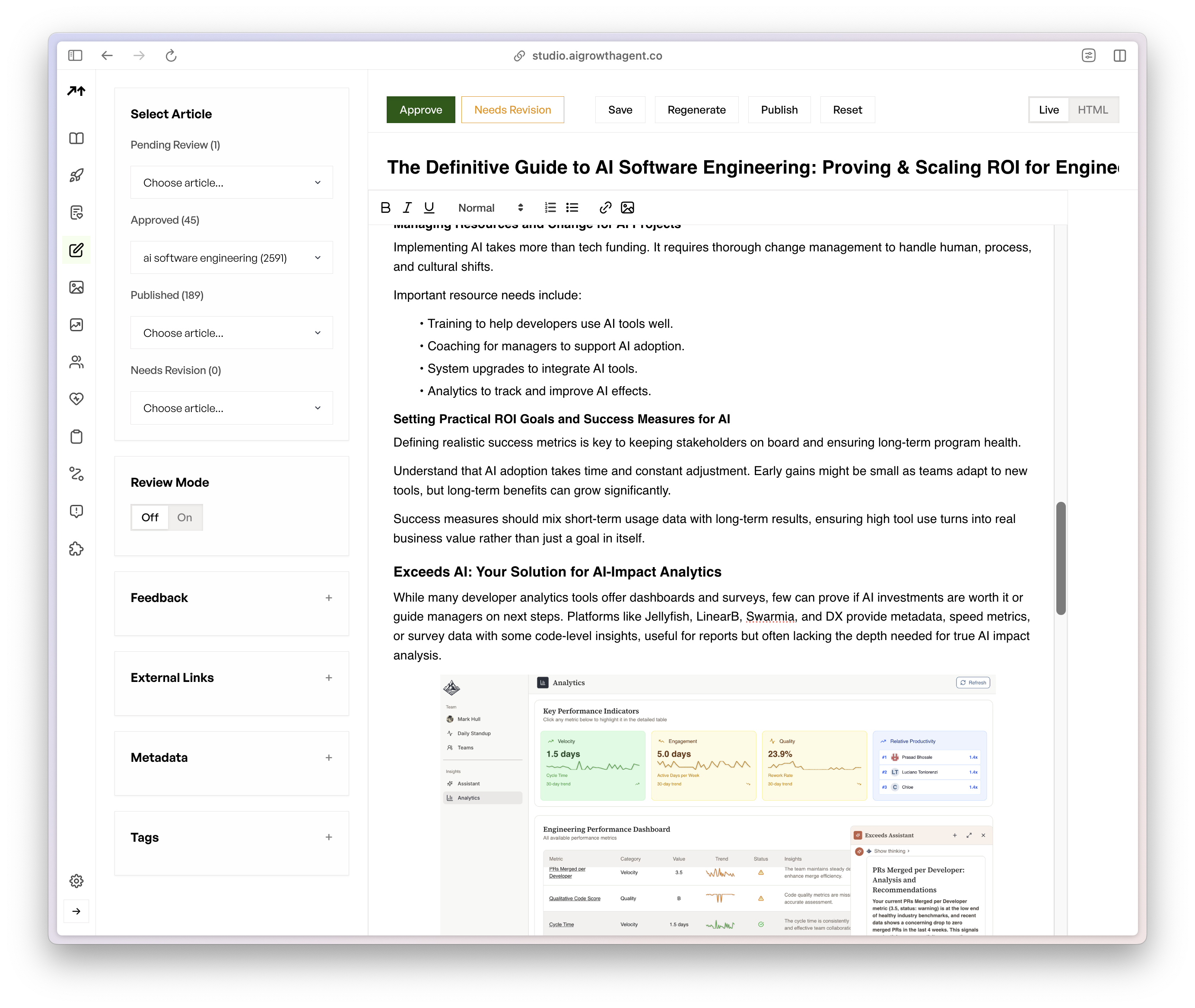
AARRR Acquisition focuses on attracting prospects through high-authority content that AI search engines cite consistently. This focus matters because Semrush research predicts AI search traffic will surpass traditional search traffic in 2028, and AI-sourced traffic converts at 4.4x the rate of traditional organic search. To capture this higher-intent traffic, teams cluster keywords around pillar topics, generate Manifesto-driven briefs, and publish at superhuman velocity. Whalesync reports that Brightline increased impressions 62x with their programmatic SEO solution, which illustrates the impact of this approach. Success metrics include 3:1 LTV:CAC ratios and citation dominance across ChatGPT, Perplexity, and Google AI Overviews, as seen in Exceeds AI’s results.
2. Predictive Personalization Engines
Omnichannel Nurturing at Scale
Activation turns acquired prospects into engaged users through AI-powered personalization that reacts to real behavior. The 3-3-3 rule guides this stage through dynamic content that serves tailored messages to each segment across email, social, and web. AdRoll’s 2026 study found that companies aligning ABM with ABA achieve 60% higher win rates. AI Growth Agent’s Studio tracks engagement patterns and automatically adjusts nurturing sequences to raise activation rates. This system shortens time-to-value and increases product adoption across user cohorts.
3. Autonomous A/B Experimentation
Data-Driven CRO Loops
Conversion rate optimization scales faster when autonomous testing replaces manual experimentation. HubSpot reports personalized CTAs convert 202% better than generic ones for lead magnets. AI agents use this type of insight to run parallel experiments across landing pages, email sequences, and content formats while still maintaining statistical significance. The system rolls out winning variations and retires weak tests without human intervention. These continuous cycles create compound gains that manual teams cannot match because of bandwidth and speed limits.
Once core conversion paths improve through experimentation, the next step is strengthening mid-funnel authority with GEO-focused content.
4. GEO-Optimized Content Flywheels
Mid-Funnel Authority Building
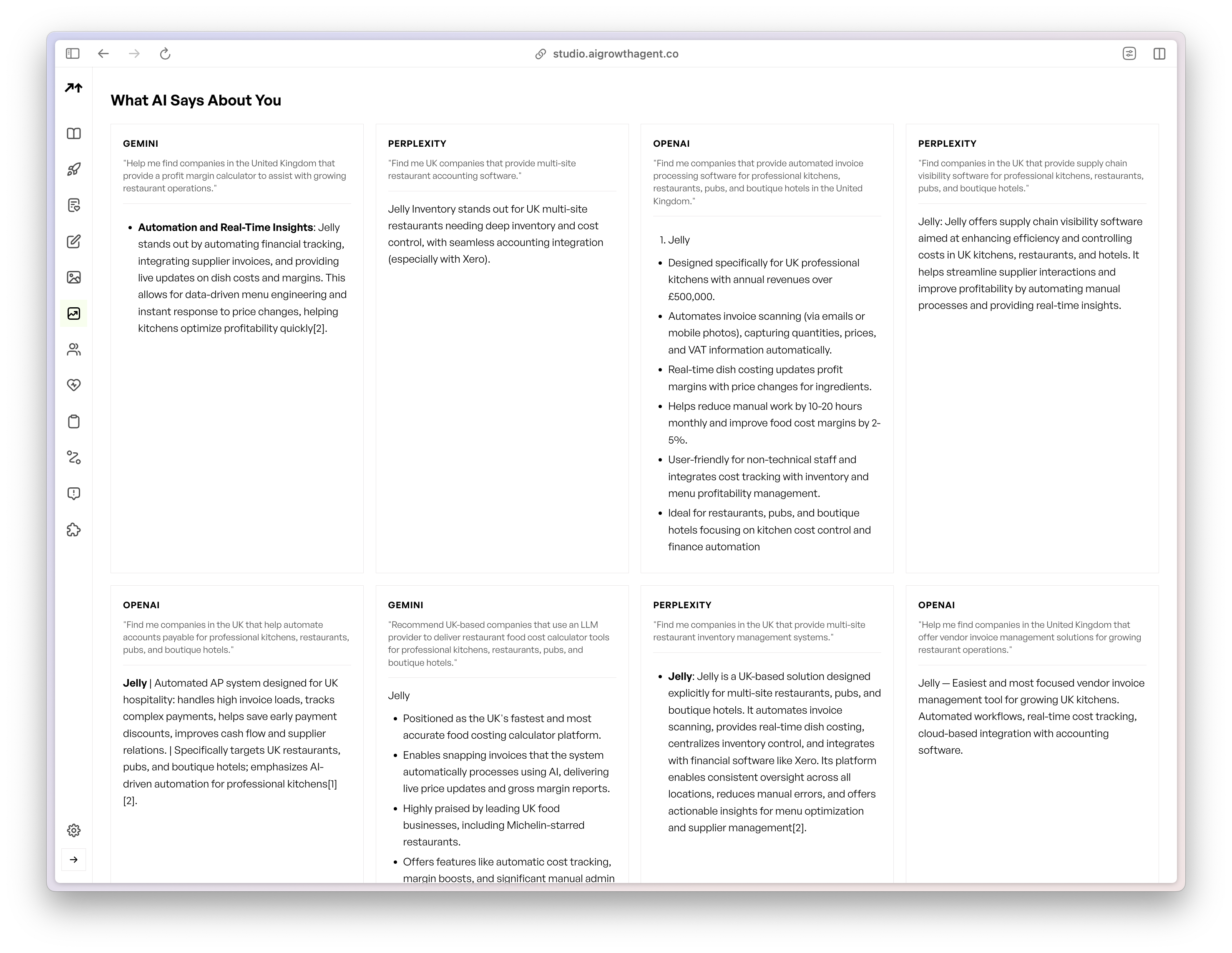
Generative Engine Optimization targets AI search engines with structured, citation-ready content that answers specific queries in depth. GEO-optimized programmatic pages for AI search include platform-specific elements: ChatGPT favors structured authoritative content like Wikipedia, Perplexity prioritizes semantic relevance, and Google AI Overviews reward E-E-A-T and structured data. Effective pages use summary-first layouts, clear entity definitions, FAQ sections, sourced statistics, and comparison tables. AI Growth Agent adds advanced schema markup and Model Context Protocol integration so AI systems can index and cite this content at high velocity.
With acquisition, activation, and mid-funnel authority in place, the next focus is keeping customers and protecting revenue.
5. Dynamic Churn Prediction Models
Retention Loops
Retention improves when predictive analytics flag at-risk customers before they churn. Top-performing SaaS companies maintain Net Revenue Retention rates exceeding 130%. AI models study usage patterns, support ticket volume, and engagement metrics to trigger automated intervention campaigns. The system then deploys personalized content, feature recommendations, and success manager outreach based on churn probability scores. AI Growth Agent also tracks citation performance so retention content appears in relevant AI search results, which adds extra touchpoints for customer success.
Ready to apply predictive retention models to your SaaS? Schedule a demo to see how AI Growth Agent automates churn intervention.
After stabilizing churn, growth teams can safely focus on expanding revenue from the customers they retain.
6. AI Upsell Recommendation Systems
BOFU Revenue Expansion
Revenue expansion uses behavioral data to uncover upsell opportunities and run targeted upgrade campaigns. For high-risk or high-reward AI-enhanced products, SaaS leaders should weigh revenue impact when moving customers from core offerings. AI systems analyze feature usage, team size growth, and integration patterns to identify which customers are ready for upgrades. Based on these signals, automated email sequences and in-app messaging deliver personalized offers at the moment customers are most likely to convert. This targeted approach increases average revenue per user and lowers sales team overhead, because intelligent lead scoring directs reps toward the highest-probability deals.
7. Viral Referral Amplifiers
Referral and Community Growth Loops
Referral programs grow faster when gamification and social proof encourage organic sharing. Referred customers usually deliver higher LTV and convert faster than paid leads. AI systems pinpoint high-value customers who are most likely to refer others and then trigger personalized referral campaigns. The platform tracks attribution across touchpoints and refines reward structures based on real conversion data. Strong referral engines create compound growth where each new customer brings in additional qualified prospects.
8. Programmatic Content Loops for Virality
Keyword Clustering and Schema Injection
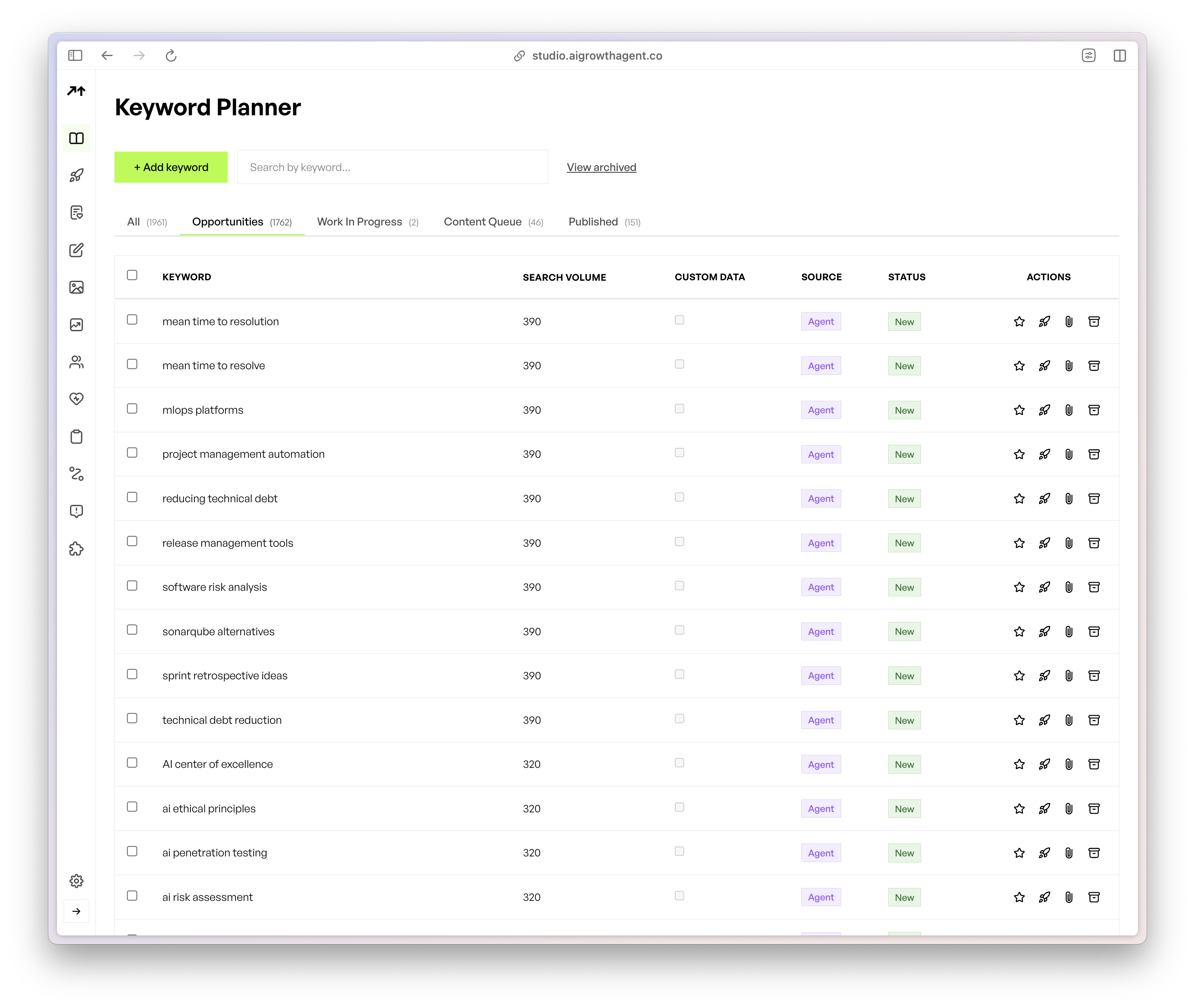
Programmatic SEO scales content production by automating keyword research, brief creation, writing, and technical setup. SaaS companies using AI agents achieve 10x content production by delegating repetitive research, drafting, and data analysis to autonomous agents. The system groups related keywords into pillar topics, generates unique articles for each cluster, and applies advanced schema markup for AI search visibility. Many SaaS teams have grown organic traffic and monthly signups through these programmatic pages. This method builds topical authority faster than manual content while keeping AI citation performance consistent.
9. Multi-Tenant pSEO Deployment
Scaling Ansoff Across Portfolios
Multi-tenant programmatic SEO lets portfolio companies run parallel content strategies from a single interface. Each brand keeps its own Manifesto, keyword plan, and voice while sharing the same AI infrastructure. This setup works especially well for private equity firms and enterprises with several product lines. Bucked Up reached ChatGPT’s number one citation for “best protein soda” within three weeks using this strategy. The system increases content output across brands without matching increases in team size or operational complexity.
10. Self-Healing Growth Pipelines
AI Search Monitoring and Feedback
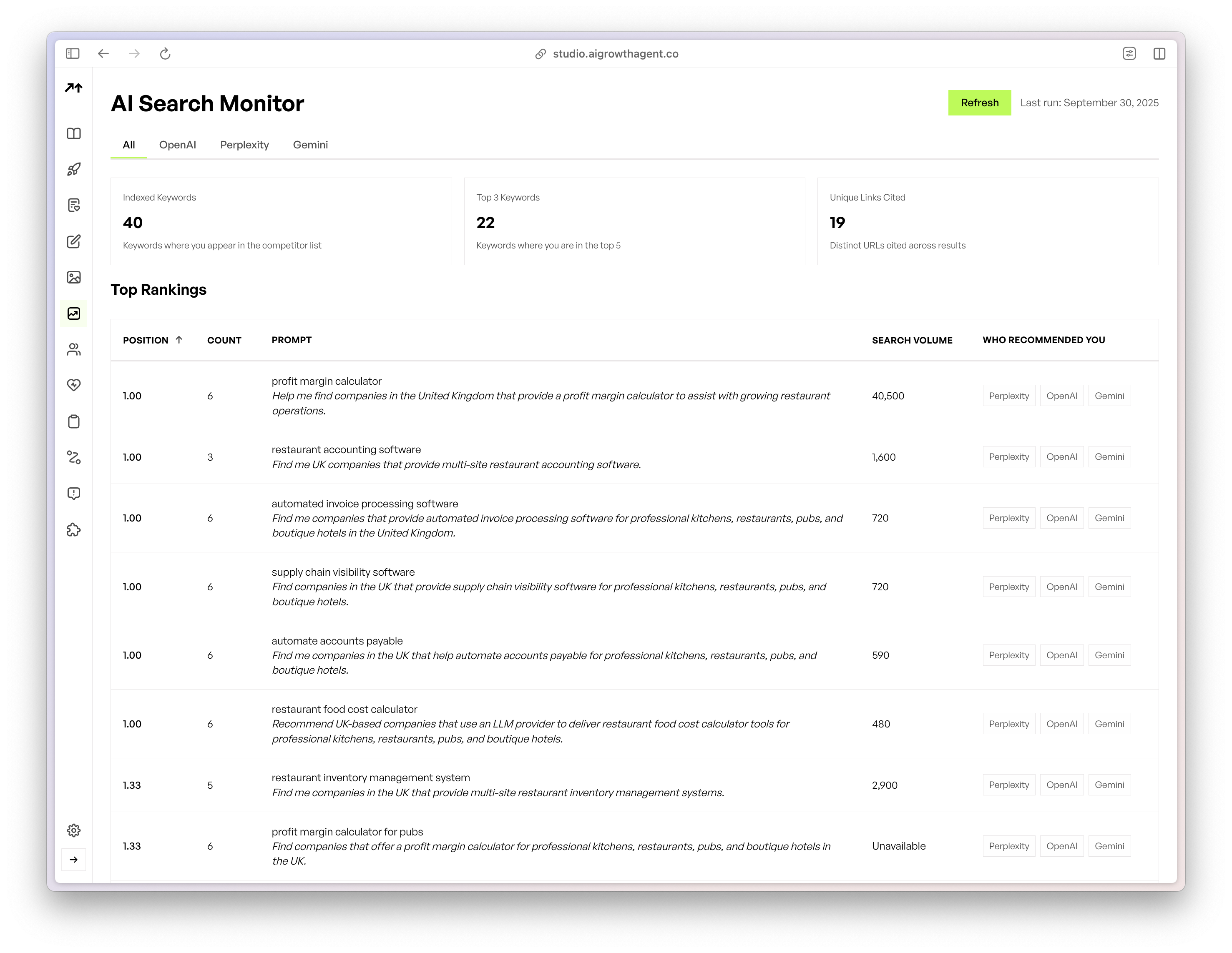
Full-funnel growth stays healthy when real-time feedback loops watch AI search performance and adjust tactics automatically. The system tracks citation velocity across ChatGPT, Perplexity, and Google AI Overviews while surfacing keyword performance heatmaps. Overlap between top 10 Google search results and Google AI Overview-cited sources dropped from 76% to 38% as of 2026. BeConfident reached Brazil’s top ranking for English learning apps using this feedback-driven method. AI Growth Agent’s Studio connects with Google Search Console to deliver unified analytics and automated optimization recommendations.
Building Your 2026 Growth Stack
These AARRR-based strategies need programmatic execution to reach the speed and scale required for AI search dominance. Most organizations now explore or use Generative AI, reshaping content creation and buyer engagement. Manual agencies and basic AI tools cannot match the technical depth needed for autonomous content engineering, schema deployment, and multi-platform optimization. AI Growth Agent combines programmatic SEO automation with real-time AI search monitoring so brands can build authority mountains that traditional methods cannot easily copy.
See how these strategies work together in a live environment. Schedule your demo to explore AI Growth Agent’s full-funnel automation.
Frequently Asked Questions
How does growth marketing differ from traditional marketing in 2026?
Growth marketing in 2026 centers on data-driven experimentation and programmatic execution instead of manual campaign management. Teams rely on rapid testing, AI-powered personalization, and autonomous optimization loops that traditional marketing groups cannot sustain at scale. Growth marketing also focuses on AI search visibility and citation velocity, which demands technical infrastructure beyond what manual processes can provide.
What are the best tools for implementing AI-powered growth marketing strategies?
The strongest stack pairs AI Growth Agent for programmatic SEO automation with tools like Surfer SEO for on-page refinement and SEMrush for keyword research. This mix supports end-to-end automation from strategy and planning through publishing and performance tracking. Platforms such as HubSpot and Salesforce can integrate with AI agents, but they lack the programmatic depth required for 2026’s competitive environment.
Can you provide examples of successful AARRR framework implementation?
Exceeds AI shows effective AARRR execution by winning strong visibility for AI performance review tools through programmatic acquisition strategies. Their activation phase used personalized onboarding sequences, retention focused on feature adoption tracking, referral programs rewarded user-generated content, and revenue expansion targeted enterprise upgrades. This integrated funnel created compound growth across every stage.
How do you measure ROI from AI-powered growth marketing campaigns?
ROI measurement starts with tracking LTV:CAC ratios of 3–5:1 for sustainable growth and CAC payback periods under 12 months for most SaaS companies. Teams also monitor AI citation velocity across ChatGPT, Perplexity, and Google AI Overviews, organic traffic gains from programmatic content, and conversion lifts from personalization engines. The crucial step is linking top-funnel AI visibility to bottom-funnel revenue through connected analytics.
What benefits does the 3-3-3 rule provide for growth marketing campaigns?
The 3-3-3 rule prevents message dilution and keeps execution focused across three core messages, three target segments, and three primary channels. This structure lets AI agents manage content distribution automatically while preserving campaign coherence. As noted earlier, this focused approach typically generates the 15–20% ROI improvements already mentioned by concentrating resources on high-impact activities instead of spreading efforts too thin. It also makes performance measurement and optimization decisions more straightforward.