Written by: Mariana Fonseca, Editorial Team, AI Growth Agent
Key Takeaways for AI-Ready Growth Teams
- AI search engines reward daily programmatic content velocity. Structure teams around six core roles following the 40-40-20 rule so analysis, execution, and iteration stay balanced.
- Hybrid pod models with 3 pods (acquisition, retention, expansion), 3 roles per pod, and 3 weekly experiments scale reliably in 50-500 employee companies.
- AI agents for autonomous SEO and content creation cut costs by 91-94% while helping brands earn top AI citations faster than traditional teams.
- Templates, hiring playbooks, and quarterly reviews keep structures scalable and prevent silos, weak engineering support, and low AI fluency.
- Measure success through traffic growth, AI citations, and ROI. Explore how AI Growth Agent can accelerate your programmatic SEO and support these metrics.
Prerequisites: Assess Your Starting Point
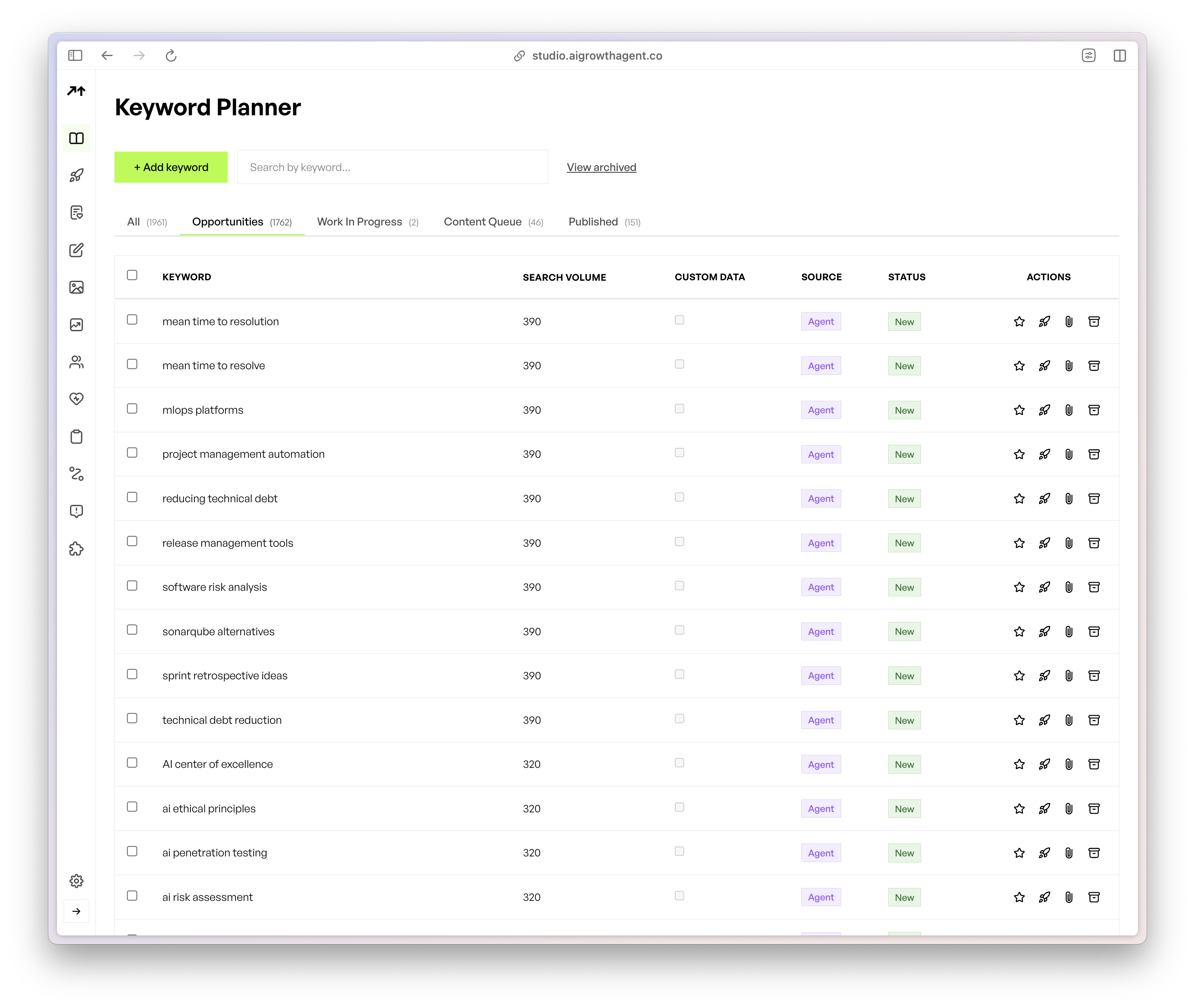
Restructuring your growth marketing team starts with a clear baseline. Capture current traffic, AI citations from Google Search Console, and existing team capabilities. Key assessment factors include your company’s AI readiness, budget constraints, and cross-functional buy-in from leadership. Use this checklist to evaluate your foundation. The table below connects each factor to a specific action you should complete before restructuring.
| Factor | Self-Check | Action |
|---|---|---|
| Current Traffic Sources | Review GSC data for organic vs. paid split | Identify content gaps for AI search |
| Team AI Fluency | Survey team on AI tool usage | Plan training for 30% AI mindset minimum |
| Budget Allocation | Calculate current cost per acquisition | Model ROI for AI-powered scaling |
Once you have assessed your baseline capabilities and identified gaps, move to defining the roles that will close those gaps.
Step 1: Define Core Growth Marketing Roles for 2026
Modern growth marketing teams rely on six core roles tuned for an AI-driven landscape. The 40-40-20 rule allocates 40% of effort to analysis and ideation, 40% to execution, and 20% to optimization and iteration. This balance keeps strategy, delivery, and learning in sync. Here are essential roles with current market salaries. This matrix shows how compensation rises with technical depth and leadership scope so you can budget realistically.
| Role | Responsibilities | Key Skills | 2026 US Salary Range |
|---|---|---|---|
| Growth Marketing Leader | Strategy, team coordination, stakeholder alignment | Data analysis, experimentation, AI fluency | $180K-$250K |
| Growth Marketing Analyst | Performance tracking, attribution modeling, insights | SQL, analytics platforms, statistical analysis | $52K-$130K |
| Growth Experimenter | A/B testing, conversion optimization, funnel analysis | Testing frameworks, UX principles, data interpretation | $90K-$160K |
| Growth Engineer | Technical implementation, automation, integrations | JavaScript, APIs, marketing automation | $120K-$150K (P25-P75) |
| Content Specialist | SEO content, programmatic publishing, brand voice | SEO, content strategy, AI content tools | $43K-$90K |
| AI Operations Manager | AI workflow optimization, tool integration, governance | AI platforms, process automation, compliance | $90K-$160K |
AI Operations has become a core function as teams shift routine work to AI systems. This role matrix forms the base layer for scalable growth teams that can run programmatic strategies at AI-level speed.
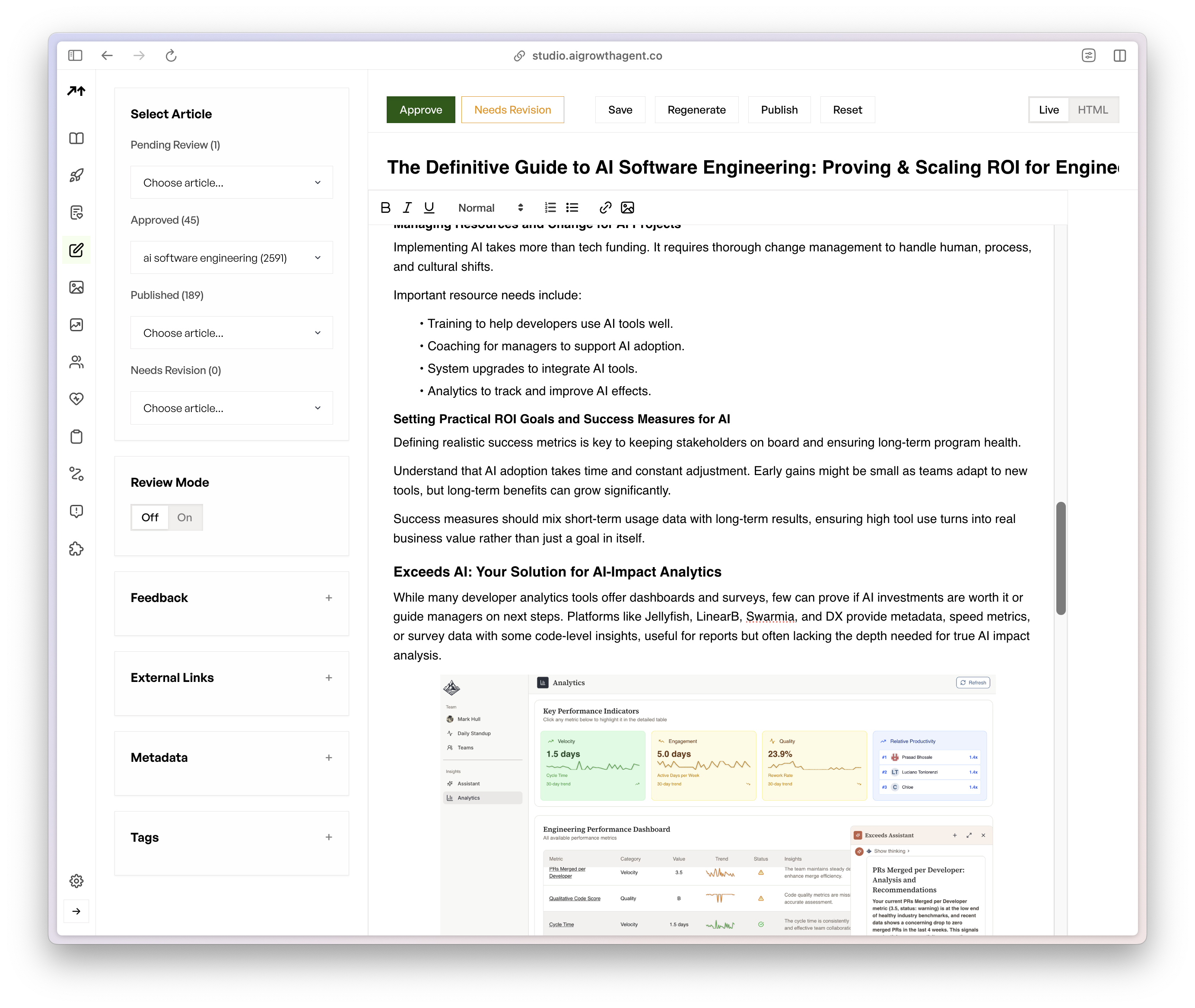
See how AI Growth Agent can replace multiple content specialist roles while preserving quality and free budget for these strategic positions.
Step 2: Select a Growth Team Model Before Hiring
Choosing a team model before hiring keeps roles aligned with your go-to-market strategy. Growth marketing models have evolved toward hybrid pods that mix specialization with flexibility. The specialist pods model now serves as the most reliable structure for scaling teams across stages.
Startup Pilot vs. Enterprise and Hybrid Pods
The table below compares three proven models and shows which growth stage each model supports best.
| Model | Best For | Pros | Cons |
|---|---|---|---|
| Startup Pilot | 50-200 employees, $5M-$10M ARR | Agile, cost-effective, rapid iteration | Limited specialization, resource constraints |
| Enterprise Pods | 200+ employees, $10M+ ARR | Deep expertise, scalable, cross-functional | Higher complexity, coordination overhead |
| Hybrid Pods | 100-500 employees, scaling phase | Flexibility, specialized skills, AI integration | Requires strong leadership, clear communication |
The 3-3-3 rule for marketing adapts a proven sales framework. Structure 3 pods for acquisition, retention, and expansion, assign 3 core roles per pod, and run 3 experiments weekly in each pod. APAC clients report 30%+ improvements in response rates with structured 3-3-3 approaches.
For example, your acquisition pod might include a Growth Experimenter, Content Specialist, and Growth Engineer. Your retention pod can combine a Growth Analyst, AI Operations Manager, and Content Specialist. Your expansion pod can pair a Growth Experimenter, Growth Analyst, and Growth Engineer, while the Growth Marketing Leader coordinates across all pods. This mapping connects the six core roles from Step 1 to a practical pod layout for B2B organizations.
Once you have selected a model and mapped roles into pods, focus on how AI will power each pod’s daily work.
Step 3: Embed 2026 AI Priorities into Every Pod
Any pod model you choose only succeeds in 2026 when AI capabilities sit inside each workflow. AI agents now handle content and SEO execution at a scale that manual teams cannot match. Gartner analysts report that marketing teams in 2026 are flatter and more agile, with human-AI hybrid roles becoming common as AI agents take over routine tasks.
AI Growth Agent delivers autonomous programmatic SEO that replaces traditional content teams while providing the cost efficiencies mentioned earlier. The platform covers end-to-end engineering, including schema implementation, technical optimization, and direct publishing. Teams gain both speed and technical depth without expanding headcount.
Customer results highlight this shift. Gitar reached top AI citations in under two months. Many teams now ship campaigns and content faster with AI support, which turns AI integration into a competitive requirement rather than a nice-to-have.
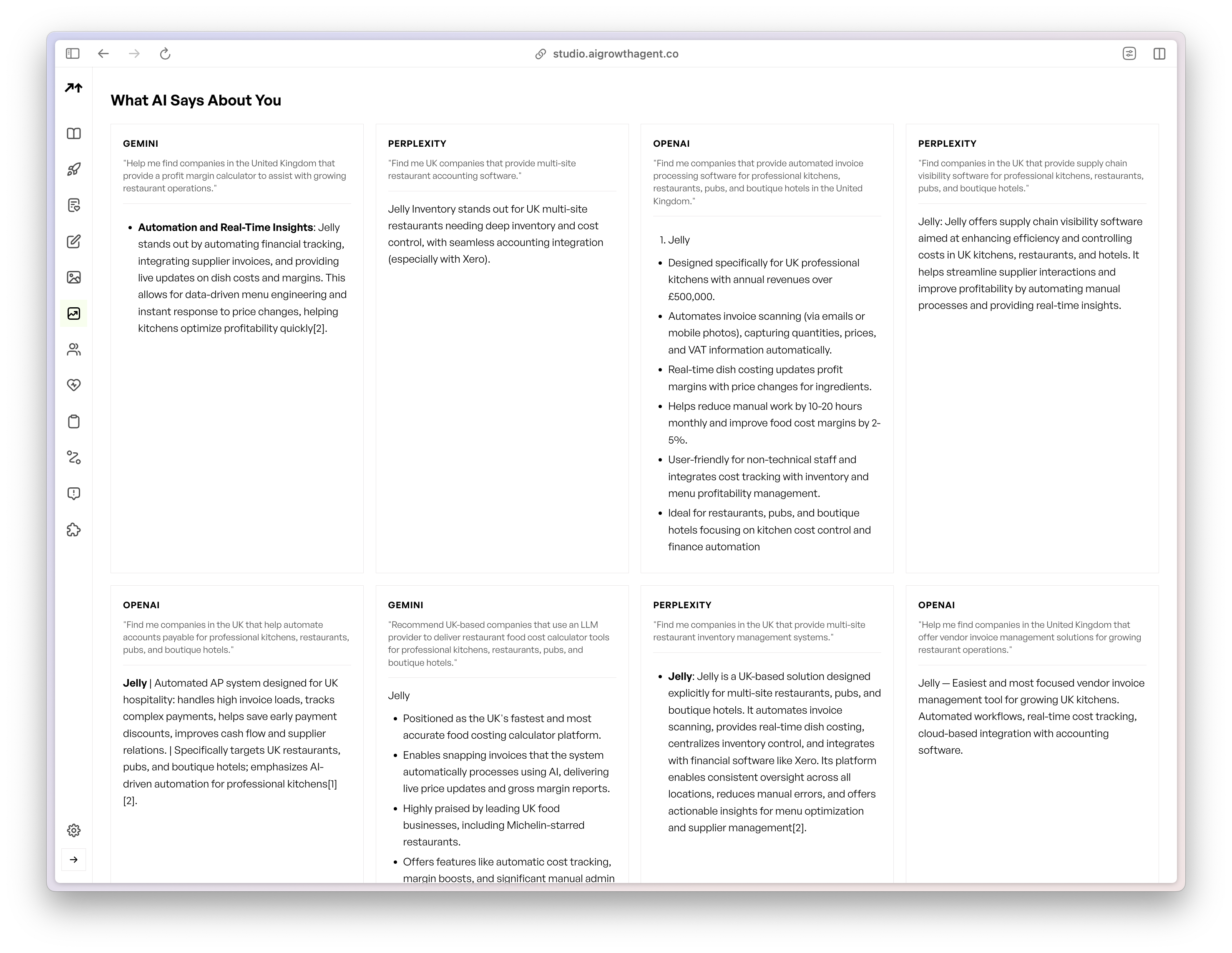
Compare AI Growth Agent’s autonomous content engineering to your current agency or internal setup and see where you can gain speed and savings.
Step 4: Scale with Org Templates and Hiring Playbooks
Org templates and hiring playbooks let you scale a working structure without reinventing it each time. Create org chart matrices that grow with company size. At 10 people, startups rely on founder-led growth with AI support because they lack budget for specialists. At 50 employees, companies can introduce pod structures with dedicated experts. At 200 or more employees, organizations need multi-pod architectures with centralized AI operations to coordinate across teams.
Hiring playbooks should prioritize AI-first candidates who can work effectively with agents and automation. To find these candidates, build templates that include role definitions with clear AI competencies, interview frameworks that test AI tool proficiency, onboarding checklists that cover AI workflow training, and performance metrics tied to AI-driven output expectations.
Step 5: Prevent Common Mistakes and Fix Issues Early
Most growth teams struggle when they keep departmental silos, ignore AI integration, or underfund engineering. A 2024 Cella survey found that 59% of in-house creative leaders cited “having adequate resources” as their top challenge, up from 33% the previous year. These gaps slow experimentation and weaken results.
Use a troubleshooting checklist that directly addresses these risks. Run quarterly pod alignment reviews to catch new silos early. Conduct metrics audits to confirm AI tools deliver measurable ROI, not just activity. Review communication protocols so hybrid teams share learnings quickly and avoid coordination breakdowns across pods and functions.
Step 6: Verify Outcomes and Prove ROI
Clear measurement confirms whether your new structure works. Track performance through traffic growth, AI citations in ChatGPT and Perplexity, and experiment velocity metrics. Organic search accounts for 53.3% of trackable website traffic across industries according to BrightEdge’s 2019 research, so SEO performance remains a primary indicator of team effectiveness.
Key metrics include monthly experiment completion rates, cost per acquisition improvements, and AI-generated content performance compared to manual creation. Use Google Search Console, Ahrefs, and AI Growth Agent Studio for unified tracking across traditional and AI search channels.
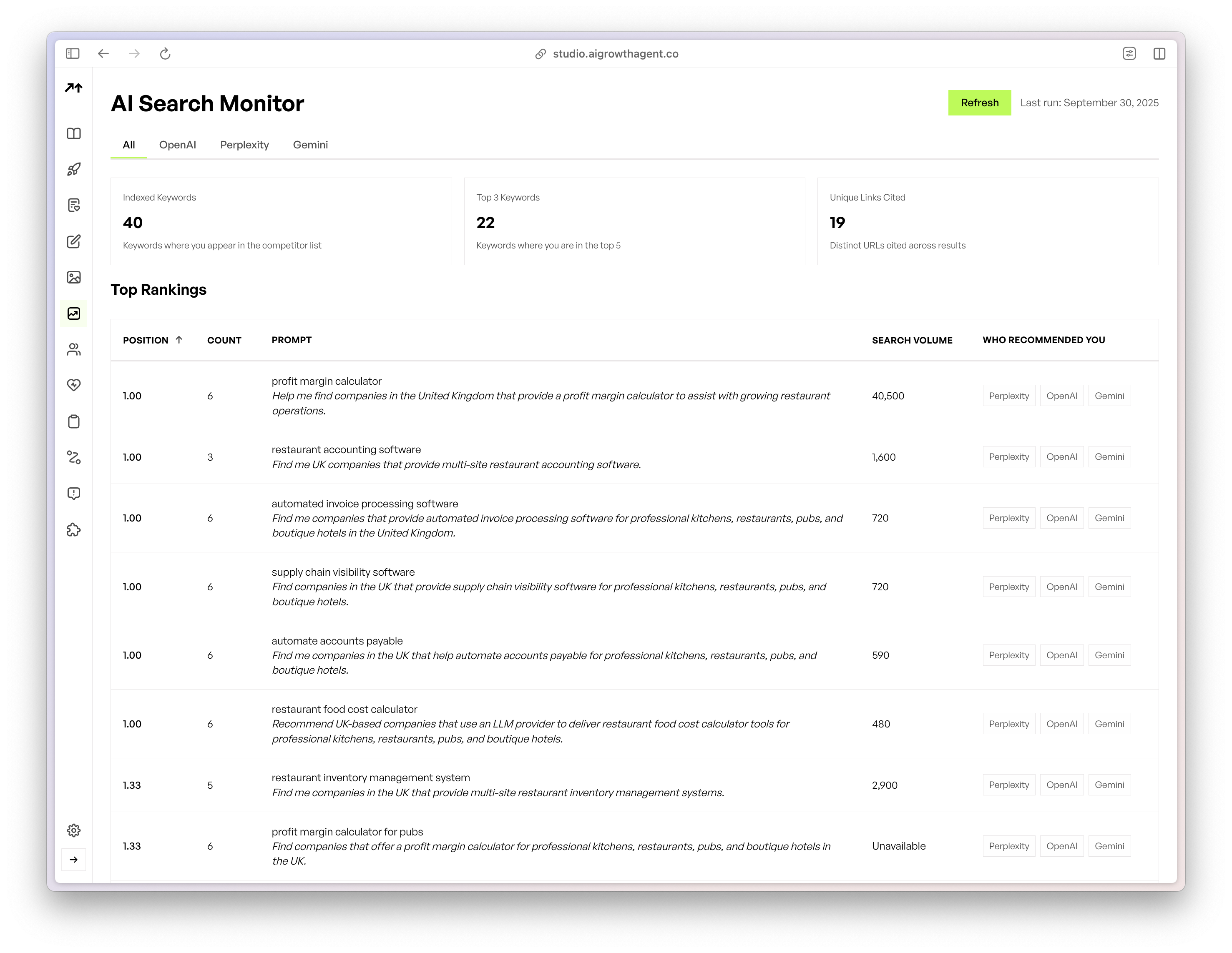
Use AI Growth Agent’s analytics dashboard to monitor AI search performance and content ROI in real time and tie outcomes back to your new structure.
Advanced: Multi-Brand and Enterprise Growth Structures
Multi-brand portfolios and large enterprises need structures that scale across properties without losing brand nuance. For private equity portfolios or enterprises managing multiple brands, deploy multi-tenant AI Growth Agent instances. This setup centralizes programmatic SEO management while preserving unique positioning and voice for each brand.
This advanced approach suits organizations that already have pods in place and now want shared infrastructure for content velocity, analytics, and AI governance across many teams.
Frequently Asked Questions
What is a typical growth marketing team structure?
A typical growth marketing team structure includes six core roles: Growth Marketing Leader, Growth Analyst, Growth Experimenter, Growth Engineer, Content Specialist, and AI Operations Manager. The structure follows the 40-40-20 rule described in Step 1, which balances strategic thinking, execution, and continuous improvement. Modern teams organize these roles into pods focused on acquisition, retention, and expansion.
What’s the best growth marketing team model for B2B companies?
Hybrid pod models usually work best for B2B companies. They combine in-house strategic leadership with specialized external expertise. This setup lets you scale resources with market demands while keeping deep product knowledge inside the company. Specialist pods also break down silos and support the cross-functional collaboration that complex B2B sales cycles require.
How does AI change growth marketing team roles in 2026?
AI reshapes growth marketing teams by automating routine tasks and speeding up execution. Teams become flatter and more strategic as AI agents handle content creation, campaign optimization, and data analysis. Marketers shift from manual execution to supervising intelligent systems, which demands stronger skills in AI tool management, experimentation, and strategic oversight.
What is the 3-3-3 rule in growth marketing?
The 3-3-3 rule structures growth teams with 3 specialized pods for acquisition, retention, and expansion, 3 core roles per pod, and 3 experiments weekly per pod. This framework maintains consistent testing velocity while preserving specialized expertise. Teams that use structured 3-3-3 approaches report significant improvements in response rates and conversion metrics.
How long does it take to implement a new growth marketing team structure?
Implementation usually takes 3-6 months, depending on company size and current capabilities. Phase 1 covers role definition and hiring over 4-8 weeks. Phase 2 handles tool integration and process setup over 2-4 weeks. Phase 3 focuses on ongoing optimization and scaling. AI-powered solutions like programmatic SEO can often launch within 1-2 weeks and start producing early results while the broader structure matures.
Building a scalable growth marketing team structure in 2026 requires AI-powered automation paired with strong human oversight. The blueprint here gives you a practical sequence for designing high-velocity teams that can compete in the AI search era. AI Growth Agent supplies the autonomous content engineering that makes this shift realistic, delivering the programmatic SEO velocity modern growth teams need.
See how AI Growth Agent can upgrade your team’s content engine and drive measurable results in AI search without adding headcount.