Written by: Mariana Fonseca, Editorial Team, AI Growth Agent
Key Takeaways
- Growth marketing builds long-term retention and lifetime value through SEO, content, and community. Performance marketing drives fast acquisition through paid ads with measurable ROAS.
- B2B SaaS companies can rely on performance marketing for early validation and pipeline gaps, then shift toward growth marketing as ARR and retention increase.
- Hybrid strategies pair paid leads with programmatic SEO to scale content production while building durable authority in AI-driven search.
- Key metrics differ by approach. Performance teams track CPL and ROAS, while growth teams focus on NRR above 110 percent and multi‑month ROI.
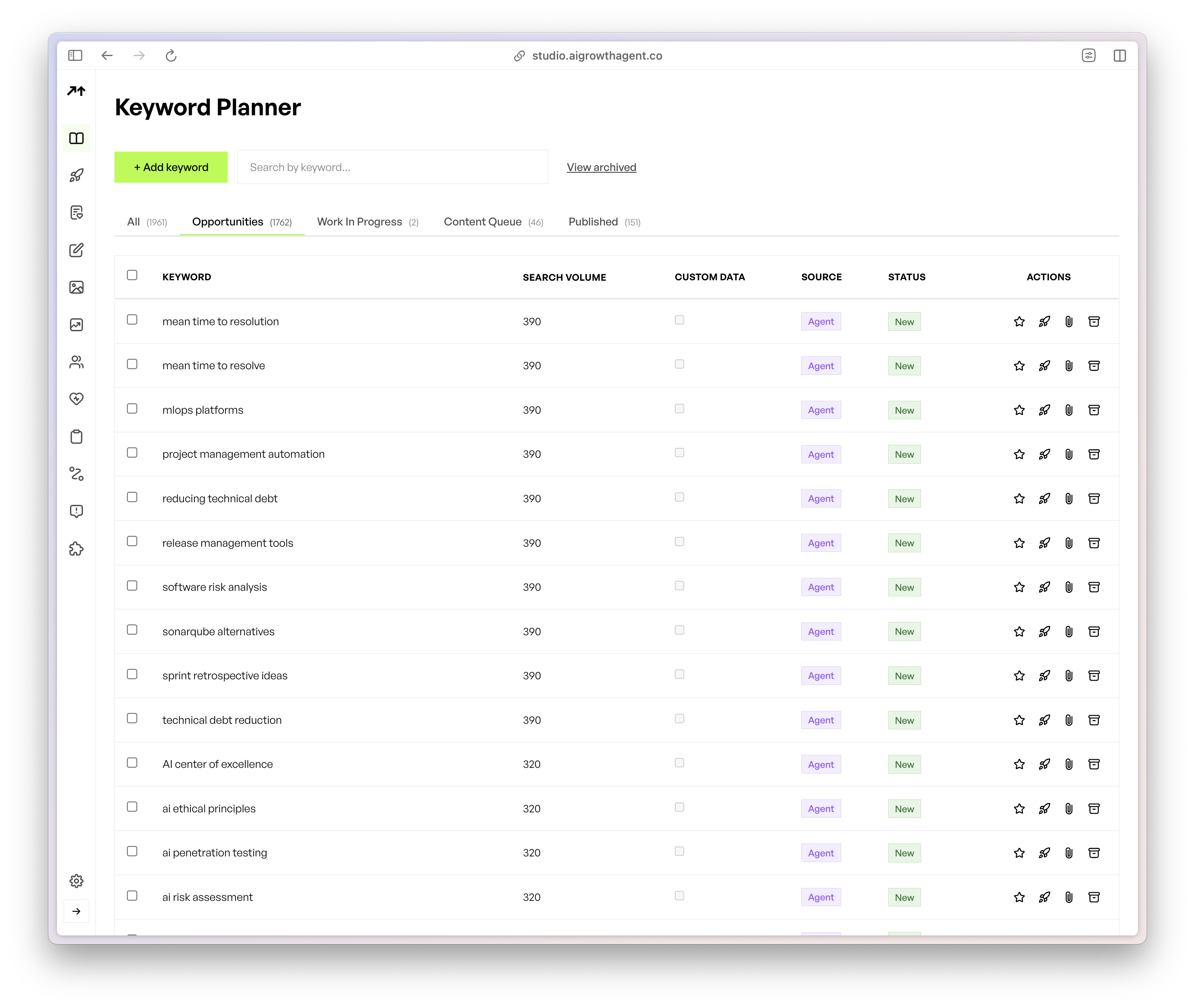
- Teams use AI Growth Agent to automate programmatic SEO and support AI-era B2B SaaS growth at scale.
How This Comparison Helps B2B SaaS Teams
Growth marketing covers the full customer lifecycle and focuses on retention, expansion, and lifetime value. Teams use content marketing, SEO, community, and product-led motions to achieve this. Performance marketing concentrates on immediate lead acquisition and conversion through paid advertising, automation, and direct response campaigns. B2B SaaS companies face long sales cycles, product-led growth challenges, and rapid AI-driven search changes. Clear rules for when to use each approach support predictable and sustainable revenue growth.
Core Evaluation Criteria for SaaS Growth Decisions
Four core dimensions separate growth and performance marketing for B2B SaaS.
- Goals and timeframes: immediate pipeline versus long-term customer value
- Channel selection: paid acquisition versus organic authority building
- Metrics focus: cost per lead versus lifetime value ratios
- AI visibility: citation potential in search engines and language models
Growth Marketing vs Performance Marketing: Key Differences for B2B SaaS
The following table shows how growth and performance marketing differ on the dimensions that matter most for B2B SaaS planning. Notice how growth marketing trades short-term measurability for compounding returns and stronger AI visibility.
| Criteria | Growth Marketing | Performance Marketing | SaaS Implication |
|---|---|---|---|
| Primary Goals | Retention and expansion with NRR above 110 percent | Acquisition with CAC payback under 80 days | Hybrid mix supports LTV to CAC near 3 to 1 |
| Timeframe | Long-term returns from SEO that build over 6 to 12 months | Short-term impact with immediate ROAS, such as 1.13x on LinkedIn | Allocation shifts as stage and runway change |
| Primary Channels | SEO, content, and community | Paid ads, with LinkedIn CPL for B2B SaaS often between 100 and 300 dollars | Programmatic blend of paid and organic |
| Key Metrics | Lifetime value and long-term ROAS near 5 to 1 | CPL and ROAS, with enterprise SaaS Google Ads often between 1.5x and 3.0x | Track cohorts and payback by source |
| AI Visibility | High citation potential across AI search and language models | Limited organic citations without supporting content | Programmatic SEO improves presence in AI answers |
Goals and Timeframes in B2B SaaS
Performance marketing excels at filling immediate pipeline gaps for early-stage companies that need rapid customer acquisition. This speed advantage is quantifiable. B2B SaaS performance programs often target CAC payback under 80 days versus an industry median near 15 months, which suits teams under quarterly revenue pressure. While performance marketing solves short-term pipeline needs, growth marketing focuses on retention in product-led models where systematic expansion can push Net Revenue Retention above 110 percent.
Channels and Tactics
Performance marketing relies on paid channels with relatively predictable costs. Benchmarks include an average CPL for B2B SaaS on Meta Ads of 63.40 dollars and an average B2B SaaS CAC through Google paid search of 802 dollars. Growth marketing invests in SEO and content that can deliver 702 percent ROI over three years while building authority for AI citations. Programmatic SEO connects both approaches by producing content at a pace that feels closer to performance campaigns.
Metrics and ROI Benchmarks
Cost per lead varies widely across channels. SaaS-specific CPL can range from 30 to 500 dollars. Growth marketing teams track lifetime value and pay close attention to organic channels such as SEO and content marketing that average 942 dollars CAC for B2B and 480 dollars for B2C. The tradeoff centers on immediate measurement versus slower, compounding returns and stronger AI search visibility. Understanding these metric differences clarifies which approach fits each business context.
Best-Fit Use Cases by SaaS Stage
Early-stage B2B SaaS companies gain the most from performance marketing when they need initial pipeline and fast product feedback. Growth-stage companies benefit from a shift toward growth marketing that builds durable advantages and reduces reliance on paid acquisition. Industry forums often recommend a stronger growth focus once companies pass roughly one million dollars in ARR, when retention and expansion drive most growth. Mature companies usually require a hybrid mix that balances near-term pipeline with long-term positioning.
Hybrid Playbook for B2B SaaS Teams
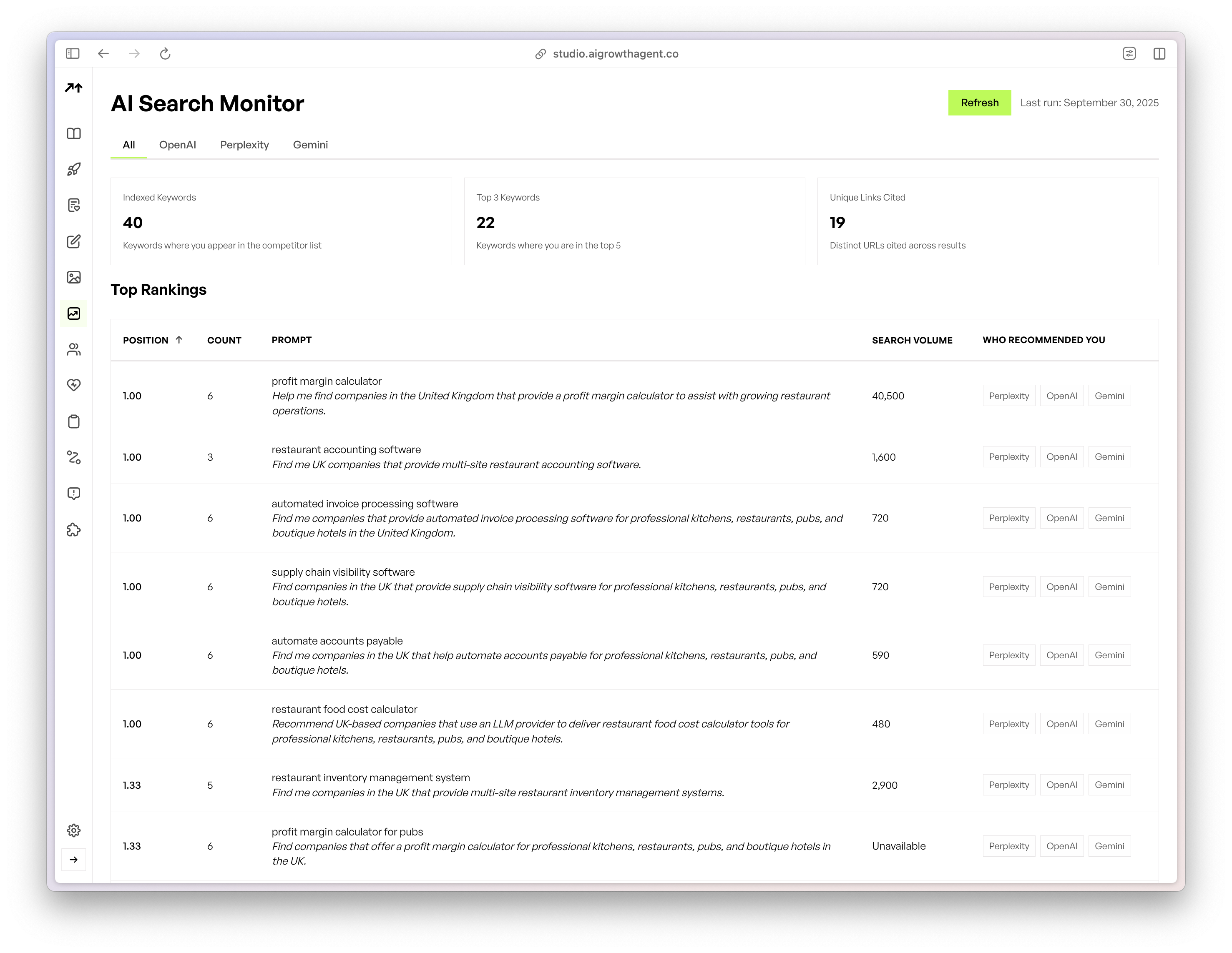
Effective hybrid strategies follow a simple three-step progression. First, teams use performance marketing to generate immediate leads while they set up growth marketing foundations. Second, they roll out programmatic SEO to publish content every day and build the volume needed for AI search authority. Third, they tune content for AI citations so it appears in ChatGPT, Google AI Overviews, and Perplexity results. Gitar.ai reached top citations for “AI self-healing pipelines”, and BeConfident became the leading recommended English learning app in Brazil by deploying programmatic content at scale.
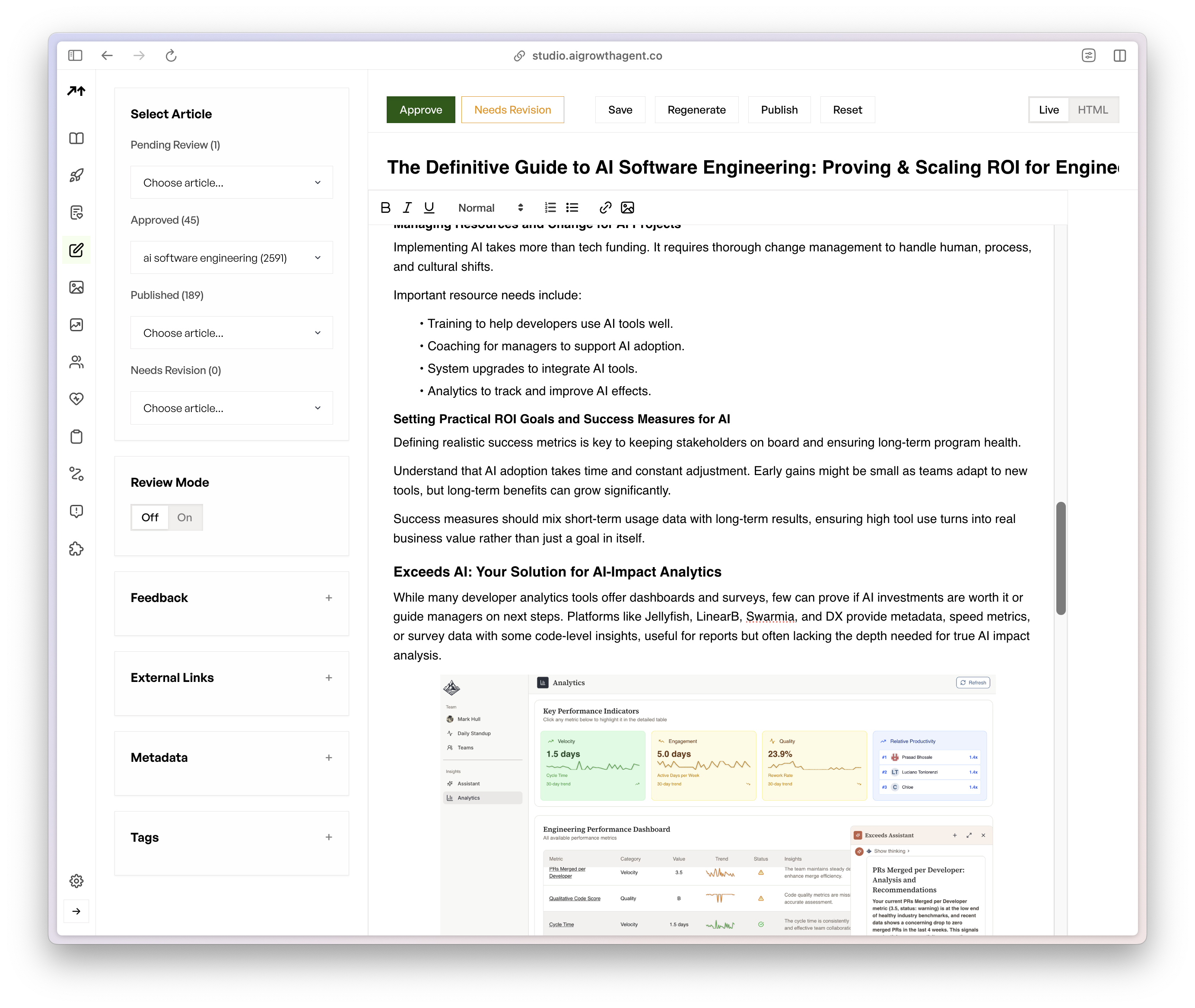
Teams that want to scale content while protecting quality can review how AI Growth Agent supports companies like these and adapts the same system to their own AI search goals.
Risks, Limitations, and AI-Era Shifts
Performance marketing carries risks such as channel saturation, rising costs, and heavy dependence on paid acquisition. The median B2B SaaS company spends about two dollars to acquire one dollar of new ARR, which signals broad inefficiency. Growth marketing has its own constraints, including slow early traction and limited short-term measurement. AI-driven search now rewards companies that publish structured, high-quality content at scale. Teams that do not build programmatic content systems risk disappearing from AI-powered discovery.
Decision Framework for Your SaaS Context
Teams choose performance marketing when they face immediate pipeline gaps, early-stage validation needs, or strict quarterly targets. They choose growth marketing when they want durable advantages, stronger retention, and long-term market authority. Hybrid strategies that use programmatic SEO automation fit companies at any stage that need both short-term results and AI-era visibility. Leaders should weigh annual contract value, sales cycle length, and competitive intensity when they split budget between these approaches.
Teams that want help applying this framework to their own metrics can work with our specialists to map current performance to an optimal hybrid mix.
FAQ
What is growth marketing for B2B SaaS?
Growth marketing for B2B SaaS covers the complete customer lifecycle and emphasizes retention, expansion, and lifetime value. Teams use content marketing, SEO, community building, and product-led initiatives to achieve these goals. Unlike traditional marketing that focuses mainly on acquisition, growth marketing builds durable advantages through organic authority, customer success programs, and systematic expansion that strengthens over time.
When should B2B SaaS companies choose growth marketing vs performance marketing?
B2B SaaS companies choose performance marketing when they need immediate pipeline, want to validate early product-market fit, or must hit near-term revenue targets through predictable paid acquisition. Growth marketing becomes essential when companies pursue sustainable advantages, higher retention, and long-term authority in their category. Most successful B2B SaaS teams adopt a hybrid mix that balances short-term performance with long-term growth investments.
What are the best hybrid strategies for B2B SaaS marketing?
Strong hybrid strategies combine performance marketing for fast lead generation with growth marketing for durable authority. Many teams use paid channels to cover pipeline needs while they build programmatic SEO systems that scale content output. This approach delivers immediate results and long-term advantages, which matters in AI search environments where consistent, high-quality content drives citations and recommendations.
How does programmatic SEO support hybrid marketing strategies?
Programmatic SEO supports hybrid strategies by automating high-quality content production at scale. Teams no longer need to choose between expensive paid acquisition and slow organic growth. Instead, they generate authority-building content that drives search traffic now and AI citations later. This method combines the speed of performance marketing with the durability of growth marketing and supports steady pipeline generation.
When should B2B SaaS companies use performance marketing?
B2B SaaS companies prioritize performance marketing during early stages when they need fast customer validation and pipeline. They also rely on it when quarterly revenue pressure demands predictable lead flow or when they enter new markets that require rapid testing. Performance marketing works best for companies with clear ideal customer profiles, shorter sales cycles, and budgets that can sustain paid acquisition while organic channels ramp up.
Conclusion
The choice between growth and performance marketing for B2B SaaS rarely stays binary. Leading companies in 2026 use hybrid strategies that pair the immediate impact of performance marketing with the durable authority of growth marketing. Programmatic SEO automation makes this possible by scaling content to performance-level volume while building the authority needed for AI search visibility. As organic reach declines and paid costs rise, companies that master this hybrid execution will create meaningful competitive distance.
AI Growth Agent operates as a programmatic SEO system for B2B SaaS teams that want this kind of hybrid growth. The autonomous content engineering approach removes the usual tradeoff between speed and quality so companies can scale authority-building content while keeping performance channels active and productive.