


Key Takeaways
- AI-powered discovery systems like ChatGPT, Gemini, and Perplexity are reshaping how people find information, so brands need content that is optimized for AI citation, not just traditional search rankings.
- AI search engines prioritize semantically clear, structured, original, fresh, and trustworthy content, backed by technical elements such as metadata, schema, and machine-readable formats.
- AI Growth Agent uses a structured onboarding process and a Company Manifesto to capture your brand’s expert voice, which guides consistent, authoritative content creation.
- A programmatic keyword and content strategy, combined with a technically optimized blog architecture, helps AI systems understand your expertise and increases visibility for relevant queries.
- Autonomous content engineering, including research, drafting, asset placement, and advanced automation, enables teams to publish at scale while maintaining quality and brand alignment.
- Ongoing monitoring of AI search visibility, citations, and crawl behavior, along with iterative updates, supports long-term domain authority and reduces common pitfalls of generic AI content.
The Urgency of AI Domain Authority: Adapting to the New Search Landscape
The relationship between businesses and search engines has changed. Previously, ranking centered on manual keyword targeting and link building. Today, it depends on programmatic content that demonstrates clear authority and earns citation within Large Language Models (LLMs).
AI search engines now break down content into structured segments and evaluate them for authority at a granular level, which changes how brands need to approach content creation. The consequences of inaction include a shrinking digital footprint, lost competitive advantage, and reduced visibility to the AI indexers that power modern discovery.
Brands that do not define themselves through authoritative content leave space for competitors to shape the narrative. In AI search, limited data points about your brand can lead algorithms to favor better-documented competitors. Those competitors then earn citations and recommendations, and their perspective becomes the version AI systems present to users.
The key distinction between generic AI content and authoritative AI-driven content lies in programmatic strategy, technical optimization, and consistent execution. Generic tools tend to produce unstructured text, while authoritative AI content uses engineered web pages with metadata, schema markup, and structured layouts that support AI parsing.
Foundations of AI-Driven Domain Authority: What AI Search Engines Prioritize
Semantic Clarity and Directness for AI Parsing
Content that performs well for AI citation is clear, tightly aligned across title, H1, and description, and written in self-contained, concise statements that can stand alone when excerpted. AI systems favor content that directly addresses specific questions with concrete facts and that uses synonyms and related terms to reinforce context.
Structured Content Formatting
Structured formatting, such as headings, lists, tables, and Q&A blocks, improves eligibility for prominent placement in AI responses. Logical structure with clear headings, subheadings, Q&A sections, and schema markup functions as a core technical layer for AI optimization.
Comprehensive and In-Depth Coverage
Helpful content that includes original research, broad coverage, and thoughtful analysis tends to be prioritized by AI systems for perceived authority and depth. In-depth, comprehensive content, often 1500 words or more, that addresses real questions with data, insights, and practical comparisons is increasingly rewarded in AI search.
Originality and Unique Insights
Unique, non-commodity content that is genuinely helpful and satisfying for users receives preference for authority in Google AI Overviews. Proprietary research, clearly labeled original findings, and explicit data points make content more likely to appear as a cited source in LLM-generated answers.
Freshness and Timely Relevance
Content freshness now plays a larger role in AI search ranking, as engines such as Perplexity use time-based decay to deprioritize older information. Covering timely topics that align with current trends strengthens domain authority and increases the chances of inclusion in AI answers.
Trustworthiness and Expertise (E-E-A-T)
AI search engines place significant value on expertise, trustworthiness, and human authority, not only on keyword optimization. A visible online presence that includes high-quality articles, relevant backlinks, active social channels, and credible endorsements reinforces domain authority signals within AI systems.
Step 1: Programming Your AI Growth Agent – Defining Your Brand’s Authoritative Voice
The foundation of programmatic domain authority starts with a clear brand voice and positioning. A structured knowledge base helps AI systems interpret and represent your expertise accurately.
The process starts with AI Growth Agent’s White-Glove Onboarding, a one-hour kickoff session with a professional journalist who conducts a focused knowledge transfer to understand your business, positioning, and narrative. This conversation produces your Company Manifesto, a living source of truth that sets the guardrails for programmatic content creation.
Your Company Manifesto supports brand consistency across all content and defines the expert voice that AI search engines can recognize. This step turns AI-assisted writing into branded, relevant content that contributes to domain authority rather than generic output.
Marketing teams that want to define a reliable, authoritative voice for AI search can schedule a demo with AI Growth Agent to review how this process works in practice.
Step 2: Unlocking Programmatic Keyword and Content Strategy for AI Citation
Traditional keyword research alone is not enough in the AI search era. Modern content strategy needs query-level insight, semantic relationships between topics, and an understanding of how AI systems categorize and cluster information.
AI Growth Agent’s research protocols analyze large volumes of search queries and topics that relate to your domain, then organize them into a Programmatic Content Strategy built around pillars and clusters. This structure reflects how AI search groups queries and supports content that is easier for AI to rank and cite.
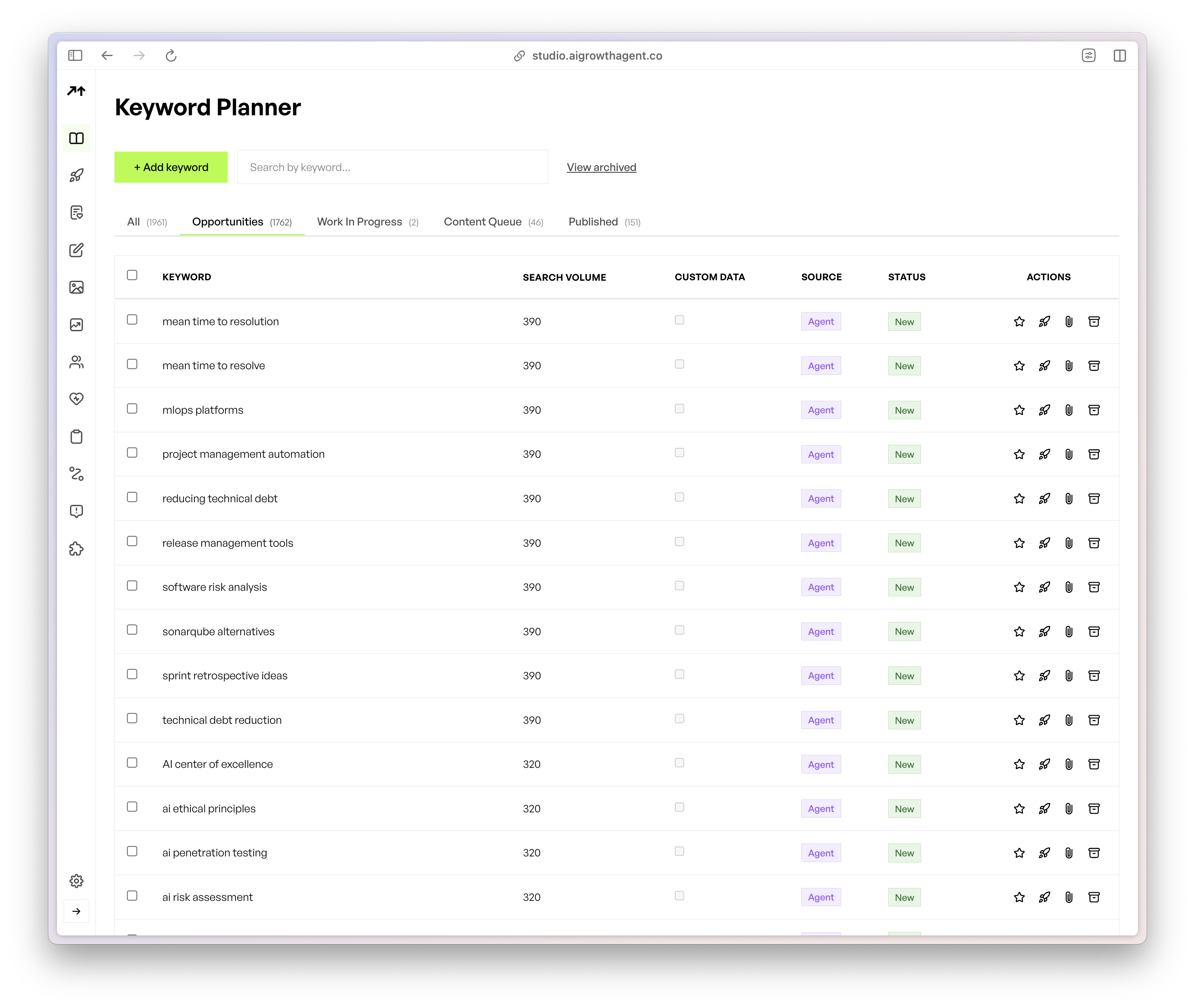
The clustering methodology identifies semantic connections between topics and supports content architectures that AI systems can parse and understand. This approach aims to cover your key expertise areas with minimal gaps, which helps AI search engines view your site as a complete resource on priority subjects.
Your programmatic strategy becomes a roadmap where each asset targets a specific opportunity for visibility in AI-powered search engines. The cumulative effect of this structured coverage is difficult to achieve with purely manual planning.
Step 3: Engineering a Technically Optimized Content Architecture for AI Indexing
Technical optimization for AI search extends beyond traditional SEO. AI systems rely on metadata, schema markup, and machine-readable protocols to interpret and cite content accurately.
AI Growth Agent autonomously sets up a technically optimized blog architecture as a subdomain, such as blog.yourcompany.com, that visually matches your existing website while providing a clean technical environment for programmatic SEO. This setup includes schema markup, metadata optimization, and descriptive image tags.
AI Growth Agent also implements an advanced LLM.txt file and a blog Model Context Protocol (MCP). These elements are designed to help AI search engines interface directly with your blog’s database and interpret its content more clearly, which can improve visibility on platforms such as ChatGPT, Gemini, and Perplexity.
Integrations exist for platforms including WordPress, Hashnode, Webflow, Framer, Sanity, and HubSpot, and clients can choose a hosted solution if they prefer a managed implementation. This technical foundation gives programmatic content a stronger platform for building domain authority.
Step 4: Autonomous Content Engineering – Creating AI Content at Scale
The programmatic SEO content lifecycle operates at high speed and handles large parts of content creation autonomously, while still working within guardrails that maintain brand authenticity.
Strategy and Briefing
Each content asset starts with a structured brief that aligns with your programmatic strategy and brand positioning. These briefs clarify the objective of each piece and connect it to authority-building goals.
Research and Fact-Checking
The system draws from your Company Manifesto and a curated set of credible web sources to assemble supporting information. This research step focuses on accuracy, depth, and alignment with your established expertise.
Drafting and Quality Assurance
Content generation produces a range of outputs, from short tactical articles to longer pillar pieces of around 2000 words. The system follows your defined voice while including structural and technical elements that AI search engines tend to favor for authority recognition.
Multi-Tenant Programmatic Deployment (Advanced)
Enterprises that manage multiple brands or product lines can use parallel agents that operate at the same time, each with its own brand voice and strategy, and each publishing to separate domains or subdomains. This structure allows central teams to coordinate complex multi-brand content strategies at scale.
Real-Time Programmatic Content Injection (Advanced)
Brands can convert breaking news and trending topics into SEO-optimized content quickly. This real-time capability helps teams capture search demand from emerging topics while they are most relevant.
Database-to-Content Automation (Advanced)
Teams can turn proprietary data into SEO-rich content assets. For example, AI Growth Agent has converted non-indexed data, such as food recommendations from a mobile app, into location-specific articles like “best bagels in New York” that support authority for local intent queries.
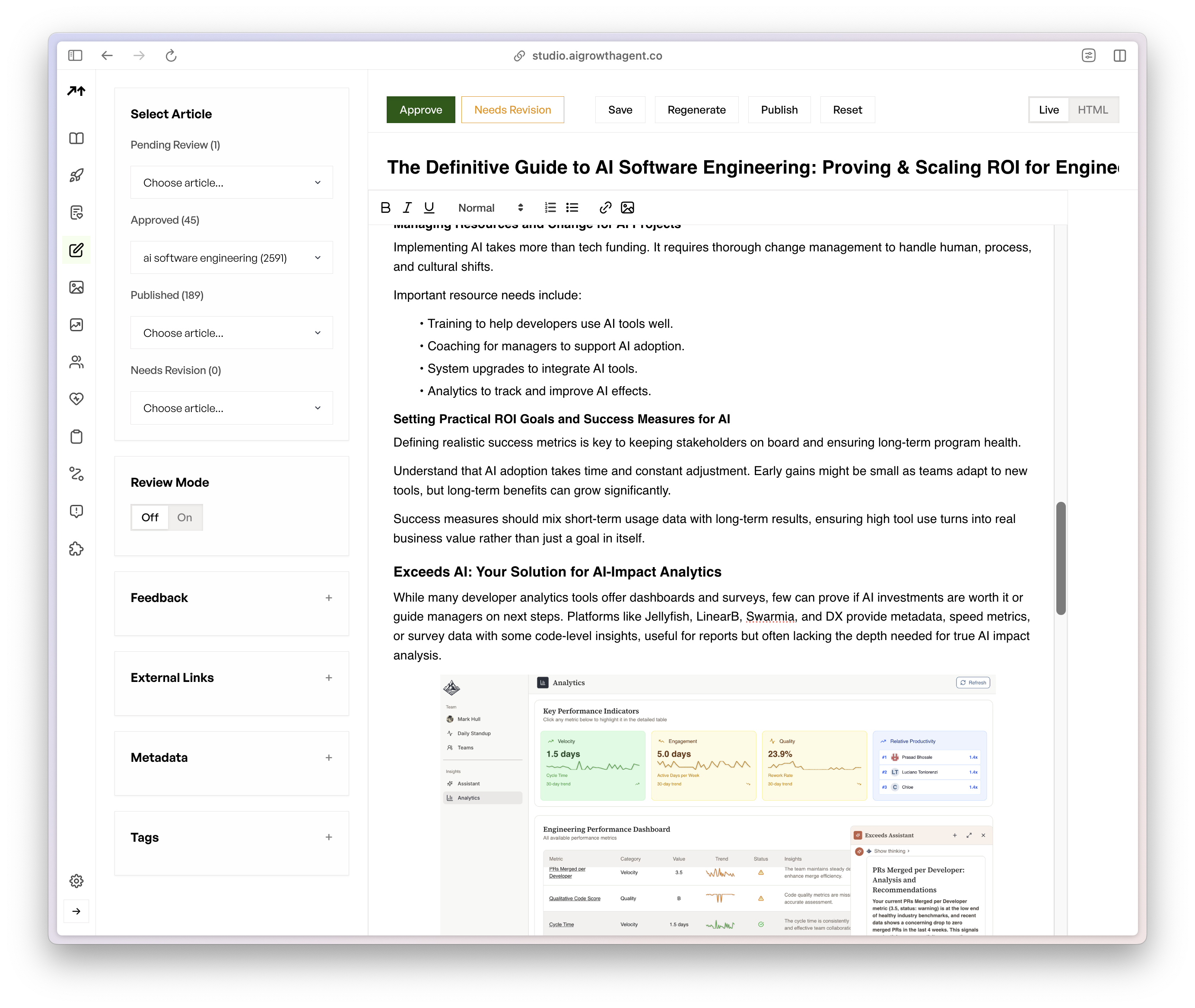
Intelligent Image and Asset Placement
Visual content is selected and inserted with metadata that supports image SEO. This includes AI-generated visuals when helpful, so written and visual elements both contribute to discoverability.
Step 5: Monitoring and Iteration – The Feedback Loop for Sustained AI Authority
Brands need ongoing monitoring and optimization to build and maintain domain authority in AI search. Traditional analytics alone may not surface the signals that determine AI citation success.
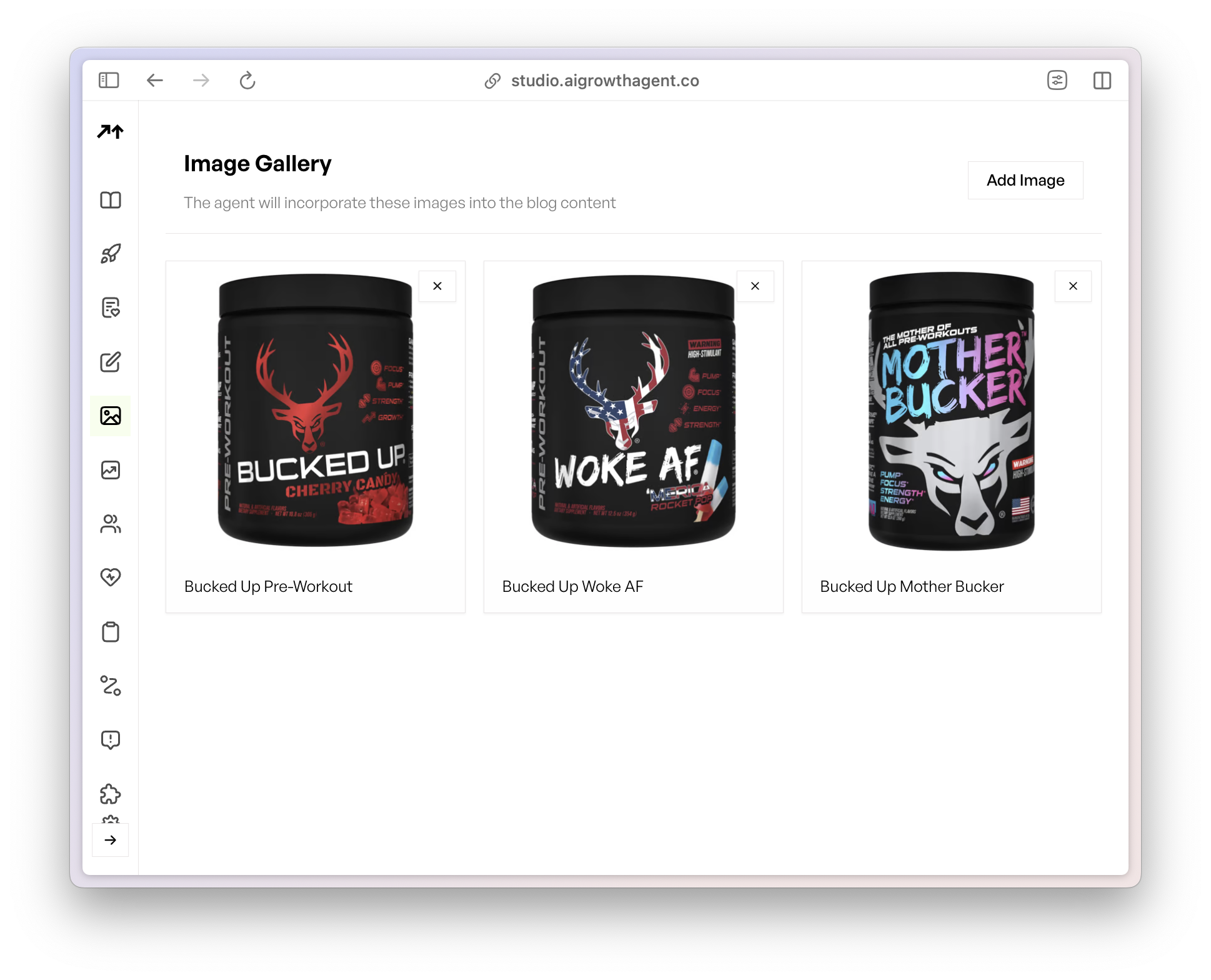
The AI Search Monitor and Feedback Loop gives teams visibility into performance across ChatGPT, Gemini, and Perplexity. The interface includes heatmaps that show keyword indexing performance, URLs that drive AI visibility, direct quotes and citations that appear in AI responses, and real-time ChatGPT citation tracking.
Crawl statistics for Google, ChatGPT, and Perplexity bots show how AI systems interact with your content. Google Search Console integration adds metrics on organic traffic growth from programmatic content, which helps teams connect AI-focused activity to broader SEO performance.
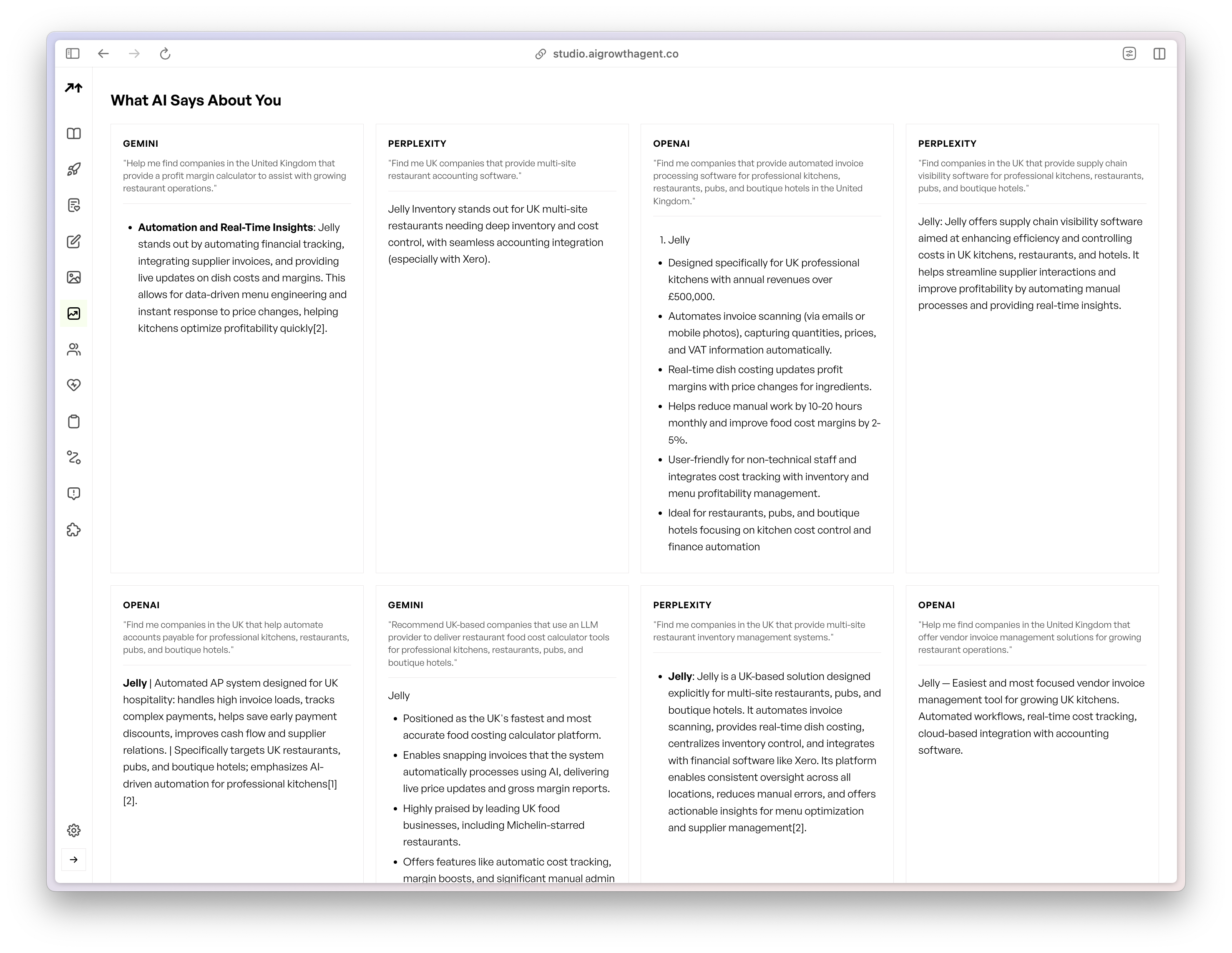
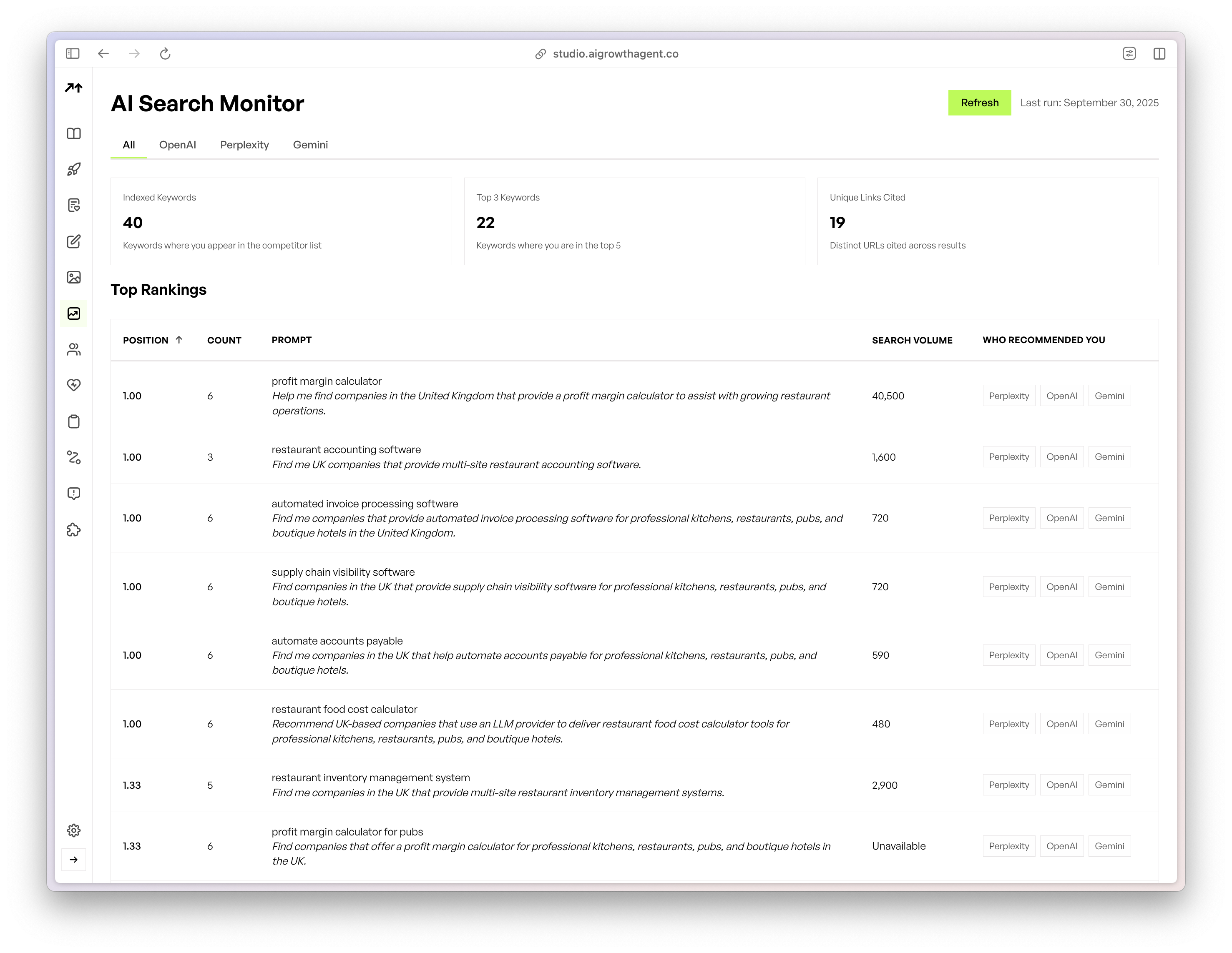
The AI Growth Agent Studio functions as a command center where teams can edit content directly, give structured feedback for iterative learning, and manage approval workflows. Many clients start in manual review mode, then move to an Auto-Pilot mode once the system has learned their preferences.
Teams that want to see how their content can gain citations in AI search can schedule a consultation with AI Growth Agent to evaluate potential impact on their current content strategy.
Key Considerations for Building Domain Authority with AI Content
Common Pitfalls to Avoid
One common pitfall is using generic AI content tools that generate unstructured text without technical optimization. These tools can increase content volume without improving authority. Gaps in integration, strategy, and quality between generic tools and programmatic SEO systems can slow progress toward domain authority goals.
Limited technical optimization is another challenge. Without schema markup, metadata, and AI-specific protocols, content may remain less visible to AI search engines. Manual SEO efforts alone can create a speed disadvantage in an environment where AI systems process and favor larger content sets.
Teams that rely on shallow, surface-level articles often miss the authority signals that AI systems look for. In-depth coverage and clear demonstrations of expertise are more likely to stand out in AI-generated answers.
Best Practices for Long-Term Authority
Maintaining content freshness and relevance over time helps sustain authority when AI systems reduce the weight of older information. Emphasizing unique value, proprietary insights, and original research also makes your content more difficult for competitors to mimic.
Teams should ensure semantic clarity and structured data that support AI parsing, as outlined in guidance on semantic structure and schema for AI search engines, while prioritizing helpfulness and user satisfaction in content organization to build long-term authority signals.
|
Approach |
Speed |
Technical Optimization |
Authority for AI Search |
Scale |
|
Manual Content Creation |
Slow |
Limited |
Low |
Minimal |
|
Generic AI Tools |
Fast |
None |
Low |
High Volume, Low Quality |
|
AI Growth Agent |
Fast |
Advanced |
High Potential |
Scalable Quality |
Conclusion: Secure Your Brand’s Position in the AI Search Era
The move from traditional search to AI-powered discovery represents a significant shift in digital marketing. Brands that adopt programmatic SEO strategies are better positioned to gain and maintain visibility, while teams that rely only on manual approaches may struggle to match the required pace and coverage.
Long-term domain authority with AI content depends on technical engineering, strategic topic selection, and systematic execution at scale. AI Growth Agent addresses the balance between content scale and quality, helping brands act as recognized authorities through an autonomous content architecture that supports AI citation.
The benefits of a programmatic SEO approach extend beyond rankings and can influence how AI systems present your brand to potential customers.
Teams that want to position their company for AI search can schedule a demo with AI Growth Agent to explore how programmatic content can support domain authority in their category.
Frequently Asked Questions (FAQ) on AI Content and Domain Authority
How long does it take for AI-generated content to build domain authority?
The timeline for building domain authority with programmatic AI content can be shorter than with purely manual methods. Many AI Growth Agent clients see initial AI search citations within 2 to 3 weeks, supported by technical optimization and broad topical coverage from the outset.
Can generic AI writing tools build real domain authority?
Generic AI writing tools often face limits that reduce their ability to build domain authority. They typically need manual configuration in a CMS and do not capture the deep brand understanding required for authoritative content. These tools may also output unstructured text without schema markup, metadata, or other technical elements that AI search engines expect. While they can assist individual writers, they usually do not provide the full technical SEO and programmatic framework needed for consistent authority building.
What is the single most important factor for AI search citation?
A critical factor for AI search citation is the combination of unique, helpful content and technical optimization for machine readability. AI search engines tend to prioritize content that offers original insights and expert perspectives. At the same time, visibility often depends on infrastructure such as schema markup, LLM.txt implementation, and structured formatting that allows AI systems to parse content accurately. Programmatic SEO approaches that unite content quality and technical engineering are designed to outperform manual creation or generic tools.
How does AI Growth Agent ensure its content is seen as authoritative, not just “AI-generated”?
AI Growth Agent focuses on authority signals at multiple levels. The Company Manifesto functions as a foundational knowledge base so that content reflects your distinct expertise. The multi-stage content engineering lifecycle, which includes research, fact-checking, and quality assurance, helps maintain editorial standards. Technical elements such as LLM.txt and Model Context Protocol implementation are designed to make content easier for AI search engines to interpret in context, which supports stronger authority recognition.
What makes programmatic SEO different from traditional SEO for building domain authority?
Programmatic SEO is built for the volume and structure requirements of the AI search era. Traditional SEO often centers on manual keyword targeting and page-by-page optimization, which can limit how quickly teams can publish and update content. Programmatic SEO uses systematic content engineering at scale and builds topic architectures that signal topical authority. It also includes AI-specific optimization protocols, such as LLM.txt and Model Context Protocol, to improve the likelihood of AI citation and recommendation beyond standard search rankings.
