Written by: Mariana Fonseca, Editorial Team, AI Growth Agent
Key Takeaways
-
AI search engines prioritize semantic authority through intent clusters that cover thousands of related queries with deep topic coverage.
-
Advanced schema markup, LLM.txt files, and MCP create machine-readable content that AI systems can understand and cite accurately.
-
Daily publishing velocity powered by programmatic automation keeps your site fresh enough to compete for 2026 rankings.
-
E-E-A-T grows when you publish first-hand case studies, proprietary data, and verifiable author credentials that stand out in AI answers.
-
AI Growth Agent automates the full programmatic SEO workflow, from strategy and clustering to technical setup and publication.
Step 1: Build Intent Clusters That Match AI Search Behavior
AI search engines evaluate semantic relevance and comprehensive topic coverage instead of simple keyword density. Your goal is to become the most complete source on each intent cluster that matters to your business.
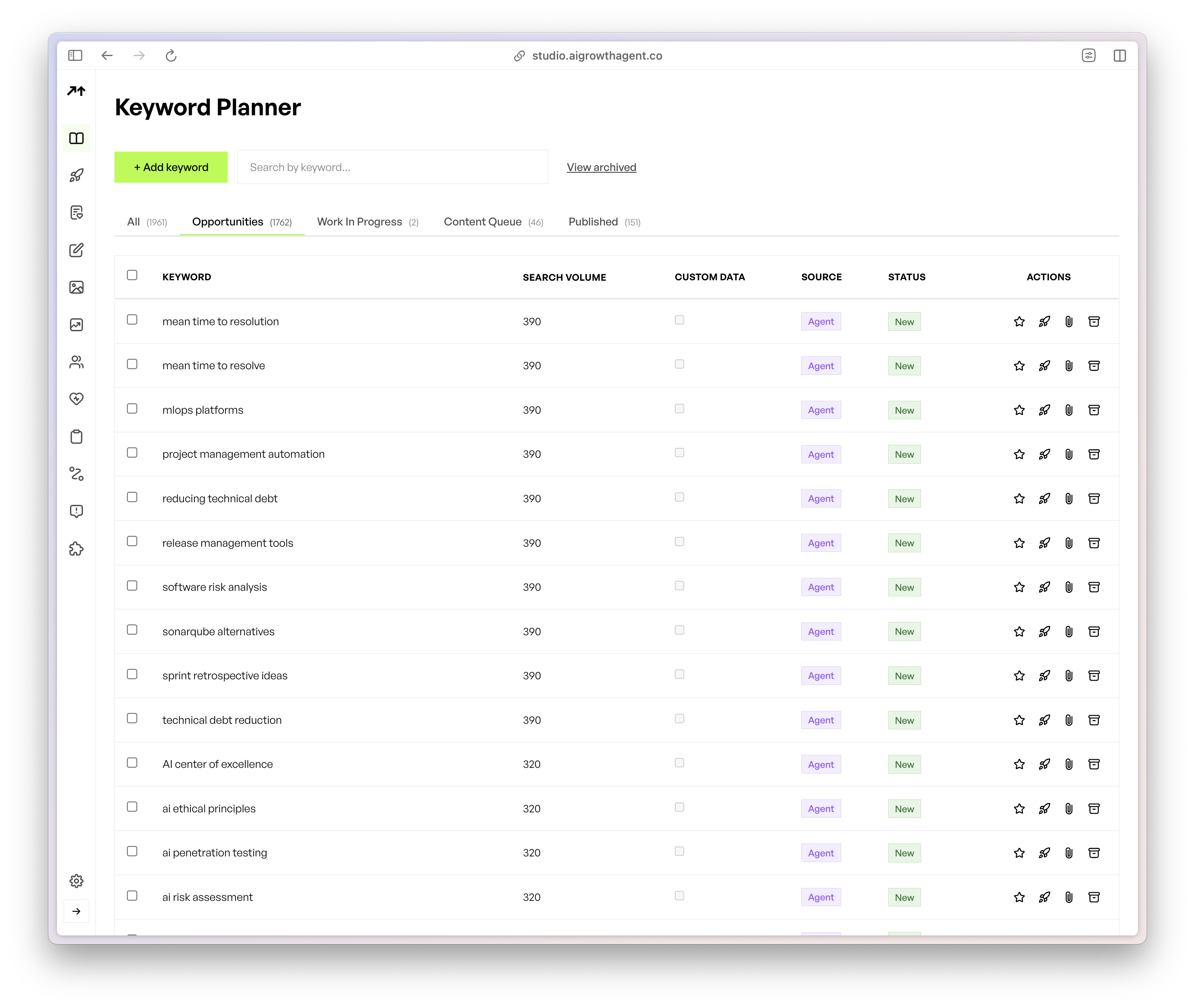
Start by analyzing more than 10,000 related queries to uncover content gaps your competitors have not covered in depth. Use those gaps to create topic clusters that address use cases, implementation strategies, and comparative analysis for each core problem. Before writing, create a Company Manifesto that defines your unique positioning so every cluster reflects a consistent point of view. Map these content pillars to user intent patterns across the full customer journey so each article supports a specific stage, from awareness to decision.
AI Growth Agent automates this research phase. The platform ingests your company context, evaluates tens of thousands of search queries, and delivers a complete programmatic content strategy organized into pillars and clusters.
Step 2: Use 2026 Schema, MCP, and LLM.txt for AI-Ready Content
Schema.org markup acts as the AI translation layer that turns your pages into structured data. The table below shows how core schema types shape how AI engines understand and reuse your content. Focus especially on FAQ and HowTo schemas because they give AI pre-formatted answers it can quote directly.
|
Schema Type |
Purpose |
AI Benefit |
|---|---|---|
|
Article Schema |
Content structure |
Defines authorship and E-E-A-T signals |
|
FAQ Schema |
Question-answer pairs |
Pre-packaged chunks for RAG retrieval |
|
HowTo Schema |
Step-by-step instructions |
Structured guidance for AI responses |
Advanced 2026 requirements include LLM.txt files that guide AI interpretation and Model Context Protocol (MCP) for direct AI interfaces. Configure robots.txt so GPTBot, ClaudeBot, and PerplexityBot can crawl your content without friction. AI Growth Agent automatically injects these technical elements into every published article so your team does not manage them manually.
Step 3: Maintain Freshness with Programmatic Publishing Velocity
Traditional search volume will drop 25% in 2026 as users move to AI-powered answer engines. Consistent daily publishing now acts as the baseline for staying visible in these systems.
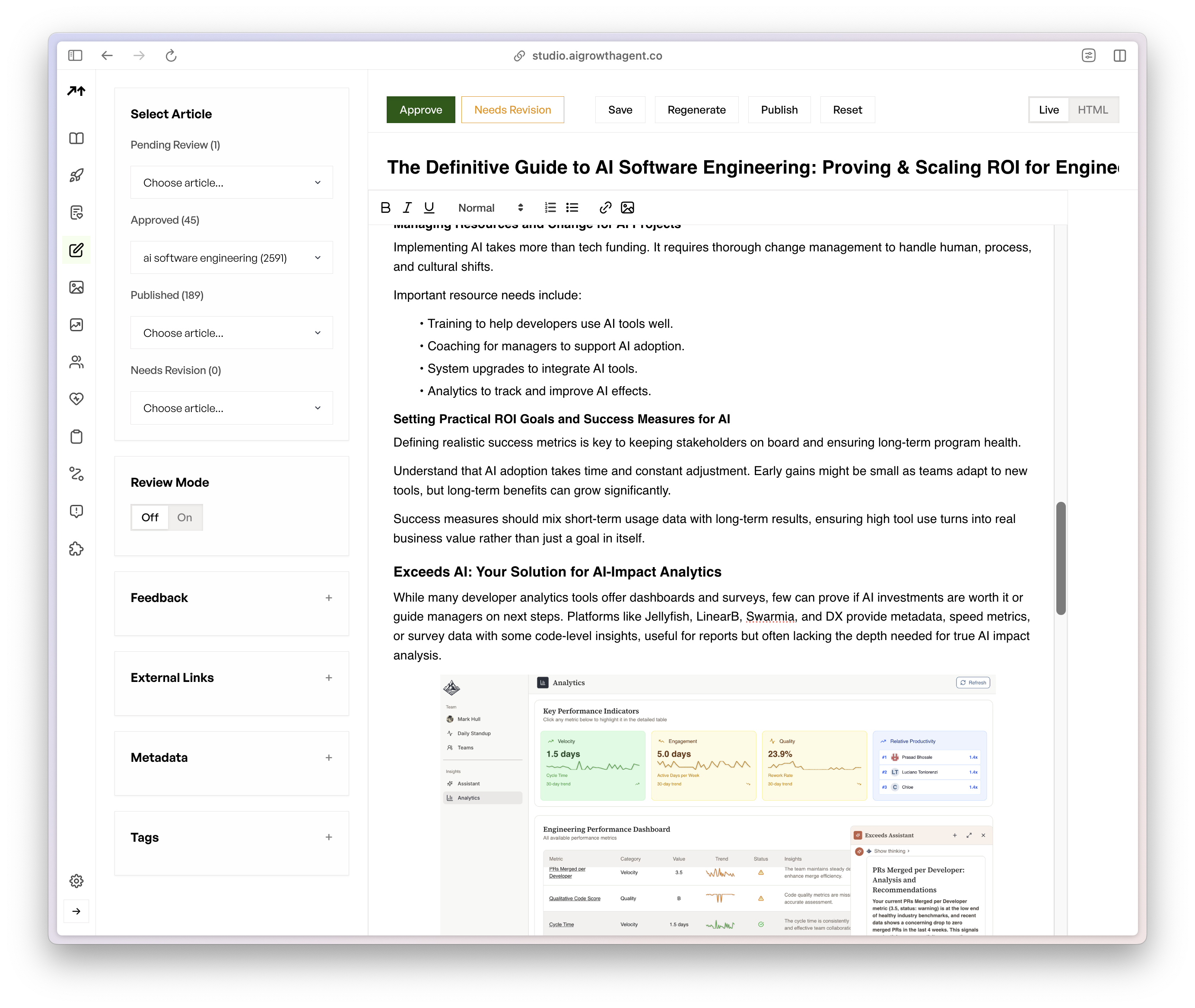
Publish high-quality content every day instead of monthly batches. This pace becomes realistic only when you automate research, drafting, fact-checking, and publishing workflows from a single system. Extend this automation to existing content by updating articles with fresh data, new examples, and current timestamps so AI engines treat them as live sources. Throughout this process, maintain a consistent brand voice across all automated content so readers experience one coherent identity.
Manual teams cannot sustain this scale. AI Growth Agent Studio enables full auto-pilot mode, learns your preferences, and executes the entire content lifecycle autonomously while preserving quality standards.
Step 4: Strengthen E-E-A-T with Concrete Proof of Experience
E-E-A-T functions as a ranking filter for AI-powered search, and 78% of users actively seek content with identifiable human authors. Authority signals show both users and AI systems that your guidance comes from real experience.
Highlight first-hand case studies that include specific metrics and outcomes instead of vague success claims. Publish detailed author bios with verifiable credentials and clear domain expertise. Support your arguments with proprietary data and original research citations that other sites cannot copy. Add screenshots, examples, and real-world implementations so readers and AI engines can see how your advice works in practice.
Deploy these signals quickly because AI engines favor content with clear experience markers over generic summaries. See how AI Growth Agent helps you build these authority signals at scale.
Step 5: Add Multimodal and Conversational Elements for AI Visibility
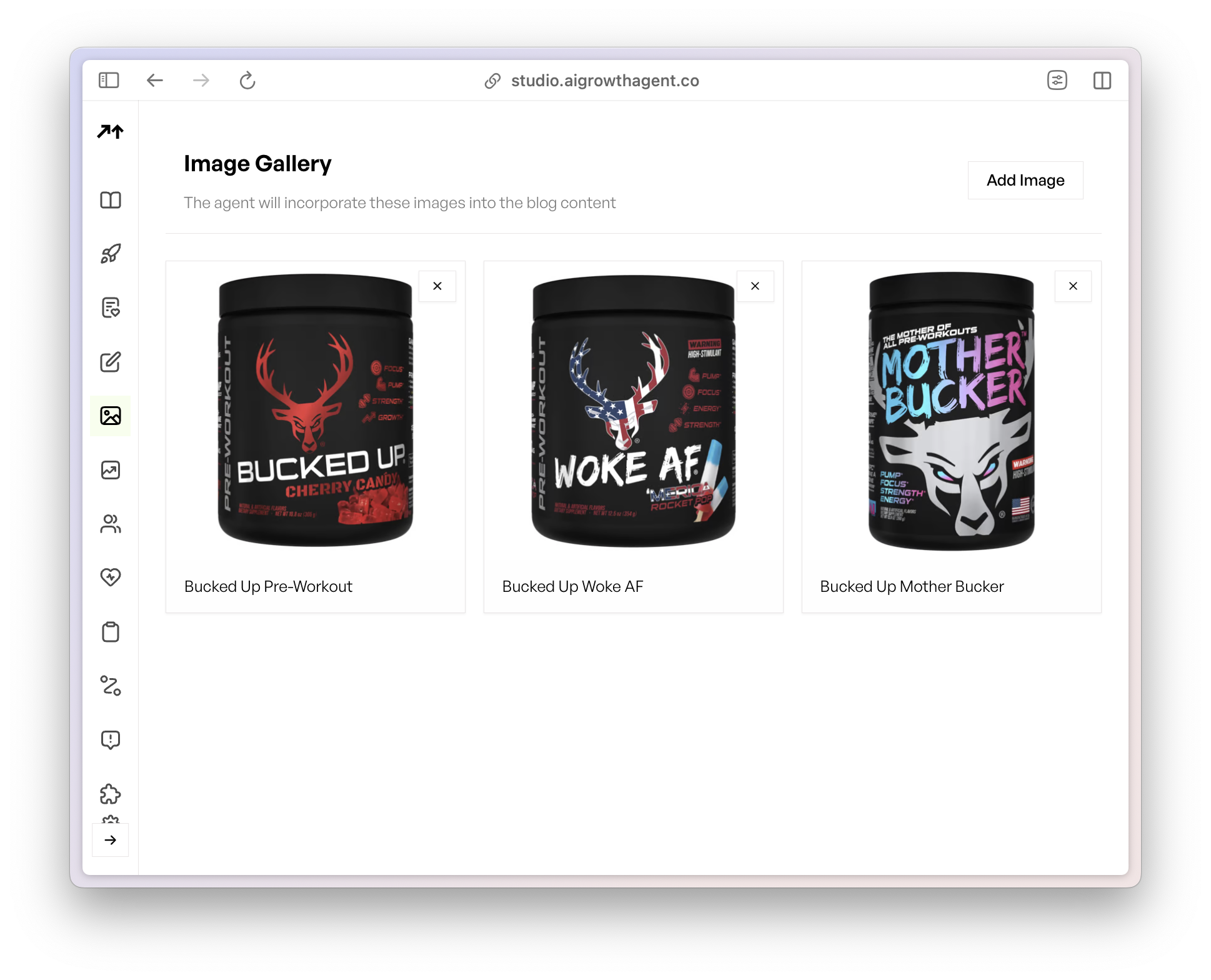
Visuals, videos, and examples with descriptive alt text make content multimodal and easier for AI search engines to interpret. These elements also improve user engagement, which reinforces authority signals.
Embed videos with VideoObject schema and accurate captions so AI systems can parse the content. Use conversational phrasing such as “What is the best…” and “How do I…” to mirror natural language queries that users type into AI tools. Create comparison tables and step-by-step visual guides that AI can quote as structured answers. Support every image with descriptive metadata and alt text so image SEO contributes to your AI visibility.
AI Growth Agent automates image selection and placement, inserting relevant visuals with complete metadata so each article ships ready for multimodal AI indexing.
Step 6: Monitor AI Performance and Iterate with Specialized Tools
Ongoing monitoring across AI surfaces shows whether your programmatic SEO efforts translate into real visibility and traffic. Treat this data as a feedback loop that guides your next content sprints.
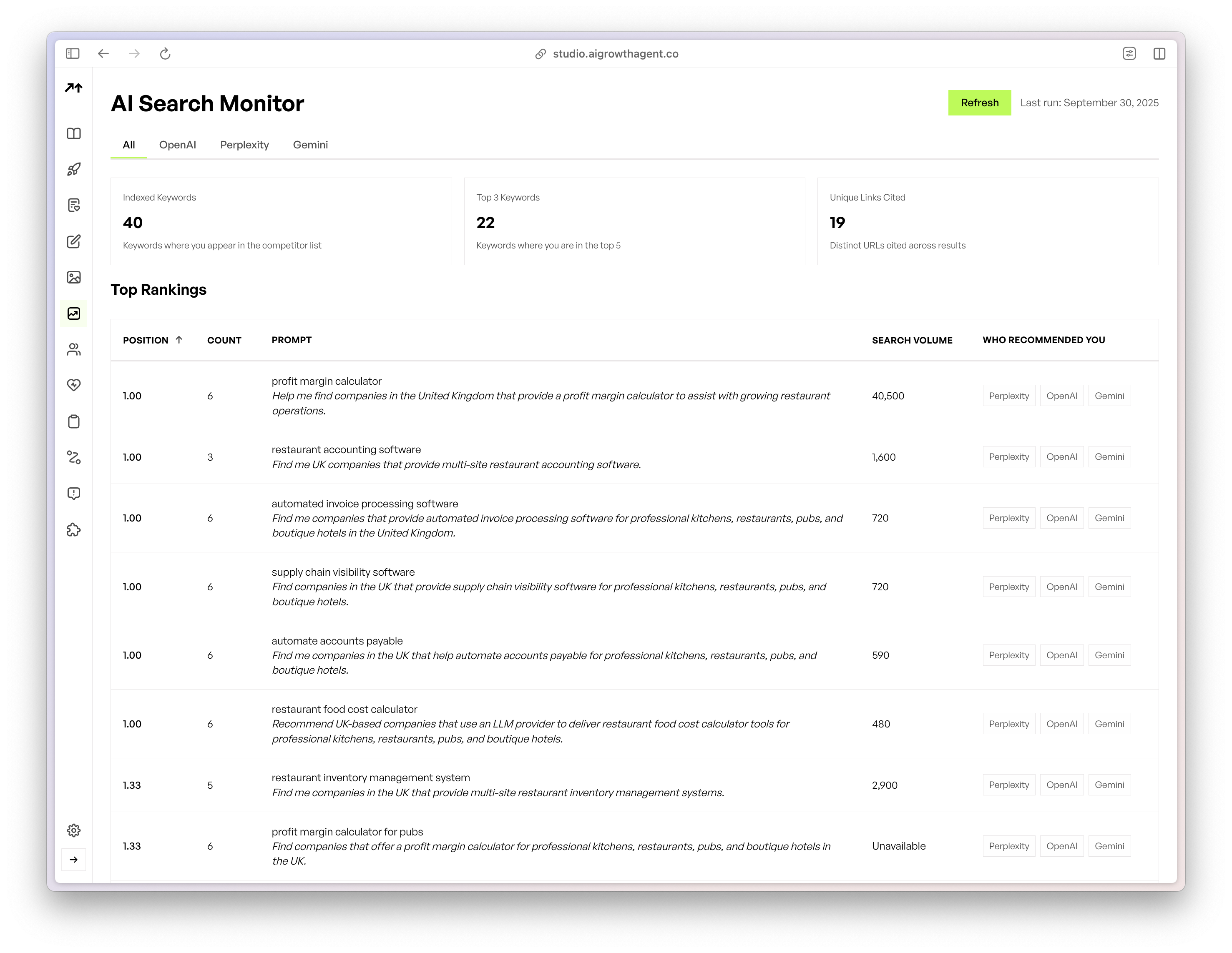
Track citation frequency in ChatGPT, Google AI Overviews, and Perplexity to see where your brand appears as a source. Measure share of voice against competitors inside AI responses for your priority topics. Monitor AI-referred traffic and conversion rates to confirm that citations drive business outcomes, not just impressions. Review crawl statistics for AI bots so you can fix access issues before they affect rankings.
AI Growth Agent Studio provides real-time heatmaps of indexing performance across target keywords, direct quotes from AI responses, and clear ROI metrics tied to organic traffic growth and conversions.
Step 7: Scale with an Autonomous Programmatic SEO Engine
A complete programmatic SEO system runs continuously, turning strategy into published content without constant human intervention. This structure lets you expand across markets, products, and brands while keeping quality consistent.
The full workflow includes automated keyword research and content strategy development that align with your intent clusters. Autonomous content creation then produces articles that match your brand voice and follow your editorial standards. Technical SEO optimization and schema injection happen in the background for every piece, so nothing ships without proper structure. Multi-tenant deployment supports portfolio companies or multiple brands from a single control panel.
AI Growth Agent represents the only solution that delivers true programmatic automation from strategy through publication. See the autonomous content engine in action with a personalized demo.
2026 Case Studies: Programmatic SEO Wins in AI Search
Bucked Up reached the number one ChatGPT citation for “best protein soda” within three weeks of adopting programmatic SEO strategies. The sports nutrition brand now appears as the top citation alongside competitors such as Feisty Drinks and Clean Simple Eats.
Gitar.ai became the reference brand for AI-powered CI/CD automation in under two months. The company now leads conversations across Google AI Overviews, ChatGPT, and Perplexity for queries like “fix broken CI builds automatically” and “best AI reviewer that comments on CI failures.”
Success stories like Exceeds AI, BeConfident, and Bucked Up show how AI Growth Agent’s programmatic SEO drives rapid AI citations and durable authority. Explore whether this approach fits your content strategy with a quick consultation.
Is SEO Dead in 2026? Programmatic SEO for AI-Powered Search
SEO has evolved into Generative Engine Optimization and programmatic SEO, while manual content creation has lost its edge. Velocity-driven authority building now wins because AI engines reward consistent, structured, and expert content. AI-referred visitors browse 12% more pages per visit and show a 23% lower bounce rate compared to traditional organic traffic, which makes every AI citation more valuable.
Use this audit checklist to gauge your 2026 readiness:
-
Publish quality content daily without burning out your team.
-
Confirm that AI crawlers can access and index your content.
-
Check whether you appear in AI citations for your core topics.
-
Verify that your content uses schema and structure for machine readability.
Teams that cannot meet these standards need programmatic SEO automation to stay competitive.
FAQ
How to optimize for AI-powered search engines?
Focus on structured content with clear headings and direct answers at the top of each section. Add comprehensive schema markup, including FAQ, Article, and HowTo schemas, and confirm that AI crawlers can access your pages. Use conversational language that mirrors natural queries and keep content fresh with regular updates and new data.
How to rank in AI search engines like ChatGPT and Perplexity?
Publish consistent expert-level content that builds topical authority around your main intent clusters. Structure articles with modular sections so AI engines can extract concise answers. Strengthen E-E-A-T with first-hand experience, clear author credentials, and structured data that makes citation simple.
Is SEO dead in 2026?
SEO is not dead, but manual SEO has become ineffective at scale. The discipline now centers on programmatic SEO and Generative Engine Optimization. Success requires automated content velocity, technical preparation for AI crawlers, and systematic authority building instead of sporadic manual publishing.
What are the best AI search optimization tools?
AI Growth Agent leads the category as the only autonomous programmatic SEO platform that manages strategy, creation, and technical setup. Other useful tools include Semrush for AI visibility tracking, schema markup validators, and monitoring platforms for AI citations. Most alternatives still depend on manual execution, while AI Growth Agent automates the entire workflow.
How to rank in Perplexity and ChatGPT specifically?
These platforms favor encyclopedic content supported by strong third-party authority signals. Build presence through community engagement, digital PR for earned media citations, and frequent publication of expert-level guides. Implement MCP and LLM.txt files so AI systems can interface with your content directly and interpret it correctly.
Next Steps
You now have a complete seven-step framework for AI search dominance. Turn it into action with a focused rollout.
-
Audit AI crawler access and fix any blocking rules highlighted above.
-
Choose your top three intent clusters and plan content for each one.
-
Implement schema markup on your highest-traffic pages this week.
Manual SEO cannot compete with programmatic velocity in 2026. Schedule a demo to see if AI Growth Agent fits your stack and deploy autonomous content automation so your company becomes the definitive source when AI systems look for answers.