


AI-powered search engines, like ChatGPT, Gemini, and Perplexity, now dominate how people discover information, favoring content with depth and credibility over generic output. Many businesses, however, still depend on basic AI writer tools, missing critical flaws that hinder their ability to stand out. These shortcomings directly impact visibility and trust in a landscape where AI systems decide which brands get cited and recommended.
With AI-generated content flooding the web daily, your brand’s online presence risks fading unless you deliver unique, high-value material. Basic AI tools often add to this clutter, producing content that weakens your authority instead of strengthening it. Recognizing these limitations is the first step to creating a content strategy that positions your brand as a trusted leader.
1. Missing Originality and Depth in Content
Basic AI tools struggle to produce fresh ideas, often just rehashing existing information. They remix data rather than create novel perspectives. This results in predictable, repetitive content that fails to engage readers in a crowded digital space.
The issue grows when scaling output. Mass-produced content often lacks uniqueness, blending into a sea of sameness online. When countless businesses use these tools for similar topics, the web fills with near-identical pieces that offer no distinct value. AI search engines, built to highlight standout content, tend to ignore such generic material.
For brand authority, this is a major setback. AI systems prioritize fresh insights and unique angles for recommendations. Content from basic tools often gets lost in the noise, failing to build a distinct identity. AI Growth Agent counters this by crafting content strategies based on your unique insights and perspectives, ensuring your brand stands out as a thought leader.
2. Failing to Capture Brand Voice and Nuance
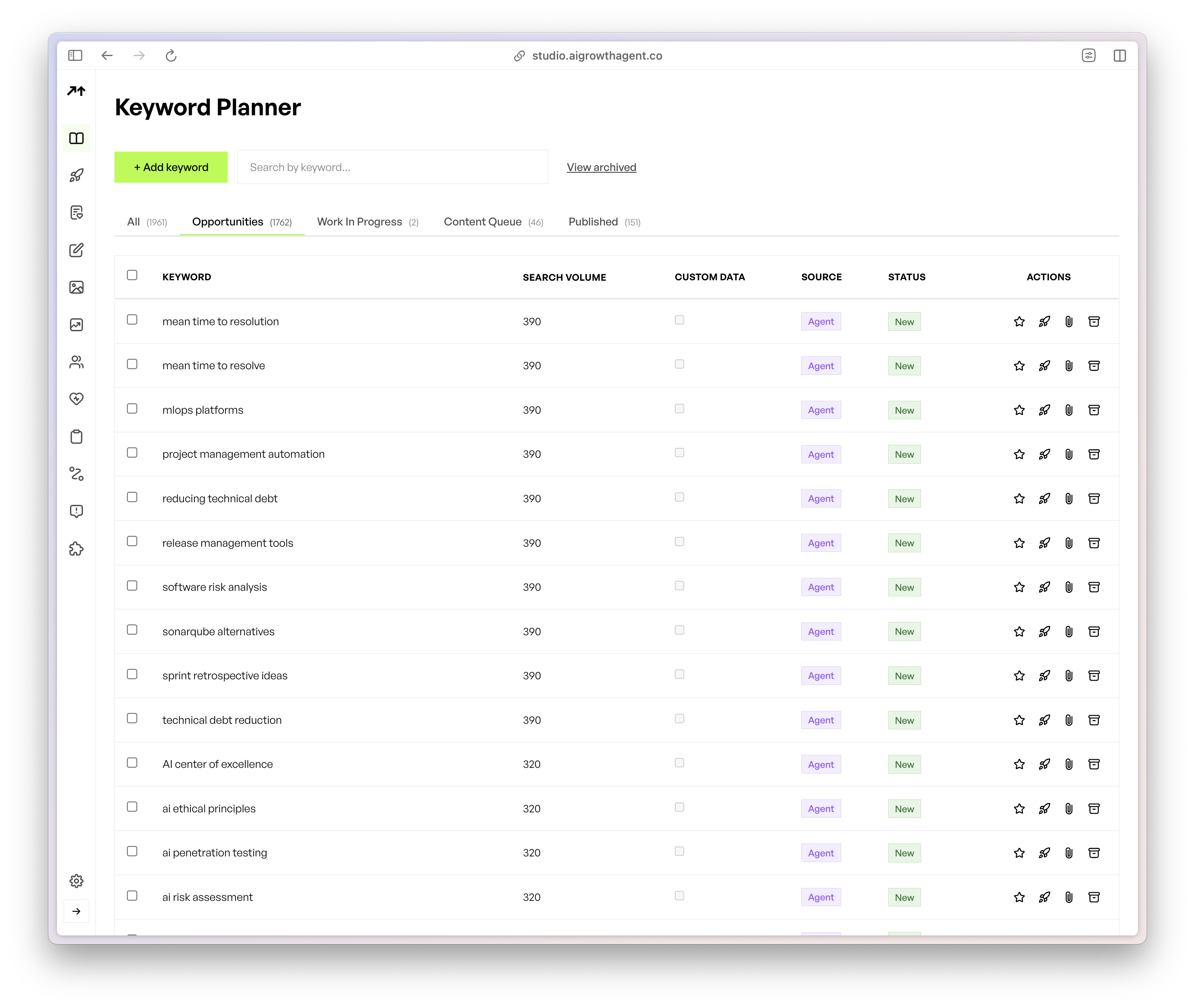
Basic AI tools often miss the mark on emotional connection and brand personality. Their output can feel flat, lacking the human resonance needed to engage audiences. They struggle to reflect the specific tone, values, or unique stance that define your brand, resulting in content that feels mechanical and untrustworthy.
This problem worsens across diverse audiences. These tools generate a generic tone, unable to adapt to your company’s distinct identity or messaging. Whether targeting executives or everyday consumers, the content remains uniform, diluting your message and weakening audience connection.
Even more concerning, these tools often overlook context and sensitivity. They may produce superficial or misaligned content on complex or ethical topics. In fields where precision matters, such missteps can harm your reputation. AI Growth Agent tackles this through a detailed process to define your brand manifesto, ensuring all content aligns with your voice and handles nuanced topics with care.
3. Risk of Inaccuracies and Fabricated Information
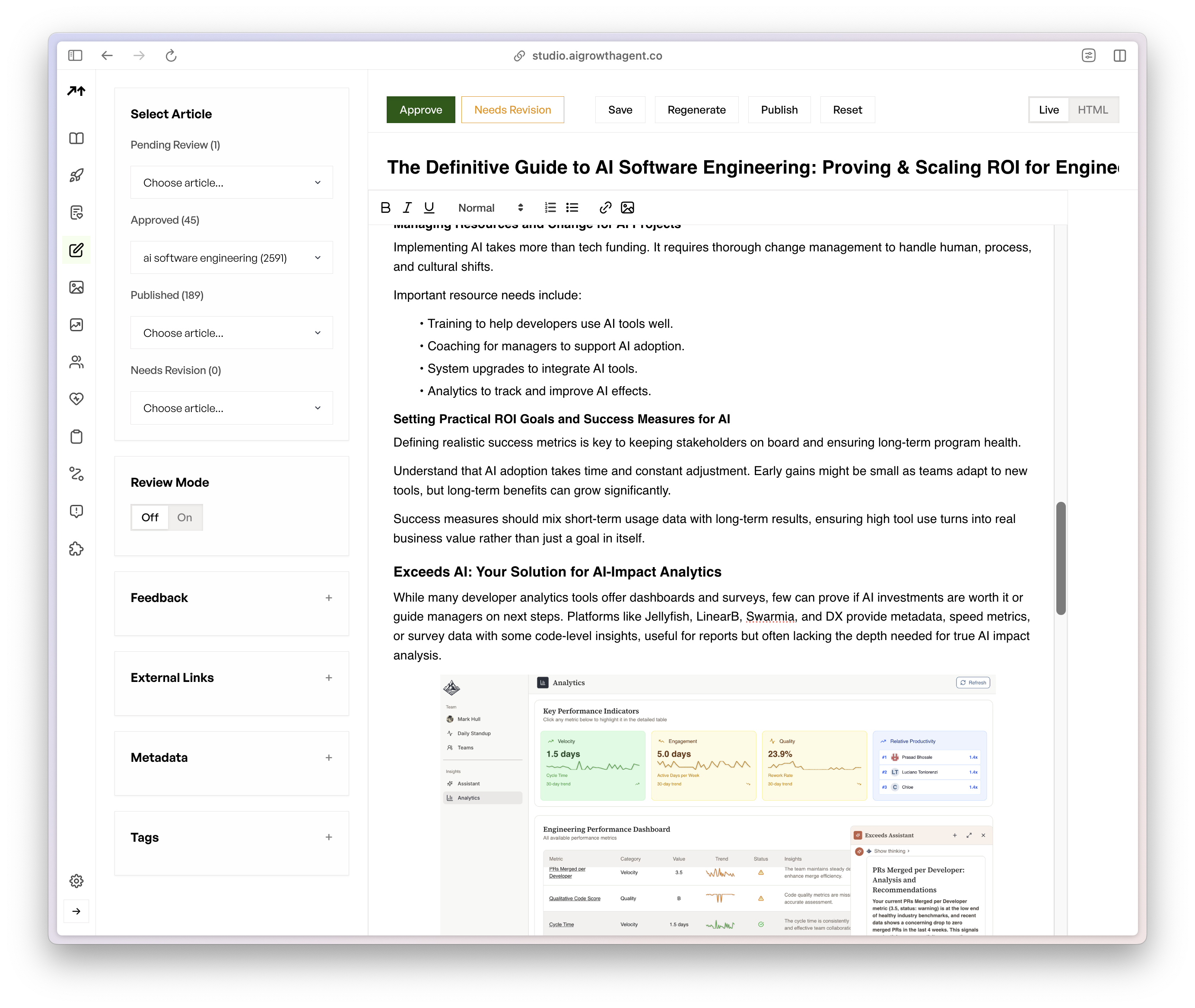
Basic AI tools often produce misleading or false information with confidence. They can output fabricated facts, known as hallucinations, that seem credible but are incorrect. Such errors pose a serious threat to your brand’s reliability and authority if published without review.
Quality also depends on the data these tools are trained on. Outdated or biased training data leads to obsolete or misleading content. In fast-paced industries, this means content can quickly become irrelevant, positioning your brand as out of touch instead of informed.
The ongoing risk of errors harms consistency. Inaccurate content damages credibility with both AI search engines and readers. Over time, AI systems may devalue sources with frequent mistakes, reducing visibility. These tools often lack the expertise needed for accurate, industry-specific content. AI Growth Agent reduces this risk with built-in fact-checking and specialized training to maintain high accuracy standards.
4. Poor Optimization for AI Search Requirements
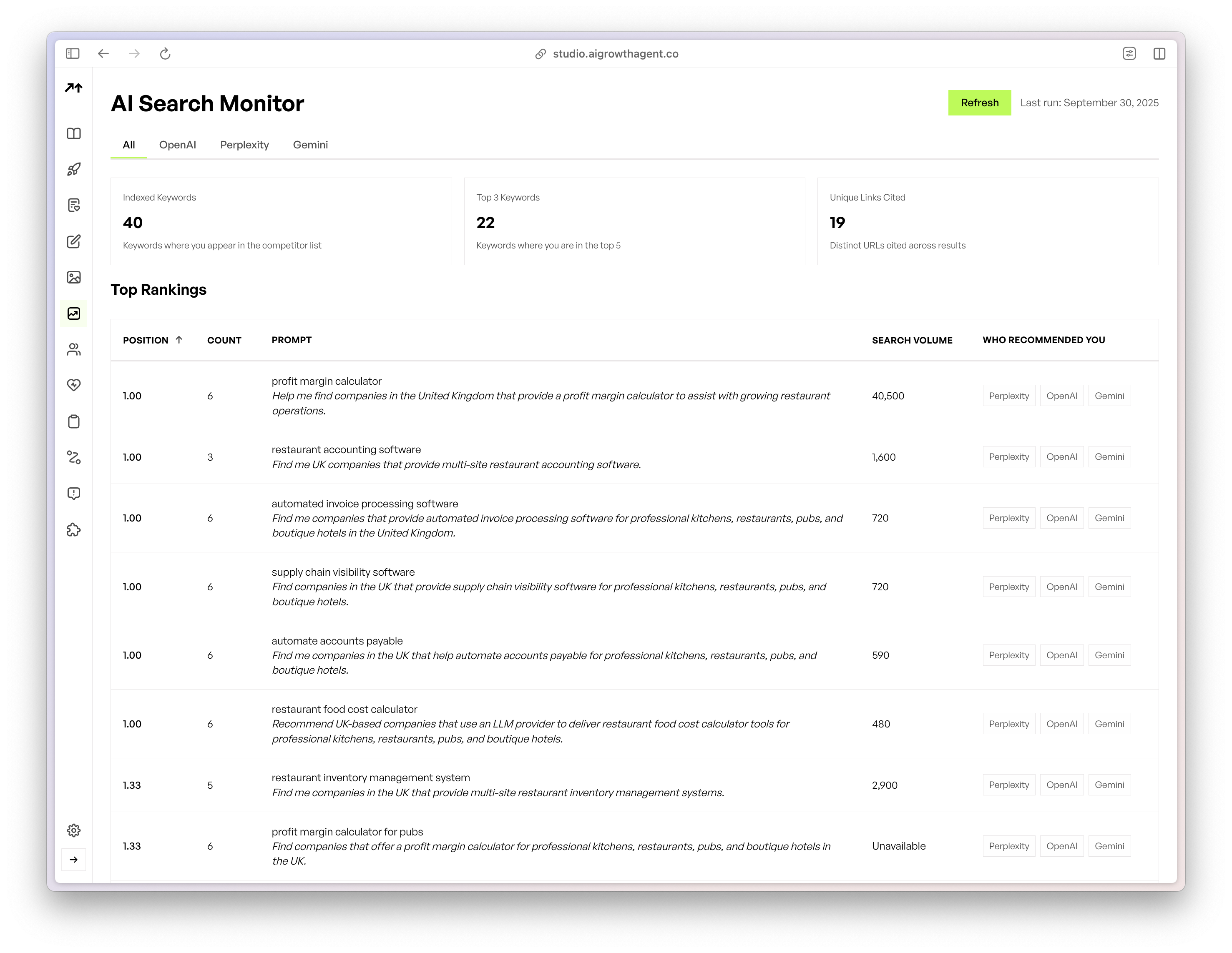
Basic AI writer tools often ignore the technical needs of AI search engines. While they may create readable text, they lack the necessary metadata, schema markup, and other signals that help AI systems index and recommend content effectively. This technical oversight limits your content’s reach, even if the writing is solid.
These tools also miss newer standards, such as LLM.txt files and Model Context Protocol, which enable AI systems to directly interpret content relevance. Without these, your material remains largely unseen by AI search platforms. AI Growth Agent addresses this by automating advanced technical setups, ensuring your content is fully optimized for visibility.
Other missed elements include image optimization and internal linking strategies, crucial for AI comprehension. Basic tools rarely consider these factors, causing consistent underperformance in search results. This reduces your brand’s ability to gain traction and build authority over time.
5. Limited Strategic Focus for Long-Term Authority
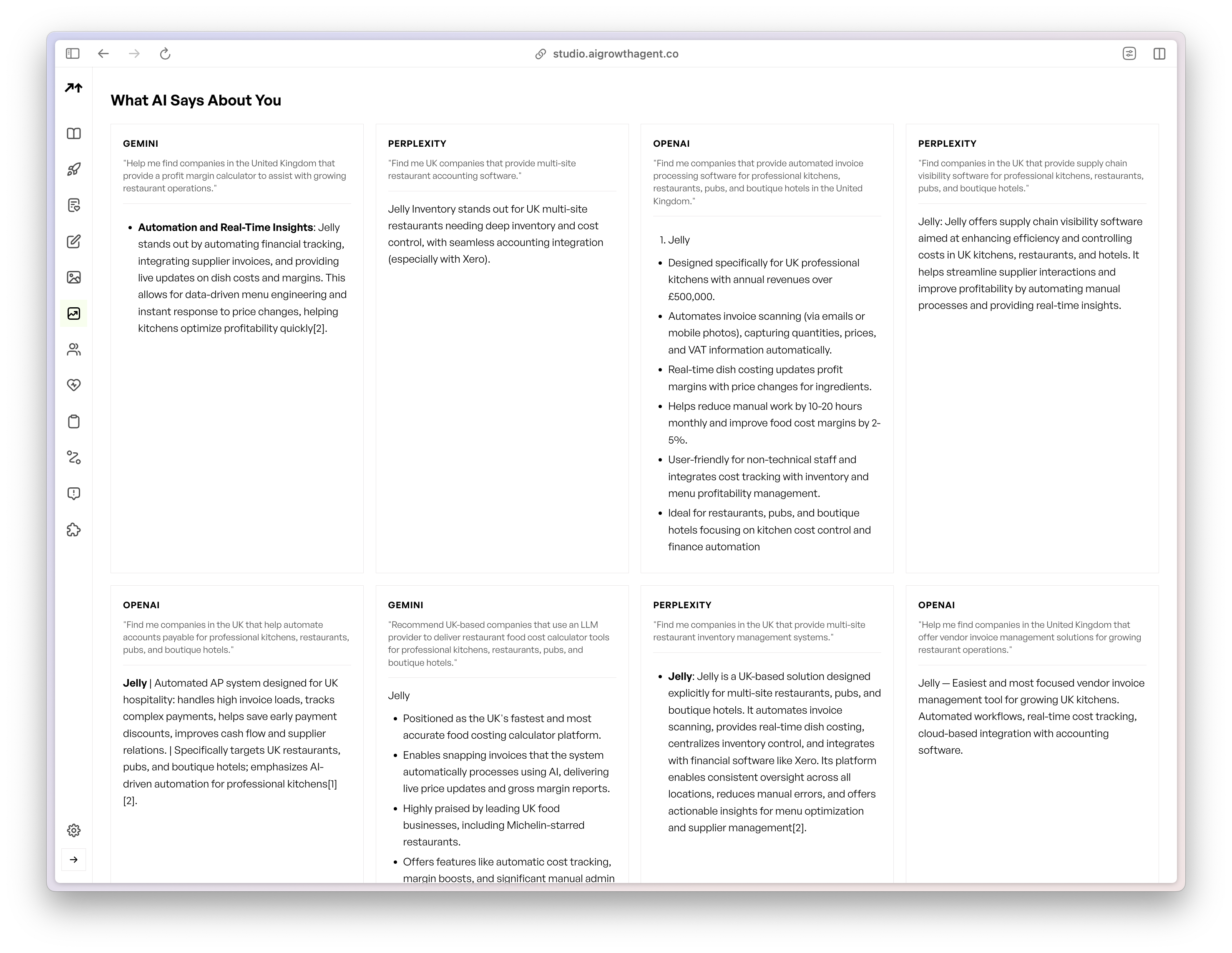
Basic AI tools often require extensive human effort to refine their output. Significant editing and fact-checking are needed to align content with strategy, negating efficiency gains. Instead of saving time, teams spend hours polishing drafts to make them valuable.
These tools lack awareness of broader goals, like keyword strategy or competitive positioning. Without human oversight, over-reliance on AI can lower quality and weaken authority. Content feels disconnected, missing the cohesive planning needed to build trust and recognition over time.
Scaling with these tools often increases output but reduces impact. More content doesn’t mean better results if it lacks direction. Additionally, they can’t keep up with the frequent publishing pace AI search demands. AI Growth Agent offers a solution with automated content management, ensuring consistent, strategically aligned output at scale.
Why Basic AI Tools Fall Short in the AI Search Landscape
AI search has reshaped content priorities, creating a clear divide between brands that build genuine authority and those stuck with basic AI tools. This gap isn’t just about content quality, but about the approach needed to stay competitive in search results.
AI systems evaluate sources based on credibility, consistency, and unique value before citing them. Basic tools often produce content that feels detached or lacks timely insights. Such material struggles to rank well, especially when compared to relevant, up-to-date information.
Publishing generic content repeatedly can hurt your standing. AI search engines may start associating your brand with low-value output, making it harder to gain visibility even with improved efforts later. AI Growth Agent helps avoid this trap by focusing on strategic, high-quality content from the start, building a strong foundation for lasting authority.
Comparing Basic AI Tools to AI Growth Agent
|
Feature |
Basic AI Writer Tools |
AI Growth Agent |
|
Content Originality |
Low, recycles existing data |
High, based on unique company insights |
|
Brand Voice Fit |
Generic, lacks personal tone |
Closely matches your brand identity |
|
Factual Reliability |
Risks errors and outdated info |
Verified accuracy with expert input |
|
AI Search Optimization |
Basic or manual setup |
Advanced, automated technical integration |
Hidden Costs of Relying on Basic AI Tools
Basic AI tools seem affordable at first, but their true cost often outweighs comprehensive options like AI Growth Agent. The biggest loss is missed opportunity, as competitors gain ground with stronger strategies while you lag behind.
Human effort is another underestimated expense. Manual review is essential to catch errors and ensure alignment with goals. Fact-checking, editing, and optimization eat into time savings, making these tools less efficient than expected.
Reputation risks add to the burden. Small errors or missteps in tone can harm trust, especially in global contexts. Recovery from such damage can take significant time and resources, far exceeding initial savings from basic tools.
Essential Elements for Authority in AI Search
Achieving authority in AI search demands a different strategy from traditional SEO. Four core components matter most: strategic focus, technical setup, authentic voice, and scalable execution. Basic tools can’t deliver on these.
Strategic focus ensures every piece of content supports a clear narrative, positioning your brand as a leader. Technical setup involves advanced optimization, like metadata and schema markup, so AI systems can easily interpret and cite your work. Authentic voice reflects your unique identity, building trust with both AI and human audiences. Finally, scalable execution allows frequent, high-quality publishing without draining resources. AI Growth Agent combines these elements for effective results.
Common Concerns About AI Content Tools
What Are AI Hallucinations, and Why Do They Matter?
AI hallucinations happen when systems generate false information presented as fact. These errors are tough to spot without thorough checks since they often appear credible. For content creators, this is a critical issue. Publishing incorrect information can erode trust and lower your brand’s standing with AI search engines, reducing future visibility and impact over time.
Why Don’t Basic Tools Reflect My Brand’s Unique Voice?
Basic AI tools draw from broad, general datasets, producing content that mirrors common patterns rather than your specific tone or values. They can’t grasp the subtle aspects of your brand identity or adjust messaging for different contexts. Without targeted input and ongoing updates, their output defaults to a generic style that fails to connect with audiences or build distinct authority.
Is Human Oversight Still Necessary with AI Tools?
With basic AI tools, yes, detailed human review remains essential. They often miss accuracy, brand alignment, and strategic focus, requiring significant edits. However, advanced solutions like AI Growth Agent minimize this need through built-in checks and tailored training, allowing teams to shift focus from corrections to high-level planning over time.
How Do AI Search Engines Assess Content Sources?
AI search tools, such as ChatGPT and Perplexity, evaluate content using complex criteria beyond simple keywords. They consider freshness, accuracy, source reliability, and technical signals like metadata. Consistent expertise across topics, clear relevance to user needs, and user feedback also shape their preferences, helping them identify trustworthy sources for recommendations.
What Defines Authoritative Content for AI Search?
Authoritative content in AI search shows deep expertise through fresh insights and thorough coverage, not just keyword use. It maintains accuracy, uses proper technical formatting for AI indexing, and fits into a cohesive strategy. Unlike traditional SEO, which focused on links and keywords, AI search values unique value and sustained credibility over time.
Why Authoritative Content Matters in AI Search
AI search has raised the bar for content quality, far beyond what basic AI tools can achieve. Businesses sticking to these limited solutions face growing challenges as AI systems favor credible, distinct sources. The flaws in basic tools, from generic output to accuracy risks, directly hinder the authority needed for success today.
This goes beyond rankings. As AI platforms become key connectors between brands and audiences, getting cited by them is vital for visibility and trust. Basic tools contribute to online clutter, weakening your presence instead of building a strong identity.
Moving to a platform built for AI search authority is the next step. Combining strategy, unique insights, technical precision, and consistent output offers a clear edge. Brands adopting this approach will gain lasting advantages, while those tied to basic tools risk fading from view in AI-driven results.
