Written by: Mariana Fonseca, Editorial Team, AI Growth Agent
Key Takeaways
-
88% of brands remain invisible in AI search engines, so they need entity-rich content with structured data and original research instead of traditional SEO tactics alone.
-
AI search gives significant weight to content freshness (18-22%) and structured formats, with structured pages earning a 60% citation rate in Google AI Overviews, ChatGPT, and Perplexity.
-
The seven-step framework covers the full path to AI visibility: audit visibility, build a manifesto, cluster keywords, deploy technical infrastructure, activate pSEO, monitor citations, and scale with multi-tenant agents.
-
Programmatic SEO supports daily high-authority content production and increases citations by 35-40% compared to manual methods, as seen in 2026 case studies like Bucked Up and Flyhomes.
-
Brands can implement these strategies with AI Growth Agent to dominate AI discoverability, with a guided demo showing the full workflow.
Why AI Search Optimization Matters in 2026
AI-powered search engines now shape how users discover information across entire categories. Google AI Overview presence grew 102% from 6.49% of queries in January 2025 to 13.14% in March 2025, while queries with AI Overviews have an average CTR of 8%, a 47% reduction from 15% for queries without AI Overviews.
Traditional manual SEO approaches cannot compete with the velocity required for AI visibility. The shift is fundamental: brand mentions are now 3x more important than backlinks for AI search visibility, which means brands must establish entity authority through consistent content production across multiple touchpoints. Yet manual content creation typically produces only one to two articles monthly, a pace that cannot maintain relevance when 85% of Google AI Overview citations come from content published in the last two years.
Programmatic SEO (pSEO) solves this scale problem by automating high-authority content creation. Brands using pSEO maintain the recency and depth that AI systems prioritize while building comprehensive entity profiles that support consistent citations across ChatGPT, Perplexity, and Google AI Overviews.
7-Step Framework to Maximize Brand Discoverability in AI Search Engines
1. Audit Your Digital Footprint vs. Competitors
Start by measuring your current AI visibility with tools like Otterly.ai that track mention rates across ChatGPT, Perplexity, and Google AI Overviews. Authority signals, including domain authority, backlink profiles, and brand mention frequency, account for 35% of citation likelihood. Document gaps where competitors appear in AI responses while your brand remains absent, especially for high-intent queries tied to your core offerings.
2. Build a Company Manifesto That Guides All Content
Create a clear brand narrative that anchors every piece of programmatic content. This manifesto defines your unique positioning, core value propositions, and authoritative stance on key industry topics. AI systems favor brands with consistent messaging across multiple content pieces, so this narrative framework becomes essential for entity recognition and citation consistency.
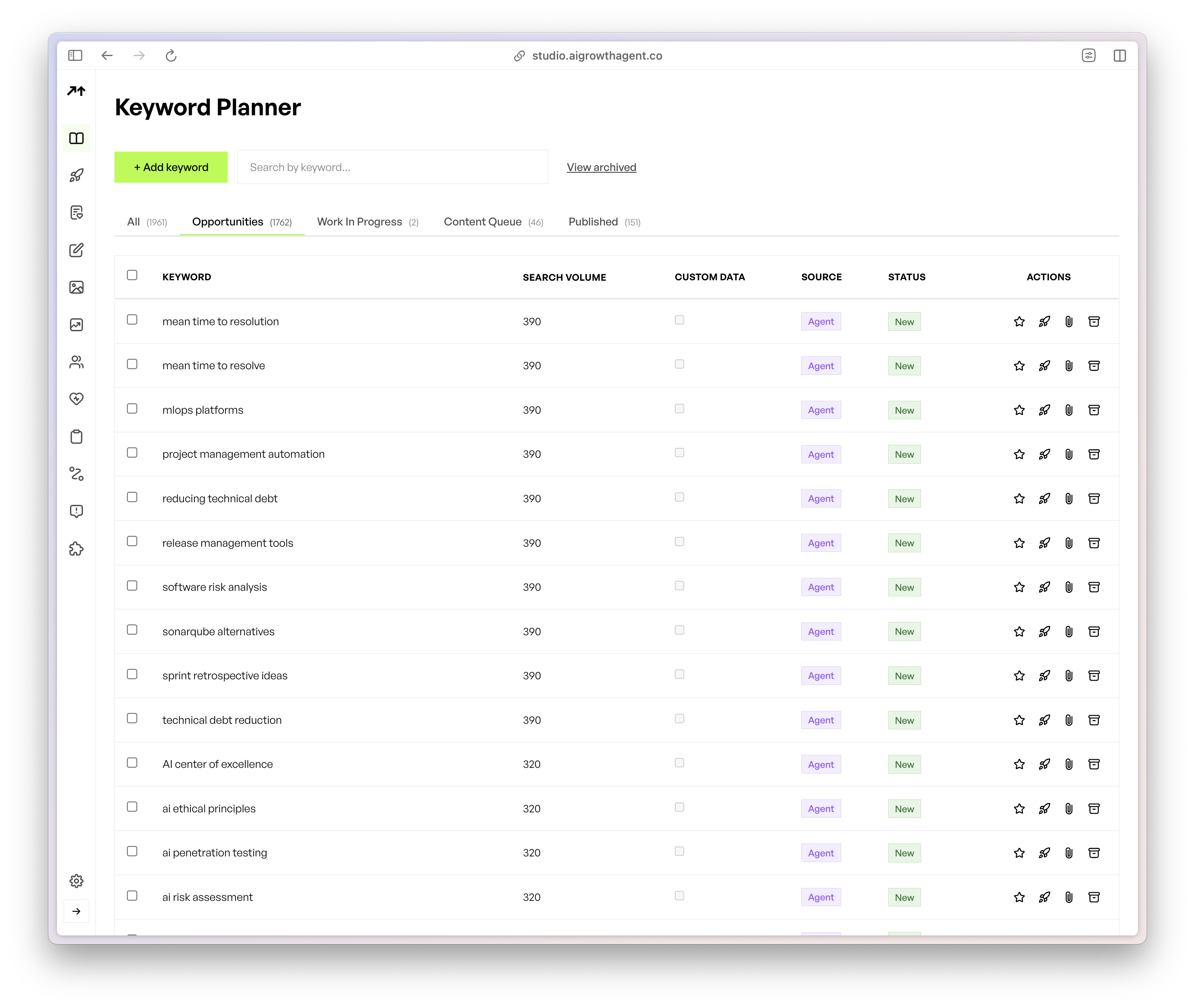
3. Use Programmatic Keyword Clustering to Define Topics
Shift from basic keyword lists to query-driven content pillars that mirror how AI systems understand topics. Focus on clusters that let you demonstrate expertise through interconnected content pieces that answer related questions. Granular, audience-specific pages receive 2.3x more citations than generic product pages when AI systems respond to targeted queries.
4. Deploy Autonomous Technical Infrastructure for AI Crawlers
Set up advanced schema markup, LLM.txt files, and Model Context Protocol (MCP), so AI systems can understand and access your content accurately. Sites with structured data, including Article, FAQPage, HowTo, Organization, and Person schemas, see up to 30% higher visibility in AI Overviews. This technical foundation ensures AI crawlers can index, interpret, and cite your content correctly.
See how AI Growth Agent automates schema markup and technical infrastructure by scheduling a demo to explore implementation.
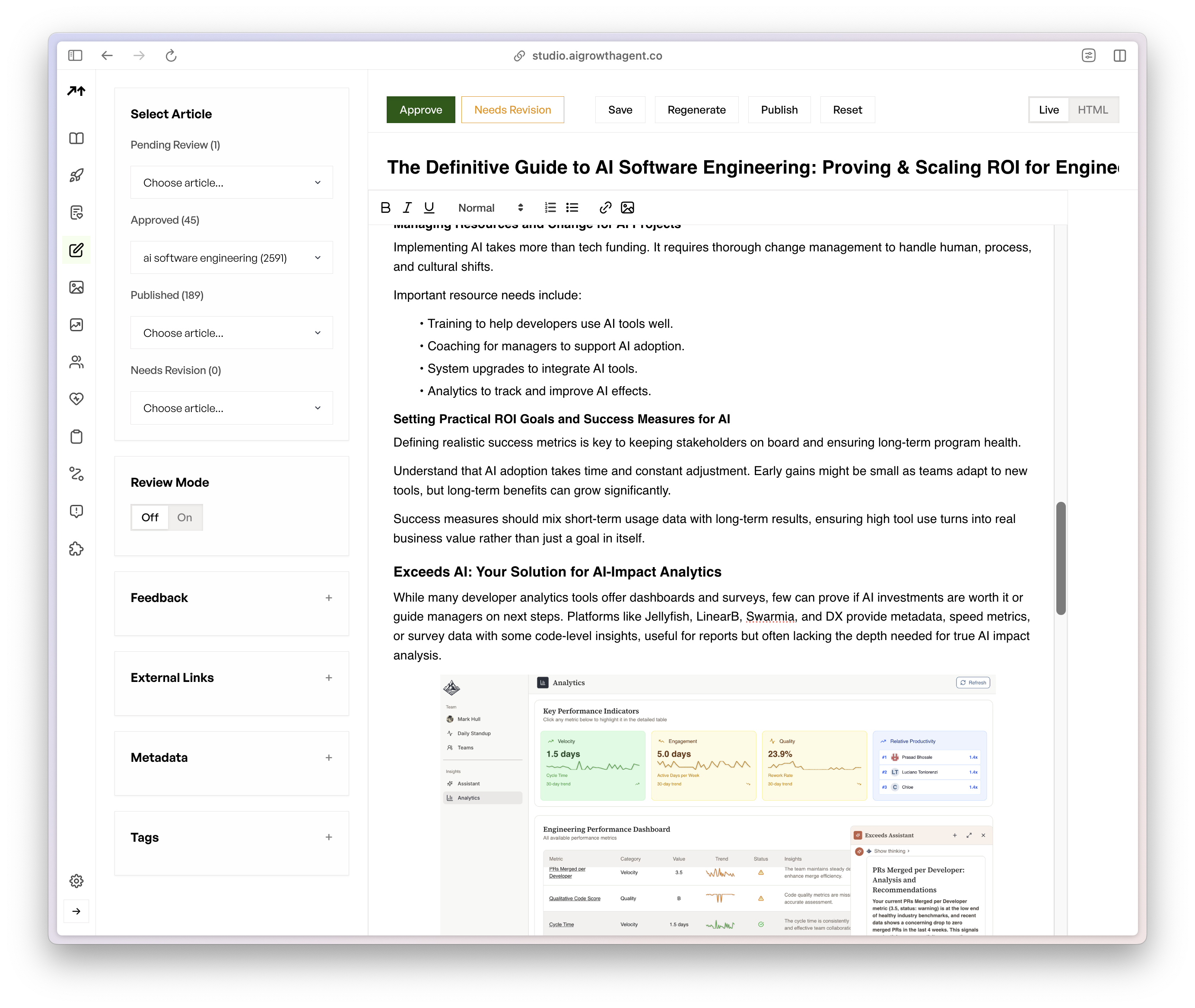
5. Activate a pSEO Content Agent for Daily Output
Run programmatic content creation that publishes high-authority articles daily instead of monthly. Reformatting blog posts from prose into structured tables and short paragraph formats caused 6 out of 10 posts to appear in AI responses within one month. Prioritize content formats that AI systems prefer, such as FAQ sections, numbered lists, comparison tables, and data-rich articles with clear headings.
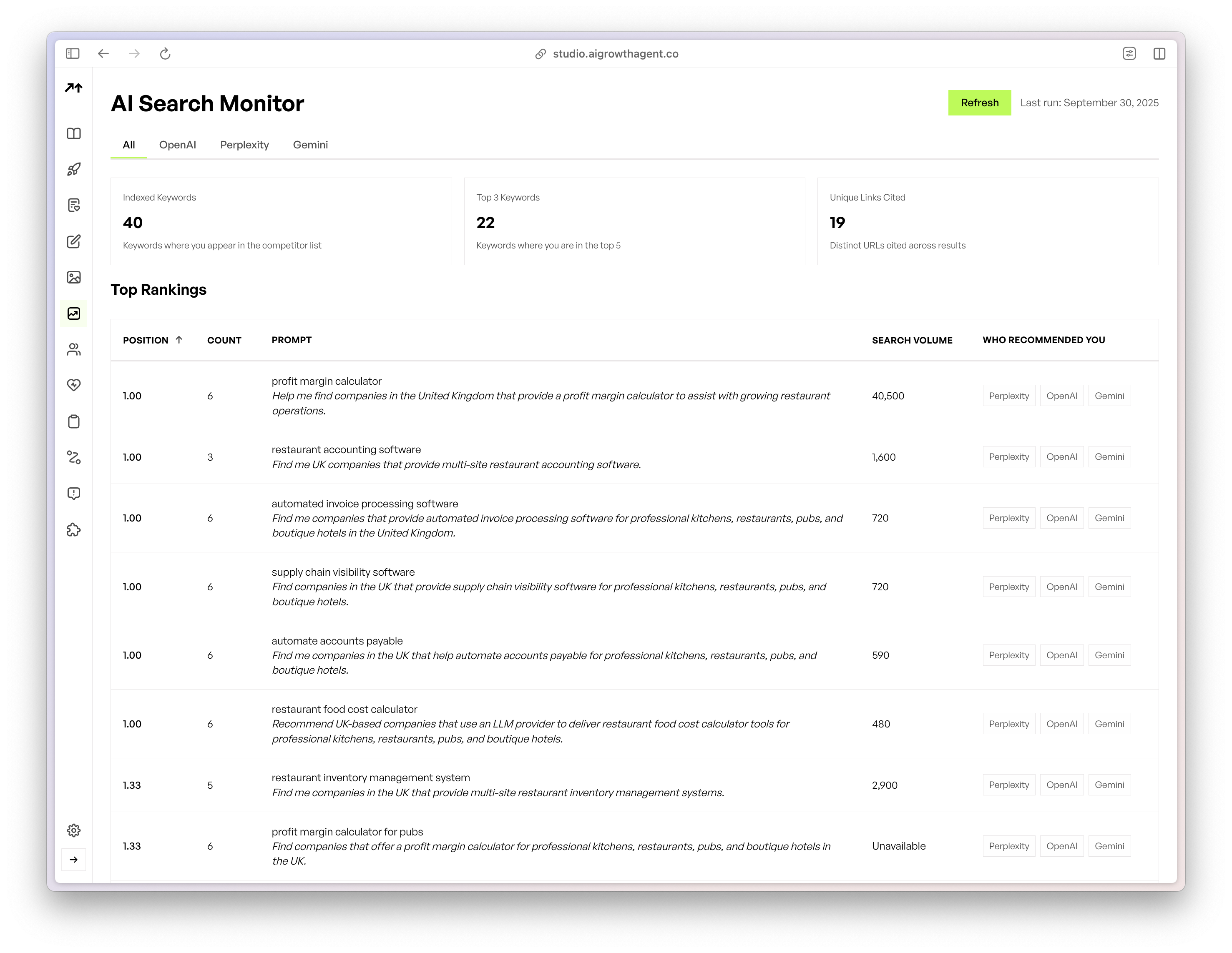
6. Monitor Citations via AI Visibility Dashboards
Track your brand mentions across AI platforms in real time using metrics like mention rate, share of voice, and citation frequency. Share of voice represents the percentage of total recorded brand mentions within the monitored query set attributed to a specific domain. Review these metrics monthly to spot trends, diagnose drops, and prioritize new content opportunities.
7. Scale with Multi-Tenant Agents and Realtime Content Injection
Enterprises managing multiple brands or product lines can scale faster by deploying parallel programmatic SEO agents that share technical infrastructure while preserving distinct brand voices. Real-time content injection capabilities help teams capitalize on trending topics and breaking news, so each brand maintains relevance for time-sensitive queries.
The table below summarizes how programmatic SEO outperforms manual approaches across content velocity, technical implementation, and resource efficiency, along with the citation lift each improvement can deliver.
|
Aspect |
Manual SEO |
Programmatic SEO |
Citation Boost |
|---|---|---|---|
|
Content Velocity |
1-2 articles/month |
Daily publication |
35-40% |
|
Technical Implementation |
Manual schema markup |
Automated structured data |
30% |
|
Resource Requirements |
Billable hours |
Set-it-forget-it |
40-65% |
Build Entity Authority in LLMs with Strategic Publishing
Testing shows that contributions to 3-5 high-authority industry publications increase brand citation rates by 40-65% for industry-specific queries within 60-90 days. As outlined in the framework, these contributions work best when they feature original research, proprietary data, and expert commentary that position your brand as the primary source for specific insights. Strategic syndication campaigns increase brand mention frequency by an average of 45% across major LLMs within 60-90 days, reinforcing the same entity signals across multiple domains.
These authority-building tactics extend the impact of your pSEO content by amplifying brand mentions in places LLMs already trust, which strengthens your entity profile and supports higher citation rates.
Common Pitfalls: Why Agencies and Tools Miss AI Visibility
Many brands struggle to execute these strategies because they rely on outdated vendors and disconnected tools. Traditional SEO agencies operate on manual processes that cannot match the velocity required for AI visibility.
Even when brands turn to generic AI writing tools to increase output, these tools produce unstructured content without the technical precision needed for AI citations. Worse, most solutions lack integration capabilities, which forces manual technical implementation and creates bottlenecks along with inconsistent content quality and schema markup.
Measure AI Citations to Guide Your Strategy
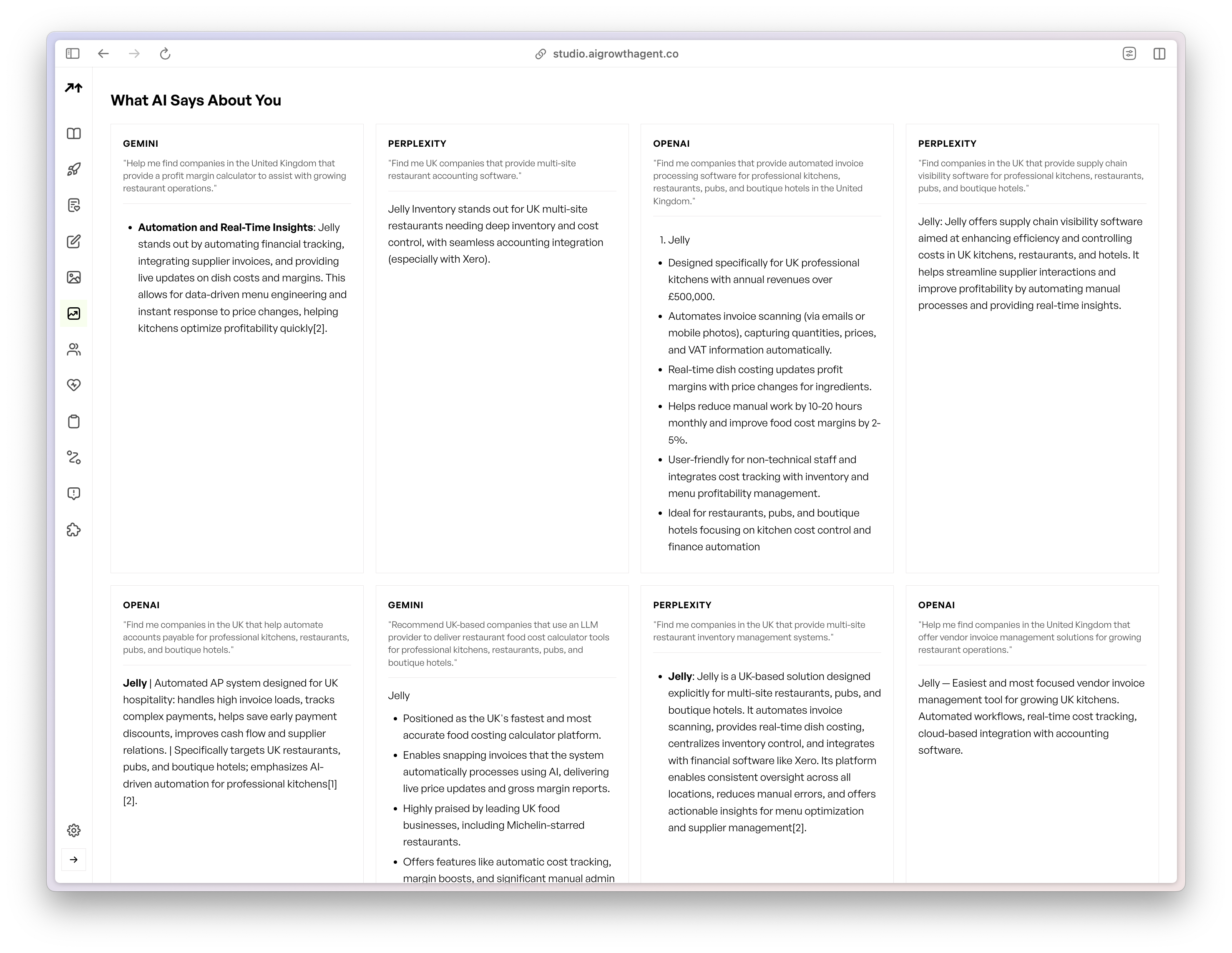
Measurement closes the loop between strategy and execution by showing which efforts actually drive citations. Track your AI search performance using comprehensive metrics, including mention rate, share of voice, and citation frequency across ChatGPT, Perplexity, and Google AI Overviews. Pages scoring 8.5/10 or higher on semantic completeness metrics demonstrate 340% higher inclusion rates in AI-generated answers. Monitor these metrics monthly to uncover optimization opportunities and benchmark your position against competitors.
Enterprise-Grade Multi-Tenant pSEO and Realtime Injection
Enterprise organizations need programmatic SEO solutions that handle multiple brands at once while respecting unique brand guidelines and technical constraints. Advanced pSEO platforms support multi-tenant setups and real-time content injection for trending topics, so teams can react to breaking news and emerging industry discussions within minutes instead of weeks.
This enterprise layer builds directly on the seven-step framework by extending it across brands, regions, and product lines without sacrificing control or consistency.
Real 2026 Case Studies: Proof of pSEO Impact
Bucked Up reached the #1 position for “best protein soda” in ChatGPT within three weeks after rolling out programmatic SEO strategies. Gitar.ai became the reference brand for AI-powered CI/CD automation across Google AI Overviews, ChatGPT, and Perplexity in under two months. Flyhomes grew organic traffic 10,737% in three months by building 425,000 programmatic pages focused on cost-of-living guides. These outcomes show how systematic, programmatic approaches to AI search optimization outperform manual tactics.
Frequently Asked Questions
How to optimize content for AI search?
Optimize content for AI search by adding structured data markup, building FAQ sections, and using clear headings that mirror natural language questions. Include original data with proper attribution and aim for semantic completeness by covering topics thoroughly instead of chasing individual keywords. Keep content fresh by updating articles regularly and maintaining consistent entity information across your site, social profiles, and third-party listings.
What is programmatic SEO for AI visibility?
Programmatic SEO for AI visibility uses automated content systems to produce high-authority articles at scale while keeping technical elements aligned with AI search engines. This approach combines strategic keyword clustering, automated schema implementation, and systematic content production to build entity authority that AI systems recognize and cite consistently.
How to rank in AI search engines?
Ranking in AI search engines requires a repeatable system that blends content velocity, technical precision, and authority building. Implement the seven-step framework by auditing current visibility, developing a brand narrative, clustering keywords programmatically, deploying technical infrastructure, activating content automation, monitoring citations, and scaling with multi-tenant systems. Consistent execution over time matters more than any single optimization change.
How to build entity authority in LLMs?
Build entity authority in LLMs by defining a clear brand manifesto, publishing original research and proprietary data, and keeping messaging consistent across many content pieces. Secure mentions in high-authority industry publications so LLMs see your brand associated with specific topics. Focus on owning a defined set of themes instead of trying to compete across every conversation in your industry.
How to measure AI citations?
Measure AI citations with specialized tracking tools that monitor mention rates, share of voice, and citation frequency across ChatGPT, Perplexity, and Google AI Overviews. Track metrics such as brand recognition frequency, competitive positioning, sentiment analysis, and source attribution. Review these data points monthly to spot trends, refine your content roadmap, and compare performance against key competitors.
What is AEO/GEO?
Answer Engine Optimization (AEO) and Generative Engine Optimization (GEO) describe the evolution of SEO for AI-powered search engines. These practices focus on earning citations in AI-generated responses rather than chasing traditional blue-link rankings. Success depends on structured content formats, strong entity authority, and programmatic content creation that matches AI systems’ preference for comprehensive, trustworthy sources.
Conclusion: Use pSEO to Dominate AI Discoverability
The seven-step framework for maximizing brand discoverability in AI search engines gives teams a clear path to build authority and technical infrastructure for consistent AI citations. Programmatic SEO delivers the speed and scale needed to compete, with documented gains of 35-40% in citation rates and 3x higher mention frequency compared to manual approaches.
Ready to implement the seven-step framework? Schedule a demo to deploy your AI Growth Agent and start dominating AI search results across ChatGPT, Perplexity, and Google AI Overviews.