


AI search platforms such as ChatGPT, Google AI Overviews via Gemini, and Perplexity now influence how users discover and trust brands, so programmatic SEO performance metrics must cover both traditional search and AI search visibility.
Marketing teams that publish content at scale need structured, automated measurement across visibility, engagement, conversion, and AI citation metrics to avoid blind spots and wasted spend. What you’ll see in this guide to measuring programmatic SEO performance metrics:
- Programmatic SEO success depends on technical health, indexation, crawl efficiency, Core Web Vitals, and content quality thresholds that protect against traffic cliffs and search penalties.
- Advanced metrics such as AI citation rate, URLs driving AI visibility, and cross-platform AI indexing heatmaps help quantify authority in the AI search landscape.
- Data-driven workflows, including continuous monitoring, progressive rollout, and content pruning, turn raw metrics into practical decisions that improve ROI and long-term authority.
- AI Growth Agent provides an integrated system for planning, generating, and measuring programmatic content, including AI search monitoring, authority tracking, and performance feedback loops.
Gain clarity on measuring programmatic SEO performance metrics. Schedule a consultation session to see how AI Growth Agent can support your content strategy.
Why measuring programmatic SEO performance metrics matters for AI search
How AI-powered discovery changes programmatic SEO measurement
Search behavior has shifted from manual browsing to AI-assisted answers. Traditional SEO focused on ranking pages for keywords and attracting clicks. AI-powered search engines now sit between users and websites, consuming large volumes of content and summarizing responses directly in the interface.
Programmatic SEO performance measurement must adapt to this change. Legacy success metrics such as click-through rate and page visits still matter, but they no longer give a full picture. Teams now need to monitor AI citation rates, authority signals within large language models, and content patterns that increase selection as a trusted source.
AI search engines reward recency, depth, and consistent structure at scale. They assess content for keyword relevance, topical coverage, citation potential, and reliability as a reference. That shift creates new categories of metrics that leaders must add to their reporting if they want to maintain visibility.
Why you need scaled, data-driven programmatic SEO measurement
Programmatic SEO changes the volume and speed of publishing. Many teams now launch hundreds or thousands of pages each month. Manual spreadsheet tracking and one-off audits cannot keep pace with that scale. Programmatic SEO automates performance tracking and reporting, replacing manual monitoring with real-time visibility into optimization efforts.
Measurement must also match the complexity of programmatic strategies. Performance now spans multiple dimensions at once:
- Technical performance, including indexation, crawl behavior, and Core Web Vitals
- User engagement, including sessions, time on page, and bounce behavior
- Conversion behavior across the full journey, not just last-click
- AI search authority and citation potential across multiple AI platforms
Many traditional SEO tools were not built for this combination of scale and complexity. Teams often end up with fragmented data and limited visibility into what is actually working.
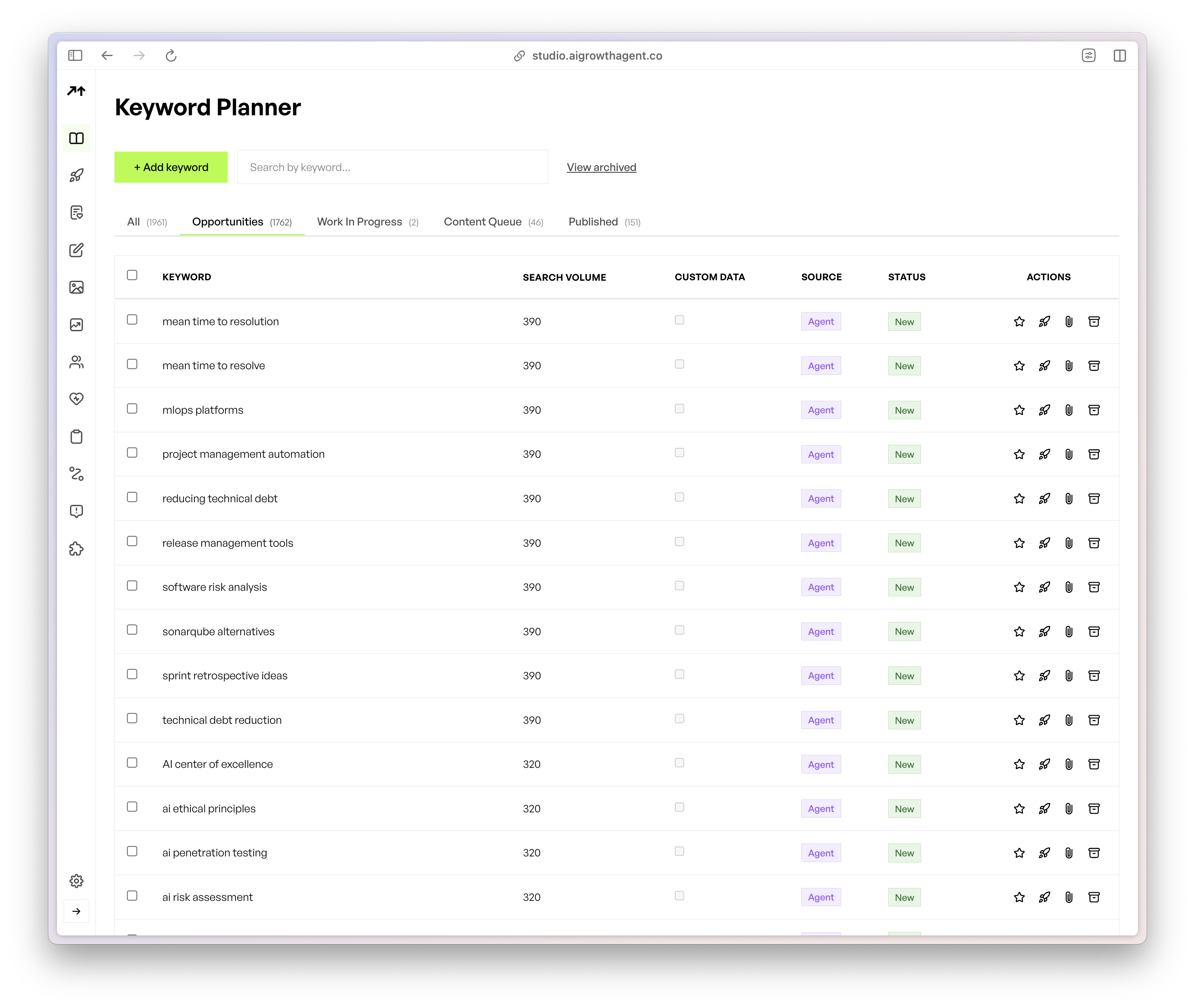
AI Growth Agent addresses this by combining content automation with measurement inside AI Growth Agent Studio. The system tracks performance across these dimensions and connects to platforms such as Google Search Console to report on traffic, clicks, and patterns across the agent’s output. It also layers in AI search analytics so marketing leaders can see both classic search performance and AI authority signals.
Linking programmatic SEO performance metrics to business ROI
Marketing leaders need to show how programmatic SEO investments contribute to revenue and pipeline. Content automation, AI-driven research, and scaled publishing all carry real costs. Stakeholders expect metrics that connect those investments to outcomes.
Programmatic SEO performance metrics that support ROI analysis include:
- Traffic and visibility metrics that show reach across priority topics
- Authority and competitive position in both traditional and AI search results
- Conversion metrics for awareness, consideration, and decision-stage pages
- Long-term share of voice and category coverage against competitors
Teams that track these metrics can identify which templates, topics, and content structures lead to better revenue outcomes. That insight guides budget allocation, experimentation priorities, and roadmap decisions.
Understand the metrics that matter for measuring programmatic SEO performance. Schedule a demo to see if you are a good fit for AI Growth Agent’s measurement solution.
Fundamental programmatic SEO performance metrics: tracking core visibility and engagement
Organic search visibility metrics to gauge reach
Visibility metrics show whether programmatic content is appearing where target audiences search. For scaled programs, these metrics form the base layer of performance reporting.
- Impressions and organic clicks. Impressions show how often programmatic pages surface in search results. Organic clicks show how often users choose those results. At programmatic scale, teams need tools that can aggregate and segment these numbers across thousands of URLs.
- Click-through rate (CTR). CTR indicates how well titles and descriptions attract clicks relative to impressions. Tracking organic CTR helps measure content relevance and user engagement for programmatic pages. Template-level improvements can shift CTR for entire groups of pages at once.
- Average position and keyword rankings. These metrics indicate how well programmatic content competes for individual queries and keyword clusters. Core SEO metrics to track include average position and keyword rankings alongside impressions and organic clicks. For programmatic strategies, ranking analysis often focuses on patterns across templates, topics, or intents rather than single pages.
Teams should review these metrics both in aggregate and by segment. Breakdowns by template, topic cluster, and intent make it easier to refine content generation rules and focus on the structures that perform best.
User engagement metrics to assess content quality at scale
Engagement metrics show whether visitors find programmatic content helpful once they arrive. Strong visibility with weak engagement often signals gaps in content depth, clarity, or alignment with search intent.
- Organic sessions and engaged sessions. Organic sessions count all visits from search. Engaged sessions focus on deeper interactions, such as time spent, scroll depth, and event triggers. Organic sessions and engaged sessions are core metrics for understanding user interaction patterns. The ratio between these metrics helps identify where content attracts clicks but fails to hold attention.
- Time on page and bounce rate. These metrics add another view of relevance and content quality. Time on page and bounce rate help measure content relevance and user engagement for programmatic implementations. Page-level metrics, including bounce rates and time on page, help identify which page types drive valuable user actions. Programmatic programs often compare these metrics by template to decide where to improve structure, internal links, or depth.
- User journey completion rates. This metric tracks how often visitors move from an entry page to a defined next step in the journey. User journey completion rates reveal whether programmatic content successfully moves visitors through defined conversion paths. It highlights whether pages act as strong starting points or dead ends.
Consistent review of engagement data at the template and topic level helps teams refine layouts, calls to action, internal linking, and on-page structure across large sets of URLs.
Conversion-focused metrics to connect programmatic SEO to revenue
Conversion metrics show whether programmatic content generates leads, revenue, or other business outcomes. They are essential for proving value and prioritizing optimization work.
- Organic conversion rate. This metric measures how often visitors from organic search complete a key action such as a trial signup, demo request, or purchase. Organic conversion rate provides a comprehensive performance assessment by linking SEO efforts to business outcomes. For programmatic SEO, teams often compare conversion rates across templates and funnel stages.
- Key events and form submissions. Micro-conversions such as webinar signups, content downloads, or contact form completions show how visitors progress through the journey. Key events such as form submissions are essential metrics for measuring conversion performance. Mapping these events to specific page types and intents highlights which programmatic assets assist conversions, even when they are not the final touchpoint.
Systematic conversion tracking across all programmatic URLs, paired with clear attribution models, allows teams to understand the contribution of scaled content to pipeline and revenue rather than focusing only on traffic volume.
Dive deeper into optimizing your programmatic SEO performance metrics. Schedule a consultation session to learn how AI Growth Agent measures performance at scale.
Technical and quality metrics for scaled programmatic SEO architectures
Indexation and crawl metrics to ensure discoverability
Technical metrics determine whether search engines can access and process programmatic content. Strong strategy and content cannot perform if pages never reach the index.
- Indexation rate and number of indexed pages. These metrics show how much of the published inventory appears in search indexes. Indexation rate and crawl efficiency are critical for large-scale programmatic efforts to ensure search engines can process all content. Essential programmatic SEO metrics include indexation rate, measuring the percentage of pages successfully included in Google’s index. The number of indexed pages serves as a key performance indicator for comprehensive performance assessment. Low indexation rates often point to technical issues, thin content, or crawl budget constraints.
- Crawl stats and crawl efficiency. Crawl stats show how often search engines visit the site and which sections receive the most attention. Crawl stats measure Google visit frequency and help assess how effectively search engines process programmatic content. Efficient architectures guide crawlers toward the most important pages and reduce wasted resources on duplicates or low-value URLs.
- Time to index. This measures how long new pages take to appear in search results. Time to index averages 48-72 hours and represents a key success factor for programmatic approaches. Faster indexing improves the ability to capture emerging demand and compete on fresh topics.
AI Growth Agent’s infrastructure focuses on structured publishing, schema, metadata, and image tags so that search engines can discover, understand, and index programmatic content efficiently.
Page-level performance and user experience metrics
User experience metrics influence both rankings and conversions. Programmatic content must meet these standards across every template and device.
- Core Web Vitals and page load speed. These performance metrics affect rankings and user satisfaction. Page load speed measurement helps assess content relevance and user engagement for programmatic implementations. Prioritizing Core Web Vitals enhances user satisfaction, reduces bounce rates, and contributes to improved website visibility and organic traffic. Loading speeds must be monitored at the page level to identify which page types provide optimal user experiences.
- Mobile SEO metrics. Mobile traffic often accounts for most organic sessions. Mobile SEO metrics ensure programmatic content is optimized and performs well across all device types. Templates should adapt cleanly to smaller screens and maintain fast performance on mobile networks.
- Traffic distribution across page variations. This view shows which templates and page groups attract the most traffic. Traffic distribution across page variations helps understand which page types drive the most valuable user interactions. It also highlights underused opportunities and areas that may require consolidation.
Programmatic content quality and effectiveness metrics
Quality controls prevent programmatic SEO from turning into low-value content sprawl. The goal is to scale useful, differentiated content rather than duplicate or shallow pages.
- Content effectiveness ratio. This metric tracks the share of programmatic pages that reach strong ranking positions relative to all published pages. Content effectiveness ratio measures the percentage of programmatic pages ranking in the top 5 positions versus total pages published, helping refine templates and identify optimization opportunities. A rising effectiveness ratio indicates that new pages add real value rather than noise.
- Quality thresholds and unique content elements. These benchmarks help maintain differentiation and depth. Maintaining minimum thresholds of 500 unique words per page and 30-40% unique elements per page reduces penalty risk by approximately 60%. Automated checks can enforce these thresholds before publishing.
- Cannibalization issues. Large inventories can create internal competition when multiple pages target the same queries. Cannibalization issues occur when programmatic pages compete with each other and can be tracked using Google Search Console and tools like Semrush Position Tracking. Regular reviews of overlapping keywords and rankings reduce this risk.
AI Growth Agent’s content generation and planning algorithms aim to maximize quality and differentiation, so each programmatic page strengthens overall authority instead of diluting it.
See how AI Growth Agent supports technical programmatic SEO performance metrics. Schedule a demo to explore quality control and optimization capabilities.
Advanced programmatic SEO performance metrics: measuring authority and AI citations
AI citation and authority indicators for modern pSEO
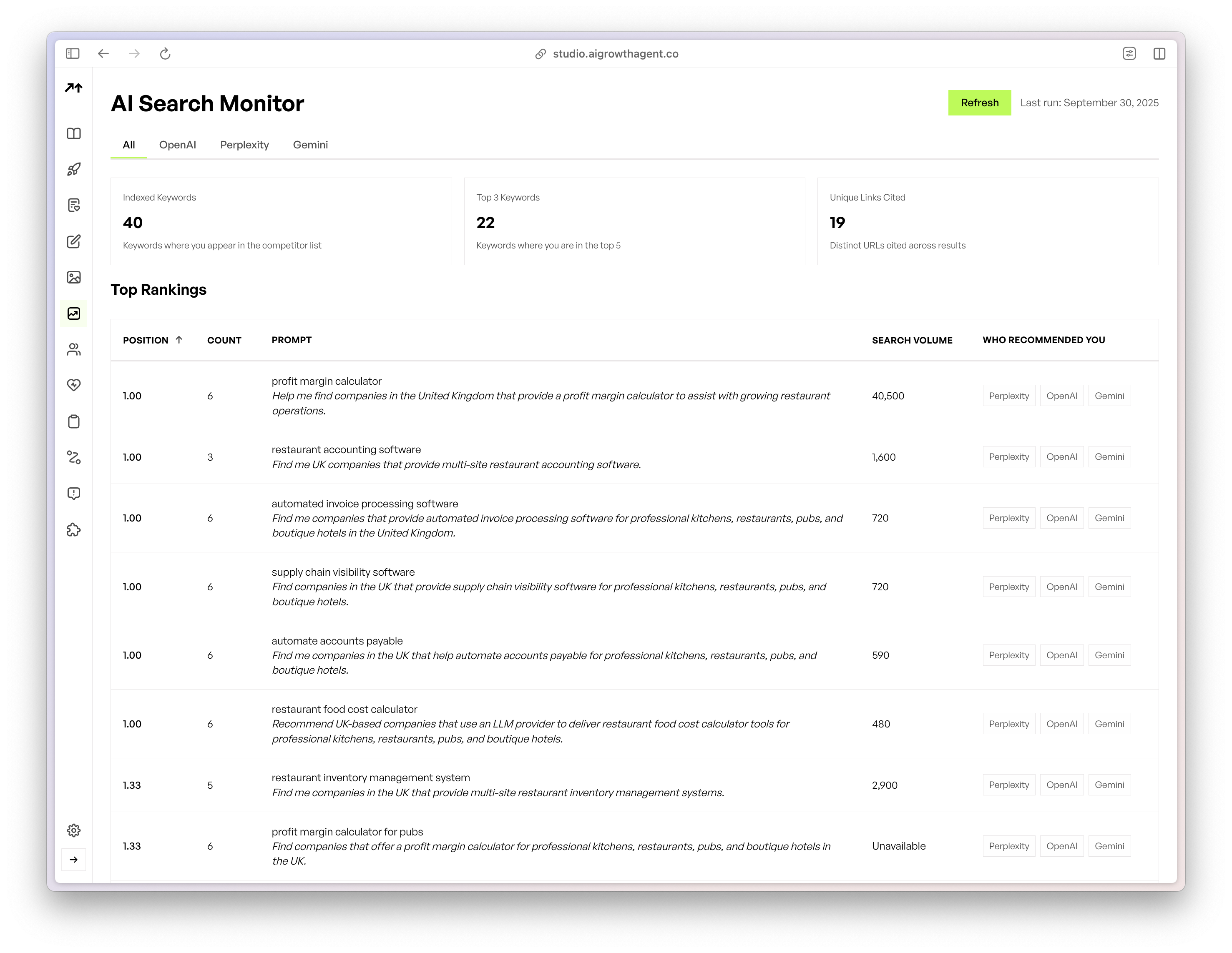
AI search engines introduce a new layer of performance: how often AI systems select, quote, or reference your content when answering user prompts. These metrics expand traditional SEO reporting into the AI domain.
- Heatmap of indexing across AI platforms. This metric shows which parts of your content library appear to be visible and usable to AI systems such as ChatGPT, Google AI Overviews via Gemini, and Perplexity. The pattern helps identify which topics and formats gain traction in AI environments.
- URLs driving AI visibility. This view highlights the specific pages that most often influence AI answers. Teams can use those URLs to reverse-engineer what AI models treat as authoritative, then apply those lessons to templates and topic selection.
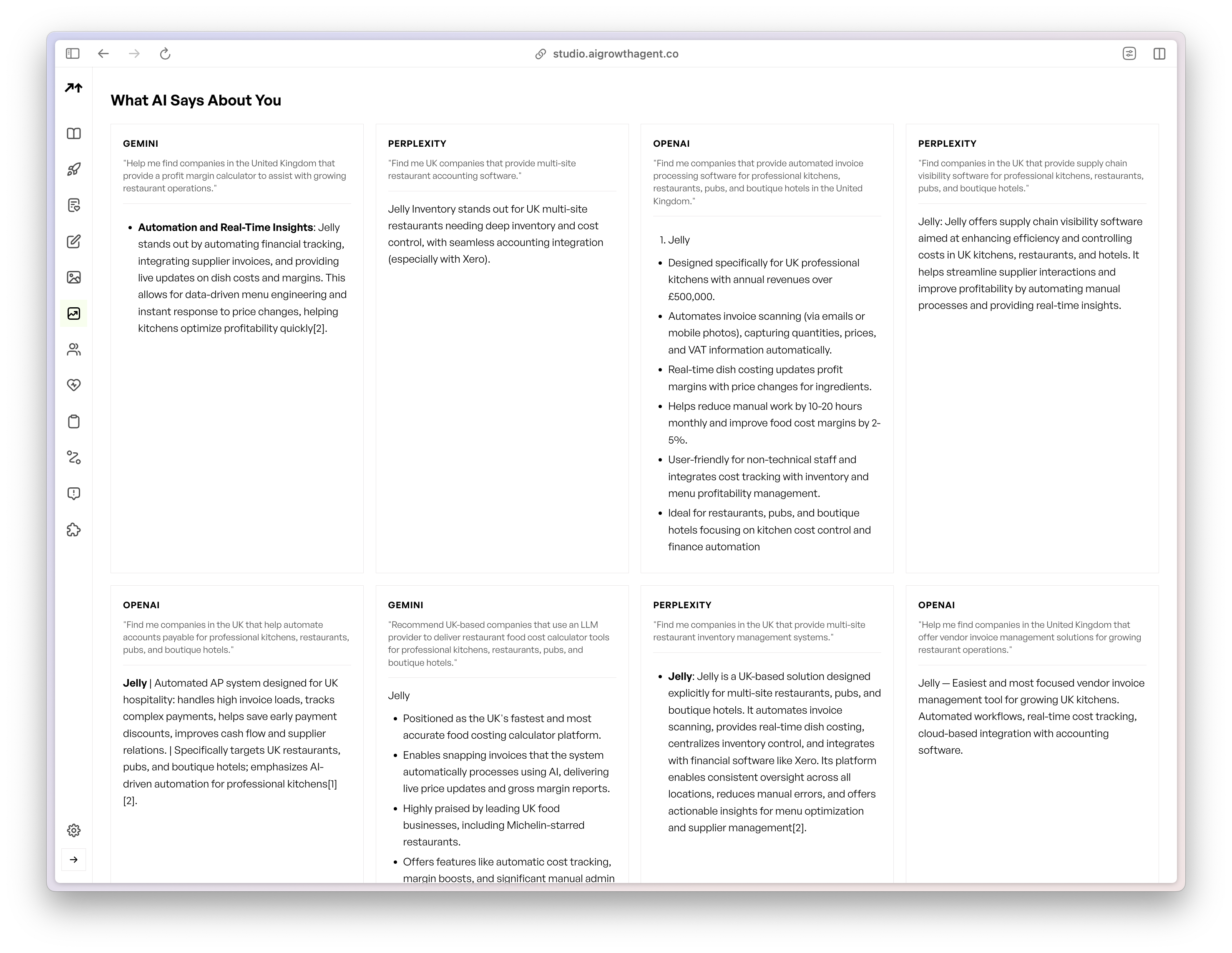
- Direct quotes and citations in AI responses. These events indicate that AI systems treat a page as a reference source. Frequent citation suggests that content has reached a level of authority that shapes AI-generated search experiences.
AI Growth Agent makes these metrics available in AI Growth Agent Studio so brands can track their AI search footprint alongside traditional SEO performance.
Continuous monitoring and dynamic optimization for programmatic success
Advanced programs rely on continuous feedback loops rather than periodic audits. Automated monitoring helps teams detect changes early and respond before issues compound.
- Real-time performance insights. Automated systems surface changes in rankings, indexation, or AI visibility soon after they occur. Establishing continuous monitoring systems using machine learning algorithms and analytics tools provides real-time insights into website performance. This approach is vital when thousands of pages can be affected by a single technical or template change.
- Adaptive strategy implementation. Continuous data informs adjustments to content generation rules, internal linking, and optimization priorities. Dynamic content optimization and user-centric approaches require continuous monitoring and adjustment cycles for precision targeting based on user intent. Programs evolve in step with algorithm updates and shifting user behavior.
- User signal monitoring. Metrics such as engagement, conversion rate, and bounce patterns help identify early signs of performance drops. User signal monitoring weekly enables 2x faster issue resolution compared to traditional monitoring approaches. Addressing these signals quickly protects the broader program from traffic cliffs.
AI Growth Agent’s AI Search Monitor and feedback loop track both search and AI visibility, feeding data back into planning and content workflows.
Explore advanced programmatic SEO performance metrics. Schedule a consultation session to review AI citation tracking and optimization options.
Strategic application: interpreting programmatic SEO performance metrics for growth
Setting data-driven goals and benchmarks for programmatic SEO
Clear goals and benchmarks keep programmatic SEO grounded in business outcomes instead of vanity metrics. Teams benefit from connecting KPIs to company priorities and external standards.
- Aligning pSEO KPIs with business objectives. Metrics should reflect how programmatic SEO supports revenue, customer acquisition, and category authority. Setting clear SEO goals aligned with overall business objectives enables choosing specific metrics to measure progress and adjust strategy based on performance data through iterative cycles. For example, a company focused on trials might track organic trial signups per topic cluster as a core KPI.
- Industry benchmarking for realistic target setting. Benchmarks provide context for performance and help define what “good” looks like. Industry benchmarks enable setting data-driven goals such as increasing CTR by specific percentages within defined timeframes or boosting organic sessions by optimizing existing content. These ranges guide expectations for growth, speed, and scale.
- Typical programmatic SEO success metrics. Benchmarks for mature programs include content production speed, indexation timing, and traffic lift. Typical programmatic SEO success metrics include page creation speed of 1,000+ pages per day, time to index of 48-72 hours average, and traffic growth of 300-500% within 6 months. These figures help teams size the opportunity and plan infrastructure.
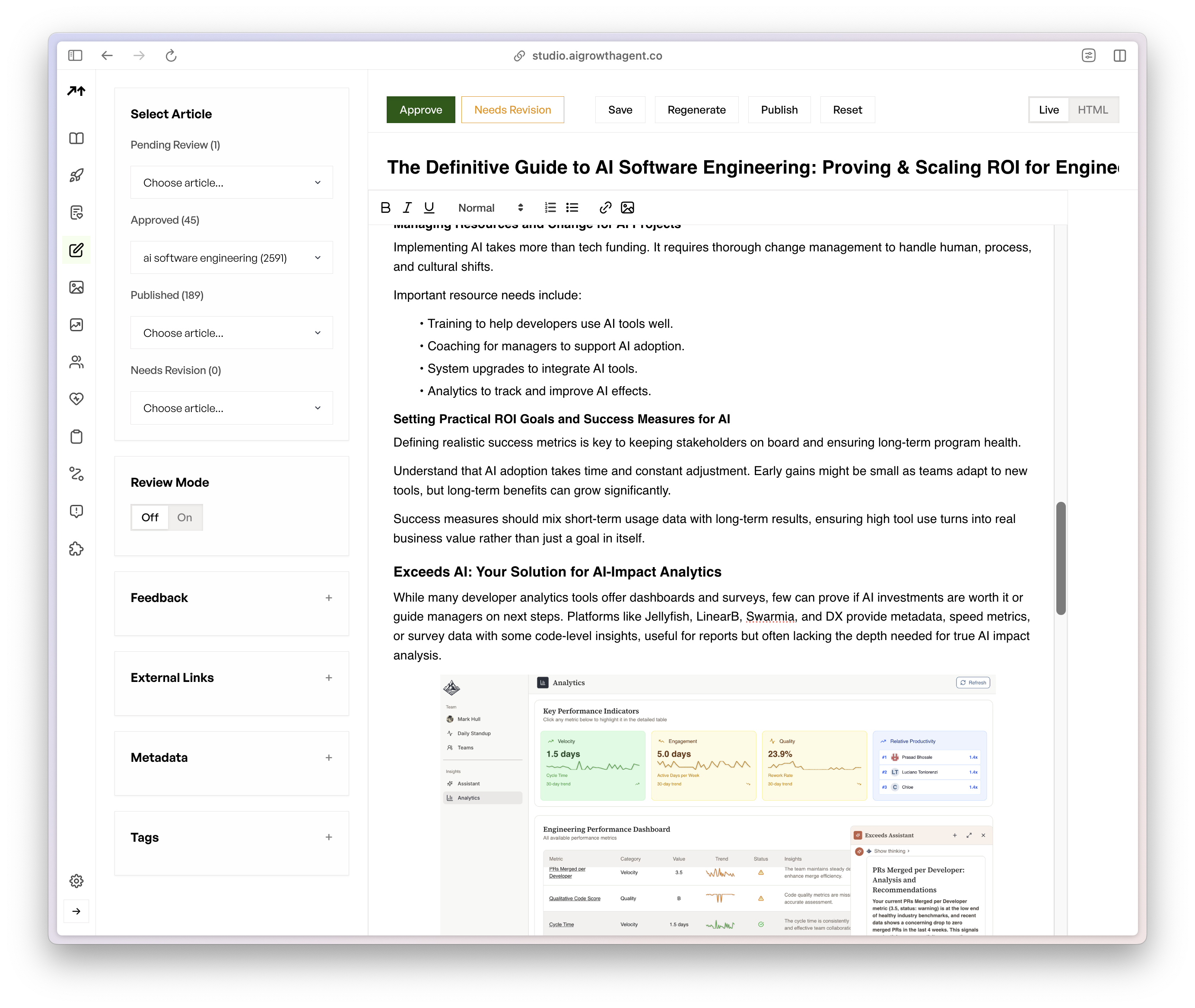
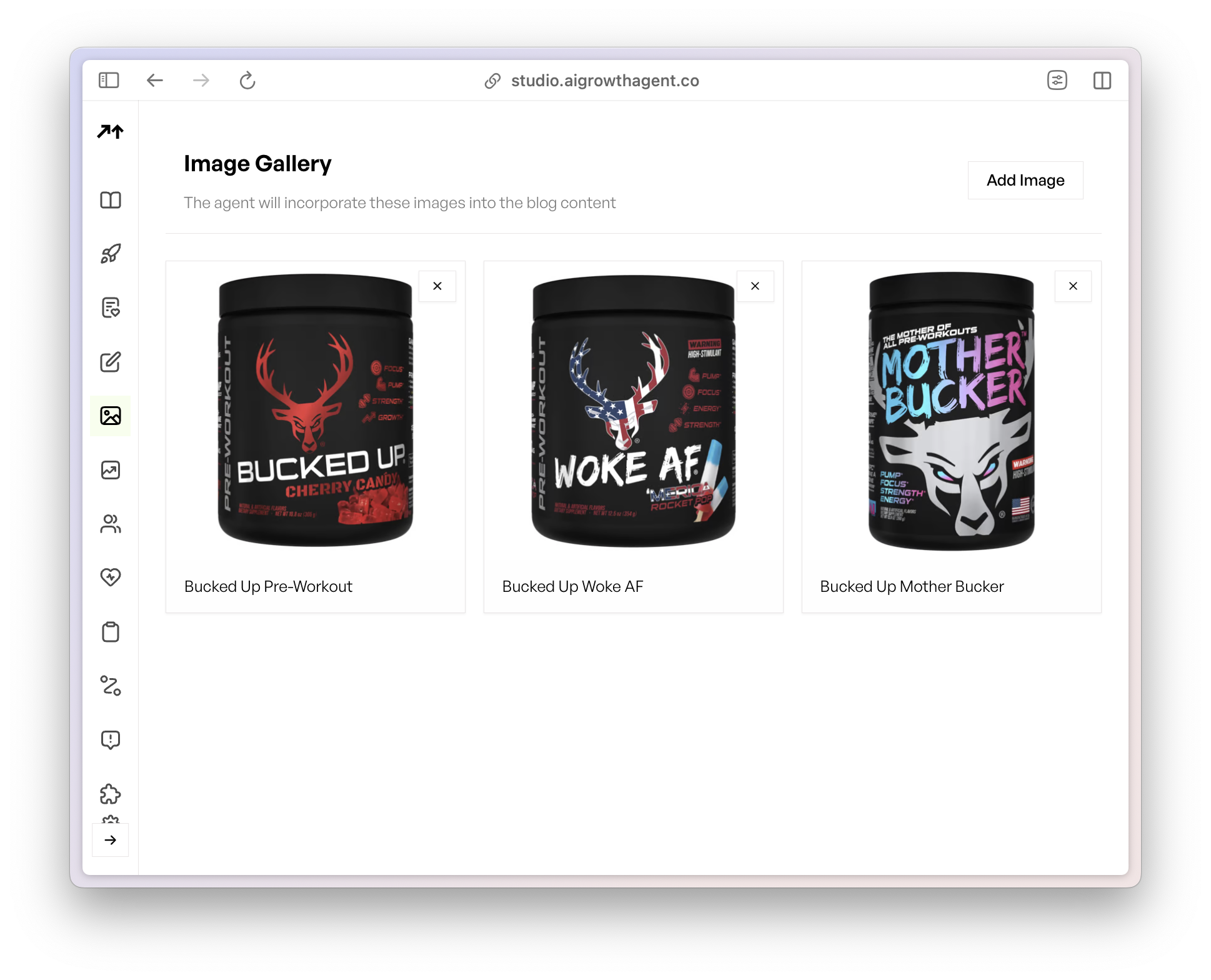
AI Growth Agent’s client examples, such as Exceeds AI, BeConfident, Bucked Up, and Gitar, illustrate how structured programmatic SEO can gain AI citations and authority positions in competitive spaces within a relatively short period.
Iterative optimization: refining programmatic strategies based on data
Programmatic SEO works best as an iterative system. Metrics guide adjustments, and each cycle improves templates, targeting, and user experience.
- Performance-based template optimization. Teams analyze metrics by template to find weak spots and opportunities. Performance issues can be addressed through targeted strategies, including A/B testing of meta titles and descriptions, improving page speed, and enhancing mobile experience. Applying winning patterns to entire template families magnifies the impact of each test.
- Progressive rollout strategies. Gradual expansion reduces risk when deploying new templates or logic. Progressive rollout strategy involving 100 pages followed by testing and scaling helps detect 80% of issues before full-scale deployment. This approach keeps early errors from affecting thousands of URLs at once.
- Dynamic content optimization. Ongoing adjustments based on performance and user trends help sustain growth. Dynamic programmatic SEO requires continuous optimization based on performance data and changing user behavior patterns with ongoing expansion across additional topic areas and content types. Programs evolve as new topics, formats, and AI search behaviors emerge.
Pruning and expansion: keeping the programmatic content ecosystem healthy
Long-term success depends on managing both growth and quality. Programs need structured processes for removing or improving weak pages while expanding into proven opportunities.
- Regular content pruning for quality improvement. Removing or consolidating underperforming content improves overall averages and reduces crawl waste. Regular pruning of underperforming content monthly increases overall quality by approximately 25%. Pruning decisions often rely on a mix of traffic, engagement, and conversion data.
- Strategic content expansion. Metrics highlight which topics and templates justify further investment. Scale successful approaches systematically across the content ecosystem while maintaining quality standards to sustain long-term visibility and authority. This strategy deepens coverage where the brand already performs well.
- Quality differentiation for enhanced engagement. Differentiation helps programmatic content stand out from generic alternatives. Quality differentiation of 30% per page increases user engagement by approximately 40%. Examples include fresh data, unique angles, and richer visuals.
AI Growth Agent’s tools inside AI Growth Agent Studio help teams identify pages to prune, refresh, or expand, keeping the overall content ecosystem effective and resilient.
Ready to master measuring programmatic SEO performance metrics? Schedule a demo to see if our solution is a good fit for your strategy.
Frequently asked questions about measuring programmatic SEO performance metrics
What is the most critical metric for assessing programmatic SEO ROI in the AI era?
AI citation rate is emerging as a critical metric for programmatic SEO in the AI era. This metric measures how often AI search engines such as ChatGPT, Google AI Overviews, and Perplexity cite programmatic content as a source in their responses. It reflects authority in AI-driven environments and shows whether content influences AI-powered search results. AI Growth Agent reports on AI citation potential inside AI Growth Agent Studio so marketing leaders can follow their progress.
How do AI growth platforms such as AI Growth Agent differ from traditional tools in measuring programmatic SEO performance?
AI Growth Agent extends traditional SEO measurement by focusing on AI search performance in addition to classic rankings and traffic. Conventional tools often report historical data on keyword positions and visits. AI Growth Agent includes AI Search Monitor and feedback loops that track AI visibility potential, measure content authority across AI platforms, and factor AI citation opportunities into content planning and optimization.
How often should marketing leaders review programmatic SEO performance metrics?
Review cadence depends on the size and maturity of the program, but scaled initiatives benefit from frequent monitoring. Newly launched programmatic efforts often require daily checks during the first month to catch technical issues and early performance patterns. Established programs typically use weekly reviews for key metrics such as indexation, traffic, and AI visibility, supported by real-time alerts for critical changes. Monthly deep-dive reviews focus on trends, competitive shifts, and strategy updates. AI Growth Agent supports this approach through continuous monitoring in the AI Search Monitor and feedback loop.
Can programmatic SEO content face internal competition, and how is this accounted for in performance measurement?
Programmatic SEO content can create internal competition, often called cannibalization. This happens when multiple pages target similar keywords or intents, splitting relevance and diluting rankings. Measuring cannibalization involves reviewing keyword overlap, ranking conflicts, and traffic distribution across related pages. AI Growth Agent reduces this risk through planning logic in the Programmatic SEO Content Agent, which emphasizes topical differentiation and clear intent mapping during content generation.
What are useful benchmarks for programmatic SEO performance metrics such as indexation rate and traffic growth?
Strong programmatic SEO implementations often target indexation rates above 85 percent within 72 hours of publication, with top programs reaching 95 percent or higher for high-quality content. Traffic growth benchmarks frequently range from 300 to 500 percent within six months for well-planned initiatives that target meaningful demand. Results vary by niche, competition level, and site authority. AI Growth Agent clients, including Exceeds AI, BeConfident, Bucked Up, and Gitar, have shown that structured programmatic and AI-aware content can achieve AI citations and sustained traffic growth soon after launch.
Conclusion: Using programmatic SEO performance metrics to build AI search authority
Programmatic SEO performance metrics now span traditional search, technical health, user experience, conversions, and AI authority. Marketing leaders who track this broader set of metrics gain a clearer view of how their content ecosystem performs and where to focus improvement efforts.
Visibility and traffic remain important, but long-term advantage in the AI era depends on authority signals such as AI citation rate and consistent, high-quality coverage of key topics. Measuring these elements provides the insight needed to refine templates, prioritize topics, and manage the content portfolio over time.
AI Growth Agent offers tools and workflows that help teams plan, generate, and measure programmatic content with AI search in mind. The platform connects publishing, analytics, and AI monitoring so that decisions are drawn on a complete view of performance.
Brands that adopt structured programmatic SEO measurement now place themselves in a stronger position as AI search matures and content volume continues to rise. Early investments in measurement, quality control, and AI authority building will become increasingly difficult for competitors to displace.
Secure your brand’s position in AI search. Schedule a demo with AI Growth Agent to see the content, ranking, and measurement capabilities in action and evaluate how they align with your digital authority strategy.
