


Key Takeaways
- AI search engines in 2026 favor content they can verify and structure as citations, not pages that only target keywords.
- Clear content architecture, rich schema markup, and strong E-E-A-T signals make it easier for AI systems to understand and reference your brand.
- Technical health, including speed, mobile readiness, and crawlability, remains a baseline requirement for AI visibility.
- Consistent business data, reviews, and cross-source references strengthen entity recognition and citation rates across AI assistants.
- Marketing teams can use AI Growth Agent to apply these on-page SEO audit steps at scale, and can schedule a demo to see the platform in action.
Marketing leaders who want to improve AI search visibility can schedule a consultation session to evaluate whether AI Growth Agent aligns with their programmatic SEO goals.
1. Prioritize Content Architecture for AI Citability
AI search engines now evaluate content for citability, not only for keyword relevance. They analyze trust signals, entity strength, content quality, and consistency across the web, which requires clear structure and depth instead of thin, keyword-stuffed pages.
Audit headings, internal links, and topic coverage so each page fits into a coherent topic cluster. Pages that cover a subject comprehensively tend to rank higher, which supports semantic, cluster-based content over isolated posts. H2s and H3s should map out a logical path through the topic, showing AI systems the scope of your expertise and where each page fits within it.
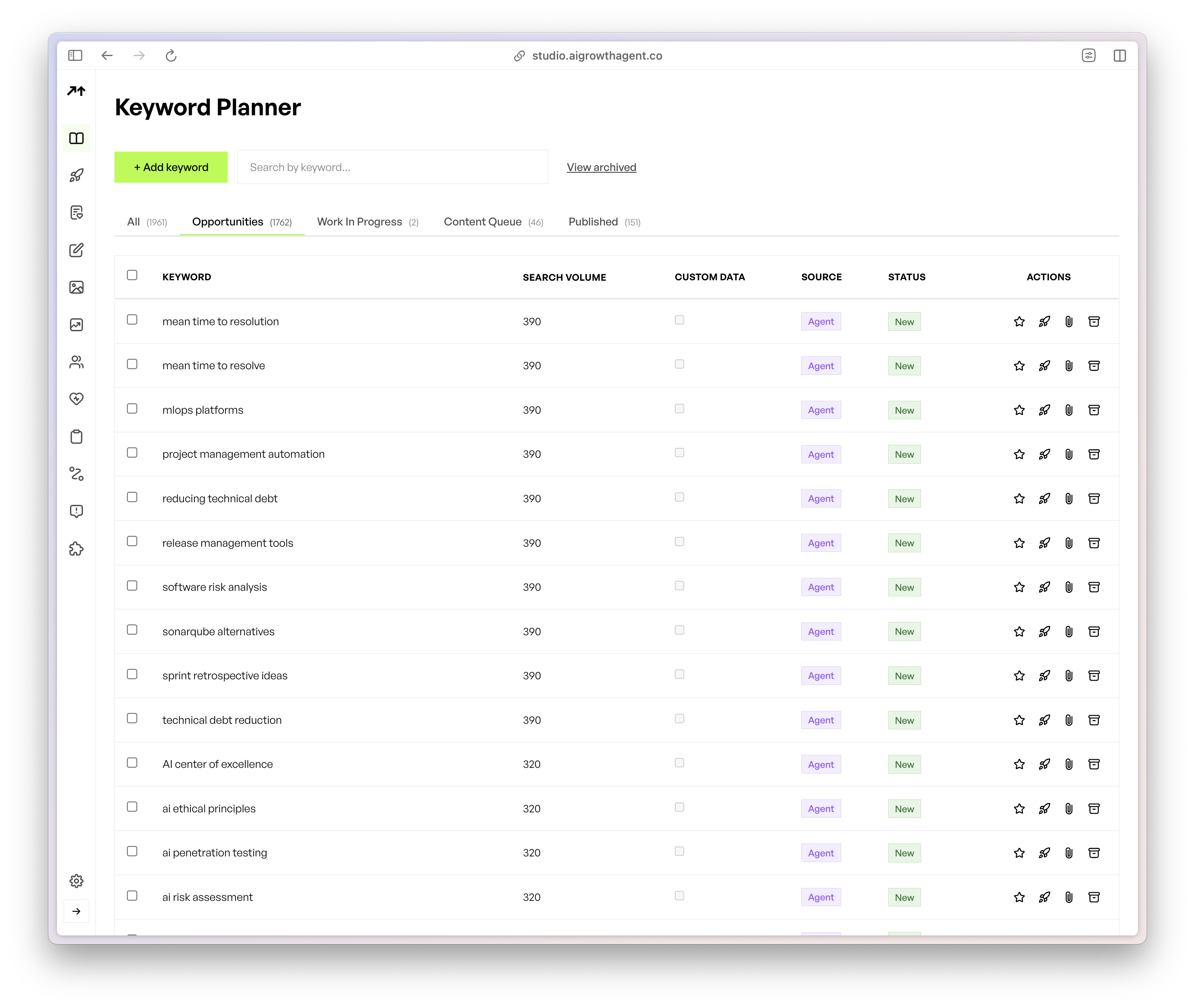
Content strategy now rewards expert commentary, strong author signals, and clear ownership. Generic, commoditized pages underperform compared with expert-led content that AI Overviews can confidently cite. AI Growth Agent supports this shift by generating well-structured content architectures that cover topics in depth while aligning with your brand’s expertise.
2. Master Advanced Schema Markup for Entity Recognition
Structured data gives AI systems a precise way to understand entities and relationships. Clear site structure and updated schema help make entities and their context machine-readable, which directly supports inclusion in AI summaries.
Audit high-impact schema types first, including Organization, LocalBusiness, Article, Product, and FAQ. LocalBusiness schema and related types improve machine understanding of local entities and support visibility in AI-driven local results. Ensure that schema fields match on-page content and business data, with no conflicts between what users see and what the markup claims.
Strong entity signals come from consistent data across your site, listings, and social profiles. Alignment across these sources helps LLMs recognize a brand and reference it reliably. AI Growth Agent streamlines this work by programmatically generating and maintaining schema markup at scale so that technical gaps do not block AI indexing.
3. Optimize for E-E-A-T and Trust Signals
E-E-A-T (Experience, Expertise, Authoritativeness, Trustworthiness) continues to guide both traditional rankings and AI recommendations. AI answer engines treat detailed reviews, real photos, credentials, and reputation signals as primary ranking and recommendation inputs.
On-page audits should confirm that each important page clearly shows who wrote it, why they are qualified, and how users can contact the business. Content that demonstrates a clear purpose, sufficient depth, and credible authorship is more likely to be treated as high quality. Strong bios, transparent company information, and easily accessible support details all contribute to trust.
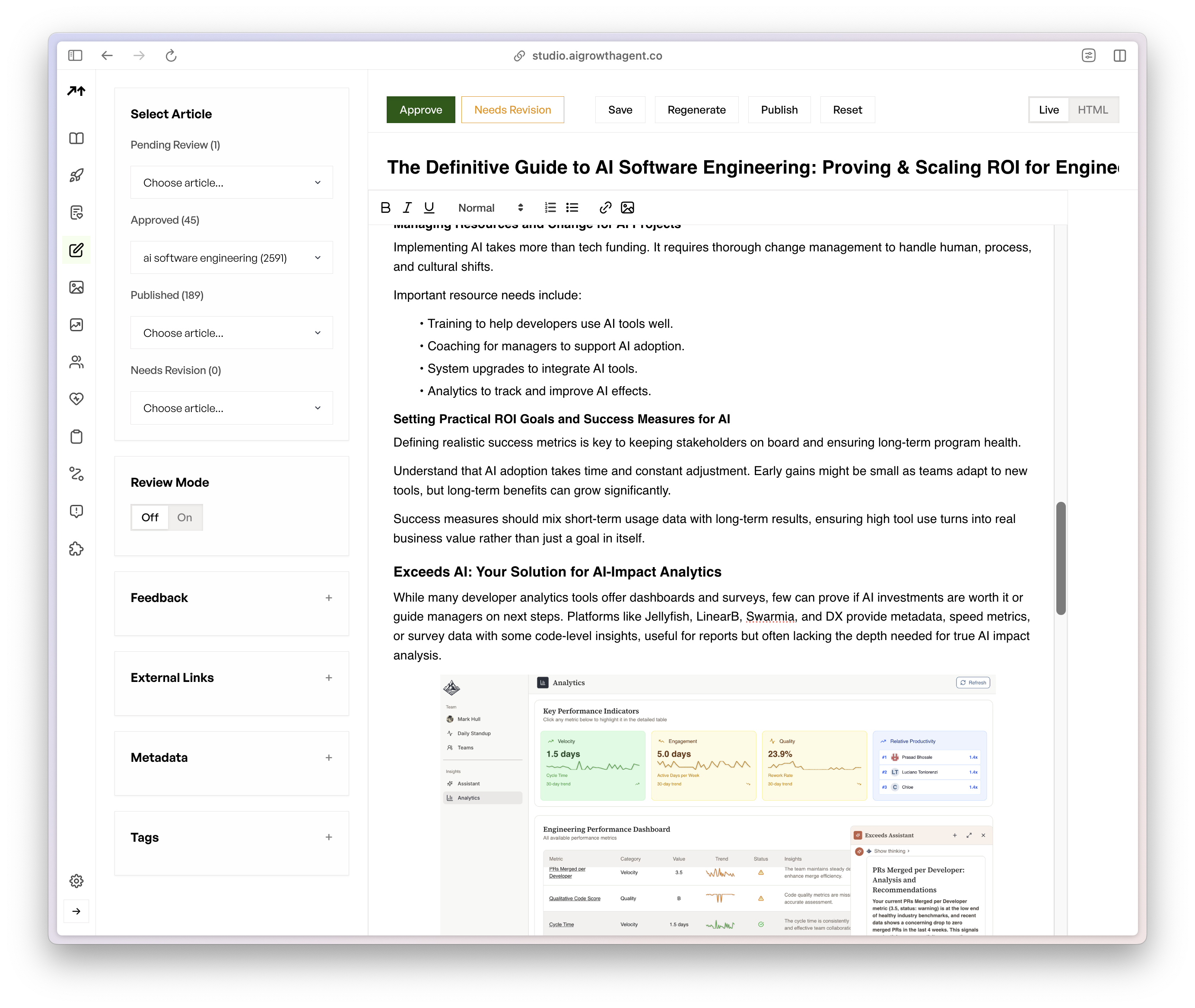
Recent reviews, case studies, and proof of real-world results further strengthen perceived experience. Content that showcases demonstrated experience now outperforms purely SEO-written articles. Teams that want to scale this type of content can speak with AI Growth Agent about programmatic approaches that highlight authentic expertise.
4. Technical Health: Speed, Mobile, and Crawlability for AI Indexing
Technical SEO still sets the baseline for any visibility in AI Overviews and generative answers. Secure, crawlable sites with strong performance, fast page speed, and mobile-first design remain core ranking factors in 2026. If AI systems cannot access or render pages efficiently, they will not cite them, even if the content is strong.
Include Core Web Vitals, mobile usability, HTTPS, robots.txt, and XML sitemaps in every on-page audit. Brands that appear frequently in AI answers often pair strong site architecture with schema, authoritative mentions, and consistent data across platforms. New technical elements such as LLM.txt files and support for the Model Context Protocol help AI tools interpret your content more precisely. AI Growth Agent can help maintain these technical standards at scale so that engineering capacity does not limit AI visibility.
5. Establish Contextual Authority Through Cross-Source References
AI search engines rely on citation hygiene, which refers to consistent, verifiable information across the web. Citation signals now influence AI visibility by supporting multi-signal citability rather than simple rank position.
On-page audits should confirm that business name, address, phone number, and key facts match across your site, directories, and social channels. Structured, accurate business data across the web helps AI engines verify entities and increases confidence in citing them. Programmatic content strategies can extend this consistency across many pages and touchpoints, giving AI systems more signals that your brand is a reliable source.
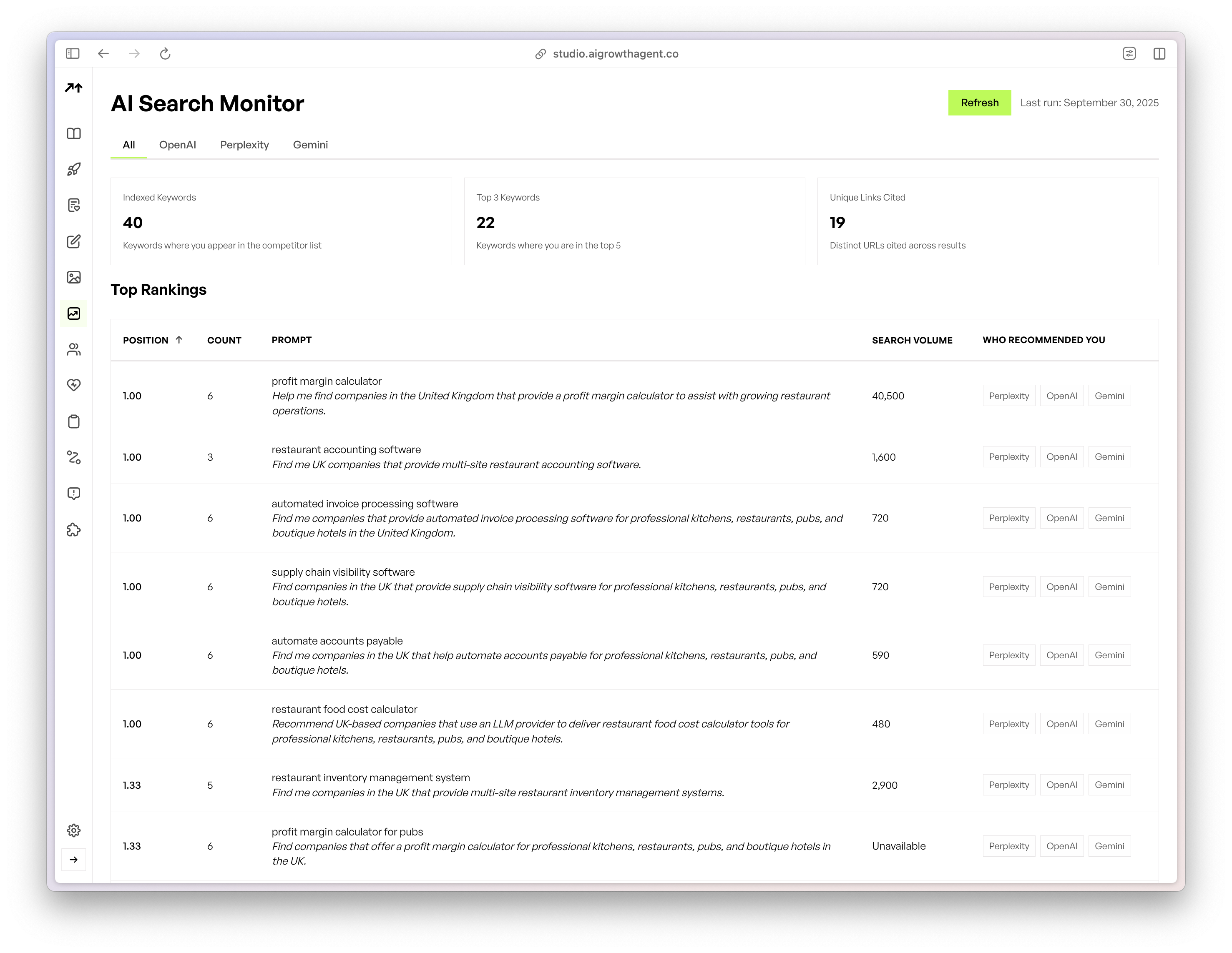
Teams that want to build broad, consistent coverage can request an AI Growth Agent demo to see how programmatic publishing supports citation hygiene and contextual authority.
Frequently Asked Questions
How much do on-page signals matter for AI search compared to traditional SEO?
On-page signals play a major role in AI search visibility, especially for local results where they account for about 24 percent of ranking influence. In traditional local SEO they represent roughly 33 percent of ranking impact, but AI systems also balance reviews, citations, links, and Google Business Profile data. This shift places more emphasis on structured, authoritative pages and less on narrow keyword targeting.
Does E-E-A-T still apply to AI search engines?
E-E-A-T remains central to AI search. AI systems prioritize transparent author information with verifiable credentials, detailed content that reflects real experience, and external trust signals such as reviews and testimonials. These factors help AI determine which sources are reliable enough to cite and feature in answers.
What role does schema markup play in AI search?
Schema markup makes content easier for AI engines to interpret. Accurate, current schema for LocalBusiness, Organization, and Article types improves entity recognition and context, which supports inclusion in AI Overviews and other generative results. Schema functions as a structured data layer that clarifies what your pages describe and how different entities relate.
Is AI search separate from Google’s core algorithm?
Public guidance from Google states that SEO for AI aligns with SEO for traditional search. AI Overviews and generative results rely on core ranking signals such as quality, relevance, E-E-A-T, and technical health, with added layers for summarization and safety. Optimizing for AI therefore, means applying established best practices while paying close attention to citability and trust.
How can programmatic SEO help with AI search visibility?
Programmatic SEO allows brands to plan, create, and optimize large volumes of structured, high-quality content across many topics and locations. Platforms like AI Growth Agent support this work by pairing content generation with technical optimization, including schema and AI-focused files such as LLM.txt. This scale and consistency create a content footprint that AI systems can reference more often.
Conclusion: Preparing Your Brand for the Future of Search
AI search in 2026 rewards brands that combine strong technical foundations with clear, verifiable expertise. By auditing content architecture, schema markup, E-E-A-T signals, technical health, and citation hygiene, marketing leaders can position their sites for inclusion in AI Overviews and assistant-style answers. Google representatives continue to state that SEO for AI follows the same core quality and relevance principles as traditional SEO, while AI layers place extra weight on authority and citability.
Organizations that want to operationalize these audit steps at scale can schedule a consultation session with AI Growth Agent to explore a structured, programmatic approach to AI-focused on-page SEO.
