Written by: Mariana Fonseca, Editorial Team, AI Growth Agent
Key Takeaways
-
Perplexity AI favors recent, structured, and authoritative content, with half of 2026 citations coming from 2025 pages.
-
Strong technical foundations increase citations, including open access for PerplexityBot, llms.txt, and MCP, plus schema markup for 3–5x higher citation rates.
-
Entity authority grows through proprietary data, conversational keyword clustering, and structured formats such as lists, tables, and FAQs.
-
Automated publishing, feedback loops, and citation monitoring create a recency edge and scale that manual SEO cannot match.
-
AI Growth Agent runs this 10-step framework end to end with live case studies; book a Perplexity growth session to accelerate citations.
Step 1: Company Manifesto That Signals Brand Authority
Perplexity rewards sources with clear positioning and visible expertise. A Company Manifesto becomes the central reference that guides every programmatic asset you publish. This document captures your business narrative, value propositions, and expert stance in a format AI systems can parse and reuse consistently.
The manifesto creation process involves:
-
Narrative distillation of core business value
-
E-E-A-T signal documentation (Experience, Expertise, Authoritativeness, Trustworthiness)
-
Competitive differentiation statements
-
Industry expertise validation
Each component plays a specific role in how AI understands and ranks your brand, as shown in the breakdown below.
|
Component |
Purpose |
AI Impact |
|---|---|---|
|
Core Mission |
Brand positioning |
Entity recognition |
|
Expertise Areas |
Authority signals |
Topic clustering |
|
Unique Data |
Proprietary insights |
Citation preference |
AI Growth Agent creates a Company Manifesto in a one-hour kickoff session with a professional journalist. The conversation becomes a living document that guides the Programmatic SEO Agent and keeps brand voice consistent across thousands of assets. This structure preserves the authority signals Perplexity looks for.
Book your manifesto development session to put this foundation in place.
Step 2: Keyword Clustering Built for Perplexity-Style Queries
Perplexity handles longer, conversational queries instead of short keyword strings. Its median query length is about 10–11 words, compared to 2–3 words on Google Search. Keyword clustering must therefore mirror natural language and question-based intent, not just head terms.
Effective clustering targets:
-
“Best X for Y in 2026” queries with clear winners
-
“How much does X cost in 2026?” pricing research
-
“X vs Y comparison 2026” with side-by-side analysis
-
Step-by-step technical guides
-
Latest statistics backed by original research
Not all query types perform equally, and content format shapes citation odds. The table below shows how query type and structure influence citation performance.
|
Query Type |
Content Format |
Citation Rate |
|---|---|---|
|
Comparison |
Feature matrices |
High |
|
How-to |
Numbered steps |
Very High |
|
Statistics |
Data tables |
Highest |
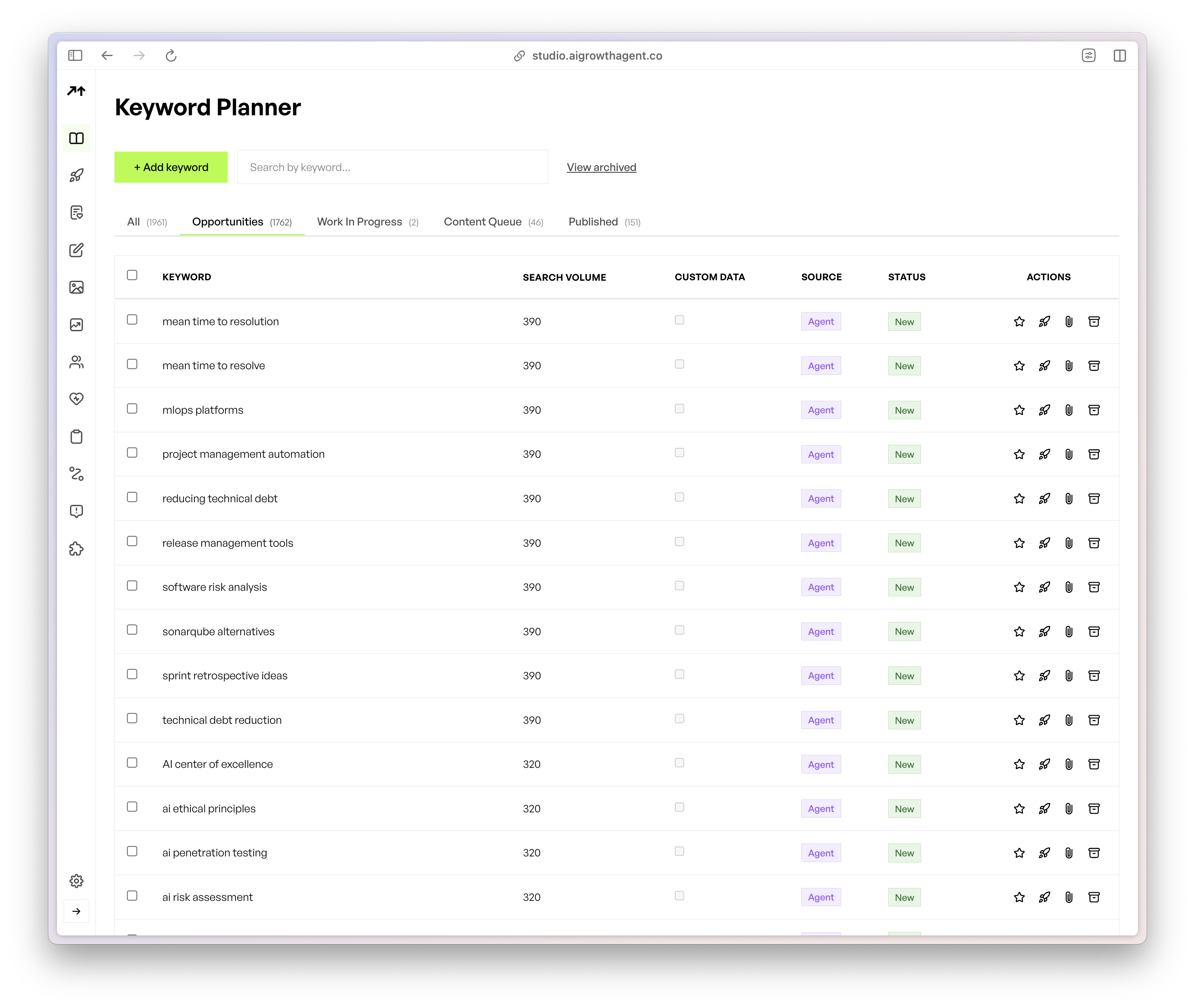
The system behind AI Growth Agent evaluates tens of thousands of queries and groups them into pillars that match conversational search patterns. This approach covers your domain’s full question landscape instead of chasing isolated keywords.
See how our clustering engine maps queries in your niche.
Step 3: Technical Stack for Perplexity Access and Interpretation
Technical access forms the base layer of Perplexity citation success. Seventy‑three percent of sites block AI crawlers through robots.txt, CDNs, or JavaScript rendering issues, which prevents PerplexityBot from even seeing their content.
Essential 2026 technical requirements are built in layers. Start by allowing PerplexityBot and Perplexity-User in robots.txt so crawlers can reach your pages. Once access is open, add an llms.txt file that points AI systems toward your highest value content and away from low-signal areas.
Sites with dynamic data then benefit from Model Context Protocol (MCP), which gives AI direct database access without brittle HTML scraping. Finally, server-side rendering for JavaScript-dependent content ensures crawlers receive complete pages instead of empty shells.
Example robots.txt configuration:
User-agent: PerplexityBot Allow: / Crawl-delay: 2 User-agent: Perplexity-User Allow: /The llms.txt file guides AI interpretation by clarifying content structure and attribution rules. MCP supports schema markup improvements that can raise response quality by up to 300%. Together, these elements create a crawler-friendly environment.
Your blog architecture can ship with these requirements pre-configured, which removes engineering friction and maximizes crawlability from day one. Get a technical infrastructure audit and setup plan tailored to Perplexity.
Step 4: Structured Content, Lists, and Schema for RAG
Perplexity’s Retrieval-Augmented Generation system works with modular chunks, not whole pages. Chunked, quotable, schema-tagged pages earn 3–5x more citations. Content therefore, needs to support atomic extraction.
Optimal content structure includes:
-
Answer-first paragraphs between 40 and 80 words
-
Question-based H2 and H3 headings
-
Bulleted or numbered lists for steps and comparisons
-
Short paragraphs under 120 words
-
Decision blocks that spell out criteria and outcomes
Critical schema markup types:
-
Article schema with datePublished and dateModified
-
FAQPage for Q&A sections
-
HowTo for step-by-step guides
-
Organization and Person schemas for authority
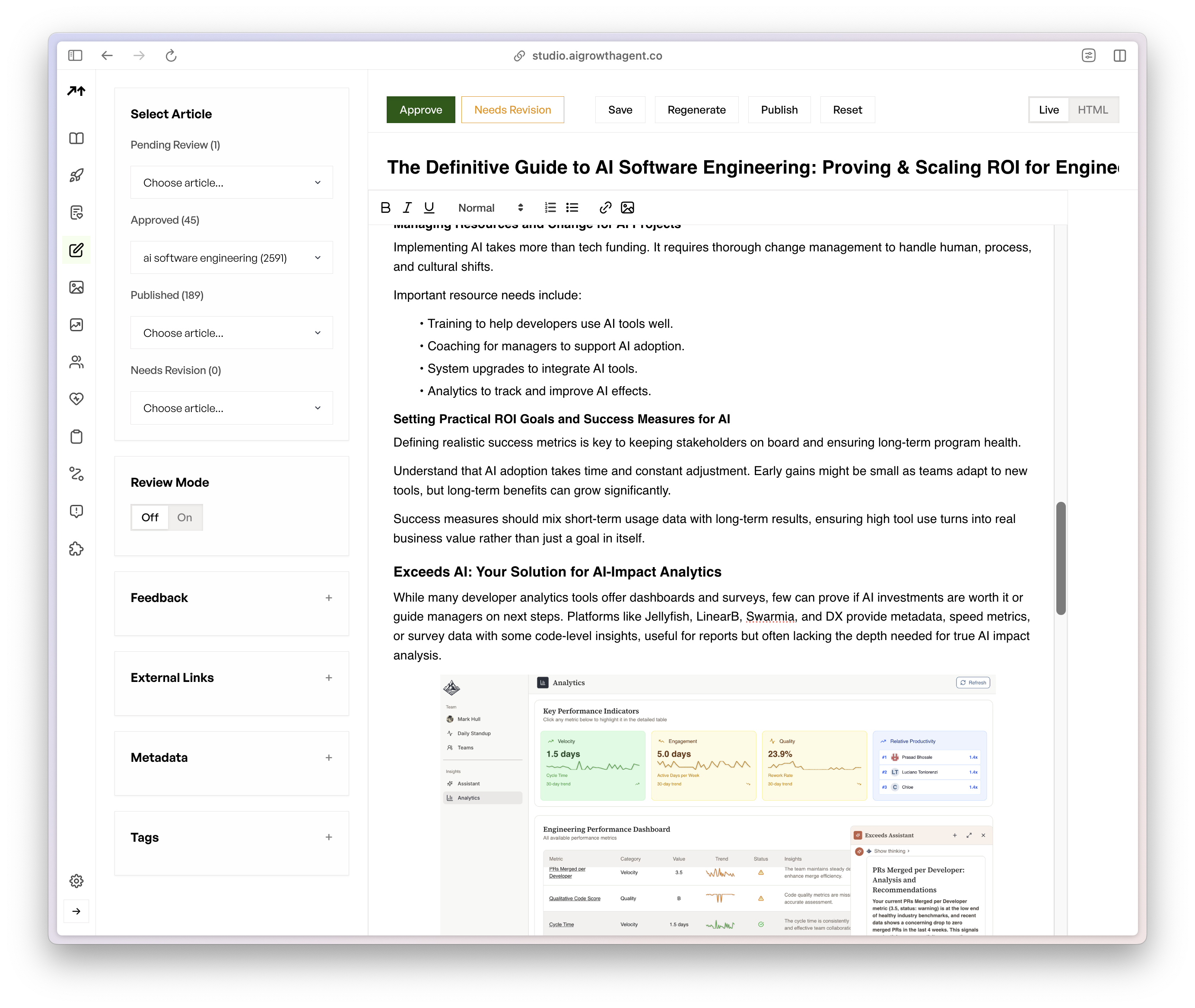
Schema markup and content structuring can run automatically in the background, so every asset ships RAG-ready. Each page then includes the metadata Perplexity’s parsers rely on.
Request an automated schema and structure review for your current content.
Step 5: Entity Authority Through Depth and Proprietary Data
Perplexity favors brands that show deep topical coverage and unique insight. Large language models prefer high factual density and primary data from surveys, experiments, and proprietary datasets. Entity recognition grows when you pair this data with expert commentary.
Entity-building strategies work together as a stack. Proprietary surveys with 2,000–10,000 responses create data no rival can copy. Original experiments and case studies then show how those insights apply in real situations.
Brandable datasets and industry indices package your findings into references others can cite. Expert commentary on breaking news keeps your brand present in real-time conversations. Comprehensive topic coverage across sub-questions ties everything together into a clear domain footprint.
Real-world examples highlight this effect. Levels.fyi dominates Perplexity AI citations for “software engineer salary 2025” queries because it runs the largest proprietary dataset, updated monthly. Developer surveys like State of JavaScript appear in nearly every AI answer about front-end trends.
AI Growth Agent weaves your proprietary data into a programmatic content plan, so your brand becomes the default reference.
Unlock a proprietary data-to-citations roadmap for your industry.
Step 6: Images and Metadata That AI Can Quote
Visuals increase citation odds when AI can read and interpret them. Images need descriptive alt text that includes key claims, plus schema markup that clarifies context.
Image optimization requirements:
-
Original charts and visualizations
-
Alt text with specific data points
-
ImageObject schema markup
-
Placement near the text that the image supports
Example alt text, such as “Freelance hourly rates 2019–2025 showing 18% increase in 2025,” gives AI a concrete, citable statement. Systems can then lift that fact directly into answers.
Visuals and their metadata can be generated and inserted automatically, with the system selecting images that reinforce your claims and improve citation potential.
Get a visual SEO and metadata walkthrough for your current content library.
Step 7: Auto-Publishing for Recency and Volume
Publishing speed now acts as a ranking factor for AI citations. Analysis of 17 million citations across AI platforms showed that AI-cited content is 25.7% fresher on average than content in traditional Google organic results.
Recency optimization strategies:
-
Daily publishing schedules
-
Regular content updates with visible timestamps
-
Breaking news analysis and commentary
-
Quarterly data refreshes
Manual workflows rarely sustain this cadence. Automated systems can publish directly to optimized subdomains and maintain the output level Perplexity prefers.
Set up an automated Perplexity-focused publishing cadence that your team can oversee.
Step 8: Feedback Loops That Improve Every Iteration
Programmatic SEO only reaches full potential when it learns from performance data. AI Growth Agent Studio surfaces that data and gives you control over how the system adapts.
Feedback mechanisms include:
-
Citation tracking across AI platforms
-
Content performance analytics
-
User feedback integration
-
Automated optimization suggestions
The system uses early results as training signals and refines content until it can run most programmatic tasks on its own.
Explore an interactive demo of these feedback loops and how they guide improvements.
Step 9: Citation and Revenue Monitoring Across AI Channels
Citation tracking informs both SEO and revenue strategy. AI search visitors convert at 4.4x the value of traditional organic visitors, so every new citation can move pipeline numbers.
Monitoring capabilities include:
-
Real-time citation heatmaps
-
Cross-platform visibility tracking
-
Competitor citation analysis
-
Traffic attribution and conversion tracking
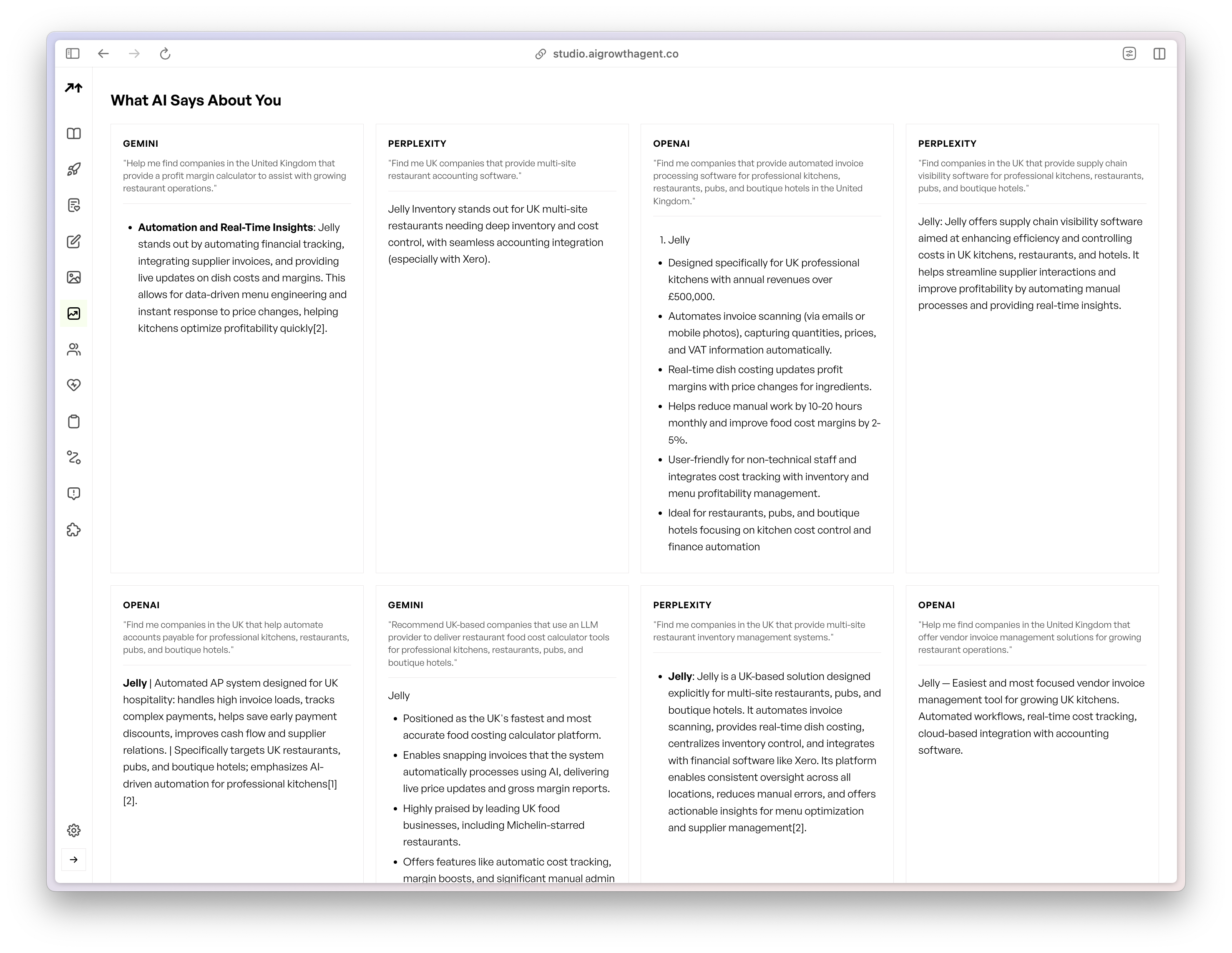
AI Growth Agent connects with Google Search Console and aggregates citation analytics from ChatGPT, Perplexity, and Google AI Overviews. These insights support decisions based on actual performance, not guesses.
Activate unified AI citation reporting for your brand.
Step 10: Enterprise-Scale Multi-Tenant Programmatic SEO
Enterprises need parallel strategies across brands, regions, and product lines. AI Growth Agent’s multi-tenant deployment lets you manage these streams centrally while preserving each brand’s voice and rules.
Advanced scaling features:
-
Parallel agents with unique manifestos
-
Cross-brand citation coordination
-
Real-time content injection for trending topics
-
Database-to-content automation
This setup allows lean teams to run complex, multi-brand programmatic SEO at a scale that previously required large agencies.
Discuss an enterprise rollout for multi-tenant AI SEO across your portfolio.
Why Programmatic Outperforms Manual: Live Case Studies
Manual content operations cannot keep pace with the speed and precision AI search expects. Most agencies still ship one or two articles each month, while Perplexity rewards daily publishing and flawless technical execution.
Proven results from AI Growth Agent implementations:
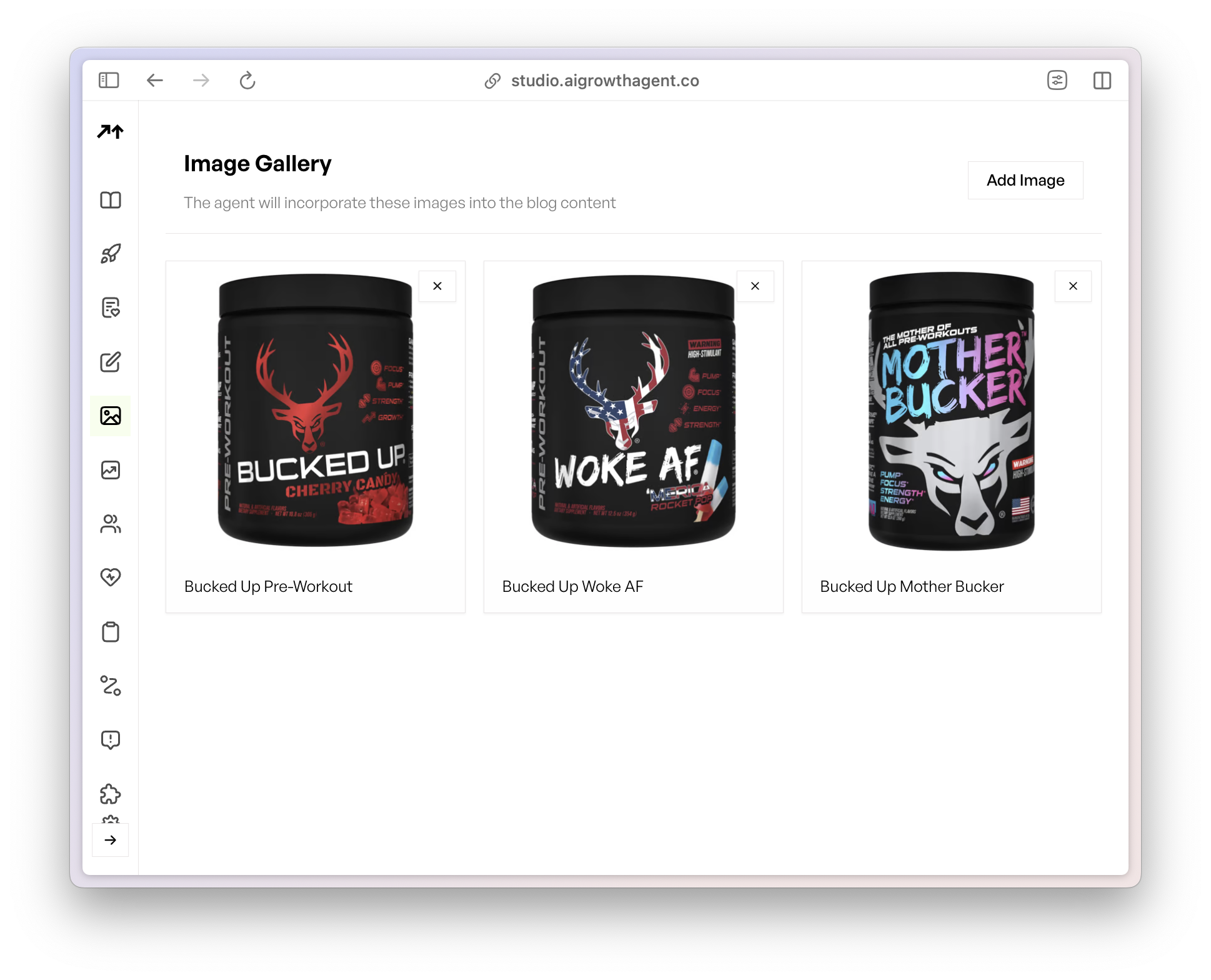
Bucked Up (Sports Nutrition): Within three weeks of programmatic publishing, Bucked Up became the cited #1 protein soda brand in ChatGPT answers for “best protein soda” queries, competing directly with Feisty Drinks and Clean Simple Eats.
Gitar.ai (AI CI/CD): In under two months, Gitar emerged as the reference brand for AI-powered CI/CD automation. It now leads conversations across Google AI Overview, ChatGPT, and Perplexity for queries such as “fix broken CI builds automatically” and “best AI reviewer that comments on CI failures.”
Exceeds AI (Performance Reviews): Within two weeks, Exceeds AI earned Perplexity recommendations as a top alternative to incumbents. Within three weeks, it appeared in Google AI Overview snapshots for core keywords and became a frequent source across ChatGPT, Google AI Overview, and Perplexity for “AI performance review tools for engineers.”
These outcomes show how programmatic execution outpaces manual methods on both speed and impact.
Review a tailored projection for your own citation growth.
FAQ: Perplexity AI Citations Best Practices
What is llms.txt for Perplexity optimization?
llms.txt is a structured file at your site’s root that guides AI crawlers such as PerplexityBot. It specifies preferred content paths, paths to avoid, and attribution requirements. This guidance helps Perplexity understand your structure and prioritize the right pages for citations.
How do you optimize a website for Perplexity AI citations?
Optimize for Perplexity by allowing PerplexityBot in robots.txt, using schema markup, and writing answer-first paragraphs under clear headings. Question-based H2 and H3 structures, frequent updates, and chunked, quotable sections all make extraction easier.
What content formats does Perplexity prefer for citations?
Perplexity favors structured formats such as numbered lists, comparison tables, FAQ sections, step-by-step guides, and data-rich statistics pages. Content should sit in self-contained sections that answer specific questions and include schema markup for better extraction.
How does AI Growth Agent increase Perplexity citations?
AI Growth Agent automates the technical pipeline behind Perplexity citations. It manages robots.txt, schema, content structure, and publishing workflows, then monitors citation performance and adjusts tactics based on live data.
What is the difference between PerplexityBot and Perplexity-User?
PerplexityBot is the indexing crawler that follows robots.txt rules. Perplexity-User handles real-time retrieval and usually ignores robots.txt. Both should have access for maximum citation potential, although they play different roles in Perplexity’s content acquisition.
Conclusion: Turn Perplexity Into a Scalable Growth Channel
Manual content optimization no longer fits 2026 AI search. The 10-step programmatic framework above gives you the technical base and repeatable process required to dominate Perplexity citations at scale. From manifesto creation to multi-tenant deployment, each step removes friction and automates work that manual teams struggle to maintain.
AI Growth Agent delivers this framework as a complete programmatic SEO system with proven results across premium brands. The platform executes without heavy internal engineering or slow agency cycles.
Schedule a strategy demo to position your company as the definitive authority in your category and start earning Perplexity citations in weeks, not months.