


AI search engines like Perplexity now shape how users discover brands, and citations inside AI answers function as a core signal of credibility. In this article, you’ll learn more about tools that generate citations inside Perplexity.
- Perplexity favors content that is accurate, consistent, well-structured, and supported by schema markup, which requires content architectures that are optimized for machine reading, not only human reading.
- Generative Engine Optimization (GEO) focuses on making content easy for AI systems to parse and cite, combining technical SEO, structured data, and answer-focused writing.
- Traditional SEO agencies, internal teams, and basic AI writing tools typically cannot deliver the scale, technical rigor, or consistency needed for ongoing Perplexity citation wins.
- AI Growth Agent offers a programmatic approach to content engineering and AI search monitoring that helps brands increase their odds of being cited across Perplexity, ChatGPT, and Gemini.
- Marketing leaders who adopt programmatic AI citation strategies early gain durable visibility advantages, while slower adopters risk allowing competitors to define category narratives inside AI search.
The AI Search Revolution: Why Citation is the New Credibility
AI-powered search engines like ChatGPT, Google AI Overviews via Gemini, and Perplexity now act as primary discovery tools, changing how users consume information. Instead of presenting long lists of blue links, these systems generate direct answers with integrated source attribution, so citations now operate as a key indicator of digital authority.
This shift marks a clear change in how credibility is earned online. In the traditional search era, ranking near the top of results was the main objective. In the current environment, earning citations inside AI-generated responses has become an important measure of authority. When Perplexity answers a query about “best project management tools for startups,” the brands cited in that response gain outsized visibility and perceived expertise.
Marketing leaders now operate in an environment where AI multiplies the amount of content on the internet while user attention remains finite. Without a focused approach to AI citation, a brand’s presence can shrink relative to the volume of new content. Organizations that understand and optimize for AI citation mechanisms strengthen their category position, while others risk ceding narrative control to competitors.
This environment calls for a shift in content strategy. Manual, craft-based approaches that produce a few articles each month struggle to keep pace with an AI-driven search ecosystem that rewards recency, depth, and structural consistency.
Schedule a demo to review whether your content strategy is aligned with AI citation requirements.
Deep Dive: How Perplexity AI Recognizes and Cites Authority
Clear understanding of Perplexity’s citation mechanisms helps marketing leaders build brands that AI systems reliably recognize as authoritative sources. Perplexity applies a multi-stage process that extends beyond keyword matching and focuses on verification, consistency, and relevance.
Perplexity’s Multi-Stage Citation and Verification Pipeline
Perplexity AI uses a verification pipeline that combines real-time web crawling, source deduplication, cross-source verification, and relevance ranking, which reduces contradictions and outdated information. This multi-stage pipeline filters for reliable, current sources before assigning citations, so brands need fresh and accurate content that can satisfy these checks.
Perplexity emphasizes cross-referencing rather than simple indexing. The system compares information across multiple sources to detect and resolve contradictions. Brands that publish inconsistent or outdated information across pages face greater difficulty earning citations, while brands that maintain coherent, updated content structures build a stronger credibility profile.
Content governance and consistency become central responsibilities for marketing leaders. A single contradictory statement inside a content ecosystem can weaken perceived authority for an entire domain during Perplexity’s evaluation. This reality makes programmatic content governance and structured content management increasingly important.
Context Fusion and Grounded Answers
Perplexity’s Context Fusion module changes how AI systems process and attribute information. The system merges relevant data from multiple sources and grounds its answers in verifiable evidence, attaching superscript numbers to specific facts and linking those references directly to URLs.
This approach affects how content should be planned and written. Traditional SEO emphasized ranking individual pages for specific keywords. Perplexity’s Context Fusion approach favors brands that build topical authority across related themes. When users ask complex questions, Perplexity often synthesizes information from several authoritative pages rather than pulling everything from a single URL.
The grounding mechanism that links facts to distinct sources creates a practical opportunity. Content that presents clear, concise statements of fact in well-structured sections is easier for Perplexity to extract and cite. Content that buries key information inside dense paragraphs with vague language is less likely to surface as a cited source.
Source Prioritization and Credibility
Perplexity often prioritizes domains that signal credibility and institutional rigor. The system cross-checks claims and frequently favors academic institutions, government sites, and established industry publications when available.
Commercial brands still have meaningful citation opportunities, but the bar for quality is higher. Original research, documented methodologies, and transparent sourcing help commercial content stand out from generic material. Brands that publish detailed, evidence-backed resources gain a stronger footing than those that rely on unsupported statements or marketing language.
Perplexity’s cross-checking process also compounds advantages for consistently reliable sources. Once the system identifies a domain as dependable for a particular topic, that domain often sees higher citation likelihood on adjacent queries. Early, sustained investment in high-integrity content can therefore pay dividends over time.
Semantic Search and Information Retrieval
Perplexity relies on semantic search rather than strict keyword matching when it retrieves information. The platform evaluates relevance, content quality, and source credibility when it selects sources from its indexed web content.
This semantic approach encourages a shift from narrow keyword targeting to concept-based optimization. Perplexity evaluates how ideas relate to one another, not just how often particular terms appear. Content that covers a topic deeply, explains related subtopics, and uses clear terminology tends to outperform content that chases isolated keywords.
Content architecture shapes how well AI systems can understand these relationships. Brands benefit from content ecosystems that cover topics comprehensively and connect pages through thoughtful internal linking. Single, isolated articles about individual phrases are less effective than interconnected clusters that cover a subject area in full.
User Feedback and Reinforcement Learning
Perplexity incorporates user feedback into a reinforcement loop that refines citation accuracy over time. Signals from user interactions and feedback influence how the model evaluates and cites sources in future responses.
This feedback loop means that citation patterns evolve with user behavior. Sources that users spend time with, share, or find helpful tend to receive more citations over time. Sources that users skip or flag as unhelpful gradually lose visibility. Brands that produce content aligned with real user needs can influence how often AI systems recommend their material.
Early work to align content with Perplexity’s preferences can create durable benefits. Brands that become trusted sources inside the model’s learning system stand a better chance of seeing their content reused and re-cited in subsequent answers.
The Imperative of Generative Engine Optimization (GEO) for Perplexity Citations
Traditional SEO practices were built for human readers and relatively simple ranking algorithms. Modern AI systems process content in different ways, so marketing teams need Generative Engine Optimization (GEO), which focuses on making content understandable, trustworthy, and easy for AI to cite.
Machine-Readable Content Architectures
AI systems interpret content differently from human readers. Humans can rely on context and intuition, while AI models depend on explicit structure, clear language, and stable signals.
Machine-readable content architectures present information in a format that AI can parse quickly. This approach uses consistent formatting, logical headings, and direct statements of fact that AI can extract without guesswork. Vague phrasing and ambiguous claims tend to reduce citation likelihood because they are harder to verify and reuse.
AI systems also assess domains at a holistic level. Inconsistent structures, fragmented topic coverage, or conflicting statements across a site reduce overall authority. Manual management of large content catalogs becomes difficult under these conditions and often calls for programmatic solutions.
Advanced Schema Markup and Structured Data
Schema markup provides explicit signals to AI about the meaning and structure of a page. Markup types such as Article schema and FAQ schema give large language models more clarity when parsing content for possible citations.
Effective implementation usually extends beyond basic article schema. Schemas for organizations, reviews, products, events, and expert credentials build a richer semantic context. This context helps AI systems determine what a page covers, who is behind the content, and why that organization may be a credible source.
Comprehensive schema coverage poses both technical and operational challenges. Manual markup becomes time-consuming and error-prone at scale. Automated schema systems require engineering resources and close coordination with content strategy. These demands often exceed the capabilities of traditional content workflows, which creates an opening for more programmatic, tightly integrated solutions.
Authoritative, Answer-Focused Content Structure
Perplexity tends to favor content that responds directly to user questions. Pages that use clear headings, explicit answers, and concise factual statements stand a better chance of earning citations.
This preference marks a shift from narrative-heavy content that delays or obscures the primary answer. AI systems benefit from content that places key takeaways near the top of sections, then supports those statements with explanation and evidence.
Effective pages for AI citation often combine three elements: a direct answer, enough supporting detail to show expertise, and a clear structure that separates each idea. Users benefit from this layout, and AI systems gain a more reliable source to quote and reference.
Explore how AI Growth Agent structures content for GEO and AI citation. Schedule a consultation.
Strategic Implications for Marketing Leaders: Winning in the AI Citation Landscape
AI citation now influences how brands appear in discovery journeys, research workflows, and buying processes. Marketing leaders who understand these implications can plan content investments that align with how Perplexity and other AI systems surface information.
Elevating Brand Visibility and Authority
Citations in Perplexity and similar tools act as an endorsement signal. Brands whose content is cited inside Perplexity answers often see higher-quality traffic and stronger perceived expertise.
Users who read AI-generated responses usually see fewer choices than on a search engine results page. When Perplexity highlights one or two sources, those brands receive focused attention. Inclusion inside the answer frame can influence which companies users view as credible or worth further evaluation.
Many users also view AI-generated answers as relatively neutral, which gives citations a particular weight. When a model draws on a brand’s content to explain an issue, the brand effectively shares the stage with the AI system itself.
Countering the Shrinking Digital Footprint
AI-generated content continues to increase the total volume of material online. Brands that rely only on older content often watch their proportional visibility decline as new pages and generated summaries compete for attention.
Maintaining or growing visibility now usually requires a deliberate content program rather than occasional publishing. The objective is not volume for its own sake but a catalog that speaks directly to user questions in a form that AI systems can recognize and cite.
B2B brands, in particular, face pressure to move beyond a few flagship pages. Comprehensive coverage of relevant topics, use cases, and industry questions gives AI systems multiple paths to discover and reuse a brand’s viewpoint.
Programmatic Velocity: The New Standard for Content Output
AI systems give preference to content that is both thorough and current. Brands that publish infrequently fall behind competitors that update and expand their libraries regularly.
Programmatic velocity focuses on combining speed with structure and quality. AI models already filter out low-quality or repetitive material, so a pure volume strategy does not perform well. The advantage lies in generating well-structured, accurate content at a pace that keeps a brand present in ongoing conversations.
Response time also matters. When new developments emerge, early, authoritative coverage can influence which sources AI systems learn to associate with that topic. Brands that can publish structured, verified content within hours of a development have stronger chances of becoming the default citations for those queries.
Mitigating the Citation Gap: Preventing Competitors from Defining Your Narrative
The citation gap occurs when competing brands become the main sources AI systems reference for questions about a shared market. Once this pattern sets in, it can reinforce itself, because AI systems often return to sources they have already treated as authoritative.
Many marketing teams discover citation gaps only after they have already affected perception. Regular review of how AI systems describe a category, a product type, or a specific problem area gives early visibility into which domains currently frame the conversation.
Preventing or closing citation gaps usually requires broader coverage than product-only content. AI systems look for helpful perspectives on industry trends, implementation best practices, and common pitfalls. Brands that publish this type of material alongside product information have more opportunities for AI systems to recognize their expertise.
See how AI Growth Agent helps your brand provide clear answers inside AI search. Schedule a demo.
The Limitations of Traditional Approaches in AI Citation Generation
The technical and structural demands of AI citation expose weaknesses in many established marketing approaches. Leaders evaluating their current strategies benefit from understanding where traditional models tend to fall short.
Traditional SEO Agencies: Speed, Cost, and Scale Hurdles
Many SEO agencies use a craft-focused model centered on a small number of carefully produced pieces each month. That pace often conflicts with the volume and coverage required to stay visible in an AI-driven environment.
The labor-intensive nature of manual content creation and optimization also drives up costs. Scaling to the number of pages needed for broad AI citation opportunities frequently pushes budgets beyond what most organizations can support.
Technical depth presents another challenge. Advanced schema, detailed technical markup, and structured data management require specialized expertise that not every agency can provide. Even strong narrative content can underperform in AI search if these technical components are missing or inconsistent.
Internal Marketing Teams: Resource and Expertise Gaps
Internal teams often balance many responsibilities across channels, campaigns, and stakeholders. Dedicated technical SEO or structured data resources are not always available.
AI citation optimization also introduces new knowledge requirements. Teams need to understand how different AI systems crawl, interpret, and rank content. Without that context, even strong messaging can fall short of what Perplexity or other models need in order to assign citations.
Maintaining consistent structures and messages across a large content library further increases workload. Project-based workflows, which focus on campaigns or launches, rarely align with the continuous, systems-level adjustments needed for AI optimization.
Basic AI Content Tools: Unstructured Output and Technical Deficiencies
Self-service AI writing tools such as ChatGPT or Jasper excel at drafting text quickly. They do not, by themselves, handle the technical, structural, or architectural work required for reliable AI citation.
These tools mainly solve the blank-page problem. They still require human users or additional systems to add schema markup, align content with GEO principles, maintain internal linking structures, and ensure consistency across a domain.
Unstructured content production can also dilute authority. Large volumes of loosely related articles without a clear topical plan, evidence of expertise, or technical optimization may make it harder for AI systems to identify a site’s primary strengths.
Manual Academic Scrutiny: Necessary but Not Scalable
Perplexity plays a growing role in research workflows, but the citations it generates can contain gaps or inaccuracies that still require human verification for academic use. That need for manual review highlights the difference between using AI as a research assistant and building a systematic content strategy for AI citation.
Manual verification remains essential where accuracy standards are high, yet it becomes difficult to apply that level of scrutiny across hundreds or thousands of pages. The time required to check every reference or claim clashes with the velocity expectations of AI-driven content ecosystems.
B2B brands that must maintain high factual standards feel this tension strongly. They need both precision and scale, but fully manual approaches often force a tradeoff between the two.
AI Growth Agent: A Programmatic System for Perplexity Citation Excellence
AI Growth Agent is a Programmatic SEO Agent that focuses on engineering content architectures that AI systems can understand, index, and cite. The platform combines technical SEO, structured data, and content production to help companies present themselves as reliable sources for AI search engines, including Perplexity.
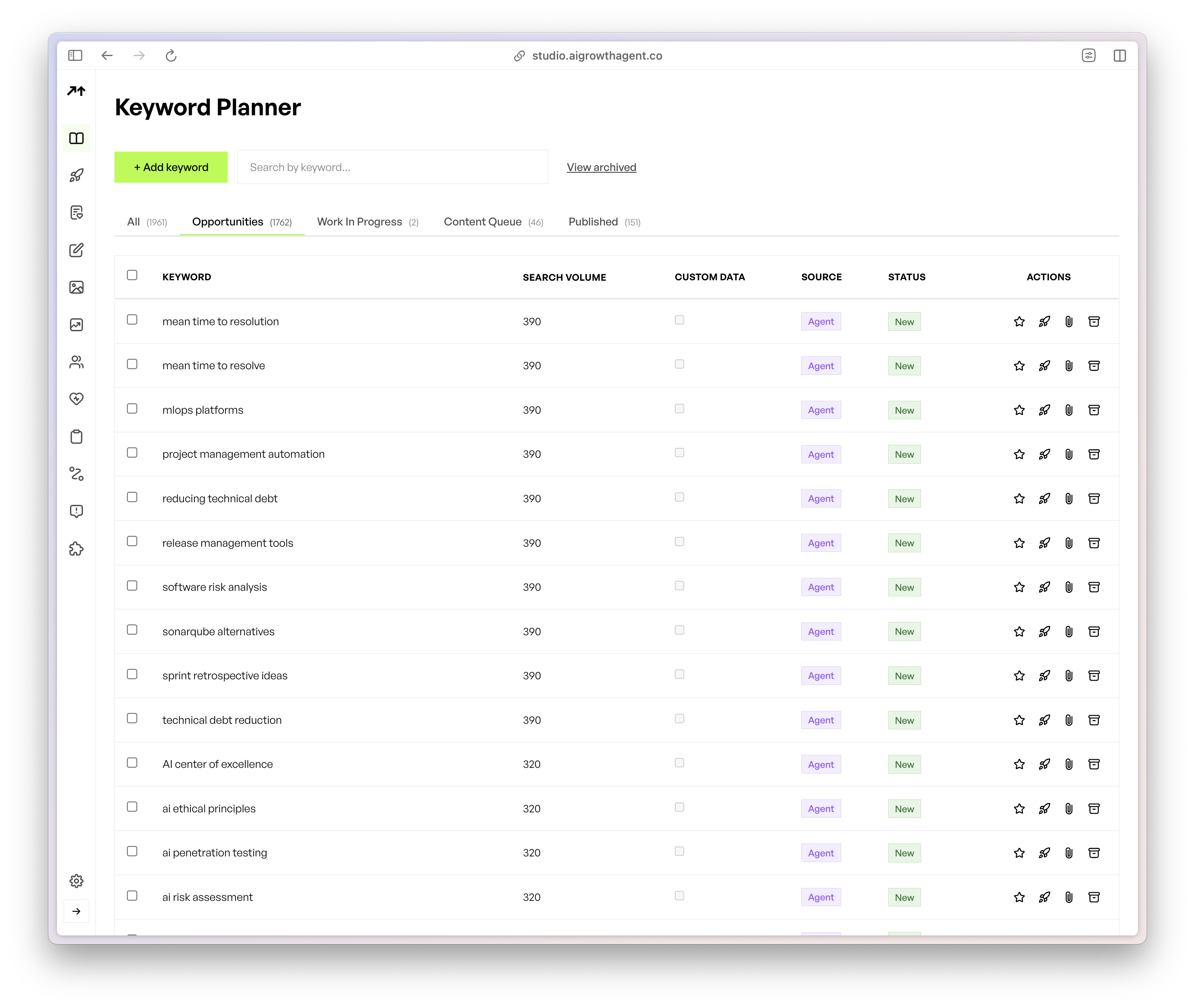
Autonomous Engineering for AI Citability
AI Growth Agent focuses on automating the technical SEO lifecycle that supports AI citation. The system handles tasks such as keyword clustering, structured content planning, schema implementation, and publishing workflows.
Automation helps address the scalability gap that manual approaches often encounter. Instead of applying technical standards one page at a time, AI Growth Agent applies consistent rules across an entire content library. AI systems that evaluate domains at a holistic level benefit from this consistency.
The engineering feature set includes advanced components such as LLM.txt files and comprehensive schema markup. These elements help AI systems interpret, categorize, and retrieve content more accurately for citation in answers.
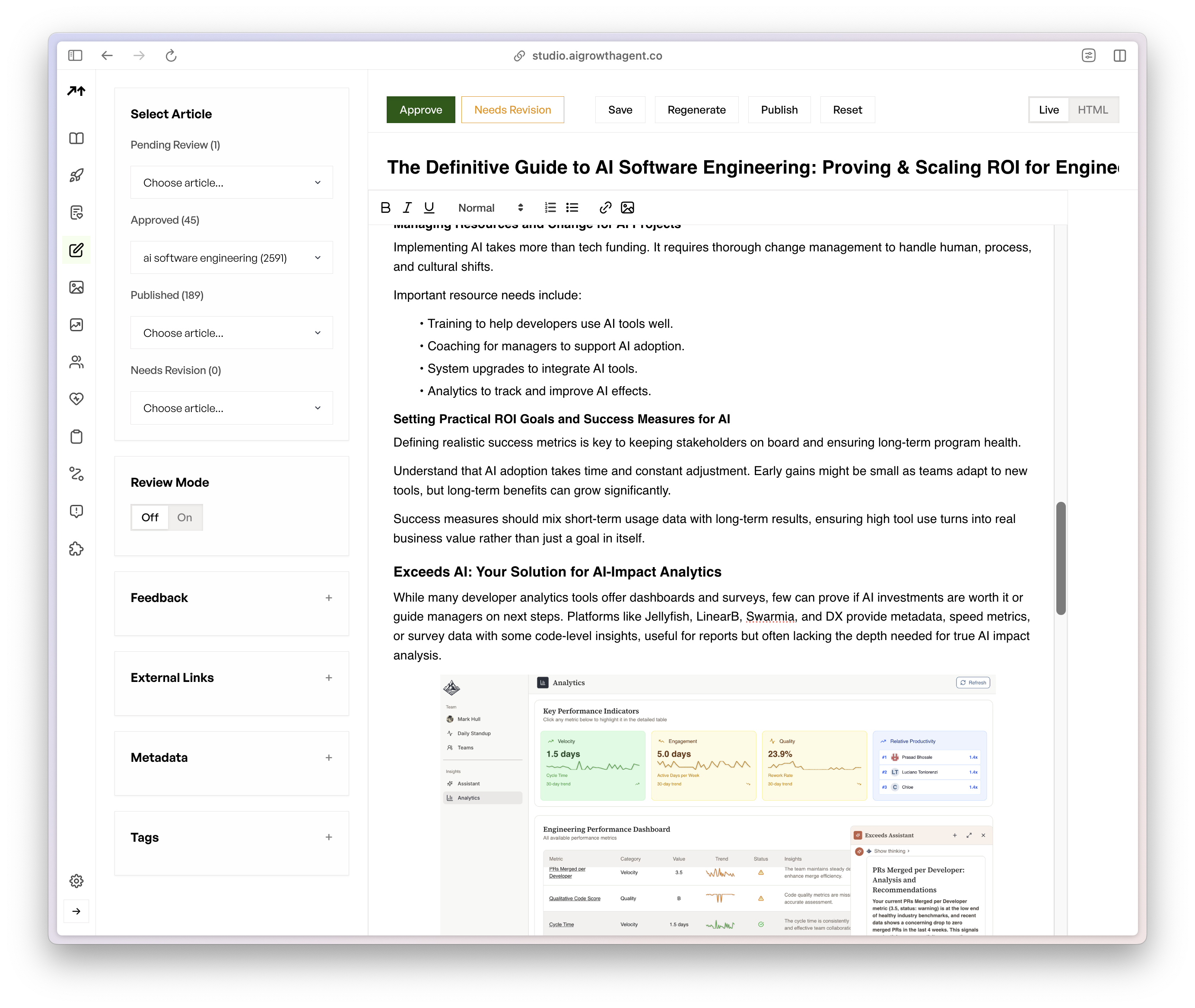
The Model Context Protocol: Supporting AI Understanding
AI Growth Agent introduces a blog Model Context Protocol (MCP) that gives AI search engines structured access to blog content. This protocol provides information on relationships between posts, topic hierarchies, and semantic contexts.
The MCP helps reduce ambiguity that traditional crawling can introduce. AI systems benefit from a clearer representation of how a site organizes and relates concepts, which can increase confidence when selecting and citing specific pages.
Programmatic Velocity at Scale
AI Growth Agent supports content programs that combine speed, structure, and quality. The platform can generate libraries that cover entire topic clusters while maintaining consistent formatting, schema, and metadata.
Automation of technical details frees teams to focus on subject matter depth and accuracy. As a result, content can reach publication more quickly, yet still align with GEO principles that AI systems use to judge and cite sources.
This programmatic approach helps brands maintain or grow their visibility as overall content volumes continue to rise. Instead of seeing digital visibility decline relative to new material, brands can build steady coverage across their priority topics.
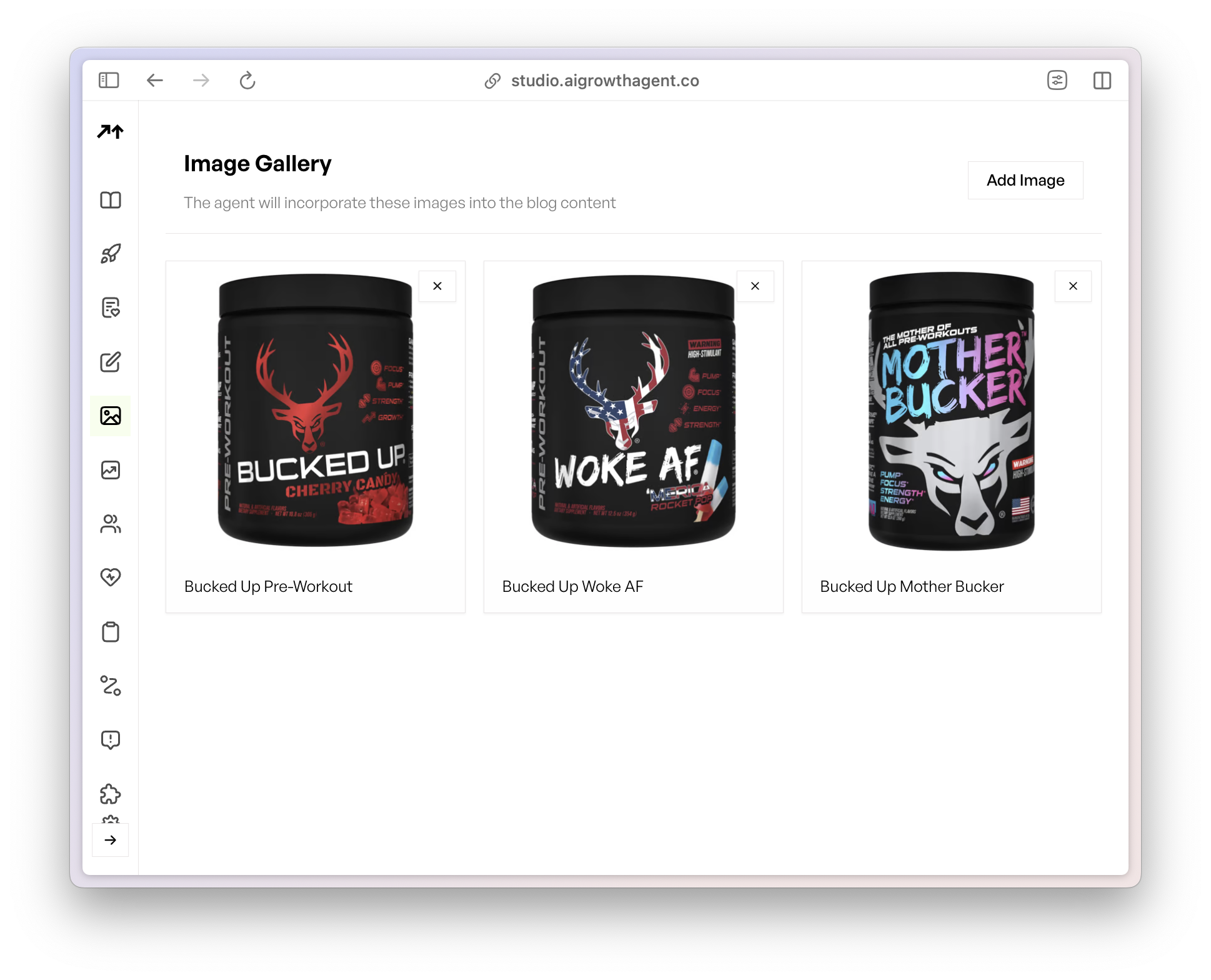
AI Growth Agent also allows teams to supply brand-specific images, diagrams, and other visual assets that can be woven into articles, which supports richer and more useful content experiences.
Direct AI Search Monitoring and Impact Tracking
AI Growth Agent Studio gives teams visibility into how their content appears across AI platforms. The system tracks citations, references, and mentions inside ChatGPT, Gemini, and Perplexity responses.
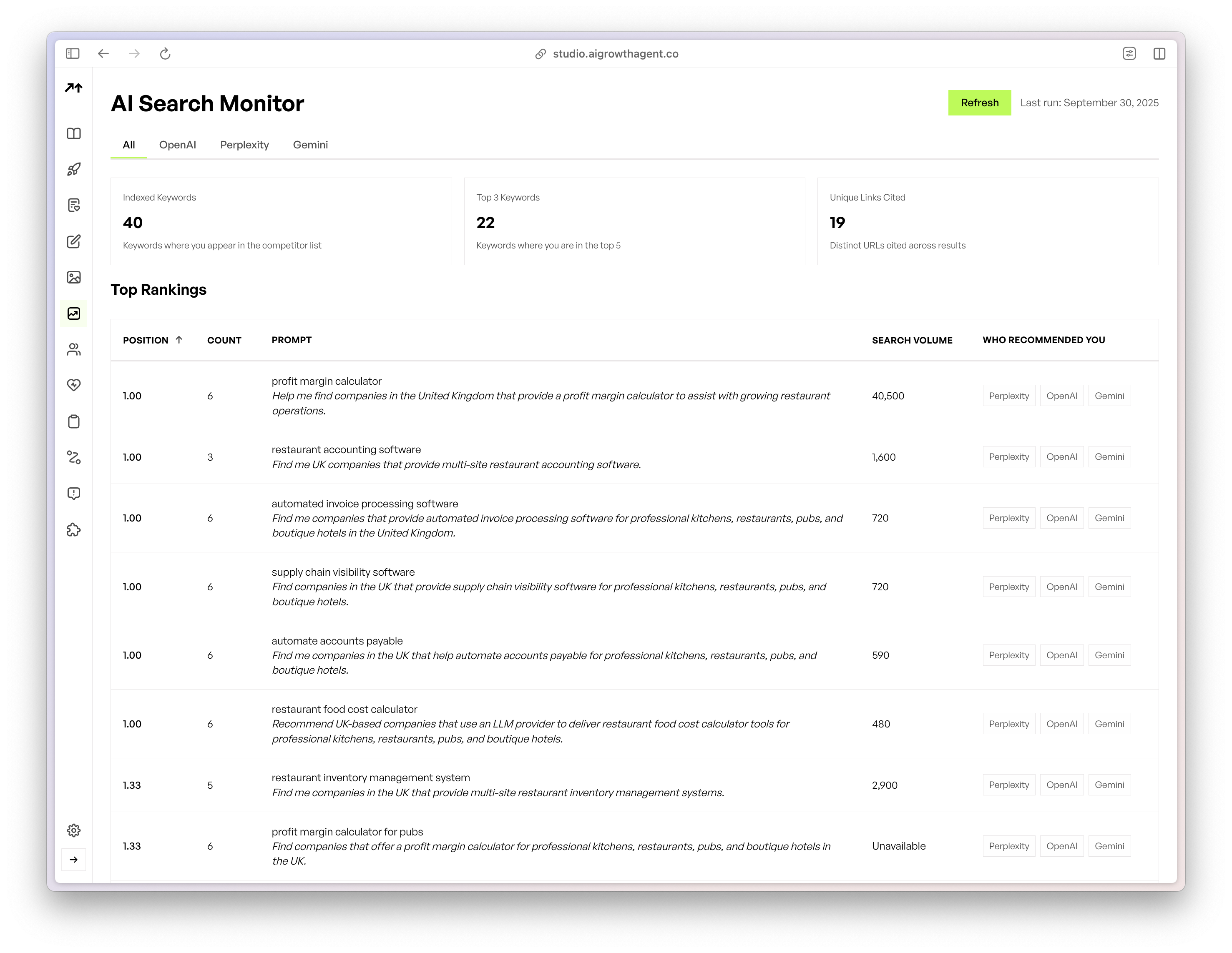
The platform connects this AI search monitoring with Google Search Console data, so teams can see how changes in content and structure correspond with organic traffic and click trends.
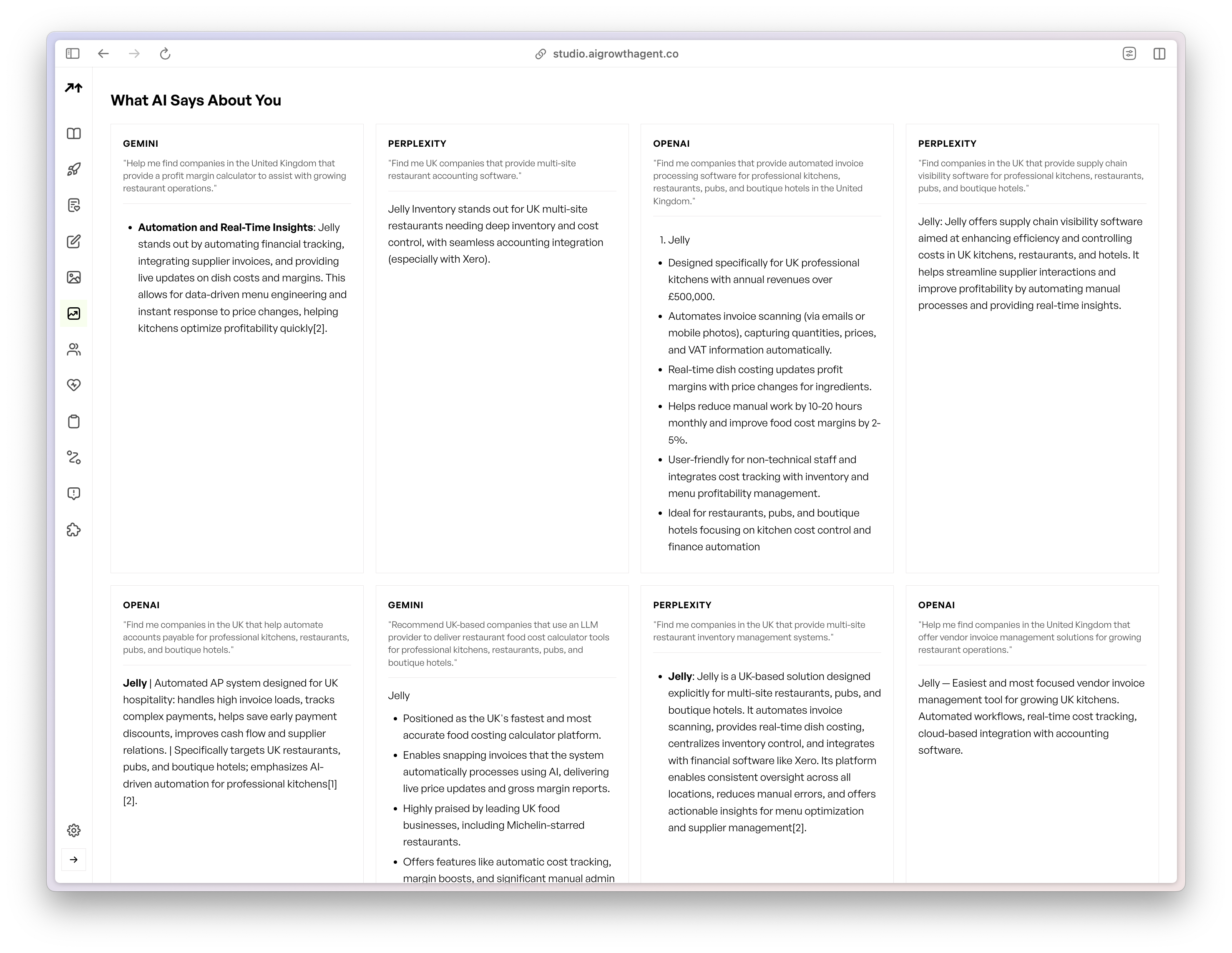
This feedback loop supports continuous refinement of content strategy, helping teams see where they are gaining or losing ground in AI-driven discovery.
Comparative Analysis: Programmatic Content vs. Traditional Approaches
|
Feature |
AI Growth Agent |
Traditional SEO Agencies |
Self-Service AI Tools |
|
Content Volume and Velocity |
Produces structured, high-quality content at programmatic scale |
Often limited to a small number of manually produced articles per month |
Can generate large volumes of text but often with limited structure and oversight |
|
AI Citation Optimization |
Combines technical engineering, schema, and MCP for AI readability |
May apply limited technical optimization, often case by case |
Outputs raw text without integrated technical optimization |
|
Technical Implementation |
Automates schema markup, metadata, and structured data across content |
Implements technical elements manually, which can create inconsistencies |
Requires separate engineering or SEO tools for technical work |
|
AI Search Monitoring |
Provides direct tracking across ChatGPT, Gemini, and Perplexity |
Typically does not monitor AI search behavior |
Does not include monitoring or feedback features |
Schedule a demo with AI Growth Agent to explore a programmatic approach to AI search.
Frequently Asked Questions (FAQ) about Perplexity Citations
Can Perplexity AI generate citations for my content automatically?
Perplexity AI does not generate citations for content that is not already published on the web. The system reads and evaluates existing pages, then cites content that meets its standards for authority, accuracy, and relevance. It searches the web in real time, processes information through verification pipelines, and surfaces sources that offer reliable, factual answers. Your content needs to be live and structured for AI discovery before Perplexity can evaluate it for potential citation.
How can I make my brand’s content more likely to be cited by Perplexity AI?
Increasing citation likelihood usually starts with GEO principles. Content should present accurate, well-sourced information in clear, answer-focused formats. Headings should match user questions where appropriate, statements of fact should be explicit, and each page should provide enough context to demonstrate expertise.
Technical optimization also matters. Use schema markup such as Article, FAQ, and How-To where relevant. Make headings descriptive, maintain consistent internal linking across related topics, and avoid contradictions between pages. A coherent and structured content ecosystem sends stronger signals of authority to Perplexity.
Does Perplexity AI’s citation system differ from ChatGPT or Google AI Overviews?
Perplexity AI uses a citation-first approach in which factual claims in responses are linked to specific web sources. This model makes it easy for users to inspect where information came from.
ChatGPT, in its default mode, usually provides answers without automated citations unless configured or prompted to do so. Google AI Overviews often show a set of sources alongside an answer, but the link between individual claims and specific sources is less explicit. Perplexity’s design therefore creates more direct opportunities for brands whose content aligns with its citation architecture.
What specific technical elements boost my content’s chances of Perplexity citation?
Several technical elements help AI systems like Perplexity interpret and trust your content:
- Comprehensive schema markup, including Article, FAQ, and How-To where applicable
- Clear heading hierarchies (H1, H2, H3) with descriptive titles that reflect page topics
- Direct, unambiguous factual statements near the top of sections
- Consistent formatting patterns across your content library
- References and links to credible external sources where they add context
- Fast, mobile-friendly pages that AI crawlers can access efficiently
Why is accurate citation by AI search engines crucial for marketing leaders today?
Accurate AI citation now shapes how many users first encounter brands and subject matter experts. When an AI system cites your content as part of an answer, it signals that your material met certain thresholds for reliability and usefulness.
Citations can drive qualified organic traffic from users who are actively seeking explanations, comparisons, or best practices. In addition, AI systems often reuse familiar, trusted sources when responding to adjacent queries, which can reinforce a brand’s visibility over time. For marketing leaders, these patterns influence lead generation, brand perception, and category positioning.
Conclusion: The Future of Authority is Programmatic AI Citation
AI search has reshaped how authority is signaled and earned online. Perplexity’s emphasis on verification, structured data, and clear attribution illustrates how modern systems evaluate and reuse content.
Marketing leaders now need to treat AI citation optimization as a strategic capability. Programmatic approaches that combine structured content, GEO-aligned writing, and technical engineering give brands a practical path to becoming reliable sources for AI systems.
The requirements for success include advanced schema, consistent content architectures, robust structured data, and a publication pace that matches ongoing developments. Individual contributors, traditional agencies, and basic AI tools often struggle to satisfy all of these needs at once.
AI Growth Agent offers a structured way to close that gap. By automating technical SEO tasks, integrating a Model Context Protocol, supporting image and asset integration, and monitoring AI search behavior, the platform helps brands align with how systems like Perplexity select and cite sources.
The opportunity to establish strong AI citation presence remains open but is becoming more competitive as more organizations adapt their strategies. Brands that invest now in systematic, programmatic AI citation workflows place themselves in a stronger position to influence how AI systems describe their markets and solutions.
AI will continue to field complex questions from users. AI Growth Agent focuses on helping your company provide clear, reliable answers that AI systems can recognize and reuse. If your organization has a solid foundation and wants to strengthen its position in AI search through Programmatic SEO, book a strategy session.
