


AI search engines like Perplexity now act as answer engines that cite sources directly, which shifts the competition for visibility from traditional rankings to citation in AI-generated responses.
Brands that earn consistent Perplexity citations gain authority at the moment of research and evaluation, while uncited competitors risk becoming invisible in AI-driven buying journeys. What you’ll learn in this guide:
- Perplexity Generative Engine Optimization (PGEO) focuses on semantic depth, technical clarity, and AI-readable structures, which differ from traditional SEO priorities like backlinks and keyword density.
- Key PGEO ranking factors include domain authority, semantic relevance, technical infrastructure for AI ingestion, content freshness, and early user engagement patterns.
- Effective PGEO requires programmatic content architecture, entity-first content, advanced technical standards such as schema markup and LLM.txt, and consistent authority building across topic clusters.
- AI Growth Agent provides an end-to-end, programmatic SEO and PGEO system that designs the technical foundation, researches topics, produces content at scale, and monitors AI search visibility and citations.
The AI Search Revolution: Understanding Perplexity’s Impact on Discovery
AI search has moved discovery from traditional keyword-based results to conversational engines that synthesize information from multiple sources. Perplexity AI sits at the center of this shift as an answer engine that returns concise, cited responses instead of long lists of blue links.
Perplexity uses natural language processing to interpret user intent and then assembles responses from content it trusts. This model means content must be easy for both people and language models to interpret, summarize, and cite.
For marketing leaders, AI search creates both opportunity and risk. Brands that appear as cited sources in Perplexity gain direct exposure when buyers research problems, solutions, and vendors. Brands that do not appear in citations lose share of voice as users consume AI-generated summaries instead of clicking through to traditional search results.
Perplexity prioritizes authoritative domains and boosts content from established platforms. This behavior gives an advantage to brands that structure content for PGEO instead of relying only on legacy SEO tactics.
Perplexity citations also act as authority signals. When the engine references your content in its answer, it positions your brand as a primary source on that topic at the moment a user is seeking guidance. That moment often aligns with evaluation and purchase research, so AI visibility now directly influences pipeline and revenue.
What is Perplexity Generative Engine Optimization (PGEO)?
PGEO vs. Traditional SEO: Key Differentiators for AI Search
PGEO, or Perplexity Generative Engine Optimization, focuses on how AI systems read, interpret, and reuse your content in generated answers. Traditional SEO typically concentrates on keyword targeting, backlink acquisition, and page-level authority within web search engines.
PGEO targets language models instead of only search crawlers. Content must show clear expertise, thorough topic coverage, and consistent signals of trust. It also must follow technical standards that allow AI systems to ingest, segment, and cite specific passages with minimal ambiguity.
Perplexity’s ranking logic prioritizes content that is concise, relevant, and structured for quick comprehension. This behavior differs from classic ranking algorithms that often reward length, keyword variation, and backlink patterns without the same emphasis on citation-friendly structure.
Programmatic content velocity also plays a larger role in PGEO. Freshness of content is important for maintaining visibility. Brands that publish consistently across a structured topic map send stronger signals of ongoing expertise than those that rely on a few evergreen assets updated occasionally.
Why PGEO is Crucial for Marketing Leaders in the AI Era
Buyers now gather information from AI-generated answers before they visit brand websites or talk with sales. The traditional funnel that starts with paid search or organic clicks often now starts inside Perplexity or similar tools, where a summary response includes a small set of cited sources.
This behavior creates a compressed, zero-sum environment in which only a handful of sources appear in each AI answer. If your content is absent from those citations, other brands effectively define your market and category on your behalf.
AI search engines influence decisions early in the research phase by surfacing product categories, solution types, and specific vendors. Brands cited as sources gain repeated exposure as buyers refine their questions. Uncited brands drop out of those learning loops even if they have strong offerings.
Quality signals and topical authority carry more weight than keyword matching alone. Marketing teams that still treat SEO as a tactical channel instead of an authority-building system will struggle to win AI citations at scale.
Research Methodology: How We Analyzed Perplexity’s Ranking Factors
This report synthesizes public research, field tests, and technical analysis focused on Perplexity’s behavior. The research base includes algorithm pattern analysis from metehan.ai, ranking factor exploration from Search Engine Land, and additional guidance from PGEO-focused practitioners and tooling providers.
The methodology combined quantitative review of citation patterns across thousands of answers with qualitative assessment of pages that repeatedly surface as sources. The analysis considered domain-level authority, content structure, semantic depth, technical implementation, and freshness.
The goal was to isolate practical, repeatable factors that marketing leaders can implement programmatically. The report focuses on inputs that teams can control, such as schema usage, content architecture, and programmatic publishing, rather than speculative factors that cannot be influenced reliably.
Decoding Perplexity’s Algorithm: Key Ranking and Citation Factors for PGEO Success
Authoritative Domains and Source Trustworthiness in Perplexity
Perplexity gives preference to content from domains it considers authoritative. Newer or less-established sites must therefore work harder to send clear, consistent signals of expertise and reliability.
In the PGEO context, domain authority includes both traditional metrics and E-E-A-T principles, which emphasize experience, expertise, authoritativeness, and trust. Authority of both the domain and the individual author matters. Brands need visible experts, clear bylines, and consistent profiles across their content.
Strong PGEO programs treat authority as a portfolio property, not a page-level feature. Brands that publish expert-level content across a coherent topic cluster send stronger authority signals than brands that rely on a few isolated posts.
Content Quality and Semantic Depth for AI Models
Semantic relevance sits at the center of Perplexity’s citation logic. Relevance appears to be measured through content depth and contextual richness rather than simple keyword matches.
Frequently cited articles often exceed 10,000 words and maintain Flesch readability scores above 55. Long-form coverage that remains clear and conversational gives AI systems enough material to answer many different but related questions while still being easy to segment into quotable passages.
Topic selection also matters. Content about AI, technology, marketing, and science appears to have higher visibility potential than some other categories. B2B and technical brands can use this tilt by investing in educational content that intersects with these areas.
Semantic relevance at the passage level is critical for citation. Articles that cover topics comprehensively, link related concepts clearly, and resolve common questions in plain language give Perplexity more reasons to cite them.
Technical Optimization for AI Ingestion and PGEO
Technical structure determines how efficiently AI systems can crawl, interpret, and reuse your content. Schema markup and semantic HTML help Perplexity’s model interpret and consider content for citation.
New AI-specific standards are emerging as important PGEO inputs. Key technical elements for direct AI ingestion include LLM.txt files, Model Context Protocol usage, and high-quality metadata and open graph tags. These elements make it easier for LLMs to understand site structure and retrieve relevant passages.
Implementing these standards consistently across a large content set often requires engineering support or automation. Manual updates by marketing teams rarely keep pace with content volume and technical change.
Content Freshness and Time Decay in AI Search
Perplexity appears to reward content that reflects current information and thinking. Freshness of content is important for maintaining visibility. Stale content risks losing citation share even if it once performed well.
This behavior challenges classic evergreen content strategies that rely on a few high-performing assets. Brands now need systems that regularly update high-value content while also publishing new assets that expand coverage.
Content freshness is suspected to improve ranking in time-sensitive verticals such as news, finance, or fast-moving technology. Regular updates, new data, and revised recommendations help show that a brand actively maintains its point of view.
User Engagement and New Post Performance in Perplexity
Initial performance signals may influence long-term Perplexity visibility. Early user engagement after publication can shape a passage’s future prominence.
Content that attracts rapid engagement shortly after launch may earn stronger placement. Brands that rely only on organic discovery during the first days after publishing may miss that window.
Long-term engagement signals can also matter for sustained ranking. Content that keeps attracting readers, scroll depth, and time on page sends signals that it remains useful.
Strategic Imperatives for Effective Perplexity Generative Engine Optimization
Programmatic Content Architecture: Building Topical Authority at Scale
PGEO success depends on a content architecture that signals complete, organized coverage of your core topics. Robust internal linking helps establish topical authority within this architecture.
Publishing stand-alone articles without a clear structure makes it harder for AI systems to infer expertise. Programmatic content production allows companies to cover entire topic clusters and subtopics with consistency. That coverage shows depth and breadth on core themes.
Effective architectures include clear pillar pages, supporting articles at different depth levels, and internal links that guide both users and bots across the cluster. Automation often identifies gaps and plans new content, reducing manual editorial overhead.
Entity-First Content Creation for AI Comprehension
Entity-focused content helps AI connect your pages to real-world concepts, people, companies, and products. Integrating real-world entities, structured data, and strong internal linking strengthens topical authority while giving AI a clearer context.
Formatting choices also affect citation potential. Definitional sections, FAQs, clear step-by-step lists, and comparative tables often align well with Perplexity’s answer format. These structures make it easy for the model to locate concise answers inside longer content.
Templates that bake in entity markup, clear headings, and citation-ready snippets can standardize this approach at scale. Manual formatting on a post-by-post basis rarely remains consistent across hundreds of assets.
Technical Foundational Excellence for Direct AI Ingestion
A strong PGEO program rests on a technical foundation that AI crawlers can navigate efficiently. Structured data, including schema.org and semantic HTML elements, enables better ingestion and understanding by Perplexity.
Some brands extend this foundation with AI-specific infrastructure. LLM.txt files, Model Context Protocol usage, and carefully defined metadata provide direct channels between AI systems and site content. These tools help ensure that engines can locate the right passages quickly and interpret them accurately.
Maintaining this level of technical quality across a growing content library generally requires automation. Manual implementation risks inconsistency, broken markup, and outdated files as the site evolves.
Establishing Brand Authority for AI Citation
AI engines look for more than basic optimization when deciding which brands to cite. Original research, expert commentary, and positive mentions on credible third-party sites serve as important credibility signals.
Definitive content often substantiates claims, cites primary sources, and surfaces multiple perspectives where relevant. This approach helps AI feel confident that it is presenting balanced, well-supported information.
Brands that publish this type of content consistently, on topics that matter to their buyers, build a durable authority signal for AI engines. Those signals compound as more external sites reference and share the material.
The PGEO Solution: AI Growth Agent Engineers Authority for AI Search
AI Growth Agent is a programmatic SEO and PGEO platform that designs, builds, and runs high-authority content architectures for brands that want to earn AI citations at scale.
The system goes beyond traditional SEO agency services by automating research, content planning, technical implementation, and performance monitoring across large content portfolios.
Autonomous Technical Infrastructure for AI Search
AI Growth Agent deploys a fully optimized blog architecture as a subdomain of your site and aligns it with your existing brand. The platform implements advanced technical standards such as LLM.txt files and a blog-focused Model Context Protocol layer, which allow AI search engines to communicate directly with the content database.
The system can also integrate with existing CMS platforms such as WordPress, Hashnode, Webflow, Framer, Sanity, and HubSpot. Many teams choose the hosted option for simplicity and to benefit from default technical best practices. In both scenarios, the goal is to give AI crawlers a clean, structured environment that supports accurate ingestion and citation.
Programmatic Keyword and Content Research for AI Citation
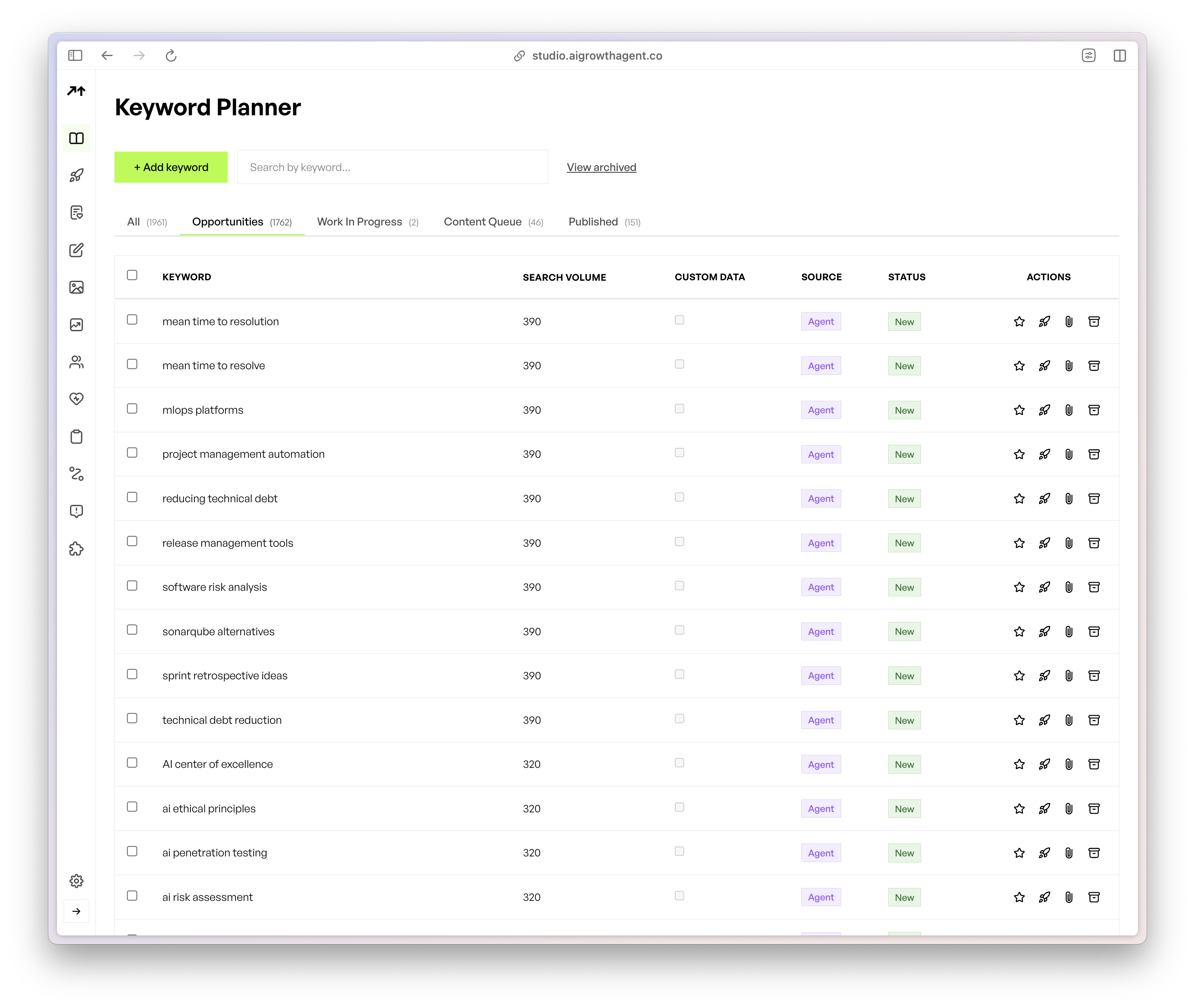
AI Growth Agent’s Programmatic SEO Agent begins by ingesting your product, audience, and competitive context. It then analyzes tens of thousands of queries and topics that align with your domain.
The outcome is a Programmatic Content Strategy that organizes topics into pillars and clusters tuned for AI search behavior. Each cluster targets clear opportunities for visibility in Perplexity and other AI engines, rather than focusing only on classic search volume.
High-Velocity, High-Quality Content Engineering for Perplexity
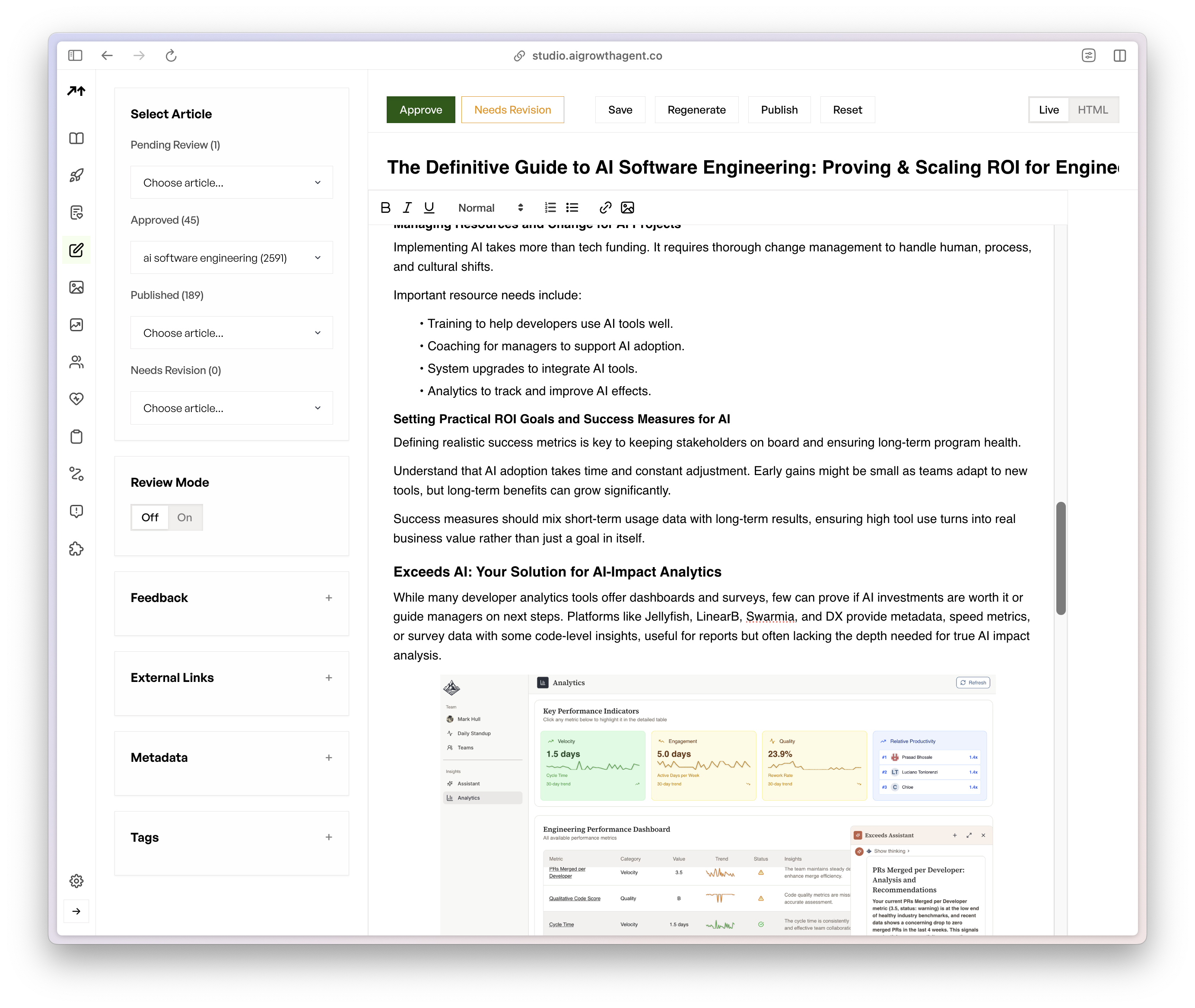
Once the keyword and topic strategy is approved, the Programmatic SEO Content Agent manages the full content lifecycle. The system handles research, outlining, drafting, fact-checking, on-page optimization, and technical markup.
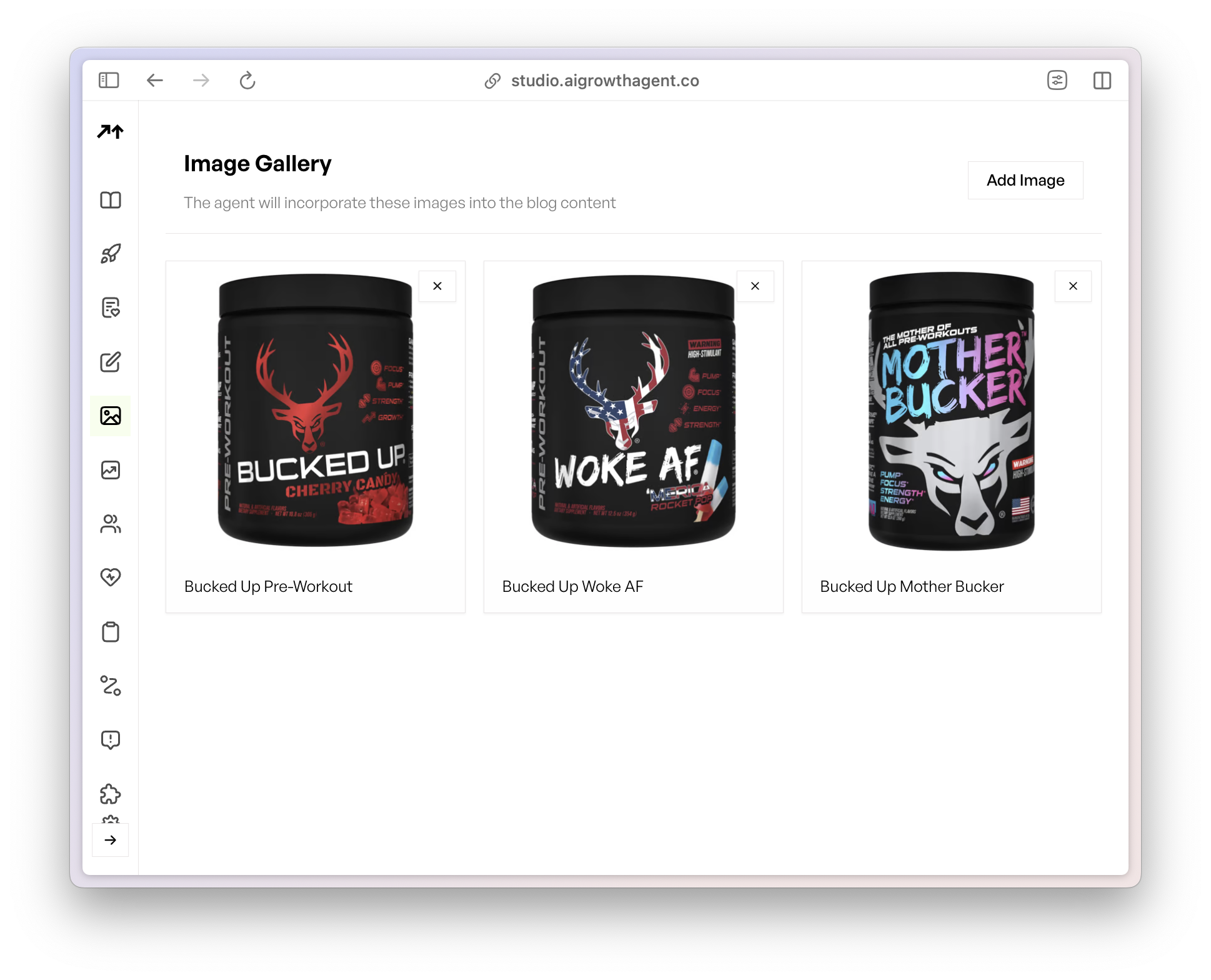
Content includes both tactical articles and deeper pillar pieces that support comprehensive topic coverage. Each asset ships with structured data, optimized headings, and image tags designed to improve both human readability and AI comprehension.
Real-Time AI Search Monitoring and Perplexity Citation Tracking
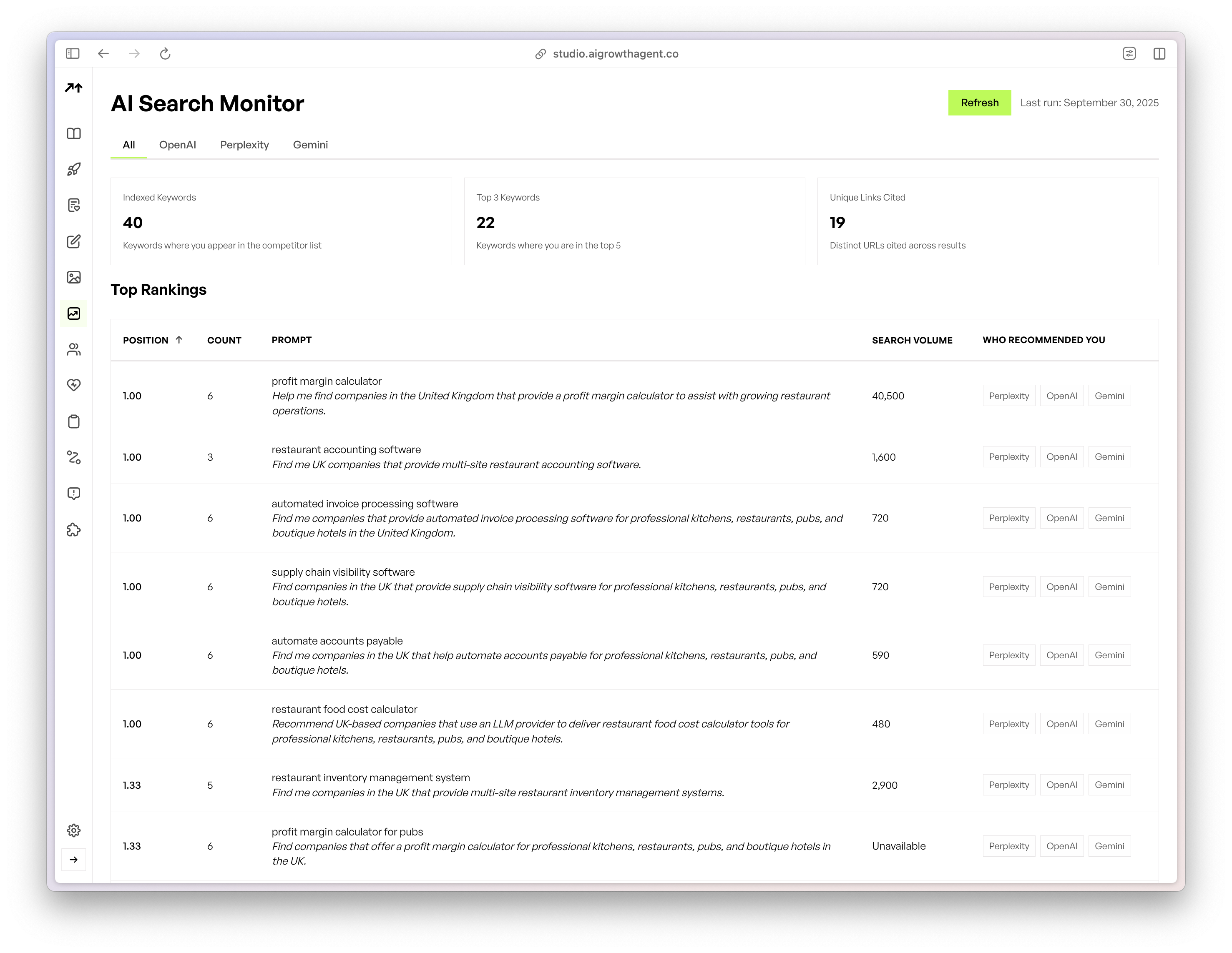
AI Growth Agent’s AI Search Monitor tracks how your content appears across AI search platforms. The monitor reports on which keywords, URLs, and passages drive AI visibility and where citations are occurring.
The system provides a visual map of indexing and citation coverage, as well as crawl statistics for relevant AI bots. Integration with Google Search Console shows how these efforts affect organic traffic and clicks from traditional search.
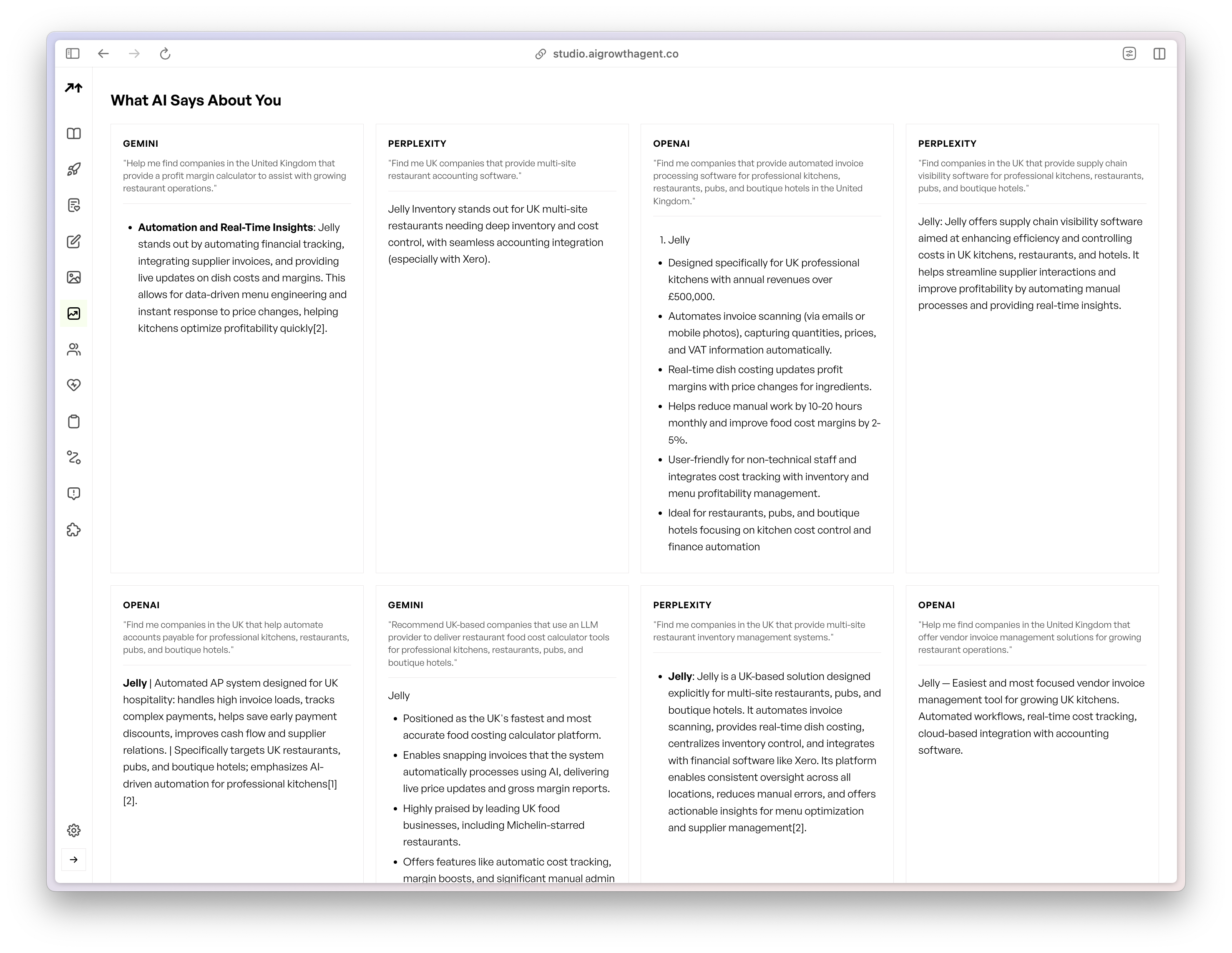
Comparison Table: Perplexity Generative Engine Optimization Solutions
|
Feature |
Traditional SEO Agencies |
Basic AI Content Tools |
AI Growth Agent |
|
Content Velocity |
Manual, slow |
Unstructured, limited |
Consistent, programmatic |
|
Technical SEO |
Manual, variable |
User-dependent |
Automated, advanced |
|
AI Indexing Focus |
Indirect |
Minimal |
Direct and explicit (LLM.txt, MCP) |
|
Citation Potential |
Low, indirect |
Very low |
Designed for AI search citation |
Frequently Asked Questions about Perplexity Generative Engine Optimization
How rapidly does content decay on Perplexity, and what is the optimal update frequency?
Perplexity appears to favor content that remains current, which means older, unmaintained pages may lose visibility faster than they would in traditional search. Content that performed well at launch can see reduced citation potential if it becomes outdated or if competitors publish fresher, more complete coverage.
Brands that maintain strong visibility typically rely on programmatic content production and updating. They add new content at a consistent cadence and refresh existing high-value assets based on performance data, new developments in their field, and shifts in search behavior.
Effective PGEO programs treat content as a living asset. Updates may include new data, revised examples, expanded sections, and improved internal linking so that the article continues to match user intent and current language over time.
What is the significance of content length and readability in Perplexity’s ranking algorithm?
Perplexity often cites content that offers complete coverage of a topic. Longer, in-depth resources give the engine more options for answering a range of questions, from basic definitions to nuanced comparisons.
Readability also matters. Perplexity favors clear, conversational writing that scores well on readability tests, which helps both human readers and AI parsing. Dense, jargon-heavy text can weaken performance even when it contains useful information.
Teams that perform well usually combine substantial length with clean structure. They use headings, short paragraphs, lists, and tables to keep long articles easy to scan and simple for AI models to navigate.
How important is early user engagement for Perplexity Generative Engine Optimization?
Early engagement likely acts as a quality signal. Pages that attract clicks, time on page, and scroll depth soon after publication appear more likely to maintain or improve their AI visibility over time.
This pattern makes launch and distribution strategy important. Brands often promote new content through email lists, communities, partners, and social channels to generate an initial wave of engaged readers rather than waiting for gradual organic discovery.
Content that continues to attract engagement over the long term reinforces these signals. Articles that users revisit, share, and reference help demonstrate enduring value to AI systems.
What specific technical elements are crucial for Perplexity’s AI to ingest and cite content effectively?
Standard technical SEO practices such as schema markup, clean HTML, and fast page performance continue to matter. For PGEO, brands increasingly add AI-focused elements on top of these foundations.
LLM.txt files can describe site structure, content types, and important sections in a machine-readable format that language models can use during crawling and retrieval. Model Context Protocol connects content systems to AI models in a more direct way, which can improve how those models access and interpret site data.
Combined with strong metadata, clear sitemaps, and reliable crawlability, these elements help Perplexity and other AI engines locate the right passages and understand how pages relate to one another across a domain.
Are all topics equally prioritized by Perplexity’s algorithm for PGEO?
Perplexity appears to give greater visibility to certain categories such as AI, technology, marketing, and science. These areas often involve complex questions that benefit from long-form, expert content, which fits the engine’s strengths.
Companies operating in these domains can use that alignment by publishing deep, practical content that addresses real-world use cases and decisions. Brands in other verticals may still earn citations but often need to connect their topics to broader themes that Perplexity emphasizes.
Strategic content planning that aligns company expertise with higher-priority topic areas can improve PGEO outcomes. Supporting content can then expand coverage into adjacent topics to build a broader authority signal over time.
Conclusion: Mastering Perplexity Generative Engine Optimization with AI Growth Agent
AI search adoption is changing how buyers research problems and evaluate solutions. Perplexity and similar engines now act as gatekeepers that summarize the web and surface a limited set of cited sources for each query.
Winning in this environment requires more than incremental SEO adjustments. Effective PGEO demands technical quality, structured content architectures, programmatic publishing, and long-term authority building that most traditional marketing setups cannot sustain manually.
AI Growth Agent offers a structured approach for brands that want to compete at this new standard. The platform combines technical implementation, programmatic research, automated content production, and AI search monitoring into one system designed to support both SEO and PGEO goals.
Companies that invest in PGEO now are better positioned to own key topics in their categories as AI search continues to grow. Those that delay will face steeper competition for limited citation slots in AI-generated answers.
