


Key Takeaways
- AI-driven search in 2026 concentrates visibility into a smaller set of authoritative sources, so weak or thin content loses reach faster than in the past.
- Traditional, manual SEO and sporadic publishing cannot keep pace with AI systems that favor depth, structure, and consistent topical coverage.
- Programmatic authoritative content combines technical SEO, structured data, and expert-level writing to earn citations from AI systems and sustain user engagement across journeys, as outlined for modern enterprise SEO and AI trends in 2026 in this overview of key enterprise SEO and AI trends.
- Brands that build topic-level authority, align with E-E-A-T, structure content for conversational queries, and track modern engagement metrics can improve both AI visibility and on-page performance across channels, as detailed in this breakdown of predictable and unpredictable SEO metrics and in this analysis of the future of search marketing.
- AI Growth Agent provides a programmatic SEO system that automates research, content engineering, and publishing so you can scale authoritative content and AI citations; schedule a demo with AI Growth Agent to see this workflow in practice.
The Shrinking Digital Footprint: Why Traditional Content Fails in AI Search
Many brands see their digital presence contract in 2026 as AI-generated content floods search results and answer engines. AI systems prioritize depth, clarity, and structure, so older strategies based on a few monthly posts and basic keyword targeting rarely sustain visibility.
Engagement indicators such as scroll depth, time on page, and conversions per content type expose the impact of declining authority. When content lacks topical depth and technical rigor, users exit quickly, conversions slow, and AI models favor competing sources.
Manual workflows struggle to publish enough high-quality pages to build topic-level authority. Competitors that deploy structured, AI-aware content at scale define the narrative for your category, so AI assistants cite them instead of you.
Programmatic Authoritative Content: A Practical Path for AI Search
Programmatic authoritative content provides a systematic way to publish expert, technically sound pages at scale. Content that ranks and converts in 2026 combines human relevance with machine-readable structure, including clear hierarchy, metadata, and schema.
Modern AI search performance now depends on metrics such as AI Presence Rate, Citation Authority, Share of AI Conversation, Prompt Effectiveness, and Response-to-Conversion Velocity. These measures show how often AI systems surface your brand, how they describe it, and how quickly those interactions lead to action.
Programmatic authoritative content typically includes:
- Structured data, schema markup, and complete metadata on every page
- Consistent content templates aligned to conversational and long-form queries
- Automated internal linking that reinforces topic clusters and entities
- Integrated measurement for AI citations and downstream engagement
Schedule a demo with AI Growth Agent to review what programmatic authority could look like for your site architecture and content library.
AI Growth Agent: Programmatic SEO Built for AI Search
AI Growth Agent is a Programmatic SEO Agent that engineers and publishes authoritative content architectures at scale. The system focuses on both AI visibility and on-page engagement, so each new asset strengthens your topic authority.
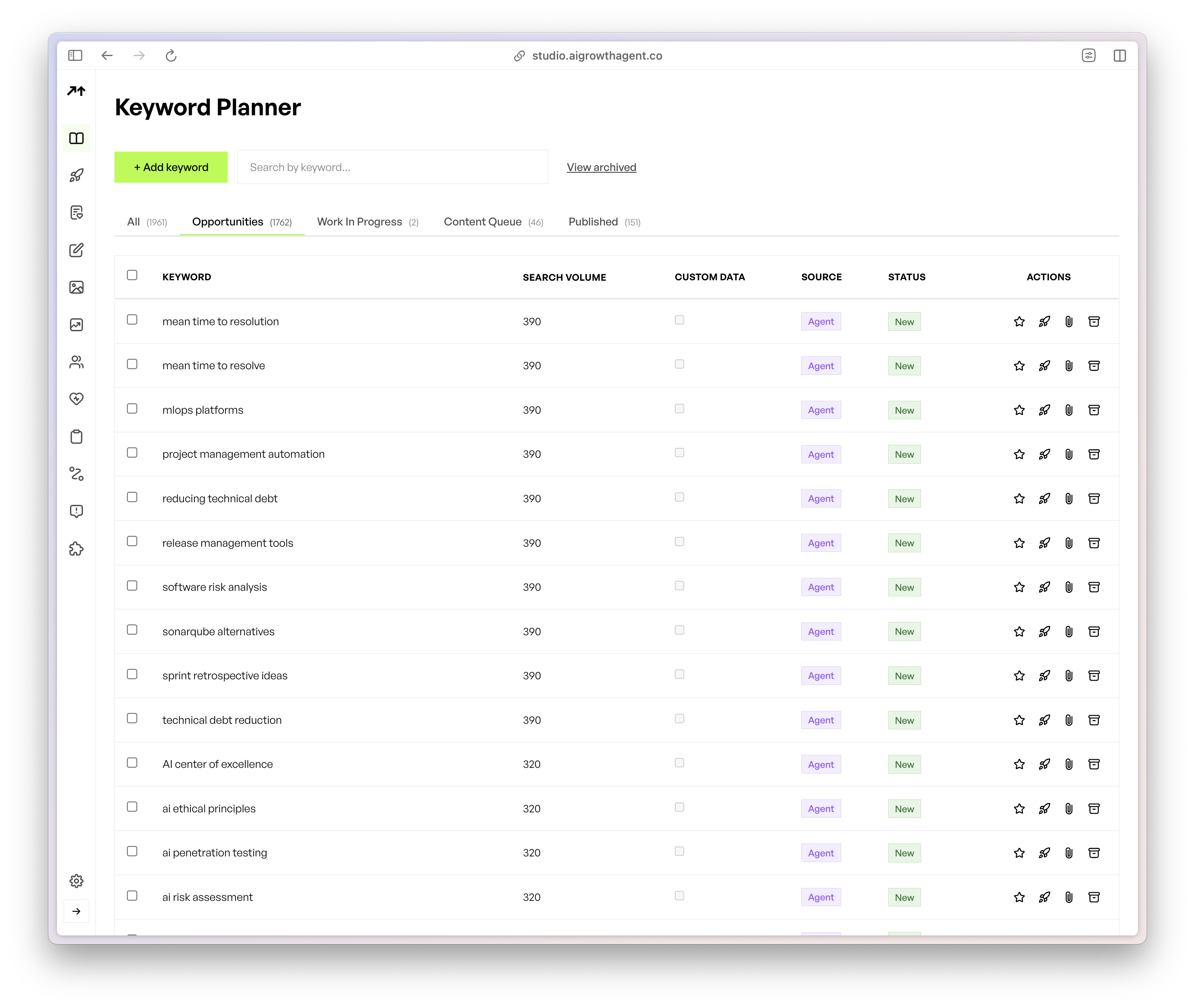
Key capabilities include:
- Autonomous content engineering and technical optimization across the full lifecycle, including schema and metadata implementation
- Programmatic keyword and content research that clusters thousands of queries into authority-building topic groups
- Real-time content generation for emerging or trending topics with built-in SEO and internal linking
- Database-to-content automation that turns proprietary data into indexable, high-value pages
- Multi-tenant deployment for organizations that manage several brands or product lines
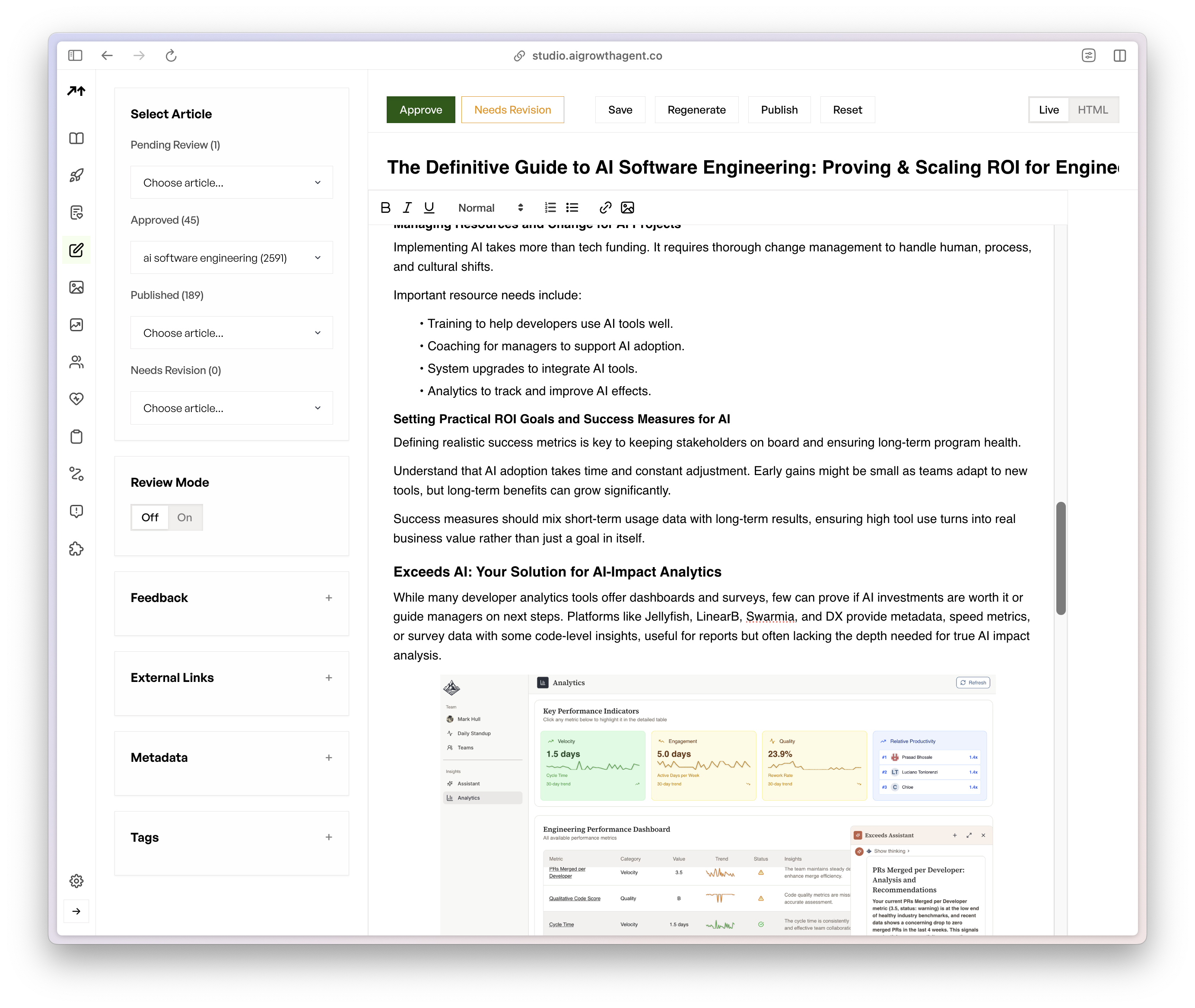
The AI Growth Agent Studio gives teams a single workspace to review content pipelines, AI citation data, and engagement performance across topic clusters.
Book a demo with AI Growth Agent to evaluate whether autonomous programmatic SEO aligns with your growth targets.
Strategies to Maximize Engagement with Authoritative Content
Build Topic-Level Authority for Complete Coverage
Strong AI visibility grows from topic-level authority instead of isolated posts. Tracking fully covered topic clusters, internal link depth, and impression lift across related queries clarifies entity-level strength.
Effective topic clusters usually include:
- Foundational explainers on core concepts and definitions
- How-to and comparison content for evaluative intent
- Use-case, industry, or role-based pages for applied scenarios
- FAQs and troubleshooting resources for detailed follow-up queries
Align Content With E-E-A-T and AI Citation Signals
Google’s Experience, Expertise, Authoritativeness, and Trustworthiness framework remains central to how AI systems judge content quality. Signals that reinforce this framework include verifiable authorship, relevant credentials, and transparent sourcing.
Programmatic content approaches can standardize these signals by embedding author bios, publication dates, revision notes, and trust elements across every template.
Structure Content for Conversational AI Queries
Content that matches natural language prompts integrates more easily into AI-generated answers. Analysis of conversational and AI-driven queries can inform headings, phrasing, and examples.
Practical structural choices include:
- Clear H2 and H3 headings that map to common questions
- Short summaries or key-point lists at the top of longer pages
- FAQ sections that mirror follow-up prompts users give to AI tools
Measure Engagement and AI Impact With Modern Metrics
Core engagement metrics such as time on page, scroll depth, and pages per session still indicate content quality, but they now sit alongside AI-specific indicators.
Teams increasingly track:
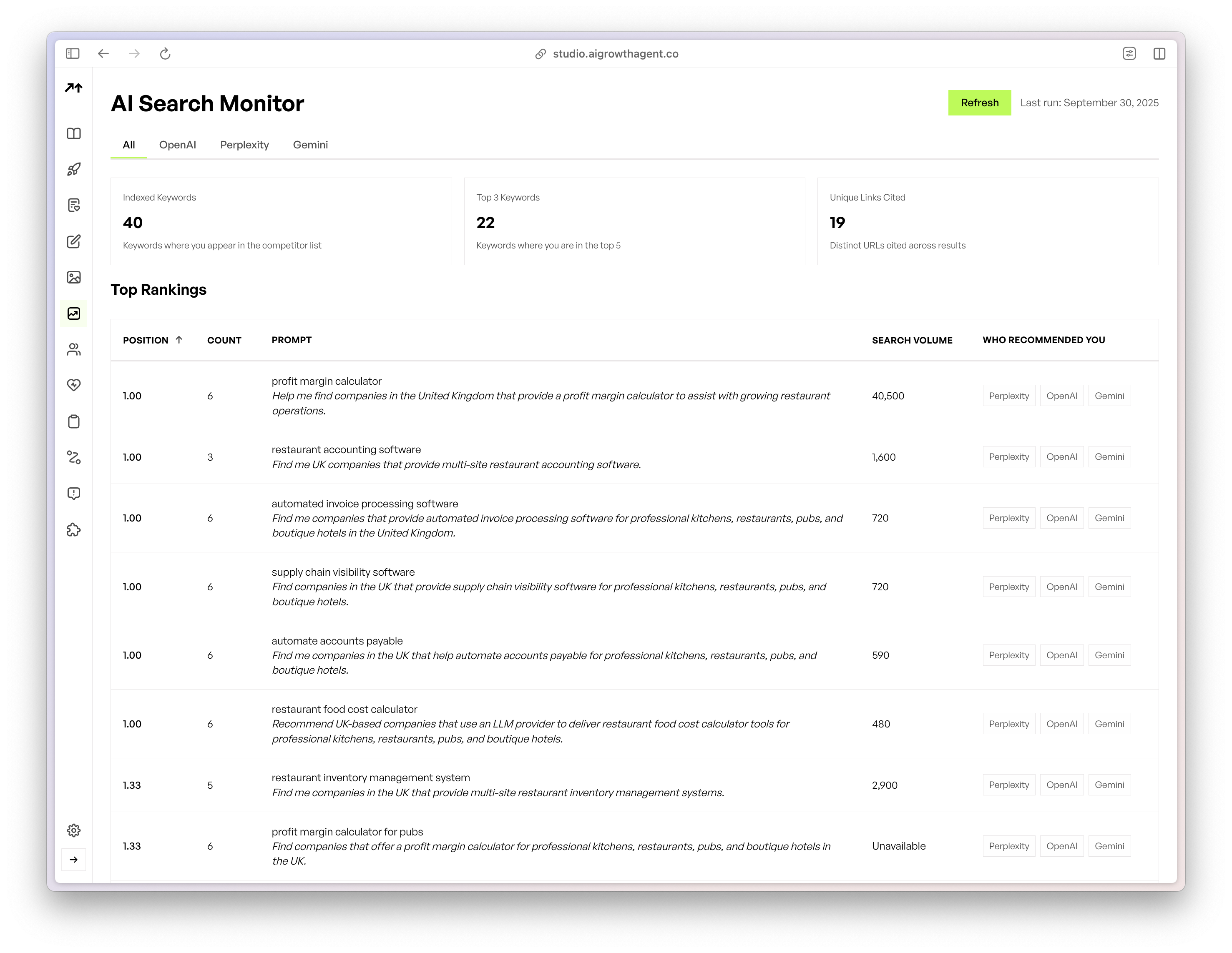
- Frequency and context of AI citations across major assistants
- LLM-driven referral traffic and branded search lift
- Multi-touch conversion paths that start in AI environments and end on site
AI Growth Agent vs. Traditional Approaches
|
Solution Type |
Scalability of Authoritative Content |
Technical SEO Automation |
AI Citation Potential |
|
Traditional SEO Agencies |
Limited output, often 1–2 articles monthly |
Manual implementation and slower updates |
Lower, due to inconsistent technical depth |
|
Internal Marketing Teams |
Constrained by bandwidth and competing priorities |
Requires ongoing engineering support |
Medium, based on in-house expertise |
|
Basic AI Content Tools |
High volume of unstructured text |
No integrated SEO automation |
Lower, due to limited schema and metadata |
|
AI Growth Agent |
Programmatic velocity across full topic clusters |
End-to-end technical SEO automation |
Higher, by design for AI parsing and citation |
Schedule a consultation with AI Growth Agent to compare this model with your current SEO and content processes.
Frequently Asked Questions on AI Search and Engagement
How does AI search change traditional metrics like clicks and impressions?
AI search often answers queries directly in the interface, so click and impression counts may decline even as brand exposure rises. New metrics such as AI Presence Rate, Citation Authority, and Share of AI Conversation help quantify how often assistants mention your brand and how those mentions influence downstream conversions and pipeline.
What is topic-level authority, and why does it matter?
Topic-level authority reflects comprehensive coverage of a subject area, not just single keywords. Brands that publish structured, interconnected content across basic, advanced, and niche questions become reliable sources for AI tools, leading to more frequent citations and steadier visibility across related searches.
Can content updates still improve engagement in 2026?
Substantive updates continue to drive engagement when they deepen coverage, clarify structure, and modernize data. Effective refreshes often reorganize headings, strengthen internal links in a cluster, add expert input, and align examples with current user behavior and AI query patterns.
How can brands create content that is helpful to both people and AI systems?
Helpful content addresses real user needs while presenting information in a structured, machine-readable format. Pages that combine audience research, clear answers, schema markup, and consistent trust signals tend to perform well in both engagement metrics and AI citation patterns.
What role does programmatic velocity play in building authority?
Programmatic velocity enables frequent publication of high-quality, technically sound content across an entire topic domain. High-quality content published daily, rather than monthly, generates stronger freshness and coverage signals for AI systems, while automation preserves consistency in structure, linking, and optimization.
Conclusion: Use Programmatic Authority to Compete in AI Search
AI-led discovery in 2026 rewards brands that pair expert content with reliable technical execution at scale. Programmatic authoritative content helps teams meet that standard, so AI assistants can confidently surface their pages and users can navigate them with ease.
AI Growth Agent focuses on this intersection of authority, structure, and velocity. The platform automates research, content engineering, and SEO implementation so teams can allocate more time to strategy and subject-matter expertise.
Schedule a demo with AI Growth Agent to review your current footprint in AI search and identify practical steps to expand engagement and authority across your key topics.
