


Key Takeaways
- AI-powered search systems like ChatGPT, Gemini AI Overviews, and Perplexity now influence how buyers discover brands, which reduces visibility for sites that rely only on traditional SEO.
- Manual content production and conventional SEO tactics cannot match the scale, structure, and recency that large language models (LLMs) prefer when selecting sources to cite.
- Programmatic SEO and structured content engineering create consistent, machine-readable content that helps AI systems understand, index, and reference your brand as an authority.
- Brands that adopt programmatic strategies and technical optimization can earn top placement in AI recommendations across competitive markets and product categories.
- AI Growth Agent offers an autonomous programmatic SEO system and AI Search Monitor, helping you secure and measure your AI search presence; you can get started by scheduling a demo with the team.
The Problem: Your Brand’s Shrinking Digital Footprint in the Age of AI Search
Marketing leaders now compete in an environment where AI systems decide which brands appear in answers, summaries, and product shortlists. Traditional SEO alone no longer guarantees that your brand appears as a trusted source inside these AI-generated responses.
AI search engines favor content that is easy to parse, consistent in structure, and rich in topical coverage. Brands that publish only a few manual articles each month struggle to create enough recent, structured content for AI models to recognize them as authorities.
Competitors that publish more frequently and invest in technical optimization give AI systems more data points to work with. Their websites become the default references when LLMs generate recommendations, definitions, and product comparisons.
Why Traditional SEO Falls Short for AI Databases
Conventional SEO focuses on ranking individual pages in search results. AI search systems look for reliable, structured information they can reuse across many answers. They respond best to content that has clear semantics, clean architecture, and consistent formatting at scale.
Marketing teams that rely on manual workflows often cannot keep pace with these technical and volume requirements. They may produce strong individual articles, but they lack the unified, machine-readable content architecture that AI systems prefer.
The Limits of Manual and Generic AI Content Tools
Internal teams and traditional agencies usually work with manual briefs, basic keyword lists, and generic AI writing tools. These methods create text, but not the deeper layers AI search depends on, such as systematic topic clustering, rich schema, and purpose-built discovery files.
Generic tools place the burden of planning, structuring, optimization, and publishing back on the marketing team. Without engineering support, content often remains unstructured and difficult for AI models to interpret at scale.
Teams that want to protect and grow their presence in AI results need a programmatic approach that combines strategy, automation, and technical implementation.
The Solution: Programmatic Content Engineering to Establish AI Database Presence
Programmatic SEO, or pSEO, provides a structured way to create large, high-quality content libraries that AI systems can easily crawl, understand, and cite. This approach treats content as a system rather than a set of isolated articles.
Use Programmatic SEO to Build AI Authority
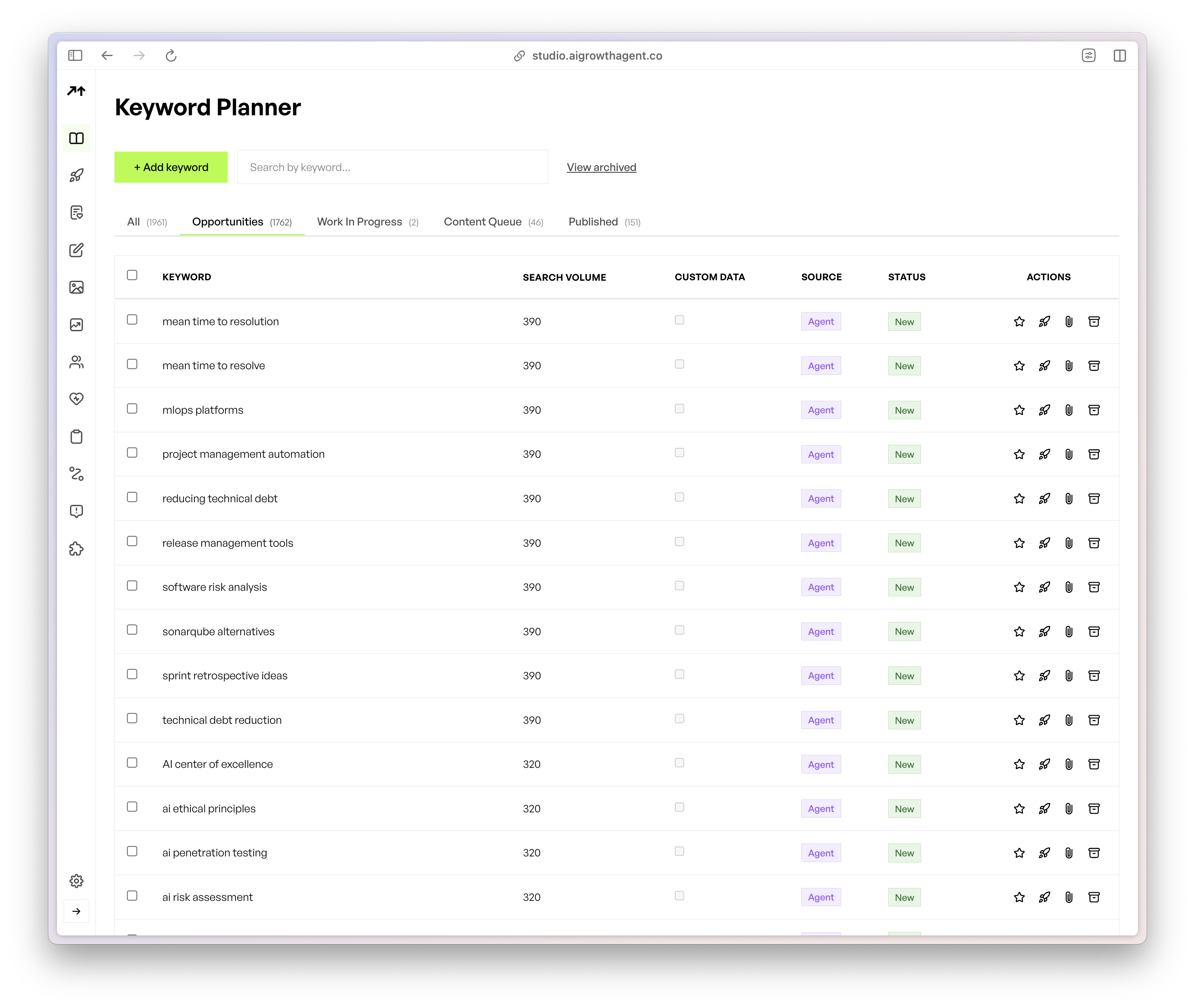
Programmatic SEO shifts the focus from one-off posts to complete content ecosystems built around your products, problems you solve, and audiences you serve. Instead of manually writing each page, you define patterns, templates, and rules, then let an agent generate content consistently across thousands of related topics.
This method delivers two core benefits. First, it increases content velocity without sacrificing quality. Second, it creates a dense, interconnected structure that helps AI models see your site as a reliable knowledge base.
Engineer Content for LLM Consumption and Citation
Effective AI search content starts with clear topic clusters and coverage maps. Each cluster addresses a specific area of expertise and links to related questions, comparisons, and use cases. This structure signals topical depth to both human readers and AI systems.
Content within these clusters uses consistent patterns, such as definitions, benefits, implementation steps, and FAQs. This predictable structure makes it easier for LLMs to extract accurate snippets, facts, and recommendations.
Optimize Technical Infrastructure for AI Discoverability
Programmatic SEO includes technical work that goes beyond title tags and meta descriptions. Robust schema, machine-readable sitemaps, and purpose-built files for AI crawlers help models access and interpret your content more reliably.
Consistent performance, fast page load times, and clean internal linking also support crawlability and retrieval. When these elements are deployed across hundreds or thousands of pages, AI systems gain a richer and more coherent picture of your brand.
The AI Growth Agent Advantage: Autonomous Programmatic SEO for AI Search
AI Growth Agent operates as a specialized Programmatic SEO Agent that combines strategy, automation, and technical implementation in one system. The platform handles tasks such as deep keyword clustering, content generation, schema deployment, and publishing to your site.
A Company Manifesto captures your positioning, audience, and brand guardrails. This document guides the agent as it generates content so that each page aligns with your voice and expertise while remaining optimized for AI search.
The system evaluates large keyword sets, groups them into topic clusters, and builds structured content plans. It then generates draft pages, applies schema, and prepares assets for publishing with minimal manual intervention.
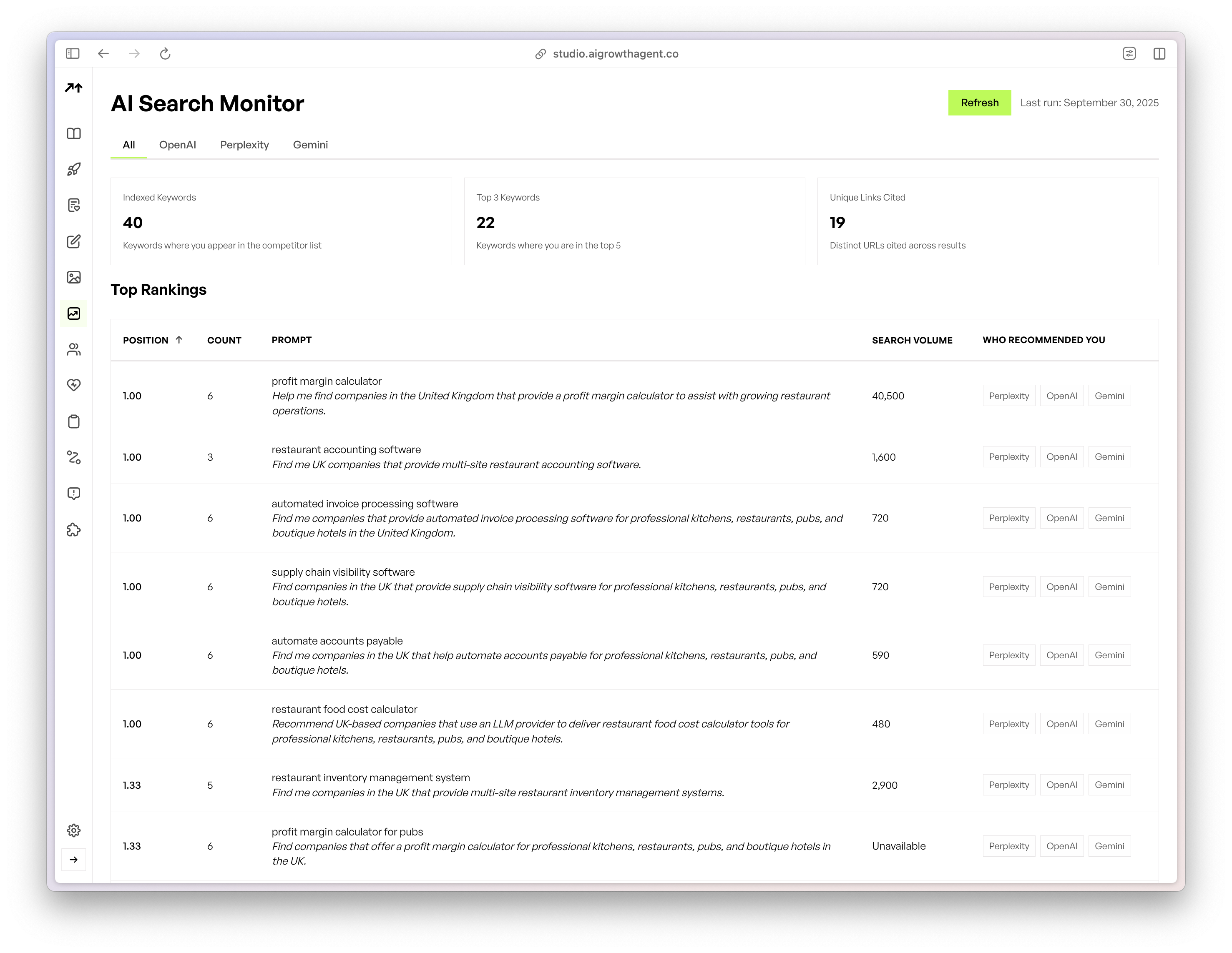
Supporting infrastructure, including files such as LLM.txt and other AI-focused context protocols, gives ChatGPT, Gemini, and Perplexity clearer signals about how your content is organized. The AI Search Monitor then tracks where and how often your pages appear as citations across these systems.
You can explore how this works in practice by booking a demo with AI Growth Agent.
Real-World Impact: Brands Improving AI Search Visibility with Programmatic Presence
Exceeds AI: Competing in Performance Management Software
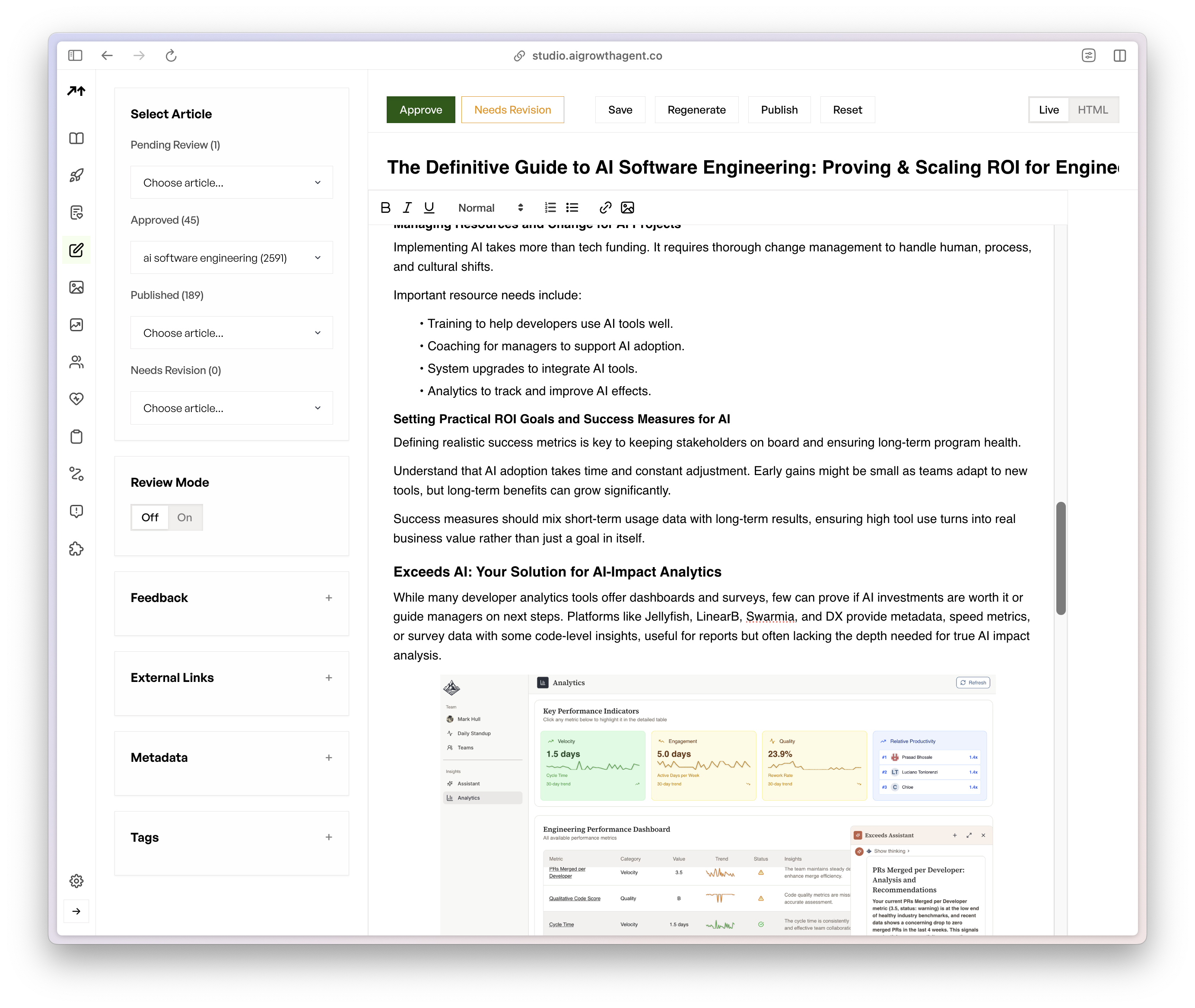
Exceeds AI operates in a crowded performance management category. Within two weeks of launching programmatic content, Perplexity began recommending them as a leading alternative to established competitors. Within three weeks, their pages appeared in Google AI Overview snapshots for priority queries about AI performance review tools for engineers.
BeConfident: Entering a Market with Established Leaders
BeConfident competes with global language-learning brands. After programmatic publishing, their content indexed quickly and gained top app recommendation status in Brazil through Google AI Overview for English learning searches.
Bucked Up and Gitar: Expanding Reach in Consumer and Developer Markets
Bucked Up, a consumer brand, saw increased visibility for protein soda queries across AI platforms within three weeks of launching programmatic content. Gitar, a developer-focused tool for CI and CD automation, became a frequent recommendation for queries about fixing broken CI builds and self-healing software within a few months.
These examples highlight how structured, high-coverage content and strong technical foundations help brands appear more often in AI-generated recommendations and comparisons.
Teams that want a similar programmatic approach can schedule a consultation with AI Growth Agent to review fit and implementation options.
Frequently Asked Questions About Trusted AI Database Presence
Why are traditional SEO metrics like backlinks less central for AI database presence?
Backlinks still matter for overall site authority, but AI databases rely more heavily on how easily they can parse and trust your content. Strong structured data, clear topic coverage, and machine-readable formats help LLMs extract accurate information, which often has more influence than raw link counts.
How does programmatic content creation differ from using a generic AI tool?
Generic tools output text based on prompts, and teams must handle strategy, structure, optimization, and publishing manually. Programmatic content creation defines a content model, automates keyword clustering, enforces semantic patterns, and integrates technical optimization so each page fits into a larger, AI-friendly architecture.
What technical elements support trusted presence in ChatGPT, Gemini, and Perplexity?
Key elements include comprehensive schema, clear internal linking, structured content templates, AI-focused context files, and fast, crawlable pages. Together, these components help AI systems discover, index, and reuse your content across many different user queries.
How can a marketing team measure current AI database presence?
Teams can review how often their brand appears in AI answers for key topics, which URLs receive citations, and which keywords show consistent coverage. AI Growth Agent’s AI Search Monitor centralizes this visibility by tracking citations, keyword coverage, and crawl patterns across ChatGPT, Gemini, and Perplexity.
Can programmatic SEO maintain quality at the scale AI authority requires?
Well-designed programmatic systems improve both quality and scale. Shared templates, brand guidelines, and automated checks keep content accurate and consistent, while automation handles repetitive work. Human experts can then focus on refining strategy, reviewing edge cases, and updating the system as markets change.
Conclusion: Define Your Authority and Secure Your Presence in the AI-First World
AI-driven search has changed how authority is assigned online. Brands that depend only on traditional SEO risk losing visibility as LLMs rely more on structured, machine-readable content libraries.
Teams that adopt programmatic SEO and content engineering can create the scale, structure, and technical clarity that AI systems look for when selecting sources. This approach strengthens your position across AI search, product recommendations, and summary results.
AI Growth Agent helps marketing leaders operationalize this shift with an autonomous Programmatic SEO Agent and AI Search Monitor. To move from isolated pages to a structured knowledge base that AI systems consistently recognize, you can schedule a demo with AI Growth Agent and explore the next steps for your brand.
