


Key Takeaways
- AI-driven search in 2026 favors structured, high-volume content that manual SEO alone cannot produce at a competitive pace.
- Programmatic SEO connects technical SEO, schema, and AI-specific protocols so large language models can understand, trust, and cite your content.
- Entity-based content architectures and strong engagement signals increase how often AI assistants surface your brand in answers, not only in blue links.
- Measurement of authority now includes AI citations, assistant mentions, and multimodal visibility, which requires new tracking and reporting workflows.
- Marketing teams can use AI Growth Agent to deploy programmatic SEO at scale; you can see it in action by booking a demo with AI Growth Agent.
Research Methodology
This report combines qualitative insights from leading SEO publications with quantitative data from large-scale analyses of AI citation patterns. The research includes work from Search Engine Journal, Semrush data on AI-cited URLs, AlmCorp’s AI Overviews research, and Search Engine Land technical SEO studies.
The findings are validated against performance data from AI Growth Agent implementations across multiple industries. The analysis focuses on the technical and strategic elements that correlate with higher AI citation rates and on how autonomous content engineering platforms such as AI Growth Agent differ from traditional SEO workflows.
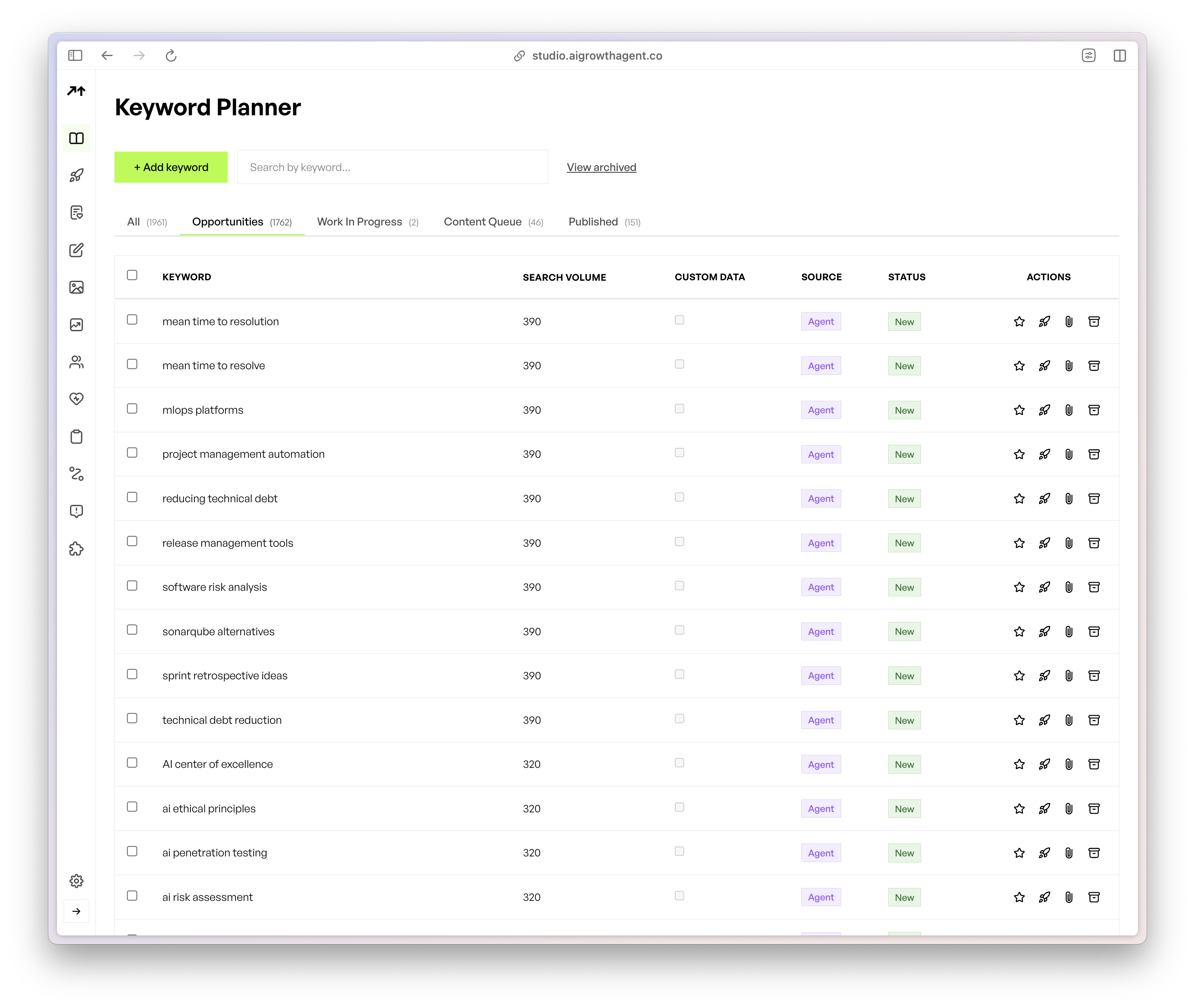
The AI Search Paradigm Shift: Why Traditional SEO Falls Short
AI-Powered Discovery Sets New Content Requirements
AI search tools now govern how users discover information. Google AI Mode blends traditional ranking signals with generative responses, so content must satisfy both classic algorithms and AI synthesis. ChatGPT Search, Google AI Overviews, and Perplexity extract, recombine, and cite content, favoring pages that are structured, consistent, and context rich.
Limited Content Volume Shrinks Your Digital Footprint
The volume of AI-generated and human-generated content continues to grow. Each brand’s relative share of online content shrinks when output remains low. Publishing one or two optimized articles per month rarely sustains visibility in AI-first environments, which increases strategic risk for teams that rely only on manual SEO.
Manual Production Creates a Velocity Gap
Most SEO agencies still use a craftsman model focused on individual articles. These processes struggle to deliver the structured content volume that AI search favors. AI engines favor content that clearly answers questions and aligns with user intent, at a scale and pace that manual production finds difficult to match.
Basic AI Writing Tools Add Technical Debt
Generic AI writers output readable text but rarely apply robust schema, internal linking, or technical SEO best practices. Marketing teams then carry the burden of formatting, markup, and publishing. Without a programmatic SEO framework, these tools often create content that is difficult for AI crawlers to interpret and less likely to earn AI citations.
Teams that want to operationalize programmatic SEO can schedule a consultation to review options and see how AI Growth Agent updates a manual content approach: book a strategy session with AI Growth Agent.
Programmatic SEO: The Authority Building Engine for AI-Driven Search
Programmatic SEO Aligns Scale, Structure, and AI Needs
Programmatic SEO applies engineering principles to content creation. It automates keyword research, content generation, internal linking, schema, and publishing. This workflow produces consistent, AI-optimized pages at volumes that human-only teams cannot sustain while keeping technical quality predictable.
Key Pillars of Programmatic SEO for AI Citation
Technical SEO as an AI Translation Layer
Technical SEO elements such as crawlability, indexation, architecture, Core Web Vitals, and structured data now act as a translation layer between content and AI systems. Strong foundations increase the likelihood that LLM crawlers can access, understand, and reuse page content in generative results.
Advanced Schema Markup for Clear Meaning
Structured data works like a clear signal for AI search: sites without robust markup often remain invisible to AI systems even when the writing is strong. Comprehensive schema for Organization, Article, BreadcrumbList, FAQ, and Product types helps AI agents map entities, relationships, and offers with confidence.
AI-Oriented Protocols Guide Crawlers
AI-oriented protocols such as llms.txt files and Model Context Protocol servers give teams more control over how AI crawlers access content. These files indicate priority sections, update frequency, and usage constraints, which align site structure with AI discovery behavior.
Entity-Based Content Architecture Supports Topic Depth
Entity-based topic clusters that cover full-funnel queries raise citation odds across many intents. Programmatic SEO systems can map entities, subtopics, and user journeys, then generate interconnected articles that signal authority across the entire cluster.
Engagement Signals Reinforce Authority
Pages with stronger engagement metrics, such as longer sessions, lower bounce rates, and better conversion performance, appear more often in AI citations. User experience and content relevance support both traditional rankings and AI visibility.
Marketing teams can review how these pillars apply to their own sites by requesting a focused walkthrough with AI Growth Agent: schedule a demo to see these programmatic SEO strategies in practice.
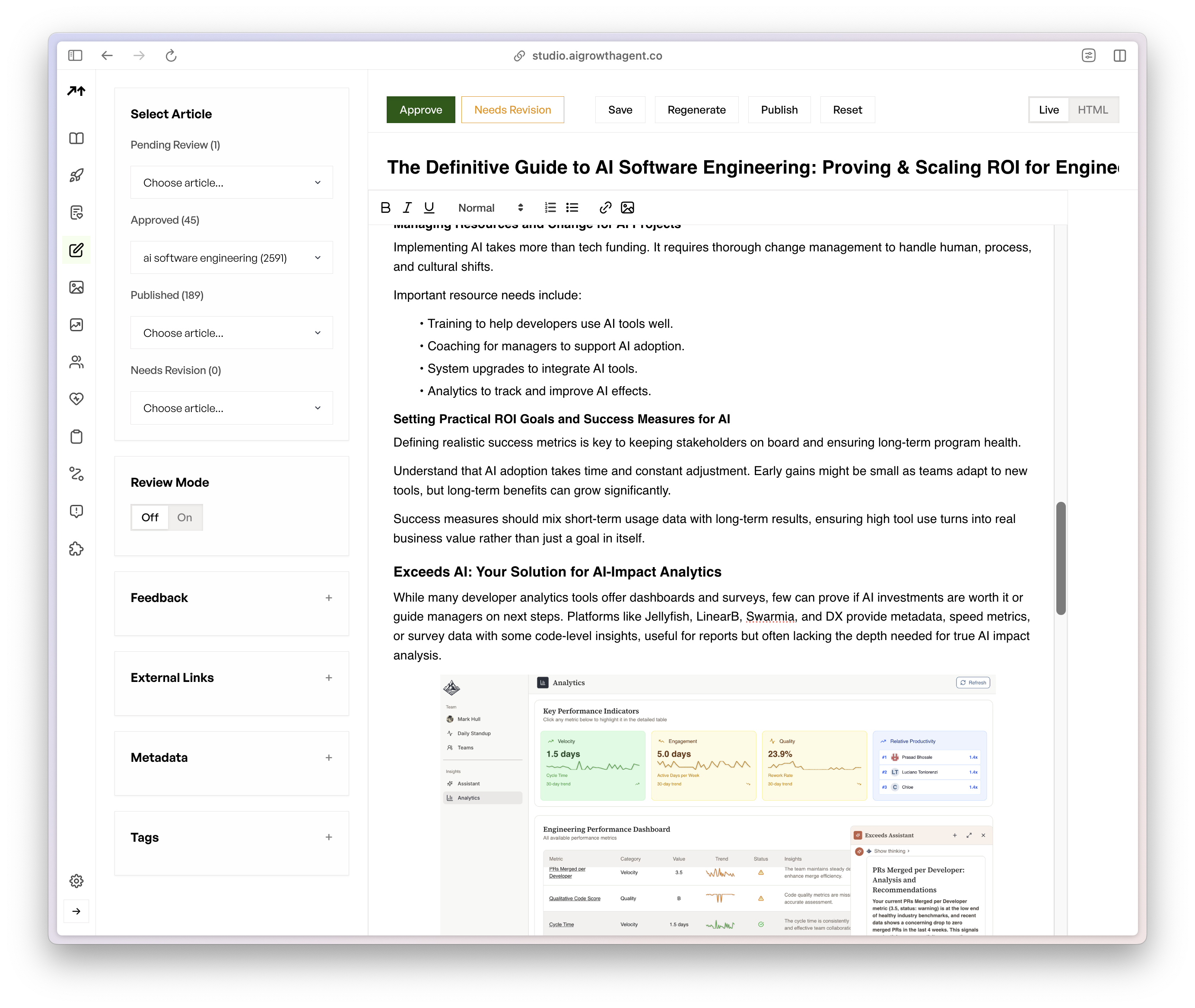
The AI Growth Agent Advantage: Building Authority with Programmatic SEO
Engineering an Autonomous Content System
AI Growth Agent is a programmatic SEO agent that engineers high-authority content architectures so companies can be cited and recommended by AI search tools. The platform combines technical engineering, content creation, and AI optimization into one coordinated system.
Content Engineering Lifecycle Focused on Your Narrative
The AI Growth Agent process starts with a one-hour onboarding session with a professional journalist. This session captures positioning, audience, and narrative inputs that become a Company Manifesto, which guides all future content decisions.
After manifesto creation, the agent analyzes tens of thousands of queries in your domain. It develops a programmatic content strategy with pillars and clusters aligned to AI search opportunities, so each asset supports clear paths to AI citations and recommendations.
How AI Growth Agent Compares
|
Capability |
Traditional SEO |
Basic AI Tools |
AI Growth Agent |
|
Content Volume |
Limited manual output |
High but unstructured |
High-volume structured content |
|
Technical Integration |
Manual implementation |
Minimal |
Automated schema and AI protocols |
|
AI Citation Monitoring |
Manual tracking |
No monitoring |
Real-time heatmap tracking |
|
Multi-Brand Deployment |
Not scalable |
Single-brand focus |
Multi-tenant architecture |
The AI Growth Agent Studio adds operational control through multi-tenant deployment, real-time content injection for emerging topics, and database-to-content automation that converts proprietary data into search assets.
Teams that want a closer look can request a personalized walkthrough: schedule an AI Growth Agent demo.
Real-World Impact: Companies Winning with Programmatic SEO Strategies
Examples of Programmatic SEO in Action
Programmatic SEO strategies supported by AI Growth Agent have driven measurable AI search visibility across several categories. Exceeds AI now appears in AI assistant responses for queries about AI performance review tools for engineers. BeConfident, a language learning company, achieved rapid indexing after programmatic publishing and gained visibility for English learning queries. Bucked Up improved its presence for protein soda searches, and Gitar.ai gained coverage for AI-powered CI or CD automation topics.
Measuring Authority Beyond Classic SEO Metrics
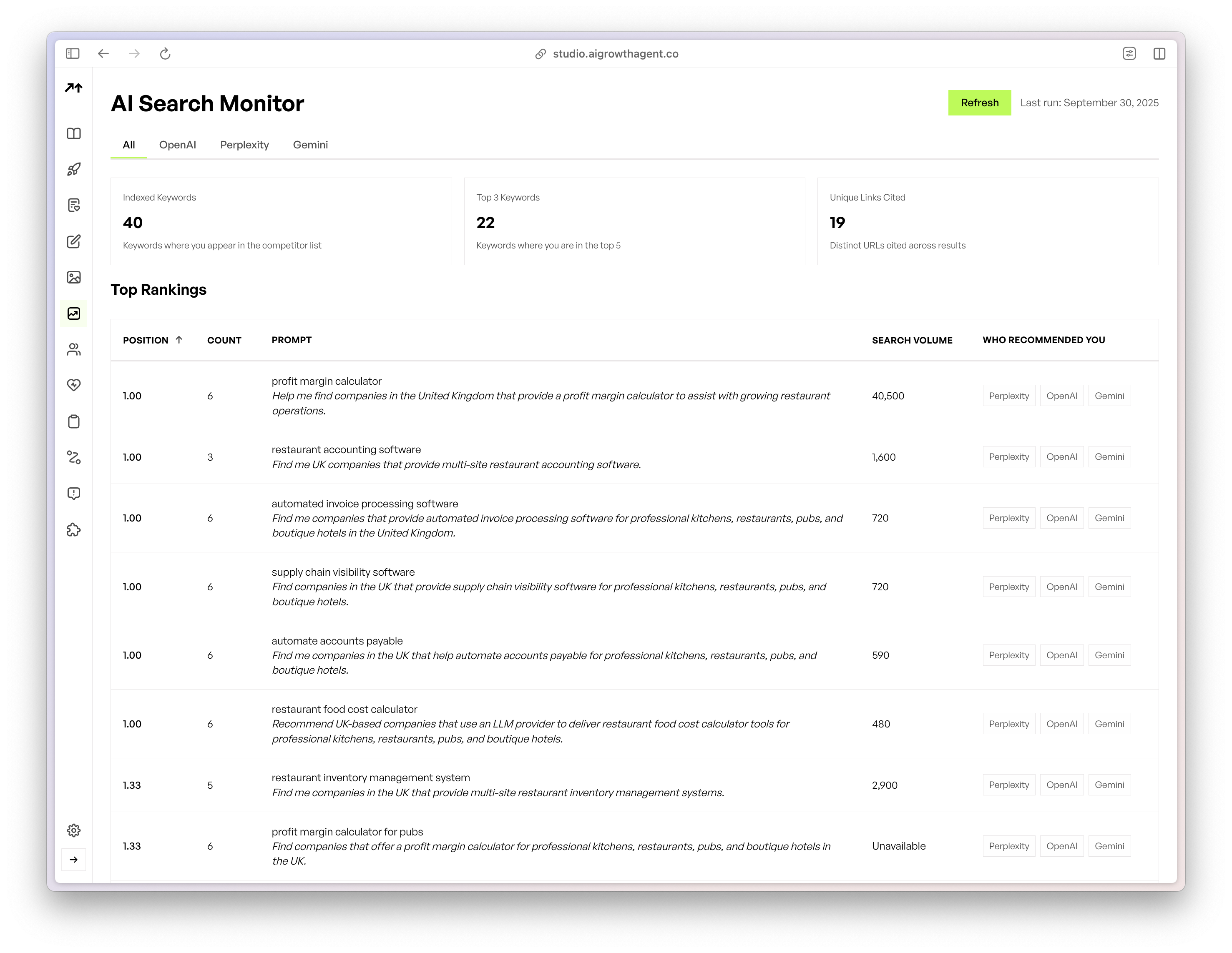
Modern SEO measurement now includes AI citations, assistant mentions, and multimodal placements, not just traffic and rankings. Effective programmatic SEO requires tracking how content appears across ChatGPT, Google AI Overviews, Perplexity, and other AI interfaces.
AI Growth Agent supports this shift with dashboards that highlight AI citation heatmaps, URLs driving AI visibility, and excerpts from AI responses. Marketing teams can review this data in the context of revenue and conversion metrics by booking a working session: schedule an AI Growth Agent consultation.
Frequently Asked Questions about Programmatic SEO Strategies
What is the difference between programmatic SEO and traditional SEO in the AI era?
Programmatic SEO uses automated, engineering-driven workflows to create and optimize content at scale for AI crawlers and LLM citation. Traditional SEO relies on manual keyword research, writing, and on-page optimization, which limits speed and technical consistency. Programmatic approaches automate the lifecycle from keyword mapping to schema and publishing, which supports the volume and structure AI search now rewards.
How do AI search engines determine authority for programmatic SEO content?
AI search tools weigh technical foundations, schema coverage, engagement metrics, entity clarity, and consistent E E A T signals. They often favor sources that show depth across topic clusters, supported by clean architecture, server-side rendering, and logical URL structures. These elements help AI systems extract, evaluate, and cite content in generated answers.
Is programmatic SEO only for large enterprises?
Programmatic SEO benefits enterprises but is also relevant for smaller brands that compete in crowded categories or rely on organic growth. The technical barrier that once limited programmatic SEO is lower today. Platforms such as AI Growth Agent make advanced workflows available to teams that already have a solid product and positioning, regardless of headcount.
What technical elements are most critical for programmatic SEO success in 2026?
Key technical elements include comprehensive schema markup, llms.txt and Model Context Protocol implementations, server-side rendering for AI crawlers, clear heading structures, and strong performance with fast, stable page loads. Structured feeds, clean URLs, and reliable infrastructure also matter, because AI systems revisit authoritative sources frequently when generating responses.
How can marketing leaders measure the ROI of programmatic SEO strategies?
ROI assessment should cover AI citation frequency across major assistants, organic traffic from AI-optimized pages, brand presence within AI-generated summaries, and downstream conversions. AI Growth Agent provides dashboards that tie AI citation heatmaps and visible quotes to specific URLs and campaigns, which helps leaders connect programmatic SEO investments to business outcomes.
Teams that want to explore ROI scenarios in detail can see the monitoring environment live: request an AI Growth Agent demo.
Conclusion: Securing Your Brand’s Authority in the AI Future with Programmatic SEO
Programmatic SEO has become a core requirement for marketing leaders who want to remain visible in AI-driven search environments. Manual approaches rarely deliver the speed, structure, and scale needed to earn consistent AI citations in 2026.
AI Growth Agent helps companies build durable authority by combining autonomous content engineering, technical optimization, and AI citation monitoring in one system. Brands that adopt programmatic SEO now are already seeing higher AI citation rates, stronger organic visibility, and more resilient category positions than teams that depend only on manual SEO.
Marketing leaders who want to evaluate fit and roadmap options can review their situation with the AI Growth Agent team: book a strategy session to see how autonomous content and ranking technology can strengthen your competitive position with programmatic SEO.
